
Bale (gait) clothing trade
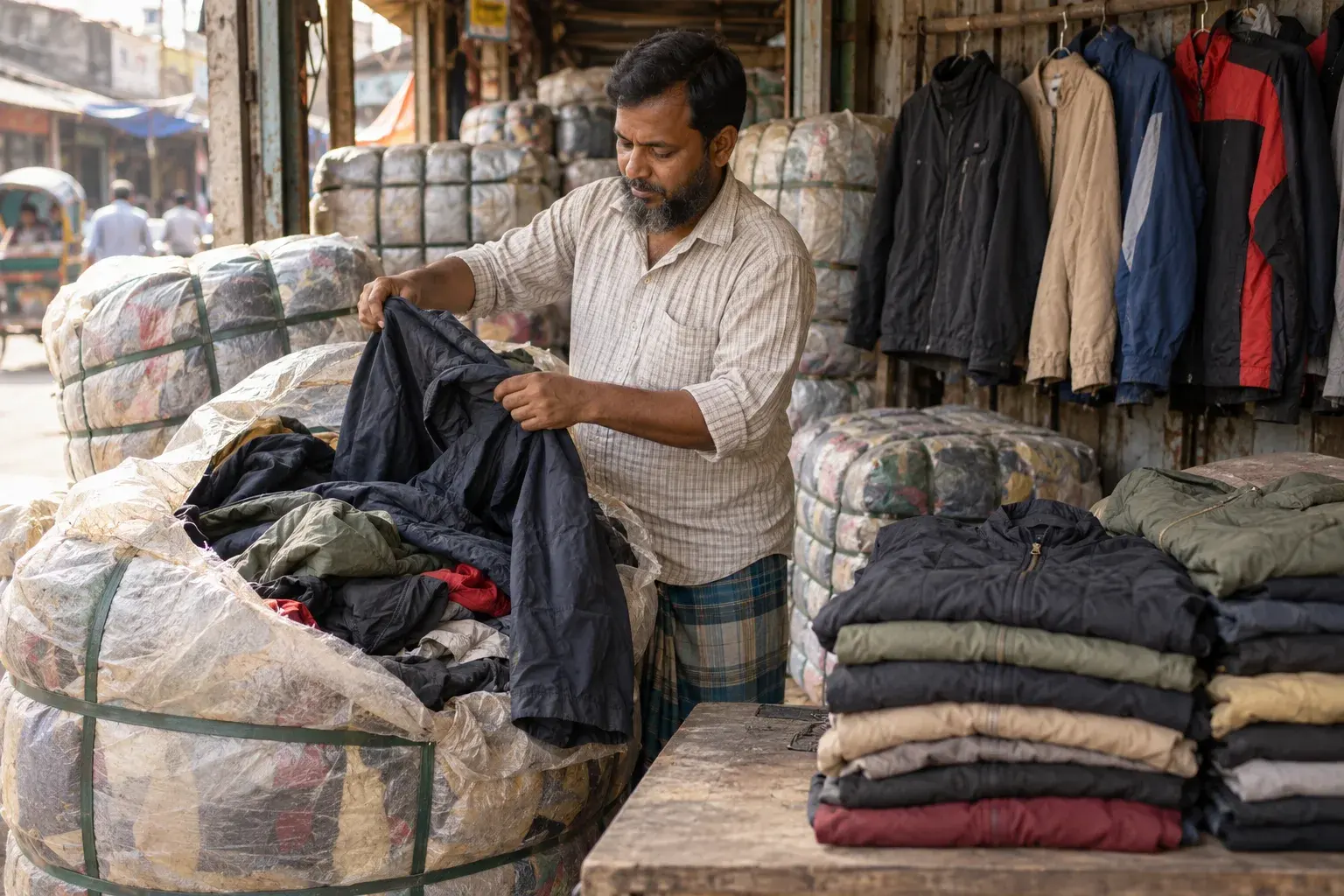
Buying imported used clothing by the sealed bale and selling it by the piece. A jacket bale is about Tk 15,000 and pieces retail at Tk 20-2,000, but the bale is bought without seeing inside.
- Last reviewed: 19 September 2026
- Version 1
Bale (gait) clothing trade
- Starting capital
- ৳50,000 – ৳4,00,000 Editorial estimate
- Manpower
- 1 – 5 people
- First sale
- 7 – 30 days Editorial estimate
- Break-even
- 2 – 8 months Editorial estimate
- Kind of work
- Shop · Medium difficulty
About the business
Buying imported second-hand clothing by the sealed bale, opening it, sorting, washing and pressing it, and selling it piece by piece. The goods come from Japan, South Korea, China and Taiwan, land at Chattogram port and spread through the Khatunganj wholesale market. Three thousand importers now hold permission nationally, down from five thousand, of whom 167 are in Chattogram, and each consignment is capped at 14 tonnes: one tonne of blankets, three of sweaters, three of ladies' cardigans, three of zipper jackets, three of men's trousers and one of synthetic shirts. In December 2025 at Syedpur a baby bale was Tk 7,000-8,000, a jacket bale Tk 15,000 and a blanket bale up to Tk 40,000, against Tk 10,000 for a jacket bale a year earlier. At retail, children's sweaters go for Tk 20-50, adult sweaters and jackets Tk 80-300, women's winter wear Tk 70-500 and a good jacket Tk 500-2,000. The honest point is this: the bale is bought sealed. Nobody knows what is inside, how much of it is saleable and how much is torn or stained until it is cut open. That sorting yield decides whether the bale made money, and nobody publishes it. This is as much a gamble as it is a trade.
Unit economics
| Item | Range | Evidence | Suggest a correction |
|---|---|---|---|
| Monthly working capital | ৳30,000 – ৳2,50,000 | Editorial estimate | |
| Selling price | ৳20 – ৳2,000 / unit | Market quote | |
| Variable cost | ৳12 – ৳400 / unit | Editorial estimate | |
| Gross margin | 40% – 80% | Editorial estimate | |
| Time to first revenue | 7 – 30 days | Editorial estimate | |
| Break-even time | 2 – 8 months | Editorial estimate | |
| Cash cycle | 0 – 7 days | Editorial estimate | |
| Waste / loss | 15% – 30% | Editorial estimate | |
| Daily capacity | 20 – 200 | Editorial estimate |
What you need to start
- Scales, a knife to cut the bale open, hangers and racks, washing facilities and an iron. Pressed and unpressed clothing do not fetch the same price.Equipment
- Trade licence from the city corporation or municipality: form Tk 10, licence book Tk 50, standard tax Tk 30, non-judicial stamp Tk 150-300, licence fee Tk 100-60,000 by trade type, plus VAT and signboard fee. Issued in 3-5 working days, renewed yearly.Licence
- Permission to import used clothing, needed only if you import yourself. There are currently 3,000 permitted importers nationally, down from 5,000, of whom 167 are in Chattogram. A consignment is capped at 14 tonnes: 1 tonne blankets, 3 sweaters, 3 ladies' cardigans, 3 zipper jackets, 3 men's trousers and 1 synthetic shirts.Licence
- Judging by feel what a bale will yield, and pricing piece by piece at retail. Nobody teaches the first one; it is learned by losing money on a few bales.Skill
- A bale wholesaler: Khatunganj in Chattogram, Northbrook Hall Road and Mallik Tower at Bangla Bazar in Dhaka, and Syedpur in Nilphamari. Which seller's bales open well is the most valuable information in this trade.Supplier
- Open floor space to cut and sort a bale, a dry room to store stock, and a market shop or seasonal footpath pitch to sell from.Workspace
How the work is done
- 1Decide whether you will buy bales from an importer or from a local wholesaler. Importing yourself needs government permission; there are now 3,000 permitted importers nationally.
- 2Take the trade licence from the city corporation or municipality; even a seasonal footpath stall needs market committee and corporation permission.
- 3Go to a bale market such as Khatunganj in Chattogram or Syedpur and talk to several sellers. Which seller's bales open well is the real capital in this trade.
- 4Start with one small cheap bale - a baby bale at Tk 7,000-8,000. Open it, sort it yourself, see how much comes out saleable, and only then move to bigger bales.
- 5Sort the whole bale on the day you open it into three piles: good, ordinary and reject. If you do not price them separately, the good pieces leave at the cheap rate.
- 6Arrange washing, drying and pressing. Bale clothing carries smell and creases, and a pressed piece sells for a different price altogether.
- 7Have your stock in by September. The Syedpur market runs September to February, 9 am to 11 pm; miss the season and the stock sits for a year.
- 8Price by how cold it actually gets. A cold snap doubles what the same piece fetches; a late winter means dumping stock at a loss in February.
- 9Sell the reject pile separately to a rag or waste-cloth buyer; this is where part of a bad bale's loss is recovered.
- 10At the end of the season write up every bale: what you paid, how many pieces came out saleable, how many were rejects and what it all brought in. That book tells you which seller to go back to next year.
Seasons
- JanHigh
- FebHigh
- MarLow
- AprLow
- MayLow
- JunLow
- JulLow
- AugLow
- SepNormal
- OctHigh
- NovHigh
- DecHigh
Where it works well
- Strong fitChattogram · The goods land at the port and spread through Khatunganj; 167 of the country's importers are here, so bales are cheapest at source.
- Strong fitDhaka · Used-clothing markets run at Motijheel, Paltan, Gulistan, New Market, Farmgate, and at Northbrook Hall Road and Mallik Tower in Bangla Bazar near Sadarghat, with the largest number of buyers.
- Strong fitDinajpur · Severe winter and large rural markets; bales can be brought from Syedpur and broken down at upazila markets.
- Strong fitNilphamari · The Syedpur winter market is one of the country's biggest used-clothing markets: about 500 seasonal stalls turning over roughly Tk 50 lakh a day, September to February, 9 am to 11 pm.
- Strong fitRangpur · Winter bites hard in the north and incomes are low, so bale clothing rather than new winterwear is what people buy, with the Syedpur market close by.
- PossibleKurigram · One of the coldest and poorest districts; the market for Tk 20-50 children's pieces is largest here.
- PossibleLalmonirhat · A cold border district with heavy demand in the char areas, though low incomes keep sales to the cheapest pieces.
- PossibleMoulvibazar · Tea garden worker families buy cheap winterwear every year, though the stock has to travel a long way.
- PossiblePanchagarh · The coldest part of the country, so the season starts earlier and blanket demand is stronger.
- PossibleThakurgaon · A cold district close to the Syedpur market, where seasonal stalls are easy to set up at upazila markets.
Risks and cautions
- HighOther: The bale is bought sealed. How many pieces, in what sizes, how much torn or stained - none of it is known until it is cut open. If half a Tk 15,000 jacket bale turns out to be reject, that loss is yours and nobody takes it back. The sorting yield is published nowhere, so there is no way to calculate the odds in advance. This is as much a gamble as a trade.
- HighDemand: The whole trade rides on the weather. The market runs September to February; a late or mild winter leaves stock unsold and it goes out at a loss in February. A seasonal Dhaka trader said he used to sell 20-25 blankets a day and now cannot sell ten.
- HighWorking capital: Bales are paid for in cash and sell back piece by piece over weeks. Freight has risen too: a Syedpur wholesaler put the cost of bringing a bale from Chattogram at Tk 3,000-4,000 more than last year. Bale prices have risen as well - a jacket bale from Tk 10,000 to Tk 15,000 and a baby bale from Tk 5,000 to Tk 7,000-8,000.
- MediumDependency: Supply sits with the permitted importers. Their number has fallen from 5,000 to 3,000 and a consignment is capped at 14 tonnes, so if the quota tightens or a consignment is held up, stock is unavailable exactly at the start of the season and prices jump.
- MediumCompliance: Importing used clothing depends on government permission and the quota is fixed item by item. Importing yourself means meeting the permission, the quota and port rules; goods brought in without them tie up the whole consignment.
Sources
সিটি কর্পোরেশন থেকে ট্রেড লাইসেন্স প্রাপ্তির ধাপ সমূহ
Collected: 16 Sept 2026Supports: Starting capital · বাংলাদেশ
What changed
No corrections have been published yet.
Questions and answers
No questions yet. Be the first to ask.
Similar businesses
 Retail & wholesale
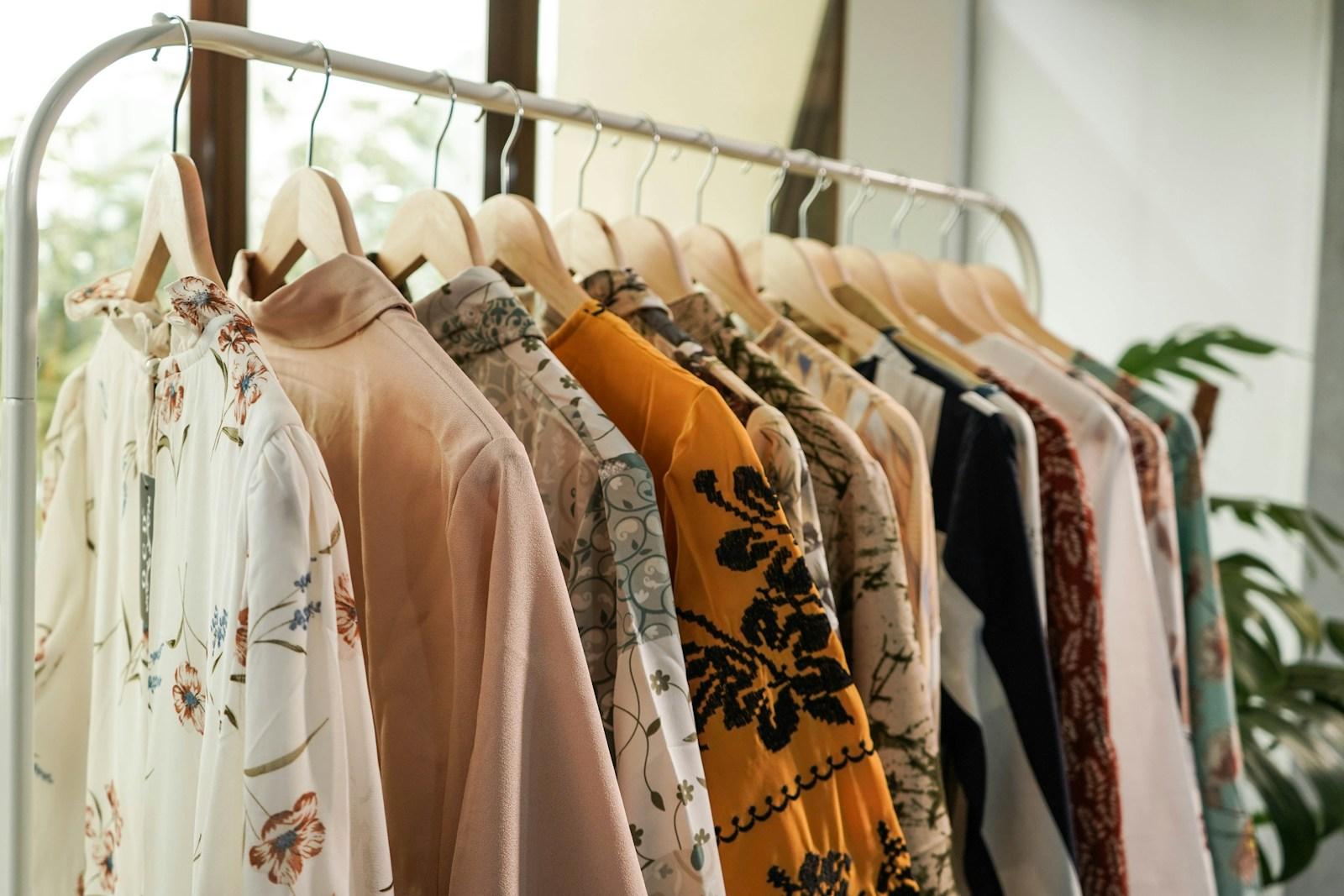
Selling clothes on a Facebook page
Buy three-pieces and saris wholesale, sell on Facebook Live, deliver by courier.
- Capital
- ৳50k – ৳1.5 lakh
- People
- 1 – 3
- First income
- 7 – 21 days
 Retail & wholesale
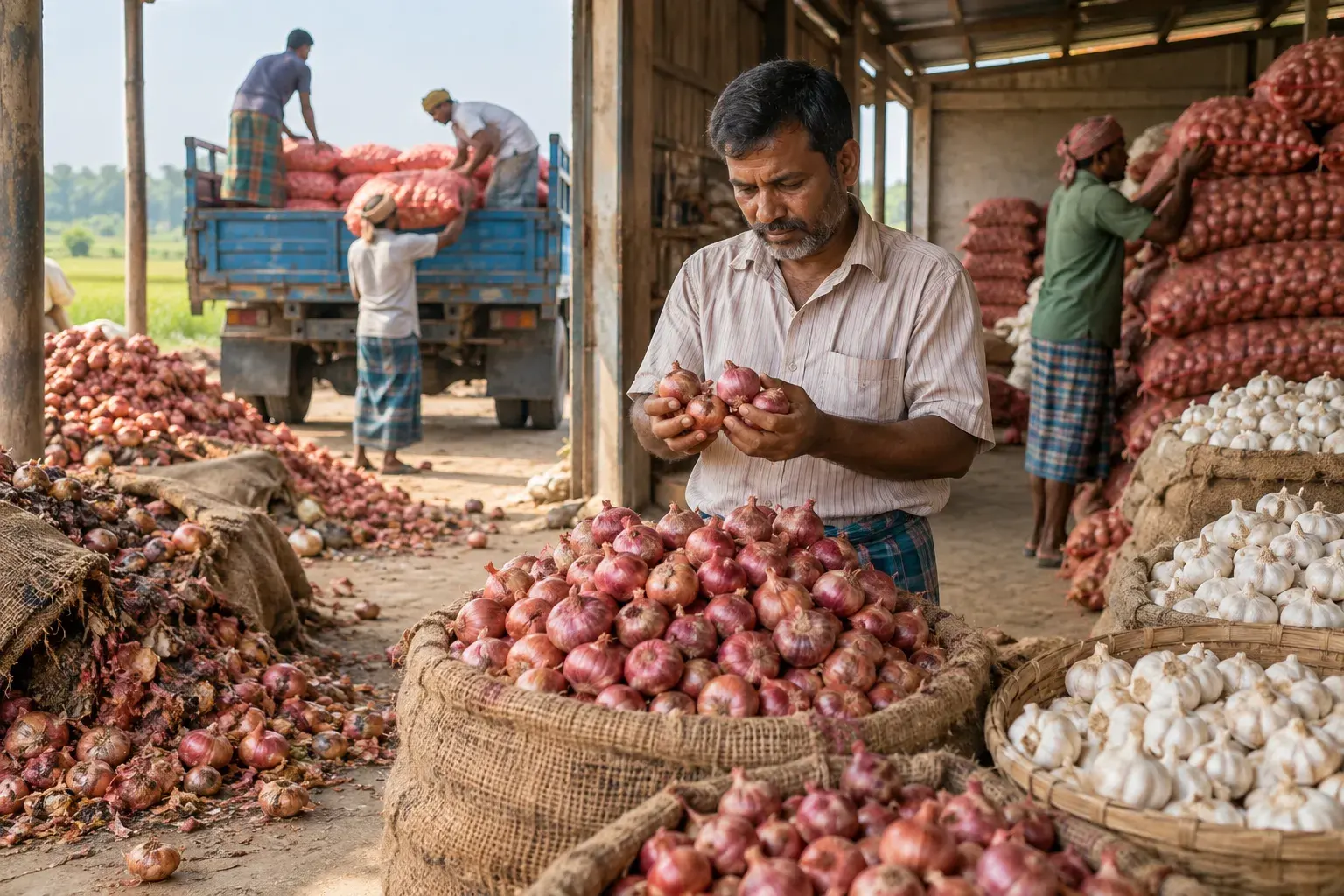
Onion and garlic storage trading
Buying cheap at harvest, storing, and selling when prices rise. But 25-30 percent of the country's onion rots for want of storage, and local onion fell 30 percent in twelve months.
- Capital
- ৳70k – ৳4.7 lakh
- People
- 1 – 4
- First income
- 90 – 250 days
 Retail & wholesale
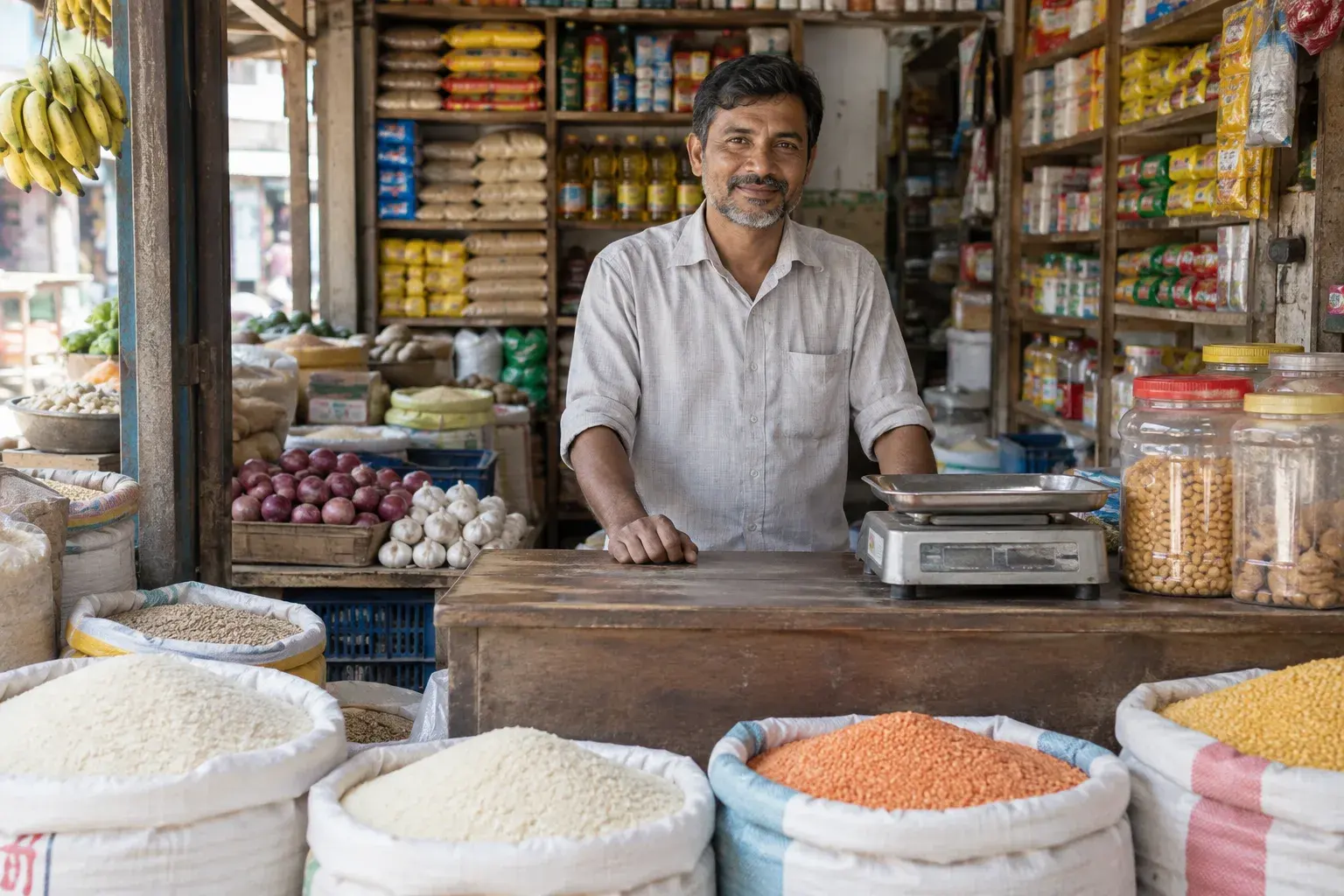
Grocery shop
The neighbourhood everyday-goods shop. A few taka a kilo, so income depends on volume - and the shop usually dies when customer credit locks up the cash.
- Capital
- ৳80k – ৳5 lakh
- People
- 1 – 3
- First income
- 10 – 30 days
 Retail & wholesale
Fresh fish from landing sites to town
Bought at dawn from the landing site, iced and in town shops before noon.
- Capital
- ৳80k – ৳1.5 lakh
- People
- 2 – 3
- First income
- 3 – 7 days