
Biscuit and chips making
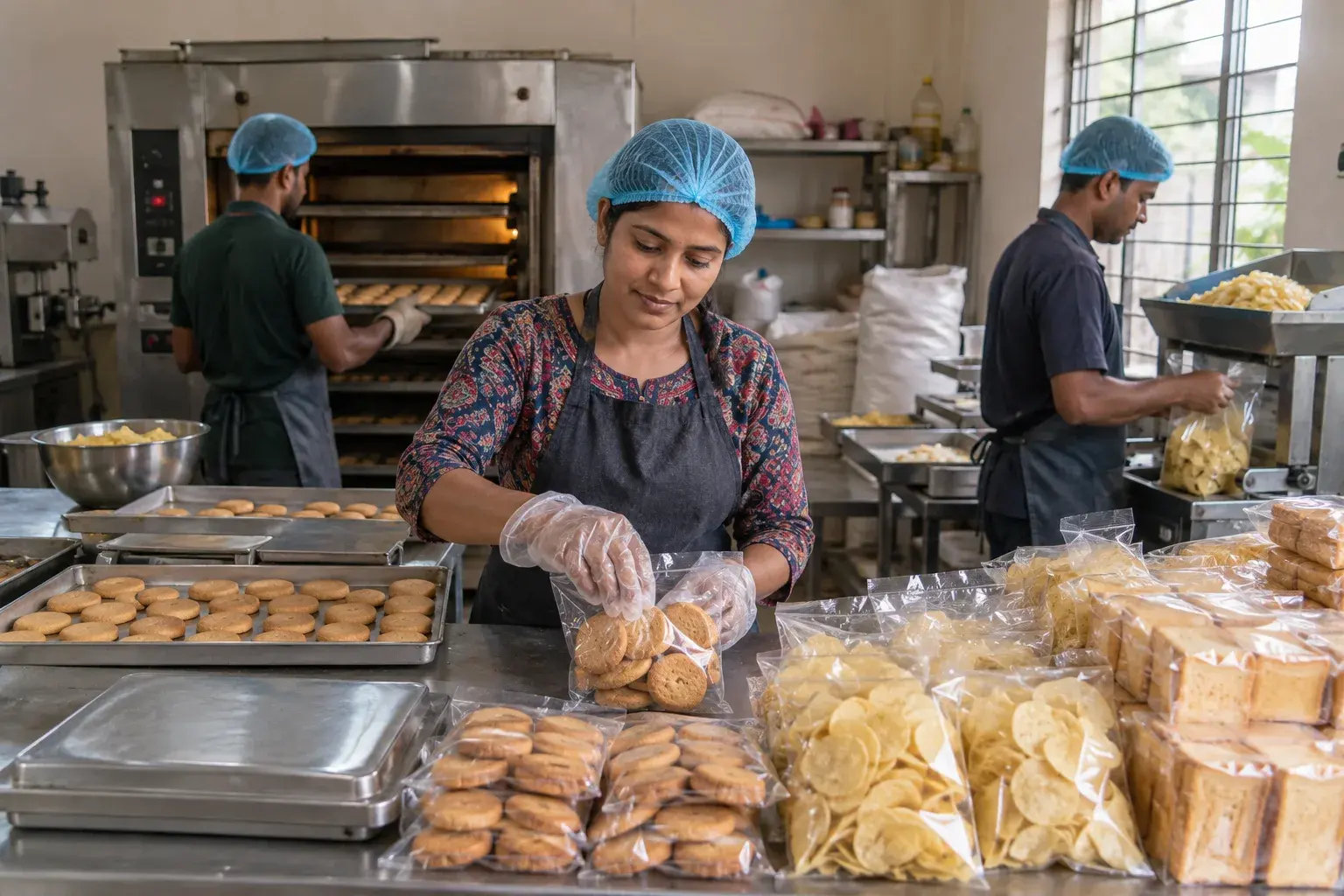
Making and packing biscuits, toast and chips from flour, sugar and oil. BSTI certification is compulsory, and the shop credit cycle is the real constraint.
- Last reviewed: 19 September 2026
- Version 1
Biscuit and chips making
- Starting capital
- ৳4,00,000 – ৳40,00,000 Editorial estimate
- Manpower
- 4 – 30 people
- First sale
- 45 – 100 days Official source
- Break-even
- 6 – 18 months Editorial estimate
- Kind of work
- Workshop · Hard
About the business
A unit that makes biscuits, toast and chips from flour, sugar and oil and sells them in packets. The product looks cheap on the shelf, but the gap between raw material and shelf price is wide. In Dhaka loose maida is Tk 65-70 a kg and packet maida Tk 75-85, sugar Tk 110-115 retail and Tk 102-103 wholesale. On the shelf, Olympic Milk Marie at 200 g for Tk 50, Energy Plus at 185 g for Tk 50 and Ispahani Premium Toast at 185 g for Tk 50 all work out at Tk 250-270 a kg. For chips the gap is wider still - Pran Potato Cracker at 15 g for Tk 10 and Sun Chips at 75 g for Tk 60 are Tk 667-800 a kg, against potatoes at Tk 25-30. None of that gap is pure profit: sugar, oil, gas, packaging, transport and the retailer's cut all come out of it. The real constraint is not money but time - biscuits go to shops on credit, unsold packets come back, and payment arrives with the next consignment. The rules are strict too: Biscuits (BDS 383), Wafer Biscuits (BDS 1001), Chips and Crackers (BDS 1556) and Potato Chips (BDS 1927) are all BSTI mandatory products, and short weight is itself an offence - Nabisco was fined two lakh taka for it on 2 August 2026.
Unit economics
| Item | Range | Evidence | Suggest a correction |
|---|---|---|---|
| Monthly working capital | ৳3,50,000 – ৳40,00,000 | Editorial estimate | |
| Selling price | ৳250 – ৳800 / kg | Market quote | |
| Variable cost | ৳212 – ৳560 / kg | Editorial estimate | |
| Gross margin | 15% – 30% | Editorial estimate | |
| Time to first revenue | 45 – 100 days | Official source | |
| Break-even time | 6 – 18 months | Editorial estimate | |
| Cash cycle | 15 – 45 days | Editorial estimate | |
| Waste / loss | 3% – 12% | Editorial estimate | |
| Daily capacity | 150 – 2,000 | Editorial estimate |
What you need to start
- Dough mixer, roller and cutter, oven or frying pans, cooling conveyor, scales and a packing and sealing machine. A 12 kg LPG cylinder is Tk 1,585 (BERC, 2 September 2026). Local machine prices could not be verified.Equipment
- Maida Tk 65-70 loose and Tk 75-85 packet a kg, sugar Tk 110-115 retail and Tk 102-103 wholesale, super palm oil Tk 170-175, potatoes Tk 25-30 (15-09-2026), plus baking powder, salt, colours and flavours.Starting stock
- Packaging registration certificate from BSTI. The actual weight must match the declared weight on the pack, or the mobile court fines you.Licence
- Bangladesh Food Safety Authority registration and premises licence: Tk 1,000 new, Tk 500 renewal, valid three years.Licence
- Trade licence from the city corporation or municipality: form Tk 10, book Tk 50, standard tax Tk 30, stamp Tk 150-300, licence fee Tk 100-60,000, in 3-5 working days.Licence
- BSTI CM licence. Biscuits (BDS 383:2001), Wafer Biscuits (BDS 1001:2010), Chips and Crackers (BDS 1556:2017) and Potato Chips (BDS 1927:2017) are all on the mandatory list. Application Tk 1,000, renewal Tk 500, annual licence fee Tk 200, marking fee from Tk 1,875.Licence
- Holding the dough ratio and the oven's heat and time. Too long and the biscuit burns; too short and it stays soft inside and spoils before its date.Skill
- A wholesale supplier for flour, sugar and oil, an LPG dealer, and a wrapper printer.Supplier
- A separate production room with pucca floor and drainage, a cooling area, a dry pest-free store and a separate packing table.Workspace
How the work is done
- 1Decide the product - dry biscuits and toast, cream biscuits, or fried chips. An oven business and a frying business are different in machinery, gas cost and the hands you need.
- 2Take the trade licence from the city corporation or municipality and register for TIN and VAT with the NBR.
- 3Take Bangladesh Food Safety Authority registration and the food premises licence: Tk 1,000 new, Tk 500 renewal, valid three years.
- 4Apply to BSTI for the CM licence and the packaging registration certificate. Biscuits (BDS 383), Wafer Biscuits (BDS 1001), Chips and Crackers (BDS 1556) and Potato Chips (BDS 1927) are mandatory products. Application Tk 1,000, annual licence fee Tk 200.
- 5Fit out the unit: dough mixer, roller and cutter, oven or frying pans, a cooling conveyor, scales, and a packing and sealing machine. Gas is a big line - a 12 kg LPG cylinder is Tk 1,585.
- 6Fix raw material suppliers. In Dhaka loose maida is Tk 65-70 and packet Tk 75-85, sugar Tk 110-115 retail and Tk 102-103 wholesale, super palm oil Tk 170-175 retail and palm oil Tk 163-164 wholesale, potatoes Tk 25-30 (15-09-2026).
- 7Weigh before packing and print the same weight on both sides of the wrapper. On 2 August 2026 Nabisco Biscuit and Bread Factory was fined two lakh taka for short weight and for showing different weights on the front and back of the same pack.
- 8Start with neighbourhood groceries and tea stalls, then move to the wholesale arot. Take too big an area at the start and the credit outstanding becomes unmanageable.
- 9Keep a separate ledger for each shop's credit and collect the previous balance before sending the next consignment. Record returned stock in the same ledger.
- 10Demand rises in the winter picnic season and in Ramadan, so build output and stock ahead of them. In the monsoon humidity softens biscuits, so hold less stock.
Seasons
- JanHigh
- FebHigh
- MarHigh
- AprNormal
- MayNormal
- JunNormal
- JulLow
- AugLow
- SepNormal
- OctNormal
- NovNormal
- DecHigh
Where it works well
- Strong fitBogura · An old food-processing centre with wheat country nearby and a good distribution base for the north.
- Strong fitChattogram · Imported flour, oil and packaging arrive fast from the port, and big names like Well Food and Banoful ship nationwide from here.
- Strong fitDhaka · The biggest consumer market and the old biscuit belt at Tejgaon and Old Dhaka, where raw material and packaging supply are easiest.
- Strong fitGazipur · An industrial belt with land and labour available and the Dhaka market within reach.
- Strong fitNarayanganj · Dense settlement and factory workforces, with quick delivery into Dhaka's wholesale markets.
- PossibleCumilla · The highway allows distribution towards both Dhaka and Chattogram.
- PossibleJashore · A south-western distribution centre reaching Khulna, Satkhira and Jhenaidah.
- PossibleMymensingh · A large population and many educational institutions, with steady sales through canteens and tea stalls.
- PossibleRangpur · Cheaper labour and wheat country nearby, but transport costs more.
- PossibleSylhet · Good urban demand and remittance purchasing power, but raw material has to come from far away.
Risks and cautions
- HighLate payment: Biscuits go to shops on credit, payment comes with the next consignment, and unsold and expired packets come back. Flour, sugar, oil, gas and wages are all paid in cash. That gap is what closes these units: production can be running perfectly while the money stuck in the market grows until there is nothing left to make the next batch with.
- HighCompliance: BSTI mobile courts sweep Dhaka's industrial areas almost weekly. On 15 September 2026 at Tejgaon, New Bright Star Bread and Biscuit Factory was fined Tk 30,000 under the BSTI Act 2018 for producing and selling chanachur without a CM licence and told to clean up the premises and get licensed. Large firms are not spared either - Nabisco was fined two lakh taka for short weight on 2 August 2026.
- HighDependency: The margin sits directly on flour, sugar and edible oil prices, and over twelve months packet maida rose 14.3 percent and loose soybean oil 11.4 percent. But the price is printed on the wrapper, so raising it is hard - makers shrink the pack instead, and when that is caught it is a fine.
- MediumSpoilage: Monsoon humidity softens biscuits and chips. A badly sealed wrapper lets air in and the packet comes back from the shop. Reusing frying oil changes the taste and, if caught, is an offence under the Food Safety Act.
- MediumDemand: The shelf is crowded with Olympic, Pran, Bombay Sweets, Ispahani, Danish and Haque. Getting space means giving the shopkeeper a bigger cut or longer credit, and both eat your margin.
Sources
- Collected: 16 Sept 2026
Supports: Starting capital · বাংলাদেশ
সিটি কর্পোরেশন থেকে ট্রেড লাইসেন্স প্রাপ্তির ধাপ সমূহ
Collected: 16 Sept 2026Supports: Starting capital · বাংলাদেশ
- Collected: 15 Sept 2026
Supports: Starting capital · ঢাকা মহানগর — সিপাহীবাগ, মিরপুর-৬, মোহাম্মদপুর টাউন হল, নিউমার্কেট, রামপুরা, মহাখালী বাজার
- Collected: 15 Sept 2026
Supports: Starting capital · ঢাকা মহানগর
LPG price cut by Tk 13, 12kg cylinder now Tk 1,585 (BERC, কার্যকর ২ সেপ্টেম্বর ২০২৬)
Collected: 2 Sept 2026Supports: Starting capital · বাংলাদেশ
All food businesses now need safety registration
Collected: 22 Jul 2026Supports: Starting capital · বাংলাদেশ
What changed
No corrections have been published yet.
Questions and answers
No questions yet. Be the first to ask.
Stories about this business
Jackfruit biscuit, 20-25 kg a day at 850 taka a kg, with no BSTI standard to meet
Two months into trial production the biscuits sell 20-25 kg a day at 850 taka for a one-kg box, but buyers call them too sweet, too fragile and too expensive, and BSTI says jackfruit biscuit is not on its biscuit standards list at all.
- Ran for
- 2 months
- Reasons
- Compliance, Weak demand
Similar businesses
 Food processing
Tea packaging and branding
Buying loose tea at auction, blending and packing it under your own brand. The 2026-27 Chattogram auction averages Tk 280.88 a kg while packet tea sells at Tk 428-650.
- Capital
- ৳5 lakh – ৳50 lakh
- People
- 2 – 15
- First income
- 45 – 100 days
 Food processing
Frozen paratha and samosa
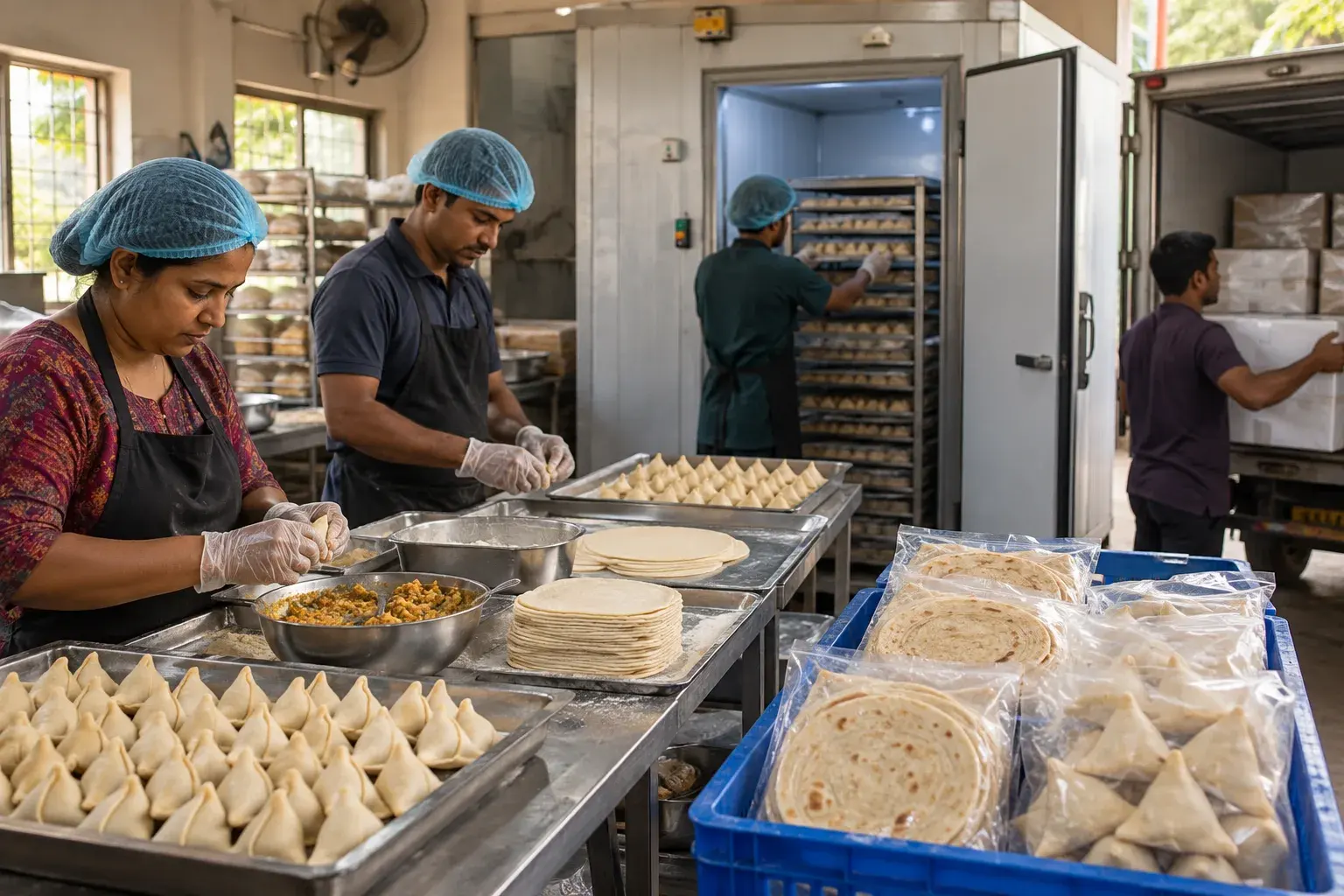
Making raw paratha, samosa and singara, freezing them and selling them in packs. Retail is Tk 12.5-19 a paratha and Tk 8.6-9.4 a mini samosa. The cold chain from factory to shop is the real condition of the business.
- Capital
- ৳3 lakh – ৳15 lakh
- People
- 3 – 15
- First income
- 45 – 90 days
 Food processing
Small restaurant
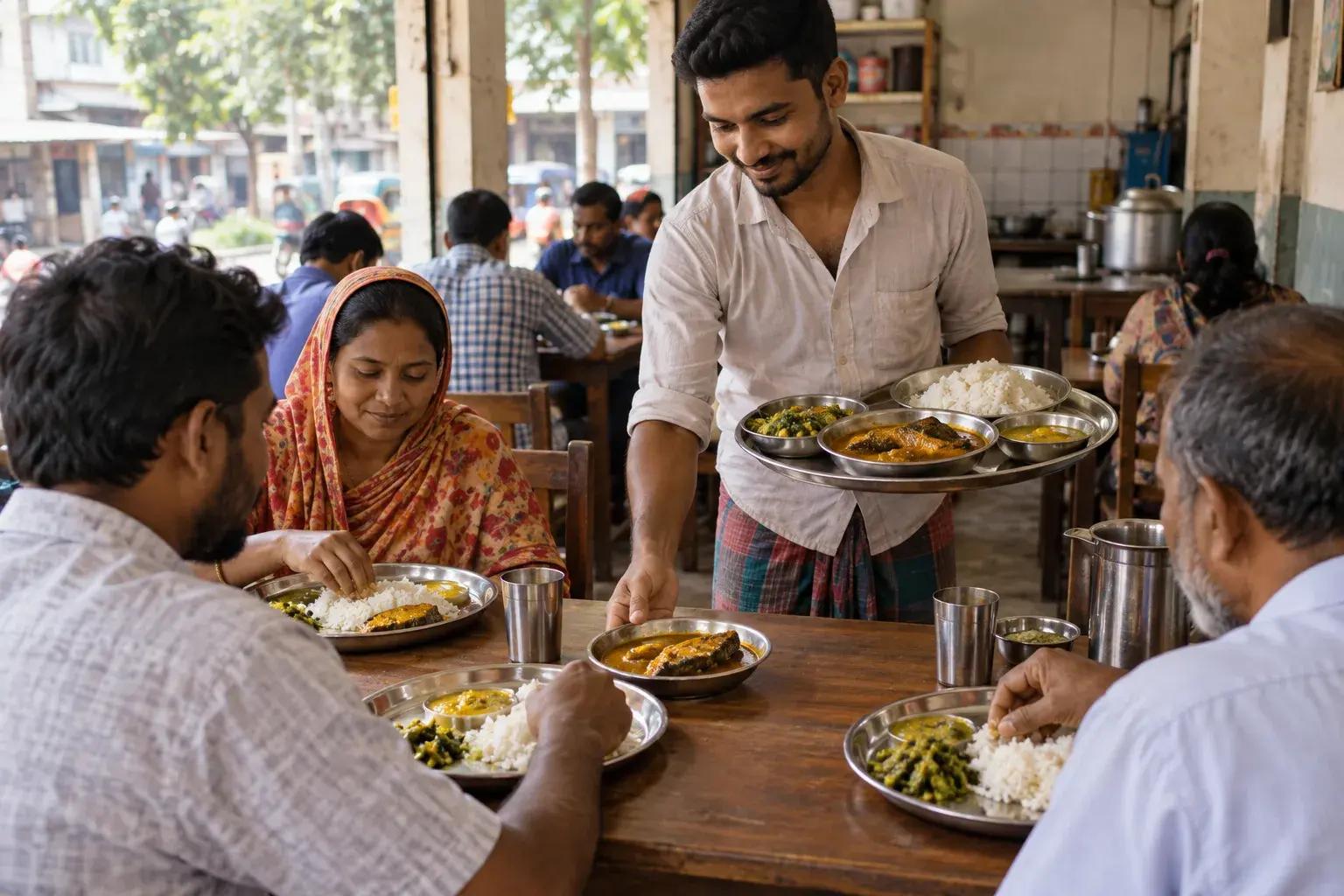
A 300-500 sqft rice hotel. Cash comes in daily, but ingredients eat 35-50 percent of sales and six separate approvals are needed to open.
- Capital
- ৳3 lakh – ৳6 lakh
- People
- 3 – 8
- First income
- 60 – 120 days
 Food processing
Biriyani shop
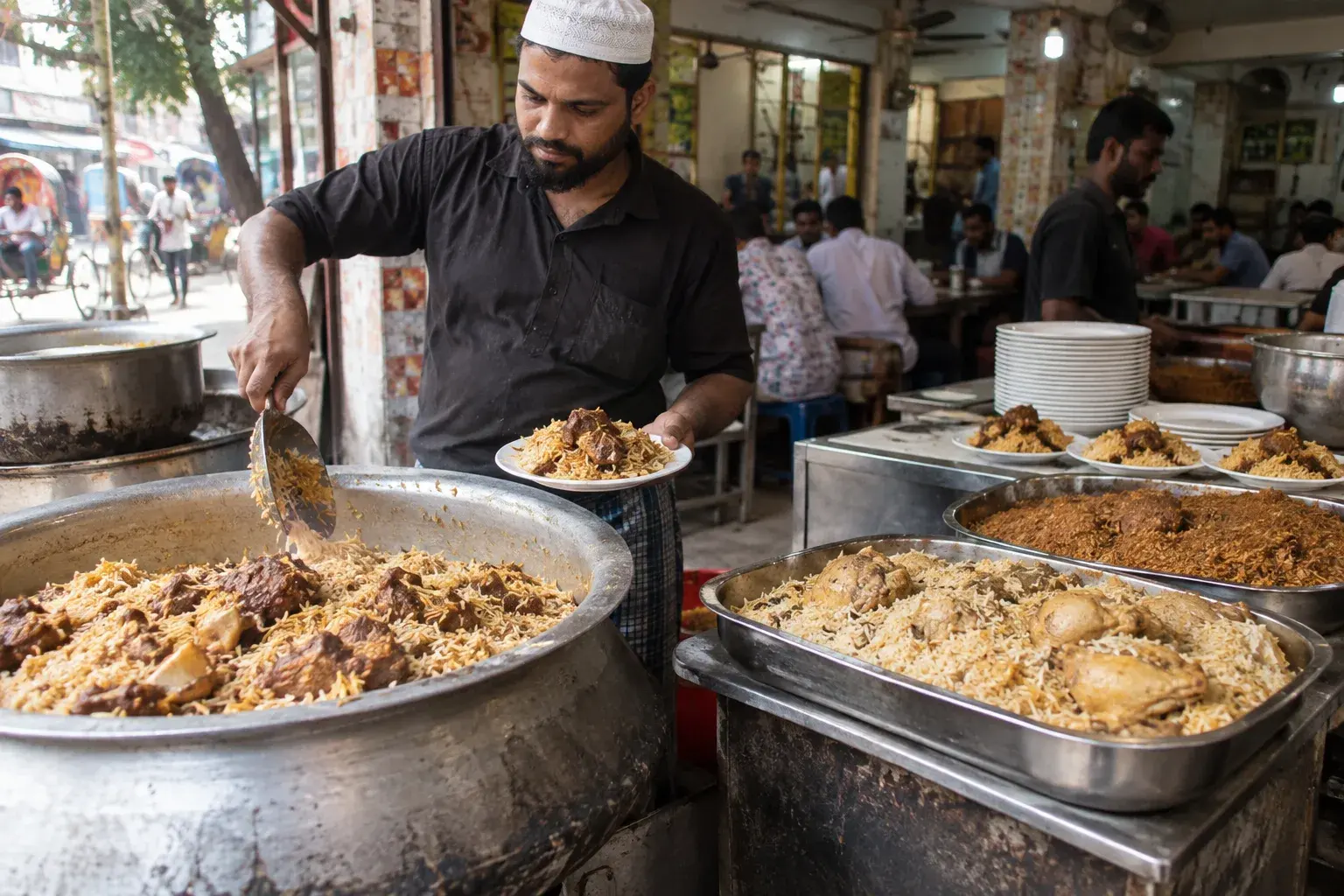
Selling kacchi, tehari and morog polao by the plate. Almost the entire cost is meat - the raw material in one pot of shahi mutton kacchi is Tk 13,265-15,054.
- Capital
- ৳3 lakh – ৳25 lakh
- People
- 3 – 15
- First income
- 30 – 90 days