
Chanachur and snack making
Goods go to shops on credit and the money comes back in 15-30 days, so working capital is the limit, not the machine. Branded chanachur is Tk 300-333 a kg; a small maker has to sell at Tk 200-250.
- Last reviewed: 19 September 2026
- Version 1

Chanachur and snack making
- Starting capital
- ৳1,50,000 – ৳8,00,000 Editorial estimate
- Manpower
- 2 – 12 people
- First sale
- 30 – 130 days Official source
- Break-even
- 8 – 10 months Editorial estimate
- Kind of work
- Workshop · Medium difficulty
About the business
Making chanachur is not the hard part. Getting paid for it is. The goods go to the shop and the shopkeeper pays after they sell - and those fifteen to thirty days in between are the real problem in this trade. The limit is cash in hand, not the machine. The market prices show where a small maker has to stand: Ruchi and Bombay Sweets sell a 500 g pack at Tk 150, which is Tk 300 a kg, and a 300 g pack at Tk 100, which is Tk 333 a kg. Smaller brands have to come down - Aafi at Tk 60 for 300 g is Tk 200 a kg and Arku at Tk 75 is Tk 250 a kg. Inputs: gram Tk 100-110 a kg, loose palm oil Tk 166-172 a litre, loose soybean oil Tk 186-195, potato Tk 25-30, dried chilli Tk 320-380, turmeric Tk 320-350, salt Tk 40-42. The legal side catches most people out. Chanachur is on BSTI's list of 315 products under mandatory certification (item 55, BDS 1564:2016), so it cannot be sold in a pack without a CM licence. The application fee is Tk 1,000 and renewal Tk 500, and the licence takes 19 to 94 working days. Worse, a separate licence is needed for every flavour and every pack size: one entrepreneur who wanted three kinds of chanachur in four sizes was told to file twelve separate applications. On top of that an annual marking fee is charged on sales, with 15 percent VAT added. Food Safety Authority registration is also required, and there is no leniency on oil and colour: on 15 January 2026 two chanachur factories in Bogura were each fined one lakh taka for frying in burnt oil and using banned dyes.
Unit economics
| Item | Range | Evidence | Suggest a correction |
|---|---|---|---|
| Monthly working capital | ৳80,000 – ৳4,00,000 | Editorial estimate | |
| Selling price | ৳200 – ৳333 / kg | Market quote | |
| Variable cost | ৳130 – ৳165 / kg | Editorial estimate | |
| Gross margin | 35% – 50% | Editorial estimate | |
| Time to first revenue | 30 – 130 days | Official source | |
| Break-even time | 8 – 10 months | Editorial estimate | |
| Cash cycle | 15 – 30 days | Editorial estimate | |
| Waste / loss | 3% – 8% | Editorial estimate | |
| Daily capacity | 25 – 120 | Editorial estimate |
What you need to start
- Frying kadai or deep fryer (a small commercial fryer is Tk 1,583-9,480), a sev or noodle press, mixing drums, scales and a hand impulse sealer (Tk 1,498-2,263). Prices for sev and jhuri machines could not be verified.Equipment
- Gram or besan (gram Tk 100-110/kg; packet besan retails at Tk 85 for 500 g), frying oil (loose palm Tk 166-172/litre, loose soybean Tk 186-195), potato Tk 25-30, dried chilli Tk 320-380, turmeric Tk 320-350, coriander Tk 200-250, salt Tk 40-42, peanuts, plus packaging and labels.Starting stock
- Trade licence from the city corporation or municipality: form Tk 10, book Tk 50, standard tax Tk 30, stamp Tk 150-300, licence fee Tk 100-60,000, plus VAT and signboard fee. Issued in 3-5 working days, and a current one is mandatory for the BSTI application.Licence
- A TIN certificate and trademark registration, both required as attested copies with the BSTI CM licence application. A premises licence is required for food products, and environmental clearance where applicable.Licence
- BSTI CM licence. Chanachur is item 55 on the list of 315 mandatory-certification products, standard BDS 1564:2016 (1st Rev.). Application fee Tk 1,000 new / Tk 500 renewal, 19-94 working days, valid three years. An annual marking fee is charged on production or sales, plus 15 percent VAT. Issued from the Dhaka head office or the five divisional regional offices.Licence
- Food safety registration from the Bangladesh Food Safety Authority: Tk 1,000 new, Tk 500 renewal, valid three years. The Food Safety (Registration and Licensing) Regulations 2026 make it compulsory for packaged-food producers, with establishment licensing at Tk 1,000-5,000.Licence
- Wholesale suppliers of gram and oil, a spice arat, and a press for packaging and labels. Changing a pack size needs a new BSTI licence, so fix sizes before printing.Supplier
- A separate factory space with distinct frying, cooling, packing and storage areas. BSTI's inspection will not pass a licence unless hygiene and the environment match the Bangladesh standard.Workspace
How the work is done
- 1Decide first how many kinds and how many pack sizes you will sell. BSTI licences each type and each pack size separately, so a long list makes the cost jump.
- 2Take the trade licence from the city corporation or municipality and have the product correctly named on it, because BSTI will ask for it.
- 3Get a TIN certificate and trademark registration. Attested copies of both are required with the BSTI CM licence application.
- 4Register with the Food Safety Authority: Tk 1,000 new, Tk 500 renewal, valid three years. It is compulsory for a packaged-food producer.
- 5Set the factory up so its hygiene and environment match the Bangladesh standard - a BSTI officer inspects on site and takes samples.
- 6Apply for the CM licence: Tk 1,000 new or Tk 500 renewal, with a process flow diagram and a compliant label. Testing fees run up to Tk 30,000 depending on the product.
- 7Keep a written record of the frying oil. Reusing the same oil brings fines - two Bogura factories were fined one lakh taka each for it in January 2026.
- 8Use only approved colours and ingredients. Banned dyes bring a direct mobile-court fine under section 39 of the Safe Food Act 2013.
- 9Build the dealer line shop by shop among grocers and tea stalls. Keep the first consignment small and write down how many days each shop takes to pay.
- 10Stop the next consignment when the money has not come in. Once the outstanding gets large that shop never settles in full, and you are left with nothing to buy raw material with.
- 11Buy oil and gram ahead of Ramadan and winter, when demand rises and input prices rise with it.
Seasons
- JanNormal
- FebHigh
- MarHigh
- AprNormal
- MayNormal
- JunNormal
- JulNormal
- AugNormal
- SepNormal
- OctNormal
- NovHigh
- DecHigh
Where it works well
- Strong fitBogura · The food processing centre of the north, with chanachur factories at Bandighi and Erulia - and regular Food Safety Authority drives.
- Strong fitChattogram · A BSTI divisional office is here, and the port keeps wholesale oil and spice prices competitive.
- Strong fitDhaka · The biggest market, and BSTI's head office is here, so licensing and sample testing move faster.
- Strong fitNarayanganj · Next to Dhaka, dense in small food factories, with easy delivery into the Dhaka market.
- PossibleBarishal · A BSTI regional office, with easy river distribution across the south.
- PossibleCumilla · The Dhaka-Chattogram highway makes distribution easy, with strong demand from highway shops and hawkers.
- PossibleGazipur · A large market of factory workers, with steady sales through canteens and gate shops.
- PossibleKhulna · A divisional market with a BSTI regional office, so licensing does not mean a trip to Dhaka.
- PossibleRajshahi · A BSTI regional office, with good local supply of pulses and gram.
- PossibleSylhet · A BSTI regional office, plus a high density of tea stalls, which are chanachur's main retail outlet.
Risks and cautions
- HighLate payment: Goods go on credit and the money comes back late. Grocers and tea stalls take stock on the understanding that they pay after selling, usually in 15 to 30 days. Supply ten shops and your money sits on their shelves for that whole time, while the gram and oil for the next batch must be bought today. Once the outstanding grows you have to change shops and the old money is rarely recovered. (The 15-30 day figure is what the trade says and could not be verified from a document.)
- HighCompliance: The BSTI licence is separate for every flavour and every pack size. Yakub Hossain of Mim Food Products said he was told to file twelve separate applications to market three kinds of chanachur in four sizes, each with its own application and testing fee, with testing running up to Tk 30,000 per product. Licensing a whole range is effectively impossible for a small maker, so many sell without a licence - and lose everything when caught.
- HighCompliance: There is no leniency on oil and colour. On 15 January 2026 a Food Safety Authority mobile court in Bogura fined two factories - Mahi Chanachur in Bandighi and Ruchi Food in Erulia - one lakh taka each for frying in oil used for two to three months, using unapproved and banned dyes, and unhygienic conditions, under section 39 of the Safe Food Act 2013.
- HighWorking capital: The annual marking fee is charged on sales, not profit. BSTI's service profile says 0.10 percent of declared production a year, a minimum of Tk 1,875 and a maximum of Tk 15,00,000; press reporting says 0.07 percent with a minimum of Tk 1,500 and a maximum of Tk 30 lakh, or 0.10 percent with a minimum of Tk 3,500 and a maximum of Tk 35 lakh, plus 15 percent VAT. The two do not agree. Either way it is payable even in a loss-making year.
- MediumDemand: The big brands sit above you and set the ceiling. Ruchi and Bombay Sweets hold Tk 300-333 a kg with national distribution, so a new brand has to come down to Tk 200-250 and carry the BSTI fees, packaging and shop commission out of that thinner price. Shopkeepers give the good shelf position to the big brands.
- MediumSpoilage: Fried snacks go off through the oil. A badly sealed pack, or one that sits too long in the shop, turns rancid and comes back. Loose soybean oil is up 11.4 percent in a year, so what is wasted costs more than it used to.
Sources
সিএম লাইসেন্স প্রসেস ফ্লো (বাধ্যতামূলক) — সেবা প্রোফাইল, ফি ও সময়
Collected: 16 Sept 2026Supports: Starting capital, Time to first revenue · বাংলাদেশ
সিটি কর্পোরেশন থেকে ট্রেড লাইসেন্স প্রাপ্তির ধাপ সমূহ
Collected: 16 Sept 2026Supports: Starting capital, Time to first revenue · বাংলাদেশ
- Collected: 15 Sept 2026
Supports: Monthly working capital · ঢাকা মহানগর — সিপাহীবাগ, মিরপুর-৬, মোহাম্মদপুর টাউন হল, নিউমার্কেট, রামপুরা, মহাখালী বাজার
All food businesses now need safety registration
Collected: 22 Jul 2026Supports: Starting capital · বাংলাদেশ
৩১৫ বাধ্যতামূলক পণ্যের তালিকা — চানাচুর ক্রমিক ৫৫, বিডিএস ১৫৬৪:২০১৬ (১ম সংশোধিত)
Collected: 15 Apr 2026Supports: Time to first revenue · বাংলাদেশ
What changed
No corrections have been published yet.
Questions and answers
No questions yet. Be the first to ask.
Stories about this business
Started on 120 taka; 42 years later, land, a house and two master's degrees
Two or three taka a day saved out of a 15-taka labourer's wage made 120 taka: 30 for a tin, 70 for a saucepan and 20 for stock. Forty-two years on it has bought three shotok of land in town, a house and two master's degrees.
- Capital
- ৳120
- Reasons
- Working capital, Good location
Similar businesses
 Food processing
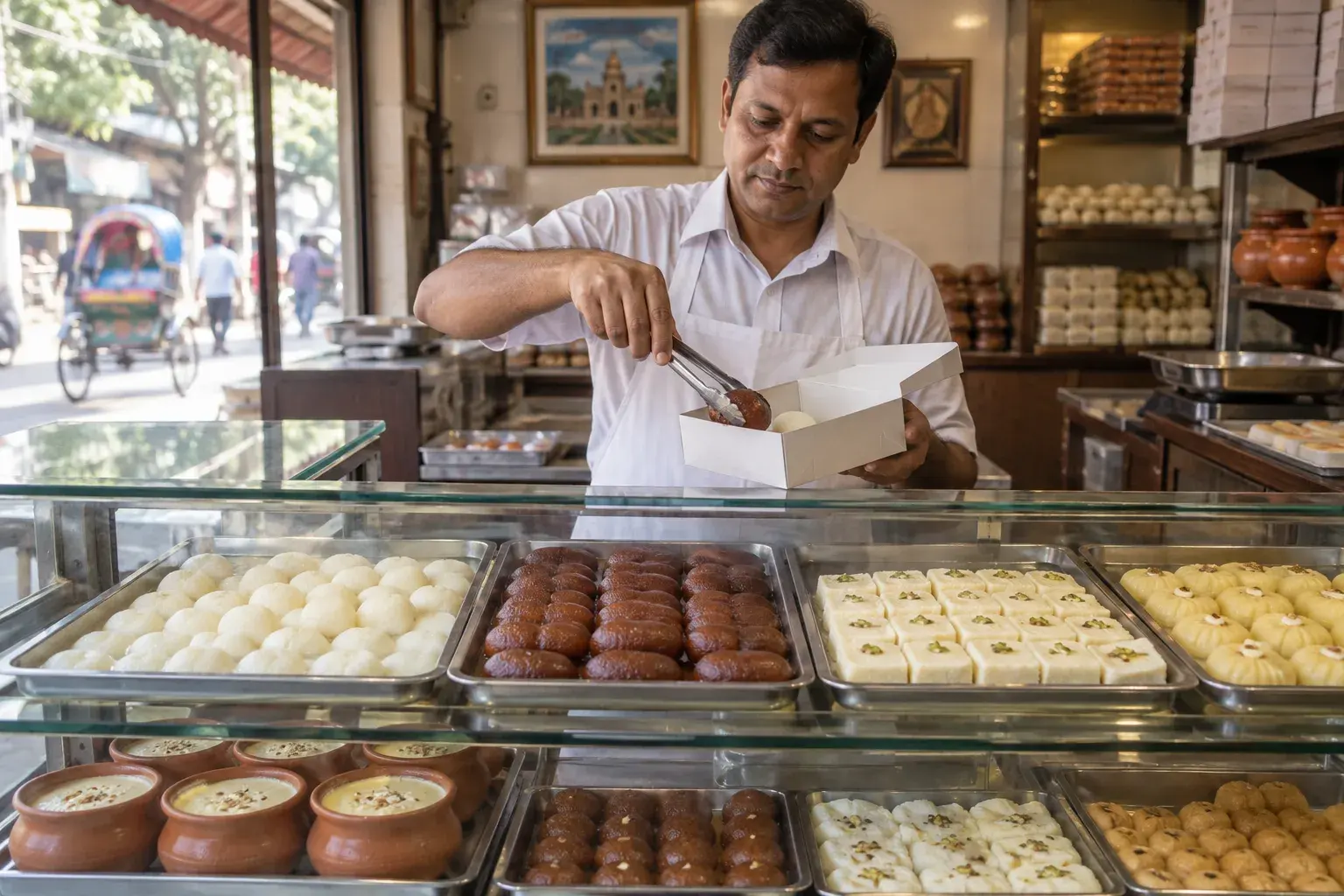
Sweet shop
Making sweets from chhana and selling them over a counter. Sweets run Tk 380-600 a kg and doi Tk 210-300 a litre, but milk is Tk 120-140 a litre, so the margin is the milk price.
- Capital
- ৳1.5 lakh – ৳9 lakh
- People
- 2 – 8
- First income
- 14 – 45 days
 Food processing
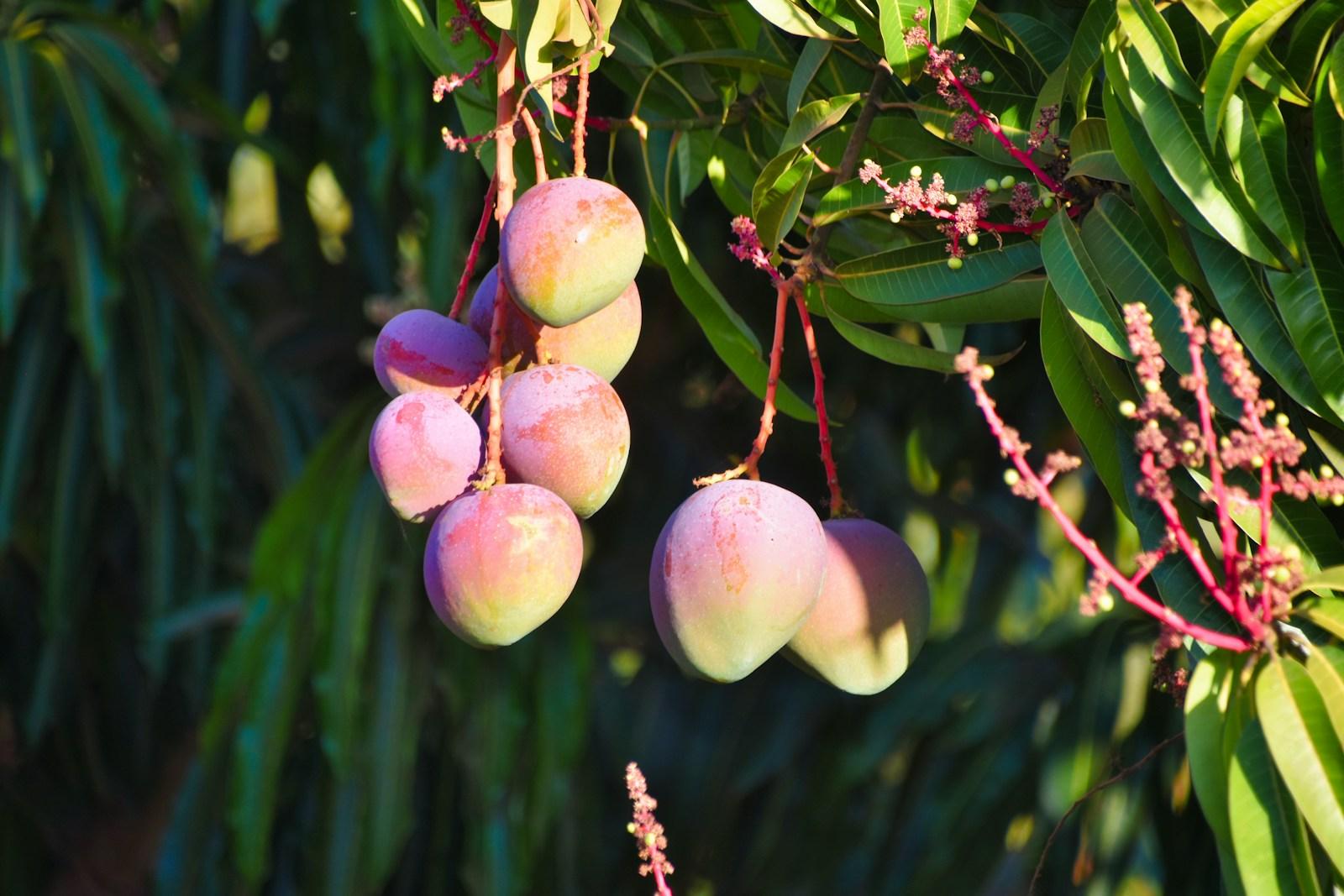
Dried mango production
Buy raw mango at ৳15–40/kg in season, dry it and sell all year. 8–10 kg of fresh mango makes 1 kg dried.
- Capital
- ৳1.5 lakh – ৳4 lakh
- People
- 2 – 4
- First income
- 30 – 60 days
 Food processing
Honey processing and bottling
Buying raw honey from keepers, straining and bottling it under your own label. Bottled honey runs Tk 800-2,100 a kg, but a BSTI CM licence is compulsory and the sample test alone is Tk 7,500.
- Capital
- ৳1.5 lakh – ৳8 lakh
- People
- 2 – 6
- First income
- 45 – 150 days
 Food processing
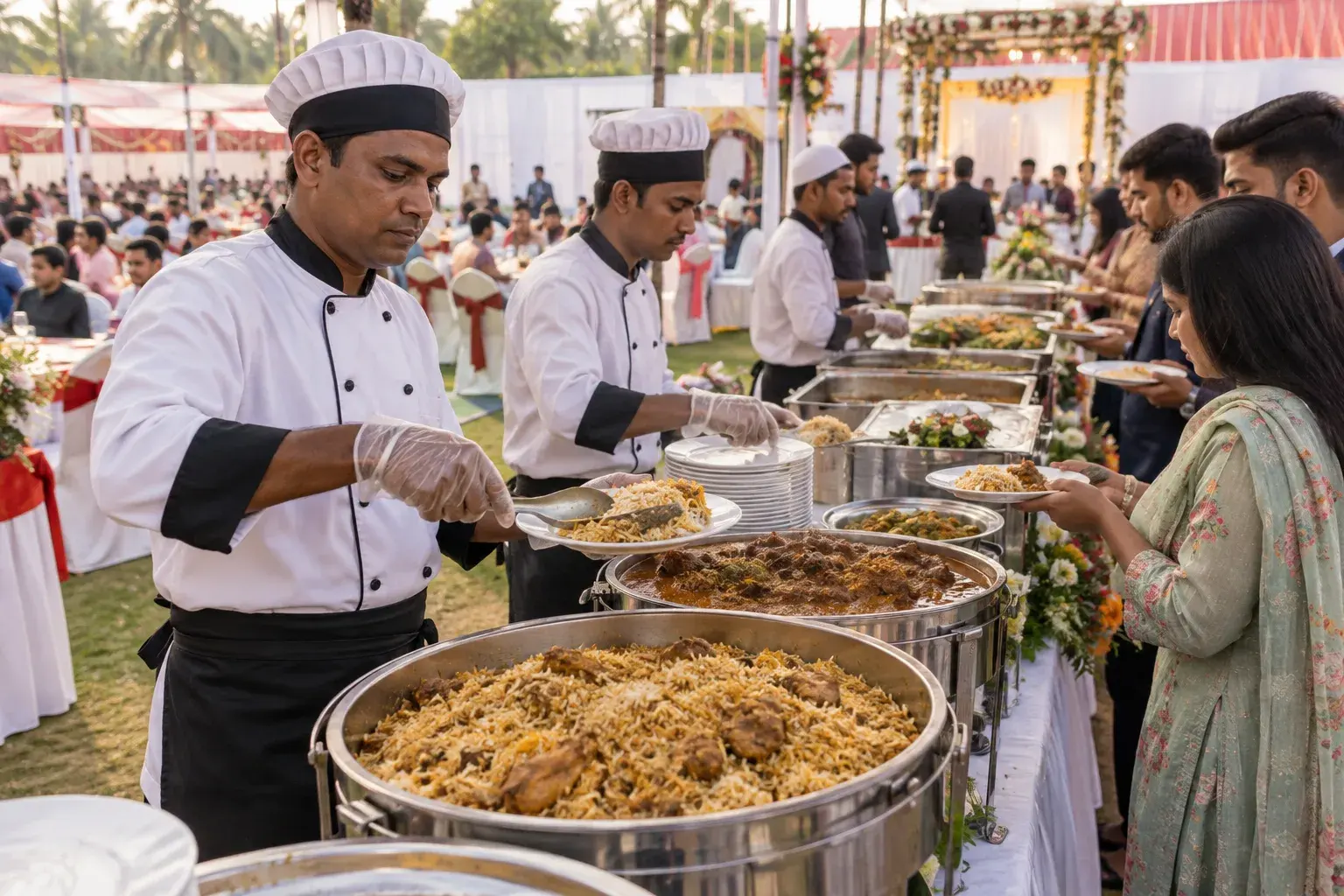
Event catering
Cooking and serving for three to five hundred guests at events. The booking advance comes first, but catering services carry 15 percent VAT, not the restaurant's 5 percent.
- Capital
- ৳1.5 lakh – ৳8 lakh
- People
- 5 – 25
- First income
- 14 – 30 days