
Dry fish (shutki) processing
Buying fresh fish, sun-drying it for three to four days and selling shutki. December 2025 prices ran from poa at Tk 500-800 to rupchanda at Tk 1,800-2,500 a kilo; drying without insecticide is the condition for export.
- Last reviewed: 19 September 2026
- Version 1

Dry fish (shutki) processing
- Starting capital
- ৳50,000 – ৳5,00,000 Editorial estimate
- Manpower
- 3 – 30 people
- First sale
- 4 – 30 days Editorial estimate
- Break-even
- 2 – 6 months Editorial estimate
- Kind of work
- Workshop · Medium difficulty
About the business
Buying fresh fish from the sea or the haor, drying it in the sun and selling it as shutki. At Nazirartek in Cox's Bazar the fish lies on bamboo racks on the sand for three to four days and that is the whole method: sun, wind and hand work. That single yard covers about a hundred acres, turns out 200 tonnes a day, employs around twenty thousand workers, most of them women, and involves some two thousand traders. The season runs November to July, with the real production in the dry months from November to April. Prices swing wildly by species: in December 2025 poa was Tk 500-800 a kilo, loitta Tk 1,000-1,400, churi Tk 800-1,800, koral Tk 1,500-1,900 and rupchanda Tk 1,800-2,500. There is foreign demand too, with poa shutki going to Hong Kong, Malaysia and Indonesia. But one problem clings to this trade: to stop flies laying and maggots forming, many spray insecticide on the fresh fish. Section 23 of the Food Safety Act, 2013 flatly prohibits using pesticides including DDT in food, and an offence under it is cognizable and non-bailable. The yard that can dry without insecticide is the yard that will hold an export market.
Unit economics
| Item | Range | Evidence | Suggest a correction |
|---|---|---|---|
| Monthly working capital | ৳90,000 – ৳20,00,000 | Editorial estimate | |
| Selling price | ৳500 – ৳2,500 / kg | Market quote | |
| Variable cost | ৳400 – ৳1,700 / kg | Editorial estimate | |
| Gross margin | 20% – 32% | Editorial estimate | |
| Time to first revenue | 4 – 30 days | Editorial estimate | |
| Break-even time | 2 – 6 months | Editorial estimate | |
| Cash cycle | 7 – 40 days | Editorial estimate | |
| Waste / loss | 5% – 15% | Editorial estimate | |
| Daily capacity | 100 – 4,000 | Editorial estimate |
What you need to start
- Bamboo racks, water and tanks for washing, salt, netting to cover, scales and sacks. Greenhouse and mechanical dryers now exist too: the Ministry of Fisheries and Livestock project for Cox's Bazar Sadar provided for 350 greenhouse dryers and 30 mechanical dryers.Equipment
- Cash to buy fresh fish. A lot lands at once on the day the trawlers come in and it must be paid for on the spot - this is the real pressure in the business.Starting stock
- Bangladesh Food Safety Authority registration as a food processor: Tk 1,000 new, Tk 500 renewal, valid three years, under the Food Safety (Registration and Licensing) Regulations, 2026.Licence
- Trade licence from the union parishad, municipality or city corporation: form Tk 10, licence book Tk 50, standard tax Tk 30, stamp Tk 150-300, licence fee Tk 100-60,000 by trade type.Licence
- Knowing how long each fish takes to dry and how much salt it needs, and reading the sky to decide whether to lay fish out at all that day.Skill
- A direct line to fishermen or the fish arot, a salt supplier, and a crew of seasonal workers.Supplier
- Open sand or ground that gets sun and wind, plus a covered store for the dried stock. The Nazirartek yard spans about a hundred acres and small plots within it are available on rent.Workspace
How the work is done
- 1Fix the yard: open sand or raised ground that gets sun and wind. In shade the fish will not dry, it rots.
- 2Decide which fish you will dry. Poa is cheap but exports; rupchanda and koral fetch more but the fresh fish costs more too.
- 3Arrange a steady supply of fresh fish from fishermen or the fish arot. Deep-sea fish arrives in a rush when the trawlers land, and you need cash in hand that day.
- 4Build bamboo racks raised off the ground so sand and dirt stay off and air moves underneath.
- 5Take the trade licence from the union parishad or municipality, and register with the Bangladesh Food Safety Authority as a food processor.
- 6Wash the fish, salt it, lay it on the racks and dry for three to four days, turning it partway or one side stays damp.
- 7Do not spray insecticide to keep insects off. Cover with netting instead, salt properly, and bag the dried fish quickly.
- 8Weigh and bag the dried fish separately by species. Mixed together, the whole lot sells at the cheap fish's price.
- 9Settle the rate with wholesalers in the Chattogram and Dhaka arots, and put the credit terms in writing.
- 10If you want to export, go to the Department of Fisheries and find out what approvals and tests are needed - this could not be verified here, so ask at the office yourself.
- 11Wind the season down before the rains. Without sun in August and September nothing dries, and wet fish is a total loss.
Seasons
- JanHigh
- FebHigh
- MarHigh
- AprHigh
- MayNormal
- JunNormal
- JulNormal
- AugLow
- SepLow
- OctNormal
- NovHigh
- DecHigh
Where it works well
- Strong fitChattogram · The nearest big wholesale market and the port; most of Cox's Bazar's shutki moves through here to the rest of the country and abroad.
- Strong fitCox's Bazar · The country's largest shutki centre, Nazirartek, is here: about a hundred acres, 200 tonnes a day, over fifty arots and some twenty thousand workers, with three hundred more yards at Nuniarchhara, Khurushkul, Chaufaldandi, Sonadia, Maheshkhali, Ukhiya, Kutubdia, Teknaf and St Martin's.
- PossibleBarguna · Has sea-facing fish landing centres and comparatively low labour costs.
- PossibleBhola · A big landing point for hilsa and marine fish at the Meghna mouth, so fresh fish is cheap and close.
- PossibleDhaka · The largest consumer market and wholesale trade, though fish cannot be dried here, so the work is on the selling side.
- PossibleKishoreganj · Haor country, with small fish in quantity once the flood water drops.
- PossibleNetrokona · Both haor fish and low-cost labour are close at hand.
- PossiblePatuakhali · A coastal district with open chars and sand flats available in the dry season.
- PossibleSunamganj · A long-standing haor drying area where small fish come up in quantity in the dry season. Separate production or price figures for this district could not be verified here.
- PossibleSylhet · Demand for shutki is high here and it travels abroad through expatriate families.
Risks and cautions
- HighCompliance: Spraying insecticide on fresh fish to keep flies and maggots off is an old and acknowledged problem in this trade. Section 23 of the Food Safety Act, 2013 flatly prohibits using pesticides such as DDT in food, or storing and marketing such food. Section 60 makes the offence cognizable and non-bailable, and section 78(6) bars settling it with an administrative fine - the case goes to the Food Court. An export consignment that fails testing comes straight back.
- HighWorking capital: Fresh fish is bought for cash while the shutki money comes four days later, or later still if the arot takes it on credit. A lot lands at once when the trawlers come in, and without cash that day you let cheap fish go and the whole season's earnings shrink.
- HighSpoilage: The whole job depends on sun. Unseasonal rain or a run of cloudy days inside those three or four days rots the half-dried fish on the racks and takes that consignment's entire value. Even after drying, insects in the store are a loss - finding a way to keep them off without insecticide is the biggest technical problem in this business.
- MediumLate payment: Stock sent to the Chattogram and Dhaka arots is not paid for at once; it goes on credit. A large outstanding balance mid-season stops you buying fresh fish for the next batch.
- MediumDemand: Exports are still small. Poa shutki to Hong Kong, Malaysia and Indonesia earned Tk 1.45 crore last year, and the Tk 400 crore export figure is traders' hope, not a settled number. The real market is domestic, and domestic prices swing a lot between the start and the end of the season.
Sources
সিটি কর্পোরেশন থেকে ট্রেড লাইসেন্স প্রাপ্তির ধাপ সমূহ
Collected: 16 Sept 2026Supports: Starting capital · বাংলাদেশ
All food businesses now need safety registration
Collected: 22 Jul 2026Supports: Starting capital · বাংলাদেশ
- Collected: 19 Apr 2026
Supports: Starting capital · কক্সবাজার সদর
What changed
No corrections have been published yet.
Questions and answers
No questions yet. Be the first to ask.
Stories about this business
500 tonnes last year, and not even 200 this season
This Nazirartek drying yard produced about 500 metric tons last year and does not expect 200 this season. With no fish on the coast, about 600 of roughly 700 mahals have stopped production altogether.
- Reasons
- Supplier problem, Dependency
Costing 800-1,000 taka a kg to make, selling at 1,200-1,600
Balachao made at home since 2021 costs 800-1,000 taka a kg to produce and sells at 1,200-1,600. Output is 15-20 kg a day, and monthly sales have risen from an average of 3 lakh taka last year to 6-7 lakh.
- Reasons
- Weak demand, Supplier problem
Similar businesses
 Food processing
Tulshimala aromatic rice
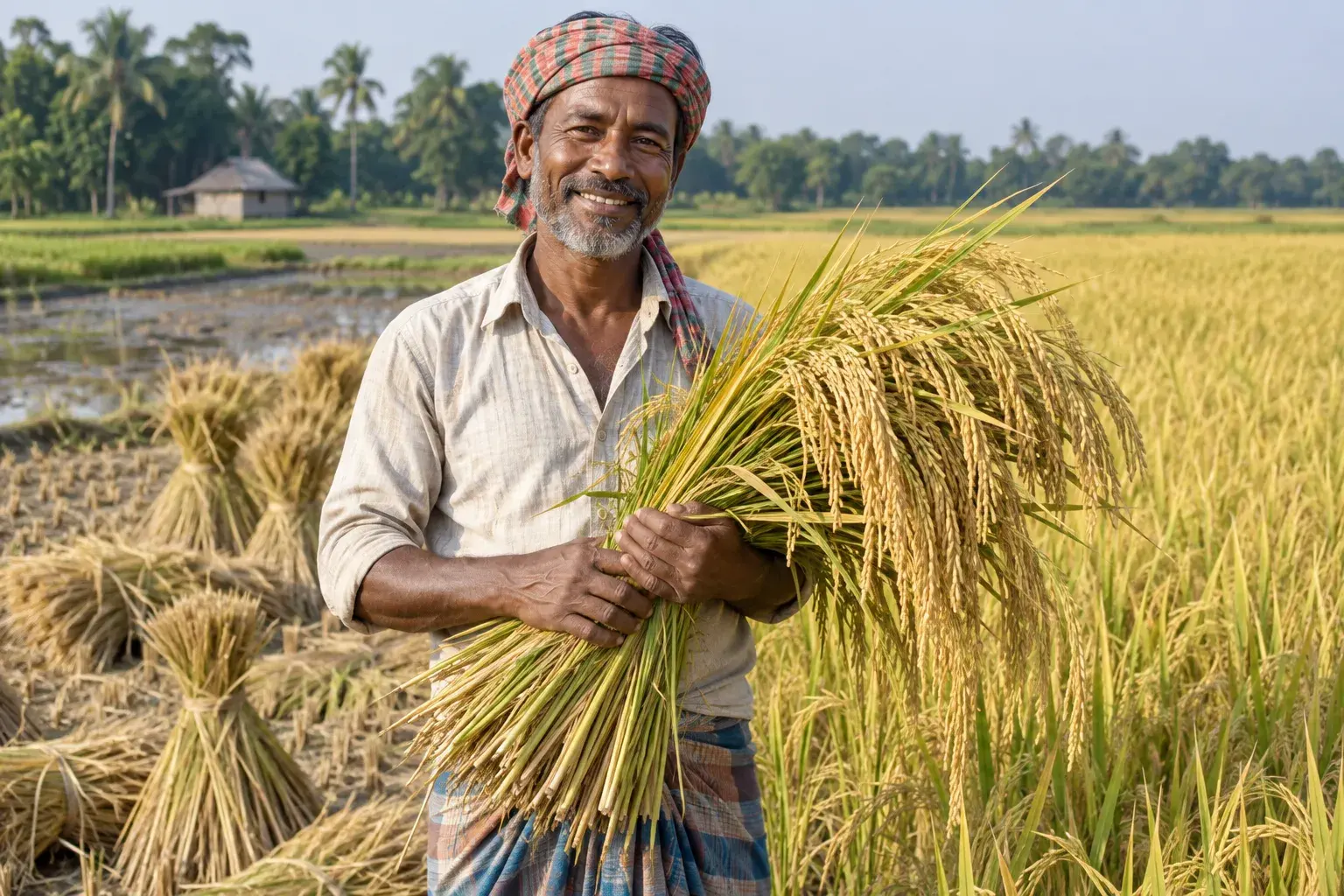
Growing and milling Sherpur's GI-registered aromatic paddy. Paddy is Tk 2,200-2,400 a maund and the rice sells online at Tk 145-150 a kilo - no higher than aromatic rice without a GI.
- Capital
- ৳50k – ৳3 lakh
- People
- 1 – 6
- First income
- 120 – 180 days
 Food processing
Solar and rack-dried shutki
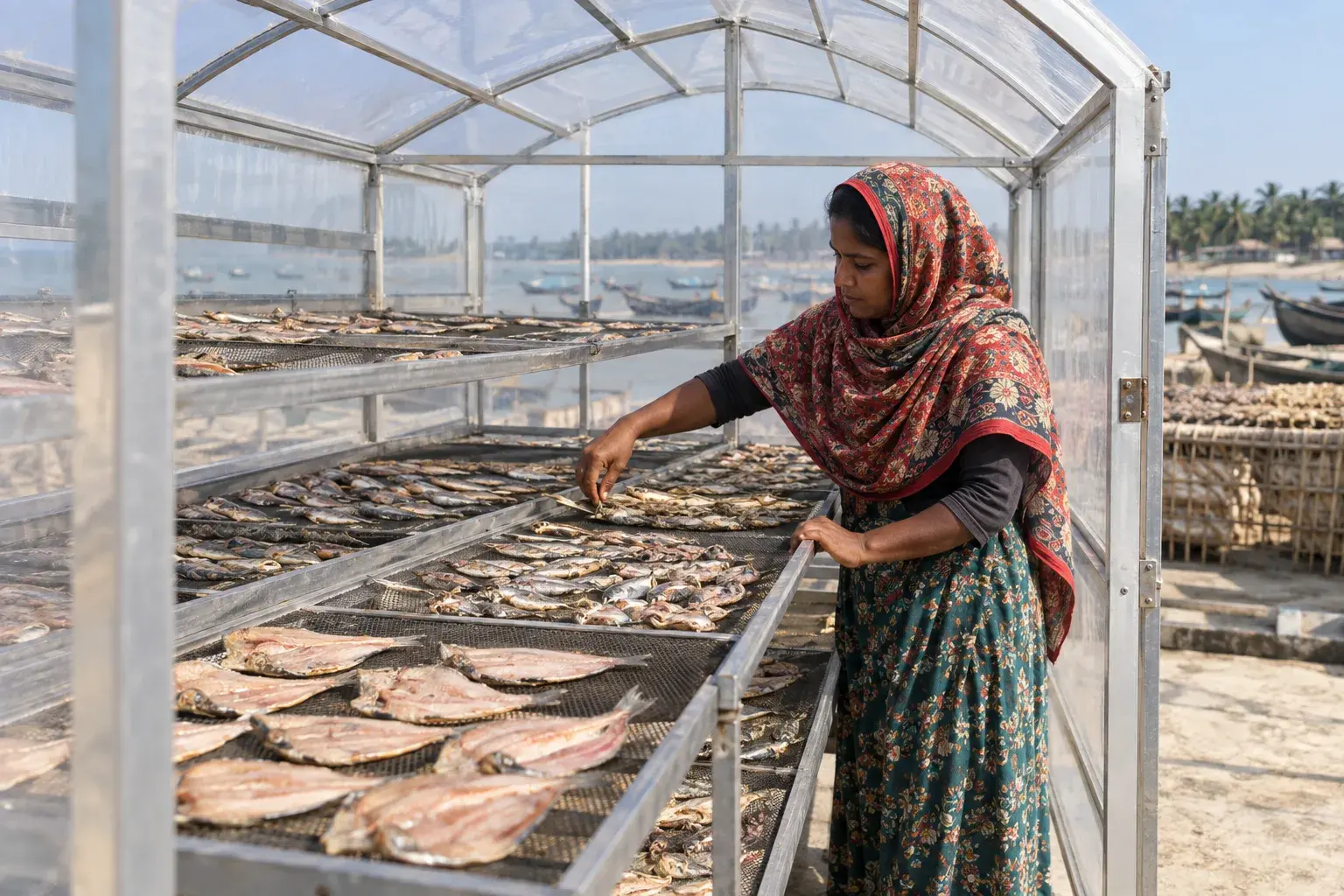
Drying fish on raised racks or inside a solar dryer instead of on the ground, so no insecticide is needed. At Asadganj on 3 June 2026 good churi shutki fetched Tk 2,000-2,500 and loitta Tk 600-1,500 a kg.
- Capital
- ৳50k – ৳6 lakh
- People
- 2 – 20
- First income
- 20 – 60 days
 Food processing
Paneer and chhana making
Milk split into chhana, pressed into paneer. 8-10 kg of milk makes 1 kg of paneer, which sells at Tk 900-1,200 a kg - the whole business is the gap between the two prices.
- Capital
- ৳50k – ৳20 lakh
- People
- 1 – 10
- First income
- 7 – 135 days
 Food processing
Corporate meal delivery
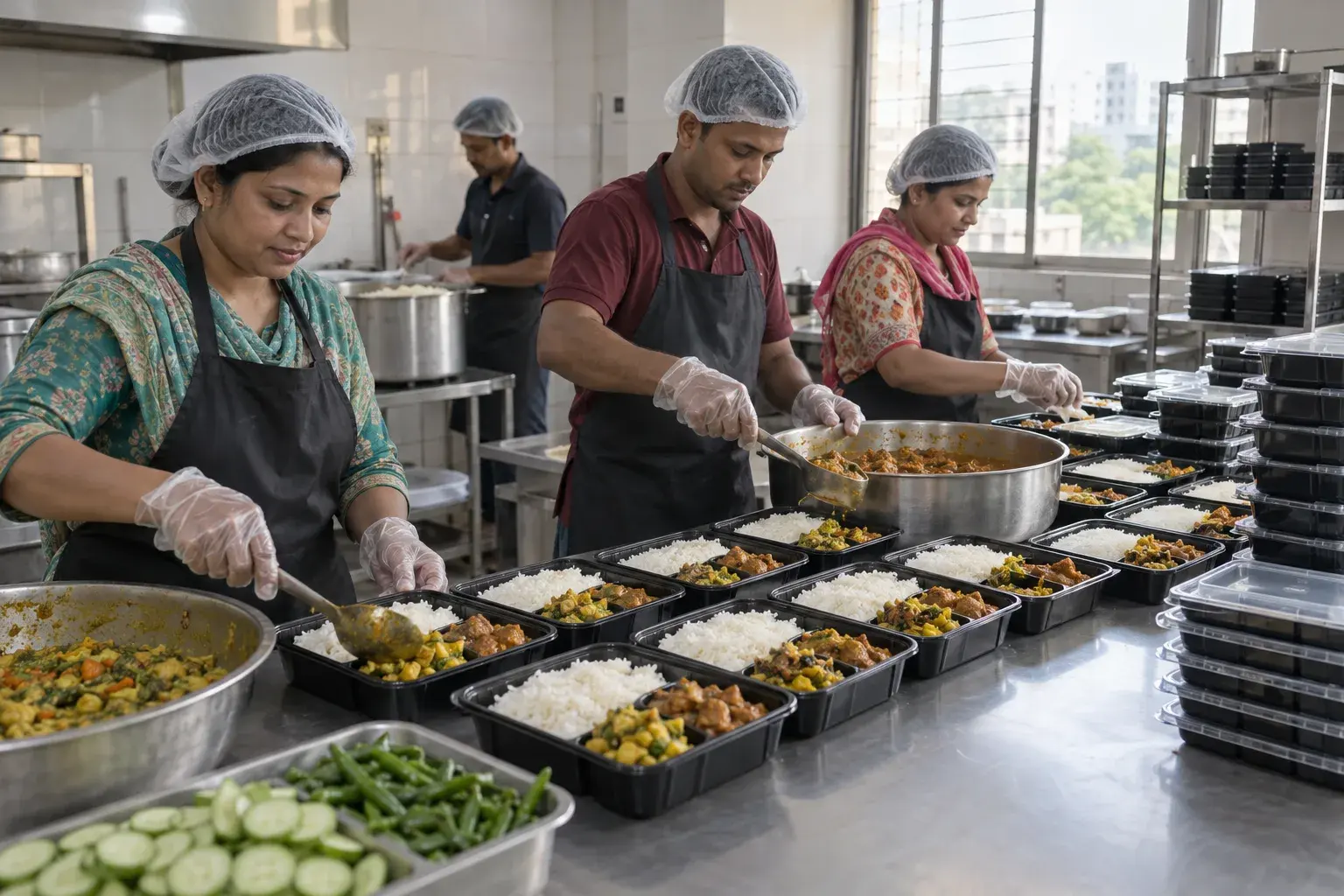
Daily cooked meals delivered to offices on contract. Dhaka breakfast sells from Tk 40 and lunch packages from Tk 85 to Tk 150, but the office pays at month end.
- Capital
- ৳45k – ৳1.8 lakh
- People
- 1 – 4
- First income
- 15 – 45 days