
Grocery shop
The neighbourhood everyday-goods shop. A few taka a kilo, so income depends on volume - and the shop usually dies when customer credit locks up the cash.
- Last reviewed: 19 September 2026
- Version 1
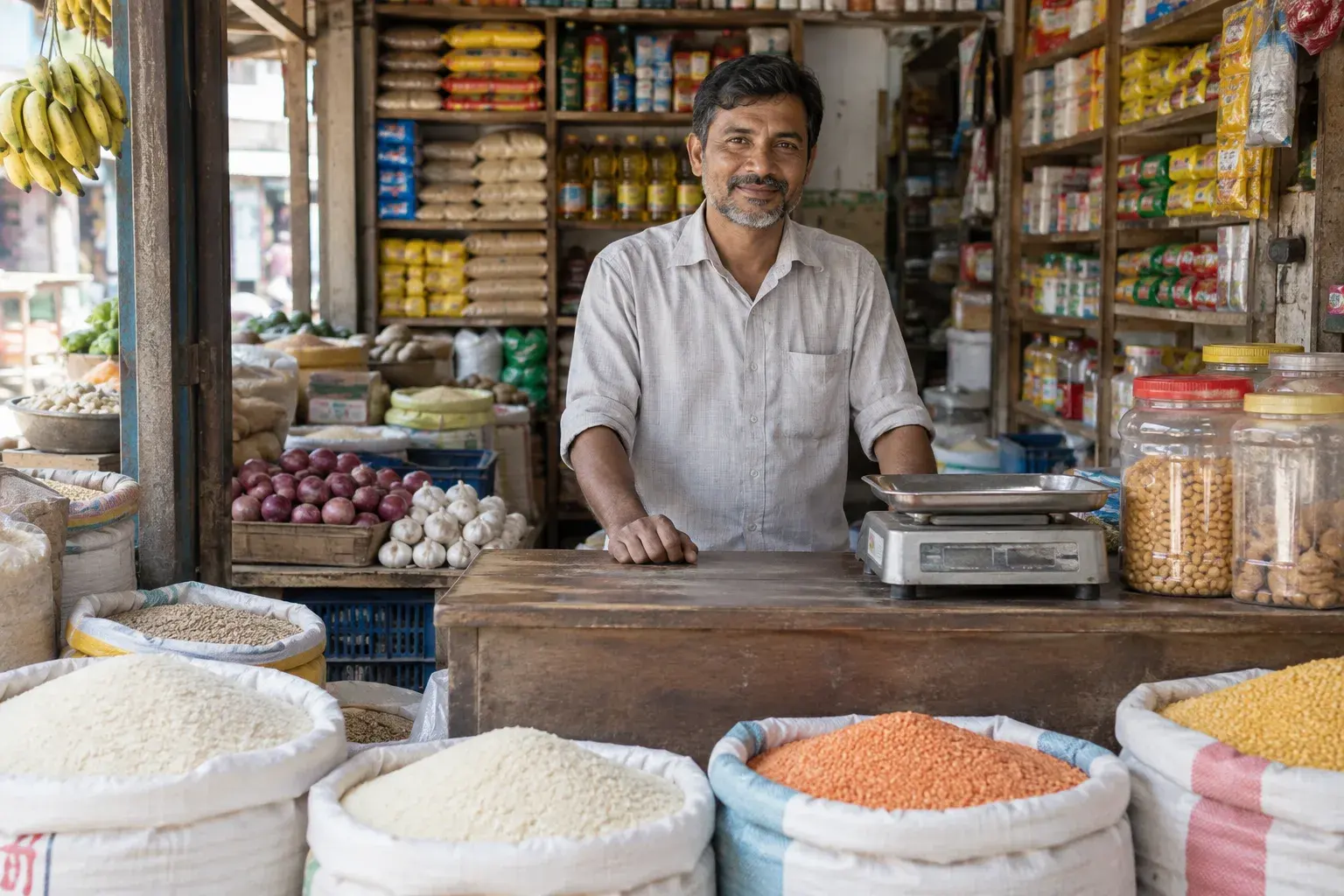
Grocery shop
- Starting capital
- ৳80,000 – ৳5,00,000 Editorial estimate
- Manpower
- 1 – 3 people
- First sale
- 10 – 30 days Editorial estimate
- Break-even
- 6 – 10 months Editorial estimate
- Kind of work
- Shop · Easy
About the business
A neighbourhood shop selling rice, lentils, oil, sugar, salt, spices and everyday household goods. More people in Bangladesh start with this business than any other, and fewer know what it really earns. On 15 September 2026 Dhaka retail was Tk 50-55 a kg for coarse rice, Tk 70-85 for fine rice, Tk 186-195 a litre for loose soybean oil, Tk 90-100 for large-grain masur dal, Tk 110-115 for sugar and Tk 40-42 for packet salt. A mudi shop earns a few taka on a kilo, so the money is in volume, in how many kilos cross the counter in a day. The real game is price movement. Over twelve months loose soybean oil rose 11.4 percent, packet maida 14.3 percent and potato 22.2 percent, while local onion fell 30 percent. A shopkeeper holding sacks bought at the old price gains when prices rise and loses on the very same sacks when they fall. The second game is credit. A neighbourhood shop that refuses credit loses its customers; a shop that gives it gets paid at month end, and some of it never at all. Stock on the shelves and no cash in the drawer is the most common way a mudi shop dies.
Unit economics
| Item | Range | Evidence | Suggest a correction |
|---|---|---|---|
| Monthly working capital | ৳70,000 – ৳4,00,000 | Editorial estimate | |
| Selling price | ৳25 – ৳195 / kg | Official source | |
| Variable cost | ৳24 – ৳995 / kg | Official source | |
| Gross margin | 0% – 12% | Official source | |
| Time to first revenue | 10 – 30 days | Editorial estimate | |
| Break-even time | 6 – 10 months | Editorial estimate | |
| Cash cycle | 0 – 30 days | Editorial estimate | |
| Waste / loss | 1% – 5% | Editorial estimate | |
| Daily capacity | 80 – 400 | Editorial estimate |
What you need to start
- Shelving and a glass showcase, a digital scale or balance, a measuring jug and drum for oil, paper and poly bags, a cash box, and a credit register.Equipment
- Opening stock: rice, dal, oil, sugar, salt, atta and maida, onion, garlic and ginger, spices, soap and shampoo, biscuits and tea. This is where most of the capital goes.Starting stock
- Trade licence from the city corporation, municipality or union parishad: form Tk 10, licence book Tk 50, standard tax Tk 30, non-judicial stamp Tk 150-300, licence fee Tk 100-60,000 by trade type, plus VAT and signboard fee. Issued in 3-5 working days and renewed annually.Licence
- Food business registration with the Bangladesh Food Safety Authority: under the Food Safety (Registration and Licensing) Regulations 2026 registration is Tk 1,000 new and Tk 500 on renewal, valid three years. The regulations do not name retail grocery shops specifically, so check with the district food safety office whether your shop is covered.Licence
- Remembering buying prices, weighing honestly, and judging who can be given credit and how much. Without the last one the shop does not survive.Skill
- A wholesale market or arat, rice and oil dealers, and the company DSRs who deliver packet goods to the counter.Supplier
- A shop within walking distance of homes: a lane mouth, a bazar edge, or beside hostels and worker housing. The floor must be dry and rice sacks must not sit directly on it.Workspace
How the work is done
- 1Look at the location. A mudi shop lives on walking distance: the mouth of a lane, beside a bazar, or next to hostels and worker housing. Count the mudi shops already there first.
- 2Take the trade licence from the city corporation, municipality or union parishad: form Tk 10, book Tk 50, standard tax Tk 30, stamp Tk 150-300, plus the licence fee for your trade type. Issued in 3-5 working days.
- 3Fit out the shop: shelving, a glass showcase, scales or a digital balance, an oil drum, and a raised platform so rice sacks do not sit on a damp floor.
- 4Fix your wholesale market and write the buying price of every item in a register. Without the buying price you will never know which line earns and which loses.
- 5Start with fewer lines but deeper stock: rice, dal, oil, sugar, salt, atta, onion, potato, spices and soap. Most of a neighbourhood's spend is in those few items.
- 6Get on the route of the company DSRs and dealers; they deliver packet goods like biscuits, soap, shampoo, tea and noodles to the counter and will sometimes give credit.
- 7Check the wholesale rate every morning, especially oil, rice, sugar and onion. Those four move most, and that is where the profit or loss is decided.
- 8Keep a separate credit register and total it every week, recording both how much each person owes and for how long. Once that number grows there is no money left to restock.
- 9Once a month strip the shelves and see what has not moved. Anything unsold for three months is money locked up; clear it cheap and put the cash into lines that move.
- 10Stock up in the month before Ramadan: sugar, chhola, dates, dal and oil. The biggest month of the year is that one.
- 11At month end reconcile three numbers: what you bought, what you sold, and how much the credit register grew. If the third keeps growing, the shop can be profitable and still run out of money.
Seasons
- JanNormal
- FebNormal
- MarHigh
- AprHigh
- MayNormal
- JunNormal
- JulNormal
- AugNormal
- SepNormal
- OctNormal
- NovNormal
- DecNormal
Where it works well
- Strong fitChattogram · Port and factory neighbourhoods, with the Khatunganj wholesale market close enough to buy well.
- Strong fitDhaka · The densest concentration of tenants, hostels and informal housing means high daily sales from a small space, but rents are the highest too.
- Strong fitGazipur · Garment worker neighbourhoods buy daily, and the credit book clears on wage day.
- Strong fitNarayanganj · Factories and dense settlement, with wholesale markets close so restocking costs less.
- PossibleBogura · The north's big wholesale centre, so stock is near and transport costs less.
- PossibleCumilla · Highway-side bazars and the purchasing power of remittance families both hold up sales.
- PossibleKhulna · Steady demand from the city and its industrial areas, though ticket sizes are smaller than Dhaka's.
- PossibleMymensingh · A dense student and hostel population: sales rise at the start of the month and credit rises at the end.
- PossibleSylhet · Remittance families have more spending power and the credit risk is comparatively lower.
- Weak fitKurigram · Low purchasing power and heavy pressure for credit; before the harvest the register stays locked up for months.
Risks and cautions
- HighLate payment: Credit is what kills a mudi shop. Refuse it and the customer walks to the next shop; give it and the money comes on pay day, and some of it never. The credit register grows until the shelves are full but there is no cash to buy the next sack. The books show a profit and the drawer is empty.
- HighWorking capital: Price movement is the shopkeeper's gamble. Over the twelve months to 15 September 2026 TCB recorded loose soybean oil up 11.4 percent, packet maida up 14.3 percent and potato up 22.2 percent, while local onion fell 30 percent. A shopkeeper holding onion sacks bought at the old price simply loses on them, and has no choice but to sell.
- MediumDemand: One new mudi shop in the lane splits the sales while the rent and the stock money stay the same. It costs the customer nothing to switch; it is ten steps.
- MediumCompliance: Mobile courts fine shops for short weight, expired goods and not displaying a price list, and run drives on the quality of loose oil and spices. An unrenewed trade licence raises the fine.
- MediumSpoilage: Weevils in rice and dal, rats through the sacks, and stock ruined on a damp monsoon floor. These are small losses individually, but in a business earning a few taka a kilo, a few spoiled sacks take the month's profit.
Sources
সিটি কর্পোরেশন থেকে ট্রেড লাইসেন্স প্রাপ্তির ধাপ সমূহ
Collected: 16 Sept 2026Supports: Starting capital · বাংলাদেশ
- Collected: 15 Sept 2026
Supports: Starting capital, Gross margin, Selling price, Waste / loss · ঢাকা মহানগর — সিপাহীবাগ, মিরপুর-৬, মোহাম্মদপুর টাউন হল, নিউমার্কেট, রামপুরা, মহাখালী বাজার
- Collected: 15 Sept 2026
Supports: Gross margin, Variable cost · ঢাকা মহানগর
All food businesses now need safety registration
Collected: 22 Jul 2026Supports: Starting capital · বাংলাদেশ
What changed
No corrections have been published yet.
Questions and answers
No questions yet. Be the first to ask.
Stories about this business
Capital stuck in the credit book, and nothing left to restock with
Goods go out on credit from this school-side grocery but the money does not come back, leaving the owner unable to restock.
- Reasons
- Late payment, Good location
A 4 a.m. fire takes the shop, and the owner puts the loss at 15-20 lakh taka
A short circuit burned out a grocery shop in Raiganj, Sirajganj, with everything in it; the owner put the loss at 15-20 lakh taka.
- Reasons
- Other, Working capital
A 15-year-old shopkeeper, 4,000-5,000 a month, his own schooling paid for
A village grocery run by a boy who cannot walk brings 4,000-5,000 taka a month, covering his school costs and part of the household.
- Reasons
- Family or health
Similar businesses
 Retail & wholesale
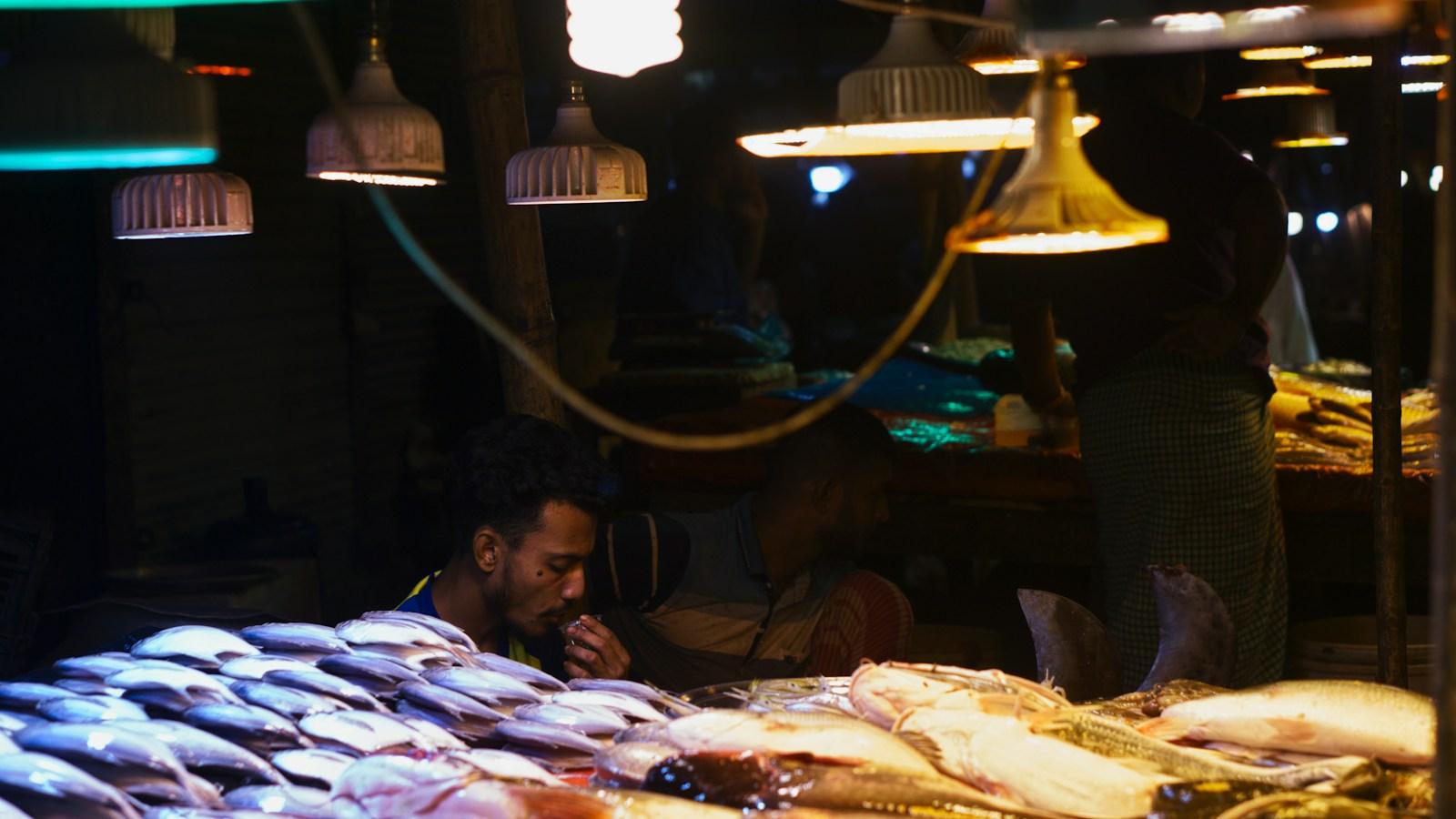
Fresh fish from landing sites to town
Bought at dawn from the landing site, iced and in town shops before noon.
- Capital
- ৳80k – ৳1.5 lakh
- People
- 2 – 3
- First income
- 3 – 7 days
 Retail & wholesale
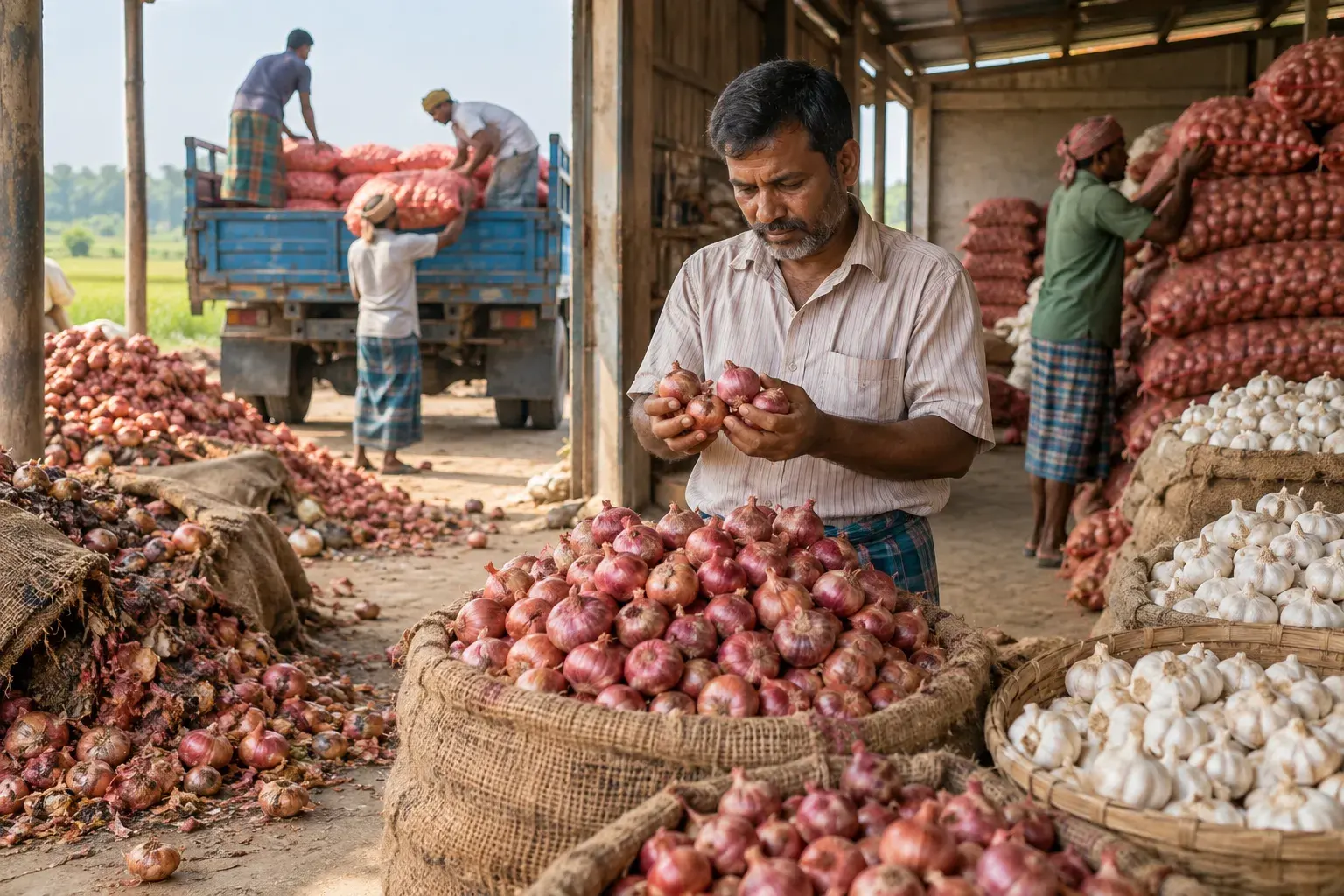
Onion and garlic storage trading
Buying cheap at harvest, storing, and selling when prices rise. But 25-30 percent of the country's onion rots for want of storage, and local onion fell 30 percent in twelve months.
- Capital
- ৳70k – ৳4.7 lakh
- People
- 1 – 4
- First income
- 90 – 250 days
 Retail & wholesale
Betel nut trading
Buying betel nut from households and selling at the hat, or soaking and drying it to sell later. In Lakshmipur in October 2025 a kaun fetched Tk 2,500-2,800 and a pon Tk 150-250.
- Capital
- ৳1 lakh – ৳25 lakh
- People
- 1 – 8
- First income
- 1 – 240 days
 Retail & wholesale
Clothing and boutique shop
A shop selling fabric and ready-made clothes. Cotton runs Tk 300-700 a yard in Dhaka, and most of the year's takings arrive in the last ten days of Ramadan.
- Capital
- ৳1 lakh – ৳8 lakh
- People
- 1 – 5
- First income
- 15 – 45 days