
Handloom and jamdani weaving
Hand-woven sarees on a wooden loom. Sarees sell from Tk 1,500 to Tk 300,000 while a weaver earns about Tk 4,590 a month, because the margin stays with the mahajan.
- Last reviewed: 19 September 2026
- Version 1

Handloom and jamdani weaving
- Starting capital
- ৳60,000 – ৳4,00,000 Editorial estimate
- Manpower
- 2 – 10 people
- First sale
- 7 – 180 days Practitioner verified
- Break-even
- 12 – 20 months Editorial estimate
- Kind of work
- Workshop · Hard
About the business
Hand-woven sarees on a wooden loom. Two people usually sit at one loom, one working the thread and one lifting the design. An ordinary jamdani takes seven to fifteen days; a complicated design takes months, and a genuinely fine piece can take six. Weavers in Rupganj, Narayanganj, make sarees worth Tk 5,000 to Tk 300,000, and at the 2026 Dhaka International Trade Fair jamdani sold from Tk 1,500 to Tk 65,000. Very little of that reaches the weaver. Most are tied to a mahajan's dadon advance: the mahajan's yarn, the mahajan's design, and the weaver takes only a piece rate. Loom owner Azgar Ali says he cannot find weavers even offering Tk 50,000 to Tk 80,000 in advance. New Age reported in July 2025 that a traditional handloom weaver earns about Tk 4,590 a month - under Tk 150 a day - and that one figure explains why Rupganj has gone from about 5,000 weavers a few years ago to about 3,500. Jamdani was Bangladesh's first Geographical Indication product, registered in 2015, but The Daily Star reports on BSCIC's own account that jamdani sarees still carry no GI tag. The recognition exists on paper and earns nothing extra in the market. The one route to a better price that is visibly working is to go around the mahajan and sell direct through Facebook, a website or your own showroom.
Unit economics
| Item | Range | Evidence | Suggest a correction |
|---|---|---|---|
| Monthly working capital | ৳50,000 – ৳80,000 | Practitioner verified | |
| Selling price | ৳1,500 – ৳3,00,000 / unit | Market quote | |
| Variable cost | ৳1,100 – ৳1,50,000 / unit | Editorial estimate | |
| Gross margin | 27% – 50% | Editorial estimate | |
| Time to first revenue | 7 – 180 days | Practitioner verified | |
| Break-even time | 12 – 20 months | Editorial estimate | |
| Cash cycle | 7 – 180 days | Editorial estimate | |
| Waste / loss | 3% – 8% | Editorial estimate | |
| Daily capacity | 0 – 0.7 | Editorial estimate |
What you need to start
- A wooden handloom, two people to a loom, plus spinning wheel, bobbins, shuttle, design charts and a place to dye yarn.Equipment
- Trade licence from the municipality, union parishad or city corporation: form Tk 10, licence book Tk 50, standard tax Tk 30, non-judicial stamp Tk 150-300, licence fee Tk 100-60,000 by trade type. Normally issued in 3-5 working days.Licence
- Registration as an authorised user of a Geographical Indication, from the Department of Patents, Designs and Trademarks (DPDT) under the Ministry of Industries, under the Geographical Indications (Registration and Protection) Act 2013. Jamdani became Bangladesh's first GI product in 2015 on BSCIC's application, but The Daily Star reports that GI tagging of sarees has not actually begun; fees and conditions have to be obtained from DPDT.Licence
- The hand for the design. Floating the motif on the surface of the cloth in fine thread is what makes a jamdani, and it is the hardest part to learn. Rupganj is now short of exactly this skill.Skill
- A yarn and dye trader, and a steady weaver. Holding on to a weaver takes an advance of up to Tk 50,000-80,000.Supplier
- A weaving shed with daylight, a pit for the loom and dry storage for yarn. The BSCIC jamdani estate at Noapara in Tarabo, Rupganj, covers about 20 acres with 416 plots, 407 of them allotted to jamdani.Workspace
How the work is done
- 1Decide first which one you are: the weaver or the loom owner. The weaver takes a piece rate; the owner puts out the advance and carries both the profit and the loss. They are two different businesses.
- 2Learn the craft or hire someone who has. Lifting a jamdani design is years of hand skill, not something learnt from a book. The BSCIC Jamdani Industrial Estate and Research Centre in Rupganj runs training and design development support.
- 3Fix the space. A weaving shed needs daylight and a pit cut into the floor. The BSCIC jamdani estate has 416 plots of which 407 are allotted to jamdani; ask whether a plot is available.
- 4Set up the loom. Two people work one loom, one on the thread and one on the design, so decide how many weavers you have before deciding how many looms.
- 5Line up yarn and dye. Rising yarn prices are the weavers' loudest complaint, so write the rate down and get quotes from more than one supplier.
- 6Choose the designs. Kalka, phool, jaal, tercha, pana, hazar buti, jolpai - the complexity of the design decides whether the saree comes off in seven days or six months.
- 7Keep both cheap and expensive lines running. Sumaiya Jamdani House keeps low and mid-priced sarees in stock and makes the expensive ones only to order, which keeps less money tied up.
- 8Go to the weekly jamdani haat at the BSCIC estate. It sits one day a week and that is where the wholesalers come.
- 9Open a direct route past the mahajan: a Facebook page, a WhatsApp group, your own website. Where buyers now take sarees straight from weavers, the weavers get a visibly better price.
- 10Do not stay only with sarees. Rupganj weavers now also make jamdani three-pieces, orna, panjabi cloth and scarves; the smaller items turn the money over faster.
- 11Build stock ahead of the two Eids. Traders say 30 to 40 percent of the year's sales happen in the Eid season.
Seasons
- JanNormal
- FebHigh
- MarHigh
- AprHigh
- MayHigh
- JunNormal
- JulLow
- AugLow
- SepNormal
- OctNormal
- NovHigh
- DecHigh
Where it works well
- Strong fitDhaka · Showrooms, online sellers and buyers are all here; much of what Rupganj and Sonargaon weave reaches the customer through Dhaka showrooms and Facebook-based sellers.
- Strong fitNarayanganj · Weaving sheds across Tarabo, Golakandail, Bhulta, Gausia and Kanchan in Rupganj and neighbouring Sonargaon, with 407 jamdani plots at the BSCIC estate in Noapara and a weekly jamdani haat.
- Strong fitSirajganj · The country's largest weaving belt around Shahjadpur, Belkuchi and Enayetpur. More cotton and tant sarees than jamdani, which makes weavers and yarn easy to find.
- Strong fitTangail · The home of the Tangail handloom saree, which sold at Tk 750-3,000 at the 2026 trade fair. After India claimed GI over the Tangail saree in February 2024, Bangladesh registered ten more products within eight days.
- PossibleKushtia · The old handloom quarter at Kumarkhali, though the number of working looms keeps falling.
- PossibleMoulvibazar · The Manipuri backstrap weaving area, working more on orna, wraps and shawls than on sarees.
- PossibleNarsingdi · The big cloth market at Madhabdi-Baburhat is next door, putting yarn, cloth supply and wholesalers all within reach.
- PossiblePabna · An old weaving area adjoining Sirajganj, with both yarn wholesalers and weavers close by.
Risks and cautions
- HighDependency: Once tied into a mahajan's dadon the weaver cannot put his own saree on the market. The mahajan's yarn, the mahajan's design and a piece rate for weeks of work. Rupganj weavers say that after raw material costs they get half the margin and the mahajan takes the rest, so a saree that sells for three lakh puts very little in the weaver's house.
- HighWorking capital: A saree sits on the loom from a week to six months, and the yarn money, the weaver's wage and the advance sit there with it. One weaver alone takes Tk 50,000-80,000 up front. Without capital a weaver cannot set up his own loom at all, which is precisely what the Rupganj weavers say.
- HighOther: The weavers are running out. Rupganj had about 5,000 a few years ago and now has about 3,500. Nationally there were 212,421 working looms in 1990 and 116,000 at the 2018 census. Nobody new is coming in because the pay is too low, and loom owners cannot find weavers even at Tk 50,000-80,000 in advance.
- MediumDemand: Thirty to forty percent of sales happen at the two Eids. Stock has to be built a month ahead, and if it does not move the money sits until the next Eid. In 2026 buyers wanted light shades - off-white, pastels, sky blue, pink, mint green - and getting the colours wrong locks up the whole stock.
- LowCompliance: The GI has not yet produced a price premium. Jamdani has been Bangladesh's first GI product since 2015, yet on BSCIC's own account no GI tagging of sarees has begun. GI goods usually fetch 20-30 percent more worldwide and Bangladesh has not captured that. Building a price plan on the GI will not work.
Sources
সিটি কর্পোরেশন থেকে ট্রেড লাইসেন্স প্রাপ্তির ধাপ সমূহ
Collected: 16 Sept 2026Supports: Starting capital · বাংলাদেশ
What changed
No corrections have been published yet.
Questions and answers
No questions yet. Be the first to ask.
Stories about this business
3 lakh taka of debt, and 112,500 looms shut across the district
A cash crunch is closing looms in Belkuchi and nearby upazilas of Sirajganj. One weaver carries 3 lakh taka of debt; 112,500 looms are shut and about 225,000 workers are out of work.
- Reasons
- Late payment, Working capital
Similar businesses
 Light manufacturing & workshop
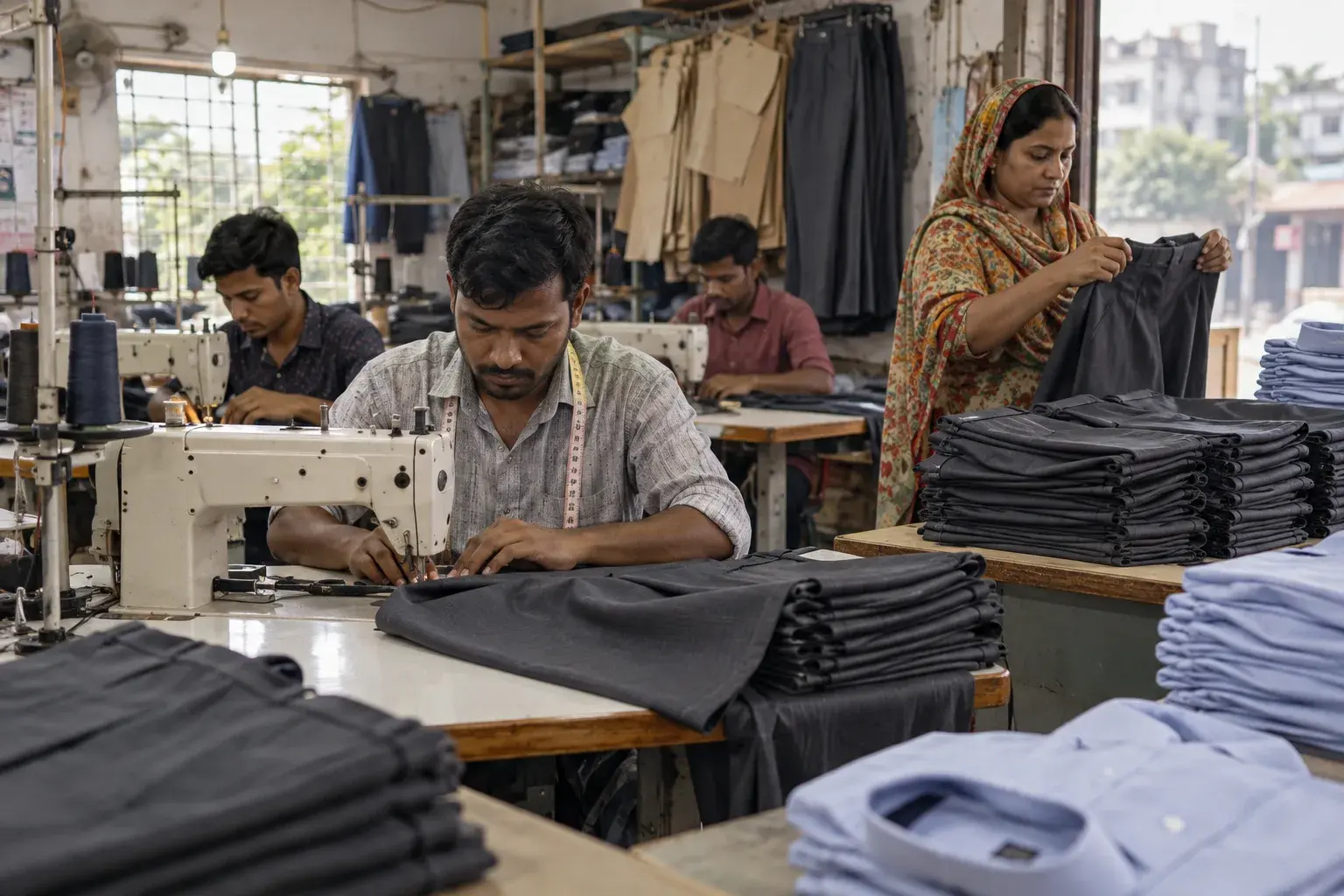
Tailoring and small garment unit
Trousers stitch for Tk 600: Tk 220 to the karigor, Tk 90 other costs, Tk 290 to the shop. One karigor does five trousers or ten shirts a day. The real money is sub-contract work, and its rules just tightened.
- Capital
- ৳60k – ৳8 lakh
- People
- 1 – 30
- First income
- 15 – 45 days
 Light manufacturing & workshop
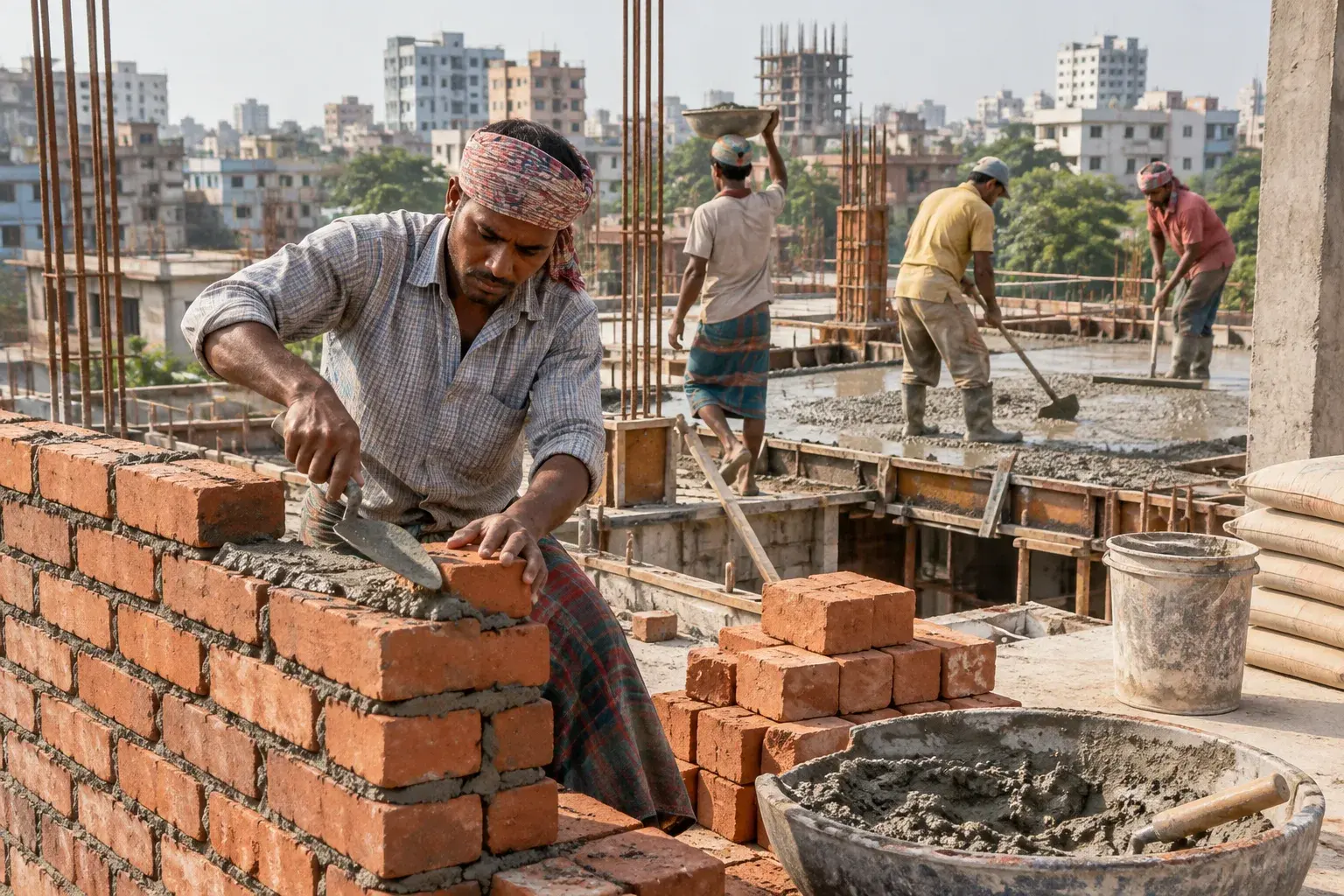
Masonry and building contracting
Contracting the labour of brickwork, casting and finishing. Dhaka construction runs Tk 1,800-3,000 per square foot of plinth area, and the statutory minimum for a mason is Tk 940 a day in town.
- Capital
- ৳50k – ৳5 lakh
- People
- 3 – 25
- First income
- 15 – 60 days
 Light manufacturing & workshop
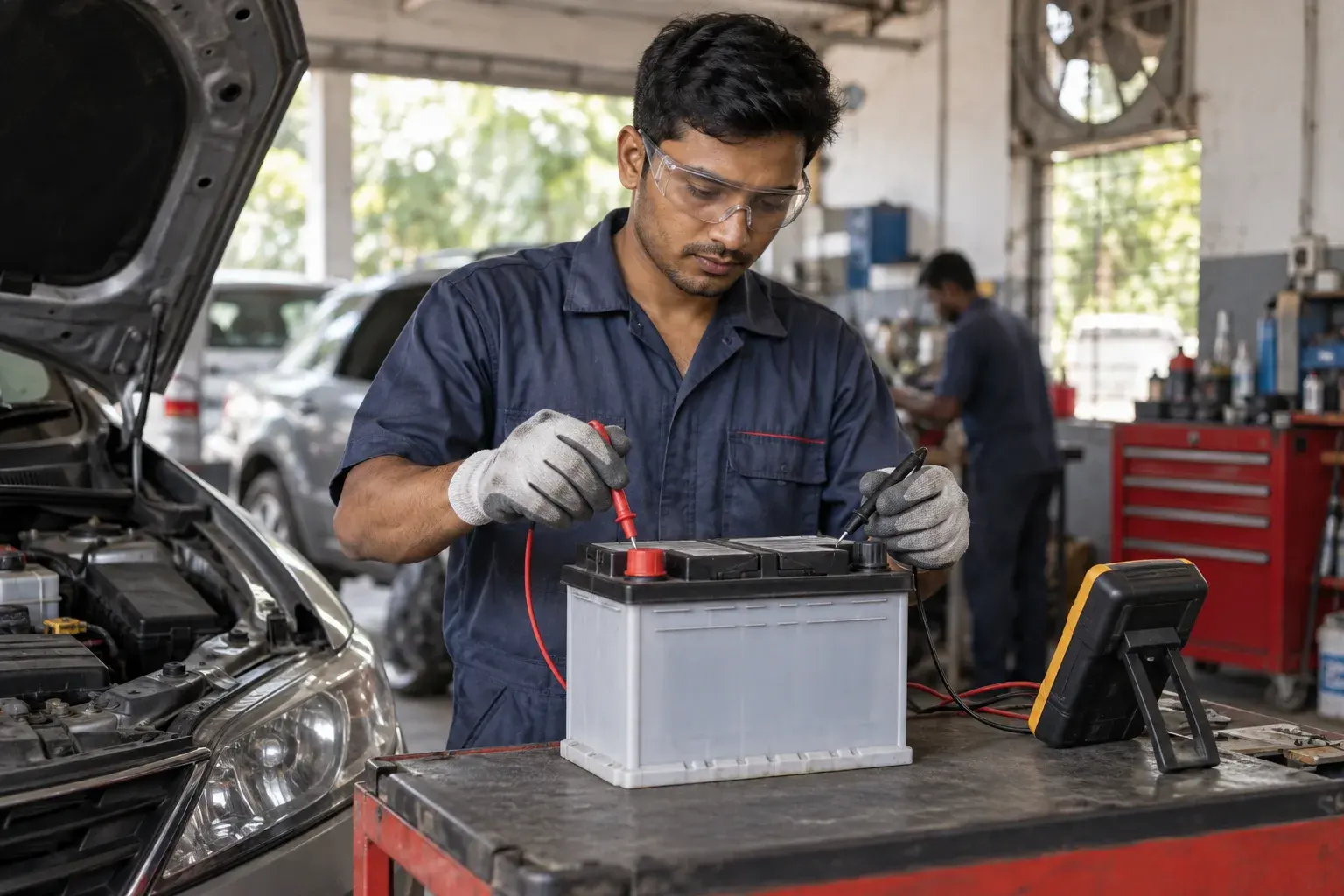
Battery reconditioning
Bringing weak lead-acid batteries back with electrolyte correction and slow charging. Breaking batteries open and smelting the lead is a completely different trade - an offence without Department of Environment clearance, and only 7 of about 1,100 such operations in the country hold one.
- Capital
- ৳50k – ৳4 lakh
- People
- 1 – 5
- First income
- 15 – 60 days
 Light manufacturing & workshop
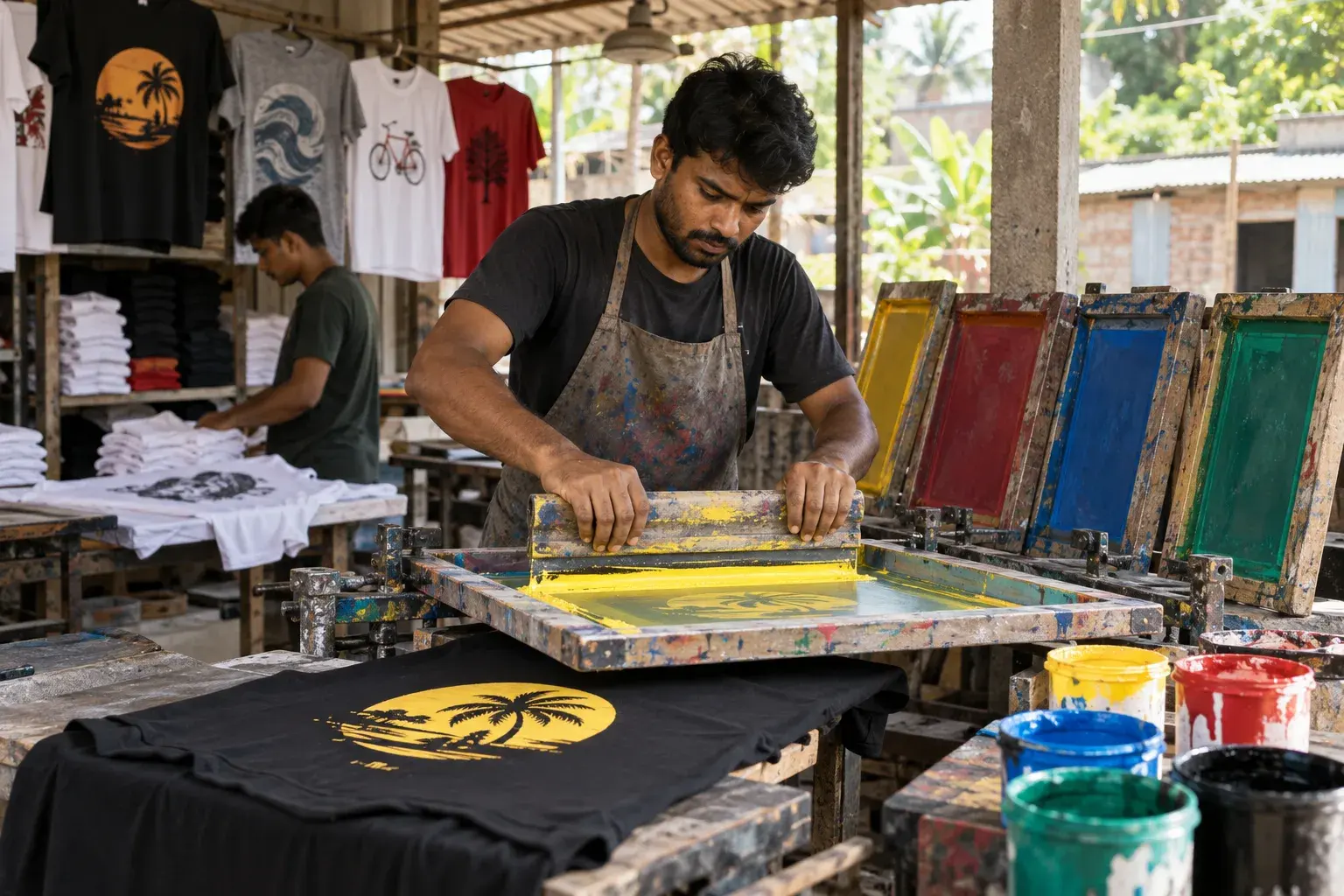
Screen printing and t-shirt
Printing designs on cloth. Low capital, but every design and every colour needs its own screen, so the per-piece cost climbs steeply as the order gets smaller.
- Capital
- ৳50k – ৳4 lakh
- People
- 1 – 6
- First income
- 15 – 45 days