
Interior design and fitout
Project work designing and building out flats, offices and shops. Materials are bought up front while payment comes in stages, so unpaid balances are the main risk.
- Last reviewed: 19 September 2026
- Version 1

Interior design and fitout
- Starting capital
- ৳1,50,000 – ৳20,00,000 Editorial estimate
- Manpower
- 2 – 25 people
- First sale
- 15 – 90 days Editorial estimate
- Break-even
- 6 – 12 months Editorial estimate
- Kind of work
- Workshop · Hard
About the business
Designing and building out the inside of a flat, office, shop or restaurant. Measuring, drawing, joinery and board work, false ceiling, partitions, moving electrical and plumbing lines, paint, lighting and finally the furniture - all of it one project. There is no shop to sit in; work arrives one job at a time and every job is its own account. That is exactly why the real danger in this trade is not technical but financial. Materials are bought first, tradesmen are paid weekly, and the client pays in stages - with the last instalment often hanging for months after the work is finished. Once the work is installed it cannot be taken back, so the leverage is gone. The second danger is material prices. On 15 September 2026 TCB recorded 60-grade MS rod in Dhaka at Tk 92,500-94,500 a metric tonne and 40-grade at Tk 89,000-91,000, up 10.3 percent and 16.9 percent respectively over twelve months. On a lump-sum contract signed before that move, the whole margin disappears. The contractors who survive are the ones who fix the written contract, the bill of materials and the payment dates before the first sheet of board is cut.
Unit economics
| Item | Range | Evidence | Suggest a correction |
|---|---|---|---|
| Monthly working capital | ৳1,00,000 – ৳15,00,000 | Editorial estimate | |
| Selling price | ৳800 – ৳3,000 / unit | Editorial estimate | |
| Variable cost | ৳89,000 – ৳94,500 / unit | Official source | |
| Gross margin | 18% – 30% | Editorial estimate | |
| Time to first revenue | 15 – 90 days | Editorial estimate | |
| Break-even time | 6 – 12 months | Editorial estimate | |
| Cash cycle | 30 – 120 days | Editorial estimate | |
| Waste / loss | 5% – 12% | Editorial estimate | |
| Daily capacity | 20 – 150 | Editorial estimate |
What you need to start
- Cutting and trimming tools, drills, drivers, levels and measuring gear, ladders or scaffolding, painting equipment, and transport for materials.Equipment
- Materials bought per project rather than stocked. Even so the prices move: on 15 September 2026 in Dhaka, 60-grade MS rod was Tk 92,500-94,500 a tonne and 40-grade Tk 89,000-91,000.Starting stock
- Trade licence from the city corporation or municipality: form Tk 10, licence book Tk 50, standard tax Tk 30, stamp Tk 150-300, licence fee Tk 100-60,000 by trade type, plus VAT and signboard fee. Issued in 3-5 working days with papers ready.Licence
- Measuring, drawing and turning the drawing into an accurate material take-off - get that sum wrong on a lump-sum contract and the loss is certain. Plus running a crew and finishing on time.Skill
- Suppliers for board and plywood, hardware, rod, paint and lighting. Keeping suppliers who will give 15-30 days' credit is what makes survival possible here, because the client's money comes later still.Supplier
- A workshop for joinery and board work, with saws, power and space to stack materials. It can be done entirely on site, but the work goes slower and wastes more.Workspace
How the work is done
- 1Decide what kind of work you take: residential flats, offices, shops and showrooms, or restaurants. Each has a different kind of client, a different budget and a different habit about paying.
- 2Take the trade licence from the city corporation or municipality, and if you want corporate work take a TIN and VAT registration too - large clients ask for them before releasing a bill.
- 3Set up a workshop for the joinery and board work. Not everything can be built on site, and building in the workshop is faster and wastes less.
- 4Build the crew: carpenters, an electrician, painters and a site supervisor. They are normally paid weekly, and you pay that before the client's instalment arrives.
- 5For every job, measure, draw, and write a detailed bill of materials - which board, which hardware, how many feet, which brand. That list is what prevents the argument later.
- 6Sign a written contract covering the scope, the bill of materials, the total price, the amount and date of each instalment, the completion date, and how a change in design is charged.
- 7Take an advance before starting, and make sure it covers the first round of materials. Buying someone else's materials with your own money is the oldest trap in this trade.
- 8Buy the materials and remember the date the price was quoted. On a lump-sum contract the price risk is entirely yours - a clause allowing adjustment if rod, cement or board rises shares it.
- 9Hand over in stages and collect in stages. Get the client to sign off each completed stage on paper, which closes the door on 'I never asked for this'.
- 10When something outside the drawing is asked for, price it in writing on the spot and get approval. Extra work agreed by mouth usually goes unpaid.
- 11Hold back something the space cannot be used without until the final instalment is paid, because once everything is installed you have no leverage left.
- 12Photograph the finished job and get the client's satisfaction in writing. The next job comes from those two things, not from advertising.
Seasons
- JanHigh
- FebHigh
- MarHigh
- AprNormal
- MayNormal
- JunLow
- JulLow
- AugLow
- SepLow
- OctNormal
- NovHigh
- DecHigh
Where it works well
- Strong fitChattogram · Commercial offices, shipping and bank branches and new housing projects keep the flow of work steady.
- Strong fitDhaka · New flat handovers, corporate offices, brand showrooms and restaurants are all densest here, and the material markets are close by.
- Strong fitGazipur · Factory offices, worker facility blocks and buyers' showrooms - an industrial belt, so most of the work is institutional.
- Strong fitNarayanganj · Dense settlement, many factories, and closeness to Dhaka makes materials easy to bring in.
- Strong fitSylhet · More work fitting out expatriate families' houses and flats, and bigger budgets, though skilled tradesmen have to be brought from Dhaka.
- PossibleBogura · The trading hub of the north; shop, showroom and small hospital work comes in from surrounding districts too.
- PossibleCox's Bazar · Hotel and resort work: individual projects are large, but the work is seasonal and the risk of unpaid balances is higher.
- PossibleCumilla · Business and new housing are growing along the highway, and materials come easily from Dhaka.
- PossibleKhulna · A divisional city with work fitting out bank and office branches, though the residential market is small.
- PossibleRajshahi · Work for educational institutions, banks and small housing projects; less competition but smaller budgets.
Risks and cautions
- HighLate payment: This is the main risk of the trade. The final instalment sticks after the work is done, and at that point there is no leverage: furniture, ceiling and partitions cannot be pulled out, and would be worthless if they were. Clients hold the last payment over small defects; corporate clients have their own long bill-approval process. That is why handover must be staged, signed for, and why something the space cannot be used without should be held back to the end.
- HighWorking capital: The cash flows the wrong way round. Materials are bought before work starts, tradesmen are paid weekly, and the client's instalment comes only after a stage is finished. Run two jobs at once and both sets of materials and wages come out of your pocket - and when one client holds payment the other job stops too. This is how a small contractor loses the business over a single unpaid balance.
- HighDependency: On a lump-sum contract a rise in material prices lands entirely on the contractor. In the twelve months to 15 September 2026, 60-grade MS rod in Dhaka rose 10.3 percent and 40-grade rose 16.9 percent. Quote a job three or four months ahead and that increase comes straight out of the margin, with no remedy unless the contract allows price adjustment.
- HighOther: Scope creep - 'just do this bit as well' - is the silent loss in this trade. Extra work agreed by mouth cannot be put on the bill, because the client says it was part of the job all along. The longer the job runs the longer the wages run, while the contract price stays where it was.
- MediumDemand: Work arrives in lumps, not steadily. Site work slows in the monsoon, and if flat handovers or office expansion stall there can be several months with nothing. The workshop rent and the permanent staff carry on regardless.
Sources
সিটি কর্পোরেশন থেকে ট্রেড লাইসেন্স প্রাপ্তির ধাপ সমূহ
Collected: 16 Sept 2026Supports: Starting capital, Time to first revenue · বাংলাদেশ
- Collected: 15 Sept 2026
Supports: Variable cost · ঢাকা মহানগর — সিপাহীবাগ, মিরপুর-৬, মোহাম্মদপুর টাউন হল, নিউমার্কেট, রামপুরা, মহাখালী বাজার
What changed
No corrections have been published yet.
Questions and answers
No questions yet. Be the first to ask.
Similar businesses
 Light manufacturing & workshop
Small shoe making unit
A small unit making sandals and shoes for wholesalers. Sandals sell at Tk 250-700 and leather shoes at Tk 1,200. Bhairab alone has 3,500-5,000 units employing about 25,000 people.
- Capital
- ৳1.5 lakh – ৳10 lakh
- People
- 4 – 20
- First income
- 30 – 90 days
 Light manufacturing & workshop
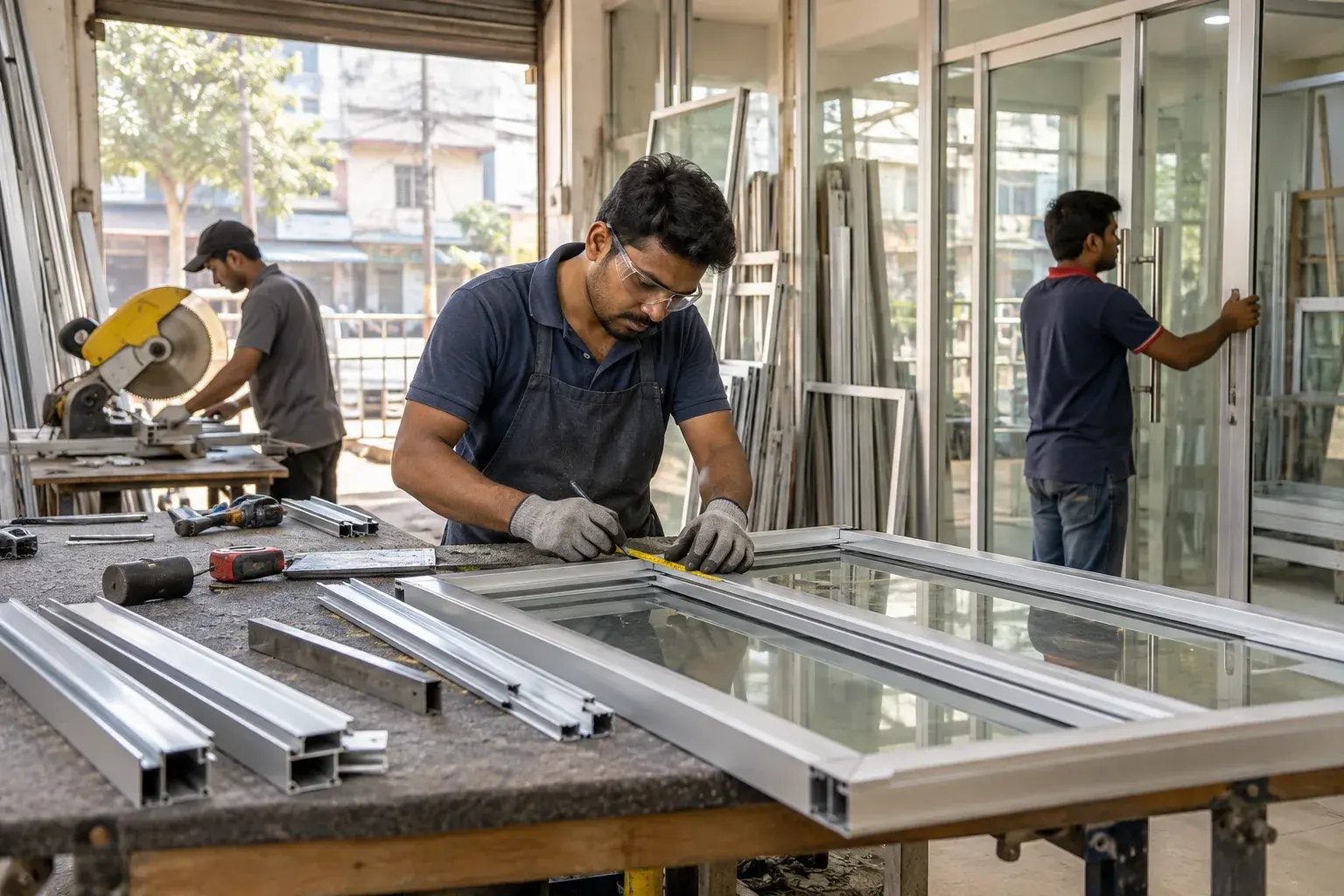
Thai glass and aluminium fitting
Cutting and fitting aluminium profile and glass into doors, windows and partitions. Ordinary work is about Tk 470-750 per square foot, and a wrong measurement cannot be returned.
- Capital
- ৳1.5 lakh – ৳6 lakh
- People
- 2 – 6
- First income
- 20 – 60 days
 Light manufacturing & workshop
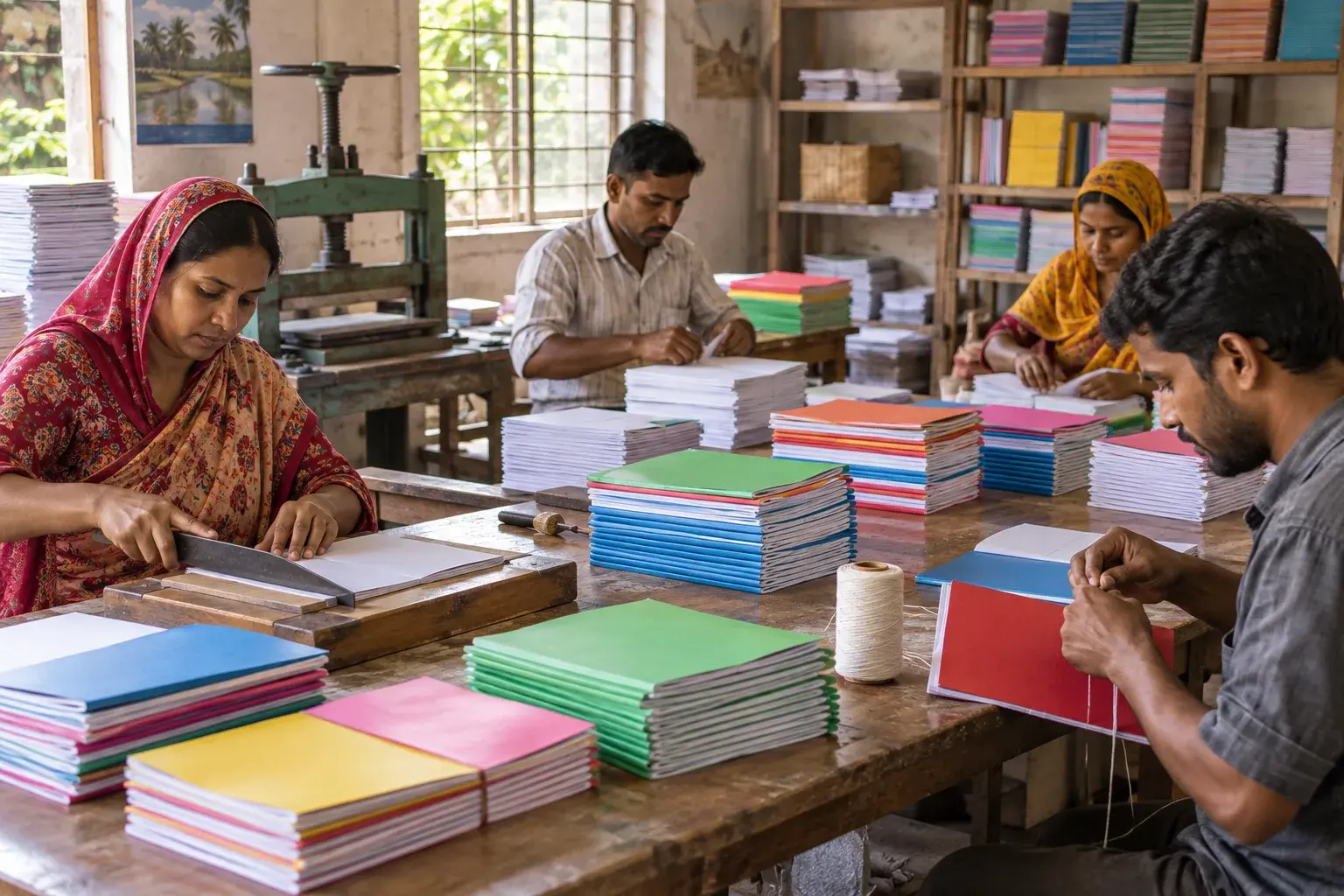
Notebook making
Cutting, folding and binding paper into exercise books. A 300-page khata sells online at Tk 169 and a 120-page one at Tk 75, while a packet of paper costs Tk 100-150 more than a year ago.
- Capital
- ৳1.5 lakh – ৳7 lakh
- People
- 3 – 15
- First income
- 15 – 45 days
 Light manufacturing & workshop
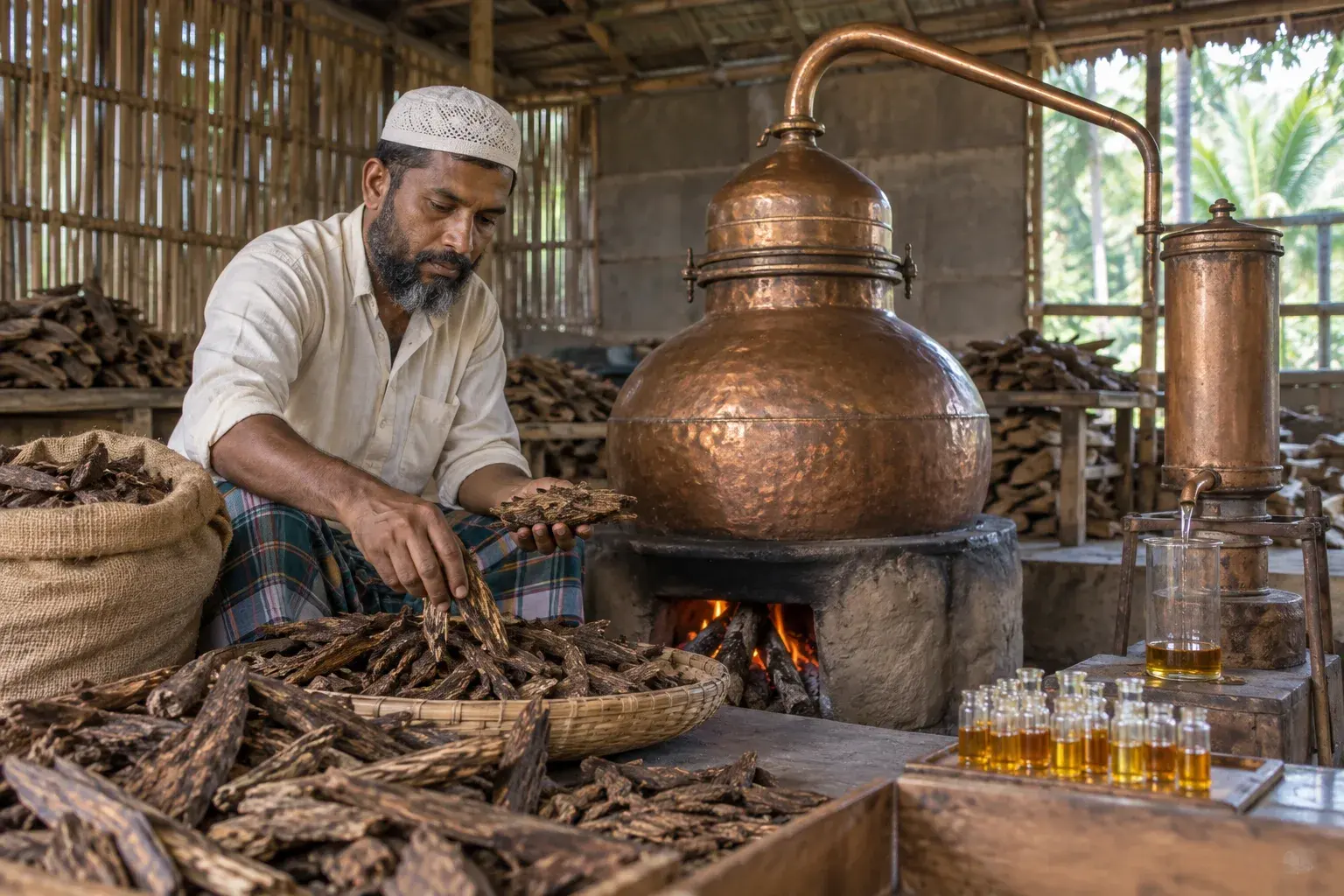
Agarwood attar distilling
Soaking and boiling agarwood to draw off fragrant attar. Barlekha's Sujanagar has about 250 units, attar sells at Tk 6,000-10,000 a tola by grade, and nearly all of it is exported.
- Capital
- ৳1.5 lakh – ৳10 lakh
- People
- 3 – 15
- First income
- 2,555 – 10,950 days