
Rice wholesale trading
Buying rice by the sack at the mokam and selling it to retail shops. Dhaka wholesale coarse rice is Tk 43-45 against Tk 50-55 retail, but the wholesaler keeps only 50 paisa to one taka a kilo.
- Last reviewed: 19 September 2026
- Version 1

Rice wholesale trading
- Starting capital
- ৳2,50,000 – ৳15,00,000 Editorial estimate
- Manpower
- 2 – 8 people
- First sale
- 15 – 45 days Editorial estimate
- Break-even
- 18 – 24 months Editorial estimate
- Kind of work
- Shop · Medium difficulty
About the business
Rice wholesaling is buying by the sack from the mokam or the mill and moving it to retail shops. The margin is counted in paisa per kilo while the goods move by the tonne, so what decides survival is capital and turnover speed, not price. How thin it is can be read off government paper. On 15 September 2026 the Department of Agricultural Marketing put Dhaka wholesale coarse rice (guti swarna) at Tk 43-45 and medium (paijam, BRRI-28, BRRI-29) at Tk 46-50 per kg. On the same day TCB's retail sheet had coarse at Tk 50-55 and medium at Tk 55-65. So Tk 5 to Tk 15 a kilo is added between wholesale and retail - but not to the wholesaler. One published breakdown of who takes what from a kilo of rice gives the wholesaler or distributor 50 paisa to one taka, with the rest going to the mill and the retail shop. CPD's study, released on 30 July 2026, found paijam rice sold by the farmer at Tk 30.65 reaching retail at Tk 59.69 after passing through the bepari, the miller and the arotdar - double. When prices move, it is not the margin that moves, it is the value of the whole stock: Dhaka wholesale coarse rice is down 14.56 per cent on the same day last year, and anyone holding sacks bought at the old price has eaten a year of margin. The real work is knowing today's rate and letting the stock go.
Unit economics
| Item | Range | Evidence | Suggest a correction |
|---|---|---|---|
| Monthly working capital | ৳2,15,000 – ৳4,50,000 | Editorial estimate | |
| Selling price | ৳43 – ৳195 / kg | Official source | |
| Variable cost | ৳42 – ৳193 / kg | Editorial estimate | |
| Gross margin | 1% – 2% | Editorial estimate | |
| Time to first revenue | 15 – 45 days | Editorial estimate | |
| Break-even time | 18 – 24 months | Editorial estimate | |
| Cash cycle | 10 – 35 days | Editorial estimate | |
| Waste / loss | 0.5% – 1.5% | Editorial estimate | |
| Daily capacity | 1,500 – 5,000 | Editorial estimate |
What you need to start
- A platform weighing scale, a bag-stitching machine, a trolley or handcart, and a ledger.Equipment
- Trade licence from the city corporation or municipality: form Tk 10, licence book Tk 50, standard tax Tk 30, stamp Tk 150-300, licence fee Tk 100-60,000 by trade type. Issued in three to five working days.Licence
- Foodgrain and food commodity business licence from the district food controller's office, under the Ministry of Food's schedule of fees and licensing authorities. It is a separate, renewable licence for wholesalers.Licence
- Pricing by variety, judging moisture before accepting sacks, and running the credit book properly.Skill
- A fixed bepari at a mill or mokam. You need separate sources by variety - coarse rice and aromatic rice rarely come from the same mill.Supplier
- A dry godown with a raised floor, airflow and truck access. Sacks must sit on wooden pallets.Workspace
How the work is done
- 1Decide which mokam you buy from - the mills of the north or Badamtoli-Babubazar in Dhaka. The distance sets your freight cost.
- 2Take a godown. Rice needs a dry floor, and sacks stacked straight on the ground rot from the bottom row.
- 3Take the trade licence from the city corporation or municipality and the foodgrain business licence from the district food controller's office.
- 4Get into the habit of reading the official wholesale rate daily. The Department of Agricultural Marketing publishes Dhaka wholesale prices every working day - that is your check on what you are being quoted.
- 5Fix rates with the mill or mokam by variety - coarse, medium, fine and aromatic have four different prices and four different demands.
- 6Keep the first consignment small. A hundred sacks of coarse rice already ties up more than two lakh taka.
- 7Sign up retail shops and settle the credit terms first - how many days, up to how much, and what happens when they are late.
- 8Measure how fast the stock turns. At 50 paisa a kilo the money comes from turning it again and again, not from holding it.
- 9Stay inside the stock limit. Anti-hoarding drives on paddy and rice do happen, and excess stock costs you the licence.
- 10Buy with the season in mind. Prices are lowest as Boro and Aman come in, but stocking up then means the whole holding loses value if the market falls.
Seasons
- JanNormal
- FebNormal
- MarNormal
- AprHigh
- MayHigh
- JunHigh
- JulNormal
- AugNormal
- SepNormal
- OctNormal
- NovHigh
- DecHigh
Where it works well
- Strong fitBogura · The trading centre of the north, with both mills and transport at hand.
- Strong fitDhaka · Badamtoli and Babubazar are among the eleven markets the Department of Agricultural Marketing samples for Dhaka wholesale prices, and the country's biggest buying market is here too.
- Strong fitDinajpur · Mill country - coarse and medium rice moves from here to Dhaka.
- Strong fitKushtia · A big mokam for fine rice; if you are buying miniket or najirshail grades this is where you go.
- Strong fitNaogaon · Naogaon is one of the districts whose chatals take truckloads of paddy from the haor arots - mills are dense here, so the mokam rate is good.
- PossibleChapai Nawabganj · One of the areas whose chatals take haor paddy, so the mokam rate is low in season.
- PossibleChattogram · Big-city demand plus imported rice off the port, though the established wholesalers are crowded in.
- PossibleJamalpur · The same kind of chatal area, with good road links to Dhaka.
- PossibleKishoreganj · The centre of the haor paddy trade - about forty arots sit at the Chamra river port in Karimganj in season, sending paddy by truck to chatals around the country.
- PossibleRajshahi · Chatal country and a destination for haor paddy, with a sizeable local market of its own.
- PossibleSherpur · A chatal area supplied with paddy from the Kishoreganj haor - a small mokam with less competition.
- PossibleSirajganj · On the highway, so northern rice breaks bulk here on its way to Dhaka.
Risks and cautions
- MediumCompliance: Anti-hoarding drives on paddy and rice start without warning. Stock above the licensed limit brings a fine, confiscation and possible cancellation of the licence. The temptation to buy cheap in season runs straight into this rule.
- HighWorking capital: The margin is 50 paisa to one taka a kilo, but a hundred sacks of coarse rice costs Tk 2,15,000-2,25,000 to buy. Clear that consignment and the gross profit is a few thousand taka. Once the money is stuck the next consignment cannot be bought, and a shop with no stock loses its retailers to another wholesaler.
- HighDemand: When the price falls it is not the margin that falls, it is the value of the stock. On 15 September 2026 Dhaka wholesale coarse rice was 14.56 per cent below the same day a year earlier and medium rice 15.04 per cent below. Anyone holding sacks bought at the old rate is down Tk 5-8 a kilo - more than a year's margin.
- HighLate payment: Retail shops almost always take on credit and pay after they have sold. Let two or three of them build up a large balance and, on a 50-paisa margin, it takes months to earn back.
- MediumDependency: Complete dependence on the mill and the mokam. If the mill raises its price or cuts supply, the wholesaler has nowhere to go, because there is almost no room to raise the price to the retail shop. CPD's study shows rice doubles in price from farmer to consumer, with most of it added at the mill and retail ends.
Sources
সিটি কর্পোরেশন থেকে ট্রেড লাইসেন্স প্রাপ্তির ধাপ সমূহ
Collected: 16 Sept 2026Supports: Starting capital · বাংলাদেশ
- Collected: 15 Sept 2026
Supports: Selling price · ঢাকা মহানগর — সিপাহীবাগ, মিরপুর-৬, মোহাম্মদপুর টাউন হল, নিউমার্কেট, রামপুরা, মহাখালী বাজার
ঢাকা মহানগরীর বাজারসমূহের নিত্য প্রয়োজনীয় কৃষিপণ্যের পাইকারী বাজারদর, ১৫-০৯-২০২৬
Collected: 15 Sept 2026Supports: Starting capital, Monthly working capital, Selling price · ঢাকা মহানগরী (১১টি বাজার)
What changed
No corrections have been published yet.
Questions and answers
No questions yet. Be the first to ask.
Stories about this business
A 3-4 taka margin flips to a 2-3 taka loss, with 100-plus trucks stuck at the port
Demand at the Hili land port halved in four or five days, leaving more than a hundred loaded rice trucks unsold and turning a 3-4 taka per kg margin into a 2-3 taka loss.
- Reasons
- Price drop, Weak demand
Similar businesses
 Retail & wholesale
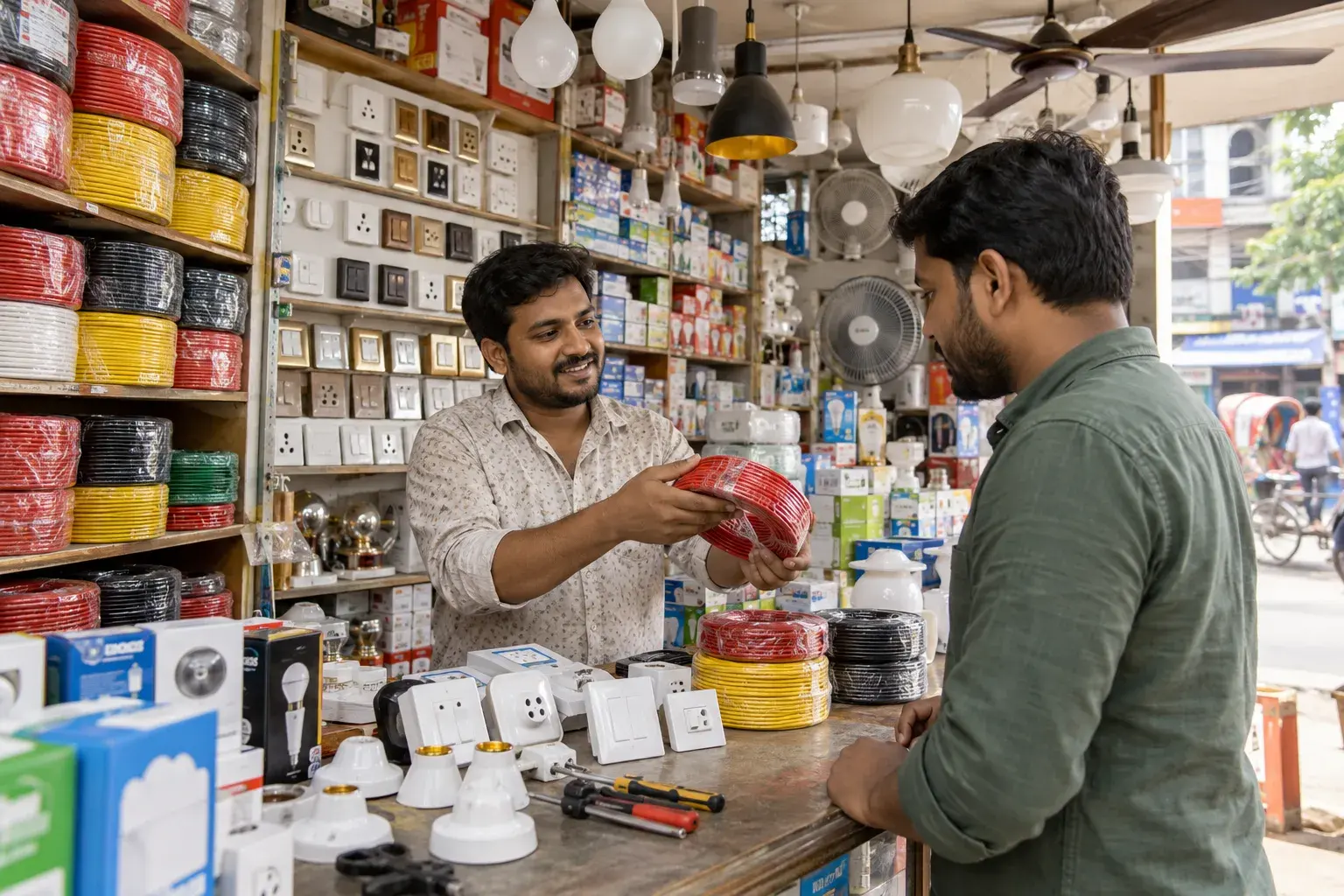
Electrical goods shop
A retail shop selling cable, switches, sockets, holders, lamps and fans. Fifty of the 315 products on BSTI's mandatory certification list are electrical, and selling uncertified cable brings a fine and a sealed shop.
- Capital
- ৳2.5 lakh – ৳15 lakh
- People
- 1 – 5
- First income
- 15 – 60 days
 Retail & wholesale
Second-hand book shop
Buying used books and selling them on. In the Purana Paltan market in Dhaka used books went at roughly Tk 20-30 a book in May 2024. In Nilkhet shop rents ran from Tk 12,000 to Tk 50,000 a month on advances of Tk 2 lakh to Tk 8 lakh.
- Capital
- ৳2.5 lakh – ৳9.5 lakh
- People
- 1 – 4
- First income
- 3 – 45 days
 Retail & wholesale
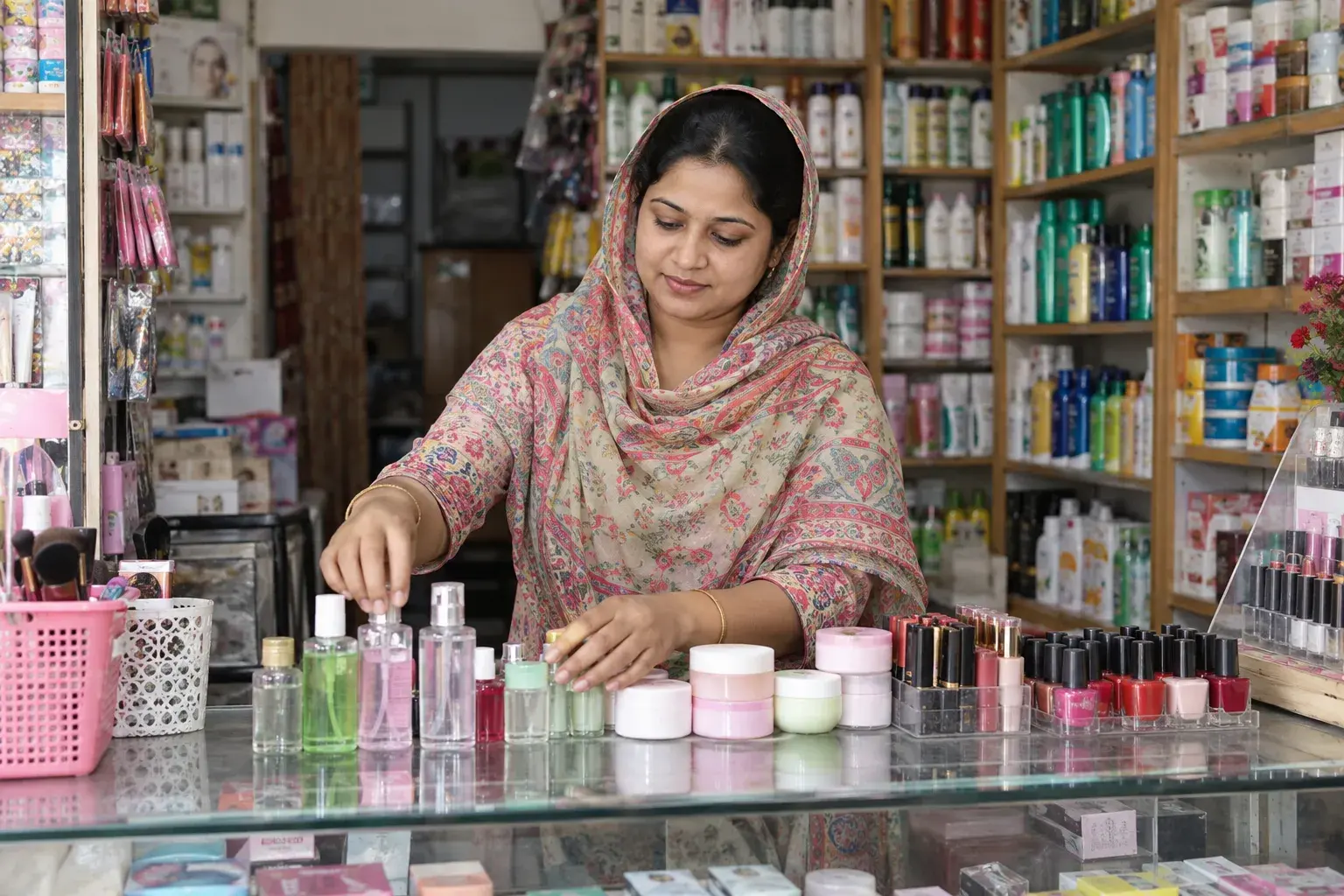
Cosmetics shop
A retail shop for creams, shampoo, face wash and make-up. At least 18 cosmetic categories are on BSTI's mandatory list, and uncertified or undocumented imported stock is the shopkeeper's liability.
- Capital
- ৳2 lakh – ৳15 lakh
- People
- 1 – 5
- First income
- 15 – 45 days
 Retail & wholesale
Optical shop (spectacles)
Buying frames and lenses and assembling spectacles over the counter. A complete ordinary pair retails at Tk 649 to Tk 5,400 (online prices, 21 Sep 2026). No BSTI certificate is needed; the trade licence is the only paper.
- Capital
- ৳2 lakh – ৳15 lakh
- People
- 1 – 4
- First income
- 15 – 60 days