
Tea packaging and branding
Buying loose tea at auction, blending and packing it under your own brand. The 2026-27 Chattogram auction averages Tk 280.88 a kg while packet tea sells at Tk 428-650.
- Last reviewed: 19 September 2026
- Version 1

Tea packaging and branding
- Starting capital
- ৳5,00,000 – ৳50,00,000 Editorial estimate
- Manpower
- 2 – 15 people
- First sale
- 45 – 100 days Official source
- Break-even
- 12 – 24 months Editorial estimate
- Kind of work
- Workshop · Medium difficulty
About the business
Buying loose tea at auction, blending it, packing it under your own name and putting it on the shelf. The garden makes the tea, but the packet in the shop is made by the packer, and that middle step is where the price jumps. By Bangladesh Tea Board figures, in the 2026-27 auction year to date the Chattogram auction centre sold 3.76 crore kg at an average of Tk 280.88 a kg, Sreemangal averaged Tk 264.06 and Panchagarh Tk 253.83; the 24 August 2026 Chattogram auction averaged Tk 306.76. On Dhaka shelves packet tea works out at Tk 428 to Tk 650 a kg - Muskan 500 g at Tk 214, Seylon Gold 500 g at Tk 240, Ispahani Mirzapore 500 g at Tk 270, ACME Premium Gold 200 g at Tk 110, Brooke Bond Taaza 200 g at Tk 130. That gap is not all the packer's: auction brokerage, transport, blending, packaging, VAT, the distributor's commission and the retailer's margin all come out of it. One more thing matters - tea is getting dearer. The auction-year average was Tk 171.24 in 2023-24, Tk 202.46 in 2024-25 and Tk 245.50 in 2025-26, so the raw material has risen about 43 percent in two years while packet prices cannot follow that fast.
Unit economics
| Item | Range | Evidence | Suggest a correction |
|---|---|---|---|
| Monthly working capital | ৳3,40,000 – ৳41,00,000 | Editorial estimate | |
| Selling price | ৳428 – ৳650 / kg | Market quote | |
| Variable cost | ৳254 – ৳307 / kg | Official source | |
| Gross margin | 28% – 61% | Editorial estimate | |
| Time to first revenue | 45 – 100 days | Official source | |
| Break-even time | 12 – 24 months | Editorial estimate | |
| Cash cycle | 30 – 75 days | Editorial estimate | |
| Waste / loss | 1% – 3% | Editorial estimate | |
| Daily capacity | 100 – 2,500 | Editorial estimate |
What you need to start
- A blending drum or mixer, sieves, scales, packing and sealing machines, and a separate machine if you make tea bags. Local machine prices could not be verified.Equipment
- Loose tea bought at auction - 2026-27 season averages of Tk 280.88 at Chattogram, Tk 264.06 at Sreemangal and Tk 253.83 at Panchagarh per kg. Auctions sell by the lot, so a large sum goes out at once.Starting stock
- BSTI CM licence. Black Tea (BDS ISO 3720:2017), Instant Tea in Solid Form (BDS ISO 6079:2015) and Green Tea (BDS ISO 11287:2012) are on the mandatory list. Application Tk 1,000, renewal Tk 500, annual licence fee Tk 200, marking fee from Tk 1,875.Licence
- Registration with the Bangladesh Tea Board as a buyer or blender. Bidding at auction needs both the board's registration and an auction broker. The registration fee could not be verified in this research.Licence
- Bangladesh Food Safety Authority registration and premises licence: Tk 1,000 new, Tk 500 renewal, valid three years.Licence
- Trade licence from the city corporation or municipality: form Tk 10, book Tk 50, standard tax Tk 30, stamp Tk 150-300, licence fee Tk 100-60,000, in 3-5 working days.Licence
- Tea tasting. Auction purchases cannot be returned, so choosing lots by tasting the samples is the most valuable skill here, along with holding a blend so the cup tastes the same as lots change.Skill
- An auction broker, a packaging printer, and transport from Chattogram or Sreemangal to your store.Supplier
- A dry, odour-free, low-humidity store, because tea takes up both smell and moisture, plus a separate blending room and packing area.Workspace
How the work is done
- 1Pick the auction centre. Chattogram is by far the largest, with 3.76 crore kg sold so far in 2026-27 against 8 lakh kg at Sreemangal and 2.69 lakh kg at Panchagarh. For a small buyer, Sreemangal and Panchagarh have smaller lots and slightly lower prices.
- 2Register with the Bangladesh Tea Board as a buyer or blender and start working with an auction broker; you cannot bid without one.
- 3Take the trade licence from the city corporation or municipality, register for TIN and VAT with the NBR, and apply for a trademark in your brand's name.
- 4Take Food Safety Authority registration and the premises licence, then apply to BSTI for the CM licence. Black Tea (BDS ISO 3720), Green Tea (BDS ISO 11287) and Instant Tea (BDS ISO 6079) are all mandatory products.
- 5Taste the samples before the auction. The broker sends a sample of each lot in advance, and without being able to judge tea by tasting you cannot do this business, because auction purchases cannot be returned.
- 6Fix the blend - mix teas from several gardens into one steady taste. Customers want the same cup every time, and holding that taste as lots change is the real work.
- 7Set up the store. Tea absorbs smell and moisture, so it needs a dry, odour-free room of its own. Store it beside spices or soap and the whole lot is ruined.
- 8Print the packet to rule: name, brand, weight, manufacture and expiry dates, batch number, address, retail price and the standard mark against the BDS number, and make sure the weight matches.
- 9Decide your pack sizes. The market runs on 200 g, 400 g and 500 g packets; smaller packs fetch more per kilo but cost more in packaging.
- 10Build a distributor and grocery network, and supply tea stalls and restaurants directly in large packs. A tea stall buys every day and is the steadiest customer there is.
- 11Track auction prices. The auction-year average was Tk 171.24 in 2023-24 and Tk 245.50 in 2025-26, a rise of about 43 percent in two years. Buy light when prices are high and build stock when they fall.
Seasons
- JanHigh
- FebNormal
- MarNormal
- AprNormal
- MayNormal
- JunNormal
- JulNormal
- AugNormal
- SepNormal
- OctNormal
- NovHigh
- DecHigh
Where it works well
- Strong fitChattogram · The country's main tea auction centre, with 3.76 crore kg sold so far in 2026-27. Brokers, warehouses and transport are all at hand.
- Strong fitDhaka · The biggest consumer market and the centre of the supermarket trade, with packaging printers and distributor networks easy to find.
- Strong fitMoulvibazar · The Sreemangal auction centre is here and most of the country's tea gardens are in this district, with the option of buying direct from gardens.
- Strong fitPanchagarh · The heart of plain-land tea and the third auction centre, averaging Tk 253.83 in 2026-27 - the lowest of the three.
- Strong fitSylhet · Tea garden country with strong urban demand, and remittance households support a market for premium brands.
- PossibleBogura · A distribution base for the north, with easy access to tea from the Panchagarh auction.
- PossibleGazipur · Cheap warehouse and factory space near Dhaka with the Dhaka market within reach.
- PossibleHabiganj · A tea garden district close to the Sreemangal auction, with scope to buy direct from gardens.
- PossibleNarayanganj · An old wholesale and warehousing area with both river and road links.
- PossibleThakurgaon · Plain-land tea country next to Panchagarh, where small bought-leaf factories can supply.
Risks and cautions
- HighWorking capital: Auctions sell by the lot and must be paid for within a set period, while money from packed sales comes back over months. The raw material alone locks up Tk 254-307 a kg before packaging and transport. One tonne of tea means two and a half to three lakh taka out of the door in a single day.
- HighDependency: The raw material price is set at auction, not by you. The auction-year average went from Tk 171.24 in 2023-24 to Tk 202.46 in 2024-25 to Tk 245.50 in 2025-26, about 43 percent in two years. The price printed on the packet cannot follow that fast because shoppers compare brands side by side, so the margin is squeezed automatically.
- HighCompliance: Tea is a BSTI mandatory product, so it cannot be packed and sold without a CM licence. BSTI mobile courts sweep Dhaka's industrial areas regularly - on 15 September 2026 a Tejgaon food factory was fined Tk 30,000 for producing without one. Short weight against the declared pack weight is a separate offence.
- MediumDemand: The shelf is already full - Ispahani, Finlay, Seylon, ACME, Brooke Bond. Getting a new name onto it means giving the shopkeeper a bigger cut or credit, and drinkers get used to a taste and are slow to switch.
- MediumSpoilage: Tea absorbs both smell and moisture. A damp store, or spices and soap kept next to it, ruins the taste of a whole lot, and selling spoiled tea kills a brand at once. The risk is worst in the monsoon.
Sources
- Collected: 16 Sept 2026
Supports: Starting capital, Gross margin, Variable cost · বাংলাদেশ
- Collected: 16 Sept 2026
Supports: Starting capital · বাংলাদেশ
সিটি কর্পোরেশন থেকে ট্রেড লাইসেন্স প্রাপ্তির ধাপ সমূহ
Collected: 16 Sept 2026Supports: Starting capital · বাংলাদেশ
What changed
No corrections have been published yet.
Questions and answers
No questions yet. Be the first to ask.
Similar businesses
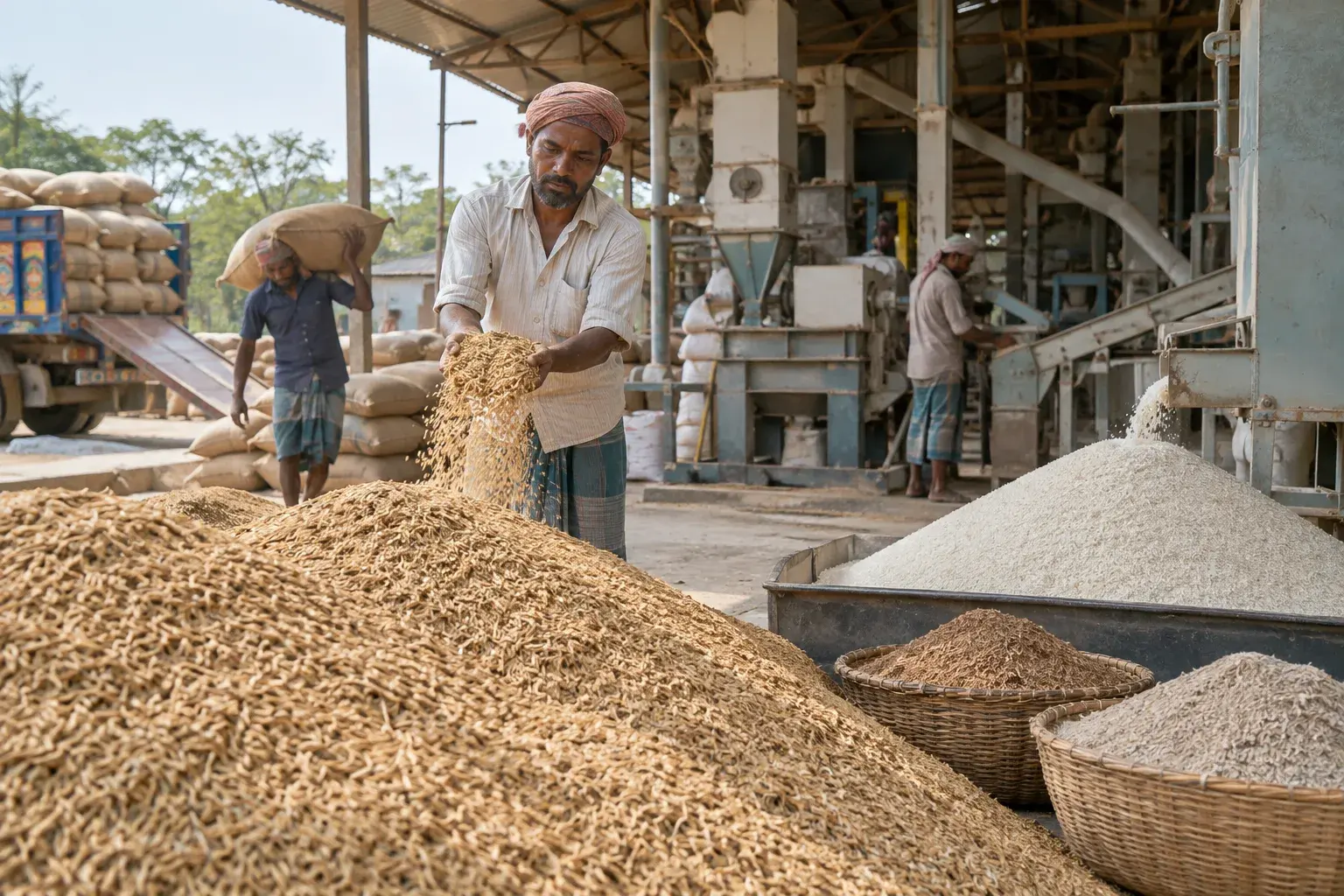 Food processing
Rice mill
Buying paddy, parboiling and hulling it, and selling the rice. 24,000 kg of paddy gives 15,000 kg of rice, and the husk, bran and broken grain return another Tk 6.45 on every kilo sold.
- Capital
- ৳5 lakh – ৳50 lakh
- People
- 4 – 20
- First income
- 30 – 120 days
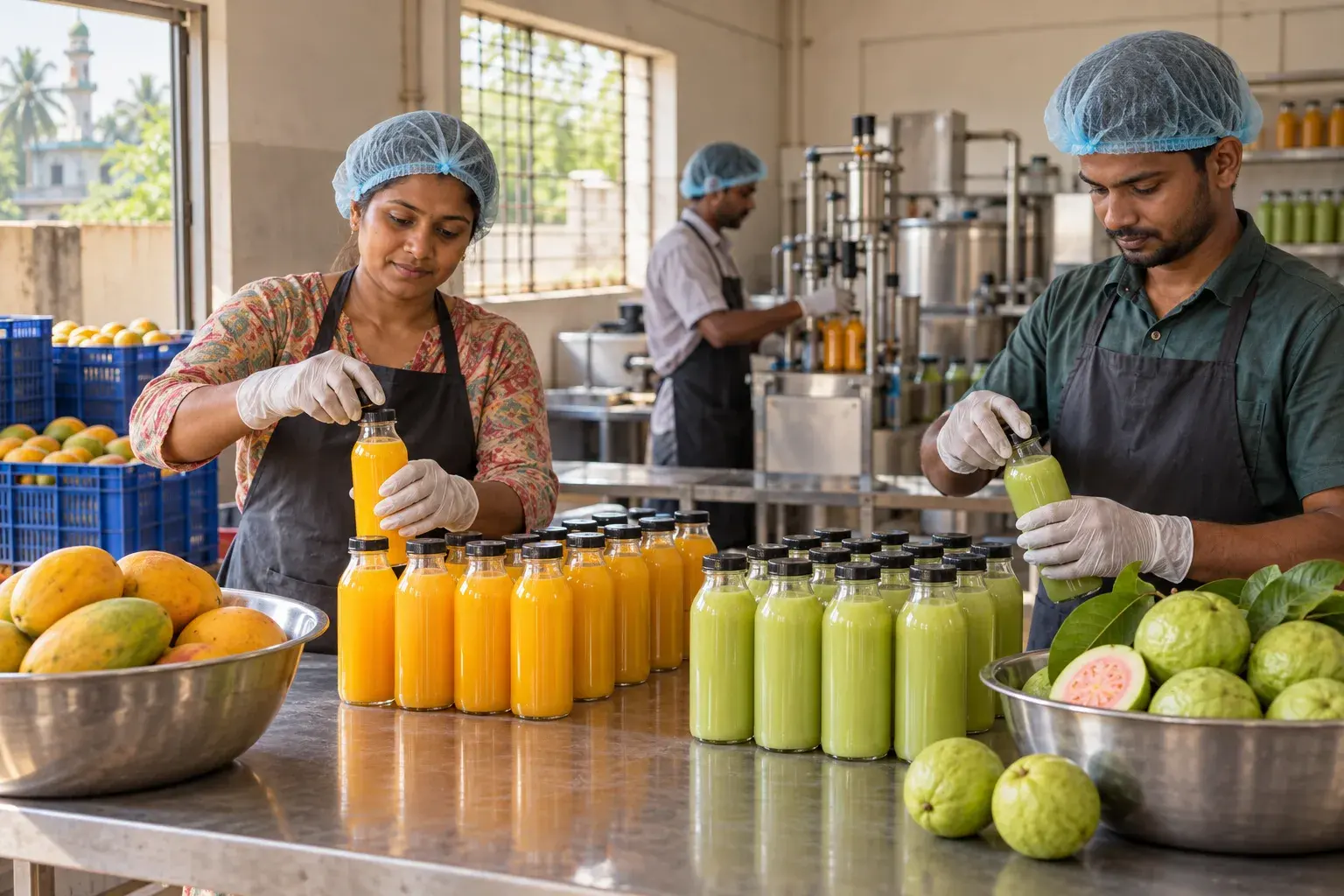 Food processing
Fruit juice and drinks
Making and bottling fruit juice and fruit drinks. A litre retails at Tk 80-90. Selling without a BSTI CM licence draws fines - recently Tk 30,000 to Tk 1,00,000.
- Capital
- ৳5 lakh – ৳30 lakh
- People
- 4 – 20
- First income
- 90 – 180 days
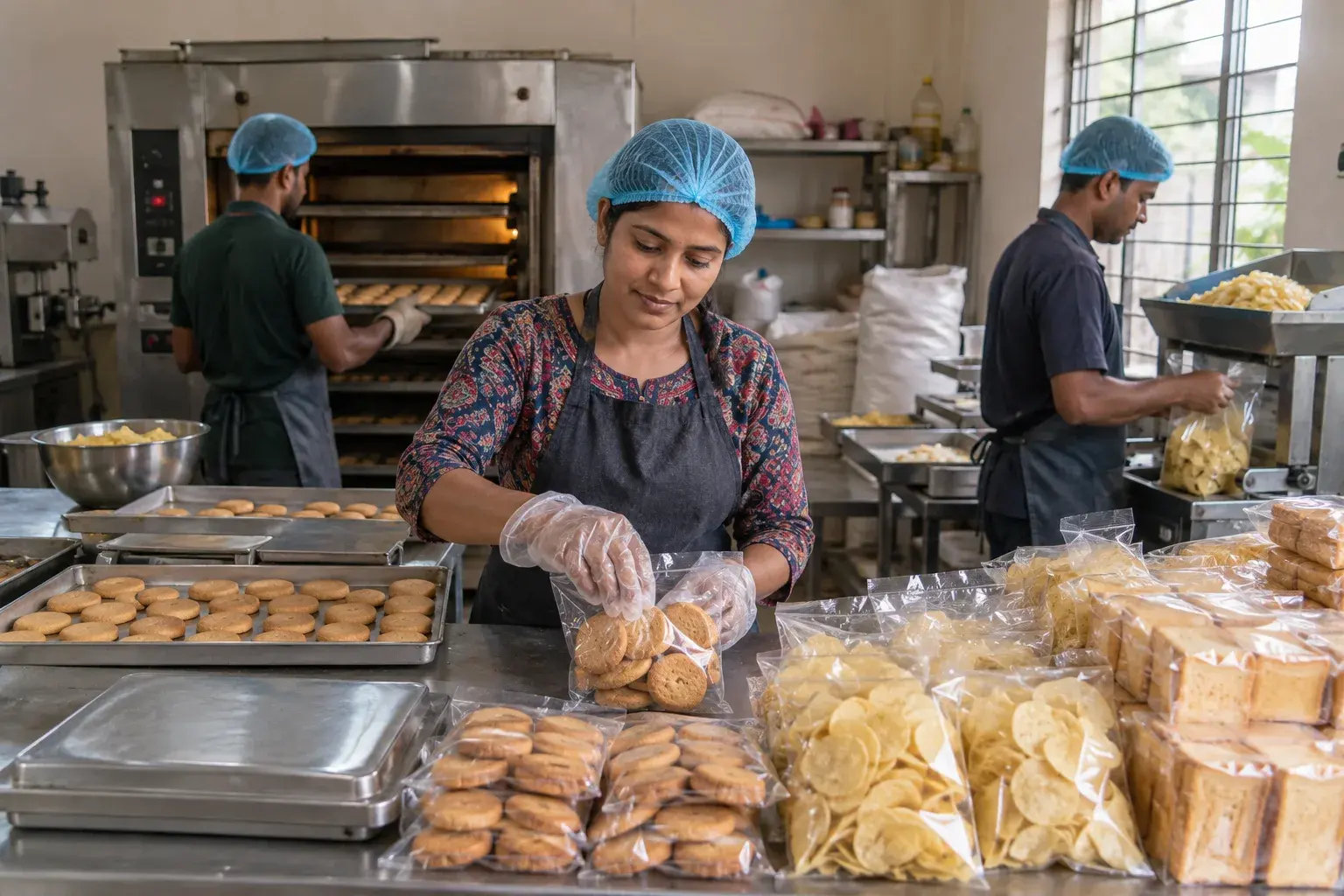 Food processing
Biscuit and chips making
Making and packing biscuits, toast and chips from flour, sugar and oil. BSTI certification is compulsory, and the shop credit cycle is the real constraint.
- Capital
- ৳4 lakh – ৳40 lakh
- People
- 4 – 30
- First income
- 45 – 100 days
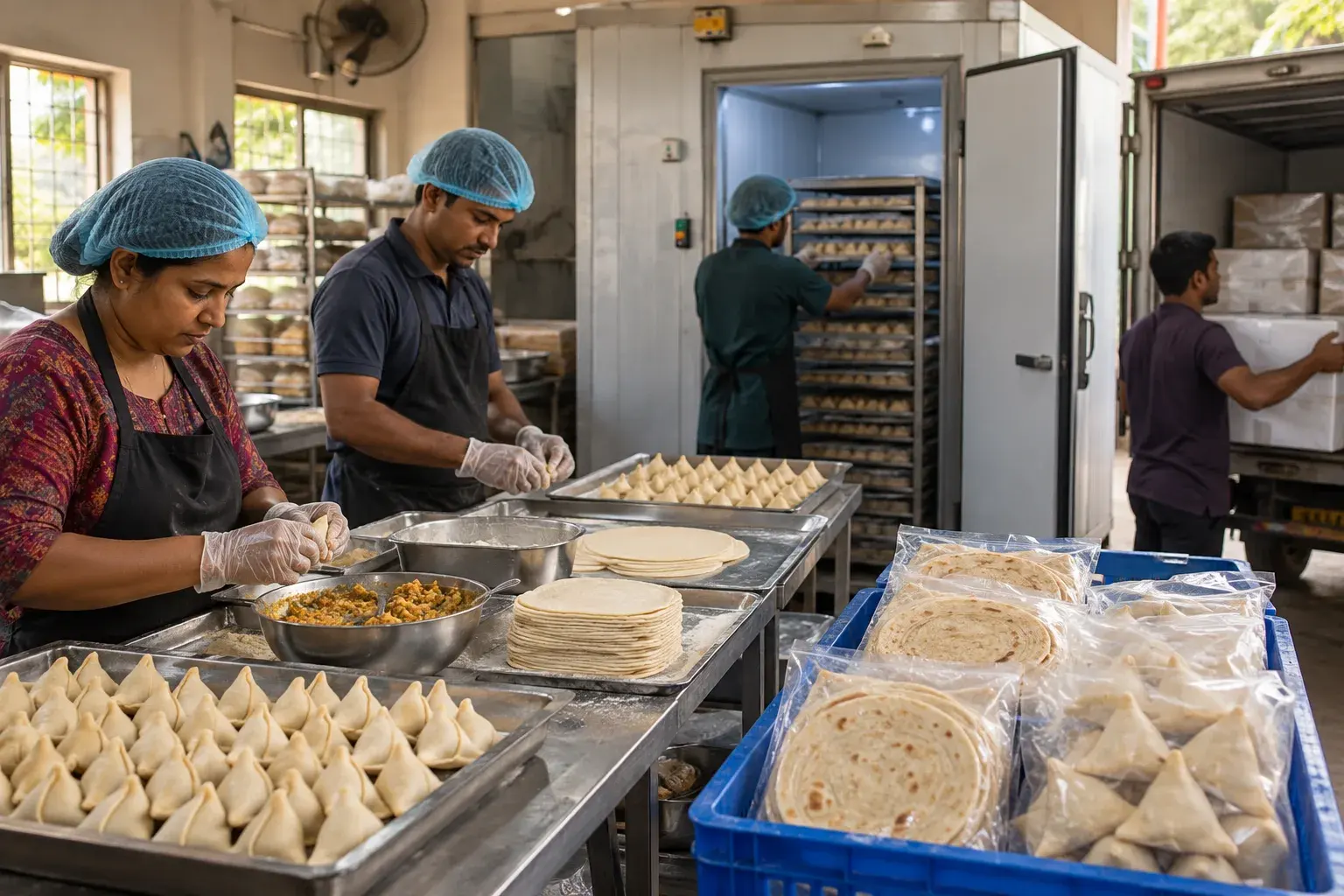 Food processing
Frozen paratha and samosa
Making raw paratha, samosa and singara, freezing them and selling them in packs. Retail is Tk 12.5-19 a paratha and Tk 8.6-9.4 a mini samosa. The cold chain from factory to shop is the real condition of the business.
- Capital
- ৳3 lakh – ৳15 lakh
- People
- 3 – 15
- First income
- 45 – 90 days