
Agarwood attar distilling
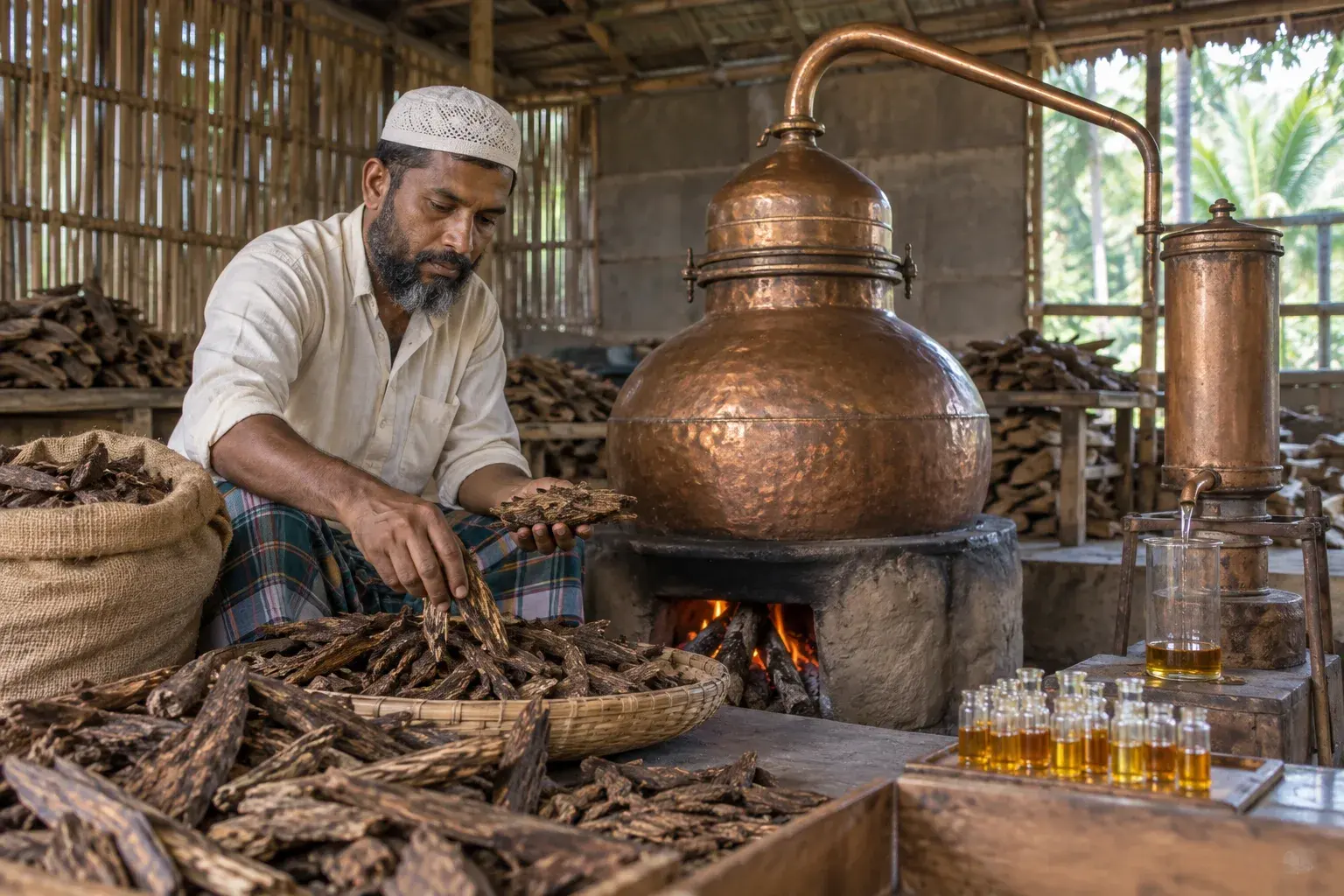
Soaking and boiling agarwood to draw off fragrant attar. Barlekha's Sujanagar has about 250 units, attar sells at Tk 6,000-10,000 a tola by grade, and nearly all of it is exported.
- Last reviewed: 19 September 2026
- Version 1
Agarwood attar distilling
- Starting capital
- ৳1,50,000 – ৳10,00,000 Editorial estimate
- Manpower
- 3 – 15 people
- First sale
- 2,555 – 10,950 days Disputed
- Break-even
- 4 – 6 months Editorial estimate
- Kind of work
- Workshop · Hard
About the business
Distilling fragrant oil, or attar, out of agarwood. Sujanagar village in Barlekha upazila of Moulvibazar is the cradle of the trade; the manufacturers' association puts 90-95 percent of the country's total agar and attar output in and around Barlekha. Sujanagar alone has around 250 small and medium units, with about 50 more elsewhere in the district. The work is slow. Iron nails are driven into the agar tree an inch apart, dark resin collects around each wound, and only seven to eight years after planting is the wood worth cutting. The wood is sliced thin, soaked in drums of water for fifteen days to a month, then boiled continuously in steel vessels while the attar drips out through a tube. One unit yields only one to five litres of liquid attar a month. In April 2024 attar sold at Tk 6,000 to Tk 10,000 per tola (11.66 g) depending on grade. Almost all of it is exported - Saudi Arabia, Kuwait, Europe, Japan, China and South Korea - with virtually no domestic market. The trade is under pressure: the association's general secretary says exports that once ran at Tk 150 crore a year have fallen below Tk 100 crore, blamed on the gas price, raw material shortage and thin export incentives. The industry pays Tk 30.50 per cubic foot for gas, and social forestry agar plantations have gone years without an auction, so wood is hard to get.
Unit economics
| Item | Range | Evidence | Suggest a correction |
|---|---|---|---|
| Monthly working capital | ৳80,000 – ৳6,00,000 | Editorial estimate | |
| Selling price | ৳6,000 – ৳10,000 / unit | Market quote | |
| Variable cost | ৳3,500 – ৳5,500 / unit | Editorial estimate | |
| Gross margin | 41.7% – 45% | Editorial estimate | |
| Time to first revenue | 2,555 – 10,950 days | Disputed | |
| Break-even time | 4 – 6 months | Editorial estimate | |
| Cash cycle | 15 – 30 days | Editorial estimate | |
| Waste / loss | 3% – 8% | Editorial estimate | |
| Daily capacity | 1 – 5 | Market quote |
What you need to start
- Soaking drums, steel boiling vessels, a distillation tube, wood cutting tools and a gas connection. In March 2025 the industry paid Tk 30.50 per cubic foot for gas.Equipment
- Forest Department licence, needed to bid at auctions for social forestry agarwood. Some 30-40 traders took this licence in 2016. The fee and validity could not be verified.Licence
- Export Registration Certificate (ERC) plus a TIN and VAT registration from NBR, compulsory for shipping abroad. Fees could not be verified.Licence
- Trade licence from the city corporation or municipality: form Tk 10, licence book Tk 50, standard tax Tk 30, stamp Tk 150-300, licence fee Tk 100-60,000 by trade type, plus VAT and signboard fee. Issued in three to five working days.Licence
- Judging wood quality by eye, separating the dark resinous part (the 'pachhrani' work), and holding the boiling temperature steady. The yield and grade of the attar depend on these three.Skill
- Agar trees, bought from private gardens or at Forest Department social forestry auctions. In April 2024 naturally formed mature agarwood sold at Tk 80,000-100,000 per kg and ordinary wood at Tk 200-1,000 per kg by grade.Supplier
- An open yard or shed to slice the wood and keep the drums, plus a separate room for boiling. In Sujanagar many units are simply the yard and verandah of a house.Workspace
How the work is done
- 1Go and watch the work in Sujanagar, Dakshinbhag, Shahbazpur or Kanthaltali in Barlekha. The skill here was built over generations and cannot be learned from a book.
- 2Secure your raw material first. Trees can be bought from privately owned agar gardens, but few are available. Forest Department social forestry agar trees come up at auction, and joining that auction needs a Forest Department licence.
- 3Take the trade licence from the city corporation or municipality and get a TIN and VAT registration from NBR - exporting is impossible without them.
- 4For export, take an Export Registration Certificate (ERC) from EPB and open an export account with a bank.
- 5Get in touch with the Bangladesh Agar and Atar Manufacturers and Exporters Association and the Barlekha Upazila Agar-Atar Traders' Multipurpose Cooperative Society. Buyers and auction news come through them.
- 6Fit out the unit: a cutting yard, soaking drums, steel boiling vessels, a distillation tube and a gas connection. The gas bill is the biggest running cost in this trade.
- 7Cut the tree, slice it, pull the nails and separate the dark resinous part from the white. This sorting, called 'pachhrani' locally, is the foundation of the whole process; sorting badly means less attar.
- 8Soak the pieces in drums of water for fifteen days to a month, then boil them continuously in steel vessels. The attar drips out through a tube into a collecting pot.
- 9Sell the agarwood, chips, dust and residue separately alongside the attar. Nearly every part of the tree has its own buyer.
- 10Apply to your bank for the export incentive. Bangladesh Bank's Foreign Exchange Policy Department set an 8 percent incentive on agar-attar exports for FY2024-25; check the current year's rate with the bank first.
Seasons
- JanHigh
- FebHigh
- MarHigh
- AprHigh
- MayHigh
- JunNormal
- JulLow
- AugLow
- SepLow
- OctLow
- NovNormal
- DecHigh
Where it works well
- Strong fitMoulvibazar · Sujanagar in Barlekha upazila is the cradle of the trade, with around 250 units there and about 50 more elsewhere in the district. The association puts 90-95 percent of national output here. 'Moulvibazar Agar' and 'Moulvibazar Agar Attar' received GI recognition on 12 February 2024.
- PossibleDhaka · Not for production but for export: banking, the ERC, incentive paperwork and contact with foreign buyers are all easier from Dhaka.
- PossibleHabiganj · Agar grows well on the hill and hillock soils here, and being close to the Moulvibazar units makes supplying wood easy.
- PossibleSylhet · Social forestry agar plantations sit under the Sylhet divisional forest office and the auctions run from here, so being close to the raw material helps.
- PossibleThakurgaon · Commercial agar planting has started on the plains here, and a unit in Yakubpur in Thakurgaon Sadar has installed machinery to produce agar oil organically. The craft skill base is new.
- Weak fitDinajpur · Agar planting has started but there is no processing capacity.
- Weak fitPanchagarh · Agar trees are being planted but without oil extraction machinery the trees are going unused.
- Weak fitSunamganj · There are some agar gardens but almost no processing units or trained hands, so the wood has to go to Barlekha.
Risks and cautions
- HighDependency: Raw material shortage is the central danger. Private gardens supply only a fraction of what is needed. The Forest Department has raised agar plantations under social forestry and the trees have matured, but no auction has been held for a long time. In 2016, at the Forest Department's own urging, 30-40 traders took licences to bid - and then the auctions stopped. The licence exists, the wood does not, and the unit sits idle.
- HighOther: The gas price. Drawing attar means keeping the vessel on the fire for hours, so gas is the biggest running cost. In March 2025 the industry paid Tk 30.50 per cubic foot and the government was moving to raise it further; traders have been asking for Tk 11.93 like the tea industry gets. When the price rises small units simply cut output, as one Sujanagar trader has already done.
- HighDemand: There is no domestic market at all. Attar, agarwood and even the residue go entirely abroad, so one bad season in the Middle East or one stuck consignment stops work for a whole village. The association reckons exports have fallen from Tk 150 crore a year to under Tk 100 crore over a few years.
- HighWorking capital: Money goes out long before it comes back. Buy the tree, slice it, soak it for fifteen days to a month, boil it, find a buyer, ship it. One Sujanagar trader gets Tk 5-7 lakh per export consignment and ships Tk 10-15 lakh of attar in a year, meaning the whole year's income rides on a handful of consignments. One held-up shipment holds up the year.
- MediumCompliance: Cutting and moving agar trees falls under Forest Department rules. Under the 2012 Agar Policy the Forest Department must send a proposal to the ministry before social forestry agar trees can be felled, so the decision is not the trader's. Without the right papers the wood risks being seized.
Sources
সিটি কর্পোরেশন থেকে ট্রেড লাইসেন্স প্রাপ্তির ধাপ সমূহ
Collected: 16 Sept 2026Supports: Starting capital · বাংলাদেশ
What changed
No corrections have been published yet.
Questions and answers
No questions yet. Be the first to ask.
Stories about this business
Gas from 26 to 30 taka a cubic foot, and a 30,000-taka bill every month
This attar still in Sujanagar makes about 12 tola of attar a month at 6,000 taka a tola, against a gas bill alone of 30,000 taka. Tea factories pay 11.93 taka per cubic foot; this trade pays 30.
- Reasons
- Dependency, Compliance
Flights stopped, and a two-crore export year turned into a one-crore loss
This agar-attar factory in Sujanagar, Barlekha, exports about 2 crore taka of product in a normal year. With Middle East flights grounded in Covid, 2020 ended with a loss of roughly 1 crore taka.
- Reasons
- Dependency, Weak demand
Similar businesses
 Light manufacturing & workshop
Small shoe making unit
A small unit making sandals and shoes for wholesalers. Sandals sell at Tk 250-700 and leather shoes at Tk 1,200. Bhairab alone has 3,500-5,000 units employing about 25,000 people.
- Capital
- ৳1.5 lakh – ৳10 lakh
- People
- 4 – 20
- First income
- 30 – 90 days
 Light manufacturing & workshop
Thai glass and aluminium fitting
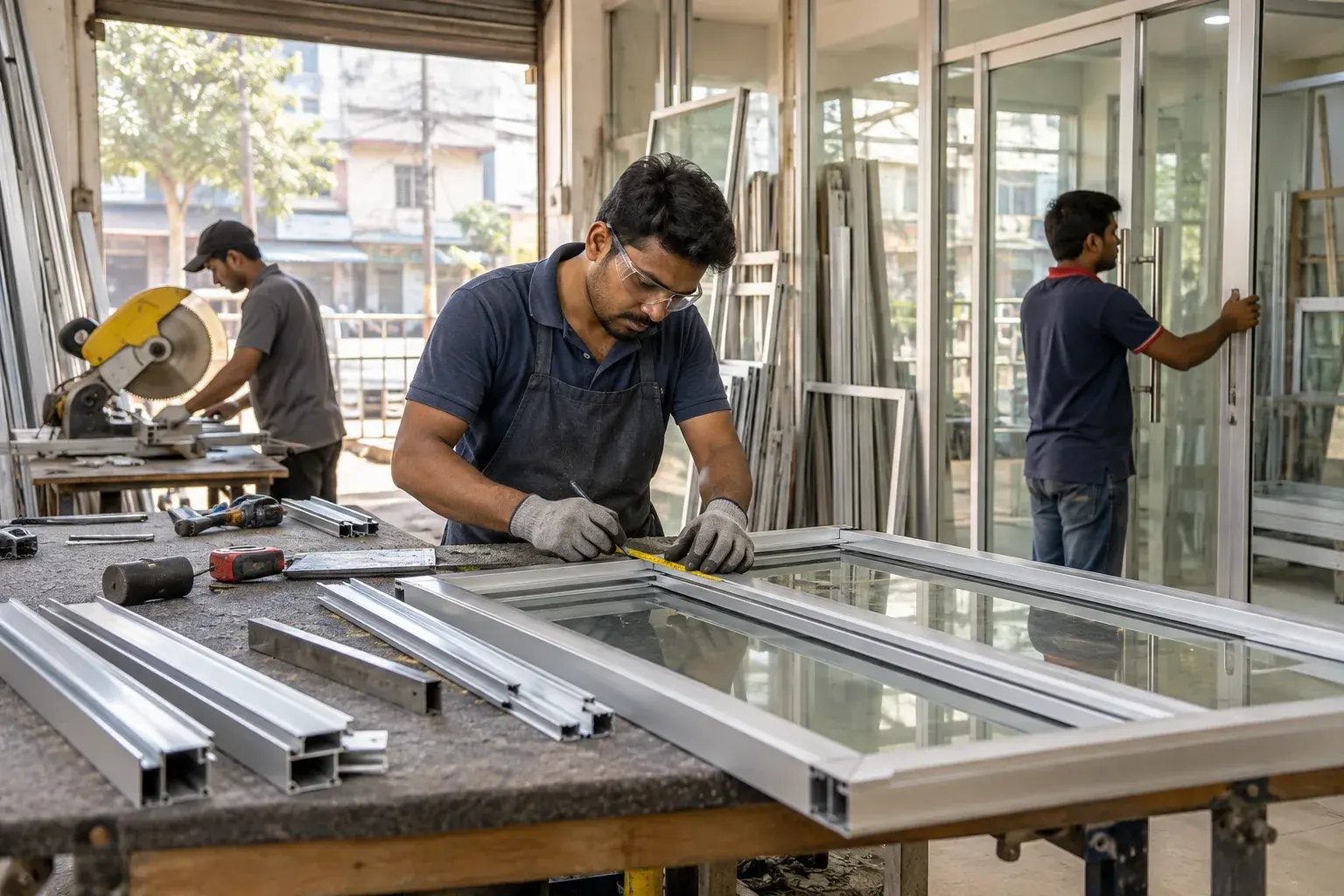
Cutting and fitting aluminium profile and glass into doors, windows and partitions. Ordinary work is about Tk 470-750 per square foot, and a wrong measurement cannot be returned.
- Capital
- ৳1.5 lakh – ৳6 lakh
- People
- 2 – 6
- First income
- 20 – 60 days
 Light manufacturing & workshop
Notebook making
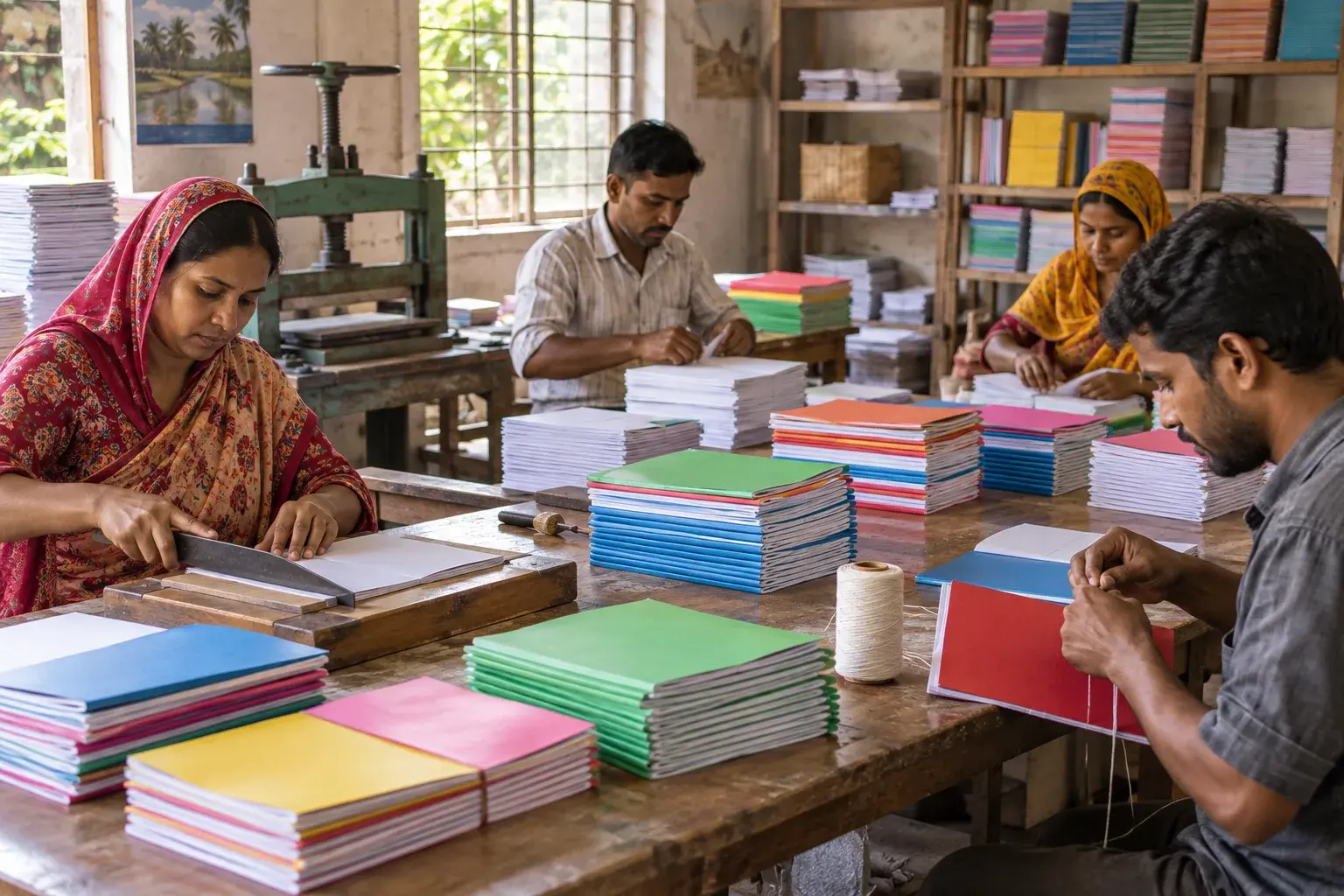
Cutting, folding and binding paper into exercise books. A 300-page khata sells online at Tk 169 and a 120-page one at Tk 75, while a packet of paper costs Tk 100-150 more than a year ago.
- Capital
- ৳1.5 lakh – ৳7 lakh
- People
- 3 – 15
- First income
- 15 – 45 days
 Light manufacturing & workshop
Wooden furniture workshop
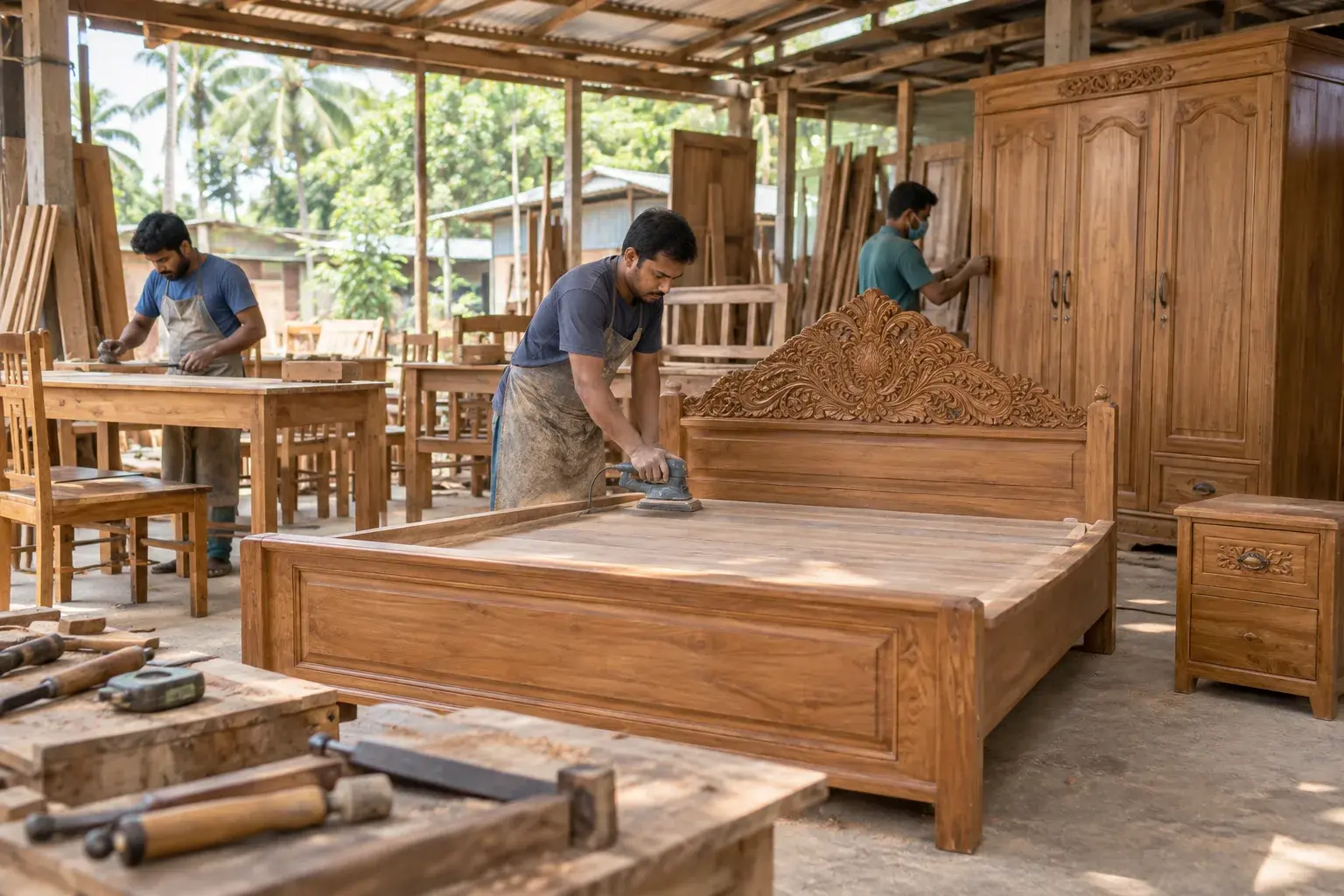
Building beds, wardrobes and tables to order. An MDF bed starts near Tk 12,000 and a solid teak king bed runs to Tk 1,80,000 - but the timber is paid for first and the money comes after delivery.
- Capital
- ৳1.5 lakh – ৳12 lakh
- People
- 2 – 10
- First income
- 30 – 90 days