
Buffalo rearing
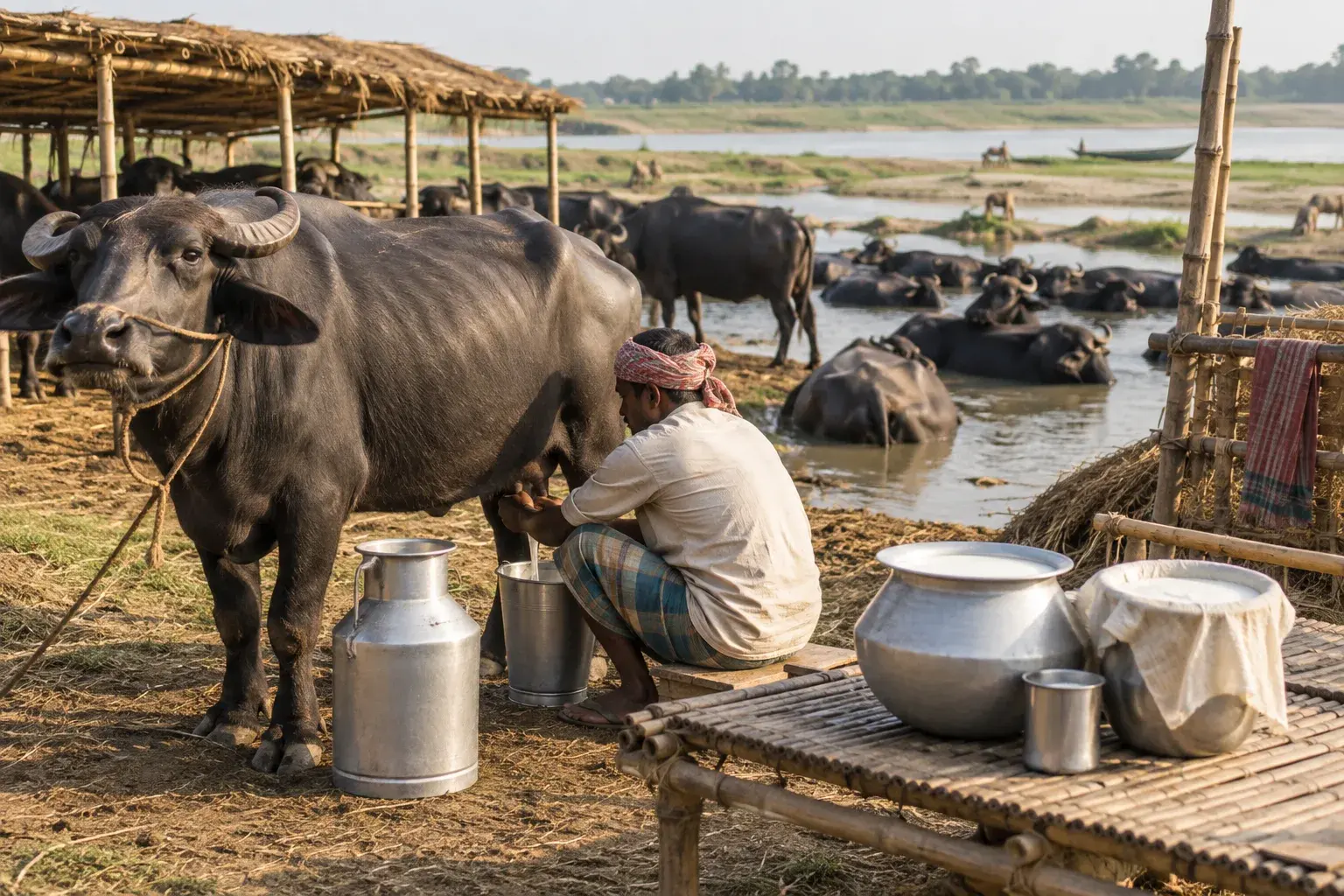
Keeping buffalo on the chars or in a bathan herd and selling the milk. A buffalo gives 4 to 8 kg of milk a day and buffalo milk fetches Tk 80 to 130 a litre, but only in districts where there are curd and sweet makers to buy it.
- Last reviewed: 21 September 2026
- Version 1
Buffalo rearing
- Starting capital
- ৳1,50,000 – ৳10,00,000 Editorial estimate
- Manpower
- 1 – 5 people
- First sale
- 1 – 365 days Editorial estimate
- Break-even
- 8 – 24 months Editorial estimate
- Kind of work
- Farm · Medium difficulty
About the business
Keeping buffalo on char grazing or in a bathan herd, selling the milk, and turning it into curd, cheese or sweets. The country has 15.32 lakh buffalo, but only 5 percent of its milk comes from them, against 43 percent in India and 65 percent in Pakistan. The reason is old: buffalo here were kept to pull ploughs and carts, not for milk, so the native breeds yield little. The heart of this business is where the price is. Buffalo milk is high in fat, so it sets into a thick curd, and that curd has a market of its own. Lakshmipur makes over 8 to 10 tonnes of buffalo curd a day and trades about Tk 50 crore of it a year; a litre of milk gives 950 grams of curd, and the curd sells at Tk 200 to 250 a kg. At Noim Mia's haat in Bakshiganj, Jamalpur, 200 to 300 kg of sour curd is sold at each market day at Tk 120 to 250 a kg. Bhola's buffalo-milk sour curd has GI recognition. But where there is no curd maker, buffalo milk has to be sold at the cow-milk price, and then the whole business loses its point. And the land is shrinking. In Lakshmipur the herd fell from 65,000-70,000 to 50,000 in two years, with settlements spreading into the grazing, more land under crops, fodder short, no bank credit, no training, robbery on the river and no embankments against storms.
Unit economics
| Item | Range | Evidence | Suggest a correction |
|---|---|---|---|
| Monthly working capital | ৳5,000 – ৳60,000 | Editorial estimate | |
| Selling price | ৳80 – ৳130 / kg | Market quote | |
| Variable cost | ৳4 – ৳55 / kg | Editorial estimate | |
| Gross margin | 32% – 58% | Editorial estimate | |
| Time to first revenue | 1 – 365 days | Editorial estimate | |
| Break-even time | 8 – 24 months | Editorial estimate | |
| Cash cycle | 1 – 30 days | Editorial estimate | |
| Waste / loss | 3% – 12% | Editorial estimate | |
| Daily capacity | 4 – 8 | Practitioner verified |
What you need to start
- Milk cans and strainers, pots for setting curd, and a way to get the milk to the haat. There is usually no chilling on a char, so speed is the only protection.Equipment
- Straw and concentrate for the dry months, and earthen pots and banana leaf if you set curd. Current feed prices could not be verified here.Starting stock
- Registration of the farm and a vaccination book at the upazila livestock office. Every upazila has a livestock office and veterinary hospital, and vaccination, treatment and training come through it. The registration fee could not be verified here.Licence
- Trade licence from the city corporation, municipality or union parishad: form Tk 10, licence book Tk 50, standard tax Tk 30, stamp Tk 150-300, licence fee Tk 100-60,000, issued in 3-5 working days.Licence
- Keeping to the vaccination schedule. Per the Department of Livestock Services guideline for cattle and buffalo: anthrax 1 ml subcutaneous, first at 6 months then yearly; haemorrhagic septicaemia 2 ml, from 6 months, every 6 months; black quarter 5 ml, from 6 months, every 6 months; foot-and-mouth from 4 months, every 4 months.Skill
- A settled buyer for the milk: a curd or sweet maker. The owner of Ghosh Mishtanna Bhandar in Raypur takes 150 to 200 litres of buffalo milk a day; without a buyer like that the price falls away.Supplier
- Grazing and water to wallow in — a char, beel or open field, with a raised yard or bathan for the night. In Lakshmipur settlements and cropping spreading into the grazing took the herd from 65,000-70,000 to 50,000 in two years.Workspace
How the work is done
- 1Find the buyer before the buffalo. Check whether there is a buffalo-milk curd or sweet maker in your area; if not, the milk goes at the cow-milk price and the extra trouble of keeping buffalo pays nothing.
- 2Settle the grazing. Buffalo graze all day and need water to wallow in; keeping them on bought feed is hard to make pay, so without a char, a beel or open ground this is difficult.
- 3Register at the upazila livestock office. Vaccination, treatment and training come through it, and there is an office in every upazila.
- 4Open the vaccination book while the animal is a calf: anthrax, haemorrhagic septicaemia and black quarter at six months, and the first foot-and-mouth shot at four months.
- 5Keep the vaccination dates to the day: foot-and-mouth every four months, haemorrhagic septicaemia and black quarter every six, anthrax once a year. One missed dose puts the whole herd at risk.
- 6Do not sit on the milk. Raw milk turns within hours in the heat and there is no chilling on a char, so the morning milking has to reach the maker the same morning.
- 7Work out whether to sell milk or set curd yourself. A litre of milk gives 950 grams of curd; at Tk 200-250 a kg that litre returns Tk 190-238, against Tk 80-130 for selling the milk.
- 8Build the week around the haat days. Noim Mia's haat at Bakshiganj sits on Saturdays and Tuesdays and moves 200 to 300 kg of sour curd each time, so the curd has to be set the night before.
- 9Stack straw ahead for the dry months. When the char grass gives out you have to buy in, and that is exactly when it is dearest.
- 10Fix in advance where the herd goes in a storm or tidal surge. With no embankment on the char, one night's surge can take the whole bathan.
- 11Once you sell milk or curd regularly, take a trade licence from the union parishad or municipality; it is issued in three to five working days.
- 12Write down which buffalo calved when and how much she gives a day. If you cannot pick out the poor milkers, the feed money keeps going into them.
Seasons
- JanNormal
- FebNormal
- MarLow
- AprLow
- MayLow
- JunNormal
- JulNormal
- AugHigh
- SepHigh
- OctHigh
- NovHigh
- DecNormal
Where it works well
- Strong fitBhola · An island ringed by rivers and sea with buffalo long kept on its 21-odd chars; Bhola's buffalo-milk sour curd has GI recognition, so the name itself carries a price.
- Strong fitJamalpur · At Noim Mia's haat in Surnagar, Bakshiganj, 200-300 kg of buffalo sour curd sells every Saturday and Tuesday at Tk 120-250 a kg, a settled market for a small keeper.
- Strong fitLakshmipur · The country's most organised buffalo-curd market: over 8 to 10 tonnes a day and about Tk 50 crore of trade a year, with a collection centre at Raypur and steady buyers like Ghosh Mishtanna Bhandar.
- Strong fitNoakhali · Wide chars at the Meghna mouth, with the Lakshmipur curd market next door, so the milk has somewhere to go.
- PossibleBagerhat · Buffalo are kept in the coastal belt, but salinity and shrimp ghers leave limited grazing.
- PossibleBarguna · Chars and open grazing are here, but the storm and surge risk is high and there is little protection from embankments.
- PossibleKurigram · Buffalo-milk chomchom is a known sweet here, so there are makers to take the milk, and there is grazing on the Brahmaputra chars.
- PossiblePatuakhali · Buffalo are kept on the coastal chars, but with fewer curd and sweet makers the premium is not available everywhere.
- PossibleSirajganj · There is an old tradition of bathan herding on the Jamuna chars and milk can reach the Dhaka market, but the separate buffalo-curd market here is small.
Risks and cautions
- HighDependency: The grazing is shrinking, and without grazing buffalo do not pay. In Lakshmipur the herd fell from 65,000-70,000 to 50,000 in two years, with settlements and cropping spreading into the grazing, fodder short, no bank credit, no training, theft and robbery on the river, and no embankments against storms. The Raypur collection centre used to take 200 litres a day and now takes 70 to 80.
- HighDemand: The premium for buffalo milk does not exist countrywide, only in the few districts that have curd and sweet makers: Lakshmipur, Bhola, Bakshiganj in Jamalpur, Kurigram. Elsewhere buffalo milk goes at the cow-milk price while the trouble and risk of keeping buffalo stay higher. Get the district wrong and the whole arithmetic inverts.
- HighSpoilage: Raw milk turns within hours in the heat and there is no ice or chilling on the char. If the boat is late or it rains on haat day, that day's milk is thrown away, and the loss is the same day with no chance to make it up.
- MediumCompliance: A missed vaccination date costs a lot. Foot-and-mouth is due every four months, haemorrhagic septicaemia and black quarter every six, anthrax once a year. In a bathan all the animals are together, so one unprotected beast can take the whole herd, and a sick buffalo stops giving milk.
- HighOther: On a char there are storms, tidal surges and robbery, all three. Without an embankment one night's surge can take the whole bathan, and theft and robbery on the river are named as one reason the herds are shrinking. There is no insurance and bank credit is hard to get.
- MediumWorking capital: Buying buffalo takes a large sum at once, and the milk only starts after calving. In between, feed and the herdsman still have to be paid. Lack of bank credit is listed as one of the seven problems holding the sector back.
Sources
সিটি কর্পোরেশন থেকে ট্রেড লাইসেন্স প্রাপ্তির ধাপ সমূহ
Collected: 16 Sept 2026Supports: Starting capital · বাংলাদেশ
Bangladesh lags behind regional peers in buffalo milk production
Collected: 2 Jun 2026Supports: Variable cost · বাংলাদেশ
মহিষের দুধের টকদইয়ের রাজ্য বকশীগঞ্জের নঈম মিয়ার হাট
Collected: 31 Aug 2025Supports: Starting capital, Daily capacity, Selling price · জামালপুর — বকশীগঞ্জ, সুর্ণনগর, নঈম মিয়ার হাট
জিআই স্বীকৃতি পেল ভোলার মহিষের দুধের দই
Collected: 19 May 2025Supports: districts · ভোলা
লক্ষ্মীপুরে যেসব কারণে কমছে মহিষের দুধ উৎপাদন
Collected: 1 Jun 2024Supports: Selling price, risks · লক্ষ্মীপুর — রায়পুর
মহিষের দই বিক্রিতে বছরে আয় ৫০ কোটি টাকা
Collected: 16 Jan 2024Supports: Gross margin, Selling price · লক্ষ্মীপুর
What changed
No corrections have been published yet.
Questions and answers
No questions yet. Be the first to ask.
Stories about this business
Started with 13 cattle; the buffaloes alone are now worth 1.25 crore
He began in 2016 with 13 local cattle. The farm now holds 45 cattle and 52 Indian crossbred buffaloes on 107 decimals, selling on a three-month cycle at a minimum of 70,000 to 1 lakh taka a buffalo.
- Reasons
- Strong network, Working capital
Similar businesses
 Agriculture & farming
Dragon fruit farming
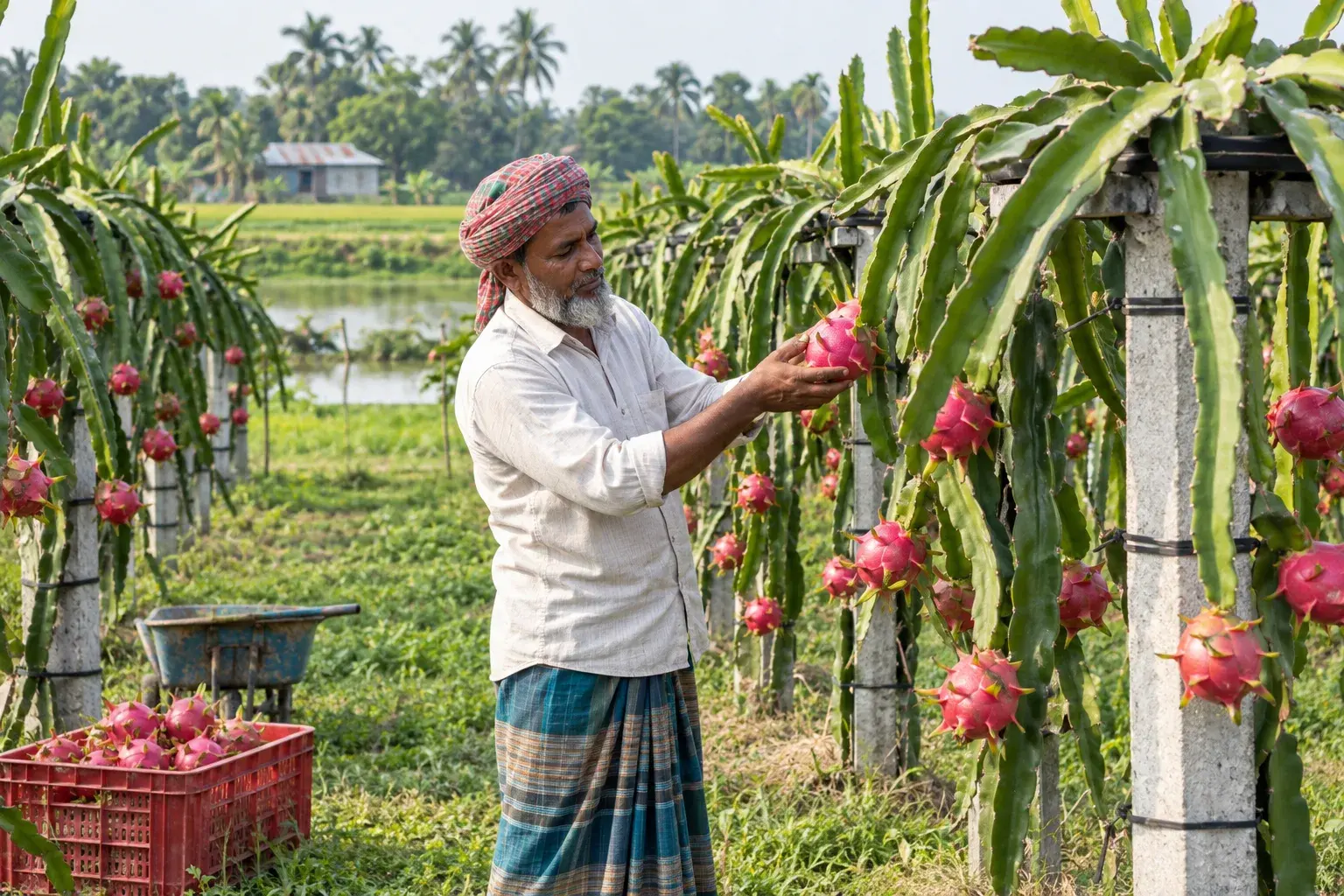
Growing dragon fruit on posts. One to four lakh taka a bigha up front, first fruit about a year later, and a price that has fallen from Tk 500 to Tk 80-100 a kilo in Karwan Market.
- Capital
- ৳1.5 lakh – ৳4 lakh
- People
- 1 – 4
- First income
- 365 days
 Agriculture & farming
Shrimp farming (gher)
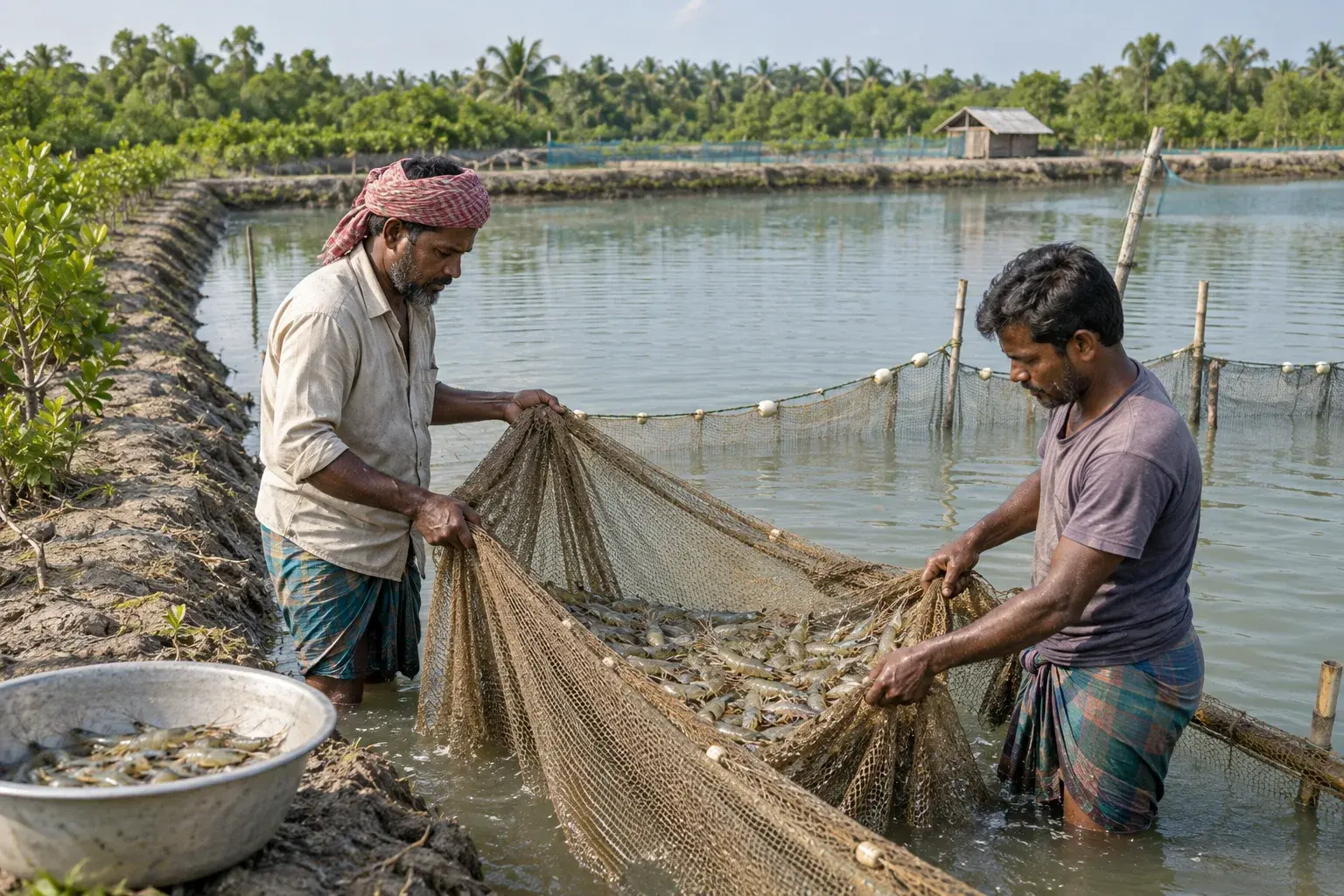
Farming bagda and golda in embanked saline ponds. Fry has gone from Tk 1,300-1,700 to about Tk 3,000 per thousand this season and southern hatcheries have fallen from 78 to 37.
- Capital
- ৳1.5 lakh – ৳6 lakh
- People
- 1 – 5
- First income
- 90 – 150 days
 Agriculture & farming
Broiler poultry farm
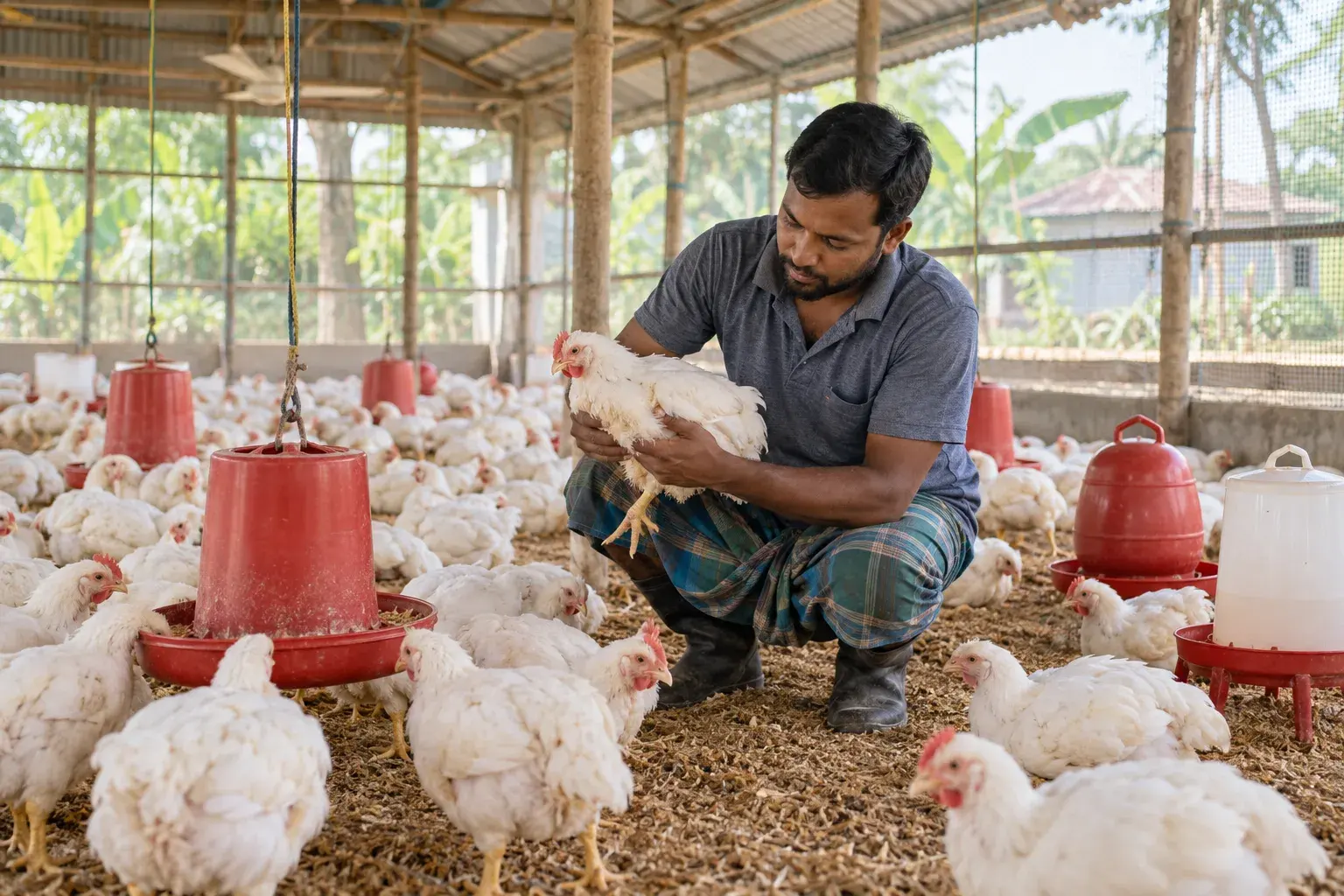
Raising day-old chicks to live birds in about a month. Farm-gate prices swung from Tk 110 to Tk 198 a kg during 2026 against a production cost of roughly Tk 140.
- Capital
- ৳1.5 lakh – ৳6 lakh
- People
- 1 – 3
- First income
- 32 – 60 days
 Agriculture & farming
Cattle fattening
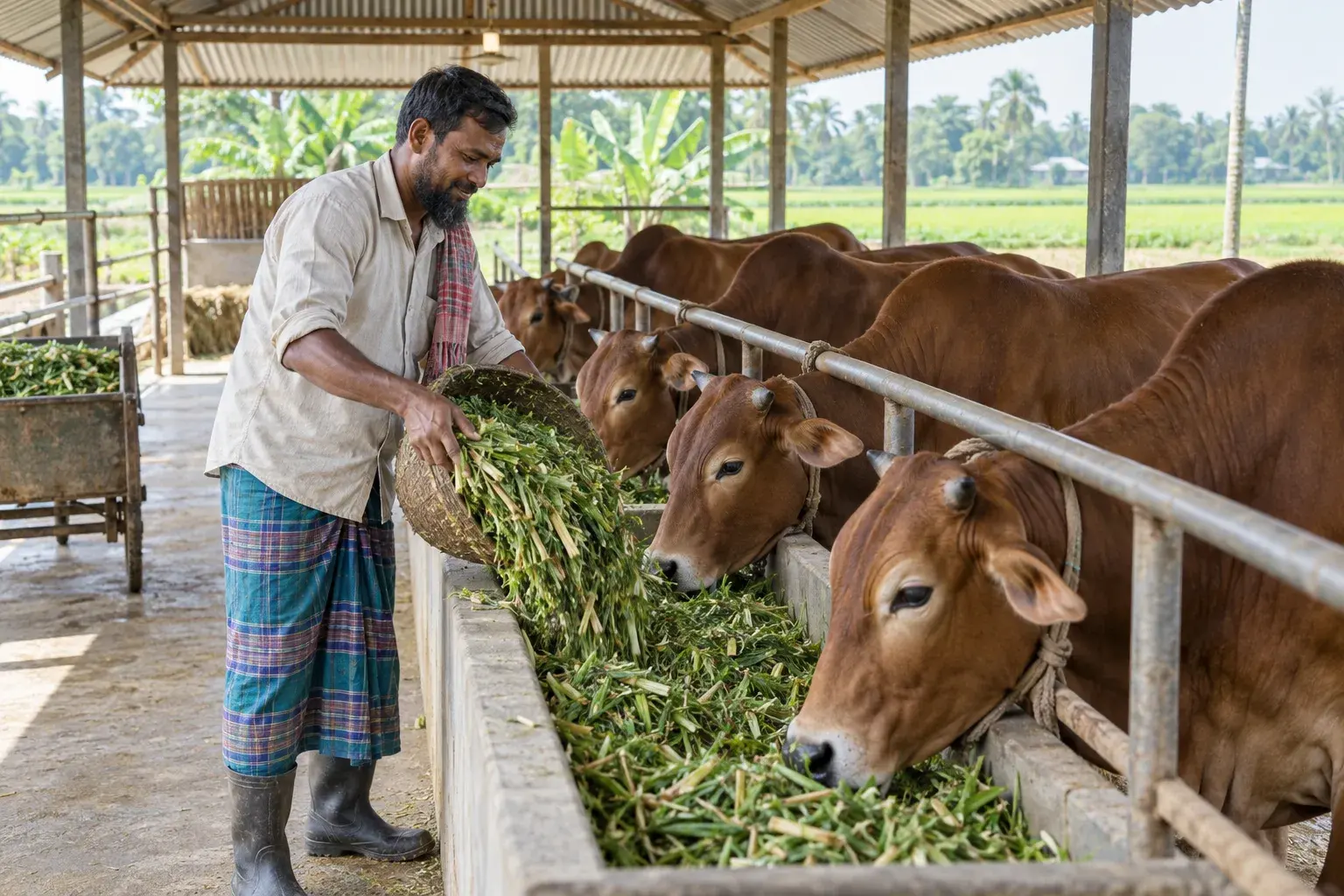
Buying cattle cheap, feeding them up and selling at the Qurbani market. About Tk 225 a day per animal, and at Qurbani 2026 one in four prepared animals did not sell.
- Capital
- ৳1.5 lakh – ৳8 lakh
- People
- 1 – 4
- First income
- 120 – 365 days