
Frozen paratha and samosa
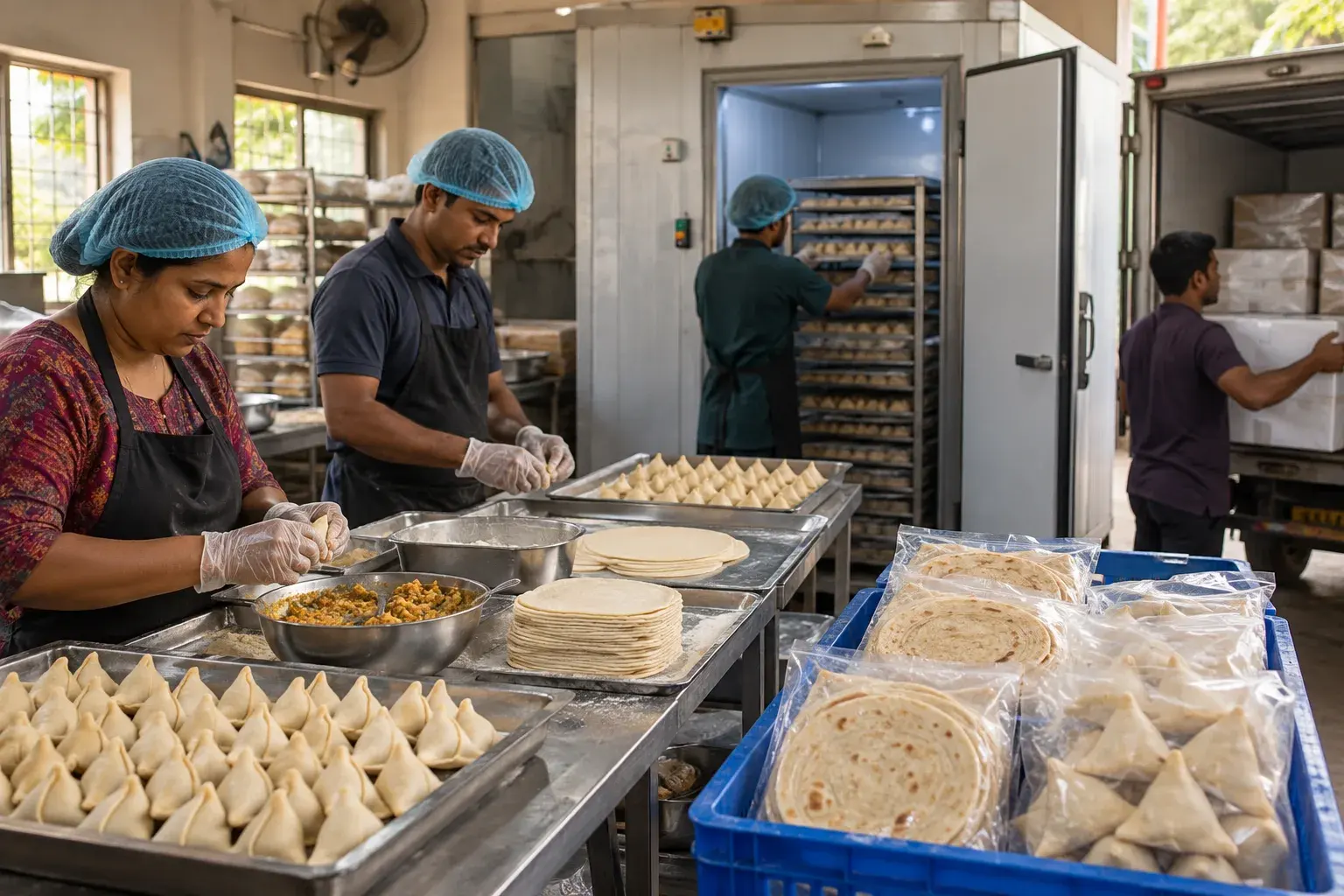
Making raw paratha, samosa and singara, freezing them and selling them in packs. Retail is Tk 12.5-19 a paratha and Tk 8.6-9.4 a mini samosa. The cold chain from factory to shop is the real condition of the business.
- Last reviewed: 19 September 2026
- Version 1
Frozen paratha and samosa
- Starting capital
- ৳3,00,000 – ৳15,00,000 Editorial estimate
- Manpower
- 3 – 15 people
- First sale
- 45 – 90 days Editorial estimate
- Break-even
- 8.5 – 24 months Editorial estimate
- Kind of work
- Workshop · Hard
About the business
Kneading flour, rolling parathas, filling samosas and singaras, freezing them raw and packing them off to shops, where the customer only has to fry them. The real subject of this business is not cooking but keeping things cold. Factory freezer to van, van to the shop's freezer - break that chain anywhere and the product is ruined, and once a ruined pack reaches a customer the shopkeeper stops stocking you. On 16 September 2026 branded frozen paratha on Chaldal ran from Tk 12.5 to Tk 19 a piece (Kazi Farms Kitchen 10 pieces at Tk 170, Golden Harvest 20 pieces at Tk 320) and mini samosa from Tk 8.6 to Tk 9.4 a piece (Golden Harvest 25 pieces, 250 g, at Tk 215). Inputs on 15 September 2026: loose atta Tk 48-50/kg, loose maida Tk 65-70, loose soybean oil Tk 186-195/litre, potato Tk 25-30. Packet maida rose 14.3 percent and soybean oil 11.4 percent over the year, but a printed pack price cannot be changed the same week. The market is not small - about Tk 450-500 crore in 2023, growing at least 15 percent a year - but it belongs to Golden Harvest, Kazi Food, AG Agro, Pran and Bengal Meat. A small maker's room is inside one locality, close enough to deliver in person and to look at the shop's freezer with his own eyes.
Unit economics
| Item | Range | Evidence | Suggest a correction |
|---|---|---|---|
| Monthly working capital | ৳1,20,000 – ৳6,50,000 | Editorial estimate | |
| Selling price | ৳9 – ৳19 / unit | Market quote | |
| Variable cost | ৳5 – ৳8 / unit | Editorial estimate | |
| Gross margin | 44% – 58% | Editorial estimate | |
| Time to first revenue | 45 – 90 days | Editorial estimate | |
| Break-even time | 8.5 – 24 months | Editorial estimate | |
| Cash cycle | 10 – 30 days | Editorial estimate | |
| Waste / loss | 3% – 8% | Editorial estimate | |
| Daily capacity | 500 – 2,000 | Editorial estimate |
What you need to start
- Deep freezers (September 2026: Walton 125 L Tk 16,990, Walton 205 L Tk 32,390, Haier 301 L Tk 38,000, Sharp 310 L Tk 49,490), a dough mixer or large bowls, rolling tables and pins, gas burners, scales, a sealing machine, and a generator or IPS for power cuts.Equipment
- Atta, maida, oil, potato, onion, spices and packaging. Dhaka retail on 15 September 2026: loose atta Tk 48-50/kg, packet atta Tk 60-65, loose maida Tk 65-70, packet maida Tk 75-85, loose soybean oil Tk 186-195/litre, palm oil Tk 166-172, potato Tk 25-30, local onion Tk 50-55.Starting stock
- A fire licence from Fire Service and Civil Defence, environmental clearance from the Department of Environment, and TIN and VAT registration from the NBR. The full process takes 2-4 weeks with documents ready.Licence
- Trade licence from the city corporation or municipality, with the trade named as food manufacturing: form Tk 10, licence book Tk 50, standard tax Tk 30, stamp Tk 150-300, licence fee Tk 100-60,000. Issued in 3-5 working days, renewed yearly.Licence
- Bangladesh Food Safety Authority registration under the Food Safety (Registration and Licensing) Regulations 2026, gazetted 16 July 2026. Compulsory for packaged food producers: Tk 1,000 new, Tk 500 renewal, valid three years; establishment licensing Tk 1,000-5,000, up to Tk 40,000 for large warehouses including cold storage. A physical kitchen inspection precedes registration.Licence
- Rolling to an even size and filling to an even weight. If the 20 pieces in a pack are not alike, the shopkeeper does not reorder.Skill
- A flour dealer, an oil wholesaler, a printer for packaging, and a freezer mechanic. When a freezer fails you need someone within hours, so arrange it beforehand.Supplier
- Premises with washable floors and walls and separate areas for kneading, rolling, filling, packing and freezing, with continuous power and water.Workspace
How the work is done
- 1Count the shops before you think about the factory. Walk your area and count how many grocery and departmental stores have a working freezer. No freezer means nowhere to keep your product.
- 2Take premises with separate areas for kneading, rolling, filling, packing and freezing. Floors and walls must be washable, because BFSA registration follows a physical inspection of the kitchen.
- 3Take the trade licence and make sure it names the trade as food manufacturing, otherwise the later papers stall.
- 4Register with the Bangladesh Food Safety Authority: Tk 1,000 new, Tk 500 renewal, valid three years. Licensing for establishments is Tk 1,000-5,000, and up to Tk 40,000 for large warehouses including cold storage.
- 5Get the Fire Service licence, Department of Environment clearance, and TIN and VAT registration from the NBR. With documents ready the whole set takes 2-4 weeks.
- 6Buy deep freezers - large ones for the unit and a separate arrangement for the van. In September 2026 a Walton 125 L was Tk 16,990, Walton 205 L Tk 32,390, Haier 301 L Tk 38,000 and Sharp 310 L Tk 49,490.
- 7Decide what happens in a power cut - generator or IPS - before anything else. A few hours without power thaws and refreezes the stock, and people fall ill from that product.
- 8Fix the piece weight and hold it. Market packs are 600-650 g for 10 parathas and 1,300-1,600 g for 20. If you shave the weight it is the customer, not the shopkeeper, who notices.
- 9Print name, address, ingredients, weight, piece count, date of making, expiry and a keep-frozen instruction on the pack. A registration number on the label makes shopkeepers willing to stock it.
- 10Start in your own area and deliver yourself. Short distances can be covered with an ice box, but reaching a distant market needs a refrigerated van.
- 11Go back at least once a month, open the shop's freezer and look - is your pack iced up, and does the freezer stay on after closing? That one habit stops most complaints.
- 12Samosa and singara orders climb from two months before Ramadan. Set aside the money for that period's flour and oil in advance.
Seasons
- JanNormal
- FebHigh
- MarHigh
- AprHigh
- MayNormal
- JunLow
- JulLow
- AugLow
- SepNormal
- OctNormal
- NovNormal
- DecNormal
Where it works well
- Strong fitChattogram · A large city with many superstores and departmental shops and relatively steady power, so the cold chain is easier to hold.
- Strong fitDhaka · The highest concentration of shops with freezers, superstores and online grocers; online shops such as Chaldal sell branded paratha and samosa routinely, and working households here have the least time to cook.
- PossibleBogura · A northern trading centre from which shops in surrounding districts can be supplied.
- PossibleCox's Bazar · Hotels and restaurants buy snacks in fixed quantities during the tourist season, though demand falls off out of season.
- PossibleCumilla · Hotels and tea stalls on the Dhaka-Chattogram highway sell fried snacks, and the number of departmental shops in town is growing.
- PossibleGazipur · Factory workers and mess kitchens want quick food, and the Dhaka market is a short delivery away.
- PossibleKhulna · Superstores and larger groceries in the divisional city have freezers, and it works as a base for supplying nearby districts.
- PossibleNarayanganj · Dense settlement next to Dhaka, close enough to deliver in an ice box.
- PossibleRajshahi · Messes and canteens around the university and student quarters want quick snacks.
- PossibleSylhet · Remittance households have higher spending power and less resistance to ready food, and the city has superstores.
Risks and cautions
- HighSpoilage: Break the cold chain and everything is lost. Factory freezer, transport van, shop freezer - a few hours without cold at any one of them thaws and refreezes the product. The pack looks the same from outside, but ice crystals form inside and the taste goes. Shops routinely switch the freezer off after closing, and that is where your stock is sitting.
- HighCompliance: BFSA registration is compulsory for packaged food producers and follows a physical kitchen inspection. Registration is Tk 1,000 (Tk 500 renewal, three years), establishment licensing Tk 1,000-5,000, and up to Tk 40,000 for large warehouses including cold storage. On top of that come the trade licence, fire licence, environmental clearance and VAT registration - 2-4 weeks even with papers ready. Without them no superstore or large shop will take the product.
- HighDependency: The market is already taken. A 2023 report put frozen food at Tk 450-500 crore led by Golden Harvest, Kazi Food, AG Agro Food, Pran and Bengal Meat, with Kazi Farms Kitchen alone running 170 franchises then. The shelf inside a shop's freezer is full of their packs, and a newcomer gets space only by taking someone else's.
- MediumWorking capital: Input prices rise, the printed pack price does not. Over the year packet maida rose 14.3 percent and loose soybean oil 11.4 percent (TCB, 15 September 2026). Changing the price means reprinting packaging and persuading shopkeepers, and the gap in between is your loss.
- MediumDemand: Demand leans on Ramadan - samosa and singara are iftar items, so orders jump before it and fall away after Eid. Capacity added for Ramadan sits idle the rest of the year while the freezers draw power all twelve months.
Sources
সিটি কর্পোরেশন থেকে ট্রেড লাইসেন্স প্রাপ্তির ধাপ সমূহ
Collected: 16 Sept 2026Supports: Starting capital, Time to first revenue · বাংলাদেশ
- Collected: 15 Sept 2026
Supports: Starting capital · ঢাকা মহানগর — সিপাহীবাগ, মিরপুর-৬, মোহাম্মদপুর টাউন হল, নিউমার্কেট, রামপুরা, মহাখালী বাজার
All food businesses now need safety registration
Collected: 22 Jul 2026Supports: Starting capital · বাংলাদেশ
What changed
No corrections have been published yet.
Questions and answers
No questions yet. Be the first to ask.
Similar businesses
 Food processing
Small restaurant
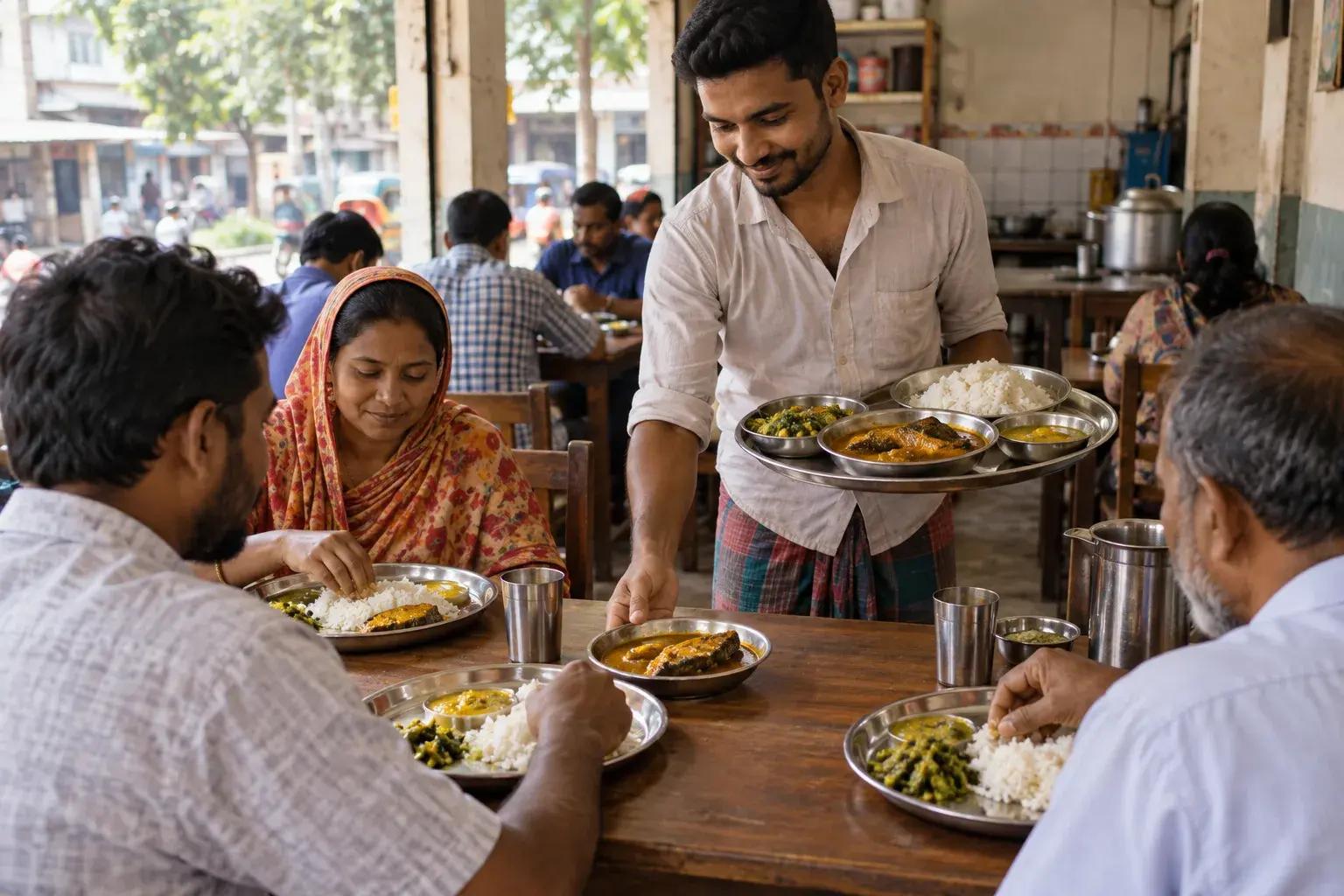
A 300-500 sqft rice hotel. Cash comes in daily, but ingredients eat 35-50 percent of sales and six separate approvals are needed to open.
- Capital
- ৳3 lakh – ৳6 lakh
- People
- 3 – 8
- First income
- 60 – 120 days
 Food processing
Biriyani shop
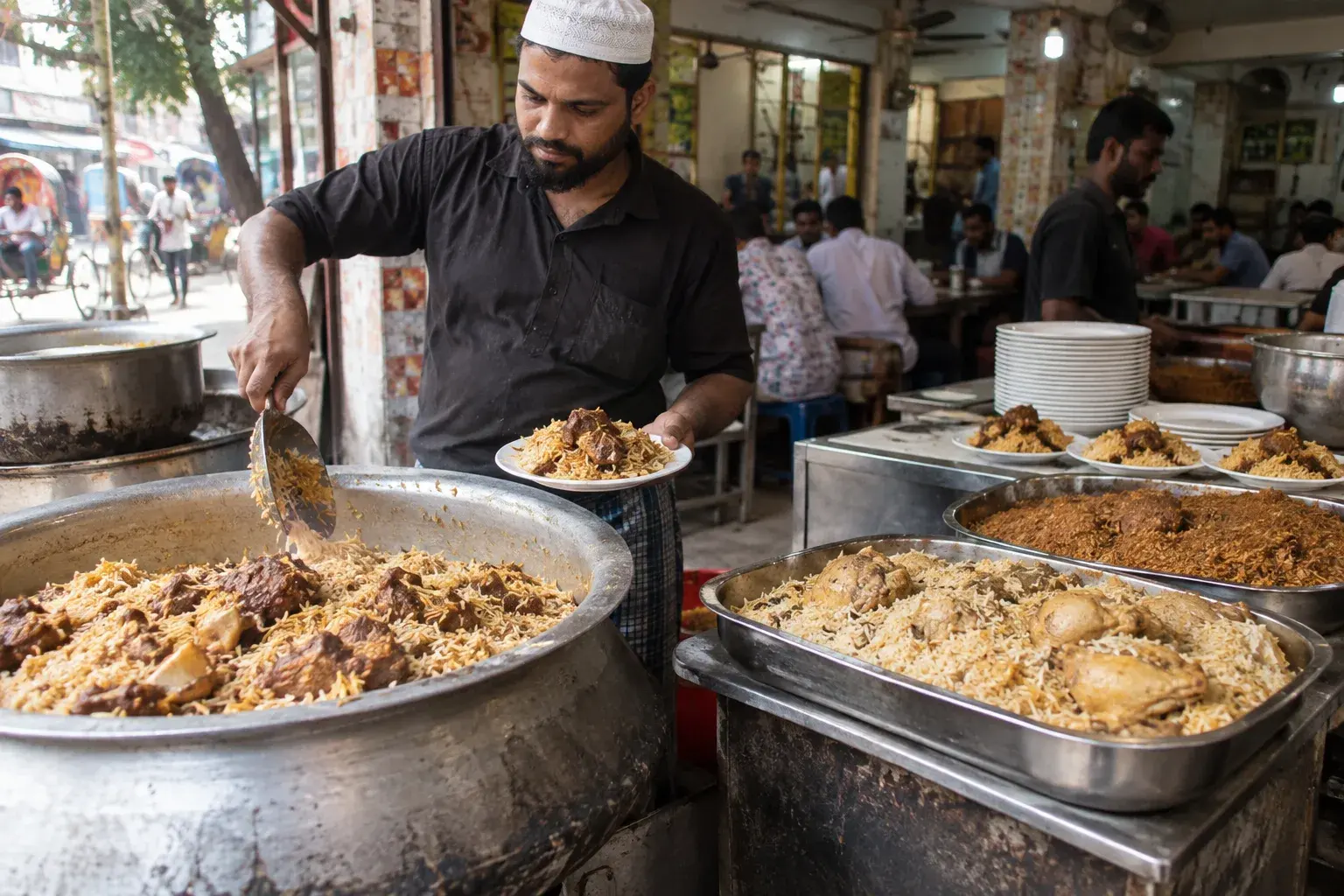
Selling kacchi, tehari and morog polao by the plate. Almost the entire cost is meat - the raw material in one pot of shahi mutton kacchi is Tk 13,265-15,054.
- Capital
- ৳3 lakh – ৳25 lakh
- People
- 3 – 15
- First income
- 30 – 90 days
 Food processing
Semai and noodle making
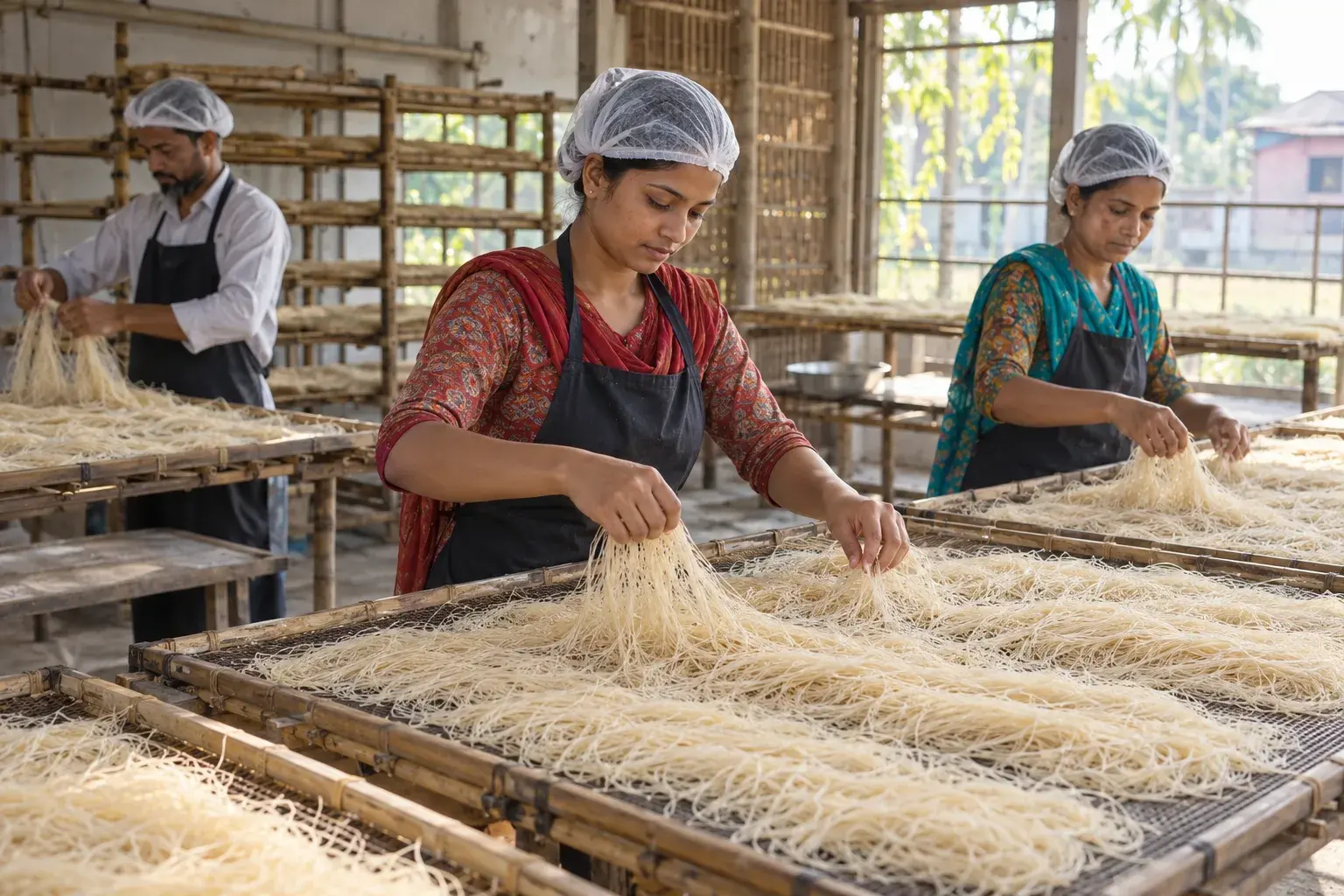
Cutting flour dough into vermicelli and noodles. Most of the year's sales fall at Eid-ul-Fitr, and the same flour makes anything from Tk 80 loose semai to Tk 1,600 ghee-fried lachcha.
- Capital
- ৳3 lakh – ৳25 lakh
- People
- 3 – 25
- First income
- 45 – 100 days
 Food processing
Tomato sauce and ketchup making
Buying winter tomatoes and cooking them into bottled sauce and ketchup. Sauce sells at Tk 320-430 a kg, and the BSTI sample test alone is Tk 11,100 for ketchup and Tk 12,200 for sauce.
- Capital
- ৳2.5 lakh – ৳15 lakh
- People
- 3 – 12
- First income
- 60 – 180 days