
Fruit juice and drinks
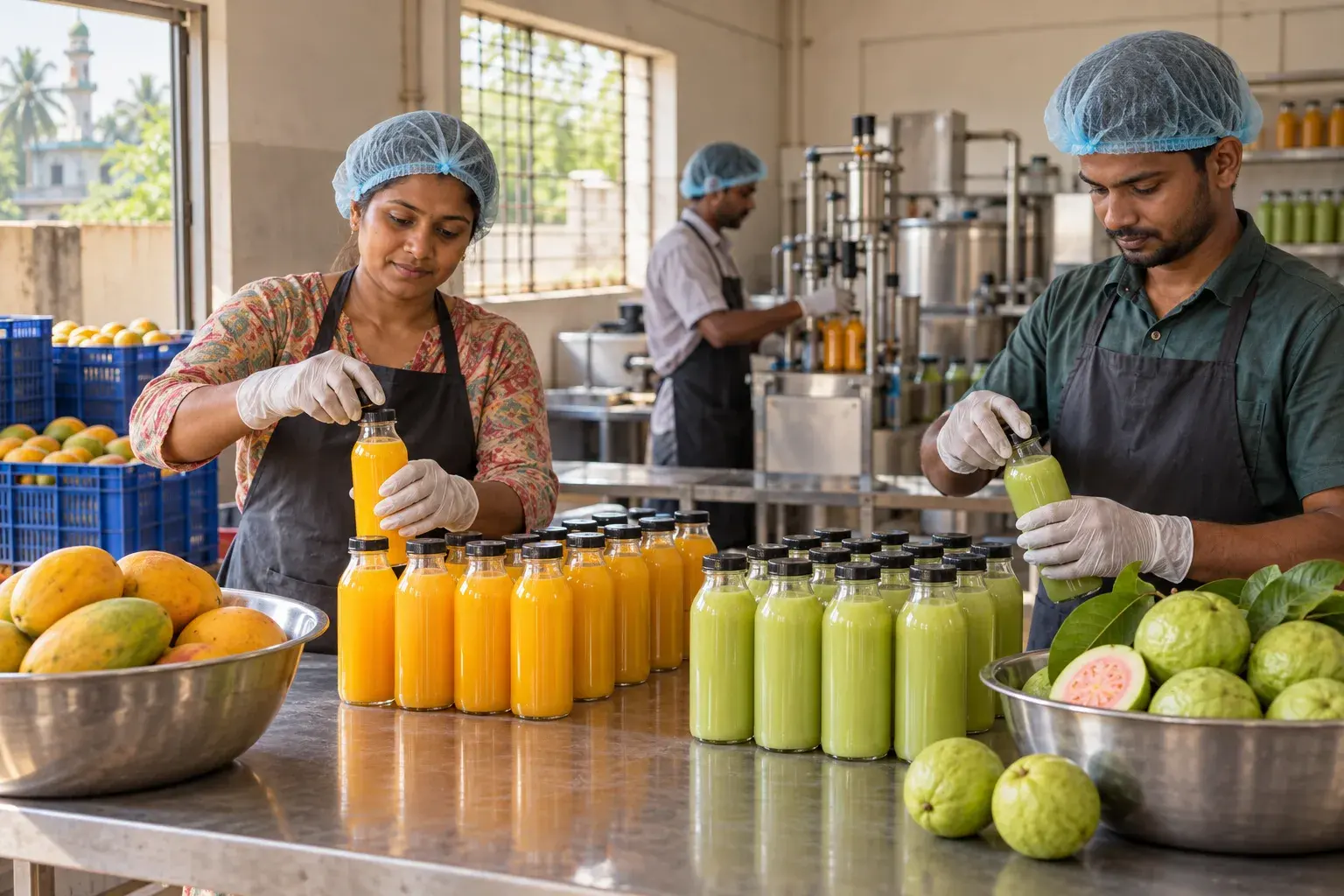
Making and bottling fruit juice and fruit drinks. A litre retails at Tk 80-90. Selling without a BSTI CM licence draws fines - recently Tk 30,000 to Tk 1,00,000.
- Last reviewed: 19 September 2026
- Version 1
Fruit juice and drinks
- Starting capital
- ৳5,00,000 – ৳30,00,000 Editorial estimate
- Manpower
- 4 – 20 people
- First sale
- 90 – 180 days Editorial estimate
- Break-even
- 14 – 24 months Editorial estimate
- Kind of work
- Workshop · Hard
About the business
Making fruit juice or fruit drinks and selling them in bottles or packs. The real barrier here is not the machine but the paperwork. A bottled drink cannot legally be marketed without a BSTI Certification Marks (CM) licence. By BSTI's own fee schedule a new CM licence application is Tk 1,000, renewal another Tk 1,000, and the CM fee on fruit-based products is 0.07 percent of annual ex-factory production value, minimum Tk 3,000 and maximum Tk 30 lakh a year, with 15 percent VAT on every fee. The money is small; the document list is long - trade licence, trademark or industrial design registration, VAT and TIN certificates, premises licence, workers' health certificates, factory layout and process flow chart, equipment lists, and a label that names or codes every colour, flavour, preservative and artificial sweetener. What happens if you skip it is published by BSTI itself: on 31 August 2026 'Milky Way' in Tejgaon was fined Tk 30,000 for having no CM licence and no packaging registration, and was told to keep its Facebook page shut until licensed; on 3 September 2026 a firm in Adabar was fined Tk 1,00,000 for the same missing licence. Market rates on 16 September 2026: Pran Frooto mango 250 ml Tk 25, 500 ml Tk 45, one litre Tk 80; Frutika one litre Tk 90; Shezan one litre Tk 85 - all of it already carrying 15 percent supplementary duty.
Unit economics
| Item | Range | Evidence | Suggest a correction |
|---|---|---|---|
| Monthly working capital | ৳3,30,000 – ৳19,00,000 | Editorial estimate | |
| Selling price | ৳25 – ৳90 / unit | Market quote | |
| Variable cost | ৳14 – ৳40 / unit | Editorial estimate | |
| Gross margin | 44% – 56% | Editorial estimate | |
| Time to first revenue | 90 – 180 days | Editorial estimate | |
| Break-even time | 14 – 24 months | Editorial estimate | |
| Cash cycle | 20 – 45 days | Editorial estimate | |
| Waste / loss | 3% – 7% | Editorial estimate | |
| Daily capacity | 1,000 – 4,000 | Editorial estimate |
What you need to start
- A processing kettle or pasteuriser, strainers, a filling and sealing machine, a date coder, weighing and measuring instruments, and a small in-house laboratory, since a list of testing equipment must be filed with the application. Prices for this equipment could not be verified in this research.Equipment
- Fruit or fruit pulp, sugar, approved colours, flavours and preservatives, and bottles and labels. Sugar retailed at Tk 110-115 a kg on 15 September 2026.Starting stock
- Packaging registration certificate from the BSTI Metrology Wing. Mobile courts check it alongside the CM licence, and its absence draws a separate fine.Licence
- Trade licence from the city corporation or municipality: form Tk 10, licence book Tk 50, standard tax Tk 30, stamp Tk 150-300, licence fee Tk 100-60,000; 3-5 working days.Licence
- BSTI Certification Marks (CM) licence, compulsory to market a bottled drink. New application Tk 1,000, renewal application Tk 1,000. CM fee: 0.07 percent of annual ex-factory production value for fruit-based products, minimum Tk 3,000 and maximum Tk 30,00,000; 0.10 percent for other products, minimum Tk 3,500 and maximum Tk 35,00,000. Fifteen percent VAT applies to all fees.Licence
- Bangladesh Food Safety Authority registration under the Food Safety (Registration and Licensing) Regulations 2026, compulsory for juice bars and packaged food producers: Tk 1,000 new, Tk 500 renewal, valid three years; establishment licensing Tk 1,000-5,000.Licence
- Documents filed with a food-product CM application: attested copy of the current trade licence; attested copy of the industrial design or trademark registration; VAT/TIN certificate; premises licence and workers' health certificates; list of testing equipment; list of factory equipment; factory layout and process flow chart; and a full label meeting BSTI's conditions.Licence
- Quality control capable of holding the BDS specification: batch records, retained samples and written test results. It is these records that inspection asks to see.Skill
- A fruit or pulp supplier, a bottle and cap factory, a label printer, and an importer of approved food additives.Supplier
- A factory with a separate filling room and divided areas for raw material, processing, filling, packing and storage; washable floors and walls, a safe water source, and cleaning records that can be shown at inspection.Workspace
How the work is done
- 1Decide at the start whether you are making fruit juice or a fruit drink. The Bangladesh Standards differ, the labels differ, and the CM licence application is filed on a separate form for each product.
- 2Fix the brand name and start the trademark or industrial design registration - an attested copy of it is required with the CM licence application. It takes the longest, so start it first.
- 3Take the trade licence, register for TIN and VAT with the NBR, and get the factory premises licence and workers' health certificates - all are on the CM application document list.
- 4Prepare the factory layout, process flow chart, list of production equipment and list of testing equipment. The application is not accepted without them.
- 5Check the BSTI label conditions before printing: product name and brand, grade or type or size, weight or volume, code or batch number, ingredients, date of manufacture and expiry, maker's name and address, maximum retail price, and the standard mark with its BDS number - all in Bangla.
- 6The label must carry the specific name or code of every colour, flavour, preservative and artificial sweetener - a separate BSTI condition for food and drink products.
- 7Submit the form, the documents and the Tk 1,000 application fee at the One Stop Service Centre of BSTI head office or your divisional or regional office.
- 8Be ready for the factory inspection and sample testing, and after passing pay the CM fee - 0.07 percent of annual ex-factory value for fruit products, minimum Tk 3,000, with 15 percent VAT on every fee.
- 9Take the packaging registration certificate too. BSTI mobile courts check the CM licence and the packaging registration together.
- 10Do not sell or advertise until the licence is in hand - not even on Facebook. On 31 August 2026 a firm was fined and told to keep its page shut until it was licensed.
- 11Price with 15 percent supplementary duty on fruit juice and fruit drinks in mind (raised from 10 percent in January 2025), and VAT on top of that.
- 12Sales peak through the hot months. Put aside the money for that period's fruit, sugar and bottles during the winter.
Seasons
- JanLow
- FebNormal
- MarHigh
- AprHigh
- MayHigh
- JunHigh
- JulHigh
- AugNormal
- SepNormal
- OctLow
- NovLow
- DecLow
Where it works well
- Strong fitChattogram · A BSTI divisional office, easy import of bottles, caps and food additives through the port, and a large city market.
- Strong fitDhaka · BSTI head office and its One Stop Service Centre are here, so licensing and sample testing move fastest; it is also the largest consumer market with the deepest distributor network.
- Strong fitRajshahi · The centre of the mango belt and a BSTI divisional office, so both the raw material and the licensing office are close.
- PossibleChapai Nawabganj · The country's largest mango district, where raw material is cheapest in season, though the nearest BSTI office is in Rajshahi.
- PossibleCumilla · A BSTI regional office, and steady demand for cold drinks from hotels and shops on the Dhaka-Chattogram highway.
- PossibleDinajpur · Litchi country with a BSTI regional office, so samples and inspections can be handled locally.
- PossibleGazipur · A BSTI regional office, bottle and label suppliers nearby in the industrial belt, and the Dhaka market an hour away.
- PossibleKhulna · A BSTI divisional office, working as a distribution base for the south-western districts.
- PossibleNarayanganj · A BSTI regional office, and the wholesale markets next to Dhaka are easy to reach.
- PossibleSylhet · A BSTI divisional office, and remittance households give relatively strong demand for higher-priced packaged drinks.
Risks and cautions
- HighCompliance: Selling without a CM licence brings a mobile court, and the fines are not small. By BSTI's own notices, on 31 August 2026 'Milky Way' in Tejgaon was fined Tk 30,000 for bottled liquid milk without a CM licence or packaging registration, told to apply within seven working days, and ordered to keep its Facebook page shut until licensed. On 3 September 2026 a firm in Adabar was fined Tk 1,00,000 for the missing CM licence. Starting small and online is no exemption.
- HighCompliance: The licence money is small but the queue of documents is long, and one missing paper stops everything. The CM application itself requires a trademark or industrial design registration, which takes months to obtain, and before that the premises licence, health certificates, VAT certificate, layout and process flow chart. Through all of it rent and wages run while not a single bottle may be sold.
- MediumOther: The tax load sits directly on the price. In January 2025 supplementary duty on fruit juice and fruit drinks was raised from 10 to 15 percent, and the chairman of Pran-RFL Group said then that a Tk 20 juice would become Tk 25. A small maker finds that increase harder to pass on, because a Tk 25 branded pack is sitting next to his on the same shelf.
- HighDependency: The market belongs to a few large brands - Pran, Frutika (Akij) and Shezan - at Tk 80-90 a litre and Tk 25-30 for 250 ml, prices built on large-scale production. A small unit matching them has to cut quality or run at a loss.
- MediumDemand: Demand is packed into a few hot months. Sales fall away in winter while rent, power, wages and the annual CM fee all continue through the year.
Sources
- Collected: 16 Sept 2026
Supports: Starting capital, Time to first revenue · বাংলাদেশ
- Collected: 16 Sept 2026
Supports: Starting capital · বাংলাদেশ
সিটি কর্পোরেশন থেকে ট্রেড লাইসেন্স প্রাপ্তির ধাপ সমূহ
Collected: 16 Sept 2026Supports: Starting capital · বাংলাদেশ
- Collected: 15 Sept 2026
Supports: Starting capital · ঢাকা মহানগর — সিপাহীবাগ, মিরপুর-৬, মোহাম্মদপুর টাউন হল, নিউমার্কেট, রামপুরা, মহাখালী বাজার
All food businesses now need safety registration
Collected: 22 Jul 2026Supports: Starting capital · বাংলাদেশ
What changed
No corrections have been published yet.
Questions and answers
No questions yet. Be the first to ask.
Similar businesses
 Food processing
Tea packaging and branding
Buying loose tea at auction, blending and packing it under your own brand. The 2026-27 Chattogram auction averages Tk 280.88 a kg while packet tea sells at Tk 428-650.
- Capital
- ৳5 lakh – ৳50 lakh
- People
- 2 – 15
- First income
- 45 – 100 days
 Food processing
Rice mill
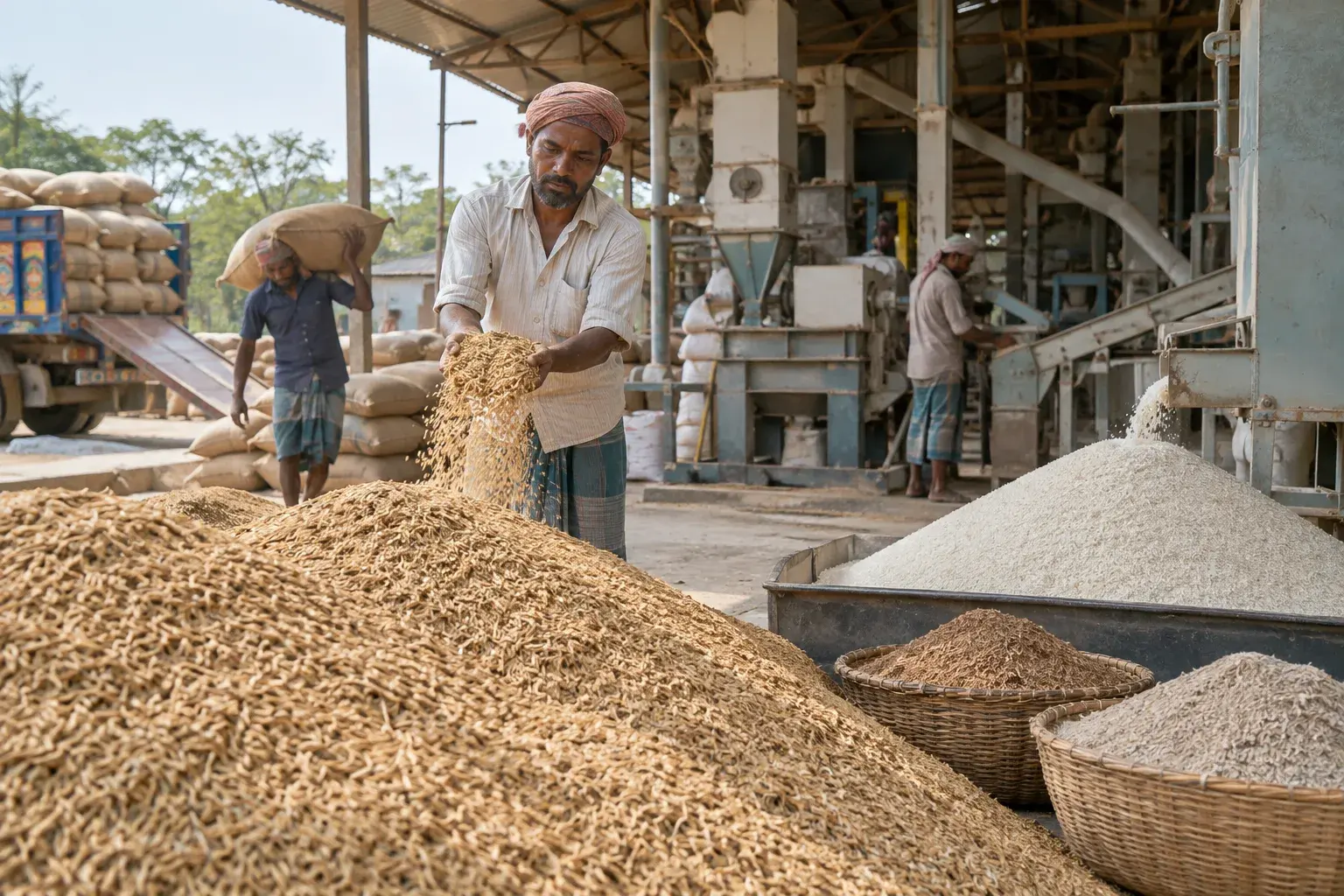
Buying paddy, parboiling and hulling it, and selling the rice. 24,000 kg of paddy gives 15,000 kg of rice, and the husk, bran and broken grain return another Tk 6.45 on every kilo sold.
- Capital
- ৳5 lakh – ৳50 lakh
- People
- 4 – 20
- First income
- 30 – 120 days
 Food processing
Biscuit and chips making
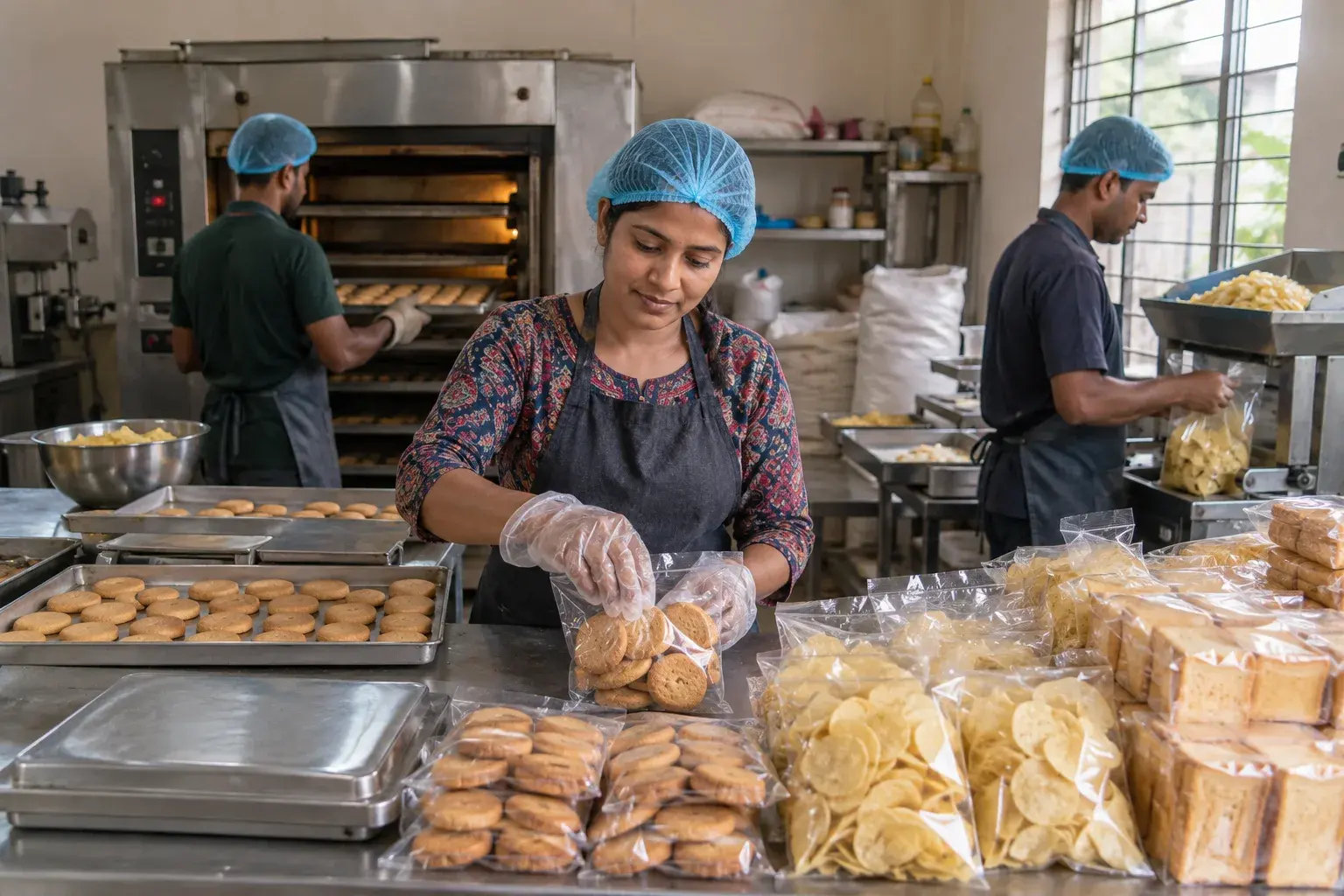
Making and packing biscuits, toast and chips from flour, sugar and oil. BSTI certification is compulsory, and the shop credit cycle is the real constraint.
- Capital
- ৳4 lakh – ৳40 lakh
- People
- 4 – 30
- First income
- 45 – 100 days
 Food processing
Frozen paratha and samosa
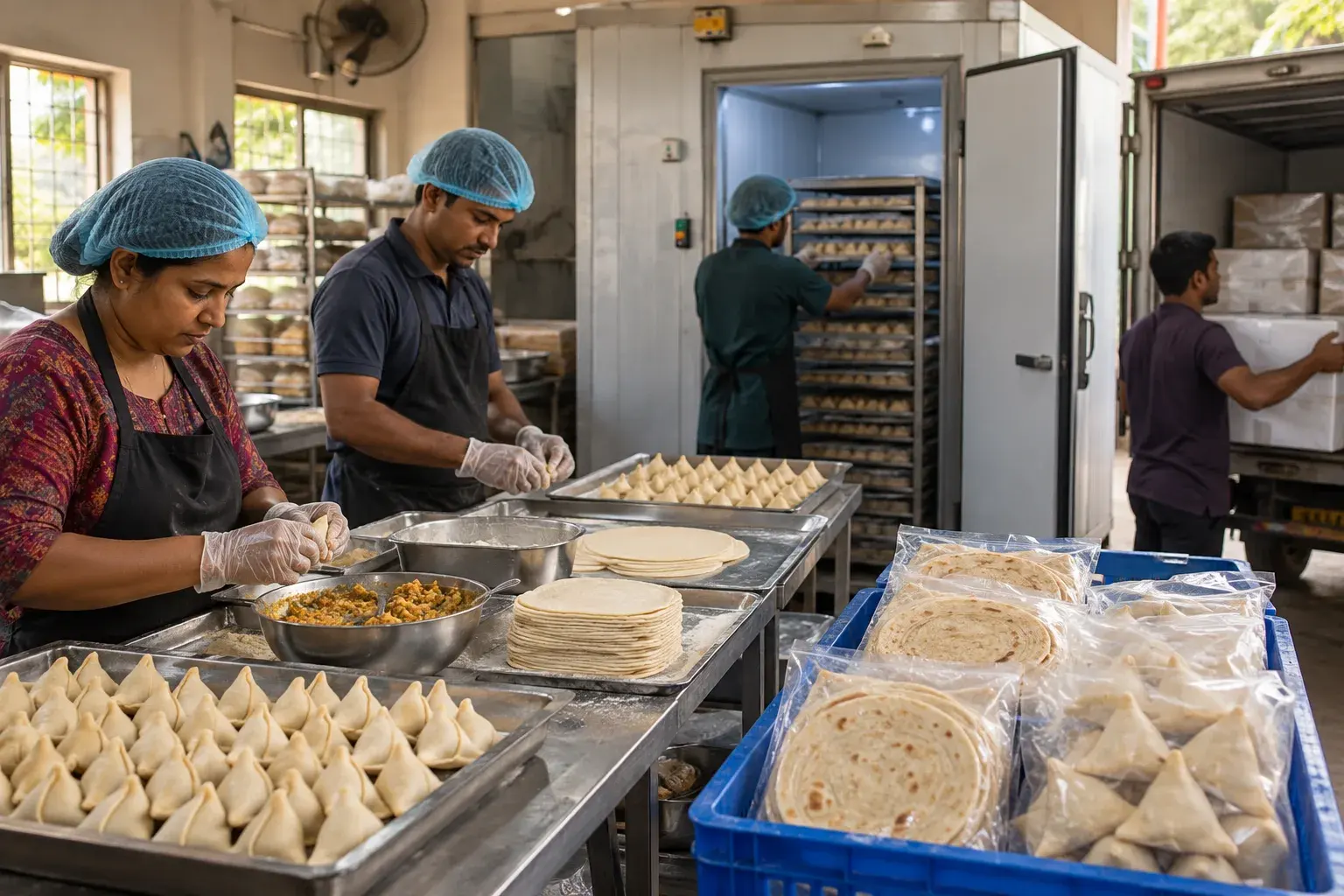
Making raw paratha, samosa and singara, freezing them and selling them in packs. Retail is Tk 12.5-19 a paratha and Tk 8.6-9.4 a mini samosa. The cold chain from factory to shop is the real condition of the business.
- Capital
- ৳3 lakh – ৳15 lakh
- People
- 3 – 15
- First income
- 45 – 90 days