
Hydroponic farming
Growing vegetables in water without soil. One Dhaka rooftop setup cost about Tk 2,00,000, and outside Dhaka there is still almost no commercial buyer.
- Last reviewed: 19 September 2026
- Version 1
Hydroponic farming
- Starting capital
- ৳4,000 – ৳2,00,000 Editorial estimate
- Manpower
- 1 – 3 people
- First sale
- 45 – 120 days Editorial estimate
- Break-even
- 13 – 40 months Editorial estimate
- Kind of work
- Farm · Hard
About the business
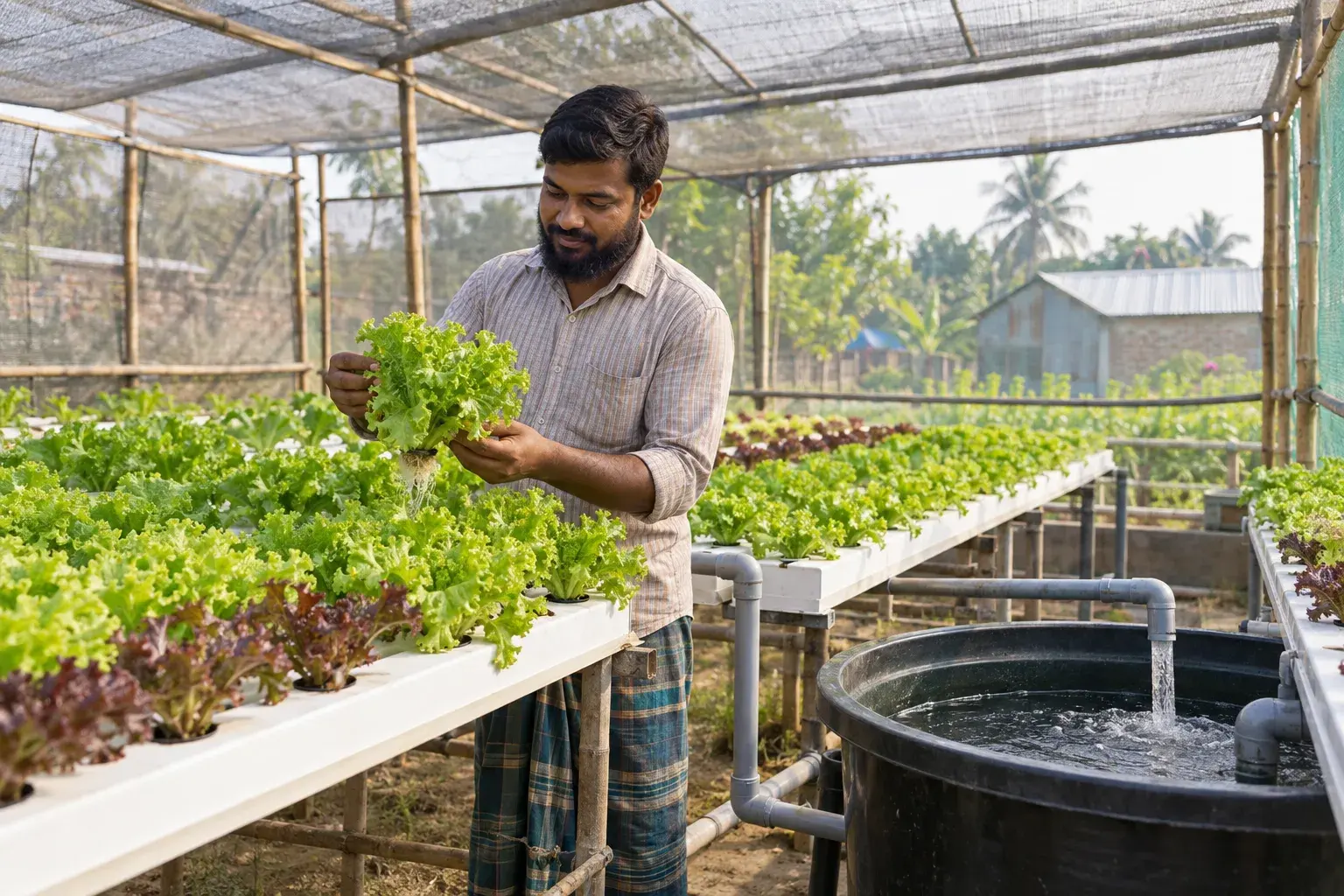
Hydroponics means growing vegetables in water alone, without soil. Plant nutrient is mixed into the water and a small pump circulates it to keep oxygen in. It needs little space, there are no weeds and less pesticide - on paper it all reads well. The reality in Bangladesh is different, and it is better to know that first. The cost is heavily front-loaded. One rooftop garden in Mirpur, Dhaka, spent about Tk 2,00,000 on 44 drums, structures and planting. Green Savers, the social enterprise that builds these, says a plastic structure for 18, 32 or 72 plants can run from Tk 3,000-4,000 up to Tk 2,00,000; nutrient costs about Tk 800 for five to six months, and a 9 to 18 watt pump moves the water. The problem is the market. That same organisation had helped about 200 households across Dhaka and other cities since 2019 - two hundred homes over several years, not commercial farms. Most people doing it are hobby rooftop gardeners growing for their own family, not selling. So before entering this, the question is not how to grow it. The question is who will buy it.
Unit economics
| Item | Range | Evidence | Suggest a correction |
|---|---|---|---|
| Monthly working capital | ৳200 – ৳2,000 | Editorial estimate | |
| Selling price | ৳150 – ৳400 / kg | Editorial estimate | |
| Variable cost | ৳40 – ৳100 / kg | Editorial estimate | |
| Gross margin | 33% – 90% | Editorial estimate | |
| Time to first revenue | 45 – 120 days | Editorial estimate | |
| Break-even time | 13 – 40 months | Editorial estimate | |
| Cash cycle | 35 – 90 days | Editorial estimate | |
| Waste / loss | 10% – 25% | Editorial estimate | |
| Daily capacity | 18 – 524 | Market quote |
What you need to start
- Plastic structures or drums, net pots, a 9-18 watt water pump, piping and a TDS/EC meter. On Daraz, 16-09-2026: 10 net pots Tk 95, rockwool cubes Tk 836, germination trays Tk 764-1,862, TDS meters from Tk 465, a 3D-printed hydroponic tower Tk 2,390.Equipment
- Nutrient solution - Green Savers put Tk 800 at about five to six months' supply (08-01-2021, over five years old). Plus seedlings and seed.Starting stock
- Trade licence from the city corporation or municipality if you sell commercially: form Tk 10, licence book Tk 50, standard tax Tk 30, stamp Tk 150-300, licence fee Tk 100-60,000. Growing only for your own family does not need one.Licence
- Holding nutrient concentration and pH, preventing root rot, and managing water temperature in heat. Soil farming experience does not transfer directly - this is a separate skill.Skill
- A supplier of structures and nutrient. Green Savers, a social enterprise, builds the whole system in Dhaka and other cities.Supplier
- A roof, balcony or shed with light and checked load capacity. The Mirpur rooftop referred to here was about a thousand plants on 1,800 square feet.Workspace
How the work is done
- 1Find the buyer before you build. Get this one step the wrong way round and you will have a Tk 2,00,000 structure and nobody to buy the vegetables. Talk to a hotel, a supermarket or a named buyer first.
- 2Decide the crop. Lettuce, Chinese vegetables and other leafy greens do well in water, mature fast and fetch city prices. Field crops like rice or wheat make no sense in this method.
- 3Pick the space - roof, balcony or shed. On a roof, check the building's load capacity first. Water-based systems are lighter than soil pots, which is the roof advantage.
- 4Start small. Green Savers says structures for 18 to 72 plants start from Tk 3,000-4,000. Grow one unit through a full cycle first, then expand.
- 5Learn water quality and nutrient dosing. If the concentration is wrong the plants die, and unlike soil there is no buffer to absorb the mistake. A TDS or EC meter starts at Tk 465 on Daraz.
- 6Secure power and water. A 9-18 watt pump runs intermittently so the bill is small, but if load-shedding stops the water in hot weather the plants suffer fast. Keep a backup.
- 7Plan separately for the hot months. April to June on a Dhaka rooftop is the hardest stretch for leafy greens, and shade netting or a shed will be needed.
- 8Keep the option of selling structures and seedlings. In Bangladesh so far, much of the money made in this method has come not from vegetables but from selling setups and services to hobby gardeners.
Seasons
- JanNormal
- FebNormal
- MarNormal
- AprLow
- MayLow
- JunLow
- JulNormal
- AugNormal
- SepNormal
- OctNormal
- NovNormal
- DecNormal
Where it works well
- Strong fitDhaka · The only place in the country with a regular buyer for these vegetables - upmarket supermarkets, hotels and restaurants - and the households willing to buy rooftop setups are here too.
- PossibleChattogram · A large city with hotels and supermarkets, but no evidence of a regular buyer was found.
- PossibleCox's Bazar · Hotel and resort kitchens need fresh leafy greens regularly, especially in the tourist season.
- PossibleGazipur · Close to Dhaka with cheaper space, but the selling still has to happen in Dhaka.
- PossibleNarayanganj · Adjacent to Dhaka, so the Dhaka buyer can be reached quickly.
- Weak fitKhulna · Salinity makes soil vegetable farming hard, which is the textbook argument for hydroponics - but there is no buyer there able to pay the price.
- Weak fitSylhet · Remittance families have purchasing power, but the market for these vegetables is unproven here.
Risks and cautions
- HighDemand: The market itself is thin, and that is the most important line on this page. Green Savers had helped about 200 households across Dhaka and other cities since 2019 - two hundred homes over several years. Almost all of them are hobby rooftop gardeners growing for their own family, not selling. No evidence of a regular buyer outside Dhaka was found. Assuming that whatever can be grown will sell is the most expensive mistake available here.
- HighWorking capital: The cost is almost entirely up front. One Mirpur rooftop spent about Tk 2,00,000 on 44 drums, structures and planting, and in the owner's own words the big cost in this method is at the start. If no buyer appears, there is no route back to that money, and the resale market for the structures is small.
- HighSpoilage: Leafy vegetables last two or three days. If they are not sold quickly after cutting they are lost, and supplying a hotel or supermarket means a fixed quantity on a fixed day. A small grower struggles to hold that rhythm, and one failed delivery sends the buyer elsewhere.
- MediumDependency: A power cut stops the whole system. When the water stops moving the roots lose oxygen, and on a hot day plants can be damaged within hours. In soil a plant survives a missed watering; here it does not.
Sources
What changed
No corrections have been published yet.
Questions and answers
No questions yet. Be the first to ask.
Stories about this business
A 20,000-taka NGO loan, and 40,000 seedlings sold in three months
A 20,000-taka NGO loan in 2020 produced 40,000 soilless seedlings that sold for 40,000 taka in three months. This season 4 lakh seedlings on 25 shotok cost about 4 lakh taka, and he expects 7 lakh taka of sales within a month and a half.
- Capital
- ৳20k
- Ran for
- 3 months
- Reasons
- Working capital, Good quality
Similar businesses
 Agriculture & farming
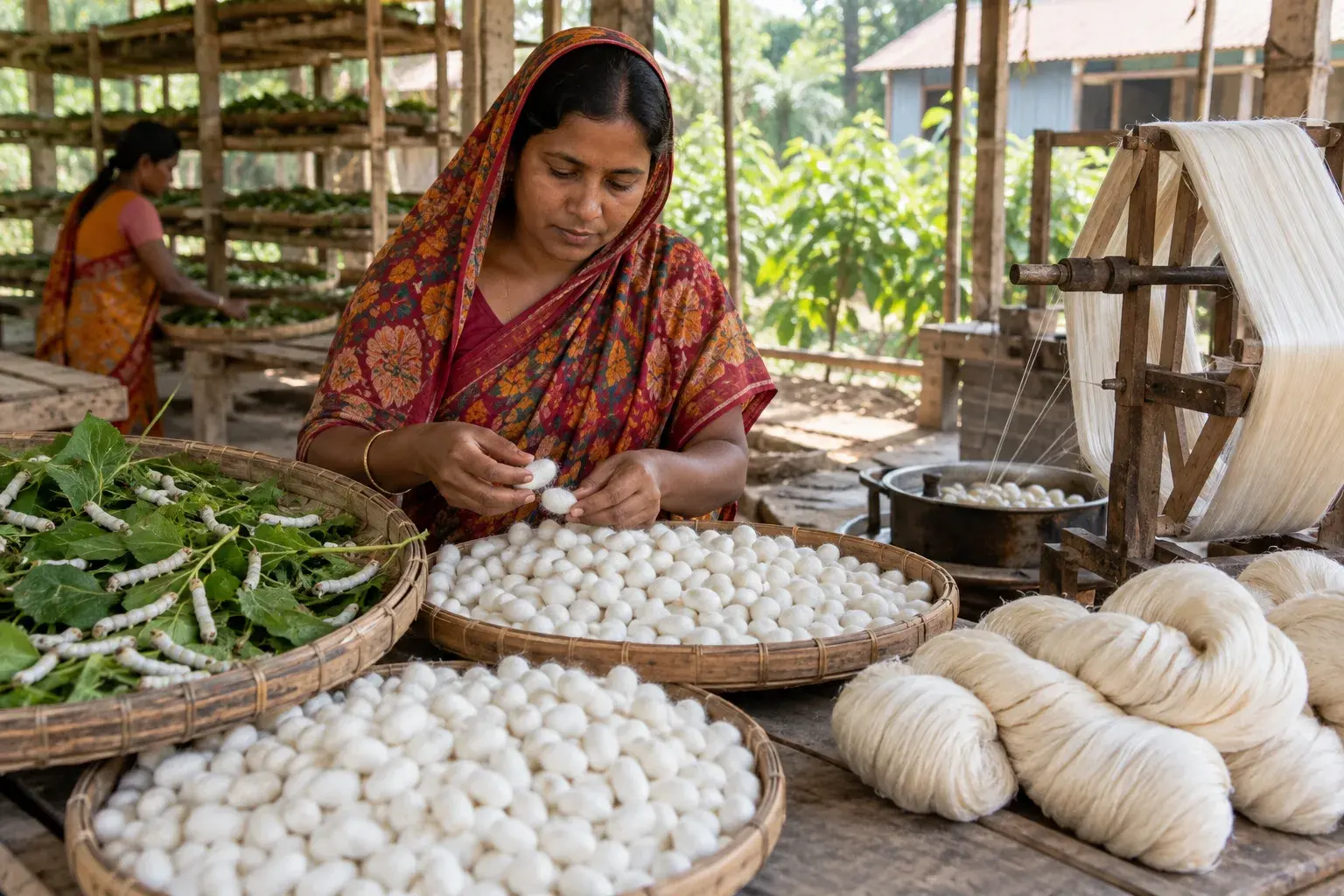
Sericulture and silk yarn
Rearing silkworms on mulberry leaf for cocoons and silk yarn. The Sericulture Board supplies eggs, saplings, equipment and training free; its own rate for yarn is Tk 3,001-3,701 a kilo.
- Capital
- ৳3k – ৳20k
- People
- 1 – 4
- First income
- 30 – 180 days
 Agriculture & farming
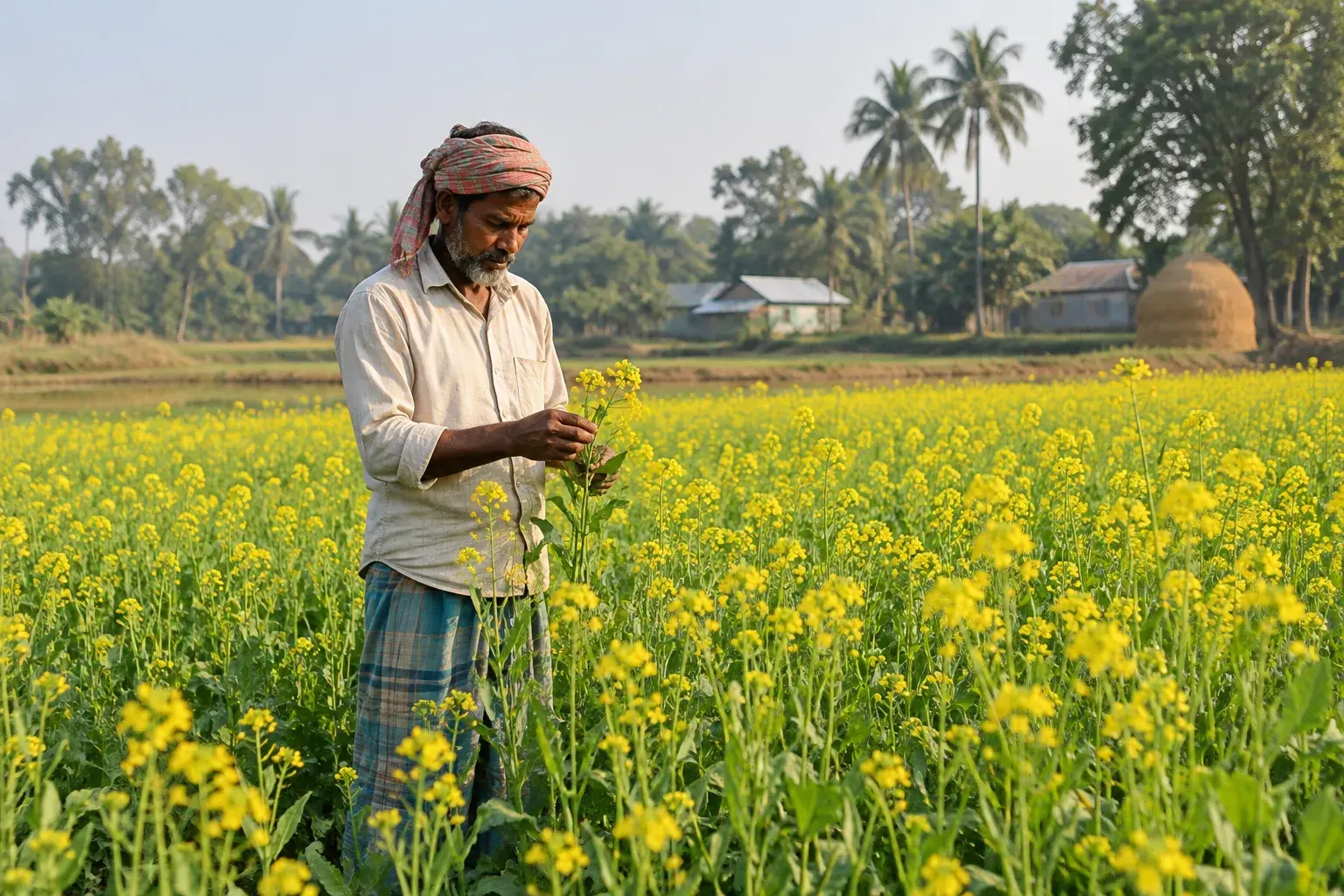
Mustard farming
The 80-90 day crop that fits between the Aman harvest and Boro planting. Mustard seed averaged Tk 91.27 a kg wholesale nationally in August 2026, about Tk 3,651 a maund, and the government hands out Tk 550.50 worth of inputs per bigha.
- Capital
- ৳5k – ৳50k
- People
- 1 – 4
- First income
- 75 – 110 days
 Agriculture & farming
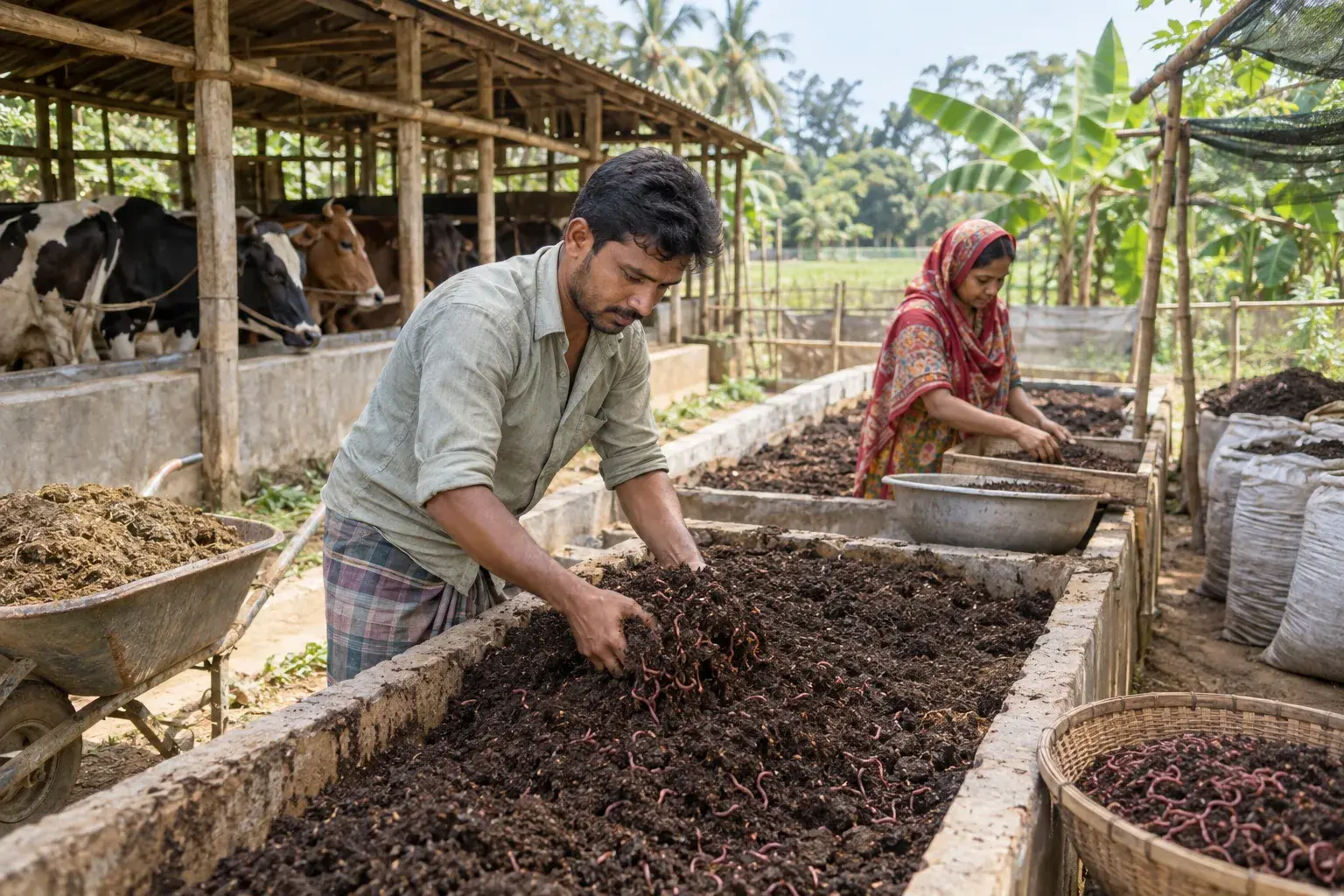
Vermicompost production
Making compost from cow dung and earthworms beside the cattle shed. Compost sells at Tk 10-13/kg against a cost of Tk 6-7, but the real income is selling breeding worms at Tk 2,000/kg.
- Capital
- ৳5k – ৳60k
- People
- 1 – 2
- First income
- 30 – 50 days
 Agriculture & farming
Rooftop farming and nursery
Growing plants in pots on the roof and selling seedlings. A small plant is Tk 50 while cactus and ferns reach Tk 1,200-5,000, and the pot, soil and fertiliser carry more money than the plant itself.
- Capital
- ৳5k – ৳80k
- People
- 1 – 2
- First income
- 60 – 180 days