
Rooftop farming and nursery
Growing plants in pots on the roof and selling seedlings. A small plant is Tk 50 while cactus and ferns reach Tk 1,200-5,000, and the pot, soil and fertiliser carry more money than the plant itself.
- Last reviewed: 19 September 2026
- Version 1

Rooftop farming and nursery
- Starting capital
- ৳5,000 – ৳80,000 Editorial estimate
- Manpower
- 1 – 2 people
- First sale
- 60 – 180 days Editorial estimate
- Break-even
- 4 – 11 months Editorial estimate
- Kind of work
- Home-based · Easy
About the business
Putting pots on your own roof, raising plants and selling the seedlings. For a city household with no land this is the only farming there is, and the capital is small: a sack of soil Tk 100, plastic pots Tk 50-500, clay pots Tk 100-300 and patterned ones Tk 500-700, a watering device Tk 100-500, a weeder under Tk 250, pruning shears about Tk 400, a small packet of fertiliser Tk 20-50, bone meal Tk 90-150 and coco coir Tk 150 (Dhaka, October 2025). The line between a hobby garden and a business is whether you are propagating and selling. Forman Hasnat's garden at Pekua in Cox's Bazar holds 460 species, about 150 of them cactus. He sells cactus at Tk 50-1,200, ferns at Tk 500-5,000 and stephania at Tk 150-1,500. Between October 2024 and 25 January 2026 he couriered 609 plants, averaging Tk 30,000-35,000 a month and at least four lakh a year. He does everything from grafting to building the shade house himself, learned off YouTube. One thing nobody says: the accessories carry more money than the plant. As a Mohammadpur nursery owner puts it, 'a fifty-taka plant needs a hundred and fifty taka of other things'. Sell the pot, the soil and the fertiliser with the plant or there is no profit. One government benefit was announced in June 2023 - a 10 percent rebate on holding tax for a rooftop garden in city corporation areas, on condition the garden is kept clean and does not breed mosquitoes. Whether the circular was ever issued could not be verified here, so ask your own city corporation's revenue office.
Unit economics
| Item | Range | Evidence | Suggest a correction |
|---|---|---|---|
| Monthly working capital | ৳3,000 – ৳15,000 | Editorial estimate | |
| Selling price | ৳50 – ৳5,000 / unit | Market quote | |
| Variable cost | ৳30 – ৳1,500 / unit | Editorial estimate | |
| Gross margin | 40% – 70% | Editorial estimate | |
| Time to first revenue | 60 – 180 days | Editorial estimate | |
| Break-even time | 4 – 11 months | Editorial estimate | |
| Cash cycle | 60 – 180 days | Editorial estimate | |
| Waste / loss | 10% – 20% | Editorial estimate | |
| Daily capacity | 1 – 2 | Editorial estimate |
What you need to start
- Pots and tools at Dhaka nursery prices (October 2025): plastic pots Tk 50-500, small clay pots Tk 100-300, patterned clay pots Tk 500-700, watering device Tk 100-500, weeder under Tk 250, pruning shears Tk 400. A shade house can be built by hand.Equipment
- Mother plants and seedlings; soil at Tk 100 a sack; small fertiliser packets Tk 20-50; an insecticide packet under Tk 250; pest medicine Tk 100-200; bone meal for calcium Tk 90-150 and coco coir Tk 150 a packet.Starting stock
- Trade licence from the city corporation or municipality once you sell plants regularly: form Tk 10, licence book Tk 50, standard tax Tk 30, stamp Tk 150-300, licence fee Tk 100-60,000 by trade type, issued in 3-5 working days.Licence
- Cuttings, grafting and propagation. The Pekua grower did everything from grafting to building the shade house himself, learned from YouTube and reading. Add the knack of packing plants for courier and photographing them on a phone.Skill
- In Dhaka the nurseries at Agargaon, 300 Feet, 100 Feet, Diabari, Doel Chattar, Beily Road, Kakrail and Beribandh, with about 500 more in Savar, Ashulia, Rupganj and Gazipur. A Monday plant fair at Rayerbazar sells the same things cheaper.Supplier
- Your own roof or balcony with drainage and a structure that can take the load, plus the landlord's consent in a rented house. A 10 percent holding tax rebate for rooftop gardens in city corporation areas was decided in June 2023, conditional on keeping the garden clean and free of mosquito breeding; whether the circular was issued could not be verified.Workspace
How the work is done
- 1Check permission and the roof's load capacity first. In a rented house get the landlord's consent in writing: pots full of wet soil are heavy, and standing water on the roof becomes an argument with the landlord.
- 2Sort out drainage before the pots go down and set each pot on bricks or a tray. Preventing mosquito breeding is not only a health matter here: it is one of the conditions attached to the holding tax rebate.
- 3Decide what you will sell: ordinary flower and fruit seedlings, or rare indoor plants like cactus, succulents and ferns. Ordinary seedlings go for Tk 50, rare plants for well over a thousand, but rare plants take far more time and care.
- 4Buy mother plants from a reliable source. The Pekua grower was cheated ordering online at the start and lost plants to poor care, and those are the two commonest beginner mistakes.
- 5Learn cuttings, grafting and propagation. That is what separates a hobby garden from a nursery: if you cannot raise your own plants you are only buying and reselling, and the margin is thin.
- 6Sell the pot, soil and fertiliser with the plant. A Mohammadpur seller reckons a Tk 50 plant needs Tk 150 of other things, and those things carry more money than the plant.
- 7Fix your selling places: Facebook plant groups, your own page, and tree fairs. A plant fair runs every Monday beside the Rayerbazar memorial in Dhaka, where prices are comparatively lower.
- 8Learn to ship by courier. From the Pekua garden 609 plants went across the country in 15 months. Unless the roots are wrapped with soil, the leaves tied and the box vented, the plant dies on the way.
- 9Go to your city corporation's revenue office and ask whether the 10 percent holding tax rebate for rooftop gardens is being given. The local government minister announced the decision on 14 June 2023 and the application had come from Dhaka North City Corporation.
- 10Once you sell regularly, take the trade licence: form Tk 10, book Tk 50, standard tax Tk 30, stamp Tk 150-300, licence fee by trade type.
- 11Record how long each plant took to become saleable and what it sold for. Roof space is limited: a plant that occupies space for six months and returns Tk 50 should give way to one that returns Tk 800.
Seasons
- JanHigh
- FebHigh
- MarNormal
- AprNormal
- MayNormal
- JunHigh
- JulHigh
- AugNormal
- SepNormal
- OctNormal
- NovHigh
- DecHigh
Where it works well
- Strong fitChattogram · A large city with many flat rooftops and a growing market for indoor plants for home decoration.
- Strong fitDhaka · The biggest buyer market, where the rooftop garden idea spread fastest. About 300 nurseries inside the city corporation area, with inputs close at hand at Agargaon, 300 Feet, Diabari and Doel Chattar. The competition is heaviest here too.
- Strong fitGazipur · A large share of the roughly 500 nurseries around Dhaka sit here: land is cheap and Dhaka's buyers are within reach.
- Strong fitNarayanganj · The nurseries here, including at Rupganj, are part of Dhaka's supply chain, so both inputs and seedlings are easy to get.
- PossibleCox's Bazar · A single rooftop garden at Pekua turns over four lakh a year and couriers seedlings across the country, which proves it can be done from a far district.
- PossibleJashore · The Godkhali flower market gives a good supply of seedlings and flowering plants, and selling them online is an old habit here.
- PossibleJhenaidah · Nursery-village country, with more than 250 nurseries in a single village turning over crores of taka of seedlings a year. Wholesale seedlings are cheap here, but the competition is hard.
- PossibleKhulna · A divisional city with comparatively few nurseries, so there is room for a newcomer, though inputs have to come from far.
- PossibleRajshahi · Known for mango and fruit seedlings, and the growing taste for fruit trees on roofs creates demand from here.
- PossibleSylhet · Remittance families have larger houses and wider roofs, and can afford expensive indoor plants.
Risks and cautions
- HighDemand: There is now a nursery in every neighbourhood. In and around Dhaka there are about 800 of them - 450 small, 250 medium - with about 300 inside the city corporation area alone. A young seller in Mohammadpur says plainly that his business is smaller than before because nurseries have sprung up everywhere. Selling ordinary seedlings no longer distinguishes anyone: unless you stock what is not available nearby, the buyer goes to the nearest shop.
- HighSpoilage: Plants die, and when they do the whole cost goes. The Pekua grower bought cactus from a Noakhali nursery, kept it in his room and lost some to rot through poor care. On a roof the pot dries out in summer and waterlogs in the monsoon, rotting the roots, and the loss is worst on the expensive plants.
- MediumDependency: Distance sales depend entirely on the courier. A plant is alive: two or three days in a box drops the leaves and dries the roots, and the buyer sends a photo and asks for the money back. Being cheated when buying plants online is common, so new buyers take time to trust you.
- MediumOther: Standing water on the roof causes trouble twice over. First mosquitoes: the rebate conditions themselves require the garden to be kept clean and free of breeding. Second, wet soil and pooled water damage the roof, and in a rented house the landlord asks for the garden to go. Without trays or bricks under the pots this cannot be avoided.
- MediumWorking capital: The money sits in the plants. A seedling takes months to become saleable while the pot, soil and fertiliser are paid for up front. Roof space is finite, so the number of pots is the ceiling; growing sales means moving to higher-value plants, not more space.
Sources
সিটি কর্পোরেশন থেকে ট্রেড লাইসেন্স প্রাপ্তির ধাপ সমূহ
Collected: 16 Sept 2026Supports: Starting capital · বাংলাদেশ
What changed
No corrections have been published yet.
Questions and answers
No questions yet. Be the first to ask.
Stories about this business
A thousand plants on the roof, over a lakh taka a month
Started in late 2021, the rooftop now holds over a thousand plants including 200-plus adenium varieties. Average monthly income exceeds a lakh taka, and August sales reached 3 lakh.
- Reasons
- Weak demand, Good quality
Similar businesses
 Agriculture & farming
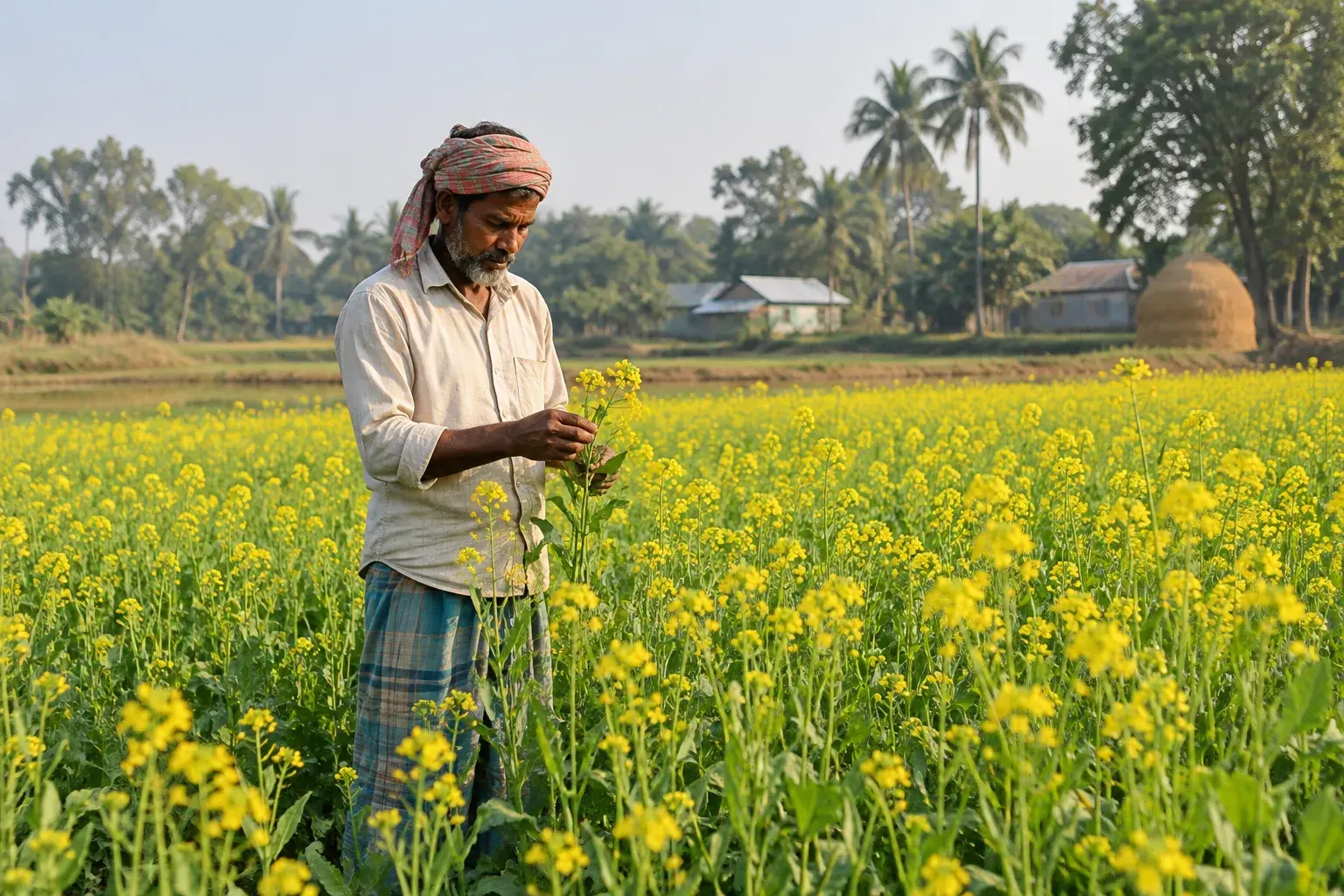
Mustard farming
The 80-90 day crop that fits between the Aman harvest and Boro planting. Mustard seed averaged Tk 91.27 a kg wholesale nationally in August 2026, about Tk 3,651 a maund, and the government hands out Tk 550.50 worth of inputs per bigha.
- Capital
- ৳5k – ৳50k
- People
- 1 – 4
- First income
- 75 – 110 days
 Agriculture & farming
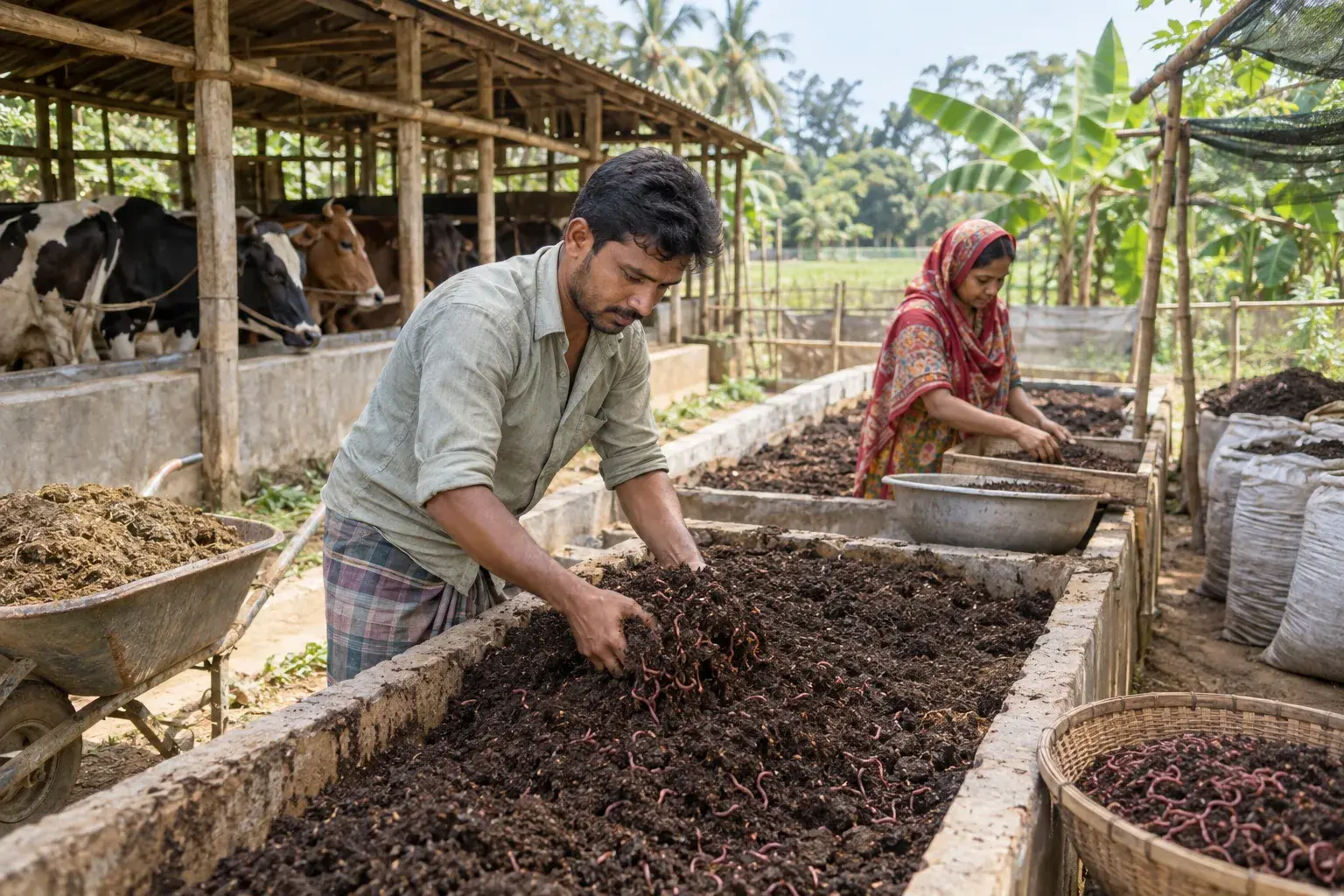
Vermicompost production
Making compost from cow dung and earthworms beside the cattle shed. Compost sells at Tk 10-13/kg against a cost of Tk 6-7, but the real income is selling breeding worms at Tk 2,000/kg.
- Capital
- ৳5k – ৳60k
- People
- 1 – 2
- First income
- 30 – 50 days
 Agriculture & farming
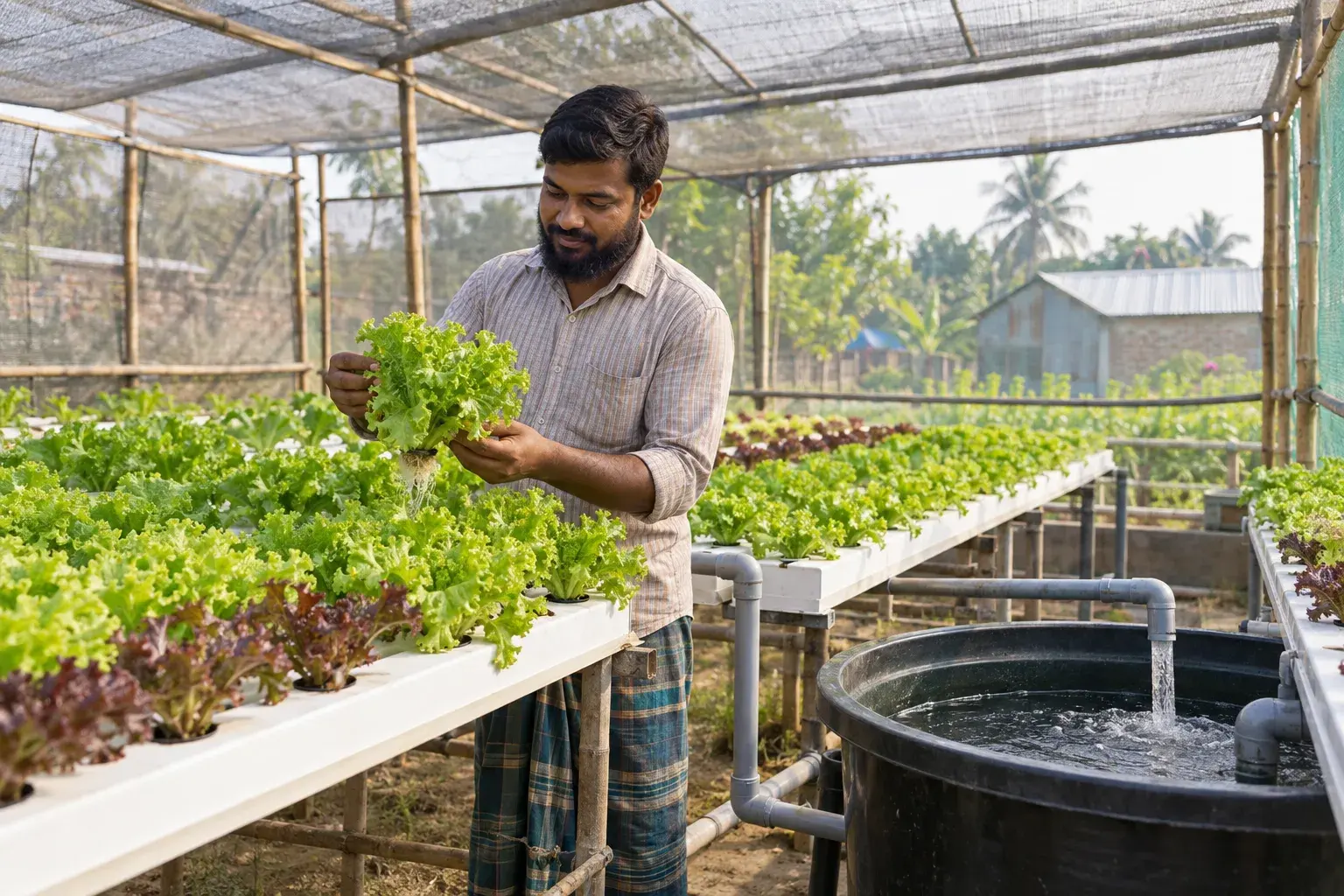
Hydroponic farming
Growing vegetables in water without soil. One Dhaka rooftop setup cost about Tk 2,00,000, and outside Dhaka there is still almost no commercial buyer.
- Capital
- ৳4k – ৳2 lakh
- People
- 1 – 3
- First income
- 45 – 120 days
 Agriculture & farming
Wheat farming
A single winter crop, sown mid-November and cut in March. The government bought wheat from farmers at Tk 36 a kg in the 2025 procurement, against a reported Tk 6,000-7,000 to grow one bigha.
- Capital
- ৳6k – ৳35k
- People
- 1 – 4
- First income
- 108 – 180 days