
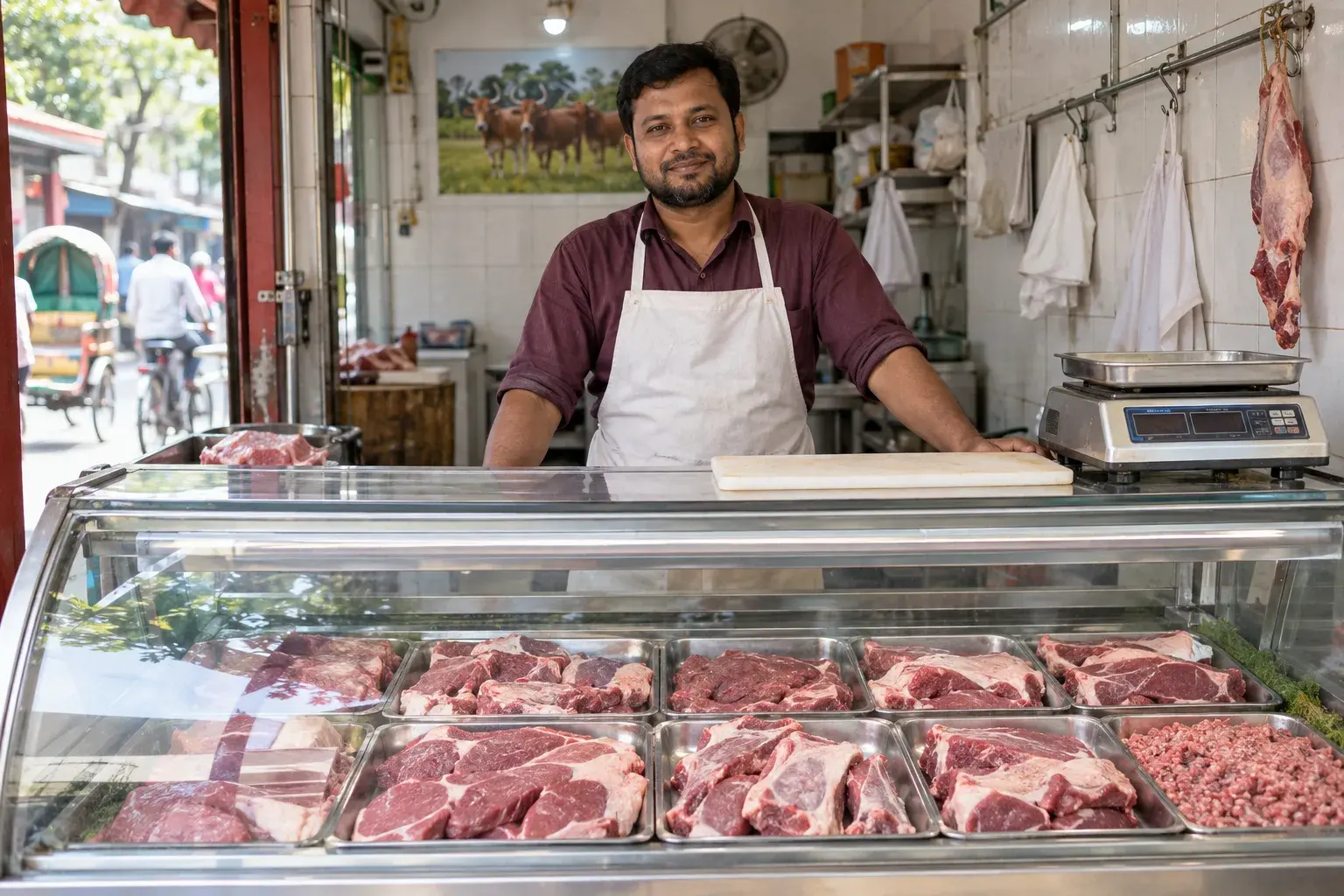
Meat retail shop
Buying, cutting and selling meat fresh daily. Dhaka beef is Tk 780-850/kg and mutton Tk 1,200-1,350/kg, and selling without the 'tested' seal now closes the shop.
- Last reviewed: 19 September 2026
- Version 1
Meat retail shop
- Starting capital
- ৳1,20,000 – ৳5,00,000 Editorial estimate
- Manpower
- 1 – 4 people
- First sale
- 15 – 45 days Editorial estimate
- Break-even
- 3 – 6 months Editorial estimate
- Kind of work
- Shop · Medium difficulty
About the business
A shop cutting and selling beef, mutton or chicken fresh every day. Buy the animal in the morning, slaughter, cut, and sell most of it before afternoon. Cash comes in daily, but a new animal must be bought daily too, so the shop stops the moment cash runs out. On 15 September 2026 Dhaka retail prices were beef Tk 780-850/kg, mutton Tk 1,200-1,350/kg and broiler Tk 180-200/kg; over twelve months beef rose about 5 percent and mutton about 13 percent. Profit does not come from meat alone — the hide, bones, offal, head and feet sell separately and often carry the margin, because a little over half an animal's live weight becomes meat and the rest is by-product. The rules have just tightened. On 31 August 2026 Dhaka South City Corporation stated that animals must be slaughtered at designated slaughterhouses and every piece of meat must carry the city health officer's 'tested' seal; meat without it is confiscated and the shop closed. Shops that slaughtered at the market as they pleased now have to come inside the system, and that single change will decide the fate of many of them over the next year.
Unit economics
| Item | Range | Evidence | Suggest a correction |
|---|---|---|---|
| Monthly working capital | ৳1,50,000 – ৳6,00,000 | Editorial estimate | |
| Selling price | ৳180 – ৳1,350 / kg | Official source | |
| Variable cost | ৳150 – ৳1,150 / kg | Editorial estimate | |
| Gross margin | 15% – 17% | Editorial estimate | |
| Time to first revenue | 15 – 45 days | Editorial estimate | |
| Break-even time | 3 – 6 months | Editorial estimate | |
| Cash cycle | 0 – 1 days | Editorial estimate | |
| Waste / loss | 3% – 10% | Editorial estimate | |
| Daily capacity | 50 – 250 | Editorial estimate |
What you need to start
- A cutting block, hanging hooks, scales, knives and cleavers, and a fridge or chiller — without one the day's meat must be finished the same day.Equipment
- Slaughter at a designated slaughterhouse. On 31 August 2026 Dhaka South City Corporation ruled that slaughtering outside an authorised slaughterhouse is prohibited and fineable.Licence
- The 'tested' seal: every piece of meat must carry the city corporation health officer's inspection seal. Meat without it is confiscated and the shop closed.Licence
- Trade licence from the city corporation or municipality: form Tk 10, licence book Tk 50, standard tax Tk 30, stamp Tk 150-300, licence fee Tk 100-60,000 by trade type.Licence
- Judging the weight and meat yield of a live animal by eye, and cutting fast and correctly. Profit depends on both.Skill
- A livestock market and a trusted dealer, plus separate buyers for hide, bones and offal.Supplier
- A shop in or beside the market with water and drainage. Waste disposal is regulated by the city corporation.Workspace
How the work is done
- 1Find a spot in the market. A meat shop needs water, drainage and a way to dispose of waste.
- 2Take the trade licence from the city corporation or municipality and ask whether meat retail needs a separate approval.
- 3Get the list of designated slaughterhouses and their rules from the city corporation. Slaughtering at the market is now prohibited.
- 4Learn the process for the city health officer's 'tested' seal. Meat without it is confiscated.
- 5Fix your livestock market and find a trusted dealer there. Judging weight and health when buying is the real skill.
- 6Fit out the shop: cutting block, scales, hooks, knives and cleavers, and a fridge or chiller if possible.
- 7Record how many kilos sell each day and buy accordingly. Buy too much and it spoils; too little and customers leave.
- 8Sell the hide, bones, offal and head and feet to separate buyers. For many shops this is where the profit is.
- 9Arrange regular supply to nearby hotels and caterers, but put the credit terms in writing.
- 10Plan separately for the two months before Qurbani, when both animal prices and sales peak.
Seasons
- JanNormal
- FebNormal
- MarNormal
- AprHigh
- MayNormal
- JunHigh
- JulHigh
- AugNormal
- SepNormal
- OctNormal
- NovNormal
- DecHigh
Where it works well
- Strong fitChattogram · A large city with high meat demand and many hotels.
- Strong fitDhaka · Dense population and many hotels and restaurants, but the slaughterhouse and seal rules are strictest here.
- Strong fitGazipur · Factory workers and dense settlement give steady daily demand.
- Strong fitNarayanganj · Dense settlement, with Dhaka's livestock markets close by.
- PossibleBogura · A northern trading centre with many livestock markets nearby.
- PossibleCox's Bazar · Hotel and restaurant demand rises in the tourist season.
- PossibleCumilla · Steady demand from highway hotels and local markets.
- PossibleKushtia · A cattle fattening area, so supply is easy.
- PossibleRangpur · Livestock rearing makes buying cheap, but purchasing power is lower.
- PossibleSylhet · Remittance families have higher purchasing power and mutton demand is relatively strong.
Risks and cautions
- HighCompliance: From 31 August 2026 Dhaka South City Corporation requires slaughter at designated slaughterhouses and the health officer's 'tested' seal on every piece of meat. Unsealed meat is confiscated, the shop is closed and the licence can be cancelled. Shops that slaughtered at the market must change how they work entirely.
- HighWorking capital: A new animal must be bought every day and one cow can cost close to a lakh. A single slow day leaves no money for tomorrow's animal, and an empty counter sends customers to another shop, from which they rarely come back.
- HighSpoilage: Meat is a one-day product. Without a chiller the day's stock must be finished that day or it rots. Losses are worst in hot weather and during power cuts.
- MediumLate payment: Hotels and caterers buy regularly but on credit, paying at month end. A large outstanding balance stops the daily animal purchase.
- MediumDemand: At Qurbani Eid households slaughter their own animals, so shop sales nearly stop for the following weeks. Ramadan and the wedding season bring sudden peaks.
Sources
সিটি কর্পোরেশন থেকে ট্রেড লাইসেন্স প্রাপ্তির ধাপ সমূহ
Collected: 16 Sept 2026Supports: Starting capital · বাংলাদেশ
- Collected: 15 Sept 2026
Supports: Monthly working capital, Selling price · ঢাকা মহানগর — সিপাহীবাগ, মিরপুর-৬, মোহাম্মদপুর টাউন হল, নিউমার্কেট, রামপুরা, মহাখালী বাজার
- Collected: 31 Aug 2026
Supports: Starting capital · ঢাকা দক্ষিণ সিটি কর্পোরেশন
What changed
No corrections have been published yet.
Questions and answers
No questions yet. Be the first to ask.
Stories about this business
Beef at 595 taka brought 50 lakh on day one, and 695 ten days later
With the market at 700-750 taka a kg, this shop opened Ramadan selling beef at 595 — more than 50 lakh taka of sales on the first day and 50 cattle slaughtered on one Friday. Ten days in, the price had to go up 100 taka to 695.
- Reasons
- Other, Weak demand
Similar businesses
 Retail & wholesale
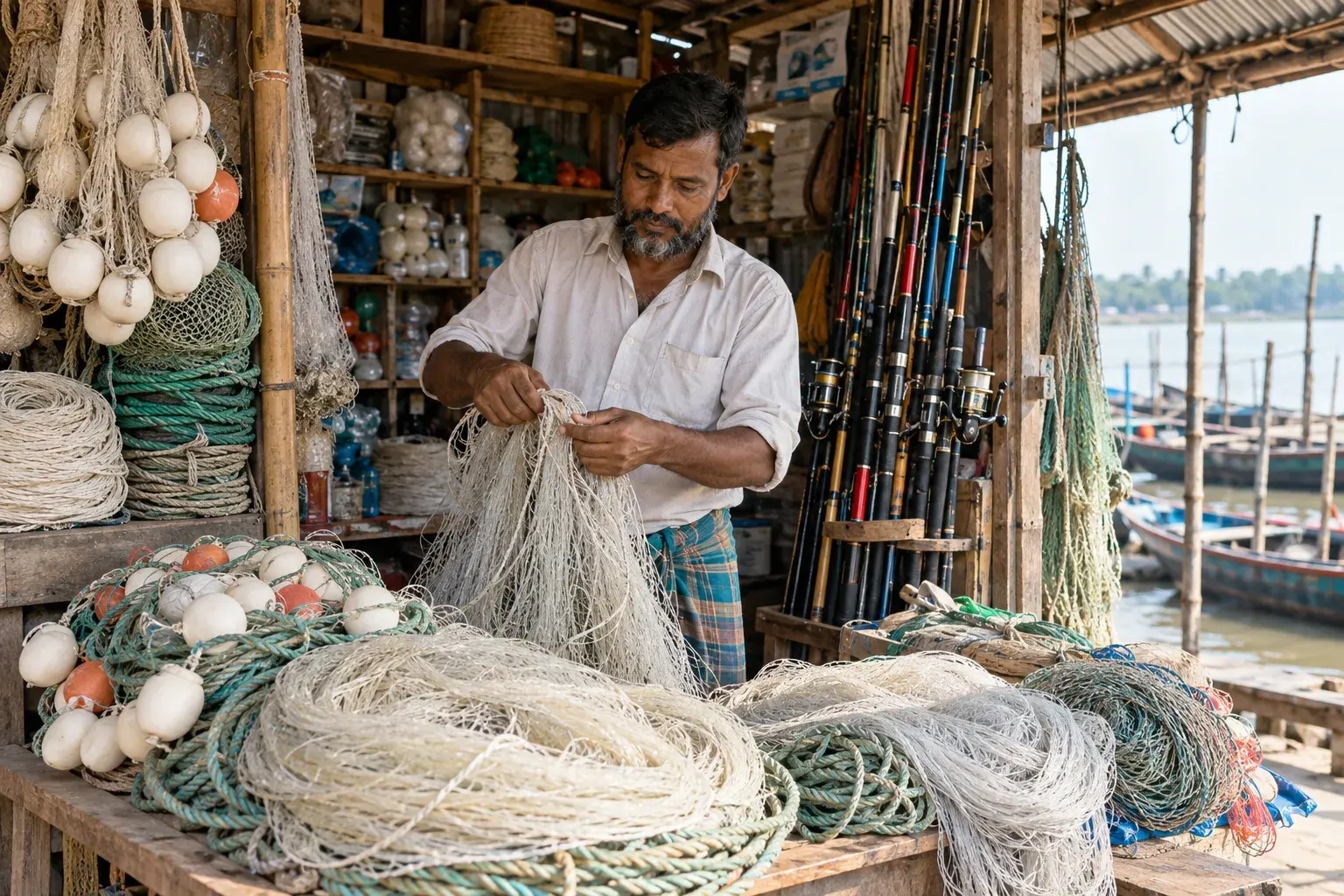
Fishing gear shop
Selling hooks, rods, reels, nets and fish medicine. Rods Tk 455-1,552, reels Tk 641-6,705. Current jal and China duari nets are illegal - stocking them means seizure and a mobile court.
- Capital
- ৳1.2 lakh – ৳6 lakh
- People
- 1 – 3
- First income
- 20 – 50 days
 Retail & wholesale
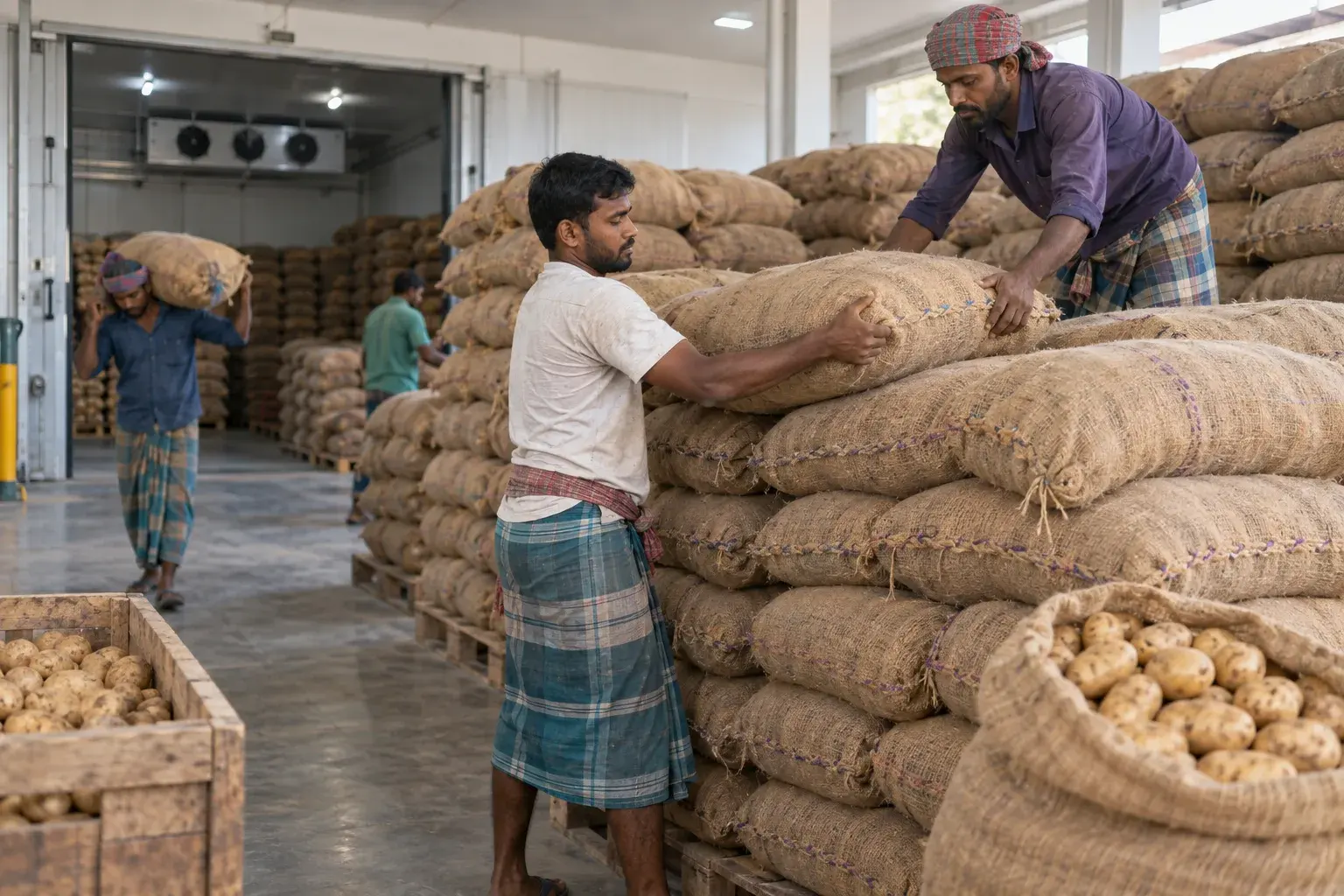
Potato storage trading
Buying potatoes at harvest, storing them cold and selling later. Rent is capped at Tk 6.00/kg, but in 2026 a 60 kg sack cost Tk 1,150-1,300 and sold for Tk 800-870.
- Capital
- ৳1.2 lakh – ৳6.5 lakh
- People
- 1 – 3
- First income
- 150 – 270 days
 Retail & wholesale
Betel nut trading
Buying betel nut from households and selling at the hat, or soaking and drying it to sell later. In Lakshmipur in October 2025 a kaun fetched Tk 2,500-2,800 and a pon Tk 150-250.
- Capital
- ৳1 lakh – ৳25 lakh
- People
- 1 – 8
- First income
- 1 – 240 days
 Retail & wholesale
Clothing and boutique shop
A shop selling fabric and ready-made clothes. Cotton runs Tk 300-700 a yard in Dhaka, and most of the year's takings arrive in the last ten days of Ramadan.
- Capital
- ৳1 lakh – ৳8 lakh
- People
- 1 – 5
- First income
- 15 – 45 days