
Rice mill
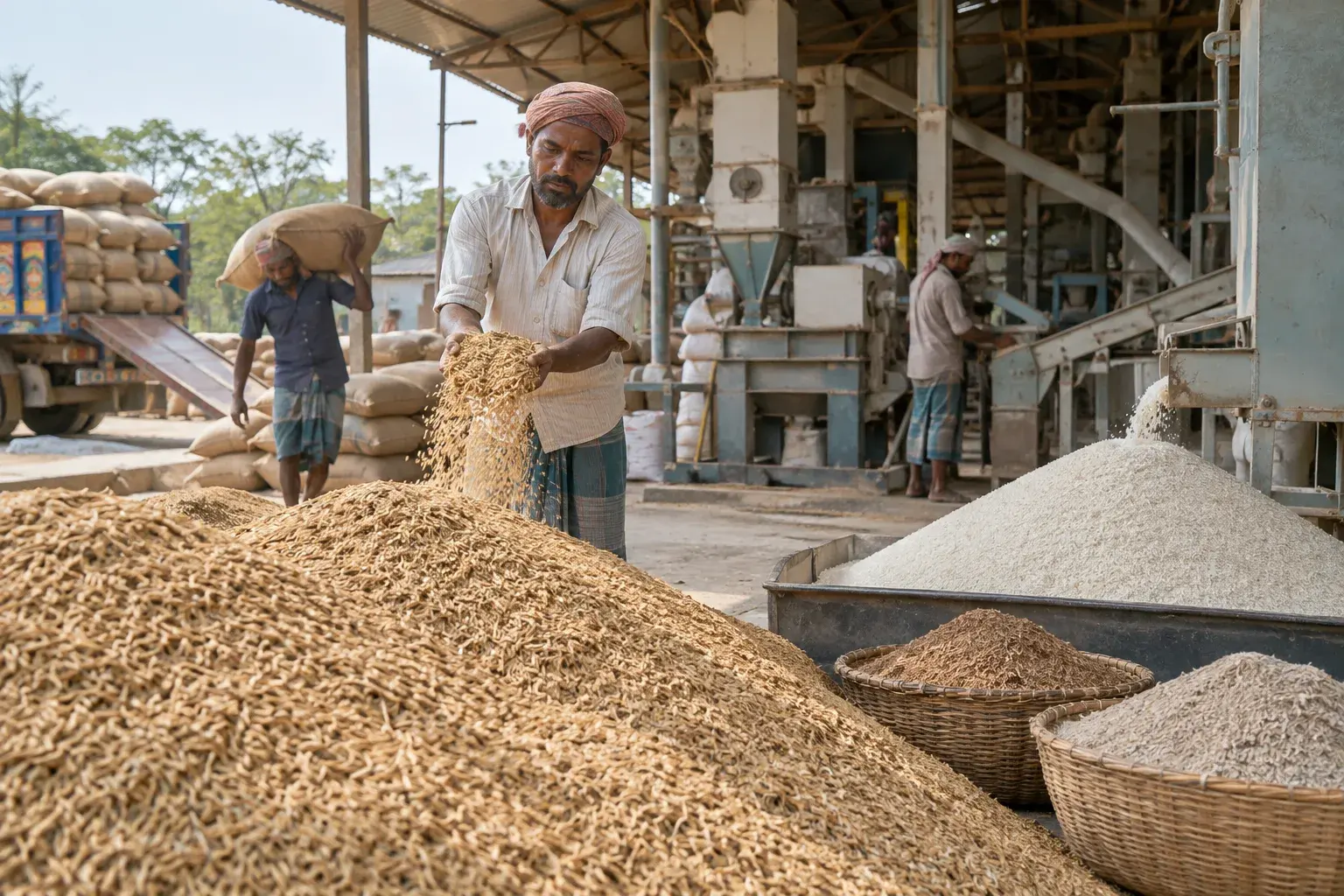
Buying paddy, parboiling and hulling it, and selling the rice. 24,000 kg of paddy gives 15,000 kg of rice, and the husk, bran and broken grain return another Tk 6.45 on every kilo sold.
- Last reviewed: 19 September 2026
- Version 1
Rice mill
- Starting capital
- ৳5,00,000 – ৳50,00,000 Editorial estimate
- Manpower
- 4 – 20 people
- First sale
- 30 – 120 days Editorial estimate
- Break-even
- 12 – 24 months Editorial estimate
- Kind of work
- Workshop · Hard
About the business
A rice mill buys paddy, parboils it, dries it, hulls it and sells the rice. The whole business turns on one sum: how many kilos of rice come out of a maund of paddy, and where the rest goes. In one worked case, 600 maunds - 24,000 kg - of paddy yielded 15,000 kg of rice. That is about 62 per cent of the paddy weight as rice; the other 38 per cent is husk, bran, broken grain and screenings. Most people leave that 38 per cent out of the calculation, and it is what decides whether the mill makes money. In the same case the by-products sold for Tk 96,720: polish 1,470 kg at Tk 38, broken rice 400 kg at Tk 32, black rice 400 kg at Tk 28, cream khud 250 kg at Tk 30 and polish khud 360 kg at Tk 26, with the husk given to the mill owner free. Spread across 15,000 kg of rice that is Tk 6.45 back on every kilo. The rice itself sold at Dhaka wholesale in September 2026 for Tk 43-45 coarse and Tk 46-50 medium. But the small husking mill is losing. Dinajpur had 2,180 husking mills running in 2019 and 703 in 2025, because one auto rice mill does the work of about twenty of them and the agricultural loan rate went from 9 to 14 per cent.
Unit economics
| Item | Range | Evidence | Suggest a correction |
|---|---|---|---|
| Monthly working capital | ৳5,00,000 – ৳28,00,000 | Editorial estimate | |
| Selling price | ৳43 – ৳50 / kg | Official source | |
| Variable cost | ৳28 – ৳32 / kg | Editorial estimate | |
| Gross margin | 10% – 30% | Disputed | |
| Time to first revenue | 30 – 120 days | Editorial estimate | |
| Break-even time | 12 – 24 months | Editorial estimate | |
| Cash cycle | 15 – 45 days | Editorial estimate | |
| Waste / loss | 37% – 38% | Editorial estimate | |
| Daily capacity | 1,000 – 5,000 | Editorial estimate |
What you need to start
- Husker, polisher, sieves and blower, a platform scale, a moisture meter and a bag-stitching machine.Equipment
- Foodgrain and food commodity business licence for a rice mill, from the district food controller's office under the Ministry of Food's fee and authority schedule. Renewable.Licence
- Trade licence from the city corporation or municipality: form Tk 10, licence book Tk 50, standard tax Tk 30, stamp Tk 150-300, licence fee Tk 100-60,000 by trade type. Issued in three to five working days.Licence
- Buying paddy on moisture, timing the parboiling and drying, and keeping a batch-wise account of rice, screenings and bran. Bad parboiling breaks the grain and the price falls with it.Skill
- A steady paddy source - market beparis or a haor arot. In season, truckloads go from the Chamra river-port arots in Kishoreganj to chatals in Rajshahi, Naogaon, Chapainawabganj, Sherpur and Jamalpur.Supplier
- By-product buyers - feed and rice bran oil mills for bran and screenings, fuel buyers for husk.Supplier
- A chatal - the open drying yard - plus parboiling tanks, a machine shed and godowns for paddy and rice. Truck access is required.Workspace
How the work is done
- 1Take land in a paddy area. Being near the paddy cuts freight, and a chatal needs open drying yard.
- 2Arrange the power connection and the water supply - parboiling needs water and hulling needs power.
- 3Take the trade licence and the rice mill licence from the district food controller's office.
- 4Install the machinery: parboiling tanks or a boiler, the husker, the polisher and the sieves that separate broken grain and bran.
- 5Fix your paddy source - the market bepari or a haor arot. From river-port arots like Karimganj in Kishoreganj, paddy goes straight to the chatal by truck.
- 6Measure moisture when buying. Pay for wet paddy by weight and you get less rice - that is exactly where the margin goes.
- 7Keep a per-batch book: maunds of paddy in, kilos of rice out, and kilos of broken grain, bran and husk.
- 8Line up separate buyers for the by-products - bran and screenings go to feed and oil mills, husk goes for fuel. These sales return about Tk 6.45 on every kilo of rice.
- 9Settle rates with rice wholesalers and arotdars, and check whether you can join the Directorate of Food's contracted procurement.
- 10Watch the borrowing. The agricultural loan rate went from 9 to 14 per cent, and in Dinajpur many mill owners became defaulters when they could not repay.
- 11Plan for the off-season. The mill is full when the paddy comes in and slack for months afterwards, while wages and loan instalments do not stop.
Seasons
- JanHigh
- FebNormal
- MarNormal
- AprHigh
- MayHigh
- JunHigh
- JulNormal
- AugNormal
- SepNormal
- OctNormal
- NovHigh
- DecHigh
Where it works well
- Strong fitBogura · The trading centre of the north - paddy, machinery and rice buyers are all close.
- Strong fitDinajpur · One of the country's biggest milling districts, and the one where husking mills are closing fastest - from 2,180 in 2019 to 703 in 2025.
- Strong fitKushtia · A big mokam for fine rice; miniket-grade rice moves out from here across the country.
- Strong fitNaogaon · Chatals are dense here and paddy comes by truck straight from the haor arots.
- PossibleChapai Nawabganj · Chatal country that takes haor paddy; paddy is cheap here in season.
- PossibleGaibandha · A paddy-growing area, though the big buying markets are far off.
- PossibleJamalpur · The same kind of chatal area, well placed for sending rice to Dhaka.
- PossibleKishoreganj · Haor paddy is on the doorstep - about forty arots sit at the Chamra river port in Karimganj in season.
- PossibleRajshahi · Chatal country with a large paddy market, and heavy competition from auto mills.
- PossibleSherpur · A chatal area supplied with paddy from the Kishoreganj haor.
- PossibleSirajganj · On the highway, so both paddy in and rice out move easily.
Risks and cautions
- MediumSpoilage: Wrong parboiling or under-drying breaks the grain, and broken rice sells at about Tk 32 a kilo against Tk 43-50 for whole rice. In the rains paddy cannot be dried on the chatal, and wet paddy left in the godown rots or goes musty.
- MediumDemand: When rice falls, the whole godown falls with it. On 15 September 2026 Dhaka wholesale coarse rice was 14.56 per cent below the same day last year and medium rice 15.04 per cent below - and the paddy had already been bought.
- MediumCompliance: Anti-hoarding drives on paddy and rice repeatedly target mills. Stock above the licensed limit brings a fine, confiscation and the risk of losing the licence - yet stocking cheap paddy in season is exactly what a mill normally does.
- HighDependency: The small husking mill is losing to the auto rice mill. Dinajpur had 2,180 husking mills in 2019 and 703 in 2025 - about two-thirds gone in five years. One auto mill does the work of roughly twenty husking mills and some corporate mills the work of thirty. Buyers want polished white rice, and the reddish rice a husking mill produces does not fetch the price.
- HighWorking capital: Buying paddy in season takes a large lump of cash at once, and the rice money comes back later. Many mill owners borrow, but the agricultural loan rate has risen from 9 to 14 per cent. Reporting from Dinajpur found owners who borrowed heavily without the returns and became defaulters.
Sources
সিটি কর্পোরেশন থেকে ট্রেড লাইসেন্স প্রাপ্তির ধাপ সমূহ
Collected: 16 Sept 2026Supports: Starting capital · বাংলাদেশ
ঢাকা মহানগরীর বাজারসমূহের নিত্য প্রয়োজনীয় কৃষিপণ্যের পাইকারী বাজারদর, ১৫-০৯-২০২৬
Collected: 15 Sept 2026Supports: Selling price · ঢাকা মহানগরী (১১টি বাজার)
What changed
No corrections have been published yet.
Questions and answers
No questions yet. Be the first to ask.
Stories about this business
2,400 taka a maund to produce, 2,250 to sell: 233 mills closed
A conventional husking mill spends about 2,400 taka a maund to produce rice that sells for 2,250, losing 150-200 taka on every maund. In the upazila 233 mills have closed and about 7,000 workers have lost their jobs.
- Reasons
- Price drop, Working capital
Similar businesses
 Food processing
Tea packaging and branding
Buying loose tea at auction, blending and packing it under your own brand. The 2026-27 Chattogram auction averages Tk 280.88 a kg while packet tea sells at Tk 428-650.
- Capital
- ৳5 lakh – ৳50 lakh
- People
- 2 – 15
- First income
- 45 – 100 days
 Food processing
Fruit juice and drinks
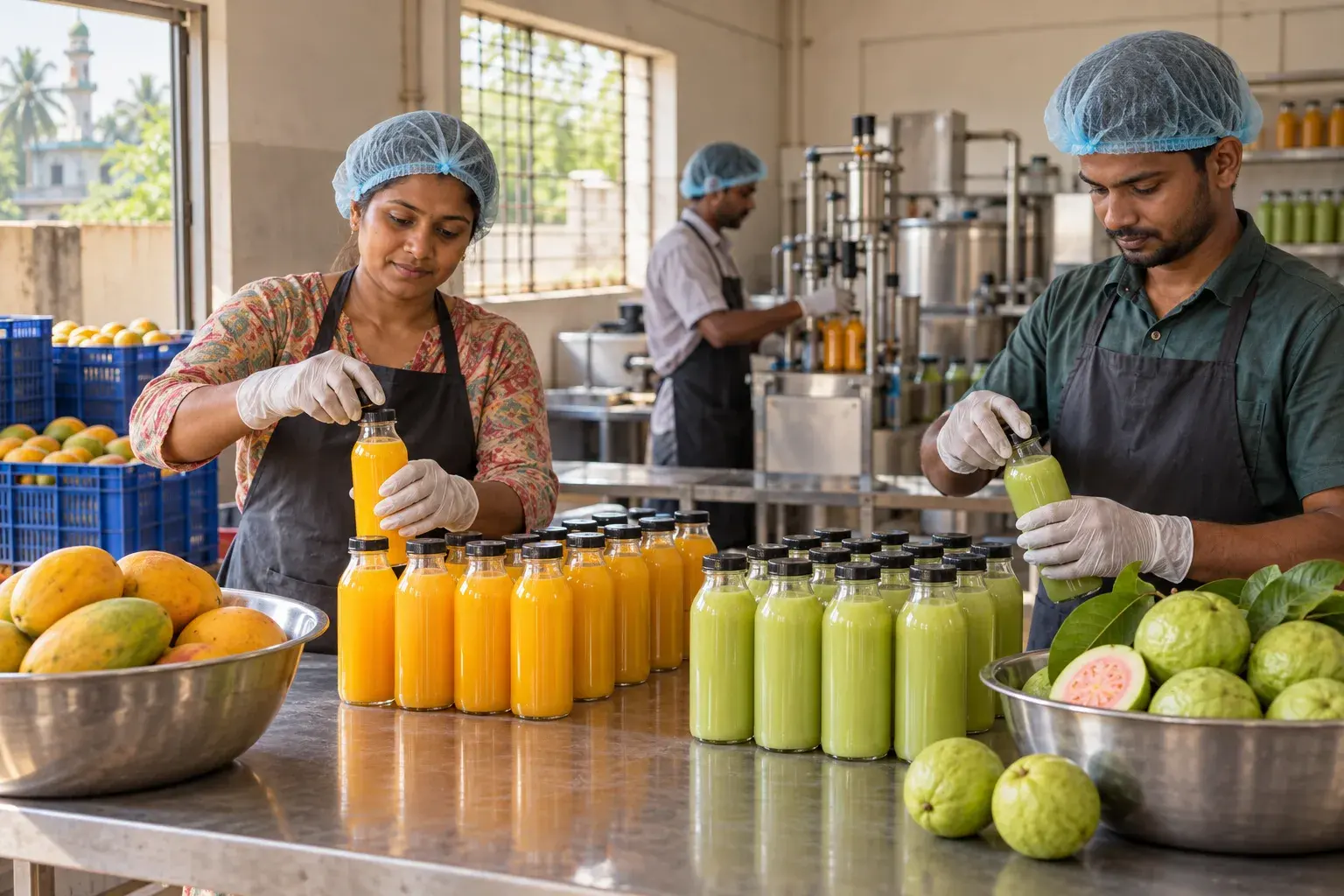
Making and bottling fruit juice and fruit drinks. A litre retails at Tk 80-90. Selling without a BSTI CM licence draws fines - recently Tk 30,000 to Tk 1,00,000.
- Capital
- ৳5 lakh – ৳30 lakh
- People
- 4 – 20
- First income
- 90 – 180 days
 Food processing
Biscuit and chips making
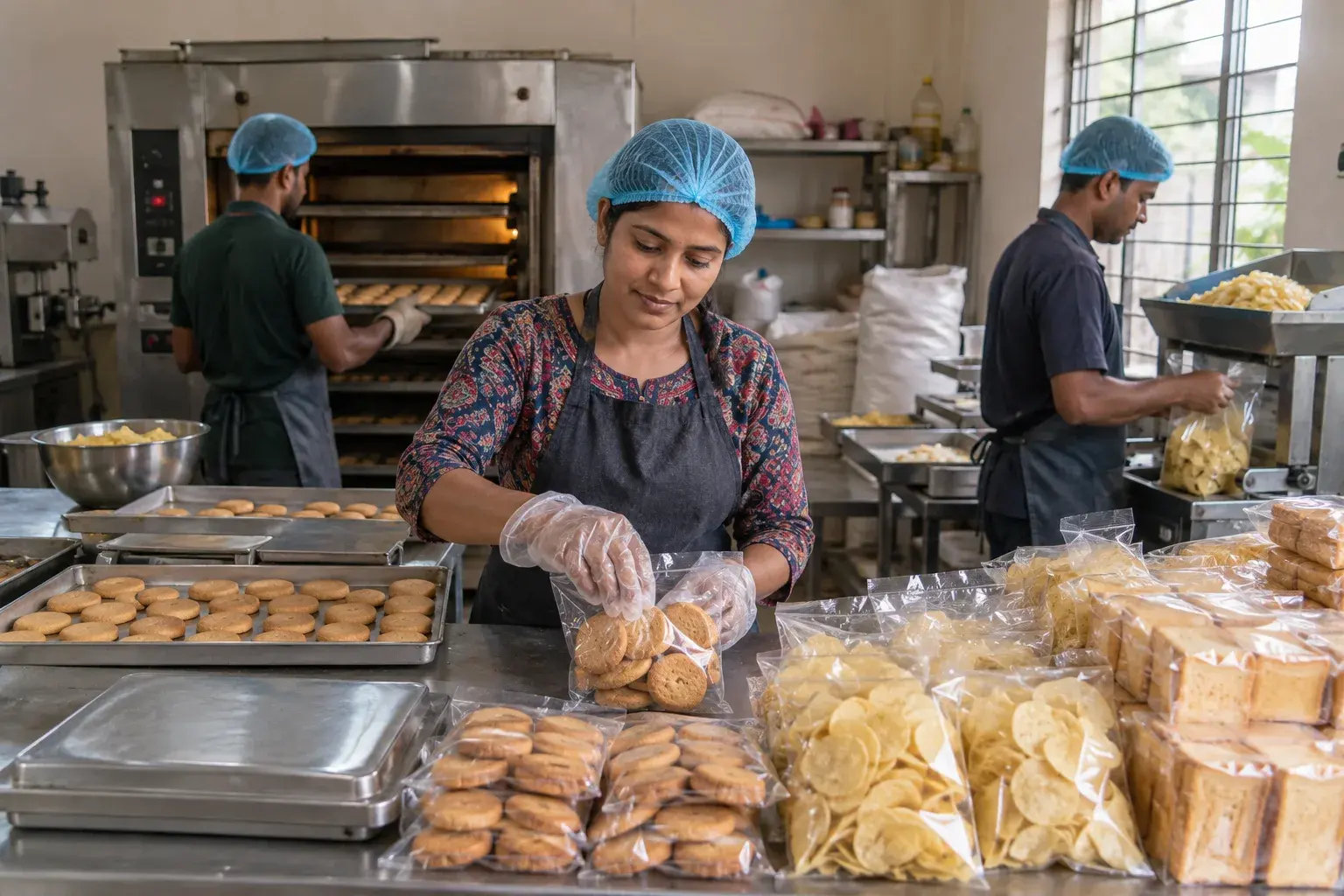
Making and packing biscuits, toast and chips from flour, sugar and oil. BSTI certification is compulsory, and the shop credit cycle is the real constraint.
- Capital
- ৳4 lakh – ৳40 lakh
- People
- 4 – 30
- First income
- 45 – 100 days
 Food processing
Frozen paratha and samosa
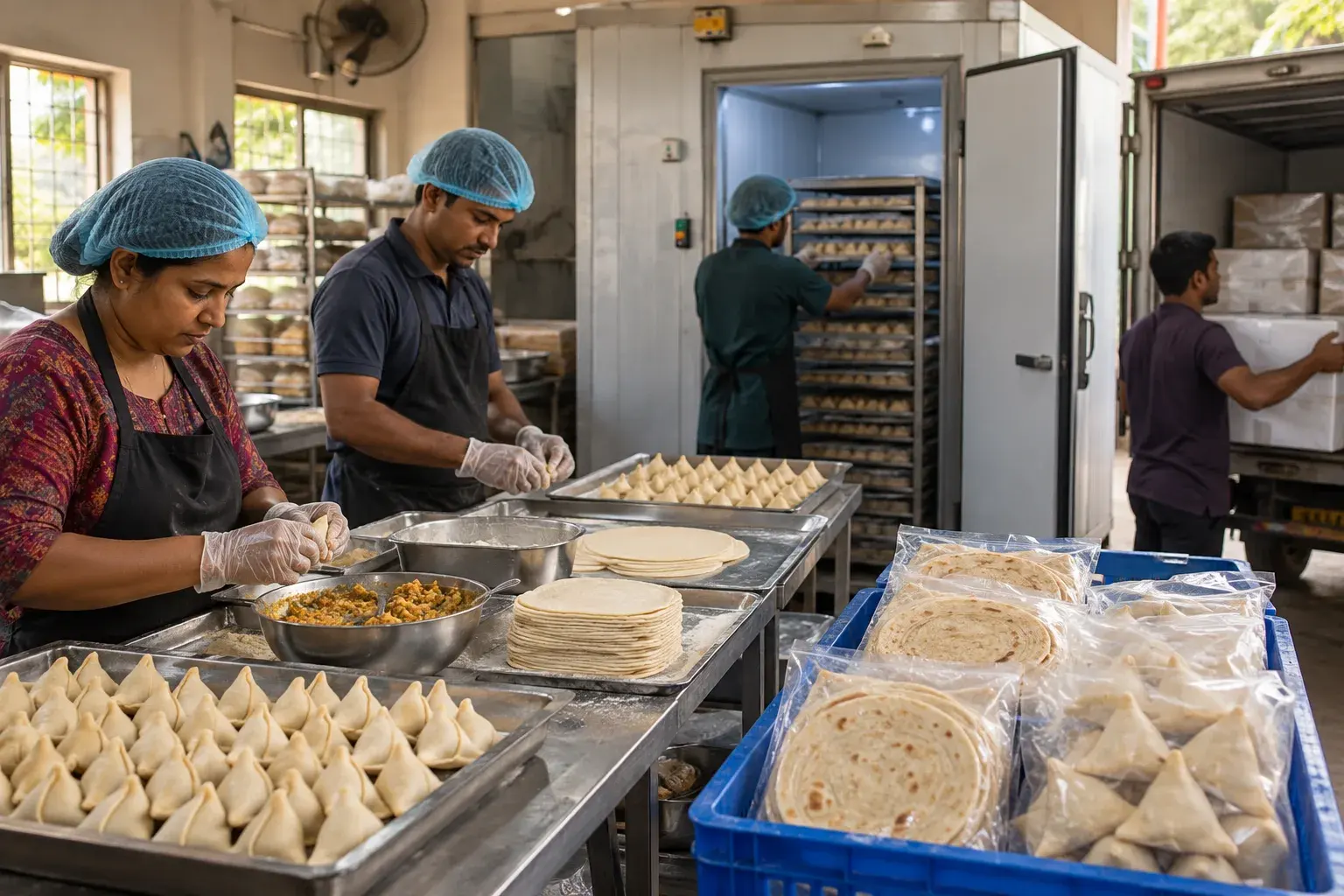
Making raw paratha, samosa and singara, freezing them and selling them in packs. Retail is Tk 12.5-19 a paratha and Tk 8.6-9.4 a mini samosa. The cold chain from factory to shop is the real condition of the business.
- Capital
- ৳3 lakh – ৳15 lakh
- People
- 3 – 15
- First income
- 45 – 90 days