
Septic tank and drain cleaning
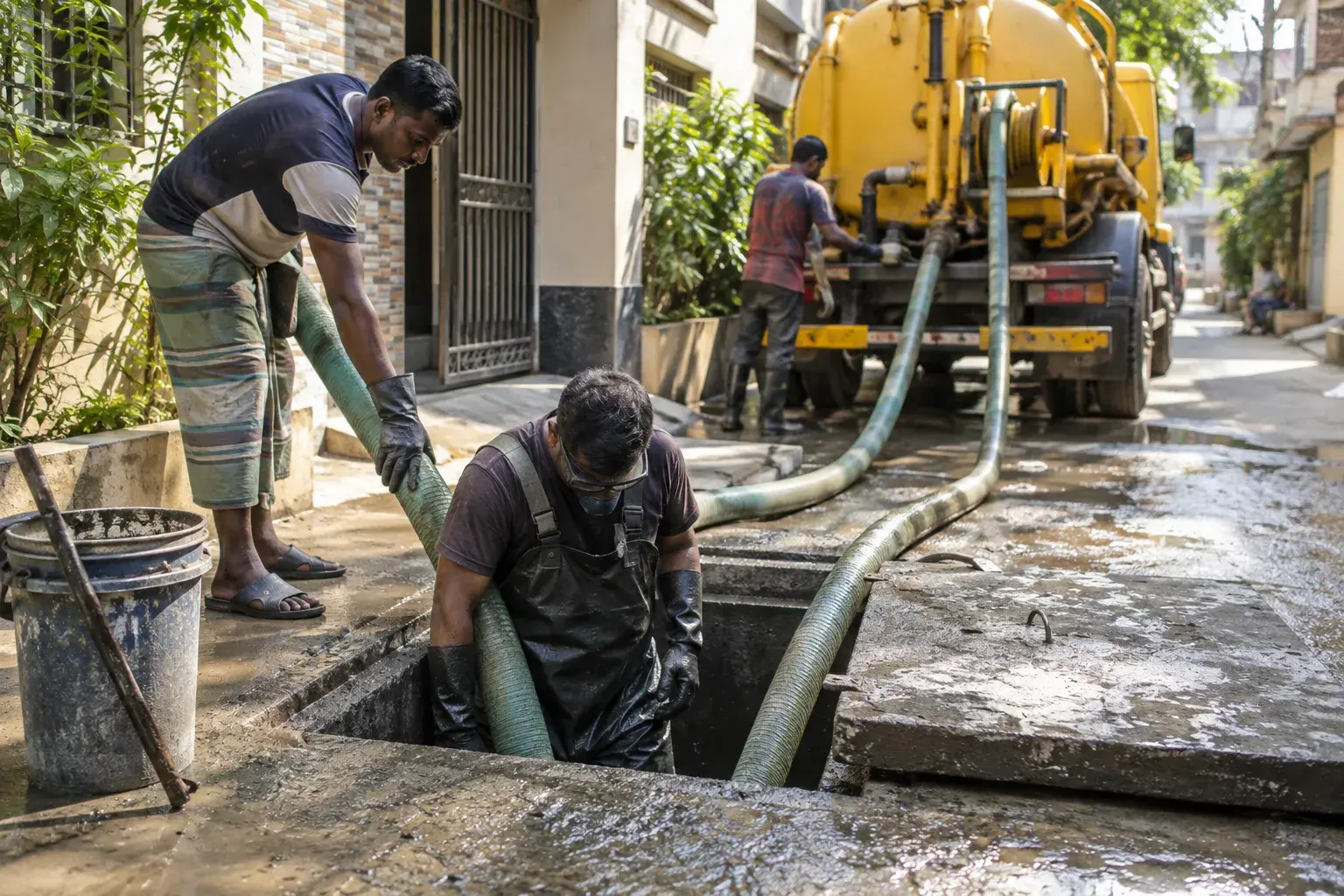
Emptying septic tanks and clearing drains. One Dhaka firm puts its starting price near Tk 7,000. But people die doing this work, from the gas, inside the tank.
- Last reviewed: 21 September 2026
- Version 1
Septic tank and drain cleaning
- Starting capital
- ৳50,000 – ৳25,00,000 Editorial estimate
- Manpower
- 2 – 6 people
- First sale
- 10 – 45 days Editorial estimate
- Break-even
- 4 – 36 months Editorial estimate
- Kind of work
- Mobile service · Hard
About the business
This has to be said first: this is not easy money, it is dangerous work. Methane, hydrogen sulphide, carbon monoxide, ammonia and propane collect inside a septic tank. A man who climbs in loses consciousness in minutes, and the man who goes in to save him dies too. On 15 March 2023 at a garment factory in Ashulia that is exactly what happened to three people: Mithu, a sanitation worker of 16, went down first; after an hour with no answer Rakib, 22, followed; then Mohammad Ali, 26. The fire service brought out all three bodies by 10pm. In May 2026 four workers died at Sarail in Brahmanbaria, in June two at Amtali in Barguna, and in September two in Faridpur. The same thing keeps happening. India banned manual septic tank cleaning in 2013; Bangladesh has no such law. Doing the work safely is therefore your own decision, not a legal obligation. There is only one safe way: empty it by machine without anyone going in. The Dhaka firms that do this work use a vacuum tanker and a high-pressure jetting machine, and one of them says its price starts at around Tk 7,000 and rises with the size and condition of the tank. Labour is costed separately: one online listing puts the daily wage for this work at Tk 800-2,000, with a job taking 4 to 8 hours and one to four men. A tank is meant to be emptied every three years, or five for a large one, so the same house does not pay you often. You have to cover ground.
Unit economics
| Item | Range | Evidence | Suggest a correction |
|---|---|---|---|
| Monthly working capital | ৳40,000 – ৳2,00,000 | Editorial estimate | |
| Selling price | ৳7,000 / unit | Market quote | |
| Variable cost | ৳1,600 – ৳4,000 / unit | Editorial estimate | |
| Gross margin | 43% – 77% | Editorial estimate | |
| Time to first revenue | 10 – 45 days | Editorial estimate | |
| Break-even time | 4 – 36 months | Editorial estimate | |
| Cash cycle | 0 – 90 days | Editorial estimate | |
| Waste / loss | 5% – 15% | Editorial estimate | |
| Daily capacity | 1 – 2 | Editorial estimate |
What you need to start
- A vacuum tanker, the only way to empty a tank without going in, plus a high-pressure water jet or sewer jet, power rodding cable, muck rake and wrecking bar. The prices of the tanker and the jetting machine could not be verified here.Equipment
- Safety equipment: a gas detector, a blower for ventilation, breathing apparatus, rope and harness, gloves, goggles and masks. A tank holds methane, hydrogen sulphide, carbon monoxide, ammonia and propane; the source does not state at what concentration they become lethal.Equipment
- Fuel, disinfectant, lime and cleaning chemicals. How much a job takes and what they cost could not be sourced.Starting stock
- Trade licence from the city corporation, municipality or union parishad: form Tk 10, licence book Tk 50, standard tax Tk 30, stamp Tk 150-300, licence fee Tk 100-60,000, plus signboard fee and VAT, issued in 3-5 working days; validity not stated in the source. No separate licence or certification for emptying septic tanks could be found, and a newspaper opinion piece confirms that while India banned manual cleaning in 2013, Bangladesh has no such law.Licence
- Trained, certified technicians and a written standard operating procedure; the newspaper piece names both as conditions of safe maintenance. Who issues such certification in Bangladesh could not be found.Skill
- A designated discharge point, a treatment plant or a dumping point named by the city corporation or municipality. Without it there is nowhere to take a full tanker. The specific points and any fee could not be verified here and must be checked with the local city corporation.Supplier
- A place to keep the tanker and equipment and to wash down. This is not a shop but a mobile service; the office is a phone number and a yard.Workspace
How the work is done
- 1Decide whether you will work by machine or by sending a man down. That decision is not about money, it is about a life. It is not illegal in Bangladesh, but between 2023 and 2026 at least eleven people died this way in Ashulia, Sarail, Amtali and Faridpur.
- 2Take a trade licence from the city corporation, municipality or union parishad: form Tk 10, licence book Tk 50, standard tax Tk 30, stamp Tk 150-300, licence fee Tk 100-60,000, issued in 3-5 working days.
- 3Go to the city corporation or municipality and find out where the sludge must be discharged. Tank waste cannot be dumped into a canal or a drain; without a treatment plant or a designated point settled in advance, you will be stuck on the first job.
- 4Get a vacuum tanker, bought or hired. That is the real asset in this business, because without the machine there is no safe way to empty a tank. Hiring one at the start keeps the capital small.
- 5Take a jetting machine for clearing blocked drains and pipes. The Dhaka firms list a high-velocity water jet, power rodding cable and rakes alongside the vacuum tanker.
- 6Buy a gas meter, a blower to force air in, breathing apparatus, rope and harness, gloves, goggles and masks. A tank holds methane, hydrogen sulphide, carbon monoxide, ammonia and propane, and they are there whether or not you can smell them.
- 7Train your men hands-on: how long the cover must stay open and the air move, how to read the gas meter before calling it safe, and what to do if someone collapses inside. Above all, never go in to rescue: that is exactly how the second and third men died at Ashulia.
- 8Quote each job after seeing the tank's size and condition. One Dhaka firm starts at around Tk 7,000 and says the price depends on the tank's size, litreage and condition. Quoting blind over the phone is a mistake.
- 9Get standing contracts with flat building committees, factories, hospitals, hotels and hostels. A household tank is emptied once in three to five years, so going door to door alone will not sustain the work.
- 10Fix the wage and hours in advance. The market rate for this work is Tk 800-2,000 a day, a job runs 4 to 8 hours and takes one to four men, and that arithmetic has to be in your head when you quote.
- 11Give a receipt for every job and keep photographs before and after. Factory and hospital contracts need paperwork, and if there is a dispute those photographs are your evidence.
- 12Look into accident insurance or a compensation arrangement for your workers. No law forces it, but one death ends the family, brings the case and ends the business, all at once.
Seasons
- JanNormal
- FebNormal
- MarHigh
- AprHigh
- MayHigh
- JunHigh
- JulHigh
- AugHigh
- SepNormal
- OctNormal
- NovNormal
- DecLow
Where it works well
- Strong fitChattogram · A port city dense with tall buildings and factories, with regular ETP and septic tank work in the industrial areas.
- Strong fitDhaka · Almost every firm working with a vacuum tanker and jetting machine is here, with prices starting around Tk 7,000. The density of flat buildings, hospitals and hotels is highest here.
- Strong fitGazipur · The garment belt, where factory septic tanks are large and need emptying regularly; it was in a factory of this kind at Ashulia that three men died in 2023.
- Strong fitNarayanganj · A mix of factories and dense housing with weak sewerage, so the demand is steady.
- PossibleBarguna · Two workers died of toxic gas at Amtali in June 2026; mechanised emptying is all but absent in the district towns.
- PossibleBrahmanbaria · Four workers died going into a septic tank at Sarail in May 2026: the demand is there, but the work here is being done without machines.
- PossibleCox's Bazar · Rows of hotels and motels with large septic tanks and heavy seasonal use, giving room for standing contracts.
- PossibleFaridpur · In September 2026 two workers died in the septic tank of a building under construction; the contracting demand for this work arises during construction itself.
- PossibleKhulna · A divisional city with limited sewage treatment, leaving room for a mechanised emptying service.
- PossibleRajshahi · A divisional city with tall buildings going up and fewer established firms than Dhaka.
- PossibleSylhet · Dense with hotels and expatriates' houses, where the ability to pay for mechanised work is comparatively better.
Risks and cautions
- HighOther: Men die doing this, and they die in groups. At Ashulia on 15 March 2023 one went down and two more followed looking for him: three dead. At Sarail in May 2026, four. At Amtali in June 2026, two. In Faridpur in September 2026, two. The cause is the same every time: opening the cover and climbing straight in, without measuring the gas, without letting the air move. One death ends a family, and your business with it.
- HighCompliance: The law will not protect you and will not carry the liability either. Manual septic tank cleaning is not banned in Bangladesh; India banned it in 2013, this country has not. So nobody stops the competitor who sends a man down cheaply, and if you buy machines and charge more you lose the job. Yet if there is an accident the liability lands on you.
- HighDemand: The same customer does not come back. A tank is meant to be emptied every three years, or five for a large well-maintained one. That is one payment from a household every three to five years. Surviving means covering a wide area and holding regular factory, hospital and hostel work.
- HighWorking capital: The machine is the biggest cost and it comes first. Without a vacuum tanker the work cannot be done safely, but an idle tanker still costs instalments and fuel. At one tank a day at Tk 7,000 against two men's wages of Tk 1,600-4,000, whether what is left covers the tanker's instalment has to be worked out on paper before you buy.
- MediumDependency: With nowhere to discharge, you stand around with a full tanker. If the treatment plant or designated dumping point is closed or far away, travel time and fuel rise on every job and the chance of doing two jobs in a day disappears.
- MediumLate payment: Factory and flat-committee work is not paid in cash. The job ends, the bill goes in, the committee meets, and then the money comes, with weeks or months in between, while the workers' wages are paid the same day and the tanker's fuel was bought before that.
Sources
Poshora BD — service list with booking prices
Collected: 21 Sept 2026Supports: Selling price · ঢাকা
সিটি কর্পোরেশন থেকে ট্রেড লাইসেন্স প্রাপ্তির ধাপ সমূহ
Collected: 16 Sept 2026Supports: requirements.LICENSE · বাংলাদেশ
What changed
No corrections have been published yet.
Questions and answers
No questions yet. Be the first to ask.
Similar businesses
 Home & local services
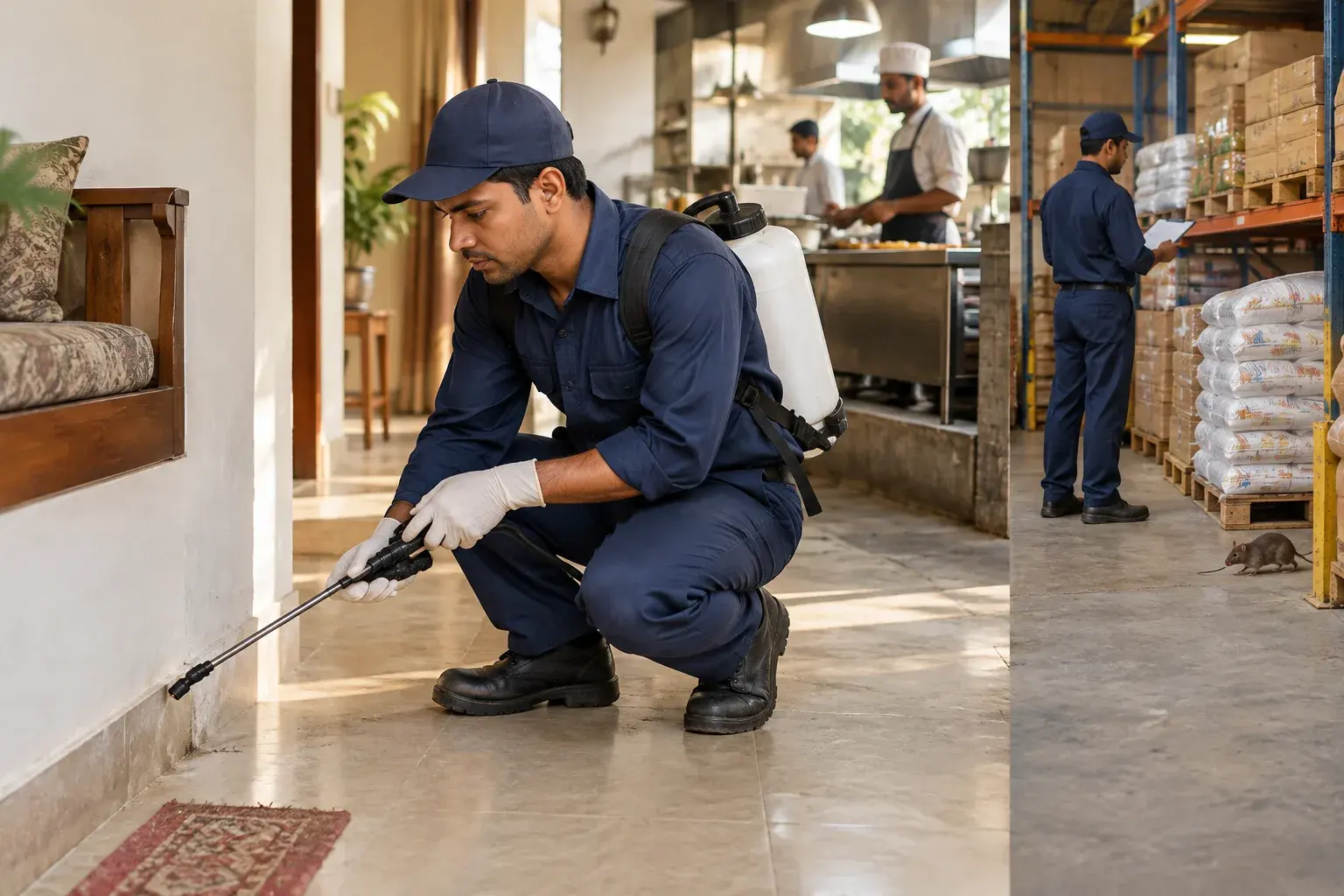
Pest control service
Controlling insects and rodents in homes, restaurants and warehouses. Annual contracts make the income predictable, and the work is illegal without a licence.
- Capital
- ৳50k – ৳3 lakh
- People
- 2 – 6
- First income
- 15 – 60 days
 Home & local services
Motorcycle servicing
Servicing motorcycles and selling parts. Bangladesh has 4,980,747 registered motorcycles, and 86 percent of all 2025 vehicle registrations were motorcycles.
- Capital
- ৳50k – ৳5 lakh
- People
- 1 – 5
- First income
- 10 – 45 days
 Home & local services
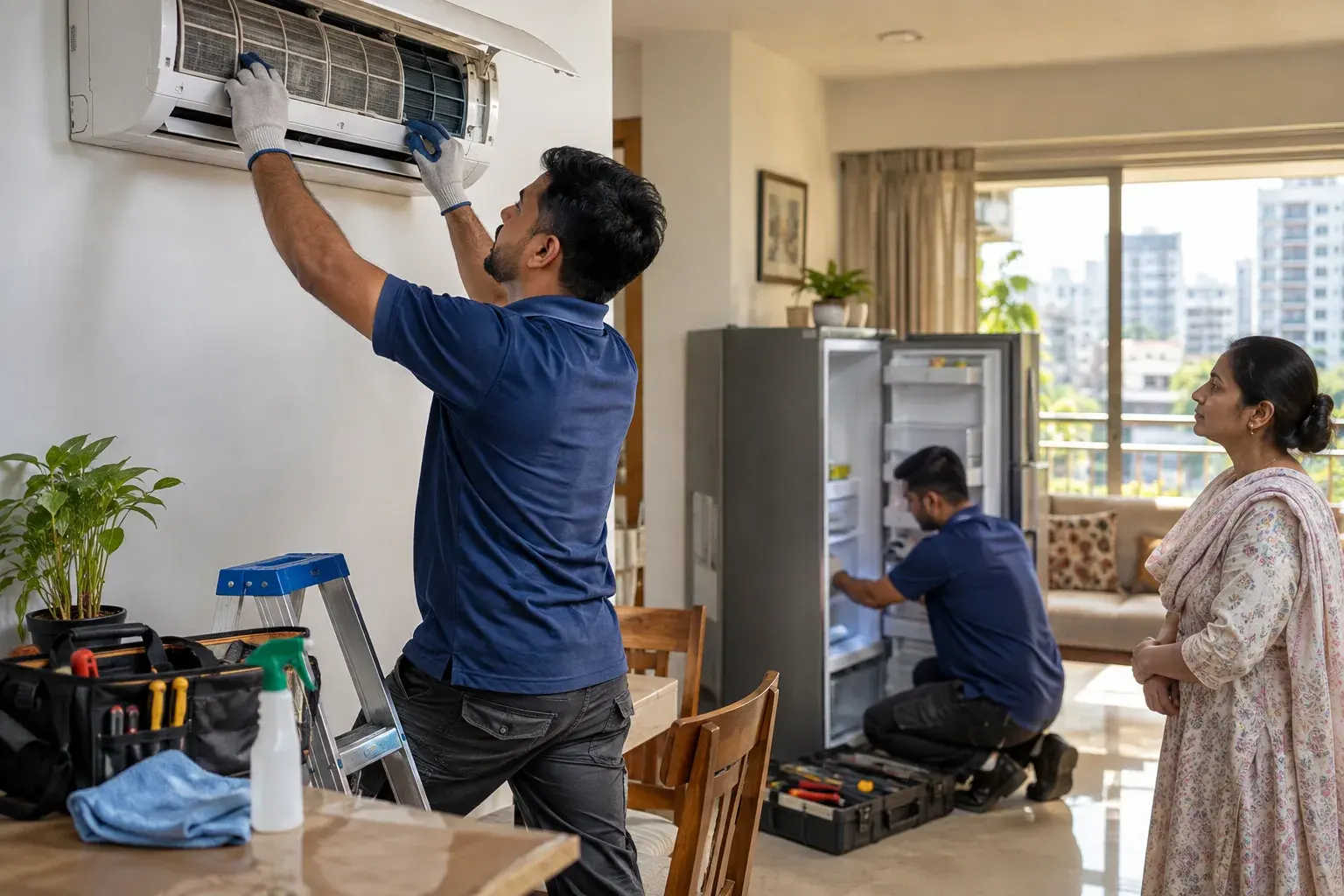
AC and refrigerator servicing
Servicing and repairing air conditioners and refrigerators at the customer's address. March to June is overloaded and winter is near dead, so annual maintenance contracts are what carry the year.
- Capital
- ৳60k – ৳4 lakh
- People
- 1 – 6
- First income
- 7 – 30 days
 Home & local services
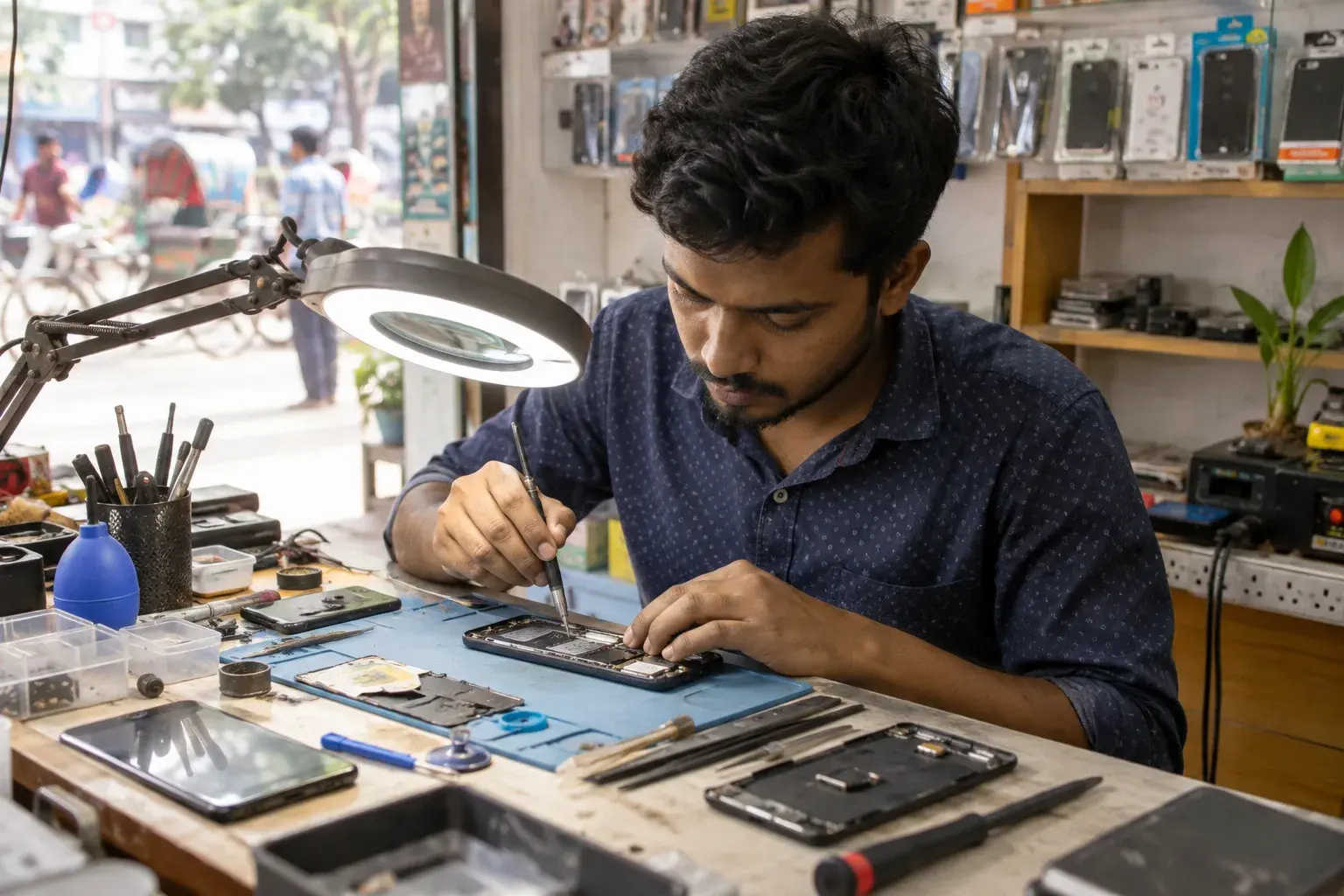
Mobile phone servicing
The part carries little margin; the money is in the labour. The repairer who can work on a motherboard gets the other shops' sets too.
- Capital
- ৳40k – ৳2.5 lakh
- People
- 1 – 3
- First income
- 7 – 30 days