
Vegetable retail and supply
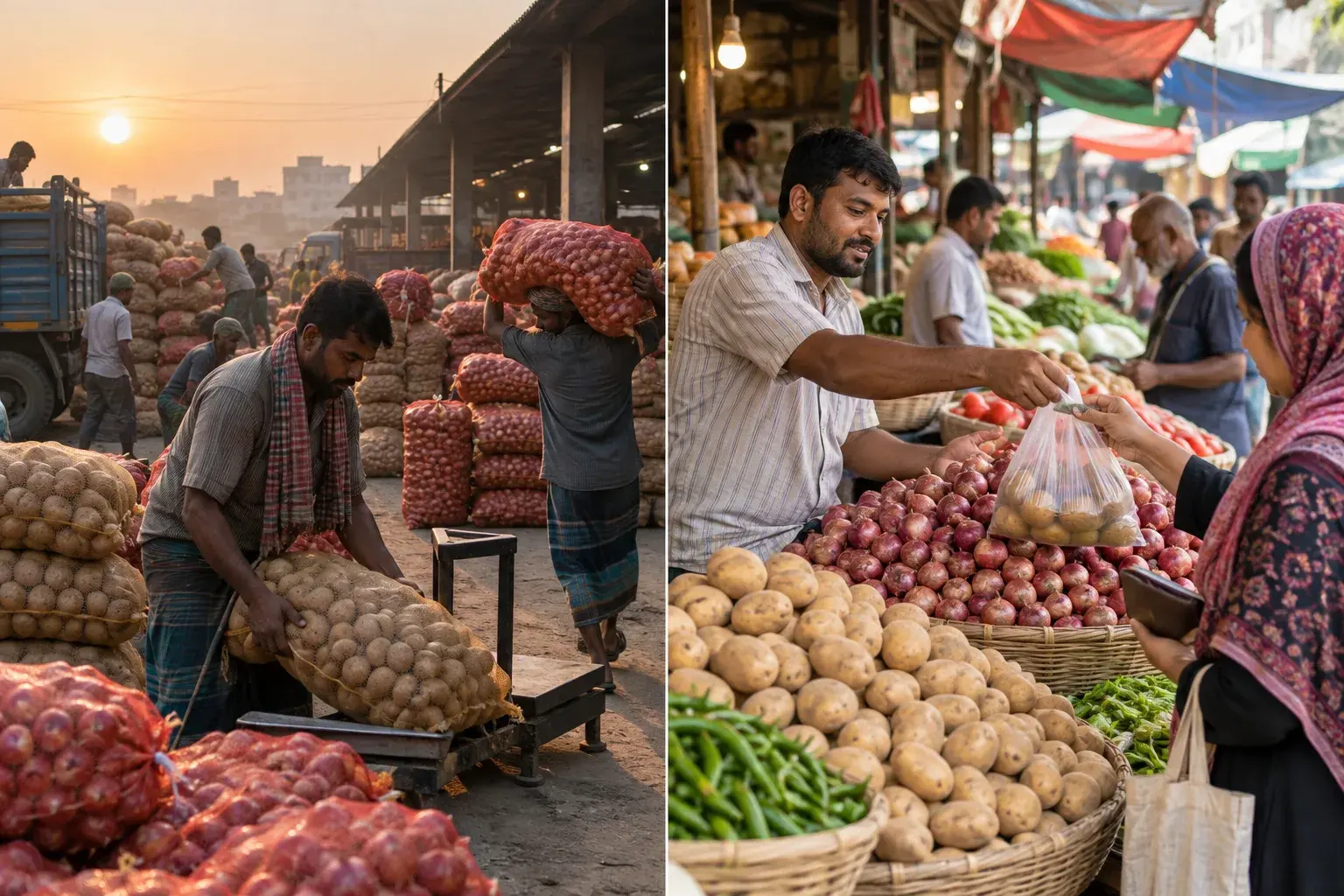
Buy at the wholesale arat at dawn, sell retail all day. On 14 Sept 2026 in Dhaka, potato was Tk 15-20 wholesale against Tk 25-30 retail, and onion Tk 24-42 against Tk 45-55.
- Last reviewed: 19 September 2026
- Version 1
Vegetable retail and supply
- Starting capital
- ৳10,000 – ৳1,50,000 Editorial estimate
- Manpower
- 1 – 3 people
- First sale
- 1 – 15 days Editorial estimate
- Break-even
- 1 – 2 months Editorial estimate
- Kind of work
- Shop · Easy
About the business
Buying vegetables at the wholesale arat before dawn and selling them retail through the day. It can be run from a van, a basket or a corner of the bazaar, so the entry cost is low. This is the one trade where the margin does not have to be guessed, because the government prints both sides of it. On 14 September 2026 the Department of Agricultural Marketing recorded, for Dhaka city markets, potato at Tk 15-20 per kg wholesale against Tk 25-30 retail, and local onion at Tk 24-42 wholesale against Tk 45-55 retail - a gap of Tk 10 to Tk 21 a kilo, or 24 to 47 percent. That gap is not profit. Spoilage, weight loss and the evening clear-out at giveaway prices all come out of it. Cash arrives daily and stock must be bought again daily, so one slow day leaves nothing to take to the arat the next morning, and an empty stall sends customers next door. Winter brings cheap, varied supply and the best selling; the monsoon brings short supply, jumpy prices and the heaviest spoilage. The traders who last are the ones who write down how many kilos actually move each day and buy to that number.
Unit economics
| Item | Range | Evidence | Suggest a correction |
|---|---|---|---|
| Monthly working capital | ৳5,000 – ৳66,000 | Editorial estimate | |
| Selling price | ৳25 – ৳55 / kg | Official source | |
| Variable cost | ৳15 – ৳42 / kg | Official source | |
| Gross margin | 24% – 47% | Official source | |
| Time to first revenue | 1 – 15 days | Editorial estimate | |
| Break-even time | 1 – 2 months | Editorial estimate | |
| Cash cycle | 0 – 1 days | Editorial estimate | |
| Waste / loss | 5% – 15% | Editorial estimate | |
| Daily capacity | 60 – 400 | Editorial estimate |
What you need to start
- Scales and weights, baskets or crates, sacking or a tarpaulin, something to sprinkle water with, and a van to the arat, owned or hired.Equipment
- Stock bought fresh every day, counted in two groups: keepers like potato, onion and pumpkin, and one-day goods like leafy greens, tomato and cucumber.Starting stock
- Trade licence from the city corporation or municipality: form Tk 10, licence book Tk 50, standard tax Tk 30, stamp Tk 150-300, licence fee Tk 100-60,000 by trade type, plus VAT and signboard fee. Issued in 3-5 working days.Licence
- Judging by eye what will sell today and what will rot by tomorrow, and separating good from damaged at the moment of buying so the price reflects it.Skill
- A fixed wholesale arat and a dealer you know there. In Dhaka the government takes daily wholesale prices from eleven markets including Karwan Bazar, Jatrabari and Shyambazar.Supplier
- A spot in or beside the bazaar with shade and water. Without a dry floor and moving air the stock goes off within two days.Workspace
How the work is done
- 1Decide which arat you will buy from. In Dhaka the Department of Agricultural Marketing collects daily wholesale prices from eleven markets including Karwan Bazar, Jatrabari, Shyambazar, Kaptan Bazar, Tejgaon and Mirpur-1 and 2. Those are the main sources.
- 2Before opening, stand in the bazaar morning and evening for a few days and watch what actually moves. What sells in your locality decides your buying list.
- 3Take a trade licence from the city corporation or municipality: form Tk 10, licence book Tk 50, standard tax Tk 30, stamp Tk 150-300, plus the licence fee by trade type. It takes 3-5 working days with the papers ready.
- 4Take a spot or a stall in the bazaar. Shade, water and a dry floor are what keep spoilage down; baskets in open sun leave the greens wilted by noon.
- 5Fix how you get to the arat at dawn: your own van, a hired van, or a shared trip with other traders. Work out what the cartage costs per kilo and count it in at the time of buying.
- 6Check the official rates before you go. The Department of Agricultural Marketing publishes both wholesale and retail prices every day, so you will know when the arat is asking too much.
- 7Write down how many kilos actually sell each day and buy to that. Keeping goods like potato and onion is safe; leafy greens, tomato and cucumber must be bought to measure.
- 8Sell at two prices in a day: the fresh price in the morning, and a cut price in the evening for whatever is left. A discount beats a bin.
- 9Arrange regular supply to nearby rice hotels, messes and canteens. It guarantees a base volume every day, but put the credit terms in writing first.
- 10Put money aside before winter. From November to February vegetables are cheap and varied and selling is at its best, while the monsoon squeezes everything.
Seasons
- JanHigh
- FebHigh
- MarNormal
- AprNormal
- MayNormal
- JunLow
- JulLow
- AugLow
- SepLow
- OctNormal
- NovHigh
- DecHigh
Where it works well
- Strong fitChattogram · A large port city thick with hotels and restaurants, and vegetables also come down from the hill districts.
- Strong fitDhaka · Eleven wholesale markets including Karwan Bazar, Jatrabari, Shyambazar and Kaptan Bazar supply stock daily, and dense settlement gives the highest retail demand.
- Strong fitGazipur · Dense settlement of factory workers and their families keeps demand for cheap, keepable vegetables steady all year.
- Strong fitMunshiganj · A main potato growing and cold-storage district right beside Dhaka, so buying is cheap and cartage is short.
- Strong fitNarayanganj · Close to Dhaka's arats, densely settled, with many messes and factory canteens giving a fixed daily volume.
- PossibleBogura · The vegetable and potato trading centre of the north, on the highway, so consignments move easily.
- PossibleCumilla · Steady demand from Dhaka-Chattogram highway hotels and local bazaars, with its own production as well.
- PossibleJashore · A big vegetable growing area that ships to Dhaka, so local buying is cheap, though purchasing power is lower than in Dhaka.
- PossibleManikganj · A vegetable area close to Dhaka; picked at dawn it reaches the capital's arats the same morning.
- PossibleRangpur · A major source of winter vegetables. Buying is very cheap in season, but local selling prices fall then too.
Risks and cautions
- HighSpoilage: Greens, tomato, cucumber and leafy vegetables are one-day goods. In the monsoon and the heat much of what is not sold by evening cannot fetch full price the next day. With only Tk 10-21 a kilo of gap, a modest amount of spoilage erases it, so buying the right quantity is the whole calculation.
- HighWorking capital: Cash must go to the arat every dawn, because the arat does not sell on credit. One bad day of selling means less money to buy with the next morning, a half-empty stall, and customers moving to the next trader. Once that spiral starts it is hard to break.
- MediumDemand: The price is not in your hands. On 14 September 2026 local onion ranged from Tk 24 to Tk 42 wholesale - nearly double, on the same day in the same city. Good stock costs Tk 42, but retail will not take more than Tk 55, leaving only Tk 13 a kilo.
- MediumLate payment: Rice hotels, messes and canteens buy steadily but on credit and pay at month end, while the arat needs cash every morning. A large outstanding balance stops the morning purchase.
Sources
সিটি কর্পোরেশন থেকে ট্রেড লাইসেন্স প্রাপ্তির ধাপ সমূহ
Collected: 16 Sept 2026Supports: Starting capital · বাংলাদেশ
- Collected: 15 Sept 2026
Supports: Selling price · ঢাকা মহানগর — সিপাহীবাগ, মিরপুর-৬, মোহাম্মদপুর টাউন হল, নিউমার্কেট, রামপুরা, মহাখালী বাজার
ঢাকা মহানগরীর বাজার সমূহের ১৪.০৯.২০২৬ খ্রি. তারিখের পেঁয়াজ ও আলুর পাইকারী ও খুচরা বাজারদর
Collected: 14 Sept 2026Supports: Starting capital, Gross margin, Selling price, Variable cost · ঢাকা মহানগরী
What changed
No corrections have been published yet.
Questions and answers
No questions yet. Be the first to ask.
Stories about this business
2,600 taka of vegetables on a hired van, and half as much money sent home
A van hired at 30 taka a day carrying 2,600 taka of vegetables returns 400-500 taka if it all sells, but the money sent home has fallen from 8,000-10,000 to 4,000-5,000 a month.
- Reasons
- Weak demand, Working capital
500-700 taka of vegetables a day, 100-150 taka of profit
Twenty-five years of hawking vegetables from a pushcart: 500-700 taka of sales a day, 100-150 taka of profit, stock bought fresh each morning.
- Reasons
- Working capital, Family or health
Similar businesses
 Retail & wholesale
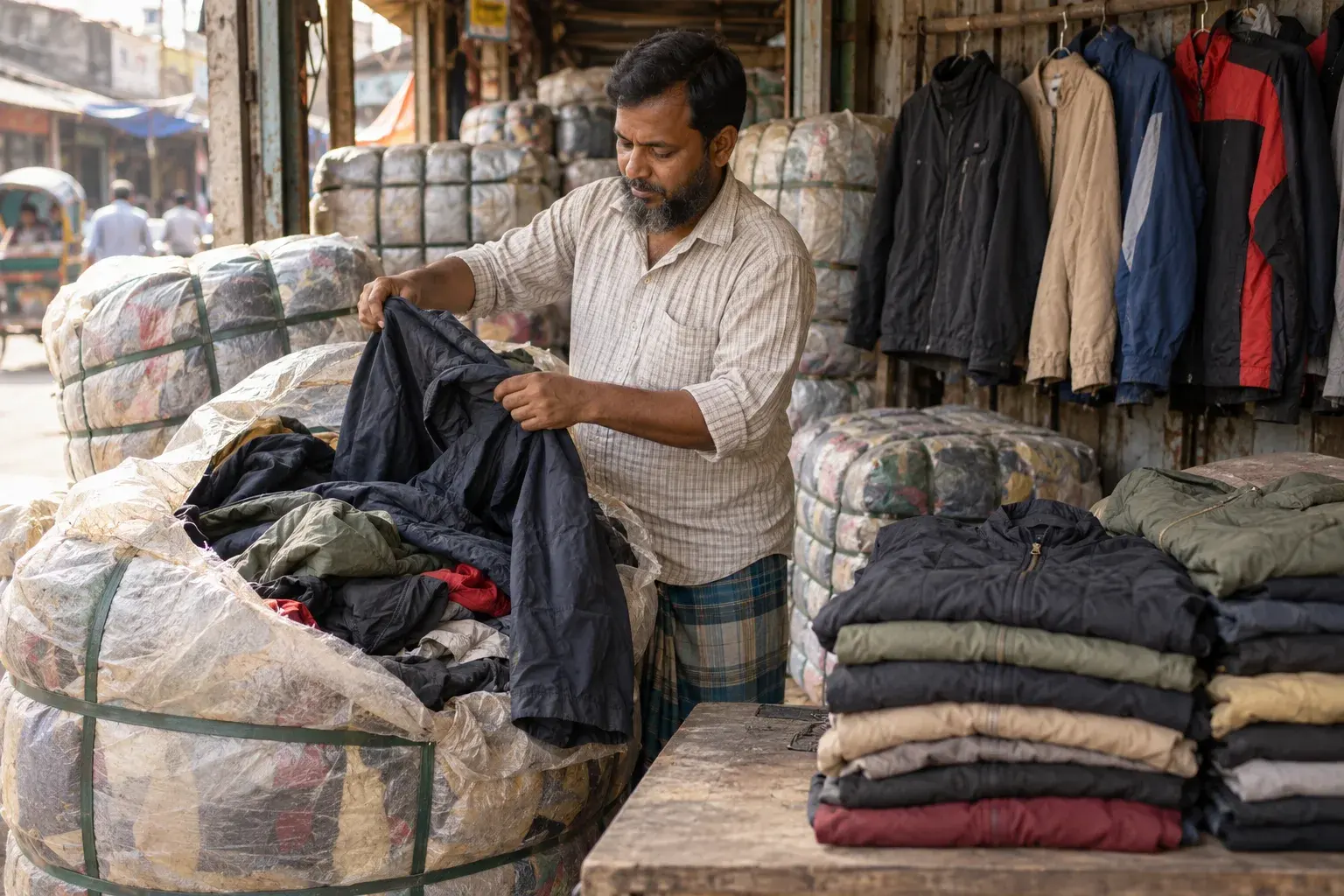
Bale (gait) clothing trade
Buying imported used clothing by the sealed bale and selling it by the piece. A jacket bale is about Tk 15,000 and pieces retail at Tk 20-2,000, but the bale is bought without seeing inside.
- Capital
- ৳50k – ৳4 lakh
- People
- 1 – 5
- First income
- 7 – 30 days
 Retail & wholesale
Selling clothes on a Facebook page
Buy three-pieces and saris wholesale, sell on Facebook Live, deliver by courier.
- Capital
- ৳50k – ৳1.5 lakh
- People
- 1 – 3
- First income
- 7 – 21 days
 Retail & wholesale
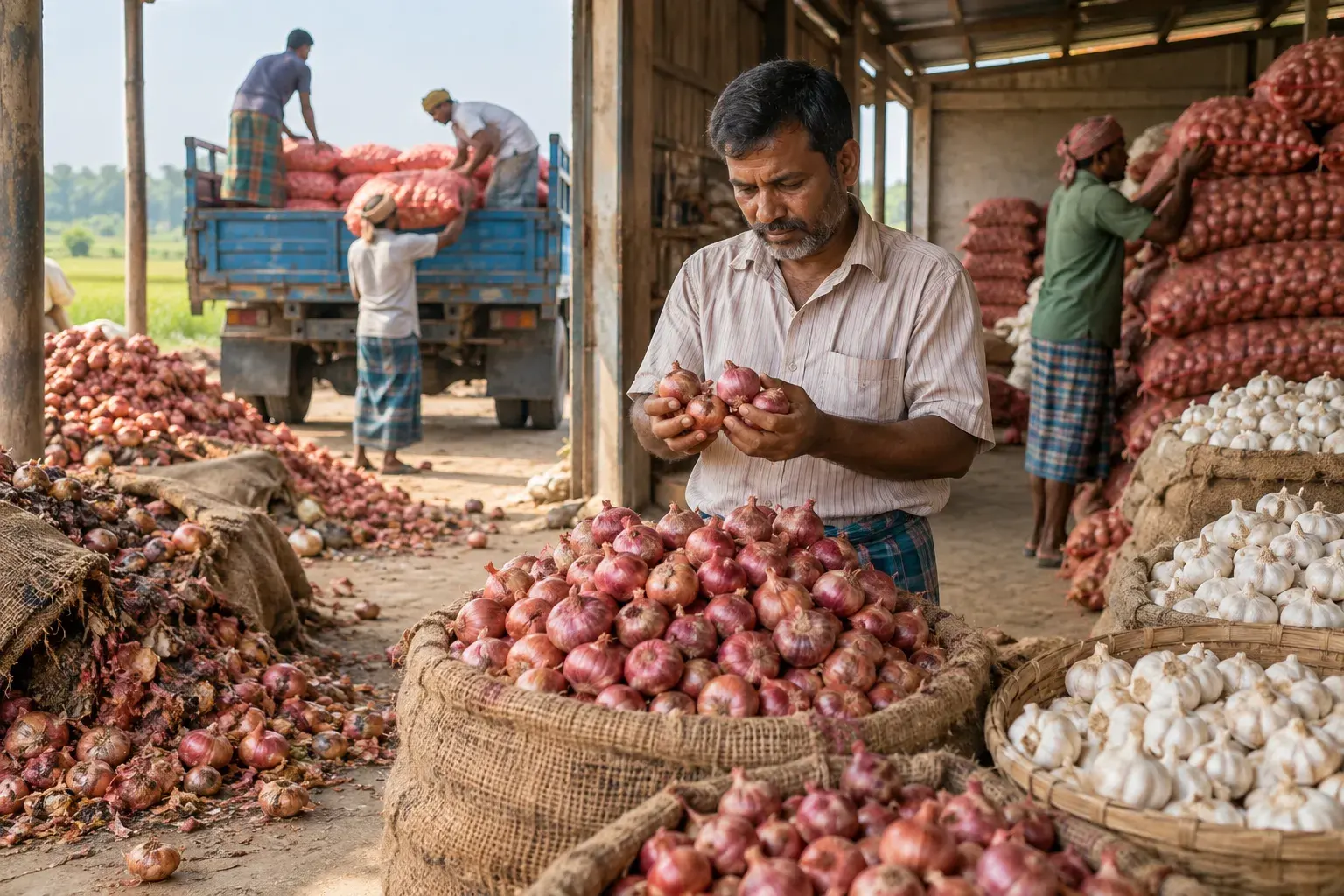
Onion and garlic storage trading
Buying cheap at harvest, storing, and selling when prices rise. But 25-30 percent of the country's onion rots for want of storage, and local onion fell 30 percent in twelve months.
- Capital
- ৳70k – ৳4.7 lakh
- People
- 1 – 4
- First income
- 90 – 250 days
 Retail & wholesale
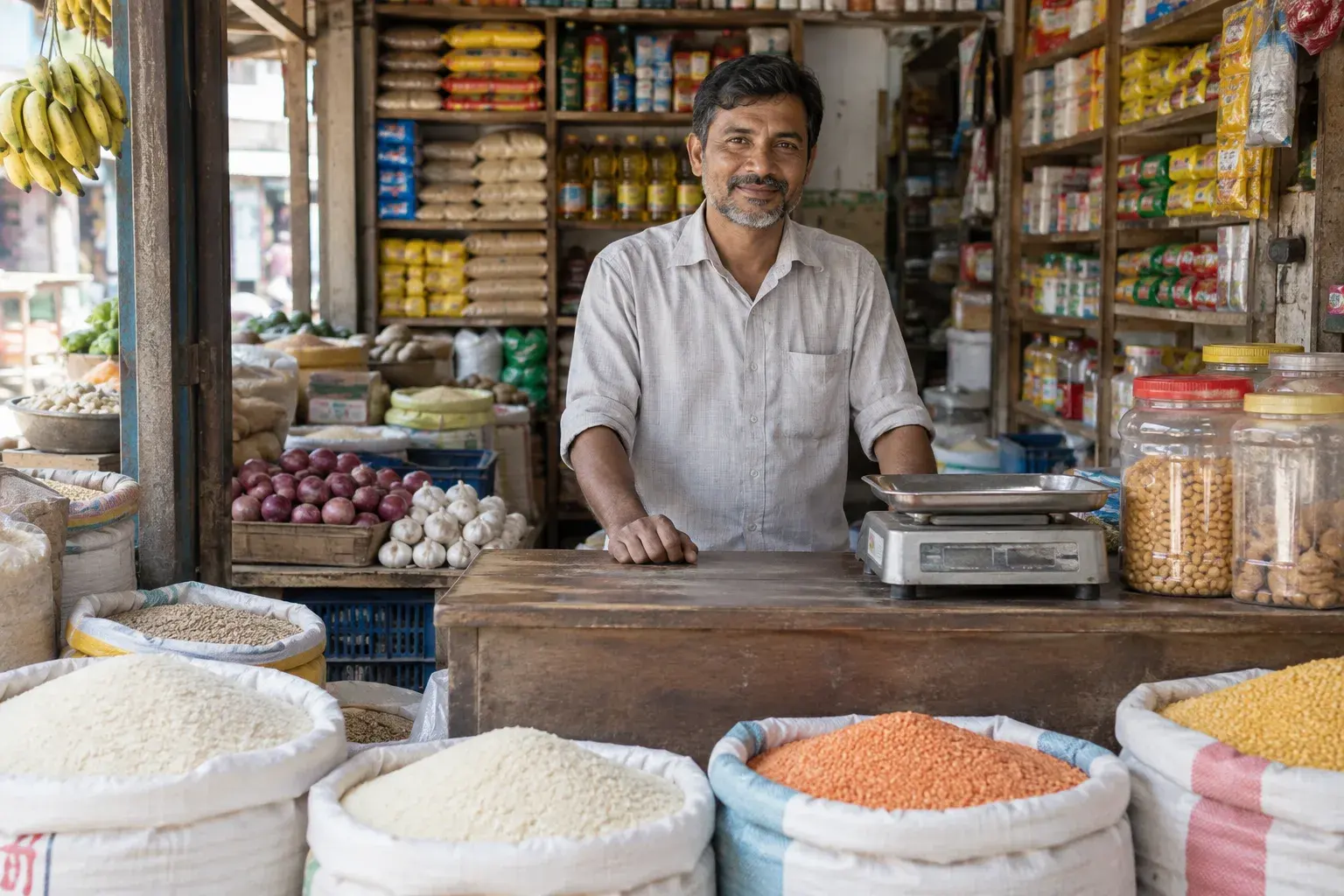
Grocery shop
The neighbourhood everyday-goods shop. A few taka a kilo, so income depends on volume - and the shop usually dies when customer credit locks up the cash.
- Capital
- ৳80k – ৳5 lakh
- People
- 1 – 3
- First income
- 10 – 30 days