
Battery reconditioning
Bringing weak lead-acid batteries back with electrolyte correction and slow charging. Breaking batteries open and smelting the lead is a completely different trade - an offence without Department of Environment clearance, and only 7 of about 1,100 such operations in the country hold one.
- Last reviewed: 21 September 2026
- Version 1
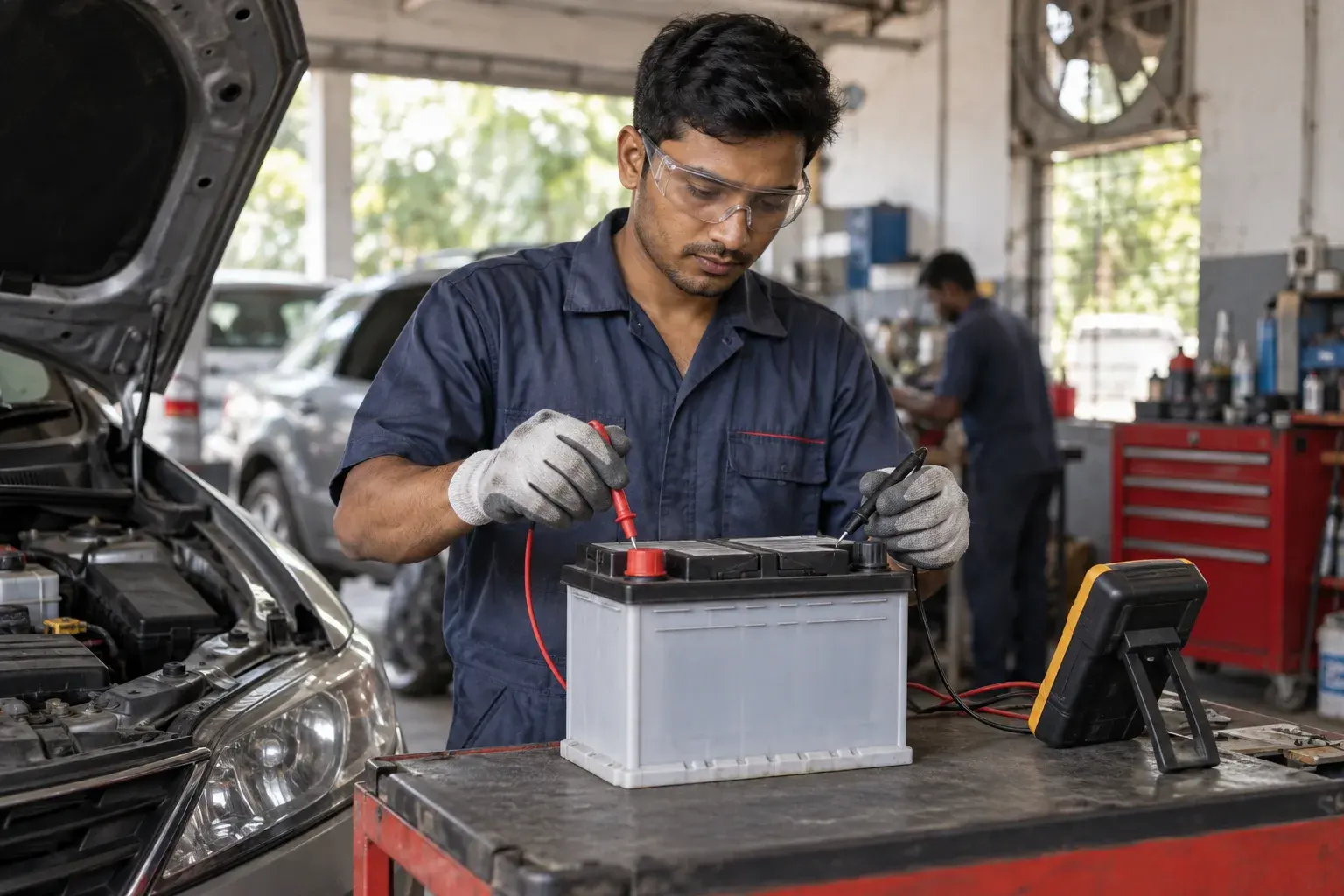
Battery reconditioning
- Starting capital
- ৳50,000 – ৳4,00,000 Editorial estimate
- Manpower
- 1 – 5 people
- First sale
- 15 – 60 days Editorial estimate
- Break-even
- 6 – 24 months Editorial estimate
- Kind of work
- Workshop · Hard
About the business
More than 6 million battery-run auto-rickshaws are on the country's roads, each carrying five lead-acid batteries that often weaken inside six months. Reconditioning means getting some of that life back: checking the level in each cell, topping up with distilled water, measuring and correcting the specific gravity of the electrolyte, cleaning corroded terminals, and charging at low current for a long time to break down sulphate on the plates. Nothing in that is melted and nothing is burned. Alongside it sits an entirely different trade - breaking open used batteries and melting the lead inside in an open furnace to cast ingots, which is called a bhatti. The two must not be confused. Running a bhatti is punishable under the Environment Conservation Act; in six months the Department of Environment shut 11 illegal plants across Savar, Dhamrai, Keraniganj, Gazipur, Narsingdi, Shariatpur and Munshiganj, demolished six furnaces at Aminbazar, and in Kushtia a mobile court fined two men Tk 50,000 each. The harm is not on paper: children near illegal smelting sites average 6.5 micrograms of lead per decilitre of blood against a reference of 3.5, and 38 percent of under-fives nationally carry elevated levels. Anyone entering this trade has to decide first which of the two jobs they are doing, and if it is the second, not take a single step without clearance.
Unit economics
| Item | Range | Evidence | Suggest a correction |
|---|---|---|---|
| Monthly working capital | ৳20,000 – ৳1,50,000 | Editorial estimate | |
| Selling price | ৳400 – ৳800 / unit | Editorial estimate | |
| Variable cost | ৳115 – ৳165 / unit | Editorial estimate | |
| Gross margin | 49% – 86% | Editorial estimate | |
| Time to first revenue | 15 – 60 days | Editorial estimate | |
| Break-even time | 6 – 24 months | Editorial estimate | |
| Cash cycle | 1 – 30 days | Editorial estimate | |
| Waste / loss | 30% – 60% | Editorial estimate | |
| Daily capacity | 4 – 20 | Editorial estimate |
What you need to start
- Current-controlled and multi-channel chargers, a hydrometer, a digital multimeter, a load tester, acid-resistant trays and funnels, acid-resistant gloves, goggles and apron, and running water for washing eyes. Prices could not be verified here.Equipment
- Water for use in secondary batteries, item 270 on BSTI's mandatory list, BDS 834:2007, plus sulphuric acid of the right strength, vent caps and terminals. Prices could not be verified.Starting stock
- BSTI CM licence, needed if you sell batteries under your own brand. Lead-acid starter batteries are item 268 on the mandatory list (BDS 206 Parts 1, 2 and 3:2002) and traction batteries item 304 (BDS IEC 60254 Part 1:2018). Repairing a customer's own battery and handing it back does not require it.Licence
- Trade licence from the city corporation, municipality or union parishad: form Tk 10, book Tk 50, standard tax Tk 30, stamp Tk 150-300, licence fee Tk 100-60,000, issued in 3-5 working days, renewed yearly.Licence
- Environmental clearance from the Department of Environment under the Environment Conservation Rules 2023 (SRO 53). It is compulsory for anyone breaking batteries or smelting and reprocessing lead; of roughly 1,100 such operations in the country only 7 hold one. Running without it means closure, demolition and a fine - two men in Kushtia were fined Tk 50,000 each. The fee and processing time could not be verified here and must be checked with the district environment office, as must the question of whether pure topping-up, acid correction and charging falls inside it - get that answer in writing.Licence
- Reading a hydrometer, measuring voltage cell by cell, judging early which batteries will come back and which will not, and mixing acid safely - always acid into water, never water into acid.Skill
- A registered route for disposing of dead batteries. Under SRO 45-Act/2021 manufacturers and recyclers are required to keep collection agents; which firms are registered has to be checked with the Department of Environment.Supplier
- A ventilated room with a hard, acid-tolerant floor, a water tap and enough electricity for charging. Not inside a dwelling or beside a kitchen - lead dust carried into the home ends up in children's blood.Workspace
How the work is done
- 1Draw the line first: are you repairing batteries, or breaking them open to melt lead? The second, done without environmental clearance, gets the place demolished and the owner fined. Do not plan to run both under one roof.
- 2Learn it hands-on: reading the level in each cell, measuring specific gravity with a hydrometer, testing with a load tester whether the battery is alive at all. Ruin a good battery while learning and you pay for it.
- 3Take a room with through ventilation, a hard floor and a water tap beside it. Do not work anywhere you cannot wash off a spill.
- 4Buy the protection before the tools: acid-resistant gloves, eye protection, an apron. Lead and acid both do their damage slowly, not in one day.
- 5Set up multi-channel and current-controlled chargers. A desulphating charge runs at low current for 12-24 hours, so the number of charge points is the number of jobs.
- 6Buy proper distilled water. Water for use in secondary batteries is item 270 on BSTI's mandatory list, BDS 834:2007. Tap water or unmarked water destroys the plates faster.
- 7Take the trade licence (form Tk 10, book Tk 50, standard tax Tk 30, stamp Tk 150-300, fee Tk 100-60,000, issued in 3-5 working days) and ask the local fire service office about their clearance.
- 8Log every battery as it comes in: owner's name, battery number, voltage, gravity reading and age. That log is what later tells you which brands come back and which do not.
- 9Decide in advance what happens to a battery that will not come back. Under SRO 45-Act/2021 manufacturers and recyclers must keep collection agents for used batteries - hand them to a registered recycler or a manufacturer's collector, not to a bhatti.
- 10Tell the customer plainly that a reconditioned battery is not a new one and that how long it lasts cannot be promised. A verbal warranty means every returned battery lands on you.
- 11If you think of selling batteries under your own brand, check BSTI first: lead-acid starter batteries (BDS 206 Parts 1-3) and traction batteries (BDS IEC 60254 Part 1:2018) are both on the mandatory certification list.
- 12Get your own and your workers' blood lead tested at least once a year. Children near illegal furnaces average 6.5 micrograms against a reference of 3.5; anyone in this trade should know their own number.
Seasons
- JanNormal
- FebNormal
- MarHigh
- AprHigh
- MayHigh
- JunHigh
- JulNormal
- AugNormal
- SepNormal
- OctNormal
- NovLow
- DecLow
Where it works well
- Strong fitDhaka · The largest fleet of battery-run auto-rickshaws and 261 counted battery retailers in greater Dhaka. It is also where the raids on illegal lead furnaces at Savar, Dhamrai and Keraniganj happened - both the work and the scrutiny are heaviest here.
- Strong fitGazipur · Industrial belt with dense easy-bike traffic; an illegal lead plant in the sal forest at Mansurabad, Sreepur was shut down, so both the market and the scrutiny are present.
- Strong fitNarayanganj · Dense garment and transport activity, with a large market for both IPS and easy-bike batteries.
- PossibleBogura · The machinery and repair hub of the north, where easy-bikes from surrounding districts come to be fixed.
- PossibleChattogram · Port and transport density gives a large market for truck, pickup and IPS batteries.
- PossibleKushtia · A mobile court fined an illegal battery recycling plant at Kumarkhali, so the flow of used batteries runs through here as well.
- PossibleMunshiganj · Next to Dhaka with many easy-bikes; illegal lead plants were shut here too.
- PossibleNarsingdi · On the list of districts raided for illegal lead plants, which means the supply of used batteries is ample but so is the scrutiny.
- PossibleRangpur · Battery autos are the main vehicle on town and upazila roads, and because drivers earn little the demand leans towards repair rather than replacement.
- PossibleShariatpur · A district on the enforcement list, where easy-bikes are the main vehicle on rural roads.
- PossibleTangail · Solar-powered battery swapping cabinets for e-autos are already running here, so demand for battery services exists.
Risks and cautions
- MediumDependency: The whole job rests on electricity. A desulphating charge has to run 12-24 hours unbroken; load-shedding breaks the cycle and the battery slips back. In summer, when the work is heaviest, the load-shedding is heaviest too.
- MediumWorking capital: The electricity bill falls due at month end while garages and charging stations settle later still. And nobody reimburses the two days of power and labour spent on the batteries that never came back.
- HighCompliance: One step towards breaking batteries or melting lead without clearance ends the business. In six months the Department of Environment shut 11 plants across Savar, Dhamrai, Keraniganj, Gazipur, Narsingdi, Shariatpur and Munshiganj and demolished six furnaces at Aminbazar; two men in Kushtia were fined Tk 50,000 each. It is worth knowing that enforcement is still rare - only 30 cases between January 2019 and March 2023, Tk 1.63 million in fines and one person jailed for seven days. Because it is rare many take the chance, and when it lands it takes everything at once.
- HighOther: Lead and acid damage your own body, and dust carried home on clothes damages your children's. Bangladesh is the world's third most lead-affected country, 38 percent of under-fives carry elevated blood lead, and children near illegal furnaces average 6.5 micrograms against a reference of 3.5. One study found terminated pregnancies rising from 16 to 20.2 percent near such facilities. None of that damage is reversible.
- HighDemand: Nobody can say how long a reconditioned battery will last, so the trade runs on word of mouth. One battery that dies in a fortnight loses that driver and everyone at his garage. An undercover survey of 261 battery retailers in greater Dhaka found inconsistent information given to buyers 80 percent of the time - distrust is the normal condition of this market.
Sources
- Collected: 21 Sept 2026
Supports: districts · বাংলাদেশ
Supports: Starting capital, Waste / loss, risks · বাংলাদেশ
Supports: requirements · বাংলাদেশ
- Collected: 21 Sept 2026
Supports: requirements · বাংলাদেশ
- Collected: 7 Sept 2026
Supports: Daily capacity · টাঙ্গাইল ও বাংলাদেশ
Supports: risks · বাংলাদেশ
Supports: risks · ঢাকা, গাজীপুর, নরসিংদী, শরীয়তপুর, মুন্সিগঞ্জ
- Collected: 25 Apr 2025
Supports: requirements · কুষ্টিয়া — কুমারখালী, শিলাইদহ ইউনিয়ন
Supports: requirements · বাংলাদেশ
What changed
No corrections have been published yet.
Questions and answers
No questions yet. Be the first to ask.
Similar businesses
 Light manufacturing & workshop
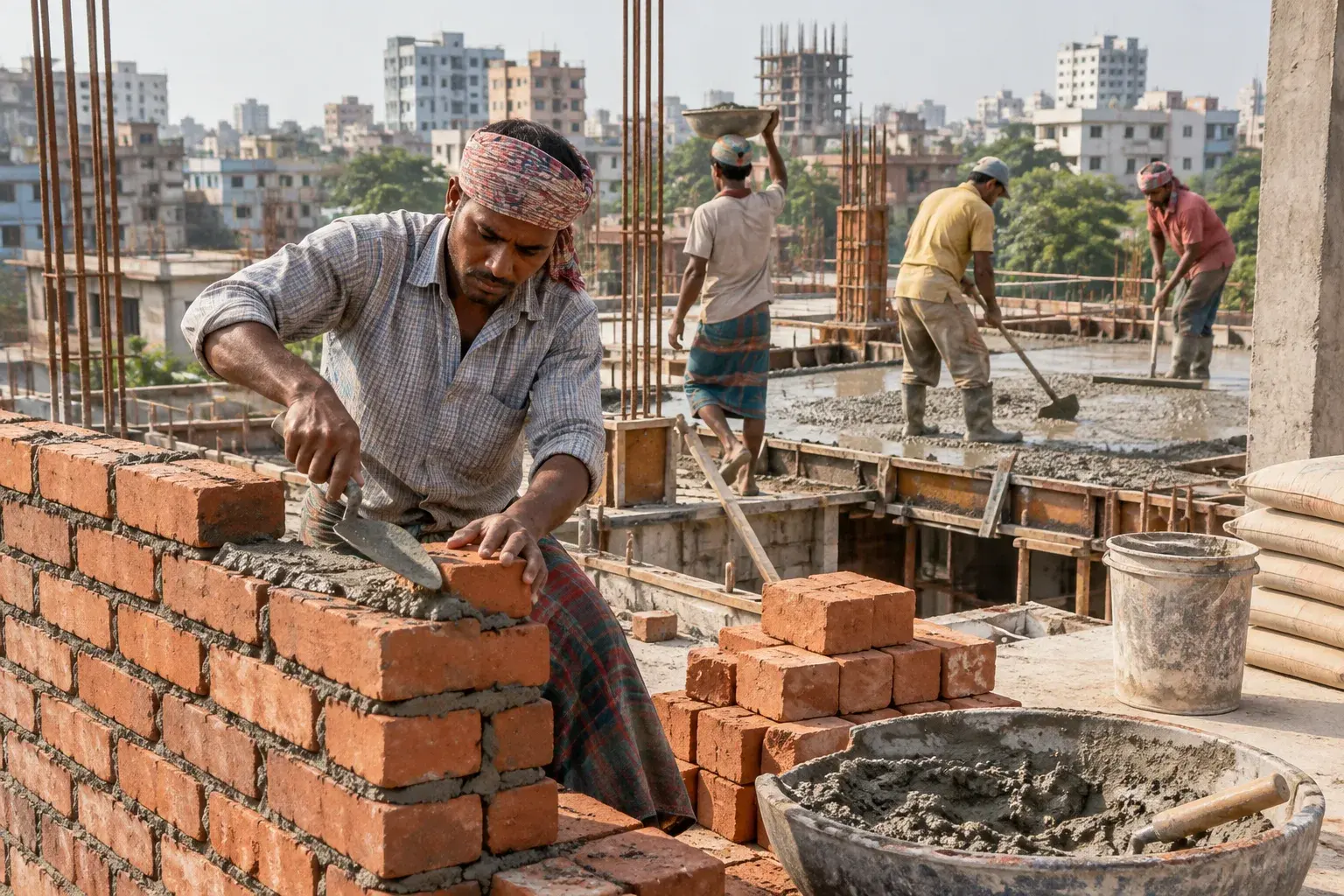
Masonry and building contracting
Contracting the labour of brickwork, casting and finishing. Dhaka construction runs Tk 1,800-3,000 per square foot of plinth area, and the statutory minimum for a mason is Tk 940 a day in town.
- Capital
- ৳50k – ৳5 lakh
- People
- 3 – 25
- First income
- 15 – 60 days
 Light manufacturing & workshop
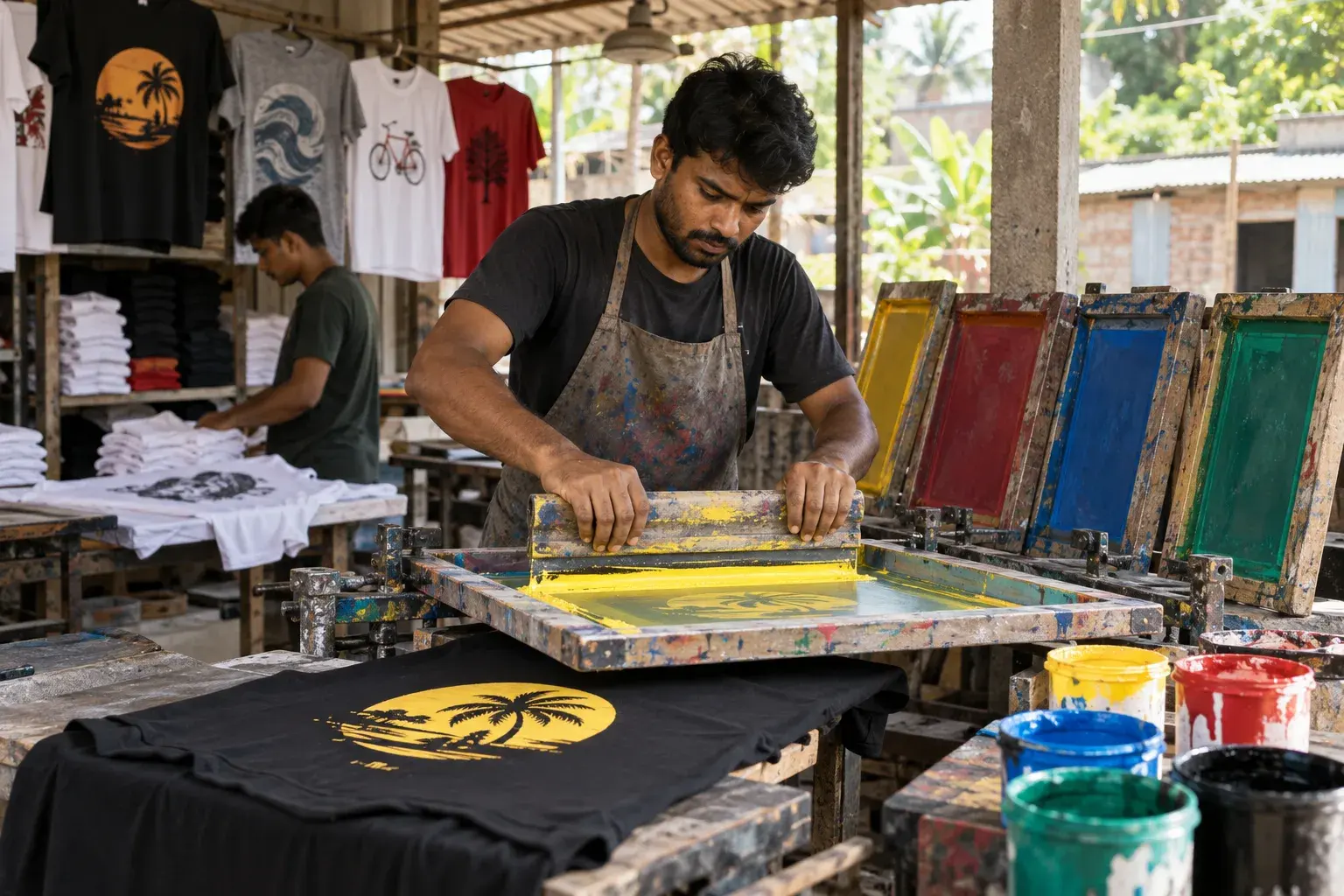
Screen printing and t-shirt
Printing designs on cloth. Low capital, but every design and every colour needs its own screen, so the per-piece cost climbs steeply as the order gets smaller.
- Capital
- ৳50k – ৳4 lakh
- People
- 1 – 6
- First income
- 15 – 45 days
 Light manufacturing & workshop
Handloom and jamdani weaving
Hand-woven sarees on a wooden loom. Sarees sell from Tk 1,500 to Tk 300,000 while a weaver earns about Tk 4,590 a month, because the margin stays with the mahajan.
- Capital
- ৳60k – ৳4 lakh
- People
- 2 – 10
- First income
- 7 – 180 days
 Light manufacturing & workshop
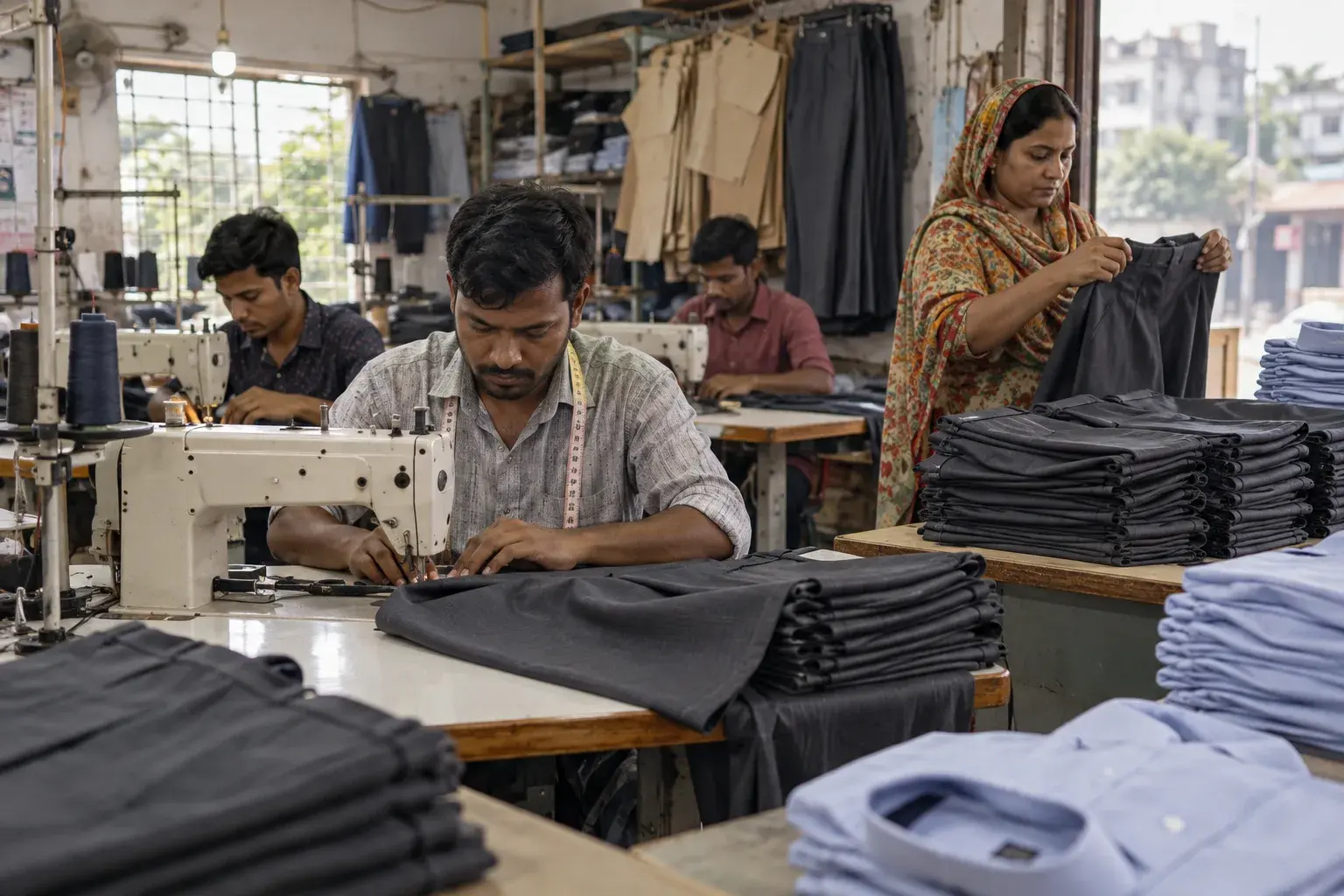
Tailoring and small garment unit
Trousers stitch for Tk 600: Tk 220 to the karigor, Tk 90 other costs, Tk 290 to the shop. One karigor does five trousers or ten shirts a day. The real money is sub-contract work, and its rules just tightened.
- Capital
- ৳60k – ৳8 lakh
- People
- 1 – 30
- First income
- 15 – 45 days