
Screen printing and t-shirt
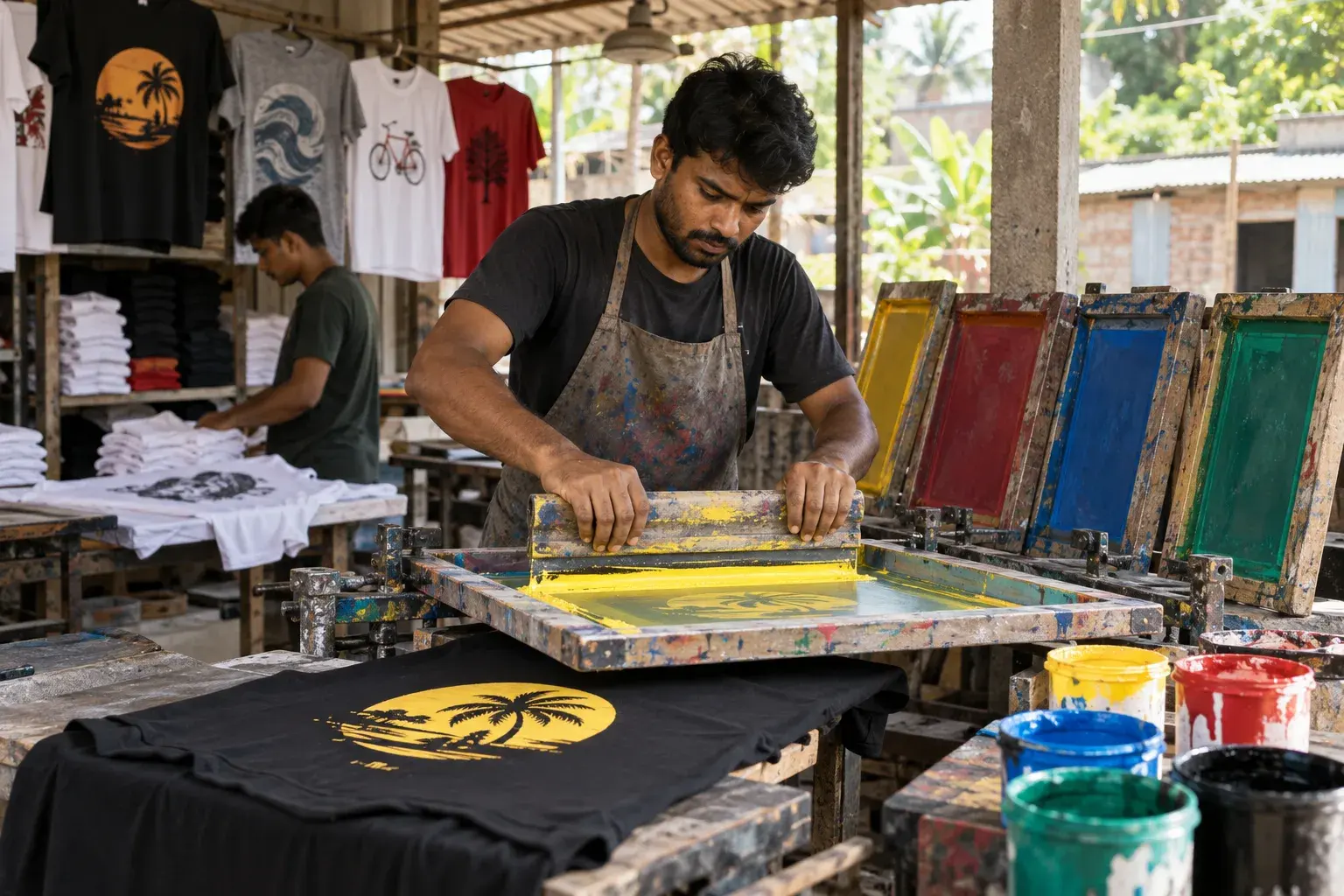
Printing designs on cloth. Low capital, but every design and every colour needs its own screen, so the per-piece cost climbs steeply as the order gets smaller.
- Last reviewed: 19 September 2026
- Version 1
Screen printing and t-shirt
- Starting capital
- ৳50,000 – ৳4,00,000 Editorial estimate
- Manpower
- 1 – 6 people
- First sale
- 15 – 45 days Editorial estimate
- Break-even
- 4 – 7 months Editorial estimate
- Kind of work
- Workshop · Medium difficulty
About the business
Screen printing means putting a design on cloth - t-shirts, jerseys, bags, caps. Capital is low, so the trade is crowded, and the number most people get wrong is the screen. Every design needs its own screen and every colour in that design needs another one. That cost is paid once, whether the run is 50 pieces or 1,000. So the per-piece cost of a 50-piece order is high and of a 1,000-piece order is low, which is why small orders have to be quoted dearer and why customers argue about it. The buyers are college batches, clubs and associations, political campaigns, company uniforms and online clothing sellers. It is also worth knowing where the big market stops: according to the US International Trade Commission, Bangladesh's average export price for a t-shirt in the first half of 2025 was USD 1.76 a piece, the year Bangladesh became the top t-shirt supplier to the United States, and in the same financial year 811 factories shipped USD 7.45 billion of t-shirts to 158 countries. Export work belongs to the big factories. A small screen printer's ground is the domestic order, and it is won on delivery date and colour accuracy, not on price.
Unit economics
| Item | Range | Evidence | Suggest a correction |
|---|---|---|---|
| Monthly working capital | ৳30,000 – ৳2,50,000 | Editorial estimate | |
| Selling price | ৳220 – ৳450 / unit | Editorial estimate | |
| Variable cost | ৳175 – ৳330 / unit | Editorial estimate | |
| Gross margin | 20% – 27% | Editorial estimate | |
| Time to first revenue | 15 – 45 days | Editorial estimate | |
| Break-even time | 4 – 7 months | Editorial estimate | |
| Cash cycle | 7 – 30 days | Editorial estimate | |
| Waste / loss | 2% – 5% | Editorial estimate | |
| Daily capacity | 100 – 600 | Editorial estimate |
What you need to start
- Frames and mesh, an exposure unit, squeegees, the printing table, ink-mixing kit and drying arrangements. Prices for these could not be verified here.Equipment
- Inks and chemicals, emulsion, and blank t-shirts if you supply the garment. Once printed, custom goods cannot be sold to anyone else, so this stock carries real risk.Starting stock
- Trade licence from the city corporation or municipality: form Tk 10, licence book Tk 50, standard tax Tk 30, stamp Tk 150-300, licence fee Tk 100-60,000 by trade type. Issued in three to five working days.Licence
- Making screens from artwork, matching colour, pulling the squeegee at the right pressure and timing the cure. Bad ink or bad curing and the print washes off.Skill
- An ink and chemical supplier, a mesh and frame shop, and a wholesaler for blank t-shirts.Supplier
- Space for a long printing table, water and drainage for washing screens, drying racks and ventilation.Workspace
How the work is done
- 1Take a room with space for a long printing table, drying racks and running water for washing screens. Inks and chemicals smell, so it needs ventilation.
- 2Take the trade licence from the city corporation or municipality with printing named as the trade.
- 3Set up the kit: frames and mesh, an exposure unit, squeegees, the printing table and a way to dry.
- 4Decide who supplies the garment - the customer brings the t-shirts, or you buy them. The price, the risk and the profit are completely different in the two cases.
- 5Every design and every colour in it needs its own screen, and that cost is paid once. Price the screens separately before quoting, or small orders lose money.
- 6Print a colour sample, show it to the customer and get written approval. If the colour is wrong the whole lot comes back, and a printed t-shirt cannot be sold to anyone else.
- 7Take an advance with the order, at least the cost of the garments and the screens. A cancelled custom print is a total loss.
- 8Put the delivery date in writing. For batch events, matches and campaigns, a day late means the goods are worth nothing.
- 9Start with college batches and clubs, then move to company uniforms and promotional wear, where the orders are bigger and repeat.
- 10Plan around the calendar - Ekushey February, Independence Day, Pahela Baishakh, Victory Day and election campaigns bring sudden peaks, with slack in between.
- 11Look at the numbers before dreaming of export. 811 factories shipped t-shirts to the United States and the biggest one shipped USD 155 million on its own. There is no room for a small print shop at that scale; the domestic order is the ground.
Seasons
- JanNormal
- FebHigh
- MarHigh
- AprHigh
- MayNormal
- JunNormal
- JulNormal
- AugNormal
- SepNormal
- OctNormal
- NovNormal
- DecHigh
Where it works well
- Strong fitChattogram · A big city with colleges and a garment-factory belt; promotional wear orders come regularly.
- Strong fitDhaka · The greatest concentration of universities, colleges, companies and associations, and the supply of inks, mesh and blank t-shirts is here too.
- Strong fitGazipur · Garment-factory country - uniforms and factory promotional wear are the orders.
- Strong fitNarayanganj · A knitwear and fabric hub, so blank t-shirts are cheap and close at hand.
- PossibleBogura · The trading centre of the north; orders from surrounding districts come here.
- PossibleCumilla · A highway town with many colleges and easy access to Dhaka for materials.
- PossibleKhulna · Orders from the city's colleges and associations, with less competition.
- PossibleMymensingh · Plenty of university and college students, so batch orders are regular.
- PossibleRajshahi · Steady batch orders from the university and colleges, at lower cost than Dhaka.
- PossibleSylhet · Orders from colleges and clubs, though the raw materials come from Dhaka.
Risks and cautions
- HighDemand: Demand swings with the calendar - Ekushey February, Independence Day, Pahela Baishakh, Victory Day, batch reunions, election campaigns. In those weeks you cannot take all the work and in the rest the table sits idle, while rent and wages carry on.
- MediumLate payment: On batch, club and association orders one person collects the money and everybody takes the goods. If the collection falls short the payment sticks, and the printed goods are already made. Without an advance the risk is entirely yours.
- MediumWorking capital: The screen cost is the same whatever the run, so a small order struggles to carry it. Customers want 1,000-piece rates on a 50-piece job, and printers who cut the price often stop counting the screen at all - the loss does not show, it accumulates.
- HighSpoilage: A rejected print is a total loss. Wrong colour, a spelling mistake, or ink that lifts after a wash, and those t-shirts cannot be sold to anybody - they carry somebody else's name. If you bought the garments, the whole loss is yours.
- MediumDependency: The big market belongs to big factories. In FY2024-25, 811 factories shipped t-shirts to the United States and the top one shipped USD 155 million alone. A small screen printer's ground is small and medium domestic orders, where the competitors are countless.
Sources
সিটি কর্পোরেশন থেকে ট্রেড লাইসেন্স প্রাপ্তির ধাপ সমূহ
Collected: 16 Sept 2026Supports: Starting capital · বাংলাদেশ
What changed
No corrections have been published yet.
Questions and answers
No questions yet. Be the first to ask.
Stories about this business
Orders from 2 lakh pieces a month to 50,000, and staff moved onto contracts
The Dot Sign works held on to an Italian buyer through Covid, but its monthly order book fell from around 2 lakh pieces of cloth to 50,000 or less.
- Reasons
- Weak demand, Loyal customers
A decade-old print works sold at a loss, 45 workers down to 17
A ten-year-old screen printing works in Mirpur that printed cloth for export garment factories was sold at a loss in November 2020 as orders fell away; the new owner has no work either and has kept 17 of the 45 staff.
- Reasons
- Dependency, Weak demand
Similar businesses
 Light manufacturing & workshop
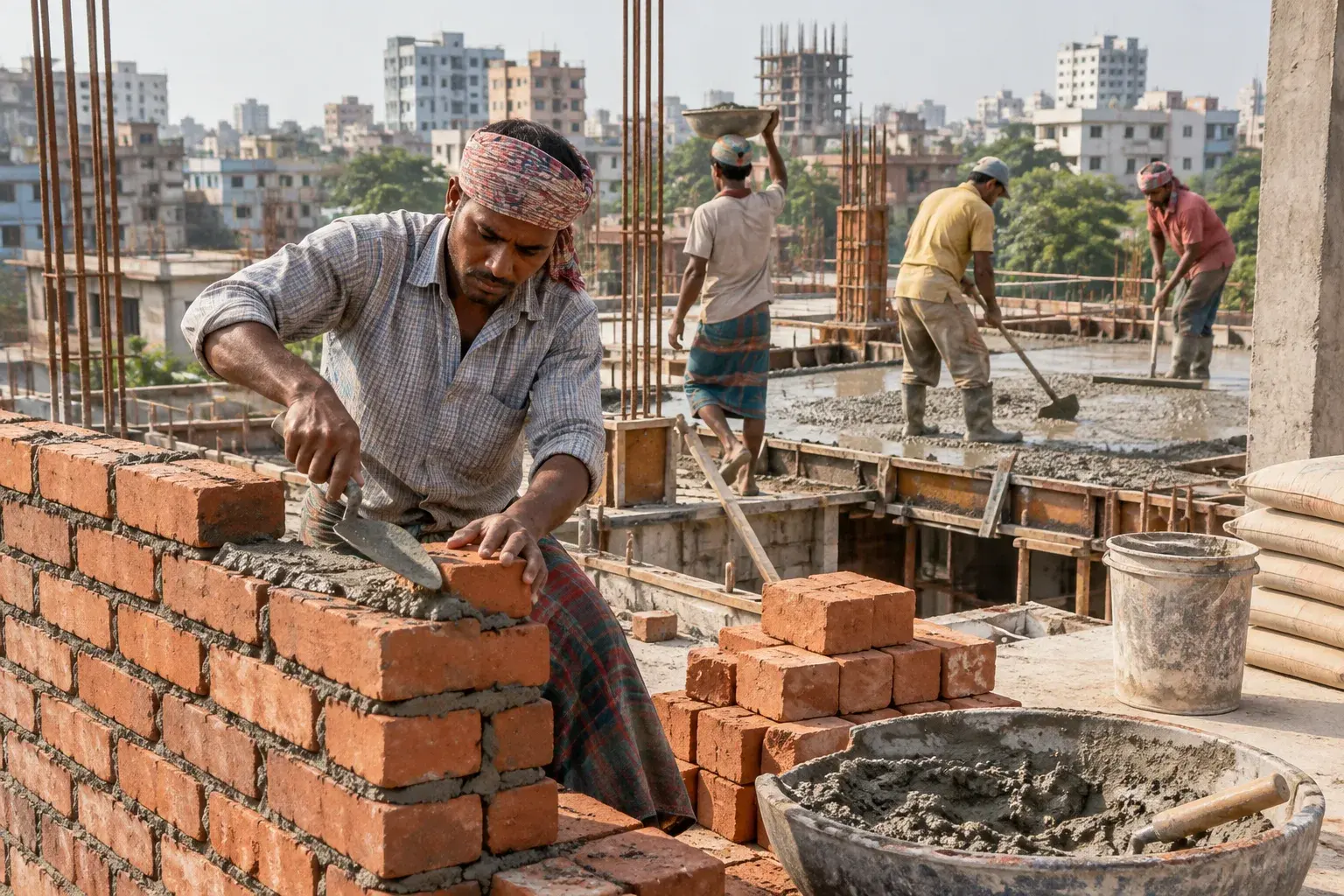
Masonry and building contracting
Contracting the labour of brickwork, casting and finishing. Dhaka construction runs Tk 1,800-3,000 per square foot of plinth area, and the statutory minimum for a mason is Tk 940 a day in town.
- Capital
- ৳50k – ৳5 lakh
- People
- 3 – 25
- First income
- 15 – 60 days
 Light manufacturing & workshop
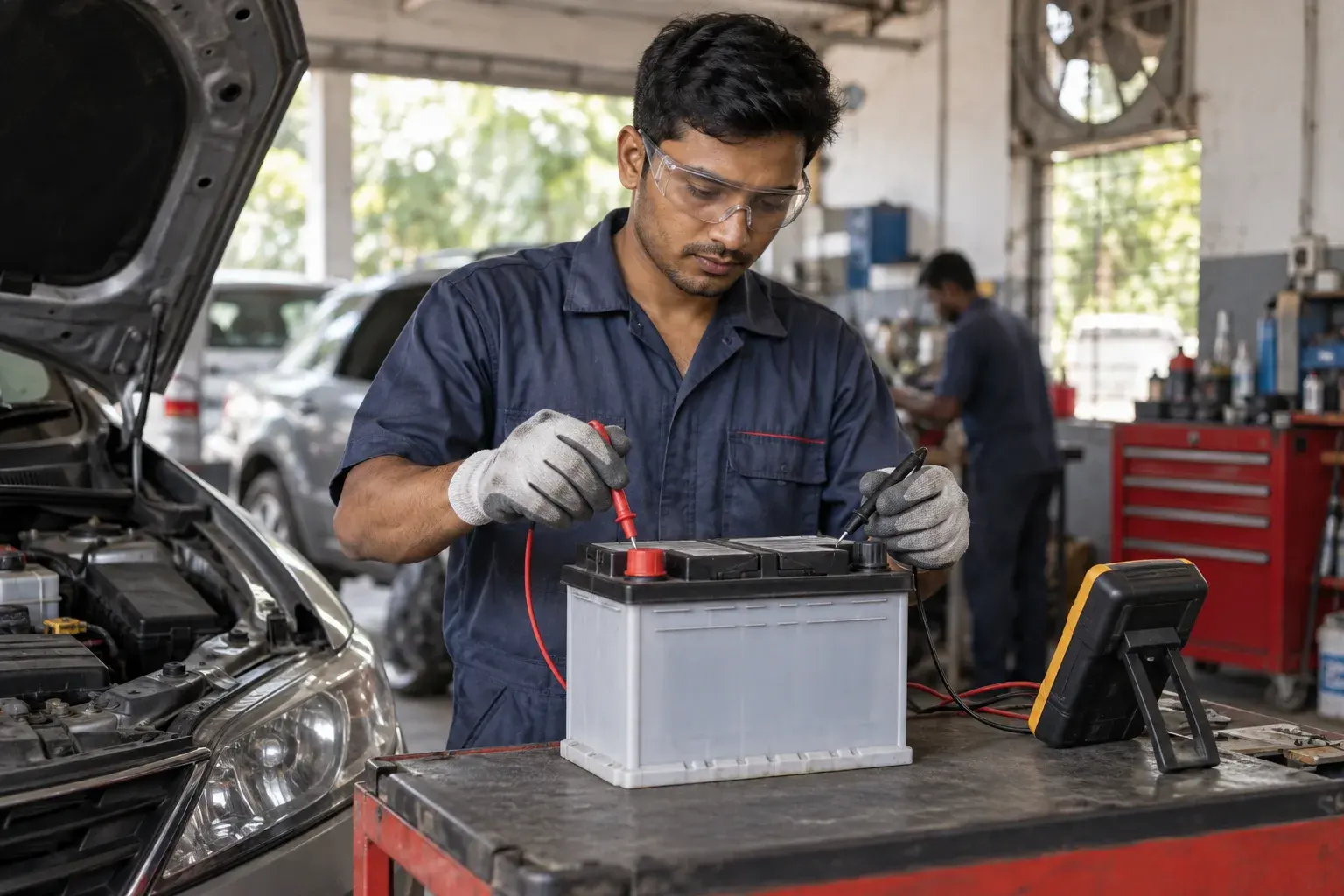
Battery reconditioning
Bringing weak lead-acid batteries back with electrolyte correction and slow charging. Breaking batteries open and smelting the lead is a completely different trade - an offence without Department of Environment clearance, and only 7 of about 1,100 such operations in the country hold one.
- Capital
- ৳50k – ৳4 lakh
- People
- 1 – 5
- First income
- 15 – 60 days
 Light manufacturing & workshop
Handloom and jamdani weaving
Hand-woven sarees on a wooden loom. Sarees sell from Tk 1,500 to Tk 300,000 while a weaver earns about Tk 4,590 a month, because the margin stays with the mahajan.
- Capital
- ৳60k – ৳4 lakh
- People
- 2 – 10
- First income
- 7 – 180 days
 Light manufacturing & workshop
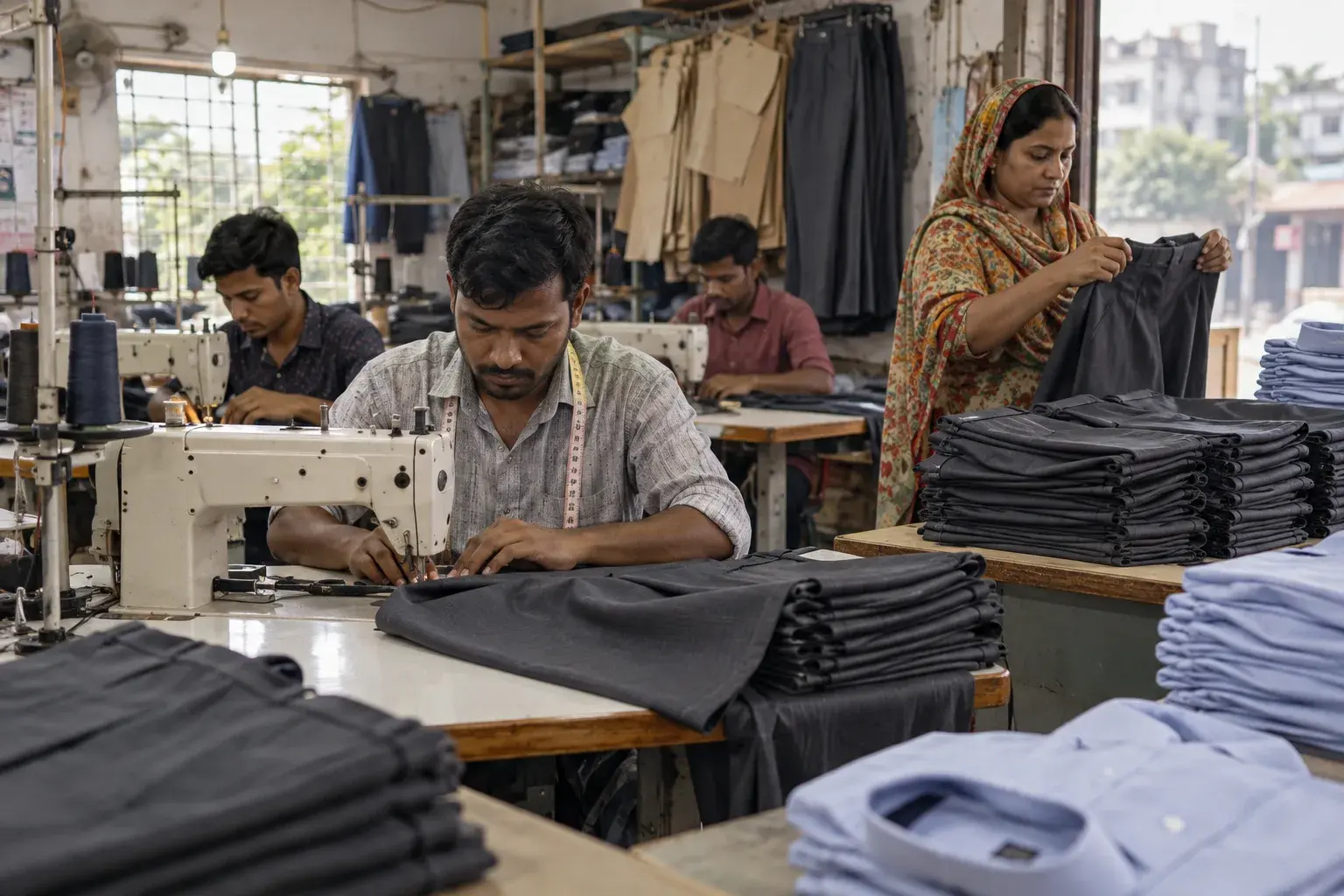
Tailoring and small garment unit
Trousers stitch for Tk 600: Tk 220 to the karigor, Tk 90 other costs, Tk 290 to the shop. One karigor does five trousers or ten shirts a day. The real money is sub-contract work, and its rules just tightened.
- Capital
- ৳60k – ৳8 lakh
- People
- 1 – 30
- First income
- 15 – 45 days