
Biriyani shop
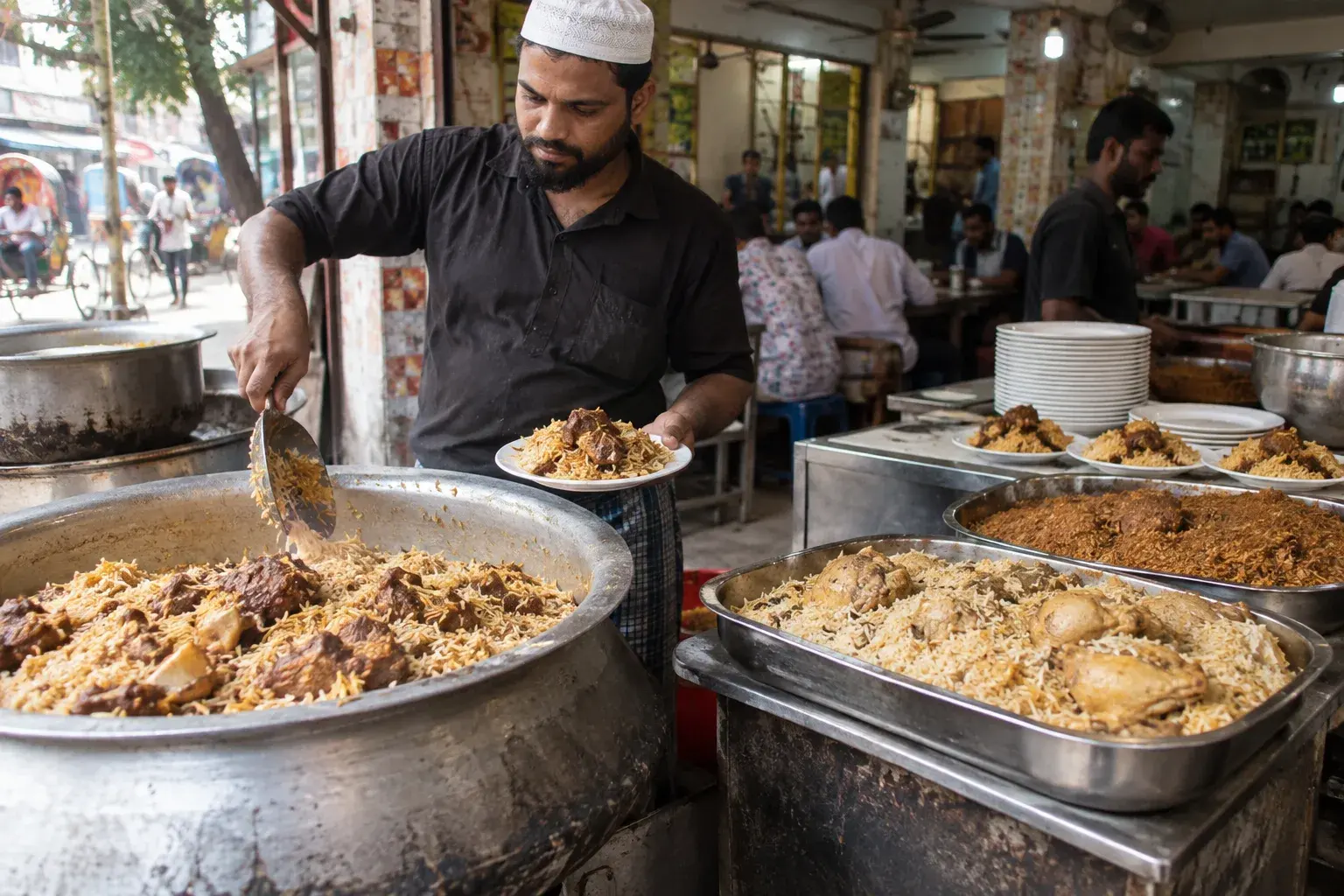
Selling kacchi, tehari and morog polao by the plate. Almost the entire cost is meat - the raw material in one pot of shahi mutton kacchi is Tk 13,265-15,054.
- Last reviewed: 19 September 2026
- Version 1
Biriyani shop
- Starting capital
- ৳3,00,000 – ৳25,00,000 Editorial estimate
- Manpower
- 3 – 15 people
- First sale
- 30 – 90 days Official source
- Break-even
- 4 – 15 months Editorial estimate
- Kind of work
- Shop · Medium difficulty
About the business
A shop cooking kacchi, tehari or morog polao and selling it by the plate. The economics are a weighing scale: how much meat goes into a kilogram of rice, and how many plates that makes. The manager of Star Hotel in Dhaka says their recipe puts eight pieces of meat into every kilogram of rice. Iqbal Catering's shahi mutton kacchi is heavier still - 5 kg of chinigura rice to 10 kg of mutton, with a litre of oil, 300 g of ghee, a kilo of onion, 250 g each of ginger and garlic, 500 g of yoghurt and a kilo of fried potato. At TCB prices of 15 September 2026 the verifiable ingredients in that one pot come to Tk 13,265-15,054, of which the mutton alone is Tk 12,000-13,500 - roughly nine taka in ten of a kacchi's cost is meat. Polao rice is Tk 170-215 a kg, beef Tk 780-850, mutton Tk 1,200-1,350 and broiler Tk 180-200; over twelve months mutton rose 13.3 percent and beef 5.2 percent. The volumes can be large - Star's Dhanmondi branch serves 1,600 to 1,700 plates of kacchi a day. So is the scrutiny: in February 2026 a well-known kacchi restaurant in Chattogram was fined three lakh taka under the Food Safety Act after rats and cockroaches were found in its kitchen.
Unit economics
| Item | Range | Evidence | Suggest a correction |
|---|---|---|---|
| Monthly working capital | ৳2,00,000 – ৳12,00,000 | Editorial estimate | |
| Selling price | ৳450 – ৳600 / unit | Editorial estimate | |
| Variable cost | ৳330 – ৳377 / unit | Editorial estimate | |
| Gross margin | 27% – 37% | Editorial estimate | |
| Time to first revenue | 30 – 90 days | Official source | |
| Break-even time | 4 – 15 months | Editorial estimate | |
| Cash cycle | 0 – 1 days | Editorial estimate | |
| Waste / loss | 3% – 8% | Editorial estimate | |
| Daily capacity | 800 – 1,700 | Market quote |
What you need to start
- Large pots with heavy lids, burners (gas or wood), a meat cutting table, a fridge and deep freeze, serving vessels, takeaway boxes and a fire extinguisher. A 12 kg LPG cylinder is Tk 1,585 (BERC, 2 September 2026).Equipment
- Daily raw material: polao rice Tk 170-215, beef Tk 780-850, mutton Tk 1,200-1,350, broiler Tk 180-200, soybean oil Tk 186-195 a litre, onion Tk 50-55, garlic Tk 100-120, ginger Tk 120-140, potato Tk 25-30, cardamom Tk 4,600-5,600, cinnamon Tk 500-600, clove Tk 1,450-1,600 (all per kg, TCB 15-09-2026).Starting stock
- Bangladesh Food Safety Authority registration, compulsory for restaurants under the Food Safety (Registration and Licensing) Regulations 2026: Tk 1,000 new, Tk 500 renewal, valid three years, with a physical kitchen inspection first.Licence
- Fire safety licence from Fire Service and Civil Defence, and environmental clearance from the Department of Environment; both are steps in the food business licensing process.Licence
- TIN and VAT registration from the National Board of Revenue: 5 percent VAT on dine-in restaurants and 15 percent on catering services.Licence
- Trade licence from the city corporation or municipality: form Tk 10, book Tk 50, standard tax Tk 30, stamp Tk 150-300, licence fee Tk 100-60,000, plus VAT and a signboard fee, in 3-5 working days.Licence
- An experienced head cook who can judge the rice-to-meat ratio, the dum time and the fire. In Iqbal Catering's method the spiced mutton rests two to two and a half hours, half-boiled rice goes on top, the pot is sealed at the rim with dough and it steams on a low fire for three hours.Skill
- A trusted butcher for daily supply, a wholesale source for rice and spices, and an LPG dealer.Supplier
- A separate ventilated cooking room, space for the meat fridge, a serving counter at the front, water and drainage, and covered waste bins.Workspace
How the work is done
- 1Pick the spot - an office area, a market junction, outside a hospital, near a bus terminal. Biriyani is a midday meal, so the shop belongs where people are at midday.
- 2Take the trade licence from the city corporation or municipality, then TIN and VAT from the NBR. With seating, VAT is 5 percent; catering work is a separate head at 15 percent.
- 3Register with the Food Safety Authority: Tk 1,000 new, Tk 500 renewal, valid three years, with a physical kitchen inspection before registration.
- 4Take the Fire Service licence and environmental clearance from the Department of Environment; big pots, gas and wood fires make both unavoidable.
- 5Hire an experienced head cook. Star Hotel's eleven branches have eleven head cooks following one identical method - keeping the taste the same is the whole point. Change the cook and the taste changes, and customers notice at once.
- 6Write down the rice-to-meat ratio and hold it. Star's rule is eight pieces of meat to a kilogram of rice. Without a fixed ratio one day's profit is bigger and the next day's customers are fewer.
- 7Fit out the kitchen: large pots with lids, burners, a meat cutting area, a fridge and deep freeze, serving vessels and takeaway boxes. A 12 kg LPG cylinder is Tk 1,585.
- 8Buy meat and rice every morning. On 15 September 2026 Dhaka prices were polao rice Tk 170-215, beef Tk 780-850, mutton Tk 1,200-1,350 and broiler Tk 180-200 a kg. Mutton kacchi is the dearest; beef kacchi and morog polao cost far less.
- 9Be careful with essences and colours. On 12 August 2026 the Food Safety Authority ruled that rose water and kewra water must not be used in food without proper labelling and approval, after finding they were being made with chemicals used in kidney dialysis.
- 10Record plates sold each day and set the next day's pot accordingly. Biriyani is a one-day product: cook too much and it spoils, too little and it runs out before noon.
- 11Take wedding, birthday and office orders. Order work is sold before it is cooked so nothing is wasted - but remember catering services carry 15 percent VAT.
- 12Keep the kitchen clean and raw meat separate from cooked food in the fridge. On 26 February 2026 Kacchi Dine at Chakbazar in Chattogram was fined three lakh taka after rats and cockroaches were found in its kitchen.
Seasons
- JanHigh
- FebHigh
- MarHigh
- AprHigh
- MayNormal
- JunNormal
- JulNormal
- AugNormal
- SepNormal
- OctNormal
- NovHigh
- DecHigh
Where it works well
- Strong fitChattogram · An old mezban and biriyani culture, a large city and busy office districts.
- Strong fitDhaka · The biggest kacchi market, with established chains from Old Dhaka to Dhanmondi and Banani selling thousands of plates a day.
- Strong fitGazipur · An industrial belt with dense settlement and steady demand for workers' midday meals.
- Strong fitNarayanganj · A dense population of traders and factory workers, making a large midday meal market.
- Strong fitSylhet · Remittance purchasing power, and kacchi is close to compulsory at functions.
- PossibleBogura · The commercial hub of the north, with good midday crowds in the market and office areas.
- PossibleCox's Bazar · Sales jump in the tourist season and fall away out of it, while rent stays high all year.
- PossibleCumilla · A shop on the highway catches long-distance travellers, and the town supplies function orders.
- PossibleKhulna · A divisional city with steady midday demand from offices and institutions.
- PossibleRajshahi · Many university and college students, though lower purchasing power means tehari and morog polao sell better than mutton kacchi.
Risks and cautions
- HighDependency: Nearly nine taka in ten of a kacchi's cost is meat - of the Tk 13,265-15,054 of raw material in the Iqbal Catering pot, Tk 12,000-13,500 is mutton. So a meat price rise comes straight off the margin. Over twelve months mutton rose 13.3 percent and beef 5.2 percent, while the plate price is on the board and compared with the shop next door. Many shops shrink the piece instead - and customers notice.
- HighCompliance: Mobile court raids on biriyani restaurants are routine and the fines are heavy. On 26 February 2026 Kacchi Dine at Chakbazar in Chattogram was fined three lakh taka under the Food Safety Act for cockroaches, rats and a damp floor in its kitchen. The same day a joint RAB-7, BSTI and consumer rights drive at Chaktai fined four food establishments Tk 367,000. Well-known names are not spared.
- HighSpoilage: Biriyani is a one-day product. What is cooked at midday must be finished that day; keeping it overnight risks both being caught and losing customers. Raw meat needs the fridge, and a power cut spoils that too. On a wet day sales halve, but the pot went on the fire that morning.
- HighWorking capital: Meat is bought in cash every morning and mutton is Tk 1,200-1,350 a kg - ten kilos for one pot is Tk 12,000 to 13,500. One slow day leaves less money for tomorrow's meat, and a smaller pot sends customers to another shop.
- MediumOther: A new restriction has landed on essences. On 12 August 2026 the Food Safety Authority said some rose water and kewra water on the market is made with chemicals used in kidney dialysis, and that packs marked 'food grade' carry no specific ingredient information. Without proper labelling and approval they must not be used in food - and biriyani and polao are exactly where they are used most.
Sources
সিটি কর্পোরেশন থেকে ট্রেড লাইসেন্স প্রাপ্তির ধাপ সমূহ
Collected: 16 Sept 2026Supports: Starting capital · বাংলাদেশ
- Collected: 15 Sept 2026
Supports: Variable cost · ঢাকা মহানগর — সিপাহীবাগ, মিরপুর-৬, মোহাম্মদপুর টাউন হল, নিউমার্কেট, রামপুরা, মহাখালী বাজার
LPG price cut by Tk 13, 12kg cylinder now Tk 1,585 (BERC, কার্যকর ২ সেপ্টেম্বর ২০২৬)
Collected: 2 Sept 2026Supports: Starting capital · বাংলাদেশ
All food businesses now need safety registration
Collected: 22 Jul 2026Supports: Starting capital · বাংলাদেশ
Budget FY27: Restaurant owners demand flat 5% VAT (বসে খাওয়ায় ভ্যাট ৫%, ক্যাটারিংয়ে ১৫%)
Collected: 20 Jun 2026Supports: Starting capital, Time to first revenue · বাংলাদেশ
What changed
No corrections have been published yet.
Questions and answers
No questions yet. Be the first to ask.
Stories about this business
From a six-seat tin shed to five storeys, feeding 700-800 people a day
Goat biriyani at 200 taka a plate and chicken polao and kachchi at 180, with 700-800 people eating there each day across lunch and dinner. It began in 1974 as a tin shed seating six and is now a five-storey building with 25 staff.
- Reasons
- Good quality, Loyal customers
Similar businesses
 Food processing
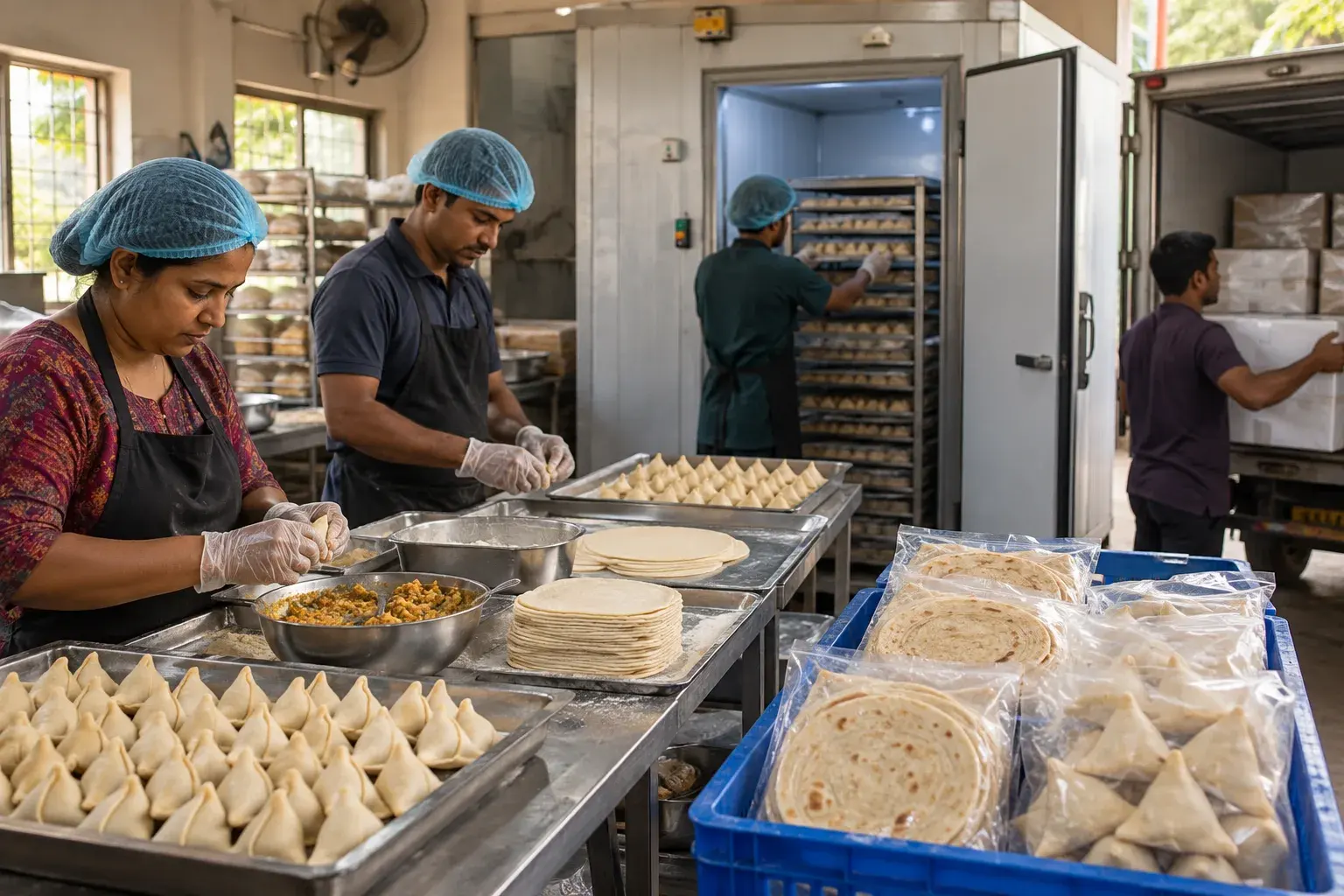
Frozen paratha and samosa
Making raw paratha, samosa and singara, freezing them and selling them in packs. Retail is Tk 12.5-19 a paratha and Tk 8.6-9.4 a mini samosa. The cold chain from factory to shop is the real condition of the business.
- Capital
- ৳3 lakh – ৳15 lakh
- People
- 3 – 15
- First income
- 45 – 90 days
 Food processing
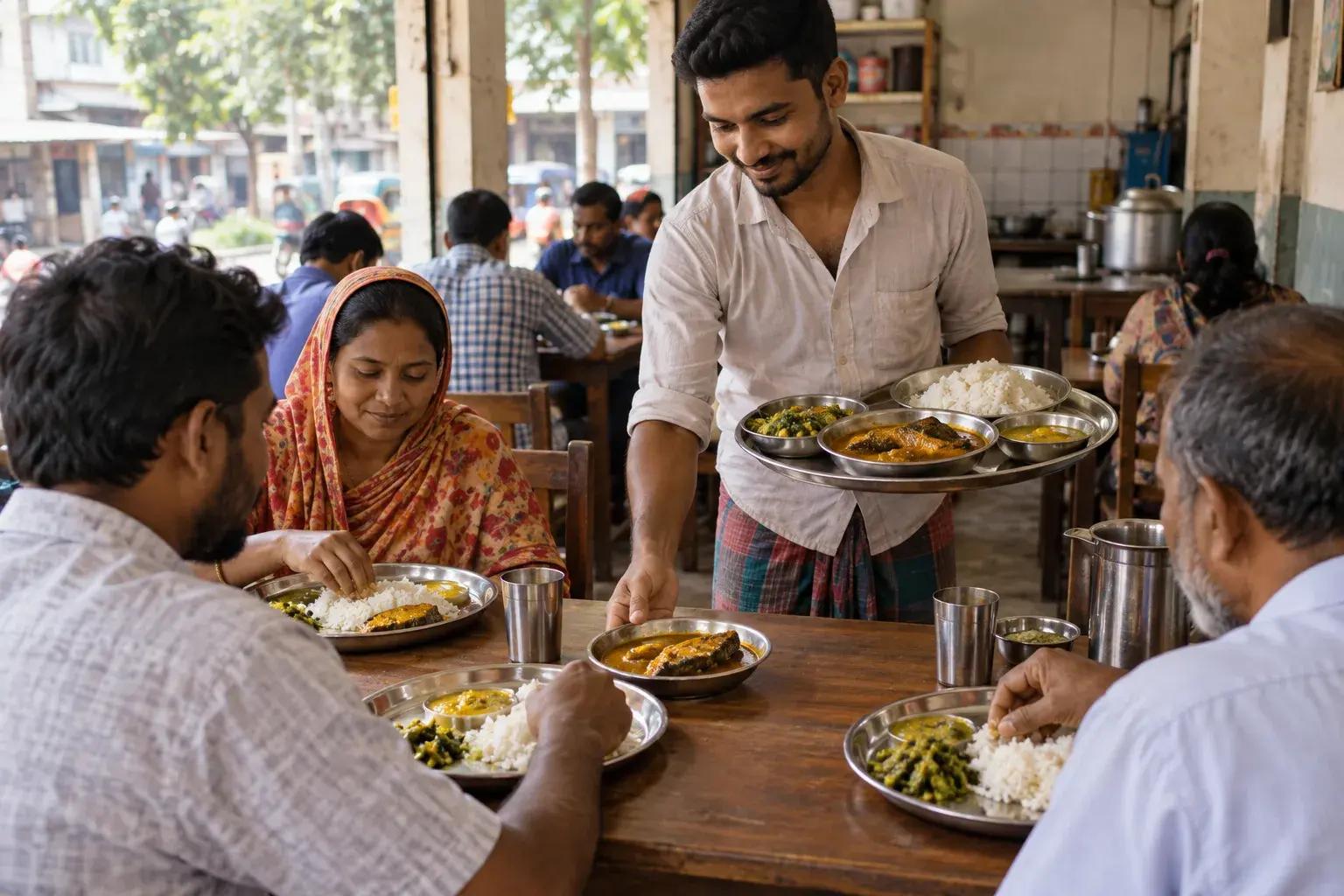
Small restaurant
A 300-500 sqft rice hotel. Cash comes in daily, but ingredients eat 35-50 percent of sales and six separate approvals are needed to open.
- Capital
- ৳3 lakh – ৳6 lakh
- People
- 3 – 8
- First income
- 60 – 120 days
 Food processing
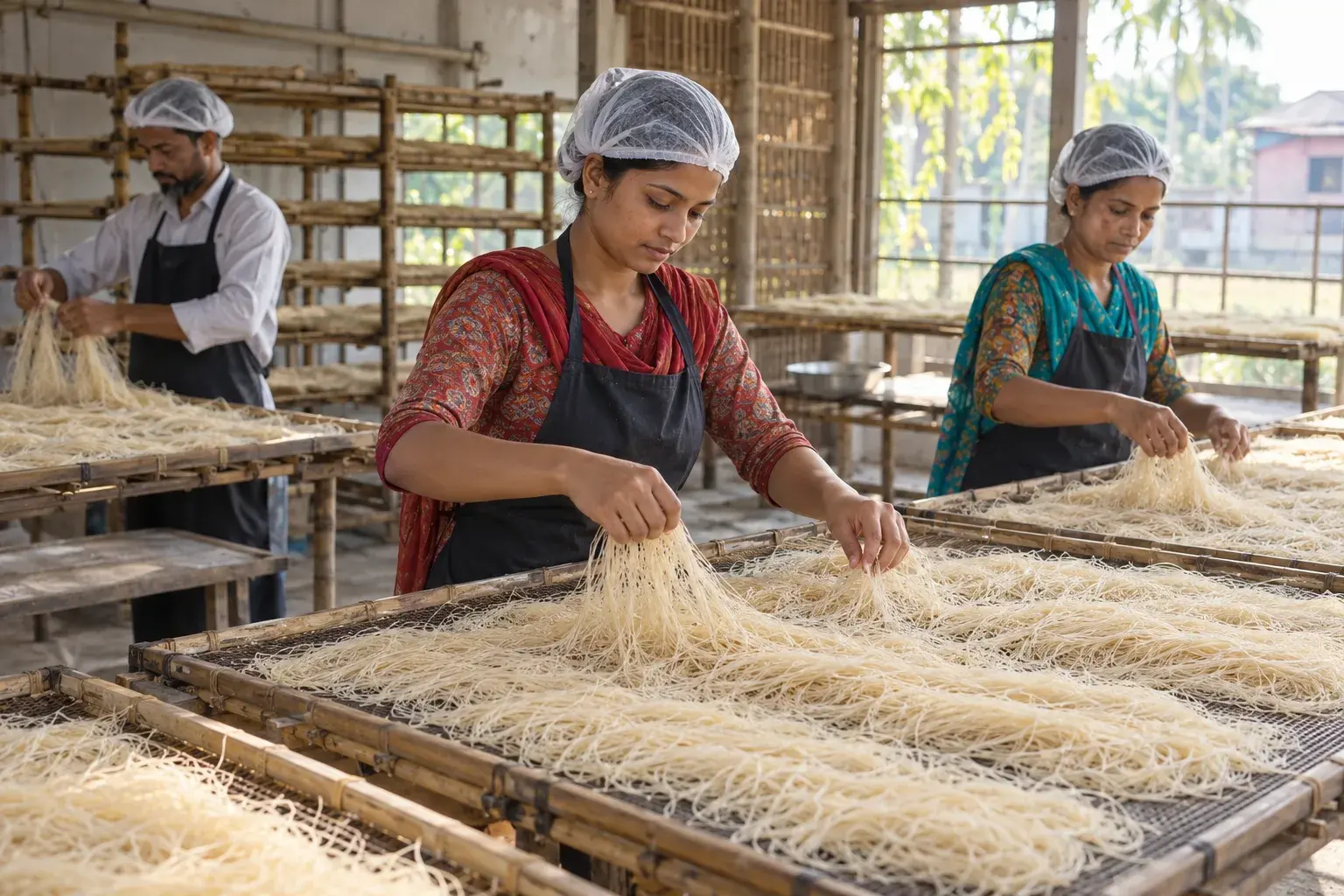
Semai and noodle making
Cutting flour dough into vermicelli and noodles. Most of the year's sales fall at Eid-ul-Fitr, and the same flour makes anything from Tk 80 loose semai to Tk 1,600 ghee-fried lachcha.
- Capital
- ৳3 lakh – ৳25 lakh
- People
- 3 – 25
- First income
- 45 – 100 days
 Food processing
Tomato sauce and ketchup making
Buying winter tomatoes and cooking them into bottled sauce and ketchup. Sauce sells at Tk 320-430 a kg, and the BSTI sample test alone is Tk 11,100 for ketchup and Tk 12,200 for sauce.
- Capital
- ৳2.5 lakh – ৳15 lakh
- People
- 3 – 12
- First income
- 60 – 180 days