
Semai and noodle making
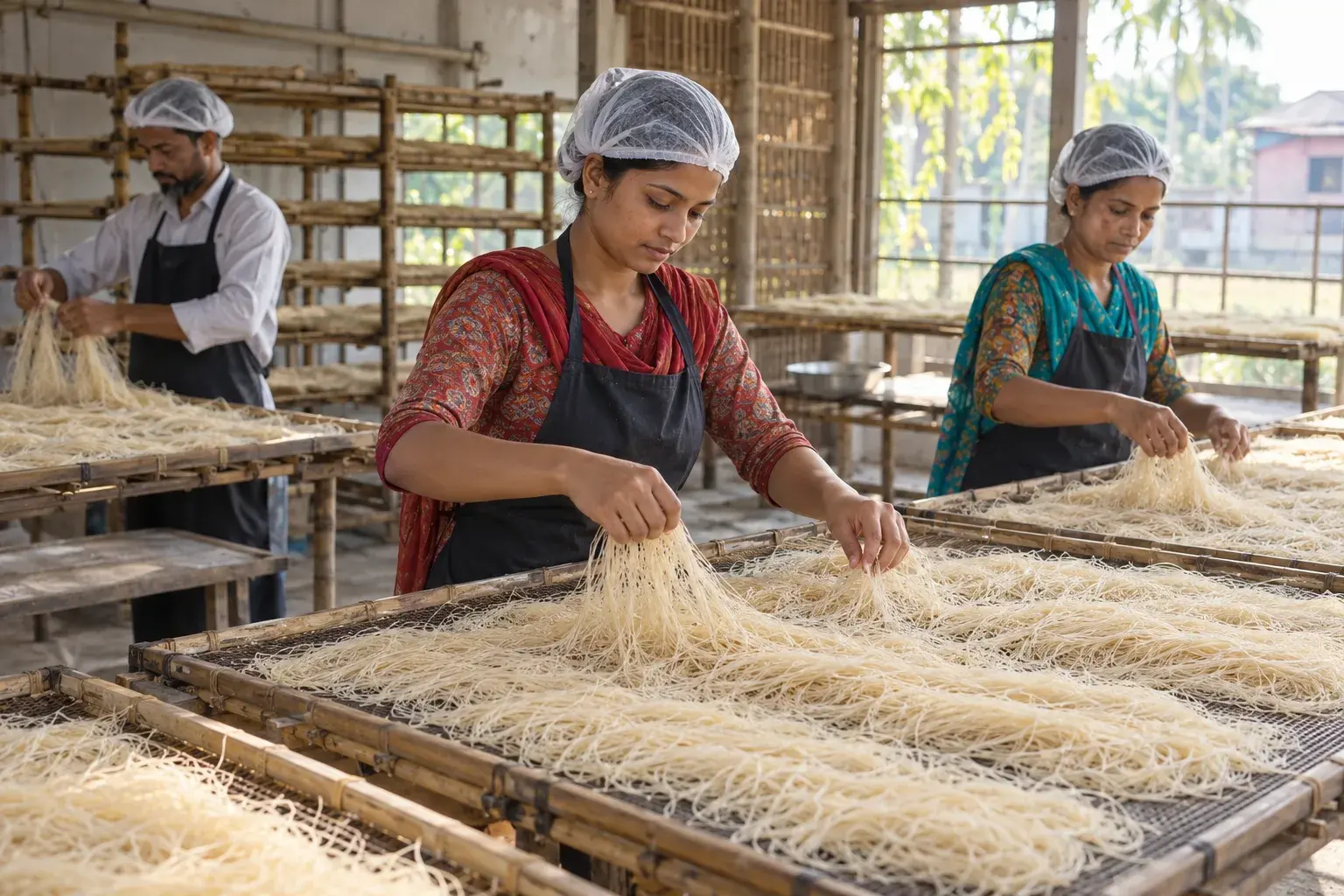
Cutting flour dough into vermicelli and noodles. Most of the year's sales fall at Eid-ul-Fitr, and the same flour makes anything from Tk 80 loose semai to Tk 1,600 ghee-fried lachcha.
- Last reviewed: 19 September 2026
- Version 1
Semai and noodle making
- Starting capital
- ৳3,00,000 – ৳25,00,000 Editorial estimate
- Manpower
- 3 – 25 people
- First sale
- 45 – 100 days Official source
- Break-even
- 12 – 24 months Editorial estimate
- Kind of work
- Workshop · Medium difficulty
About the business
A unit that cuts flour dough into vermicelli and noodles. One fact explains the whole business: most of the year's semai sells at Eid-ul-Fitr. The seven thousand member shops of the bakery association start stocking it from the twentieth day of Ramadan and do not carry it the rest of the year. A Karwan Bazar shopkeeper sells two packets in a fortnight normally, and fifteen hundred packets a day before Eid. Bogura supplies more semai than anywhere else, with roughly a thousand small and large factories and about Tk 1,000 crore of sales across the two Eids; Rangpur, Dinajpur and Chattogram also make it. The price ladder is steep: loose long semai is Tk 100 a kg and Tk 80 if you bargain, lachcha fried in dalda is Tk 300, fried fine semai Tk 160-180, and lachcha fried in ghee runs from Tk 1,300 to Tk 1,600. The same flour makes all of it - how far up the ladder you go decides the margin. The input side is simple: atta is Tk 44-46 a kg wholesale and Tk 48-50 retail. The rules are not: macaroni, spaghetti and vermicelli (BDS 384), noodles (BDS 1106) and instant noodles (BDS 1552) are all BSTI mandatory products.
Unit economics
| Item | Range | Evidence | Suggest a correction |
|---|---|---|---|
| Monthly working capital | ৳2,00,000 – ৳19,00,000 | Editorial estimate | |
| Selling price | ৳80 – ৳100 / kg | Market quote | |
| Variable cost | ৳44 – ৳46 / kg | Official source | |
| Gross margin | 42% – 56% | Official source | |
| Time to first revenue | 45 – 100 days | Official source | |
| Break-even time | 12 – 24 months | Editorial estimate | |
| Cash cycle | 30 – 75 days | Editorial estimate | |
| Waste / loss | 3% – 8% | Editorial estimate | |
| Daily capacity | 200 – 2,500 | Editorial estimate |
What you need to start
- A dough mixer, a semai cutting machine, drying racks or chamber, frying pans and burners, weighing scales and a packing and sealing machine. Local machine prices could not be verified.Equipment
- Atta at Tk 44-46 wholesale and Tk 48-50 retail a kg; maida Tk 65-70 loose and Tk 75-85 packet (15-09-2026). Frying lachcha needs palm oil at Tk 163-164 a litre wholesale, and ghee on top of that.Starting stock
- Bangladesh Food Safety Authority registration and premises licence: Tk 1,000 new, Tk 500 renewal, valid three years. District mobile courts can fine directly under the Food Safety Act.Licence
- Trade licence from the city corporation or municipality: form Tk 10, book Tk 50, standard tax Tk 30, stamp Tk 150-300, licence fee Tk 100-60,000, in 3-5 working days.Licence
- BSTI CM licence. Macaroni, spaghetti and vermicelli (BDS 384:2017), Noodles (BDS 1106:2015) and Instant Noodles (BDS 1552:2015) are on the mandatory list. Application Tk 1,000, renewal Tk 500, annual licence fee Tk 200, marking fee from Tk 1,875.Licence
- Judging the water-to-flour ratio in the dough and the frying heat. Get the ratio wrong and the strands break or dissolve on cooking; overheat the oil and lachcha burns dark.Skill
- A wholesale flour supplier, a source for edible oil and ghee, and a printer for wrappers and packets.Supplier
- A separate production room with pucca floor, drainage and hand-washing; a clean open area for drying; and a store away from the toilet. A Bogura factory was fined for storing semai beside a toilet.Workspace
How the work is done
- 1Decide where you stop on the ladder - loose long semai, fried fine semai, dalda-fried lachcha, or ghee-fried lachcha. Prices run from Tk 80 to Tk 1,600 a kg, and each rung needs different machines, different hands and different capital.
- 2Take the trade licence from the city corporation or municipality and register for TIN and VAT with the NBR.
- 3Take Bangladesh Food Safety Authority registration and the premises licence: Tk 1,000 new, Tk 500 renewal, valid three years.
- 4Apply to BSTI for the CM licence. Vermicelli (BDS 384), Noodles (BDS 1106) and Instant Noodles (BDS 1552) are mandatory products. Application Tk 1,000, annual licence fee Tk 200, marking fee from Tk 1,875.
- 5Fit out the unit: a dough mixer, a semai cutting machine, drying racks or a drying chamber, frying pans and a packing machine. Knead with hands or a machine - if you are caught kneading with feet the fine runs into lakhs.
- 6Fix a wholesale flour supplier. In Dhaka atta is Tk 44-46 wholesale and Tk 48-50 retail; maida is Tk 65-70 loose and Tk 75-85 packet (15-09-2026). Prices climb before Eid, so stock up early.
- 7Label to rule: name, brand, weight, ingredients, manufacture and expiry dates, batch number, address, retail price and the standard mark against the BDS number. Make sure the weight matches what is printed.
- 8Talk to bakeries, confectioneries and wholesale arots well in advance. The association's seven thousand member bakeries start stocking from the twentieth day of Ramadan, so the stock must be ready before that date.
- 9Ramp up output and hire extra hands two months before Ramadan. After Eid demand falls to almost nothing, and the unit either closes or switches to noodles.
- 10Add noodles to keep the unit running all year. Noodle demand is year-round - on Chaldal, Cocola Egg Noodles 125 g is Tk 20 and Mr. Noodles 496 g Tk 170 (16-09-2026).
- 11Keep a sample of every batch and change the frying oil regularly. A Bogura factory was fined three lakh taka for frying in burnt oil.
Seasons
- JanNormal
- FebHigh
- MarHigh
- AprNormal
- MayHigh
- JunNormal
- JulLow
- AugLow
- SepLow
- OctLow
- NovLow
- DecNormal
Where it works well
- Strong fitBogura · More semai comes from here than anywhere else - roughly a thousand small and large factories and about Tk 1,000 crore of sales across the two Eids, with a dedicated semai cluster at Shekhahar in Kahalu.
- Strong fitChattogram · Well Food, Banoful, Banalata and Madhubon sell nationally, and Chattogram alone does over Tk 100 crore at Eid.
- Strong fitDhaka · The biggest consumer market and the centre of the supermarket trade, with wholesale spreading citywide from Karwan Bazar.
- Strong fitDinajpur · Wheat country, so flour is close at hand, and its semai sells across the country.
- Strong fitRangpur · After Bogura, Rangpur's semai sells nationwide, with cheaper flour supply and lower wages.
- PossibleCumilla · Local semai units get busy before Eid, and the highway reaches both Dhaka and Chattogram.
- PossibleJashore · The commercial centre of the south-west, with Khulna and Satkhira within reach.
- PossibleNaogaon · Wheat and flour country, and close enough to Bogura to reach the same buyers.
- PossibleSirajganj · Between the north and Dhaka, with quick dispatch over the Jamuna bridge.
- PossibleSylhet · Remittance households can pay, so demand for expensive ghee-fried lachcha is relatively strong.
Risks and cautions
- HighDemand: Most of the year's semai sells at Eid-ul-Fitr, and the association's seven thousand member bakeries do not stock it before the twentieth day of Ramadan. A Karwan Bazar shopkeeper sells two packets in a fortnight normally and fifteen hundred a day before Eid. A whole year's income arrives in one month, and if the stock is not ready in that month the year is lost.
- HighCompliance: Raids on semai factories are routine in the Eid season. On 3 March 2026 two units at Nishindara in Bogura town were fined Tk 340,000 - Alif Lachcha Semai Tk 300,000 for kneading dough with feet, storing beside a toilet and having no BSTI certificate, and Shah Lachcha Semai Tk 40,000. Six more unlicensed units had been fined over a lakh the previous day, and a factory at the Shekhahar semai cluster in Kahalu was fined three lakh for frying in burnt oil.
- HighWorking capital: Stock is built before Eid and the money comes after it sells. The two months before Ramadan demand flour, oil, packaging and extra wages all at once, and flour and oil prices themselves rise before Eid. Anyone short of cash then buys raw material on credit, and most of the margin goes there.
- MediumLate payment: Semai goes to bakeries and groceries on credit and the money comes after Eid. One Dhaka confectionery had stocked 100 kg of lachcha from Bogura's Royal at Tk 800 a kg - consignments like that are not paid for on the spot. Unsold stock also comes back, and after Eid there is nowhere to sell it.
- MediumDependency: The margin depends entirely on flour and edible oil prices. Over twelve months packet maida rose 14.3 percent and loose soybean oil 11.4 percent. But loose semai cannot be pushed past Tk 80-100 a kg because buyers bargain. Ghee-fried lachcha can carry a price rise; plain semai cannot.
Sources
- Collected: 16 Sept 2026
Supports: Starting capital · বাংলাদেশ
সিটি কর্পোরেশন থেকে ট্রেড লাইসেন্স প্রাপ্তির ধাপ সমূহ
Collected: 16 Sept 2026Supports: Starting capital · বাংলাদেশ
- Collected: 15 Sept 2026
Supports: Variable cost · ঢাকা মহানগর — সিপাহীবাগ, মিরপুর-৬, মোহাম্মদপুর টাউন হল, নিউমার্কেট, রামপুরা, মহাখালী বাজার
- Collected: 15 Sept 2026
Supports: Gross margin, Variable cost · ঢাকা মহানগর
All food businesses now need safety registration
Collected: 22 Jul 2026Supports: Starting capital · বাংলাদেশ
What changed
No corrections have been published yet.
Questions and answers
No questions yet. Be the first to ask.
Stories about this business
A 20 kg basket of lachcha from 1,300 taka to 2,400, and orders halved
Inputs rose about 40 percent, so a 20 kg basket of loose lachcha had to go from 1,300 taka to 2,400 — and wholesalers cut their orders. Annual output of about 20,000 tonnes was heading for 12,000 or less, with about 40 of roughly 200 factories already shut.
- Reasons
- Other, Weak demand
Similar businesses
 Food processing
Frozen paratha and samosa
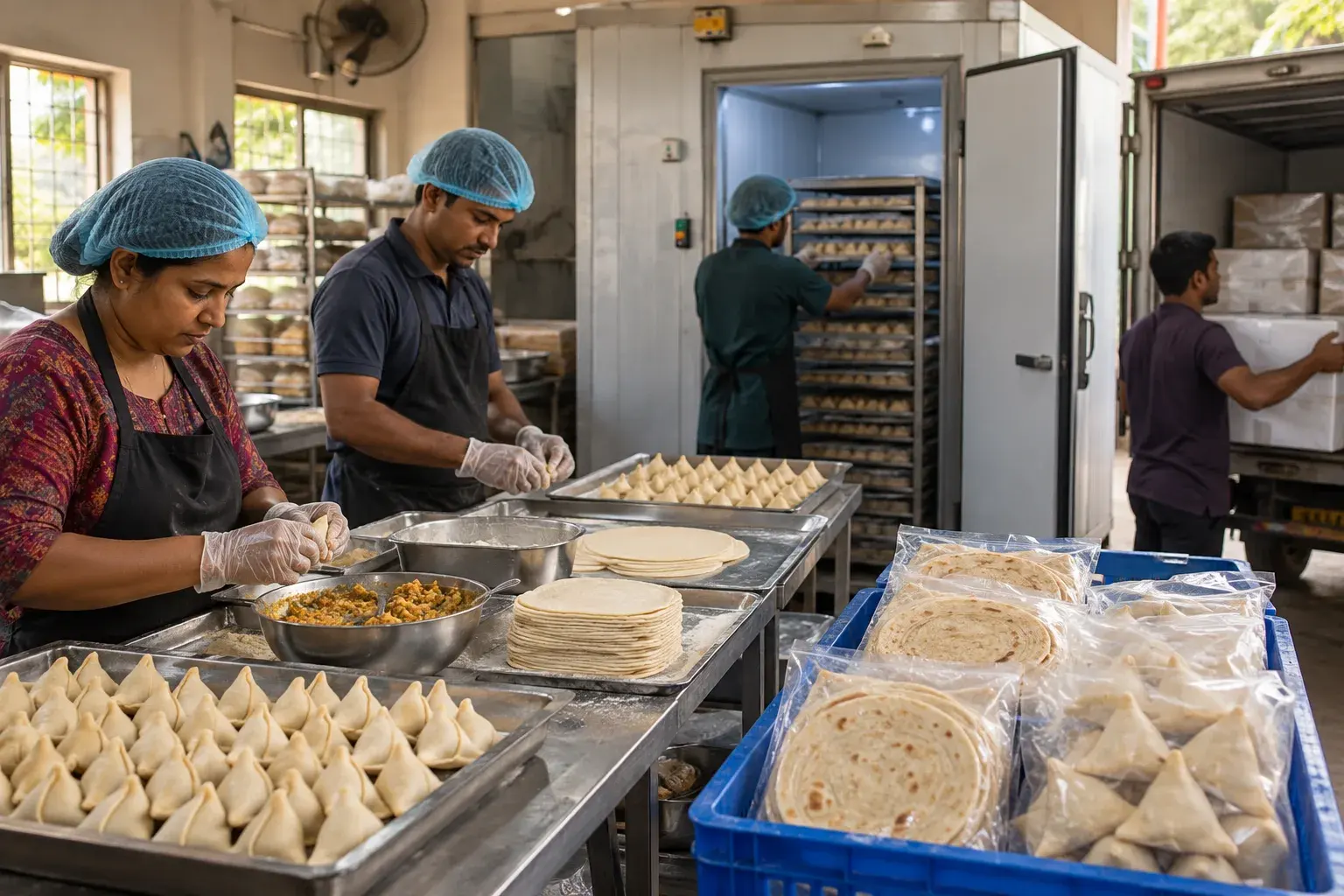
Making raw paratha, samosa and singara, freezing them and selling them in packs. Retail is Tk 12.5-19 a paratha and Tk 8.6-9.4 a mini samosa. The cold chain from factory to shop is the real condition of the business.
- Capital
- ৳3 lakh – ৳15 lakh
- People
- 3 – 15
- First income
- 45 – 90 days
 Food processing
Small restaurant
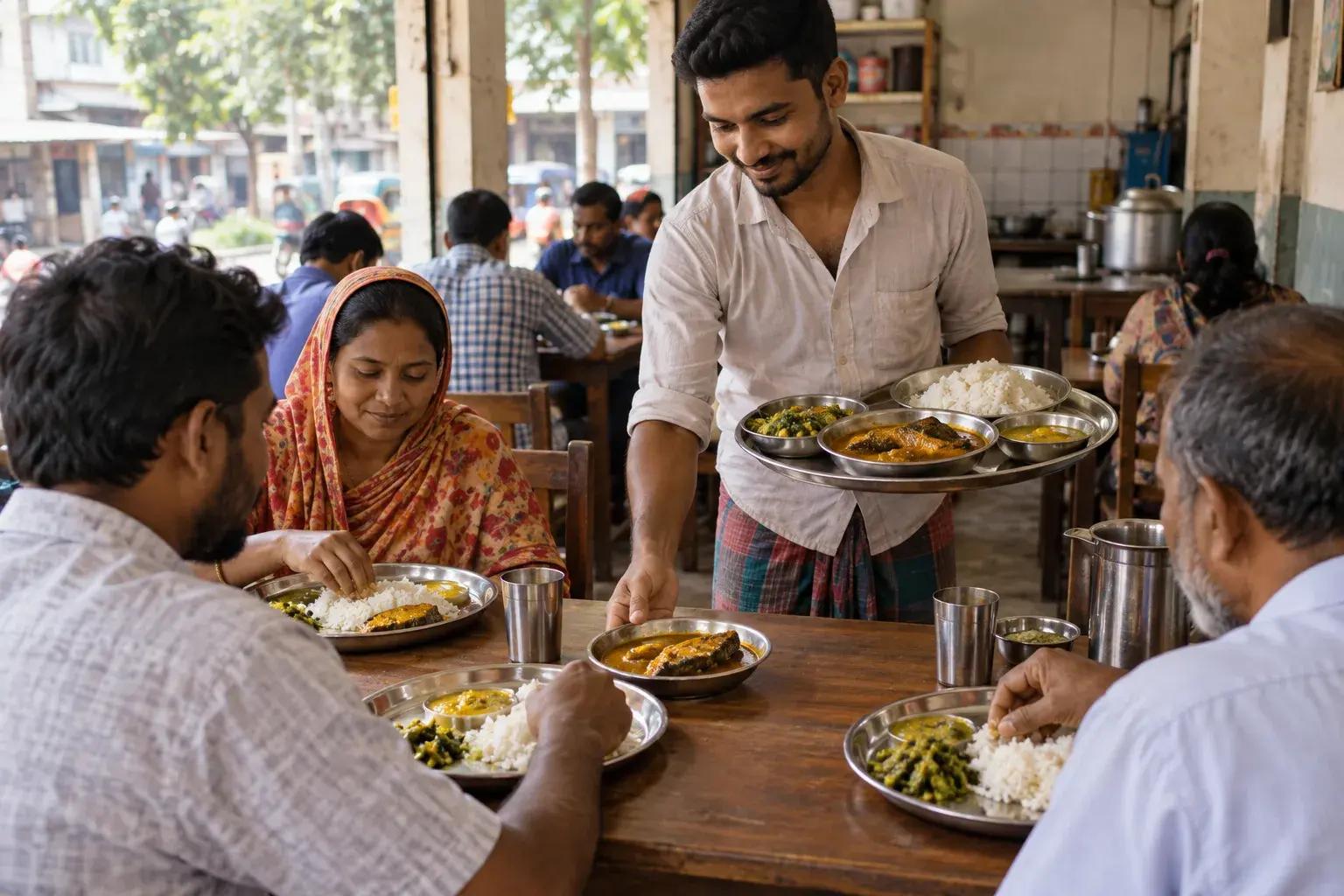
A 300-500 sqft rice hotel. Cash comes in daily, but ingredients eat 35-50 percent of sales and six separate approvals are needed to open.
- Capital
- ৳3 lakh – ৳6 lakh
- People
- 3 – 8
- First income
- 60 – 120 days
 Food processing
Biriyani shop
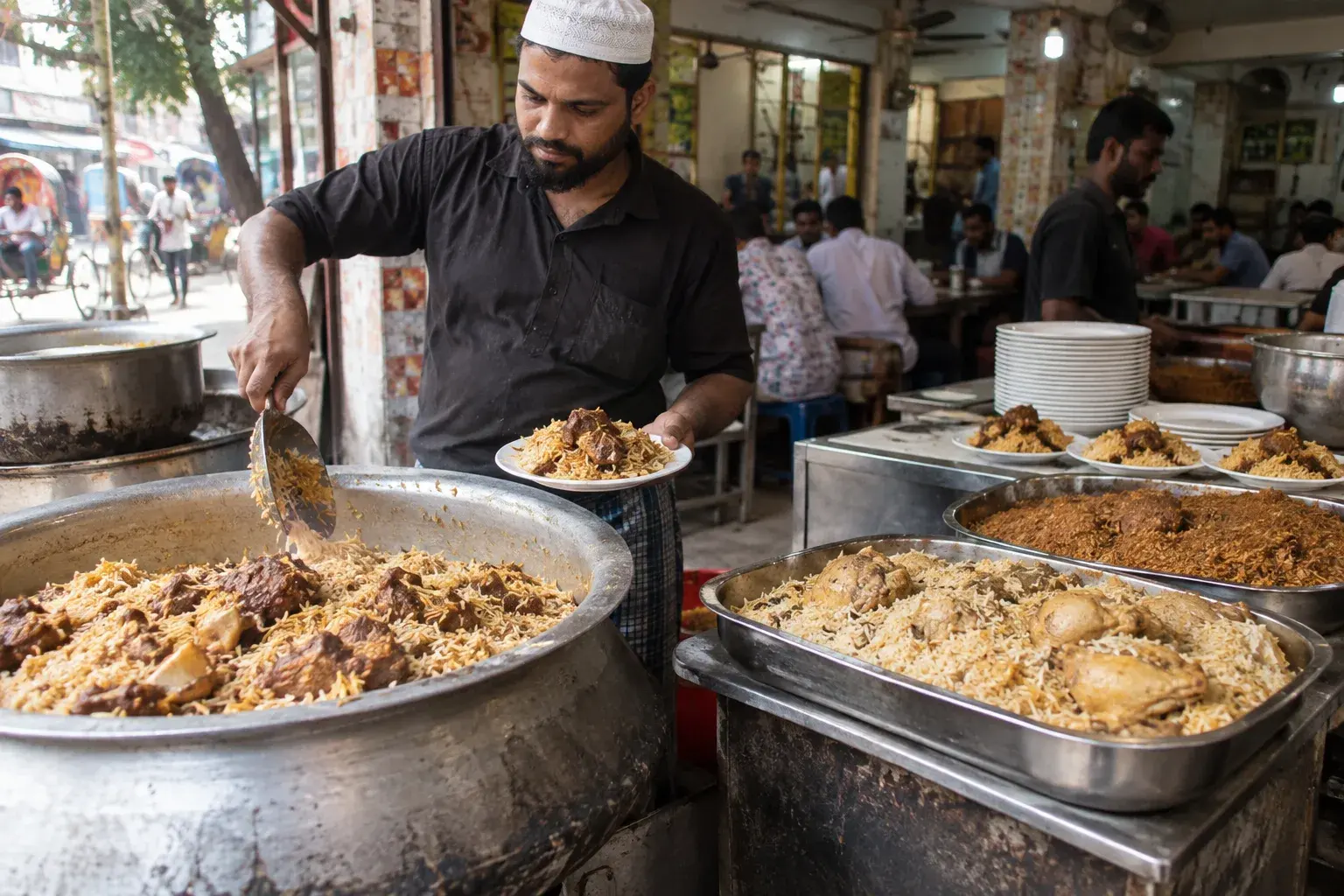
Selling kacchi, tehari and morog polao by the plate. Almost the entire cost is meat - the raw material in one pot of shahi mutton kacchi is Tk 13,265-15,054.
- Capital
- ৳3 lakh – ৳25 lakh
- People
- 3 – 15
- First income
- 30 – 90 days
 Food processing
Tomato sauce and ketchup making
Buying winter tomatoes and cooking them into bottled sauce and ketchup. Sauce sells at Tk 320-430 a kg, and the BSTI sample test alone is Tk 11,100 for ketchup and Tk 12,200 for sauce.
- Capital
- ৳2.5 lakh – ৳15 lakh
- People
- 3 – 12
- First income
- 60 – 180 days