
Online grocery delivery
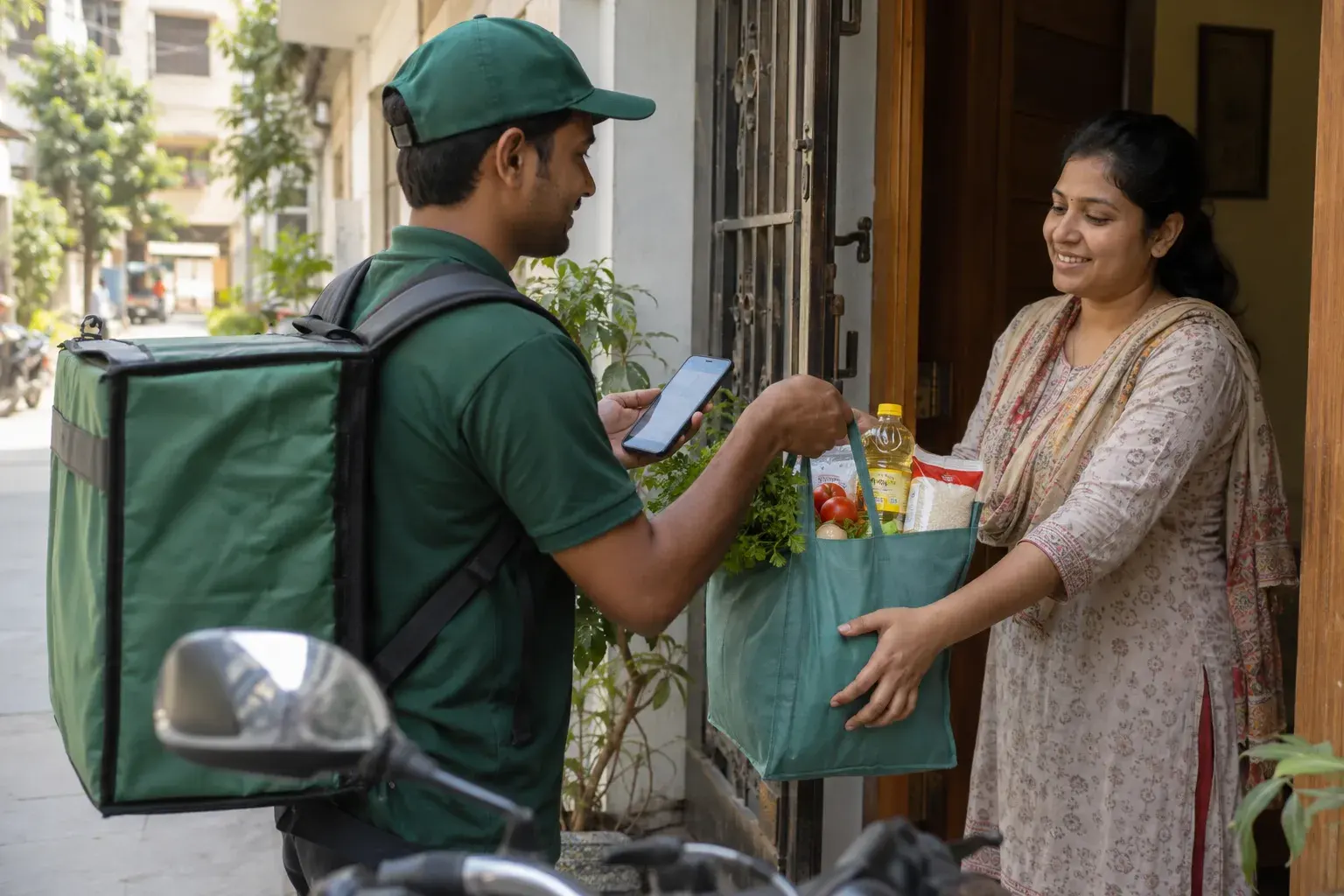
Taking grocery orders on an app or page and delivering to the door. Sugar leaves about 7 percent and bottled oil almost nothing - and the cost of delivery has to come out of that.
- Last reviewed: 19 September 2026
- Version 1
Online grocery delivery
- Starting capital
- ৳1,00,000 – ৳8,00,000 Editorial estimate
- Manpower
- 2 – 10 people
- First sale
- 7 – 30 days Editorial estimate
- Break-even
- 12 – 24 months Editorial estimate
- Kind of work
- Online · Hard
About the business
Taking orders on an app or a Facebook page and delivering rice, lentils, oil and vegetables to the door. This business has one problem and it runs through everything: the margin on grocery staples is very thin, and the cost of delivery has to come out of that thin margin. Look at the numbers. On 15 September 2026 Dhaka wholesale sugar was Tk 102-103 a kg and Chaldal's shelf price that day was Tk 110 - about Tk 7, or 7 percent. One litre of bottled soybean oil was Tk 197-203 wholesale and Tk 199 on Chaldal: effectively nothing. The five-litre bottle was Tk 975-995 wholesale against Tk 975 on Chaldal - no margin at all, possibly a loss. Potato was Tk 29 a kg and local onion Tk 39. Now the delivery: Chaldal charges Tk 59 per order and promises it within the hour. A Tk 500 basket at 7 percent is Tk 35 of gross margin. Delivering that order takes a person, a motorcycle or van, fuel and time. If the Tk 59 collected from the customer does not cover that, then every extra order deepens the loss. So the real question here is not how much you sell - it is what it costs you to deliver one order.
Unit economics
| Item | Range | Evidence | Suggest a correction |
|---|---|---|---|
| Monthly working capital | ৳1,00,000 – ৳8,00,000 | Editorial estimate | |
| Selling price | ৳29 – ৳199 / kg | Market quote | |
| Variable cost | ৳24 – ৳203 / kg | Official source | |
| Gross margin | 0% – 7% | Official source | |
| Time to first revenue | 7 – 30 days | Editorial estimate | |
| Break-even time | 12 – 24 months | Editorial estimate | |
| Cash cycle | 0 – 1 days | Market quote | |
| Waste / loss | 2% – 6% | Editorial estimate | |
| Daily capacity | 150 – 1,000 | Editorial estimate |
What you need to start
- A delivery vehicle (bicycle, motorcycle or van), scales, packing bags and crates, and a phone or computer to take orders.Equipment
- DBID (Digital Business Identification) from RJSC, Ministry of Commerce. An e-commerce or f-commerce business cannot operate without it; by 19 November 2025 only 1,870 businesses had one against about 12,000 pending applications, so allow time.Licence
- Food safety registration under the Food Safety (Registration and Licensing) Regulations 2026 from the Bangladesh Food Safety Authority: new registration Tk 1,000, renewal Tk 500, valid three years; licensing Tk 1,000-5,000 by establishment and up to Tk 40,000 for large warehouses. Confirm with the authority which applies to your operation.Licence
- Trade licence from the city corporation or municipality: form Tk 10, licence book Tk 50, standard tax Tk 30, stamp Tk 150-300, licence fee Tk 100-60,000 by trade type, issued in 3-5 working days.Licence
- Tracking the buy-sell gap on every item and working out the delivery cost per order. Without both, rising sales simply deepen the loss.Skill
- Wholesale markets and suppliers. The Department of Agricultural Marketing publishes Dhaka wholesale rates daily - checking that sheet before buying reduces the risk of overpaying at the arot.Supplier
- A small warehouse or shop space to hold stock and pack orders, with dry goods kept separately and a fridge or chiller for perishables.Workspace
How the work is done
- 1Pick a small area - one or two neighbourhoods. The further you go the more delivery costs, and the thin margin disappears.
- 2Go to Karwan Bazar or your local wholesale market, write down the rates, and check them against the Department of Agricultural Marketing's published wholesale sheet.
- 3Write the buying and selling price of each item side by side and work out the percentage. Anything under 3 percent is there to pull customers in, not to earn.
- 4Measure what one delivery actually costs you - the deliveryman's wage, fuel or vehicle cost, and time. That single number decides whether this business works.
- 5Set the delivery fee and a minimum order. Chaldal charges Tk 59 an order; if your cost is higher than that, small orders lose money.
- 6Take the trade licence, and apply to RJSC for DBID registration, which digital businesses require.
- 7You are selling food, so find out whether Bangladesh Food Safety Authority registration applies. New registration is Tk 1,000, renewal Tk 500, valid three years.
- 8Start with few lines - rice, lentils, oil, sugar, atta, potato, onion. The fewer perishables and fish you carry, the smaller the spoilage loss.
- 9Keep daily figures: how many orders, the average value, and the total margin per order. If orders rise but profit does not, delivery cost is eating the margin.
- 10Offer advance payment through bKash or Nagad. On cash on delivery, a customer who turns the order away at the door leaves the whole basket on your hands.
Seasons
- JanNormal
- FebNormal
- MarNormal
- AprNormal
- MayNormal
- JunNormal
- JulNormal
- AugNormal
- SepNormal
- OctNormal
- NovNormal
- DecNormal
Where it works well
- Strong fitChattogram · A large city with dense apartment living and wholesale markets close by.
- Strong fitDhaka · The densest concentration of working households, and several orders in one building spread the delivery cost; operators like Chaldal run here.
- PossibleGazipur · Many factory workers and tenants, but small basket sizes push up the cost per order.
- PossibleKhulna · A divisional city with working households, though limited in number.
- PossibleNarayanganj · Dense settlement and close to Dhaka's wholesale markets, though the habit of buying groceries online is weaker.
- PossibleRajshahi · A compact city keeps distances and delivery costs low, but order volume is low too.
- PossibleSylhet · Remittance households have more spending power, so basket sizes can be larger.
- Weak fitBogura · Groceries are easy to reach and haggling is the norm; few customers will pay a delivery fee.
- Weak fitCumilla · Markets are close so people shop themselves; demand for online groceries is limited.
- Weak fitRangpur · Lower purchasing power and smaller baskets; a thin margin will not cover the delivery cost.
Risks and cautions
- HighWorking capital: The margin on grocery staples is so thin that delivery cost swallows it. On 15-16 September 2026 prices, sugar leaves 6-7 percent, one litre of bottled oil 1 percent or less, and the five-litre bottle zero or a loss. On a Tk 500 basket that is about Tk 35 of gross margin, which does not pay for a person, a vehicle and fuel. Charging no delivery fee, or too small a one, means every extra order deepens the loss.
- HighSpoilage: Vegetables, fruit, fish and meat are one-day goods. If the orders do not come they rot, and a 3-7 percent margin on staples cannot absorb that - it takes the profit on dozens of orders to cover one spoiled lot. Early on, the fewer perishables carried the better.
- HighDemand: Customers know their local grocer's prices and compare. Chaldal's prices sit inside TCB's Dhaka retail band, so there is no room to charge more online than the shop does. Your income must therefore come either from the delivery fee or from enough orders to spread the cost - and getting that volume in a small area is the hardest part of the job.
- MediumLate payment: On cash on delivery a customer can refuse the order at the door. A refused grocery basket costs twice - the trip is spent and any perishable in it is lost. Without a way to take payment in advance, that risk is entirely yours.
- MediumCompliance: This is at once a digital business and a food business, so rules come from both sides. DBID is compulsory for digital businesses, yet about 12,000 applications are stuck at RJSC. On the food side, registration under the Food Safety Regulations 2026 may apply. Running without either risks a fine or closure later.
Sources
সিটি কর্পোরেশন থেকে ট্রেড লাইসেন্স প্রাপ্তির ধাপ সমূহ
Collected: 16 Sept 2026Supports: Starting capital · বাংলাদেশ
- Collected: 15 Sept 2026
Supports: Selling price · ঢাকা মহানগর — সিপাহীবাগ, মিরপুর-৬, মোহাম্মদপুর টাউন হল, নিউমার্কেট, রামপুরা, মহাখালী বাজার
- Collected: 15 Sept 2026
Supports: Gross margin, Variable cost · ঢাকা মহানগর
All food businesses now need safety registration
Collected: 22 Jul 2026Supports: Starting capital · বাংলাদেশ
What changed
No corrections have been published yet.
Questions and answers
No questions yet. Be the first to ask.
Stories about this business
From 100 coconuts bought for 8,000 taka to 25 lakh of sales a month
It began with 100 coconuts bought for 8,000 taka at Karwan Bazar; total investment is now about 10 lakh taka, with 12 staff and average sales of 25 lakh taka a month.
- Capital
- ৳8k
- Reasons
- Good quality, Working capital
Similar businesses
 Digital & B2B services
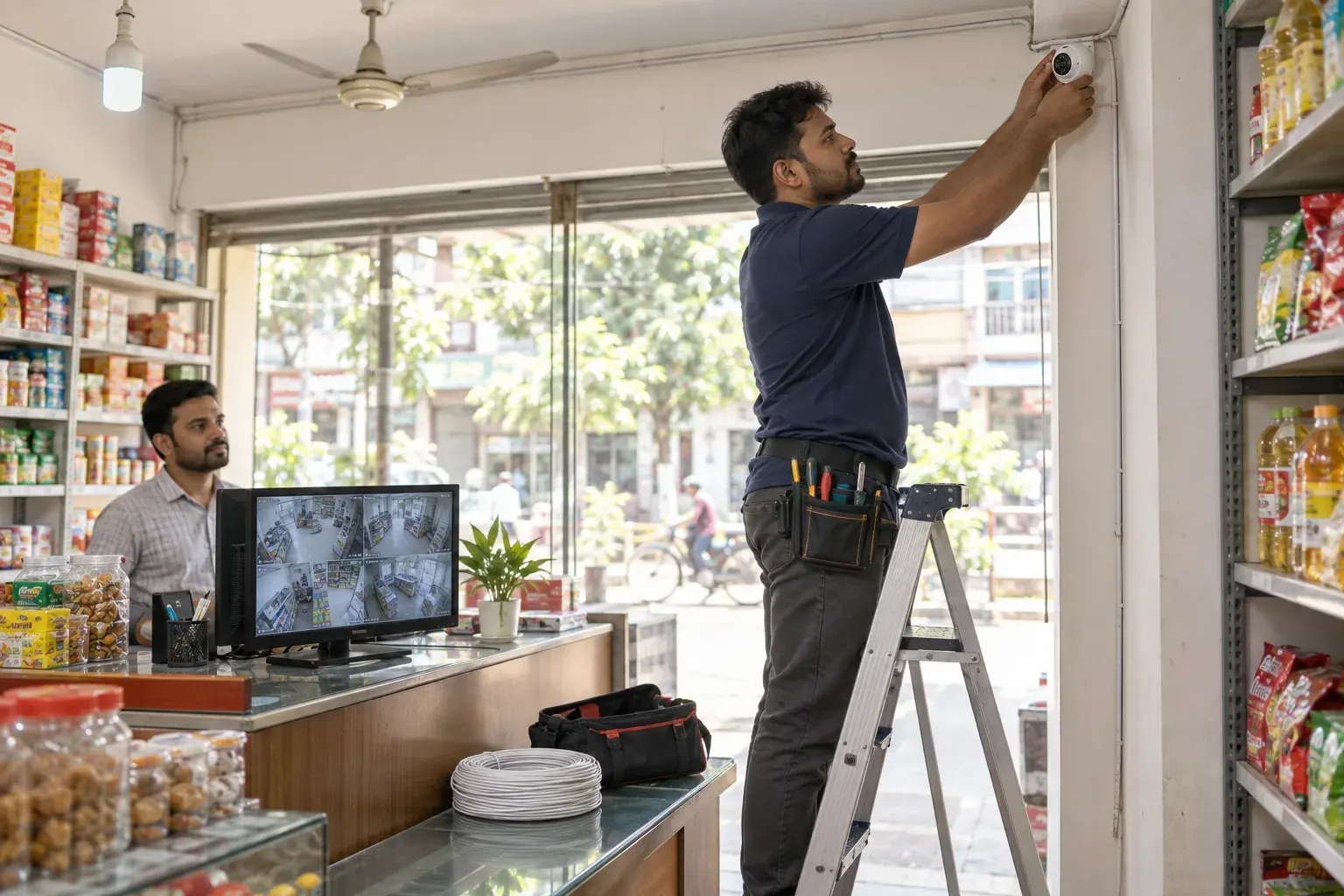
CCTV installation and maintenance
Installing and maintaining camera systems. Cameras are Tk 799-6,438 and recorders Tk 4,400-41,990, so cheap hardware has squeezed installation margins; the money is in annual maintenance contracts.
- Capital
- ৳80k – ৳6 lakh
- People
- 2 – 8
- First income
- 7 – 30 days
 Digital & B2B services
App development service
Building mobile apps to order. The capital is a computer, internet and electricity, plus a one-time USD 25 on Google Play and USD 99 a year on Apple. The cash incentive is 2.50 percent for an individual and 6 percent for a firm.
- Capital
- ৳63k – ৳1.7 lakh
- People
- 1 – 8
- First income
- 180 – 270 days
 Digital & B2B services
Video editing service
Editing product videos and content for others. The customers already exist - 200,000 online merchants on Pathao and 300,000 on Steadfast; the main capital item is one editing computer.
- Capital
- ৳62k – ৳2.5 lakh
- People
- 1 – 6
- First income
- 90 – 365 days
 Digital & B2B services
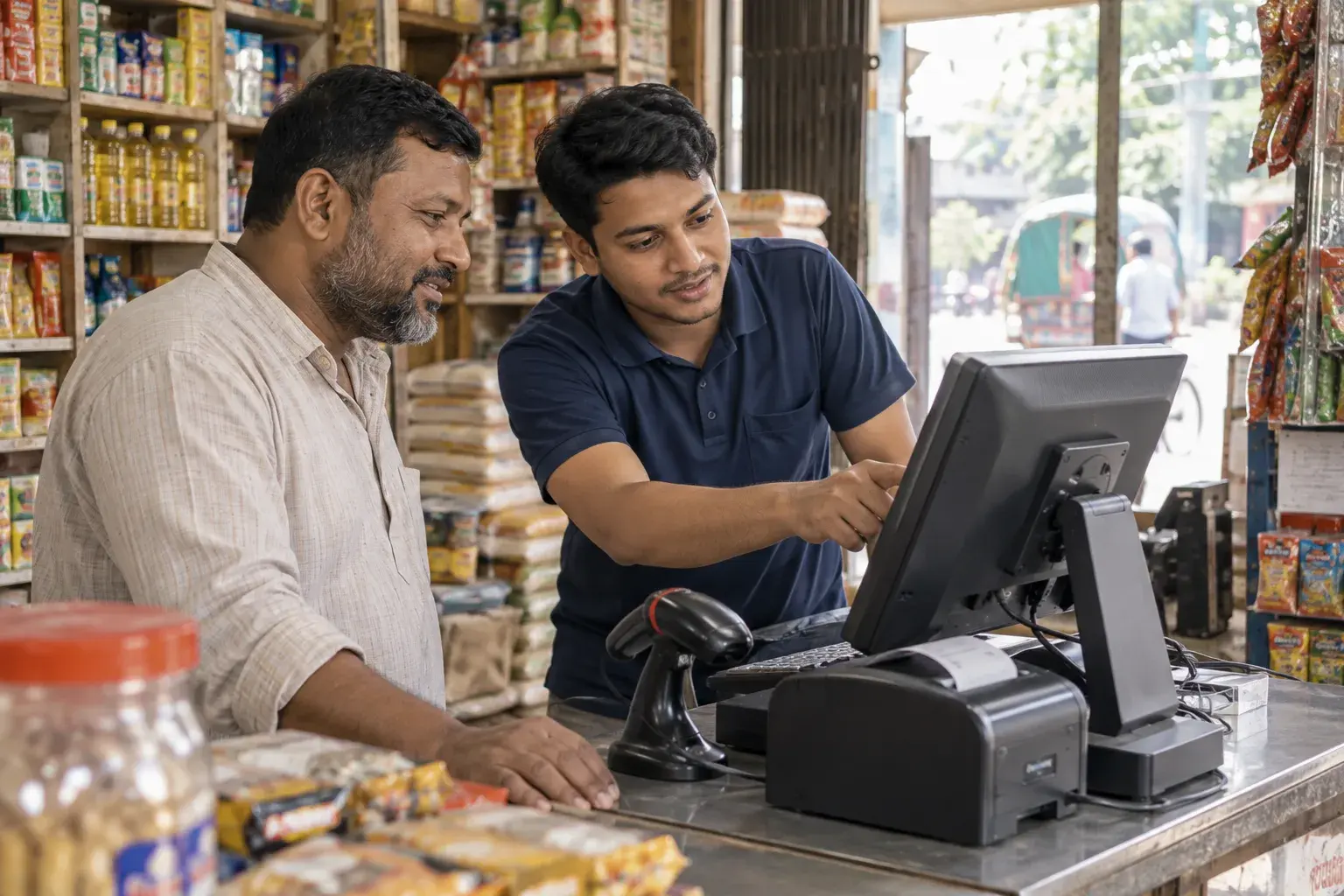
Software and app reselling
Installing point-of-sale and accounting software in small shops. The competition is free apps - TallyKhata alone has about 4.7 million registered traders - so the income comes from hardware and service.
- Capital
- ৳60k – ৳2.5 lakh
- People
- 1 – 6
- First income
- 7 – 60 days