
Shoe repair
Stitching, soling and polishing shoes. A polish is Tk 30 in Sylhet with Tk 400-500 on an average day; one launch-based repairer takes Tk 700 some days and under Tk 200 on others.
- Last reviewed: 19 September 2026
- Version 1

Shoe repair
- Starting capital
- ৳2,000 – ৳30,000 Editorial estimate
- Manpower
- 1 – 2 people
- First sale
- 1 – 7 days Editorial estimate
- Break-even
- 0.5 – 3 months Editorial estimate
- Kind of work
- Mobile service · Easy
About the business
Stitching shoes, fitting soles and polishing is one of the lowest-capital trades on this site. A wooden box, needle and thread, glue, a rasp and polish - people have run households on that for decades. No shop is needed: you can sit at a junction, in a bazaar, even on a launch. But the income is small and uncertain, and there is no point hiding it. Bindu Rishi, who has sat at Zindabazar in Sylhet for twenty-five years, said in 2022 that he charges Tk 30 for a polish, takes Tk 400 to Tk 500 on an average day, occasionally a thousand, and spends Tk 120 to Tk 150 a day on food and other costs. Babul Hossain, who has worked the Barishal-Dhaka launches for four decades, said in 2026 that some days bring Tk 700 and on others Tk 200 to Tk 300 does not even come in. Bindu Rishi said one thing that explains the trade's future: people who care about their shoes now buy good polish and do it themselves rather than pay for it. So those who survive do not live on polishing - they stitch, replace soles, and take in bags and belts as well.
Unit economics
| Item | Range | Evidence | Suggest a correction |
|---|---|---|---|
| Monthly working capital | ৳1,000 – ৳5,000 | Editorial estimate | |
| Selling price | ৳30 / unit | Practitioner verified | |
| Variable cost | ৳3 – ৳6 / unit | Editorial estimate | |
| Gross margin | 80% – 90% | Editorial estimate | |
| Time to first revenue | 1 – 7 days | Editorial estimate | |
| Break-even time | 0.5 – 3 months | Editorial estimate | |
| Cash cycle | 0 days | Practitioner verified | |
| Waste / loss | 2% – 5% | Editorial estimate | |
| Daily capacity | 7 – 17 | Editorial estimate |
What you need to start
- A wooden box, heavy needles and thread, leather glue, a rasp, a hammer, a knife, brushes and polish. Babul Hossain's entire workplace is a small box, which doubles as his pillow at night.Equipment
- Soles, heels, leather offcuts, zips, laces and polish in several colours. Little stock is needed, since what is required is available in the nearby market.Starting stock
- Trade licence from the city corporation or municipality. Most who sit on the footpath with a box never take one, but it is needed once you take a shop space: form Tk 10, book Tk 50, standard tax Tk 30, stamp Tk 150-300, licence fee Tk 100-60,000, issued in 3-5 working days.Licence
- Stitching leather, setting a sole and changing a heel. Bindu Rishi has run a household on these skills for twenty-five years and Babul Hossain for four decades.Skill
- No fixed shop is needed. A junction, the front of a shopping centre, a bus stand or a launch deck - anywhere people move.Workspace
How the work is done
- 1Learn the work. Stitching, fitting a sole and replacing a heel are learned skills, and there is more money in them than in polishing.
- 2Choose the spot: a junction, outside a shopping centre, an office area, a bus stand or a launch terminal - wherever people walk past and think about their shoes.
- 3Move with the day as Bindu Rishi does: he sits at the junction in the morning, shifts in front of the shopping centre at midday, and stays till eight or nine at night.
- 4Get the kit together: a wooden box, heavy needles and thread, leather glue, a rasp, a hammer, a knife, polish and brushes.
- 5Do not lean on polishing. Bindu Rishi says it himself: people who care about their shoes now buy good polish and do it at home - so stitching and soling are the real mainstay.
- 6Take in bags, belts, sandals and school-bag zips as well. The same tools do the job and the customer base widens.
- 7Sit in the same place every day. In this trade people know the spot and the face; move and the old customers cannot find you.
- 8Write down the day's takings and costs. Bindu Rishi spends Tk 120-150 a day on food and other costs; without that record you cannot tell which day actually paid.
- 9When there is no work, try a different route. On days without earnings Babul Hossain takes the morning launch from Barishal towards Bhola and returns on the Dhaka launch in the evening.
Seasons
- JanNormal
- FebNormal
- MarNormal
- AprNormal
- MayNormal
- JunNormal
- JulNormal
- AugNormal
- SepNormal
- OctNormal
- NovNormal
- DecNormal
Where it works well
- Strong fitBarishal · The launch terminal and the launch deck are themselves the workplace; Babul Hossain has worked the Barishal-Dhaka launches for four decades.
- Strong fitChattogram · Heavy movement around the port, offices and shopping centres, with work at the bus stand and railway station too.
- Strong fitDhaka · Office areas, shopping centres and bus stands carry the heaviest foot traffic, so the work is heaviest here.
- Strong fitSylhet · Repairers have worked Zindabazar in the city for years; Bindu Rishi has sat there for twenty-five of them.
- PossibleCumilla · Work comes from travellers at the highway bus stands and bazaars.
- PossibleGazipur · Factory workers wear out shoes fast and repair them rather than buy new ones.
- PossibleNarayanganj · Dense settlement and industry, with work at the bazaars and the launch terminal.
- PossibleRajshahi · Steady demand for student shoe and sandal repairs around the university and colleges.
Risks and cautions
- HighDemand: The demand is quietly moving away. As Bindu Rishi puts it, people used to get their shoes polished when they went out; now anyone who cares buys good polish and does it at home. Cheap shoes are so cheap that many buy new rather than repair. A polish-dependent repairer's income therefore falls year by year, and the trade's future rests on surviving through stitching and soling.
- HighWorking capital: The income is daily and uncertain while the costs are daily and certain. Babul Hossain takes Tk 700 on some days and under Tk 200-300 on others, and on many days a full day's work does not cover his costs. Bindu Rishi's own daily costs are Tk 120-150. With no savings, a week of illness or continuous rain hits the household directly.
- HighOther: There is no security of pitch. A repairer on a footpath or a junction faces eviction, encroachment or being moved on by the police, and losing the spot means losing the regular customers, because in this trade people come to the place they know. Around Bindu Rishi fifteen others in the same trade sit, so the pitch is crowded too.
- MediumOther: Festivals are the hardest time. Bindu Rishi said he used to wait for Puja and now wishes it would not come, because the earnings do not rise but buying new clothes for the family takes a large sum out. Without a steady income, a festival in this trade is pressure, not relief.
Sources
সিটি কর্পোরেশন থেকে ট্রেড লাইসেন্স প্রাপ্তির ধাপ সমূহ
Collected: 16 Sept 2026Supports: Starting capital · বাংলাদেশ
What changed
No corrections have been published yet.
Questions and answers
No questions yet. Be the first to ask.
Stories about this business
After twelve years on the footpath, a one-lakh-taka shoe shop of her own
She repaired shoes on a footpath in Jhalokathi for twelve years. A local businessman put up about 100,000 taka to build her a shop and stock it with new footwear, and it opened on 5 August 2020.
- Capital
- ৳1 lakh
- Reasons
- Working capital, Strong network
From 25 paisa a job to 10 taka: forty years that put a son through a master's
A job once paid 25 paisa to 2 taka; forty years on, his minimum is 10 taka. On that he put his son through a master's and educated and married off his daughters.
- Reasons
- Good quality, Loyal customers
Some days 50 taka, some days nothing: 67 years of mending shoes
He has mended shoes since he was nine and is now 76. The day brings anywhere from 50 to 180 taka, 200-300 in winter, and the old-age allowance is 1,650 taka every three months.
- Reasons
- Weak demand, Working capital
Similar businesses
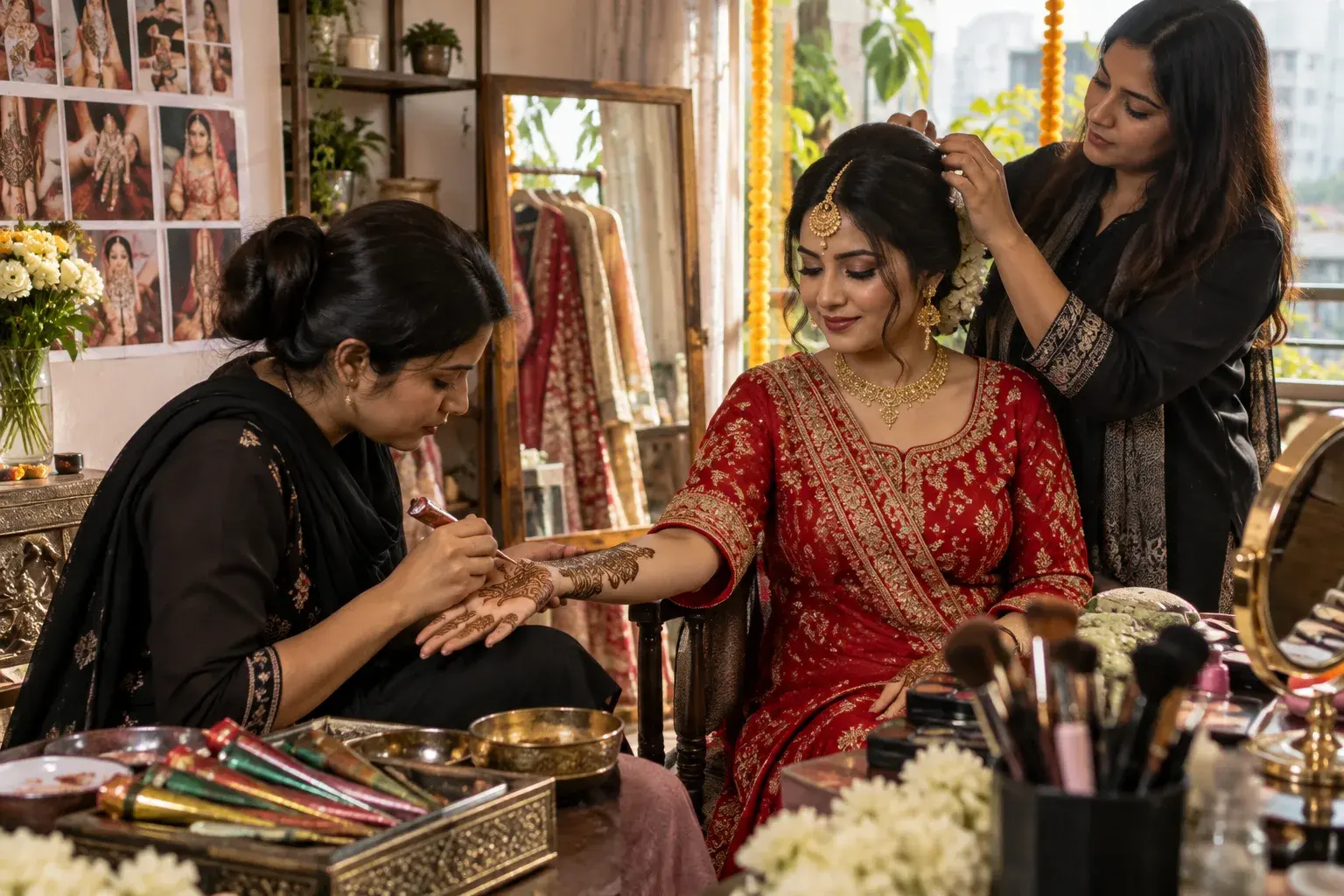 Home & local services
Mehedi and bridal service
Henna design and bridal styling for weddings, gaye holud and Eid. In Dhaka festival mehendi is Tk 1,225-1,625 and bridal Tk 3,900-5,525 per person.
- Capital
- ৳3k – ৳50k
- People
- 1 – 4
- First income
- 1 – 30 days
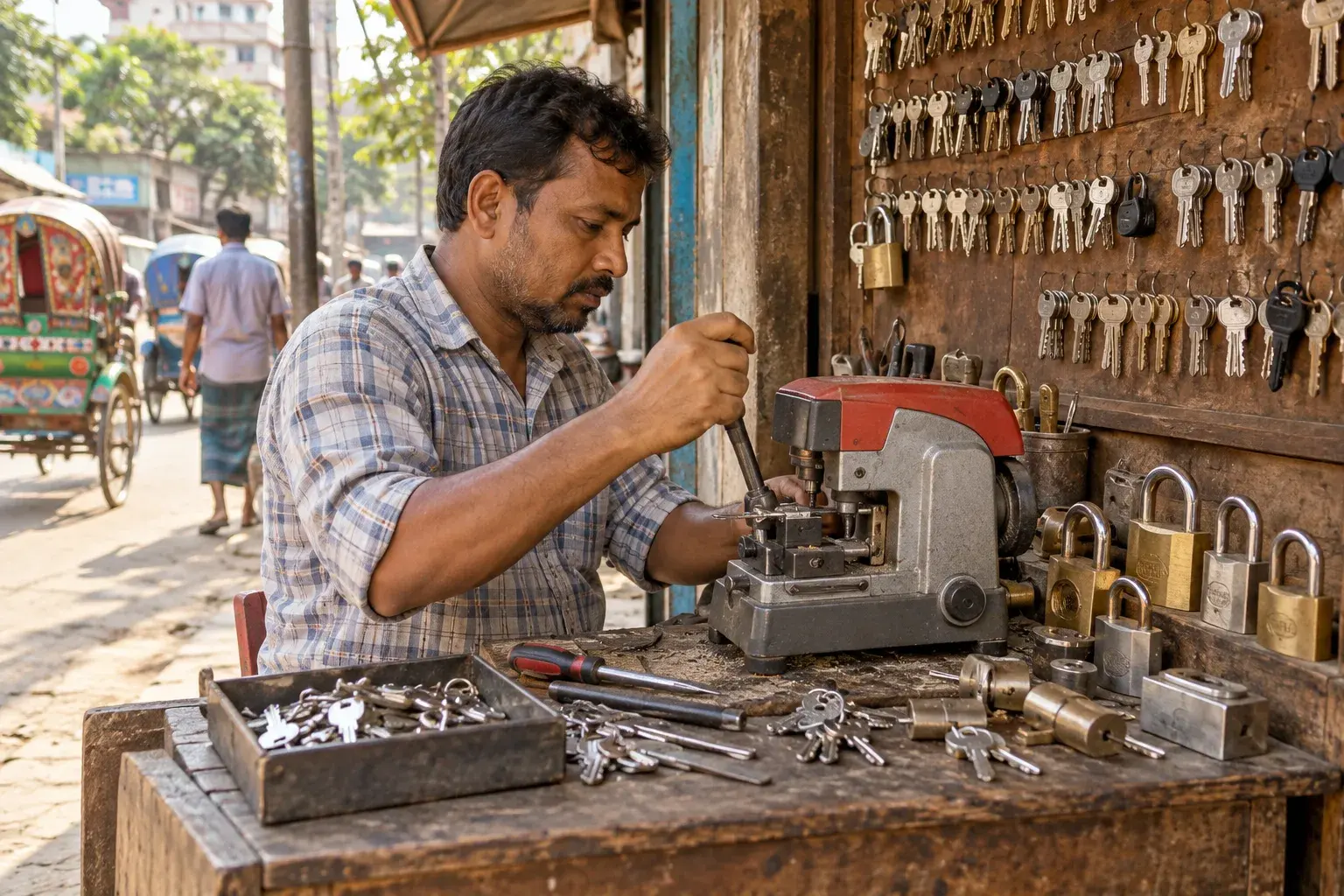 Home & local services
Key and lock service
Cutting keys, mending locks and opening jammed doors. A key is Tk 25-200 and a house call Tk 250-500; a good day brings a thousand, a bad day nothing.
- Capital
- ৳3k – ৳40k
- People
- 1 – 2
- First income
- 1 – 7 days
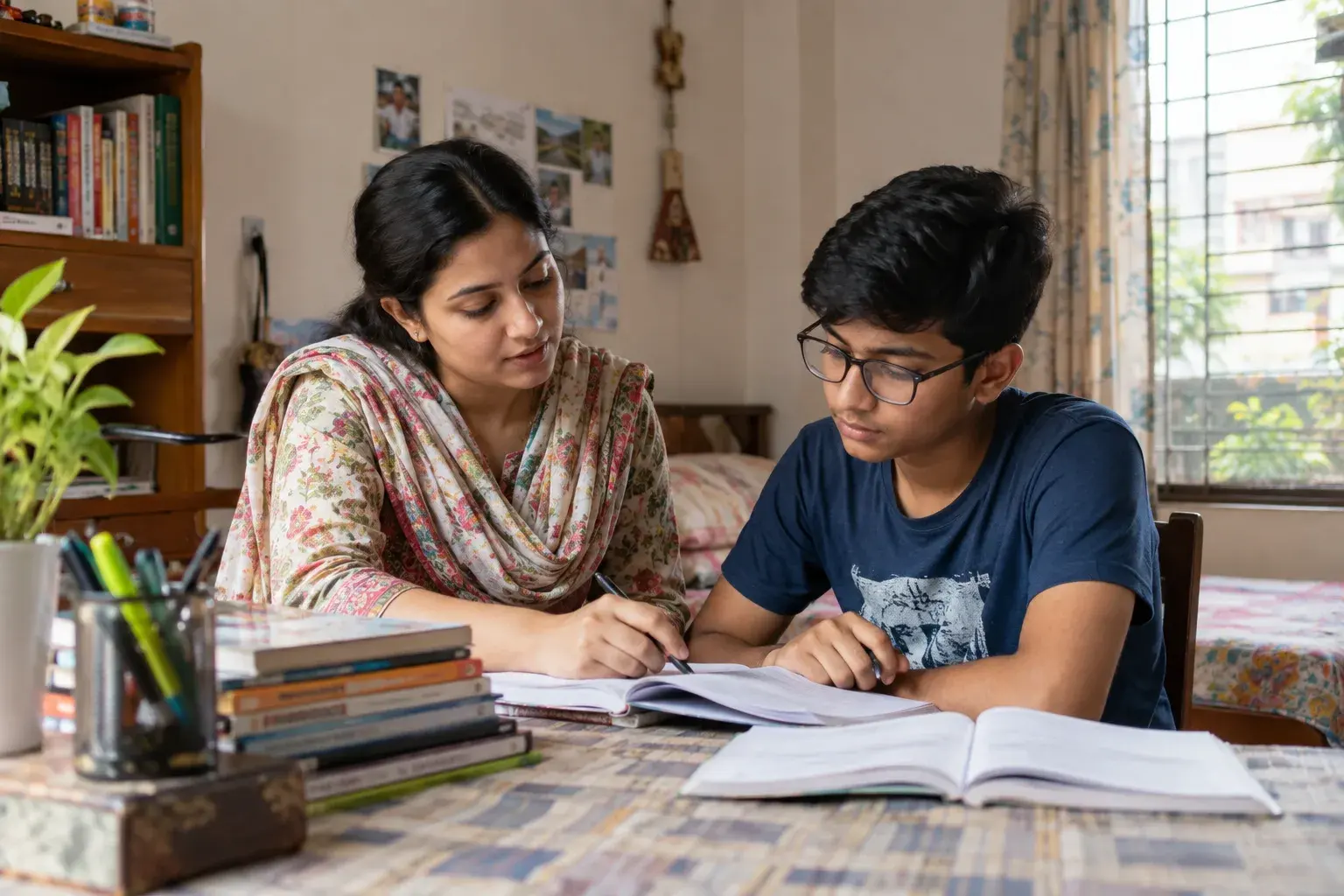 Home & local services
Private tuition and home tutoring
Teaching at the student's home or in your own room for a monthly fee per student, with almost no capital. More than three-quarters of Bangladeshi students use a private tutor or coaching centre.
- Capital
- ৳500 – ৳8k
- People
- 1
- First income
- 7 – 45 days
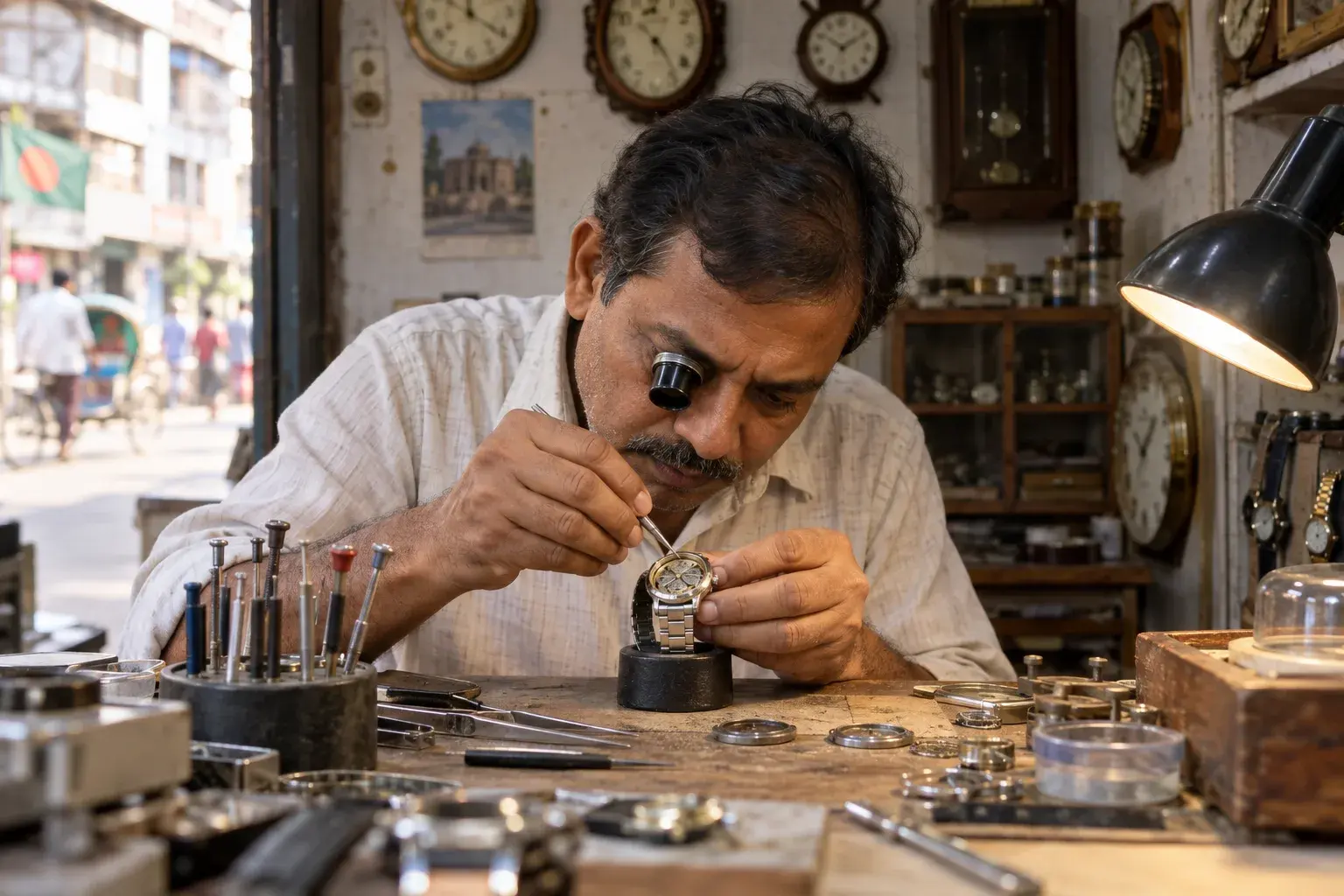 Home & local services
Watch and clock repair
Repairing wristwatches and wall clocks. The national watch market is over Tk 300 crore, but Patuatuli sells watches from Tk 30, so cheap watches are never repaired.
- Capital
- ৳5k – ৳1.5 lakh
- People
- 1 – 2
- First income
- 7 – 30 days