
Bamboo cultivation
Planting bamboo clumps and cutting culms year after year. Nothing can be cut for the first 3-4 years after planting; after that a culm fetches Tk 100-250 in the village and Tk 125-350 wholesale at the market.
- Last reviewed: 21 September 2026
- Version 1

Bamboo cultivation
- Starting capital
- ৳15,000 – ৳3,00,000 Editorial estimate
- Manpower
- 1 – 4 people
- First sale
- 1,095 – 2,920 days Official source
- Break-even
- 54 – 96 months Editorial estimate
- Kind of work
- Farm · Medium difficulty
About the business
Bamboo is grown in clumps, and once a clump takes hold it yields culms year after year. But the first cut has to be waited for. The Agriculture Information Service puts it at 3 to 4 years after planting a seedling or a cutting, 3 to 5 years for rhizome- and cutting-raised plants, and 7 to 8 years if the plant was raised from seed. That wait is the real cost of this business: the land is committed and nothing comes back. In exchange both the capital and the care are small. No chemical fertiliser is used at all; cow dung and earth heaped round the base once or twice a year is the whole regime, and it will grow on poor, high ground. Price follows species and size. On 15 March 2026 the Agriculture Information Service put a village culm at Tk 100 to Tk 250. Market rates are sharper: Tk 125-225 wholesale at the Polaidanga market in Narail (22 August 2023), and Tk 150 to Tk 350 by size at the Gosinga market in Gazipur and the Deodighi market in Tangail. The hills work differently. In Rangamati the Forest Department royalty is Tk 1.40 a culm, a truck holds 2,800 to 3,700 culms and sells for Tk 160,000-170,000, which is Tk 43-61 a culm at the forest gate. About 80 percent of national demand is met by village bamboo, the rest from forest. Buyers come from house building, betel-leaf frames, vegetable trellises, fish traps and decorators. The worst hazard is insects: shoot borers and leaf rollers sometimes destroy up to 50 percent of the culms.
Unit economics
| Item | Range | Evidence | Suggest a correction |
|---|---|---|---|
| Monthly working capital | ৳1,000 – ৳15,000 | Editorial estimate | |
| Selling price | ৳100 – ৳350 / unit | Market quote | |
| Variable cost | ৳20 – ৳45 / unit | Editorial estimate | |
| Gross margin | 55% – 94% | Editorial estimate | |
| Time to first revenue | 1,095 – 2,920 days | Official source | |
| Break-even time | 54 – 96 months | Editorial estimate | |
| Cash cycle | 0 – 240 days | Editorial estimate | |
| Waste / loss | 5% – 50% | Editorial estimate | |
| Daily capacity | 3 – 40 | Editorial estimate |
What you need to start
- A dao and a saw, a spade for the pits, rope for tying, and a way to reach the market: van, boat or truck. By a river the culms are tied into a raft and floated. A truck holds 2,800-3,700 culms and costs Tk 10,000 to load.Equipment
- Planting material: rhizomes, culm bases, node cuttings or bamboo cuttings, not seed, since a seed plant takes 7-8 years to mature. Cow dung for each pit. The price of planting material could not be verified here; many growers cut rhizomes from their own or a neighbour's clump.Starting stock
- Trade licence from the city corporation, municipality or union parishad if you trade in bamboo: form Tk 10, licence book Tk 50, standard tax Tk 30, stamp Tk 150-300, licence fee Tk 100-60,000, issued in 3-5 working days, renewed yearly. Not needed to sell bamboo off your own land.Licence
- Forest produce transit pass from the Forest Department. Under the Forest Produce Transit (Control) Rules 2011 and the Chittagong Hill Tracts Forest Produce Transit Rules 1973, forest bamboo cannot be moved without one. The Forest Department royalty in Rangamati is Tk 1.40 a culm. The fee and validity of the pass could not be verified here and must be checked at the divisional forest office.Licence
- Raising plants from rhizomes, telling which culm is ready to cut, and thinning a clump instead of clearing it. Recognising shoot borer and leaf roller attack: the losses are as large as they are precisely because bamboo groves here are given no pest management.Skill
- A contact among the market traders. Bamboo sells at fixed markets on fixed days, and wholesalers also buy standing. The big buyers are the warehouse owners of Dhaka, Narayanganj, Cumilla and Ishwardi.Supplier
- High, well-drained land where water does not stand. A soil pH of 5 to 6.5 suits it, with 1,200-4,000 mm of annual rain. Bamboo will not grow in saline soil or where salt water runs. Clumps go 4-5 metres apart, about 60 to a bigha.Workspace
How the work is done
- 1Look at the land first: it must be high ground where water does not stand. Bamboo will not grow in saline soil or where salt water runs, so do not try it on the coastal chars.
- 2Do not raise plants from seed. A seed plant takes 7-8 years to mature, while a rhizome cutting or a layered plant is ready to cut in 3-5 years. That one decision is three years.
- 3Decide which bamboo. The village species are borak, mitinga, bariyala, tolla and tengra. BFRI registered three varieties in 2023: BB1 (borak), BN1 (makla) and BS1 (karjoba); BN1 carries the most culms per hectare at 11,600.
- 4Dig pits 4 to 5 metres apart, 50 cm by 50 cm and 25-50 cm deep. Two weeks before planting, fill them with cow dung mixed into the soil.
- 5Flood-irrigate the plot at least once after planting and keep it weeded for the first year. New plants die in the dry season without water.
- 6Burn the fallen leaves in the grove in Falgun (February-March): it acts as manure and kills many of the pests and pathogens. Heap manure and earth round the base in Chaitra (March-April) and again in Bhadra-Ashwin (August-October).
- 7Watch for the shoot borer. In the monsoon it bores into young culms and shoots, and a bored culm never grows tall. These insects do the worst damage, up to 50 percent.
- 8Start cutting after three or four years, taking the old mature culms first and leaving the young ones. Thinning the clump a part at a time each year keeps it alive and gives more culms next year.
- 9Settle where you will sell. Bamboo moves at particular markets on particular days: Polaidanga in Narail on Sunday, Gosinga in Gazipur on Wednesday, Deodighi in Sakhipur on Monday. Wholesalers also buy standing, straight from the clump.
- 10Work out the haulage before you cut. A truck takes 2,800-3,700 culms and loading it costs Tk 10,000. If you are on a river, tying a raft and floating the culms down is by far the cheapest way.
- 11If the bamboo is forest bamboo, take the Forest Department transit pass. Under the Forest Produce Transit (Control) Rules 2011, and the 1973 rules in the Chittagong Hill Tracts, bamboo cannot be moved without one; the royalty in Rangamati is Tk 1.40 a culm.
- 12Consider the shoots as well. Shoots come from May to October, most in July and August, at 3 to 30 tonnes a hectare a year. But a shoot picked is a culm that will never grow, so it is one or the other.
Seasons
- JanHigh
- FebHigh
- MarHigh
- AprNormal
- MayLow
- JunLow
- JulLow
- AugLow
- SepNormal
- OctNormal
- NovHigh
- DecHigh
Where it works well
- Strong fitGazipur · The Gosinga market in Sreepur runs over ten bighas by the Shitalakkhya, turning over Tk 1-1.5 crore a month, with the culms rafted out by river.
- Strong fitKhagrachhari · Forest bamboo country in the hill tracts, with privately owned groves increasing, and the Chattogram mills and traders lifting their bamboo from here.
- Strong fitNarail · About 1,300 hectares carrying at least 65,000 clumps, with a 12-acre market at Polaidanga turning over more than Tk 30 lakh a week and drawing traders from fifteen districts of Khulna and Barishal.
- Strong fitRangamati · A main source of forest bamboo: over 1.35 million culms harvested in 2022-23 by the Forest Department's count, with ten trucks a day from the Kutukchhari depot alone. But the price is low, Tk 43-61 a culm, and a pass and royalty are needed.
- Strong fitTangail · The region's largest bamboo market sits at Deodighi in Sakhipur every Monday, turning over more than Tk 20 lakh a market day and about Tk 1.5 crore a month across the upazila.
- PossibleBandarban · Forest bamboo country, but the haul is long and hard, so the price at the grove is the lowest anywhere.
- PossibleChattogram · Forest bamboo grows in the hill forests and there is a large buyer for pulp, though the industrial price is below what the markets pay.
- PossibleMadaripur · The Bhurghata market in Kalkini has traded bamboo for about fifty years and draws buyers from across the south.
- PossibleMoulvibazar · The Agriculture Information Service names the forests of Moulvibazar and Sylhet as a main source of forest bamboo, and village bamboo also grows on the tea-garden margins and hill slopes.
- PossibleNarayanganj · Traders bring bamboo here from Tangail and Gazipur, and because it comes by river on rafts the carriage is cheap.
- PossibleNarsingdi · Bamboo bought at the Gazipur markets is resold through warehouses here, and local demand for betel frames and trellises is large.
- PossibleSylhet · Dolu, pichhla and makal bamboo in the forests; heavy rain makes it grow well, but the low land floods so the site has to be picked carefully.
Risks and cautions
- MediumDemand: Few buyers, and the market sits only on its day. Bamboo that does not sell on market day has to be carried home, with the truck hire and the loading wages already spent. Because everyone cuts at once, the price sags in the middle of the dry season, and a small grower has no way to wait it out.
- HighWorking capital: Three to four years with the land committed and not a taka coming back. Rhizomes, pits, manure and water are paid for every one of those years and the income line is empty. For anyone turning rice or vegetable land over to bamboo, those three lost crops are the real cost, not the price of the planting material. Raised from seed the wait is 7-8 years.
- HighOther: Insects. Shoot borers and leaf rollers sometimes destroy up to 50 percent of the culms, in the Agriculture Information Service's own words. They bore into young culms and shoots in the monsoon, the culm then stops growing tall and throws side branches from the nodes, and it fetches a poor price. Almost no grove in this country is given pest management.
- MediumCompliance: Forest bamboo moved without a pass is seized. Under the Forest Produce Transit (Control) Rules 2011 and the 1973 hill tracts rules bamboo is forest produce, so a pass and royalty are required to move it. Without the paper at a checkpoint the whole truck is held, and a truck of 3,000 culms is Tk 160,000 of stock.
- MediumSpoilage: Cut bamboo spoils too. The Agriculture Information Service notes that bamboo goes on being attacked by fungal disease after it is cut. Stacked in sun and rain it splits and gets borer, and then it will not do for a house post or a betel frame, and the price halves.
Sources
- Collected: 21 Sept 2026
Supports: requirements · বাংলাদেশ
বাঁশ চাষপ্রযুক্তি ও সম্ভাবনা — কৃষি কথা, চৈত্র ১৪৩২ (প্রকাশ ১৫-০৩-২০২৬)
Collected: 21 Sept 2026Supports: Starting capital, Break-even time, Gross margin, Selling price, Time to first revenue, Waste / loss · বাংলাদেশ
সিটি কর্পোরেশন থেকে ট্রেড লাইসেন্স প্রাপ্তির ধাপ সমূহ
Collected: 16 Sept 2026Supports: requirements · বাংলাদেশ
রাঙামাটিতে শত কোটি টাকার বাঁশের ব্যবসা, বাড়ছে ব্যক্তি মালিকানার বাঁশ বাগান
Collected: 22 Nov 2023Supports: districts, Variable cost · রাঙামাটি — কুতুকছড়ি বাঁশের মোকাম
Forest Research registers 3 new bamboo varieties — বিএফআরআই নিবন্ধিত BB1, BN1 ও BS1
Collected: 28 Aug 2023Supports: Daily capacity · বাংলাদেশ
মাসে সোয়া কোটি টাকার বাঁশ বিক্রি হয় যে হাটে — নড়াইলের পলইডাঙ্গা বাঁশের হাট
Collected: 22 Aug 2023Supports: Selling price · নড়াইল — পলইডাঙ্গা, ভদ্রবিলা ইউনিয়ন, চিত্রা নদীর পাড়
বাঁশের বাজার এখন বেকারদের কর্মসংস্থান — শ্রীপুরের গোসিংগা বাঁশের হাট
Collected: 16 Jun 2021Supports: Selling price · গাজীপুর — শ্রীপুর, গোসিংগা, শীতলক্ষ্যার পাড়
What changed
No corrections have been published yet.
Questions and answers
No questions yet. Be the first to ask.
Similar businesses
 Agriculture & farming
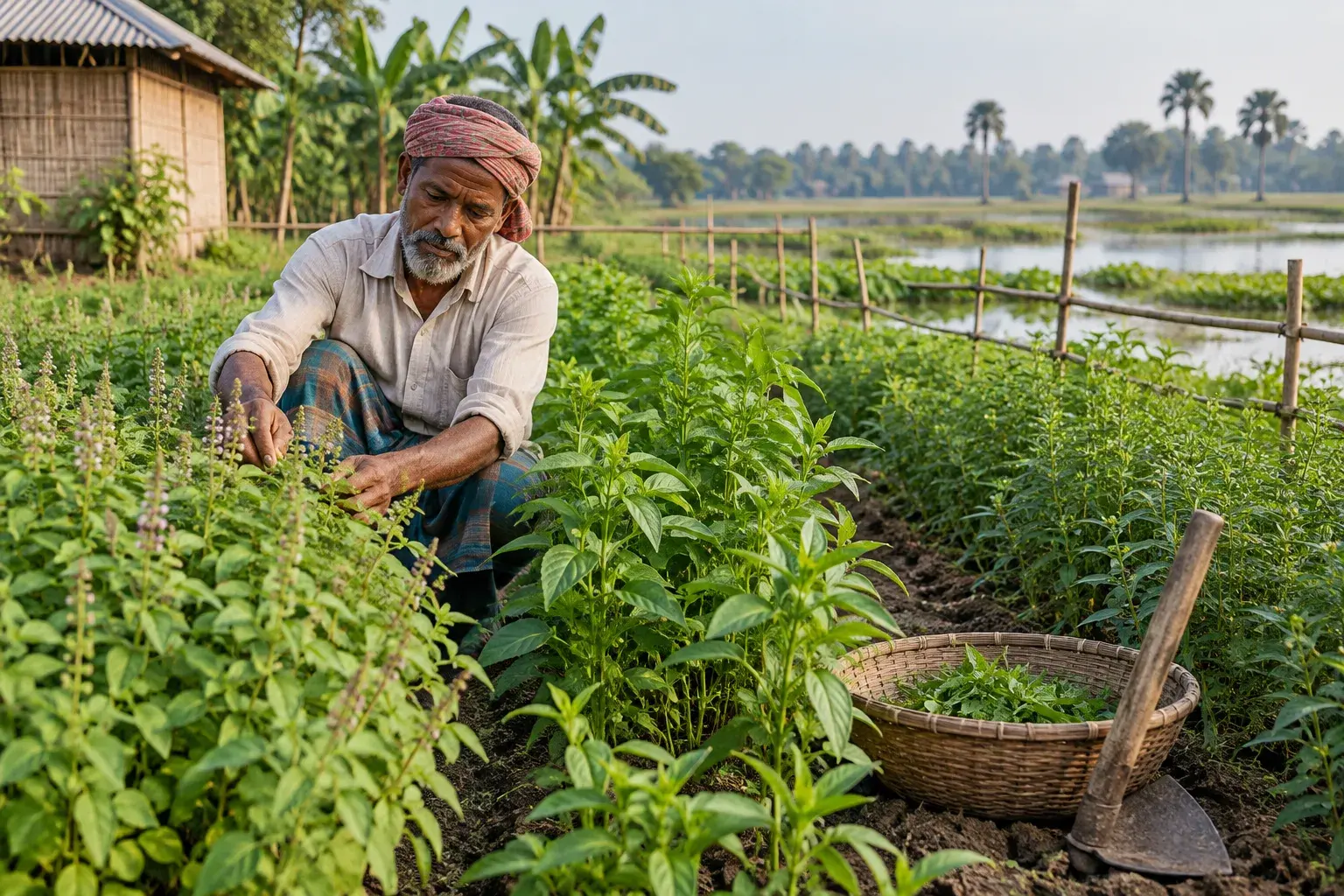
Medicinal plant farming
Growing basok, kalomegh, tulsi and arjun. The buyers are medicine companies, so the price is set by contract or tender: a bigha of kalomegh costs Tk 15,000, yields 20-22 maunds and sells at Tk 2,400 a maund.
- Capital
- ৳15k – ৳1 lakh
- People
- 1 – 5
- First income
- 90 – 365 days
 Agriculture & farming
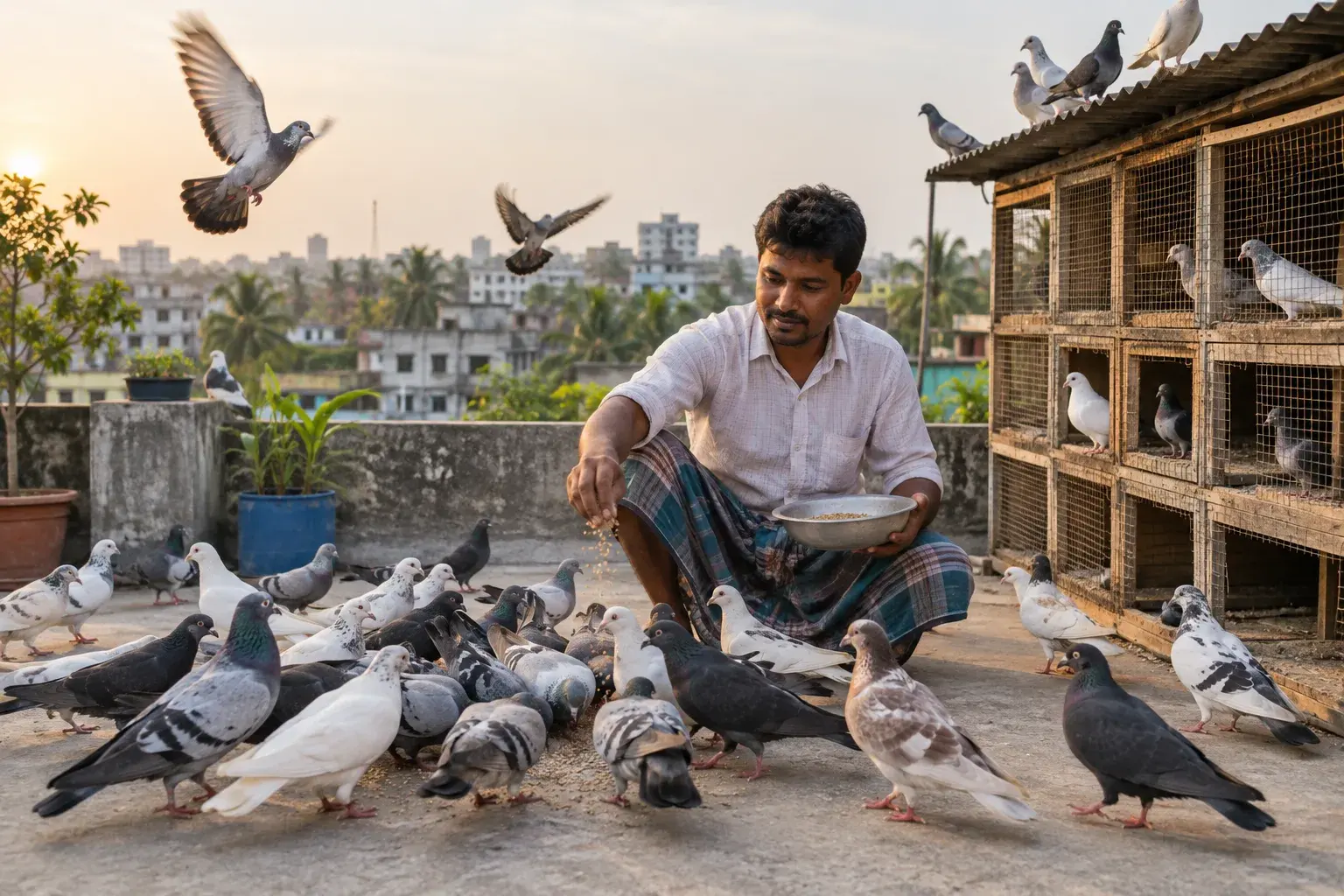
Pigeon and bird rearing
Rearing pigeons on a roof or in a yard with no land at all. A pair sells for Tk 500-5,000 at Bhojeshwar hat, and one Jashore farmer's 400 birds cost Tk 20,000 a month to keep against Tk 30,000-35,000 of sales.
- Capital
- ৳15k – ৳1.5 lakh
- People
- 1 – 2
- First income
- 45 – 75 days
 Agriculture & farming
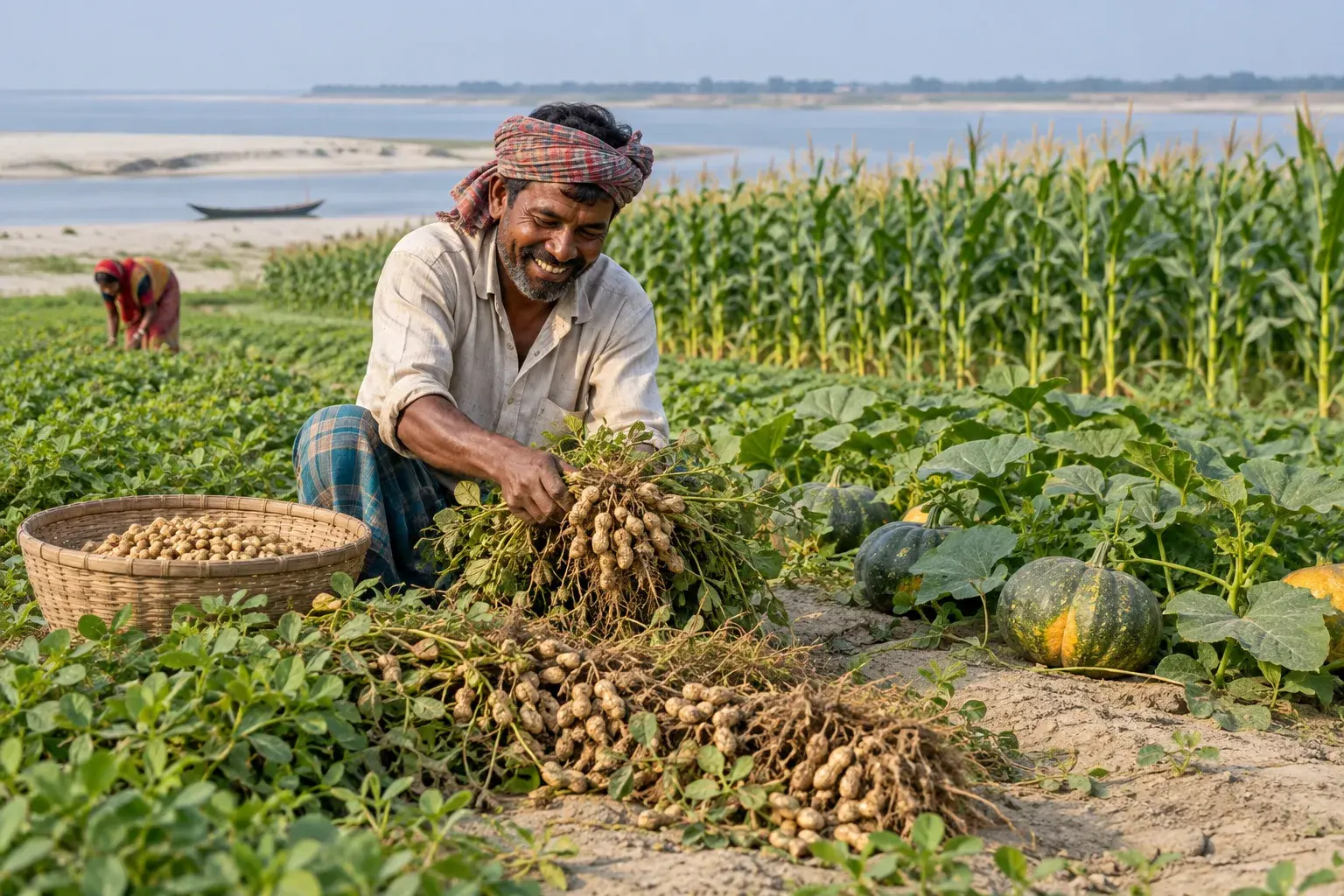
Char land farming and groundnut
Growing groundnut, maize and pumpkin on river chars. The land is close to free: Tk 16,000 on 25 decimals returned Tk 26,400, and an acre costs Tk 65,000 to return about Tk 137,000.
- Capital
- ৳16k – ৳65k
- People
- 1 – 5
- First income
- 100 – 120 days
 Agriculture & farming
Cotton farming
Sold at the price the Cotton Development Board sets, Tk 3,900 a maund of seed cotton in 2025-26. At the national average yield of about 7.6 maunds a bigha that is roughly Tk 30,000 a bigha for six to seven months of land.
- Capital
- ৳16k – ৳1 lakh
- People
- 1 – 6
- First income
- 150 – 240 days