
Char land farming and groundnut
Growing groundnut, maize and pumpkin on river chars. The land is close to free: Tk 16,000 on 25 decimals returned Tk 26,400, and an acre costs Tk 65,000 to return about Tk 137,000.
- Last reviewed: 19 September 2026
- Version 1
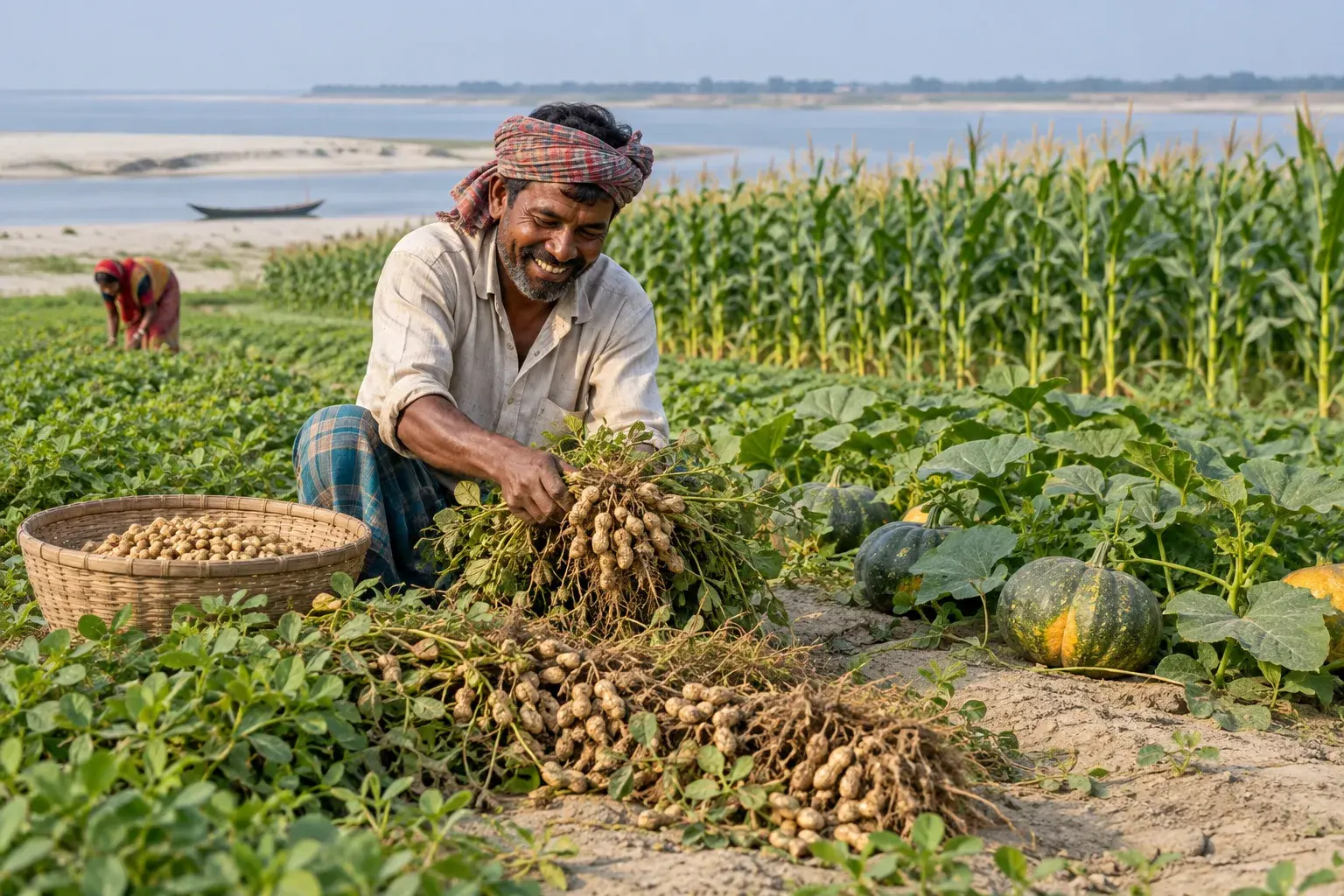
Char land farming and groundnut
- Starting capital
- ৳16,000 – ৳65,000 Market quote
- Manpower
- 1 – 5 people
- First sale
- 100 – 120 days Market quote
- Break-even
- 4 – 5 months Editorial estimate
- Kind of work
- Farm · Medium difficulty
About the business
Char land costs next to nothing, and that is the whole of this business. Sandy, uncultivated ground where nothing used to grow now carries groundnut, maize and pumpkin, and the silt the monsoon brings down from upstream keeps the soil fertile so less fertiliser is needed. The arithmetic is plain. On the Matamuhuri char at Chakaria in Cox's Bazar, a grower named Ali Ahmad puts the cost of groundnut at about Tk 65,000 an acre against about Tk 137,000 of sales, leaving roughly Tk 72,500 an acre. On the same char a younger farmer, Khorshed Alam, spent Tk 16,000 on 25 decimals and took Tk 26,400. Twenty-five decimals and sixteen thousand taka is enough to start. Groundnut sells at the field for about Tk 55 a kilo, and wholesalers will also buy by the acre at Tk 125,000 to Tk 145,000; seed groundnut is separate at Tk 250-300 a kilo. Sowing runs from Ashwin to Agrahayan and harvest from late Falgun to mid-Baishakh - roughly a hundred days to a crop. But never forget the land belongs to the river. The flood of August 2024 put the Gomti char under water and washed every crop away, and the potato and pumpkin growers on that char were not even on the government's compensation list. In the year the river leaves silt, you profit; in the year it takes the land, nothing is left.
Unit economics
| Item | Range | Evidence | Suggest a correction |
|---|---|---|---|
| Monthly working capital | ৳4,000 – ৳16,500 | Editorial estimate | |
| Selling price | ৳1,05,000 – ৳1,45,000 / unit | Market quote | |
| Variable cost | ৳64,000 – ৳65,000 / unit | Market quote | |
| Gross margin | 38% – 53% | Market quote | |
| Time to first revenue | 100 – 120 days | Market quote | |
| Break-even time | 4 – 5 months | Editorial estimate | |
| Cash cycle | 0 – 7 days | Market quote | |
| Waste / loss | 5% – 20% | Editorial estimate | |
| Daily capacity | 0 | Editorial estimate |
What you need to start
- Weeding and hand tools, sacks, and a way of getting the load to the embankment or road. A char needs little equipment - on the Gomti char even trellises are not used for pumpkin, and the growers carry the load to the road on their shoulders.Equipment
- Seed groundnut at Tk 250-300 a kilo, far dearer than the eating grade, plus hybrid pumpkin seedlings. On the Gomti char the common varieties are Mohona, Piriti Super, Anik-1 and Wonder Ball.Starting stock
- Trade licence from the union parishad or municipality: form Tk 10, licence book Tk 50, standard tax Tk 30, non-judicial stamp Tk 150-300, licence fee Tk 100-60,000 by trade type. Not needed to sell your own crop; needed once you buy other people's standing crops to resell.Licence
- Knowing which crop will take in char sand, and the timing to clear the field before the monsoon. Groundnut's calendar is fixed: sown Ashwin to Agrahayan, lifted from late Falgun to mid-Baishakh.Skill
- A seed source and the upazila agriculture office's advice; on the selling side the wholesalers who come onto the char and big vegetable arats such as Nimsar in Cumilla.Supplier
- Char land - the great advantage, because it costs little or nothing to hold. But possession and record must be settled first. Where it is khas land the Khas Land Settlement Policy 1997 (amended 2011) provides for settlement on the landless, though in practice its application depends on the local administration.Workspace
How the work is done
- 1Walk the char and settle whose land it is before anything else. Whose name is on the record, who is in possession, whether it is khas land - do not spend a taka until you know.
- 2Go to the upazila agriculture office. The department trains and advises on char crops; in Chakaria it is training that moved tobacco growers onto groundnut.
- 3Start small. Twenty-five decimals and sixteen thousand taka runs one season, and that season tells you what that char's soil will give you.
- 4Sow the groundnut between Ashwin and Agrahayan. Seed groundnut is a separate item and dearer - Tk 250-300 a kilo, four or five times the eating grade.
- 5Think of two crops on one plot. On the Gomti char potato and pumpkin go in together at the start of November; once the potato is lifted at the end of December the plot is pumpkin alone.
- 6Do not build trellises. Char growers use none - the pumpkin grows on the ground along the vine, and that saves a great deal of cost.
- 7Lift the groundnut from late Falgun to mid-Baishakh, then sort and sack it. The crop is in hand in about a hundred days.
- 8Work out both before you decide whether to sell by the acre or by the kilo. Wholesalers buy either way - about Tk 55 a kilo at the field, or Tk 125,000-145,000 for the acre.
- 9Time your sale knowing the price sags at the peak. One wholesaler watched the per-acre price fall from Tk 145,000 to Tk 125,000 in twenty to twenty-five days.
- 10Clear the field before the monsoon. The char is under water from June to September, and any crop standing then is washed away.
- 11Take a trade licence from the union parishad once you move past your own crop into buying others'. On the Gomti char one farmer bought a standing 36-decimal potato and pumpkin crop for Tk 100,000 - that is trading, not farming.
Seasons
- JanNormal
- FebHigh
- MarHigh
- AprHigh
- MayHigh
- JunLow
- JulLow
- AugLow
- SepLow
- OctNormal
- NovNormal
- DecNormal
Where it works well
- Strong fitBogura · The agriculture department records more than a thousand hectares of groundnut on the chars of Sonatola, Dhunat and Sariakandi upazilas.
- Strong fitCox's Bazar · At least 350 acres of groundnut on the Matamuhuri char at Chakaria, up from 30 acres, as growers move off tobacco.
- Strong fitCumilla · Potato and pumpkin grow on the Bhanti, Balikhara, Kahetra and East Hura chars of the Gomti, and the produce goes to Nimsar, one of the country's biggest wholesale vegetable markets.
- Strong fitGaibandha · Wide chars on the Brahmaputra and the Teesta, where groundnut and maize are the main cash crops on the sandy waste ground.
- Strong fitJamalpur · Jamuna chars; winter crops are grown on the Dewanganj and Islampur chars and consigned to the Dhaka arats.
- Strong fitKurigram · The country's greatest concentration of chars; around Ulipur and elsewhere the land can be had for almost nothing.
- Strong fitRangpur · Groundnut is one of the main cash crops on the Teesta chars, with the lifting season in full swing on the Gangachara and Kaunia chars.
- PossibleKushtia · Groundnut is grown on the Padma chars, notably in the Daulatpur area.
- PossibleLalmonirhat · Extensive Teesta chars, but a small market and higher costs to move the crop.
- PossibleShariatpur · Winter crops on the Padma chars with the Dhaka market close by.
- PossibleSirajganj · Large Jamuna chars, with the Dhaka-north highway close enough to make consignment easy.
Risks and cautions
- HighOther: The river gives the land and the river takes it back, and no compensation follows. The flood of August 2024 submerged the Gomti char and swept away every crop on it. The deputy director of the agriculture extension office in Cumilla, Aiyub Mahmud, says plainly that the char's potato and pumpkin growers were not on the list of flood-affected farmers who received help, so none could be given. The char farmer falls outside the compensation count.
- HighCompliance: Disputed possession is the char's worst danger. After erosion takes land and a char re-emerges, local strongmen claim it as government khas land and shut the original owners out. The old shikasti-payasti system is itself now the source of the dispute, with the former owner and the new cultivator both claiming. Research by the Bangladesh Environmental Lawyers Association puts illegal occupation of khas land at about 50,000 acres a year. The land you sow can have a different claimant by the time the crop is ready.
- MediumDemand: At the peak everyone sells at once and the price sags. The groundnut wholesaler Mohammad Rafik: where an acre fetched Tk 145,000 twenty to twenty-five days earlier, it had come down to Tk 125,000, about 14 percent. He adds that groundnut rarely runs to an actual loss even so, because the costs are low.
- MediumOther: Tobacco on the neighbouring plots is eating the yield. Growers on the Matamuhuri char say the chemical fertiliser used on tobacco fields is cutting yields around them - a plant that once carried up to 250 grams of groundnut now carries about 100. Kaniz Fatema, who lives on the same char, says tobacco growing brought breathing trouble and skin disease into her family.
- MediumWorking capital: One crop a year, and the money comes back about a hundred days later. Seed has to be bought in Ashwin at Tk 250-300 a kilo and the return arrives in Falgun or Chaitra. Through those four months the household and the weeding are funded out of pocket, and those without the cash sell the standing crop early and get less for it.
Sources
সিটি কর্পোরেশন থেকে ট্রেড লাইসেন্স প্রাপ্তির ধাপ সমূহ
Collected: 16 Sept 2026Supports: Starting capital · বাংলাদেশ
What changed
No corrections have been published yet.
Questions and answers
No questions yet. Be the first to ask.
Stories about this business
On the Matamuhuri char: 65,000 taka an acre to grow, 72,000 of profit expected
Peanut on 6.5 acres of char in Chakaria: about 65,000 taka of cost an acre against expected sales of about 1,37,000, which would leave roughly 72,500 taka an acre and about 4,64,000 for the season.
- Reasons
- Good location, Other
Similar businesses
 Agriculture & farming
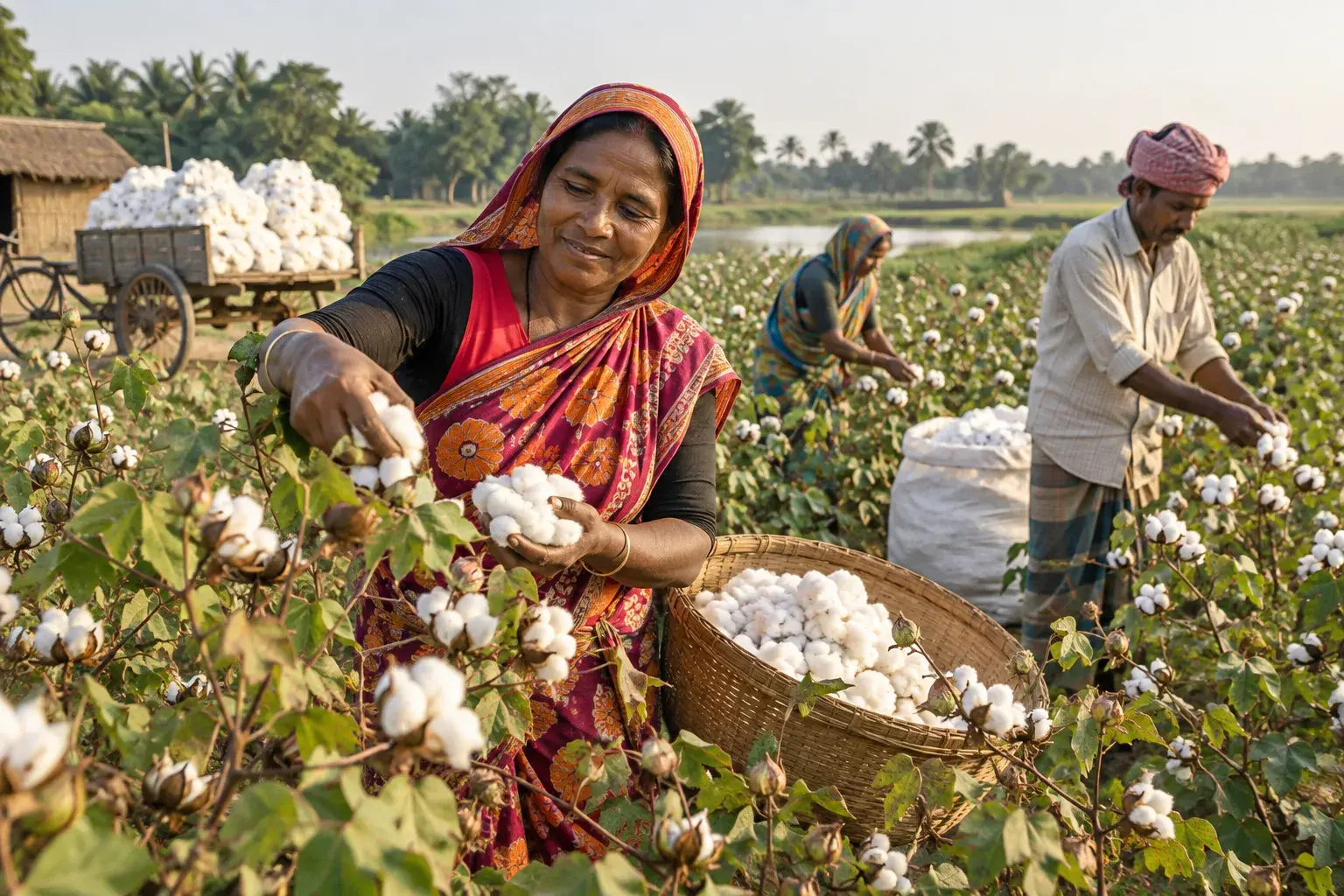
Cotton farming
Sold at the price the Cotton Development Board sets, Tk 3,900 a maund of seed cotton in 2025-26. At the national average yield of about 7.6 maunds a bigha that is roughly Tk 30,000 a bigha for six to seven months of land.
- Capital
- ৳16k – ৳1 lakh
- People
- 1 – 6
- First income
- 150 – 240 days
 Agriculture & farming
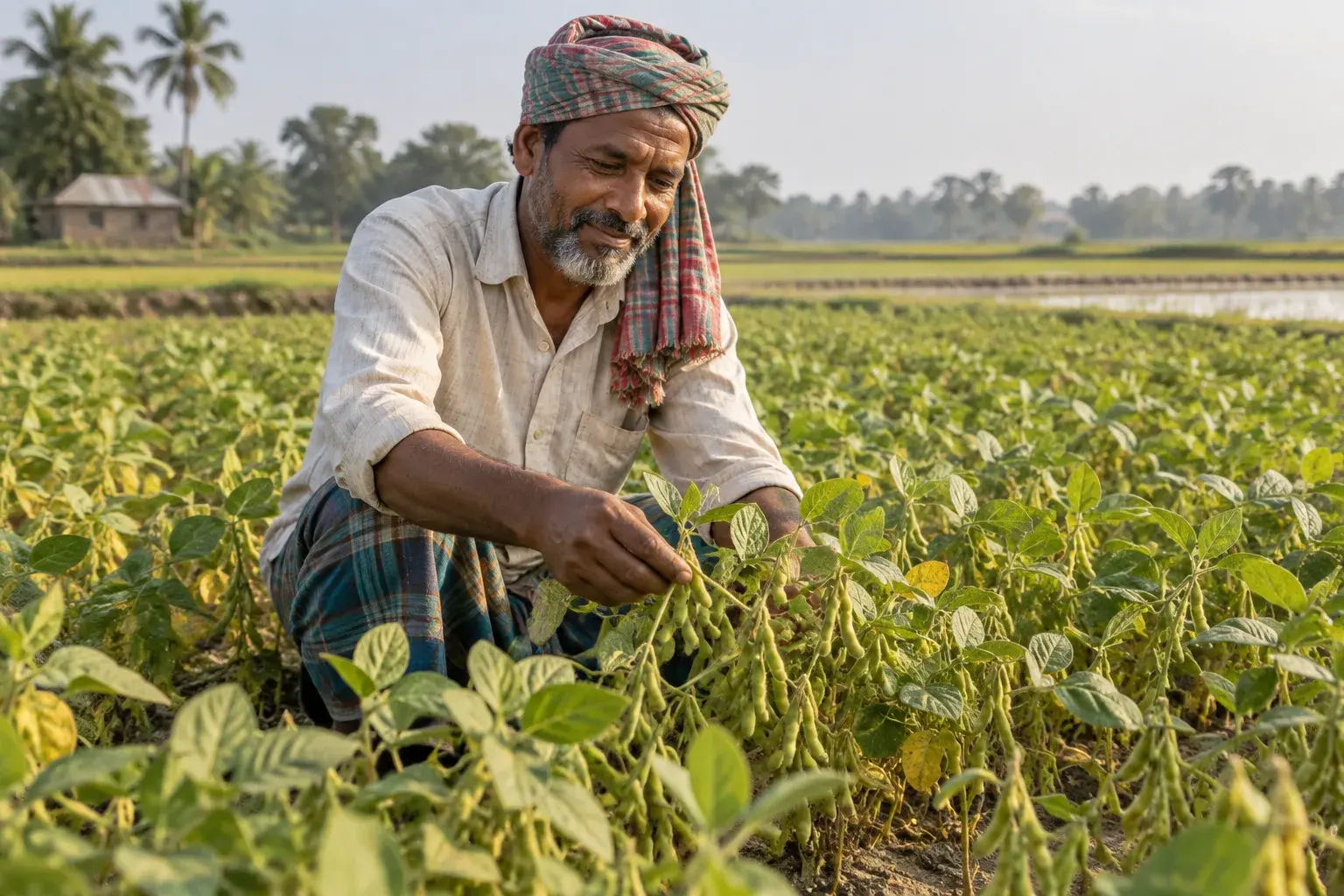
Soybean farming
Sowing soybean in December-January on land left free after aman and harvesting in May. Lakshmipur grows 70-80 percent of the national crop, and oil and feed mills are the guaranteed buyer.
- Capital
- ৳17k – ৳1 lakh
- People
- 1 – 5
- First income
- 130 – 150 days
 Agriculture & farming
Bamboo cultivation
Planting bamboo clumps and cutting culms year after year. Nothing can be cut for the first 3-4 years after planting; after that a culm fetches Tk 100-250 in the village and Tk 125-350 wholesale at the market.
- Capital
- ৳15k – ৳3 lakh
- People
- 1 – 4
- First income
- 1,095 – 2,920 days
 Agriculture & farming
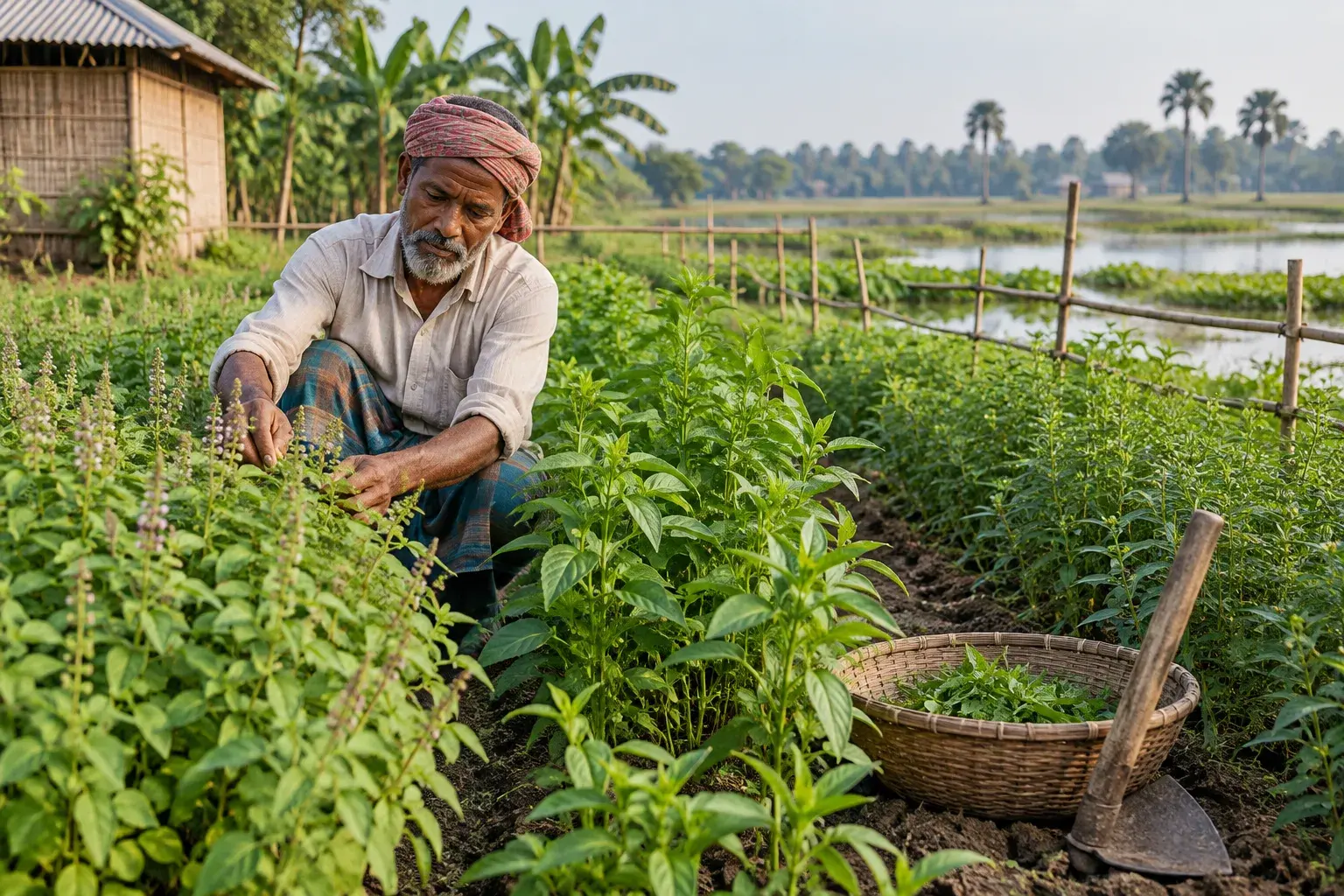
Medicinal plant farming
Growing basok, kalomegh, tulsi and arjun. The buyers are medicine companies, so the price is set by contract or tender: a bigha of kalomegh costs Tk 15,000, yields 20-22 maunds and sells at Tk 2,400 a maund.
- Capital
- ৳15k – ৳1 lakh
- People
- 1 – 5
- First income
- 90 – 365 days