
Flower farming and florist
Growing rose, gerbera, gladiolus and marigold for the Godkhali or Gabtoli wholesale mokam. One bigha of roses costs about Tk 150,000, and the whole year's income turns on the price on a few festival days.
- Last reviewed: 19 September 2026
- Version 1
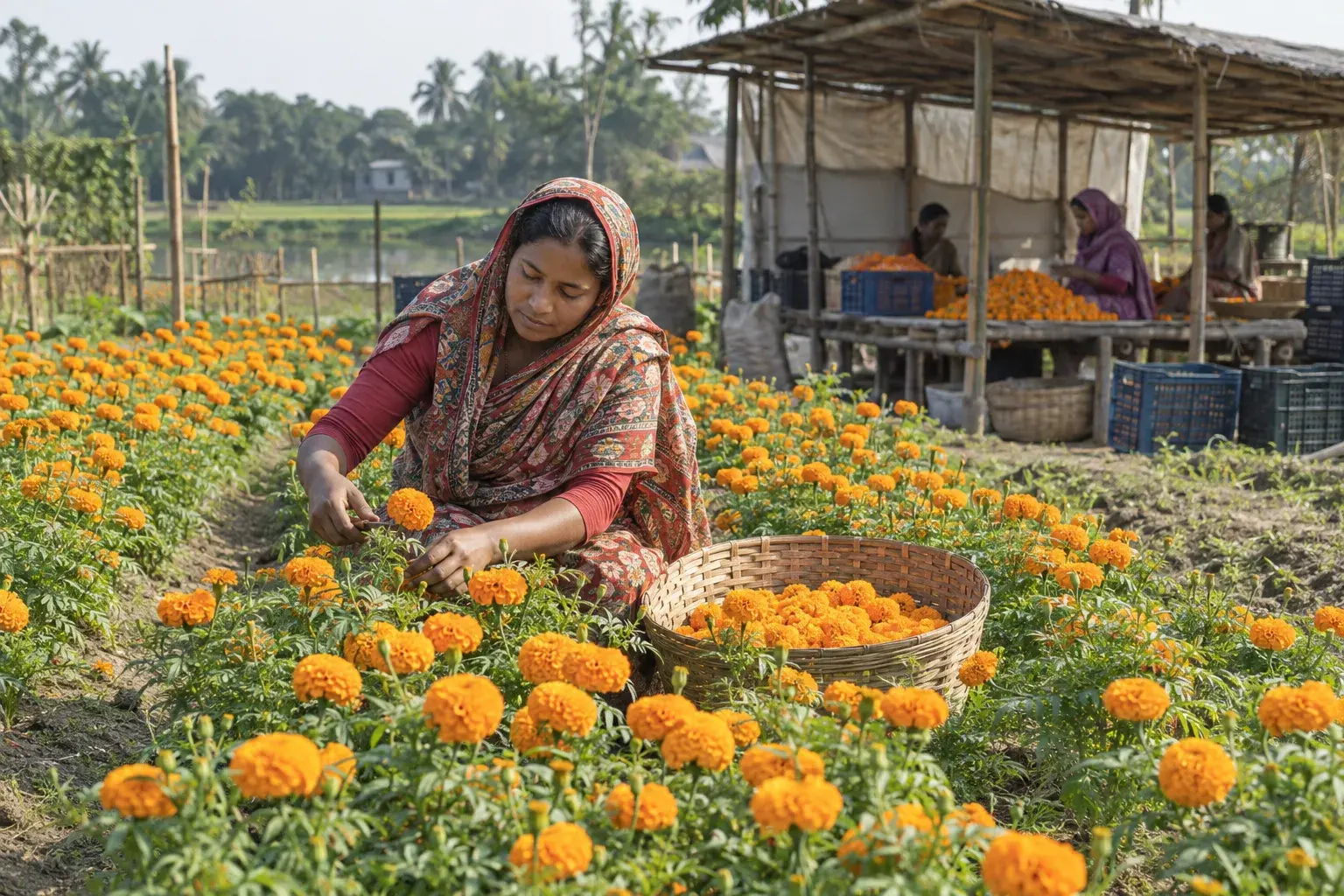
Flower farming and florist — an illustrative AI-generated picture, not a real business
- Starting capital
- ৳1,20,000 – ৳3,50,000 Market quote
- Manpower
- 1 – 5 people
- First sale
- 60 – 90 days Market quote
- Break-even
- 6 – 24 months Editorial estimate
- Kind of work
- Farm · Medium difficulty
About the business
Growing roses, gerbera, gladiolus, tuberose and marigold in the field and selling them at a wholesale mokam, with the option of running a florist shop in town. The national centre of the trade is Godkhali in Jhikargachha, Jashore: 637 hectares of Jashore district are under flowers with about three thousand growers, and more than two thousand of them lay out their flowers at the Godkhali mokam at dawn. On 26 January 2026 the country's largest wholesale flower market opened at Gabtoli Beribandh in Dhaka under a Department of Agricultural Marketing project, with space for over 350 stalls, five cooling stores of 20 tonnes each, packaging machinery and seven vehicles; cooling storage keeps flowers fresh for seven to ten days. On 6 February 2026 wholesale rates there were Lincoln rose Tk 7 a stem, China rose Tk 5-20, gerbera Tk 5-7, gladiolus Tk 5-20, tuberose Tk 7 a stick and marigold Tk 300 a bunch. The defining fact of this business is that a whole year's work is priced on a handful of days - Valentine's Day, Pahela Falgun, 21 February, Pahela Boishakh, Puja and the wedding season. Miss those and the year is lost. That is exactly what happened in February 2025, when sudden warm weather brought every bud out at once and Shab-e-Barat fell on the same dates; prices halved against the previous year and growers did not recover their costs. One bigha of roses cost Tk 150,000 to grow that season.
Unit economics
| Item | Range | Evidence | Suggest a correction |
|---|---|---|---|
| Monthly working capital | ৳12,000 – ৳40,000 | Editorial estimate | |
| Selling price | ৳5 – ৳20 / unit | Market quote | |
| Variable cost | ৳2 – ৳4 / unit | Editorial estimate | |
| Gross margin | 20% – 90% | Editorial estimate | |
| Time to first revenue | 60 – 90 days | Market quote | |
| Break-even time | 6 – 24 months | Editorial estimate | |
| Cash cycle | 0 – 2 days | Editorial estimate | |
| Waste / loss | 5% – 25% | Editorial estimate | |
| Daily capacity | 500 – 600 | Market quote |
What you need to start
- Polynet or greenhouse, irrigation, cutting shears, a van or boxes for transport, and twine for tying bunches.Equipment
- Planting material. Three thousand gerbera tissue-culture saplings cost Tk 150,000 and the crop Tk 200,000 in all. One bigha of roses cost Tk 150,000, and 38 decimals Tk 120,000.Starting stock
- Trade licence from the union parishad, municipality or city corporation: form Tk 10, licence book Tk 50, standard tax Tk 30, stamp Tk 150-300, fee Tk 100-60,000 by trade type. Many who only grow and sell at the mokam do not take one, but a shop or a market stall requires it.Licence
- Timing the planting against the festival calendar, and cutting before full bloom so the flower reaches the mokam right.Skill
- Fertiliser and pesticide - agriculture officers prescribe a cocodus, potash, TSP and zinc mix against red mite. A tissue-culture lab or importer for saplings.Supplier
- At least one bigha (33 decimals) of sandy-loam land with drainage. A polynet house is compulsory for gerbera.Workspace
- To sell in Dhaka, a 70-80 square foot stall at the permanent Gabtoli wholesale market at Tk 25 per square foot.Workspace
How the work is done
- 1Decide the flower first. Marigold and tuberose grow in the open field at low cost; gerbera cannot take water and needs a polynet house.
- 2Go to the upazila agriculture office about soil and the government support for a polynet house. The Sirajganj grower built two bighas of polynet house with Department of Agricultural Extension help.
- 3Source saplings or corms. Gerbera tissue-culture saplings are imported - 3,000 of them cost Tk 150,000. Rose and gladiolus planting material is available in the Godkhali belt itself.
- 4Make beds and plant. For gerbera, beds sit 24 inches apart and plants 13 inches apart, in sandy-loam soil.
- 5Time planting against the calendar of days. Valentine's Day, Pahela Falgun, 21 February, 26 March, Pahela Boishakh, Puja and 16 December carry the highest prices.
- 6Manage pests. Red mite is gerbera's worst enemy; the house needs enough sun and air movement.
- 7Cut at dawn and take the flowers to the mokam. At Godkhali more than two thousand growers arrive by van and bicycle at dawn and wholesalers from across the country buy there.
- 8To sell in Dhaka, ask about a stall at the permanent wholesale market at Gabtoli Beribandh. Of 350-odd stalls 150 are allotted, at Tk 25 per square foot.
- 9Put unsold flowers into cooling storage, which holds them fresh for seven to ten days. Gabtoli has five cooling stores of 20 tonnes each.
- 10Use faded flowers instead of throwing them out. At Panisara village faded petals are made into natural dye used on saris, three-pieces and panjabis.
- 11Deal directly with wedding and event decorators, where prices beat the mokam rate, but settle the credit terms in writing first.
Seasons
- JanHigh
- FebHigh
- MarHigh
- AprHigh
- MayNormal
- JunLow
- JulLow
- AugLow
- SepNormal
- OctHigh
- NovNormal
- DecHigh
Where it works well
- Strong fitDhaka · Alongside the old Shahbagh and Agargaon markets, the permanent wholesale flower market at Gabtoli Beribandh opened on 26 January 2026 with cooling storage, packaging machinery and transport vehicles.
- Strong fitJashore · Godkhali in Jhikargachha is the national centre. The district has 637 hectares under flowers, about 3,000 growers, and more than 2,000 selling at the mokam. Panisara and Potuapara villages are known for roses.
- PossibleChattogram · A large city with heavy wedding and event demand, though flowers come mainly from Jashore and local growing is limited.
- PossibleChuadanga · In the same agricultural zone as the Jashore-Jhenaidah belt, suited to low-cost flowers such as marigold and tuberose.
- PossibleGazipur · Adjoins Dhaka, so flowers reach the Gabtoli wholesale market the same day while land costs less than in the capital.
- PossibleJhenaidah · Adjoins the Godkhali belt with the same soil and the same mokam within reach, with flowers moving through Kaliganj to the Jashore market.
- PossibleMagura · North of the Jashore-Jhenaidah flower belt and on the Jashore-Dhaka highway. The Godkhali mokam is within a day, so open-field marigold and tuberose can be sent from here.
- PossibleMymensingh · Muktagachha has started growing costly imported flowers such as lilium, and the Dhaka market is close by road.
- PossibleNarail · Next to the Jashore flower belt, and Narail people are long established in the Dhaka flower trade - the founding cashier of the Gabtoli market society is from Narail and has been in flowers since 1992, so the route to Dhaka is known.
- PossibleSirajganj · The first commercial gerbera crop succeeded at Ullapara with Department of Agricultural Extension support for the polynet house, and the sandy-loam soil suits gerbera.
Risks and cautions
- HighDemand: A whole year's income hangs on a handful of days, and a missed day cannot be recovered. In February 2025 sudden warm weather brought every bud out at once and Shab-e-Barat fell alongside Valentine's Day, so retailers would not take the risk. Prices fell to under half the previous year. One grower who had spent Tk 120,000 on 38 decimals had sold only Tk 25,000 of roses by then. Godkhali, which had targeted a hundred crore taka, sold Tk 18 crore of flowers over ten days.
- HighSpoilage: Cut flowers last days. Without cooling storage an unsold day means half price the next day and then the bin. The Gabtoli cooling stores are new and only in Dhaka; district mokams have none, so a Godkhali grower who brings flowers at dawn must sell that morning at whatever price is offered.
- HighWorking capital: Money goes in long before it comes out. Three thousand gerbera saplings alone take Tk 150,000 and flowering starts only after two months, with the whole plot in flower at three. One bigha of roses absorbs Tk 150,000. Run out of cash before the peak season and fertiliser and irrigation stop, which is exactly when yield falls.
- MediumDependency: Gerbera tissue-culture saplings are not readily available locally and come from India. Plants are replaced after three years at the same cost again. Saplings arriving late or poor quality wastes the whole year. The Department of Agricultural Extension deputy director says outright that growers avoid gerbera because the costs are so high.
- MediumLate payment: The mokam pays cash, but wedding decorators and event buyers pay after the event and often later still. In a busy wedding season the outstanding balances pile up together and leave nothing to buy the next consignment.
Sources
সিটি কর্পোরেশন থেকে ট্রেড লাইসেন্স প্রাপ্তির ধাপ সমূহ
Collected: 16 Sept 2026Supports: Starting capital · বাংলাদেশ
What changed
No corrections have been published yet.
Questions and answers
No questions yet. Be the first to ask.
Stories about this business
Three trading days in all of February, and 7,000 flowers left unsold
Gerbera under shade on two bighas at Panisara, Jashore. The election and referendum kept the Godkhali market shut for most of February, leaving only 7-9 February to trade; 7,000 unsold flowers alone cost about a lakh taka.
- Reasons
- Spoilage, Other
Similar businesses
 Agriculture & farming
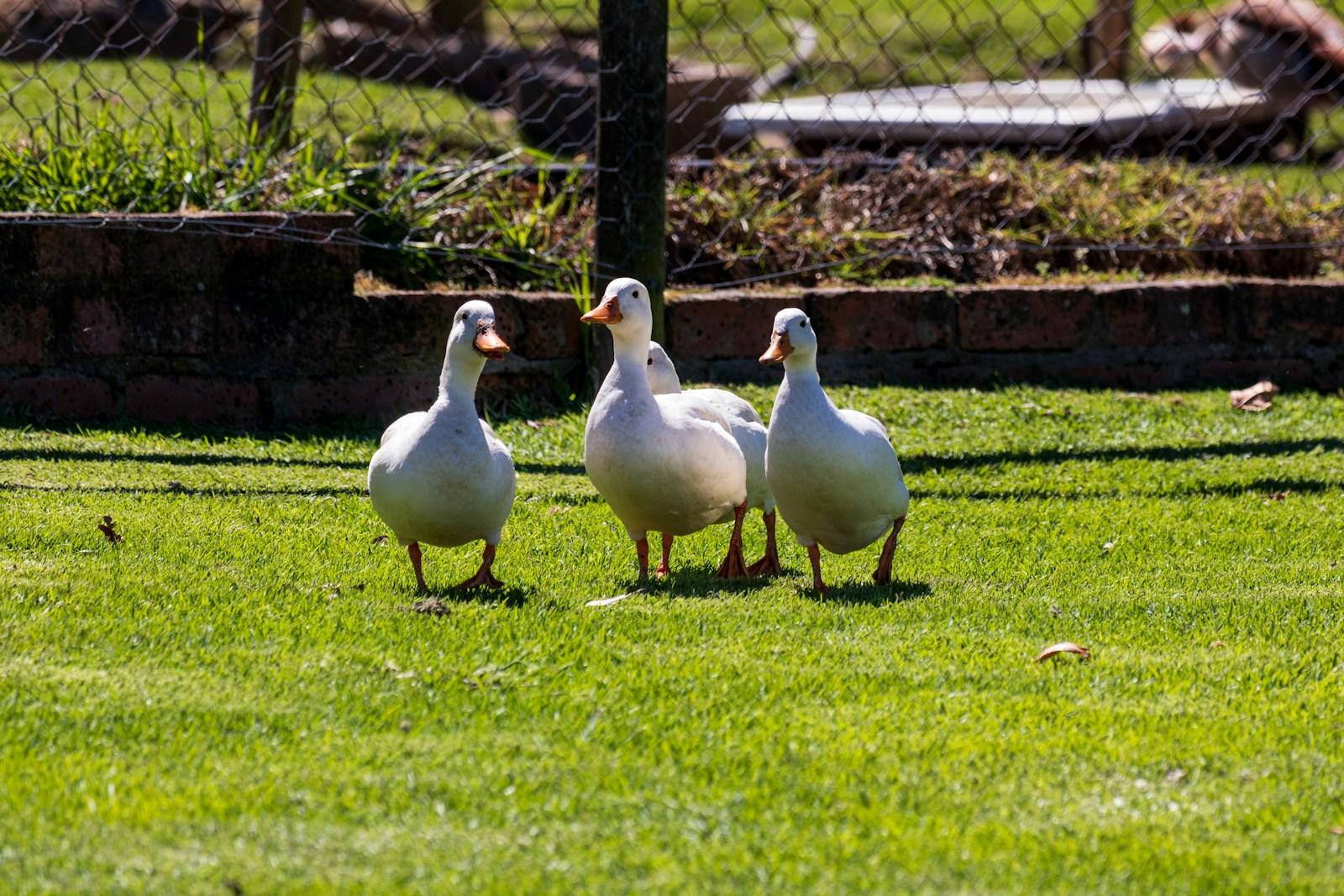
Duck farming (Khaki Campbell)
Start with 300 ducks for eggs. Feed costs far less near haors and wetlands.
- Capital
- ৳1.2 lakh – ৳2 lakh
- People
- 1 – 2
- First income
- 150 – 180 days
 Agriculture & farming
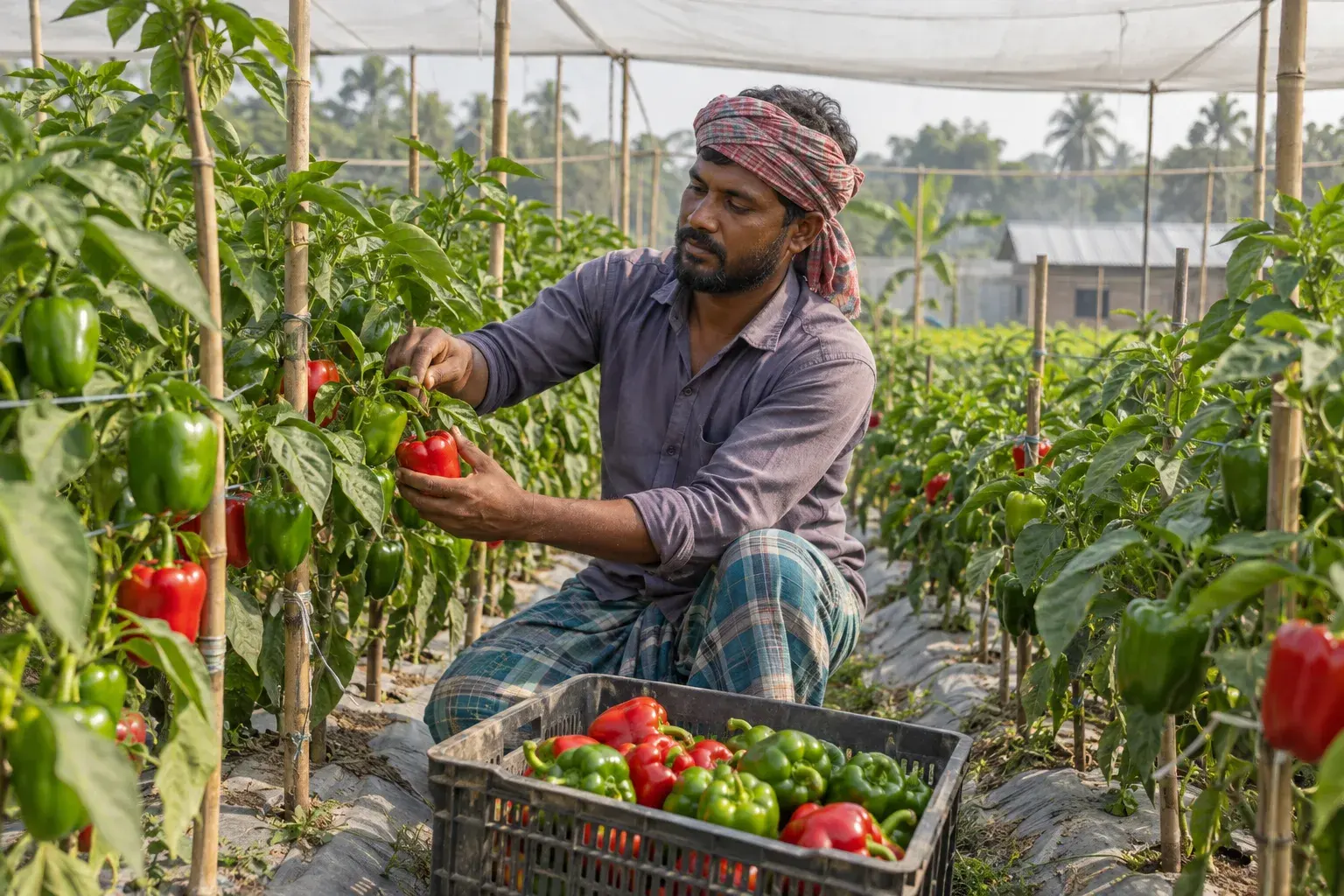
Capsicum and high-value vegetables
Growing capsicum from November to February. Dhaka retail is Tk 220 a kilo for green and Tk 400 for coloured, but total national output is only 475 tonnes a year - the buyer base is narrow.
- Capital
- ৳1.1 lakh – ৳7 lakh
- People
- 2 – 10
- First income
- 60 – 90 days
 Agriculture & farming
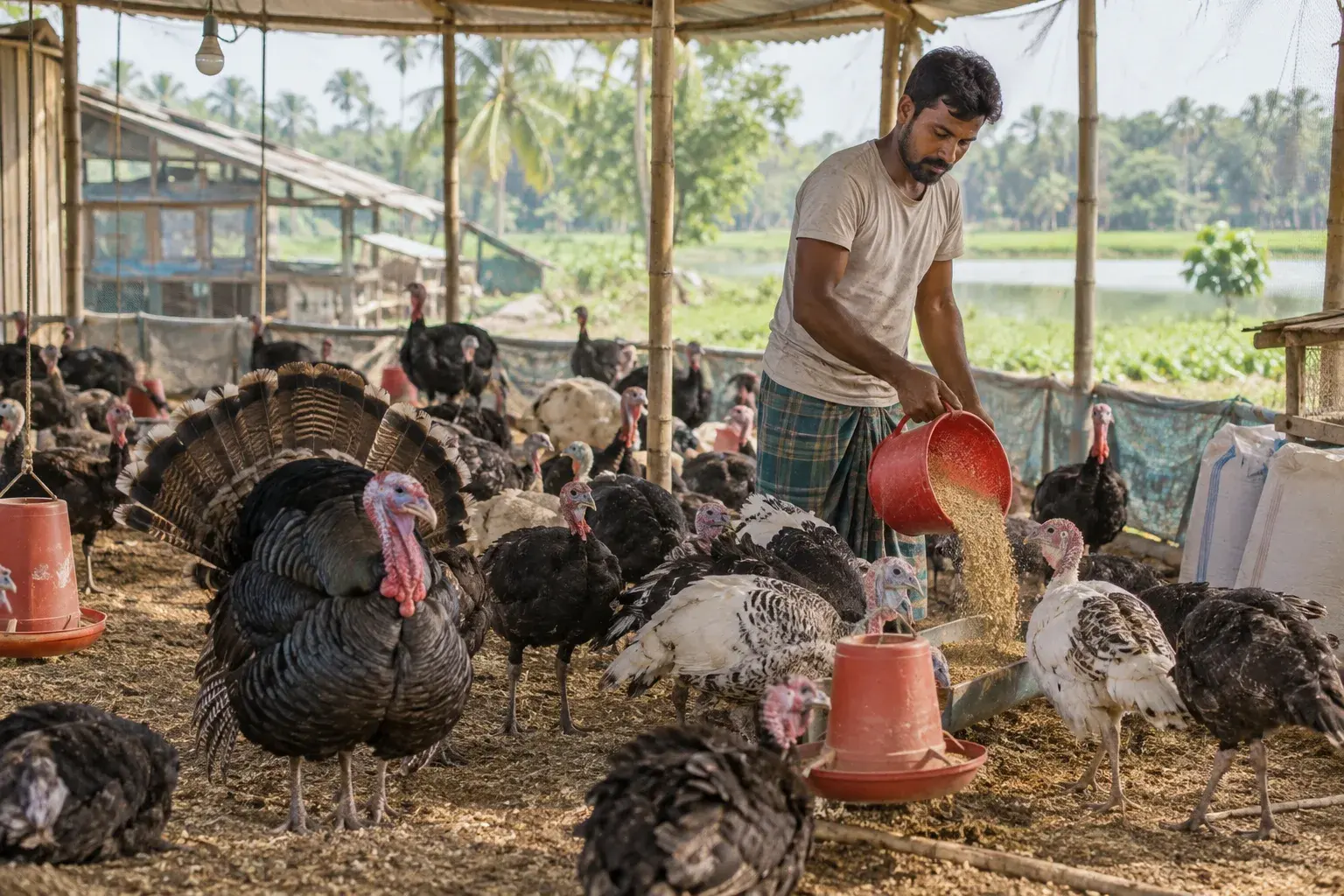
Turkey farming
About 5,000 farms sprang up in the 2015-2020 rush and a few hundred remain. Chick prices fell from Tk 600 to Tk 150 and the livestock department discourages the trade.
- Capital
- ৳1 lakh
- People
- 1 – 3
- First income
- 30 days
 Agriculture & farming
Betel leaf cultivation (boroj)
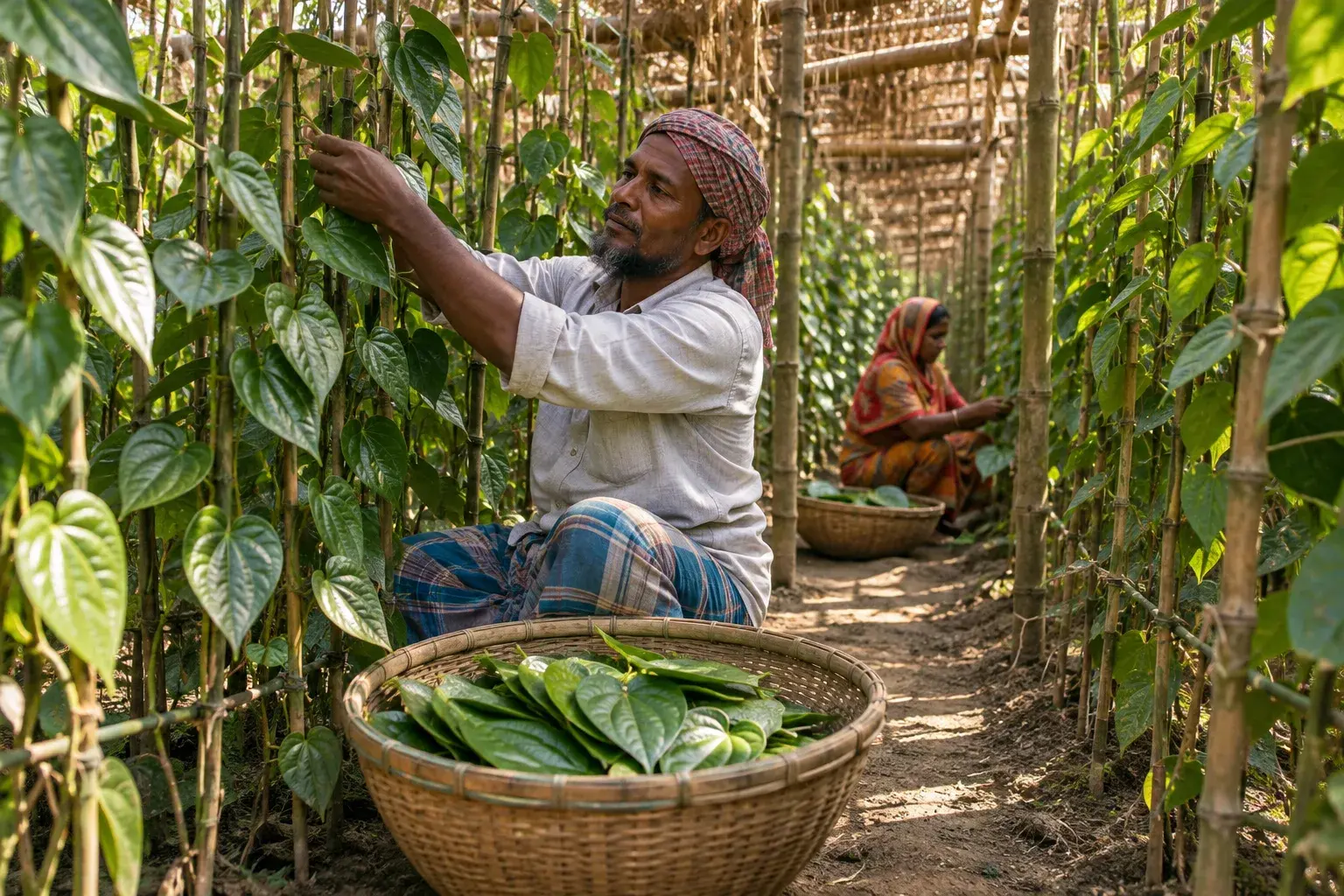
Growing betel vine inside a bamboo-and-thatch boroj. About Tk 1 lakh a bigha to run, and in Rajshahi a bira of 64 leaves has gone from Tk 100-120 to Tk 4.
- Capital
- ৳1 lakh
- People
- 1 – 4
- First income
- 120 – 180 days