
Fruit wholesale arot
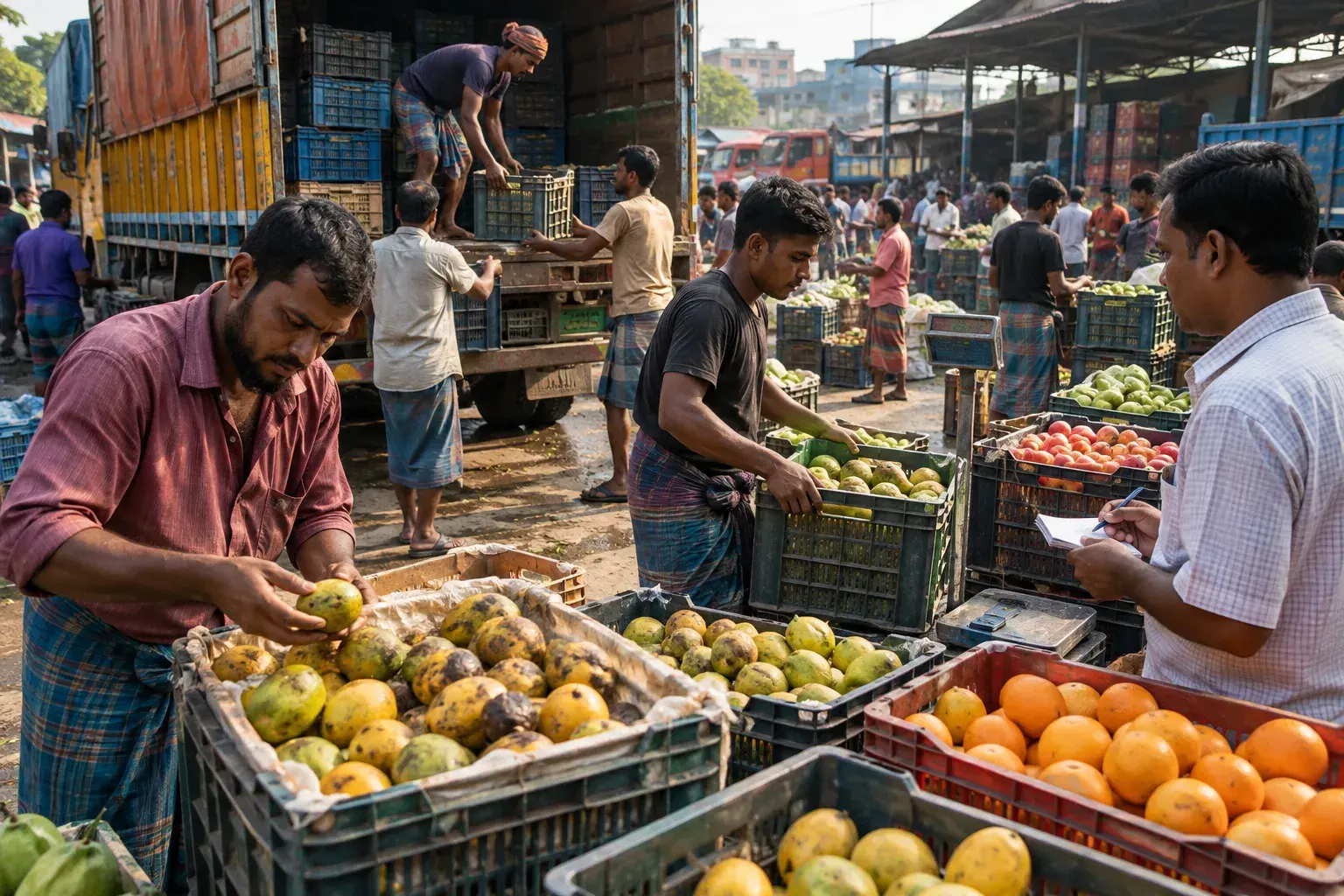
Unloading truckloads of fruit and selling by the crate to retail shops. Badamtoli turns over about Tk 40 crore a day, and opening a crate can show 25-33 percent rotten.
- Last reviewed: 19 September 2026
- Version 1
Fruit wholesale arot
- Starting capital
- ৳5,00,000 – ৳40,00,000 Editorial estimate
- Manpower
- 2 – 10 people
- First sale
- 30 – 90 days Editorial estimate
- Break-even
- 4 – 13 months Editorial estimate
- Kind of work
- Shop · Hard
About the business
An arot that unloads truckloads of fruit and sells them by the crate to retail shops and van hawkers. Dhaka's biggest fruit arot is Badamtoli in Old Dhaka: roughly 100 trucks come in a day, each carrying Tk 35-40 lakh of goods, and about Tk 40 crore of fruit changes hands daily. Trucks start arriving from 1am and trading runs from 6:30am to noon - it is all over by then. Goods come through Chattogram port, Benapol, Hili, Bhomra and Burimari from more than thirty countries, and local fruit comes from Satkhira, Naogaon, Jhalokathi, Pirojpur, Tangail and the hill districts. The number that actually decides this business is spoilage, and it is the one nobody states honestly. One wholesaler said finding four or five kilos of rotten fruit in a crate of malta happens to them 'quite often' - and an Egyptian malta crate is 15 kg, which makes that 27 to 33 percent. Research puts post-harvest loss at 30-35 percent for mango and 25-30 percent for banana, papaya, guava and litchi. One rule is worth knowing: under government rules a retailer may add 15 percent to the wholesale price, and under the Agricultural Marketing Act 2018 taking profit above the fixed rate, or trading without a licence, can bring a year in jail or a Tk 1 lakh fine.
Unit economics
| Item | Range | Evidence | Suggest a correction |
|---|---|---|---|
| Monthly working capital | ৳3,00,000 – ৳30,00,000 | Editorial estimate | |
| Selling price | ৳220 – ৳400 / kg | Market quote | |
| Variable cost | ৳200 – ৳340 / kg | Editorial estimate | |
| Gross margin | 9.1% – 15% | Editorial estimate | |
| Time to first revenue | 30 – 90 days | Editorial estimate | |
| Break-even time | 4 – 13 months | Editorial estimate | |
| Cash cycle | 3 – 20 days | Editorial estimate | |
| Waste / loss | 25% – 33% | Editorial estimate | |
| Daily capacity | 100 | Market quote |
What you need to start
- Scales, crates and baskets, a hand trolley, and a sorting area to separate rotten from sound fruit. Chilling reduces the loss but most arots have none.Equipment
- A truckload of fruit. At Badamtoli one truck carries Tk 35-40 lakh of goods. Working on commission, the importer owns the goods and you do not need that money - but the profit stops at the commission.Starting stock
- Agricultural marketing licence from the Director General, Department of Agricultural Marketing. Section 5 of the Agricultural Marketing Act 2018 bars acting as a market trader in a notified market without one; section 6 bars running a warehouse or cold store without one; section 9 bars transferring the licence. Term, renewal and fee are set by rules (section 8) and the fee could not be verified here.Licence
- Trade licence from the city corporation or municipality: form Tk 10, licence book Tk 50, standard tax Tk 30, stamp Tk 150-300, licence fee Tk 100-60,000 by trade type, usually in 3-5 working days.Licence
- Judging by eye how much of an opened crate is rotten, and knowing how many days each consignment has. An arotdar who does not count the rot cannot tell at year end where the money went.Skill
- Fruit importers and their agents; transport from Chattogram port, Benapol, Hili, Bhomra and Burimari; and in season, growers and middlemen in Satkhira, Naogaon, Jhalokathi, Pirojpur and the hill districts.Supplier
- Space inside the market with truck access, an open area for unloading and a shaded room for the crates. At Badamtoli trucks unload from 1am and selling runs from 6:30am to noon.Workspace
How the work is done
- 1Decide first which kind of arotdar you will be - buying goods yourself and selling them, or selling an importer's goods on commission. The capital and the risk are completely different.
- 2Take space inside the market. Truck access, a place to unload and shade for the crates - a fruit arot does not work without those three.
- 3Take the licence from the Department of Agricultural Marketing. Section 5 of the Agricultural Marketing Act 2018 bars acting as a market trader in a notified market without one, and section 6 bars running a warehouse without one.
- 4Take the trade licence from the city corporation or municipality and a TIN from the NBR.
- 5Fix your suppliers. Imported fruit comes through Chattogram port, Benapol, Hili, Bhomra and Burimari; local fruit comes from Satkhira, Naogaon, Jhalokathi, Pirojpur, Tangail and the hill districts.
- 6Arrange the porters and fix the rate in advance. At Badamtoli the rate is Tk 30 a carton and a porter earns Tk 600-700 on a good day.
- 7Fit your day to the trucks. At Badamtoli they start arriving from 1am and trading runs from 6:30am to noon. Unload late and the day's goods do not sell that day.
- 8Open every crate before quoting, and write down how much was rotten. Four or five kilos of rot in a crate is not unusual here, and without that record you cannot tell profit from loss.
- 9Separate the bruised and soft fruit and release it cheap - to juice shops, van hawkers or people who make pickles. Selling low loses less than throwing away.
- 10If you give credit to retail shops, write down the amount and the date. A new truck has to be paid for every day, so money stuck in credit stops the next one.
- 11Follow the import duty. On 9 January 2025 supplementary duty on fresh fruit went from 20 to 30 percent and on dried fruit from 30 to 45 percent, after which wholesale imports fell 20-25 percent. Check whether those rates have since changed.
- 12Respect the profit limit. Under government rules a retailer may add 15 percent to the wholesale price, and under the Agricultural Marketing Act taking more than the fixed rate, or creating an artificial shortage, is an offence.
Seasons
- JanNormal
- FebHigh
- MarHigh
- AprNormal
- MayHigh
- JunHigh
- JulHigh
- AugNormal
- SepNormal
- OctNormal
- NovNormal
- DecNormal
Where it works well
- Strong fitChapai Nawabganj · The leading mango district, and Sona Masjid land port is here too, so both local and imported supply are close.
- Strong fitChattogram · Imported fruit enters through Chattogram port, so arots here sit closest to supply.
- Strong fitDhaka · Badamtoli in Old Dhaka is the country's largest fruit arot - about 100 trucks and Tk 40 crore of trade a day.
- Strong fitJashore · Benapol land port is here, and fruit from India lands in this market first.
- Strong fitNaogaon · A major mango district that supplies Dhaka's arots in season.
- PossibleDinajpur · Fruit comes in through Hili land port, and the location suits distribution across the north.
- PossibleJhalokathi · A guava and hog-plum area where goods can be lifted straight from the floating markets.
- PossibleLalmonirhat · Fruit arrives through Burimari land port, the route for Bhutanese and Indian goods.
- PossiblePirojpur · A big guava area with heavy supply and cheap buying in season.
- PossibleRangamati · Hill-district pineapple, banana and jackfruit go to Dhaka's arots in season.
- PossibleSatkhira · Imports come through Bhomra land port, and local fruit also goes from here to Dhaka.
- PossibleTangail · A local-fruit supply area with easy access to the Dhaka-North Bengal highway.
Risks and cautions
- HighSpoilage: Spoilage eats the profit here, and it is not rare - it is daily. A Badamtoli wholesaler said four or five kilos of rot in a malta crate happens to them 'quite often'; in a 15 kg crate that is 27-33 percent. Research puts loss at 30-35 percent for mango and 25-30 percent for banana, papaya, guava and litchi. Anyone buying 100 kg must start the calculation having already written off 25-33 kg, or the profit on paper turns into a loss in the hand.
- HighDependency: A change in import duty rewrites the whole business. On 9 January 2025 the National Board of Revenue raised supplementary duty on fresh fruit from 20 to 30 percent and on dried fruit from 30 to 45 percent; wholesale imports fell 20-25 percent immediately afterwards, and July-November fruit imports fell 8.5 percent year on year to $107 million. No goods means an empty arot, and an empty arot's costs do not stop. (This is more than twelve months old and the rates may have changed.)
- HighWorking capital: Goods arrive fresh every day and have to be paid for. One truck at Badamtoli is Tk 35-40 lakh. Credit given to retail shops comes back slowly while the next truck must be paid for today. One bad day stops the next unloading, and if there are no goods the retailers go to another arot.
- MediumCompliance: Under section 19 of the Agricultural Marketing Act 2018, trading without a licence, failing to display wholesale and retail prices openly, not keeping purchase receipts at the shop, creating an artificial shortage and taking profit above the government-fixed rate are all offences, punishable with up to a year's jail or up to Tk 1 lakh fine or both, doubled on repetition. Mobile court raids increase before Ramadan and whenever prices rise.
- MediumLate payment: Retail shopkeepers and van hawkers take goods on credit and pay after selling. If the fruit rots or does not sell they cannot pay either, and the loss comes back to the arotdar. There is nothing in writing with a small shopkeeper, so there is no way to recover it.
Sources
কৃষি বিপণন আইন, ২০১৮ (২০১৮ সনের ৪৪ নং আইন) — ধারা ৫, ৬, ৮, ৯, ১৬, ১৯, ২৬
Collected: 16 Sept 2026Supports: Starting capital · বাংলাদেশ
সিটি কর্পোরেশন থেকে ট্রেড লাইসেন্স প্রাপ্তির ধাপ সমূহ
Collected: 16 Sept 2026Supports: Starting capital · বাংলাদেশ
What changed
No corrections have been published yet.
Questions and answers
No questions yet. Be the first to ask.
Stories about this business
Four days without trucks, and 20,000 maunds of mango rotted in the arots
Baro Bazar in Khulna normally moves 9,000-10,000 maunds of mango a day; a four-day curfew took sales to zero and about 20,000 maunds rotted in the arots. One wholesaler was left with 1,500 maunds and another with 700.
- Reasons
- Spoilage, Other
Similar businesses
 Retail & wholesale
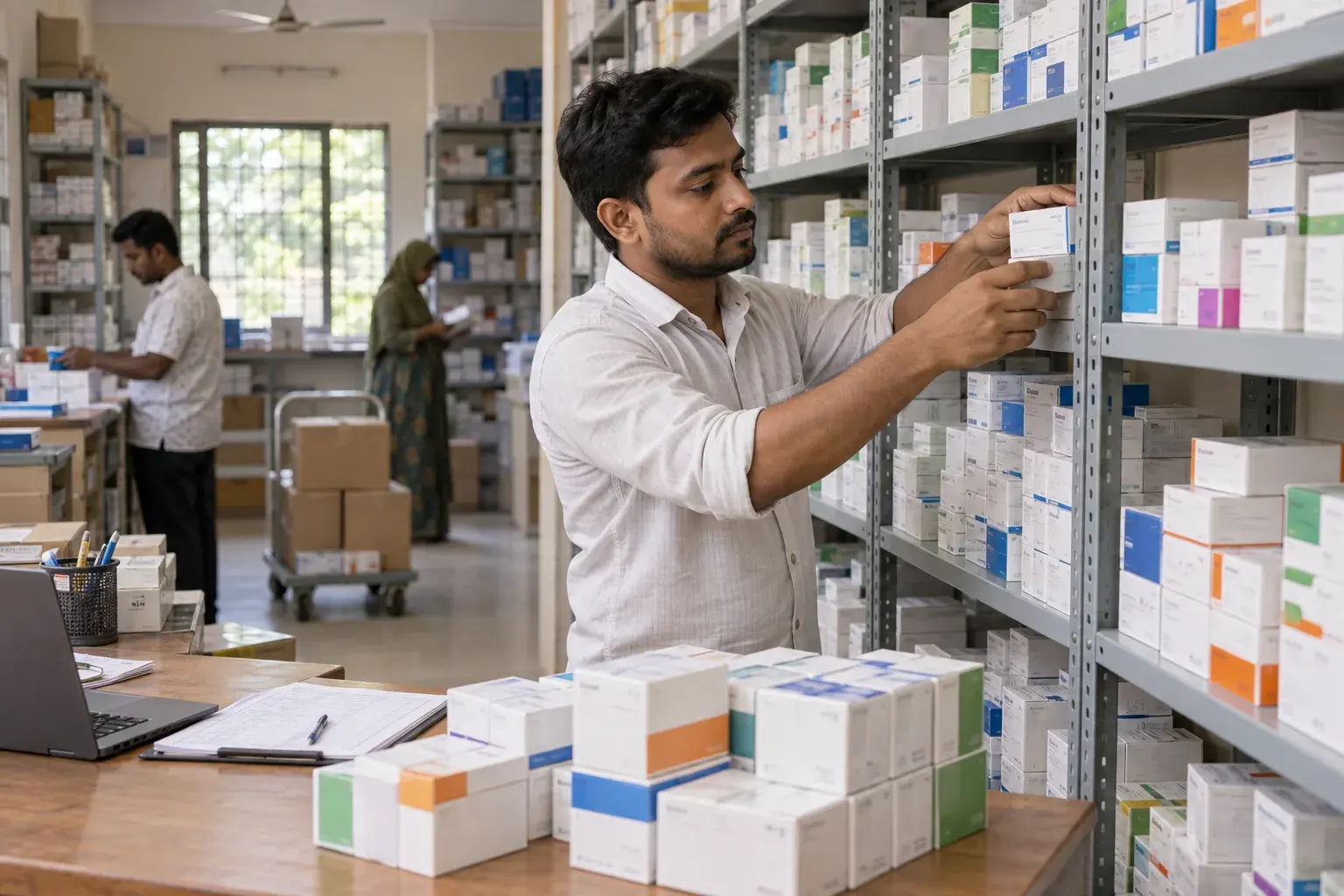
Wholesale medicine business
Wholesaling medicines to pharmacies. DGDA licenses it separately - Tk 10,000 new, Tk 5,000 renewal, valid two years - but no pharmacist is required.
- Capital
- ৳5 lakh – ৳50 lakh
- People
- 2 – 10
- First income
- 42 – 120 days
 Retail & wholesale
Model pharmacy
A DGDA-accredited pharmacy. 300 sq ft, air-conditioning, a pharmacy-grade fridge and a Grade A pharmacist are compulsory; the drug licence runs two years.
- Capital
- ৳5 lakh – ৳25 lakh
- People
- 2 – 5
- First income
- 45 – 180 days
 Retail & wholesale
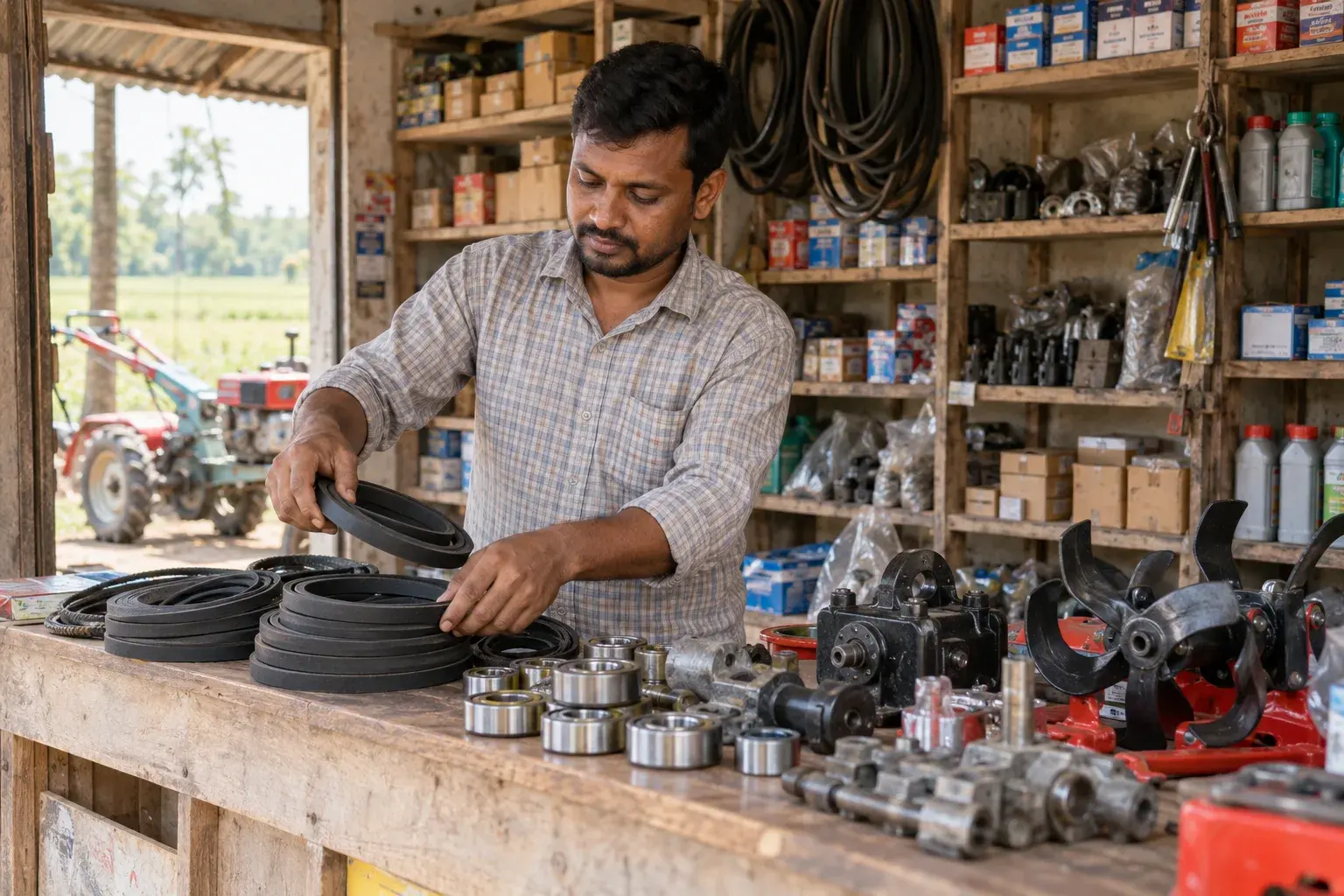
Agricultural machinery parts shop
Spare parts for power tillers, shallow engines and sprayers. Machine sales fell 80-90 per cent when the subsidy was suspended in June 2024, but the machines already in the fields still need parts.
- Capital
- ৳3 lakh – ৳15 lakh
- People
- 1 – 4
- First income
- 30 – 75 days
 Retail & wholesale
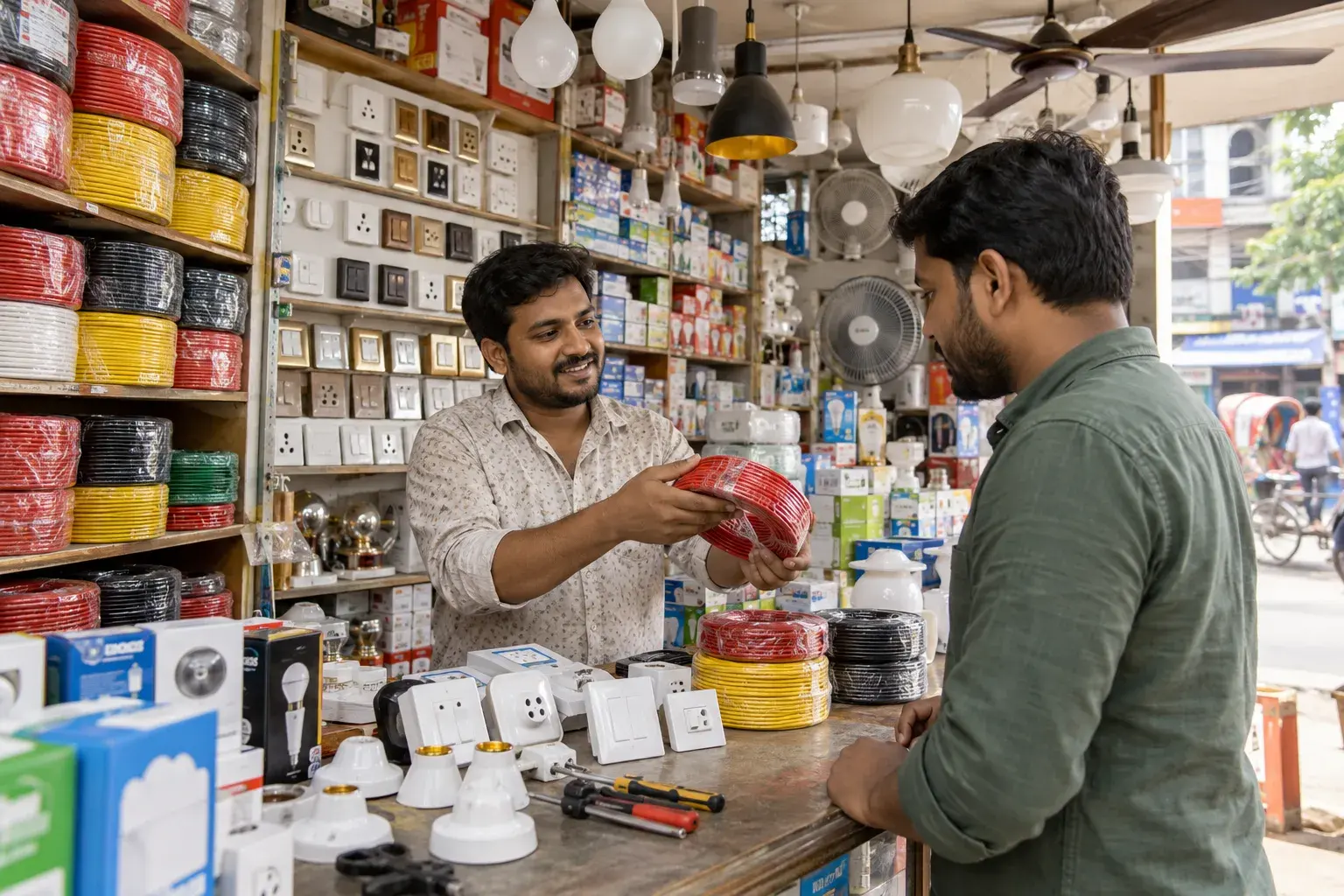
Electrical goods shop
A retail shop selling cable, switches, sockets, holders, lamps and fans. Fifty of the 315 products on BSTI's mandatory certification list are electrical, and selling uncertified cable brings a fine and a sealed shop.
- Capital
- ৳2.5 lakh – ৳15 lakh
- People
- 1 – 5
- First income
- 15 – 60 days