
Wholesale medicine business
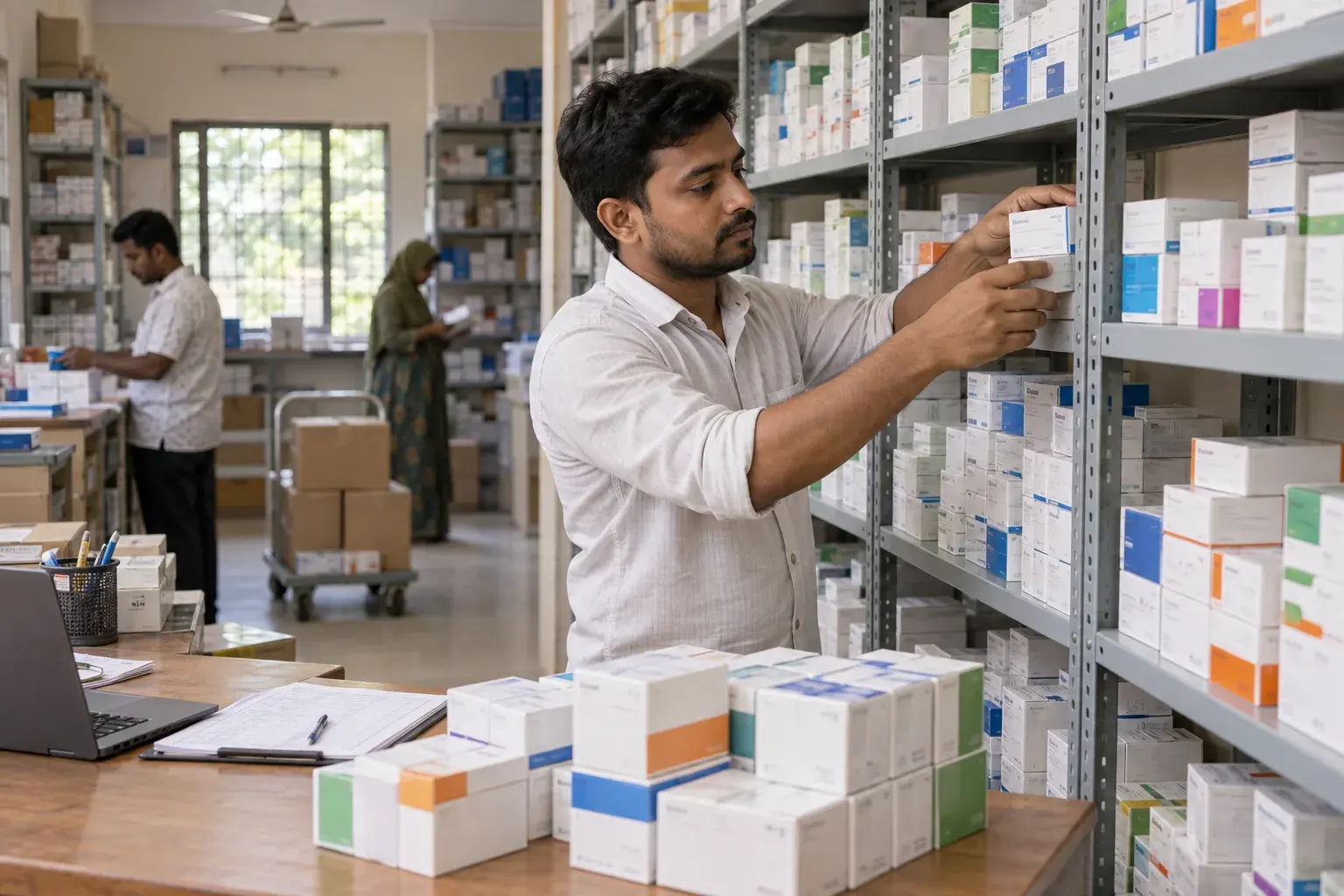
Wholesaling medicines to pharmacies. DGDA licenses it separately - Tk 10,000 new, Tk 5,000 renewal, valid two years - but no pharmacist is required.
- Last reviewed: 19 September 2026
- Version 1
Wholesale medicine business
- Starting capital
- ৳5,00,000 – ৳50,00,000 Editorial estimate
- Manpower
- 2 – 10 people
- First sale
- 42 – 120 days Official source
- Break-even
- 10 – 20 months Editorial estimate
- Kind of work
- Shop · Hard
About the business
Wholesale medicine is not a retail pharmacy, and the Directorate General of Drug Administration licenses the two separately. A new wholesale drug sale licence costs Tk 10,000 plus 15 percent VAT and takes 30 working days; renewal is Tk 5,000 plus VAT in 15 working days. The fee is far above retail - a model pharmacy licence is Tk 2,500 in municipal and metropolitan areas and Tk 1,500 in a union. But wholesale carries one large advantage: section 45(4) of the Drugs and Cosmetics Act 2023 says plainly that wholesale drug selling requires no supervision by a pharmacist, diploma pharmacist or pharmacy technician - while retail does, with a Grade A pharmacist and 300 square feet for a model pharmacy, or a Grade B or C technician and 120 square feet for a medicine shop. The licence runs two years, not three, under section 15(1), and renewal must be applied for no more than 90 days before expiry. Selling, stocking, distributing or displaying drugs without a licence carries up to five years' rigorous imprisonment or a Tk 5 lakh fine, or both, under the Act's Schedule. One requirement catches people out: the wholesale application needs a bank solvency certificate, so the money has to be proved on paper.
Unit economics
| Item | Range | Evidence | Suggest a correction |
|---|---|---|---|
| Monthly working capital | ৳4,50,000 – ৳45,00,000 | Editorial estimate | |
| Selling price | ৳3,000 – ৳8,000 / unit | Editorial estimate | |
| Variable cost | ৳2,880 – ৳7,520 / unit | Editorial estimate | |
| Gross margin | 4% – 6% | Editorial estimate | |
| Time to first revenue | 42 – 120 days | Official source | |
| Break-even time | 10 – 20 months | Editorial estimate | |
| Cash cycle | 0 – 60 days | Editorial estimate | |
| Waste / loss | 1% – 3% | Editorial estimate | |
| Daily capacity | 10 – 60 | Editorial estimate |
What you need to start
- Medicine stock and a separate place for expired goods. Section 40(kha) makes selling, stocking or displaying expired or banned drugs an offence.Starting stock
- Wholesale drug sale licence from DGDA: new Tk 10,000 plus 15 percent VAT in 30 working days, renewal Tk 5,000 plus VAT in 15 working days. Valid two years under section 15(1) of the Drugs and Cosmetics Act 2023, with renewal applied for no more than 90 days before expiry. Application on Form-7 of the Bengal Drug Rules 1946.Licence
- A current trade licence from the city corporation or municipality in the name of the godown or depot: form Tk 10, licence book Tk 50, standard tax Tk 30, stamp Tk 150-300, licence fee Tk 100-60,000 by trade type.Licence
- No pharmacist is needed - section 45(4) says wholesale requires no supervision by a pharmacist, diploma pharmacist or pharmacy technician. But batch numbers, expiry dates, storage temperature and registration certificates all have to be checked.Skill
- A manufacturer or importer. A manufacturer's depot licence needs the current manufacturing licence; imports need the IRC and product registration certificate; contract storage or supply needs the contract on a Tk 300 stamp.Supplier
- A godown or depot with the rent agreement on a Tk 300 non-judicial stamp, or ownership papers. DGDA issues the licence only after inspecting the premises. Unlike retail, no minimum floor area is stated for wholesale in the published documents.Workspace
How the work is done
- 1Decide retail or wholesale first. DGDA licenses them separately with different fees and different conditions: wholesale needs no pharmacist but the fee is four times higher.
- 2Fix the godown or depot and make the rent agreement on a Tk 300 stamp. If the place is your own, the ownership papers are needed instead.
- 3Take a current trade licence in the name of the premises - DGDA's application requires it.
- 4Get a bank solvency certificate. It is on the wholesale document list and not on the retail one: your financial capacity has to be proved on paper.
- 5Deposit Tk 10,000 plus 15 percent VAT by treasury challan: licence fee code 1-2715-0000-1863 and VAT code 1-1-1133-0015-0311.
- 6Apply on Form-7 of the Bengal Drug Rules 1946 with the owner's or managing director's national ID. A manufacturer's depot needs a copy of the manufacturing licence; an importer needs the IRC.
- 7Have the godown ready for inspection. Under section 16(1) the licence is issued only in favour of premises found suitable after inspection.
- 8Sign supply contracts with manufacturers or importers. For contract storage or supply DGDA requires the contract on a Tk 300 stamp plus the manufacturer's licence or the importer's product registration certificate.
- 9Keep a separate place for expired medicine and never sell or display it. Section 40(kha) makes selling, stocking or displaying expired or banned drugs an offence carrying up to one year or Tk 50,000.
- 10Never let physician samples into your stock - section 40(ga) makes that an offence with a fine up to Tk 10,000 - and antibiotics may not change hands without a registered physician's prescription.
- 11Put the renewal date on the calendar. The licence runs two years and renewal must be applied for no more than 90 days before expiry: Tk 5,000 plus VAT, 15 working days.
- 12Open the godown when an inspector comes. Section 49 requires whoever is in charge of a place of storage, sale or distribution to open it on direction, and obstructing an inspector carries a fine up to Tk 3 lakh.
Seasons
- JanNormal
- FebNormal
- MarNormal
- AprNormal
- MayNormal
- JunNormal
- JulNormal
- AugNormal
- SepNormal
- OctNormal
- NovNormal
- DecNormal
Where it works well
- Strong fitBogura · The medicine distribution centre of the north, supplying much of Rajshahi and Rangpur divisions.
- Strong fitChattogram · The port and import hub, where imported medicine and raw material change hands first.
- Strong fitCumilla · A position on the highway and easy supply to pharmacies across neighbouring districts.
- Strong fitDhaka · Mitford is the country's main wholesale medicine market, and nearly every company's head depot and DGDA's headquarters are here.
- PossibleJashore · Both border trade and regional distribution are open here.
- PossibleKhulna · The distribution centre for the south-west, supplying Satkhira, Bagerhat and Jashore.
- PossibleMymensingh · A divisional city with a medical-college-centred market and supply routes into the surrounding upazilas.
- PossibleRangpur · A divisional city, but lower purchasing power means more pressure for credit.
- PossibleSylhet · A divisional city with company depots and a market supplying tea-garden and upazila pharmacies.
- Weak fitBandarban · Few pharmacies, long distances, and transport cost that a wholesale margin will not cover.
Risks and cautions
- HighCompliance: Trading without a licence, or outside its conditions, is punished hard. Section 14(1) bars selling, stocking, distributing or displaying drugs without a licence or beyond its conditions, and the Act's Schedule sets up to five years' rigorous imprisonment or a fine up to Tk 5 lakh, or both. Section 56 doubles the maximum for a repeat offence. Selling online without a licence is barred the same way by section 14(2).
- HighWorking capital: You must show the money first and then have it tied up. The wholesale application itself asks for a bank solvency certificate, so capacity has to be proved at the outset. Then the trade works by paying the company up front while pharmacies settle when they take the next consignment, leaving the whole stock standing on your money.
- MediumSpoilage: Expired stock is a total loss and selling it is a crime: section 40(kha) provides up to one year or Tk 50,000 for selling, stocking or displaying expired medicine. Loading up on any company's stock without a return policy is taking that risk directly.
- MediumCompliance: The two-year term slips away easily. Section 15(1) makes the licence valid for two years and 15(2) requires renewal no more than 90 days before expiry. Many assume three years. Once it lapses the business is unlicensed in law, and the government may fix a late fee by gazette - an amount not yet published.
- MediumDependency: Dependence on manufacturers and distributors is near total. The company decides what medicine is available, at what price, on what credit and on what terms. For imports nothing moves without a product registration certificate, and if supply stops the customers for that medicine leave with it.
Sources
সিটি কর্পোরেশন থেকে ট্রেড লাইসেন্স প্রাপ্তির ধাপ সমূহ
Collected: 16 Sept 2026Supports: Starting capital · বাংলাদেশ
ঔষধ ও কসমেটিকস্ আইন, ২০২৩ (২০২৩ সনের ২৯ নং আইন) — ধারা ১৪, ১৫, ১৬, ৪০, ৪৫, ৪৯, ৫৬, ৭০ এবং তফসিল
Collected: 18 Sept 2023Supports: Starting capital, Time to first revenue · বাংলাদেশ
- Collected: 25 Jun 2023
Supports: Starting capital, Time to first revenue · বাংলাদেশ
ঔষধ প্রশাসন অধিদপ্তর — খুচরা/পাইকারী ড্রাগ লাইসেন্স-এর জন্য প্রয়োজনীয় ডকুমেন্টস এর তালিকা
Collected: 14 Feb 2023Supports: Starting capital, Cash cycle · বাংলাদেশ
What changed
No corrections have been published yet.
Questions and answers
No questions yet. Be the first to ask.
Similar businesses
 Retail & wholesale
Fruit wholesale arot
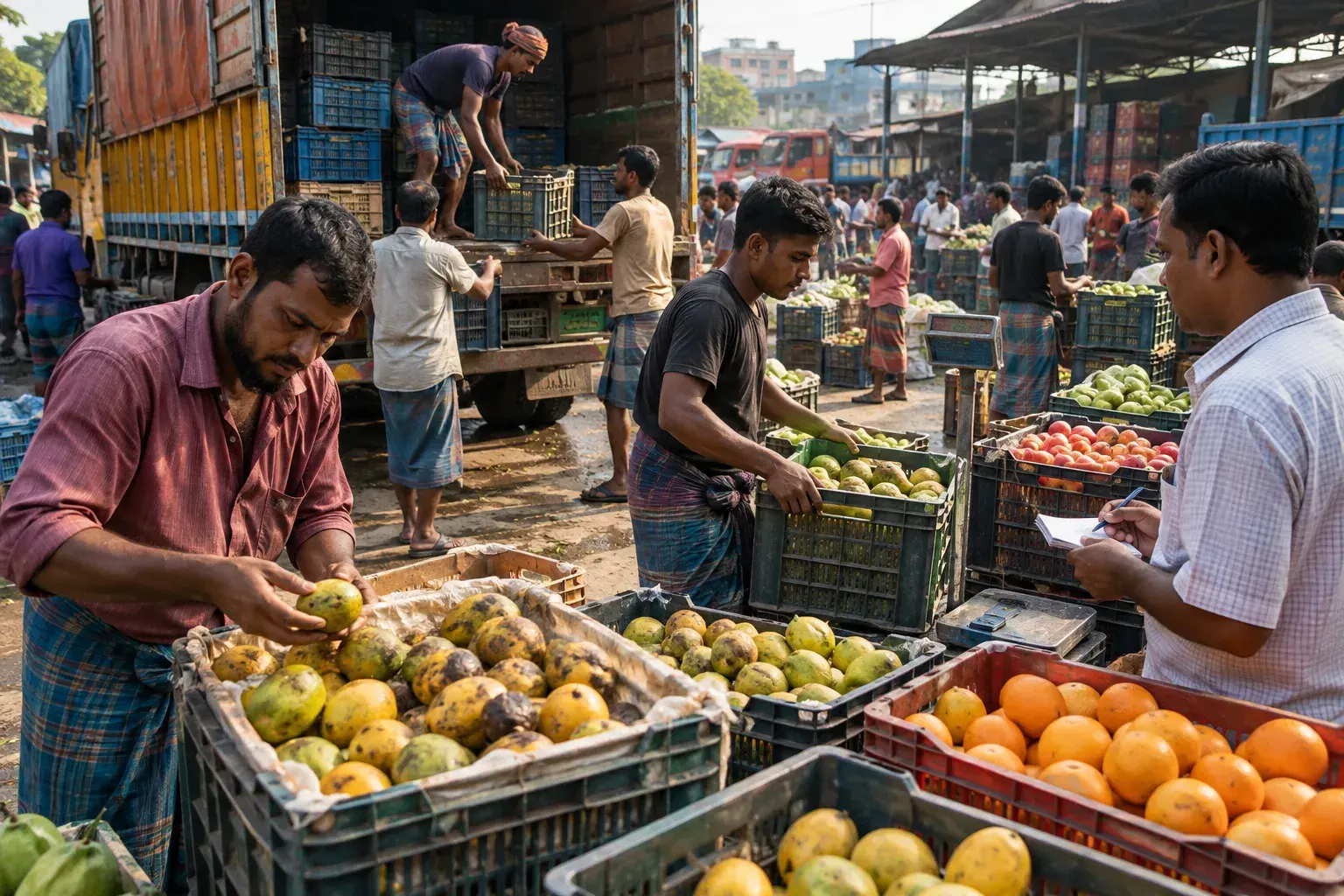
Unloading truckloads of fruit and selling by the crate to retail shops. Badamtoli turns over about Tk 40 crore a day, and opening a crate can show 25-33 percent rotten.
- Capital
- ৳5 lakh – ৳40 lakh
- People
- 2 – 10
- First income
- 30 – 90 days
 Retail & wholesale
Model pharmacy
A DGDA-accredited pharmacy. 300 sq ft, air-conditioning, a pharmacy-grade fridge and a Grade A pharmacist are compulsory; the drug licence runs two years.
- Capital
- ৳5 lakh – ৳25 lakh
- People
- 2 – 5
- First income
- 45 – 180 days
 Retail & wholesale
Agricultural machinery parts shop
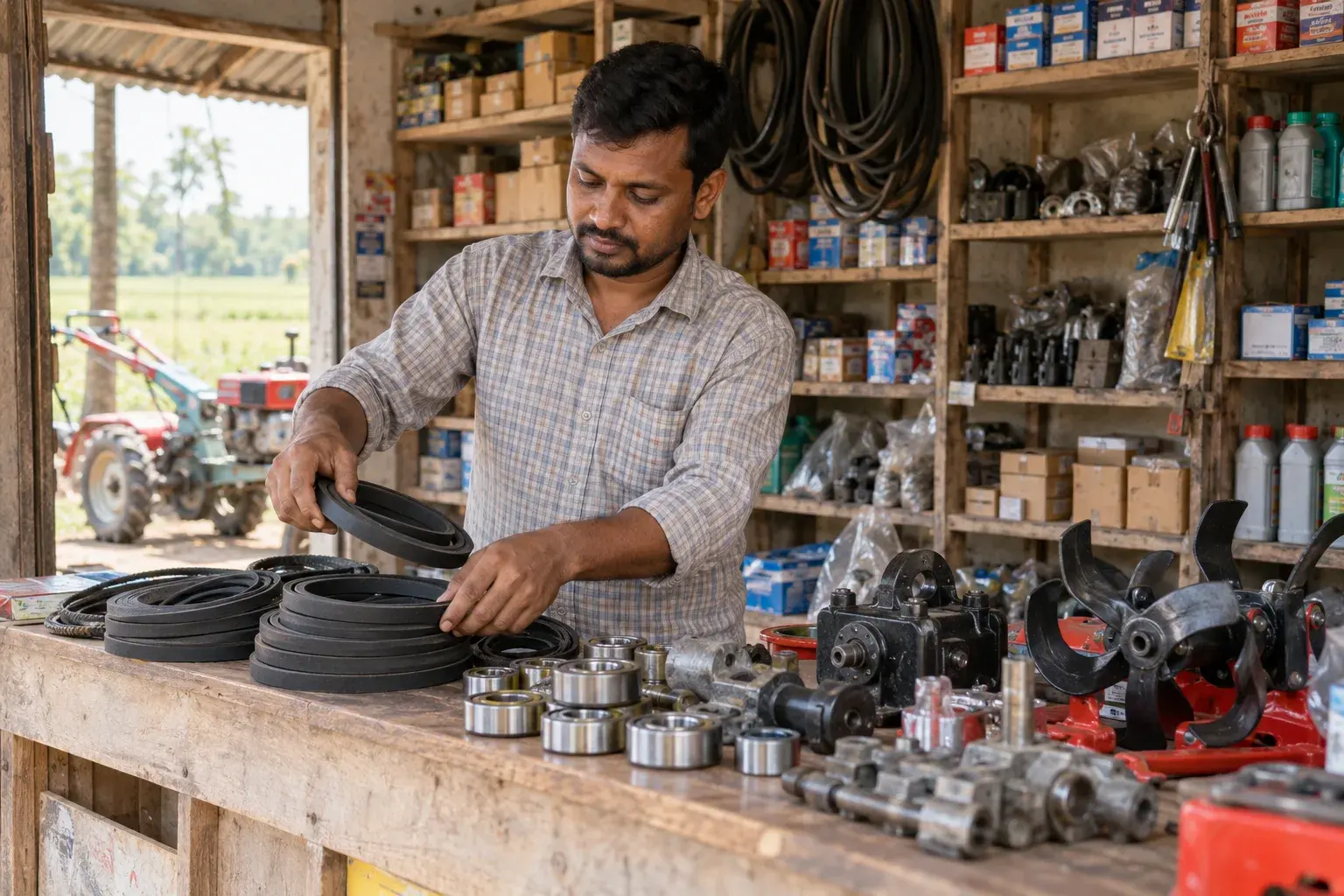
Spare parts for power tillers, shallow engines and sprayers. Machine sales fell 80-90 per cent when the subsidy was suspended in June 2024, but the machines already in the fields still need parts.
- Capital
- ৳3 lakh – ৳15 lakh
- People
- 1 – 4
- First income
- 30 – 75 days
 Retail & wholesale
Electrical goods shop
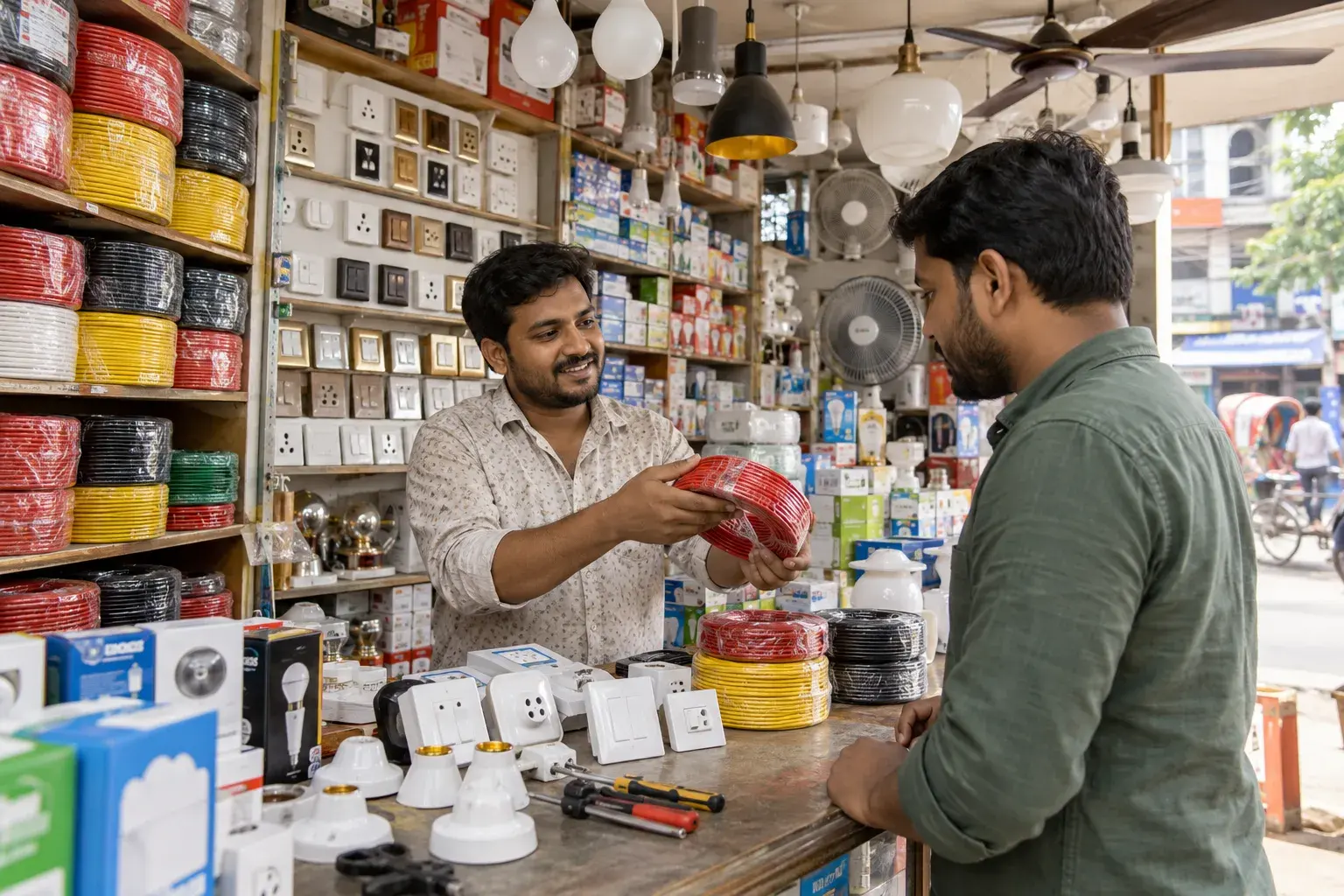
A retail shop selling cable, switches, sockets, holders, lamps and fans. Fifty of the 315 products on BSTI's mandatory certification list are electrical, and selling uncertified cable brings a fine and a sealed shop.
- Capital
- ৳2.5 lakh – ৳15 lakh
- People
- 1 – 5
- First income
- 15 – 60 days