
Karchupi hand embroidery
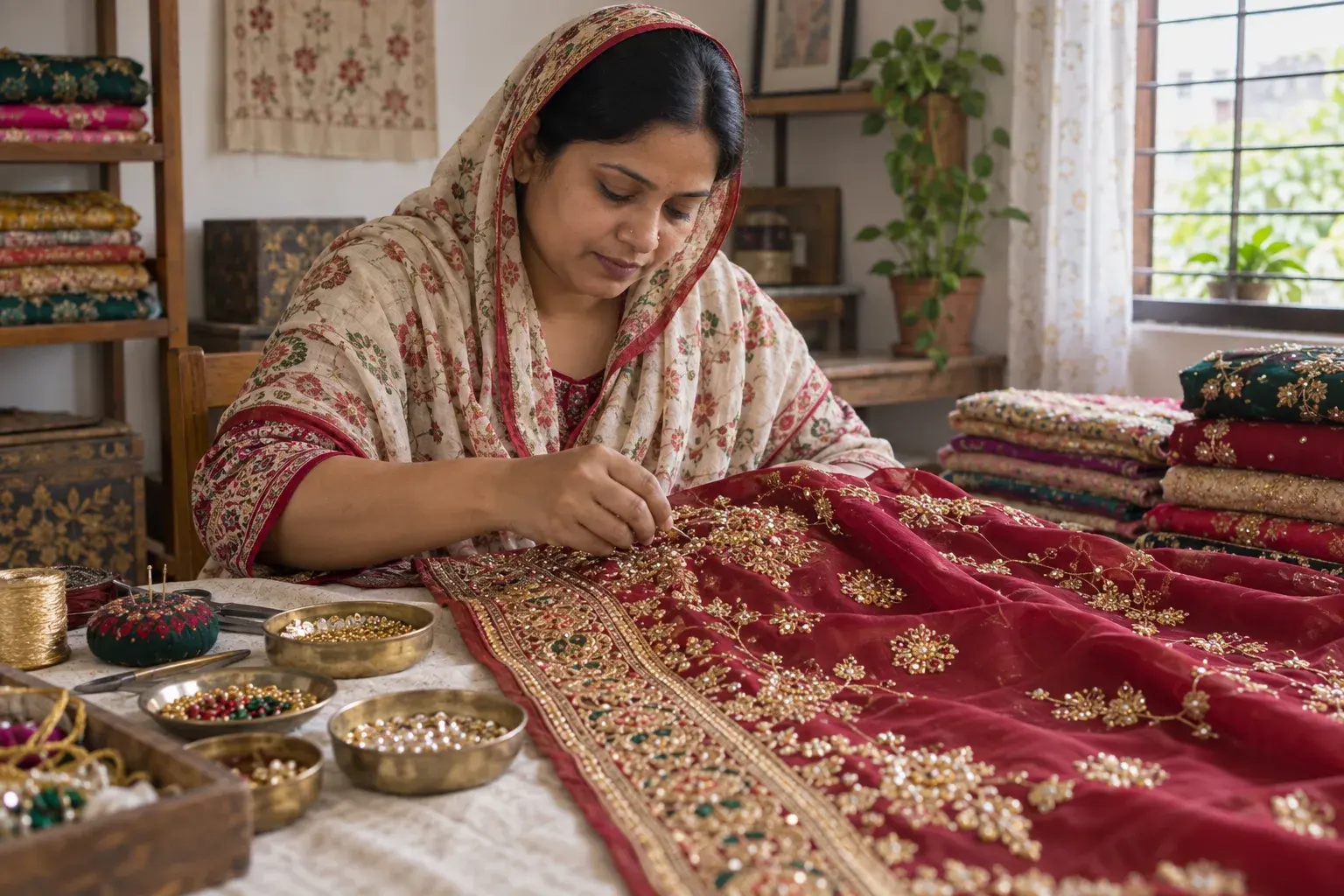
Sequin, bead and zari handwork on sarees and three-pieces, done at home. The mohajon supplies every material; the piece rate is Tk 700-800 a saree and one saree takes at least fifteen days.
- Last reviewed: 19 September 2026
- Version 1
Karchupi hand embroidery
- Starting capital
- ৳500 – ৳5,000 Editorial estimate
- Manpower
- 1 – 3 people
- First sale
- 15 – 20 days Market quote
- Break-even
- 1 – 2 months Editorial estimate
- Kind of work
- Home-based · Easy
About the business
A wooden frame set out in front of the house, cloth stretched tight across it, and sequins, beads and zari worked onto it with a needle - that is karchupi. The work comes from Dhaka. A mohajon takes the order from a Dhaka buyer, hands over the design, and delivers the georgette or chiffon cloth, the sequins, the silk thread and the gum to each house. The worker buys nothing and needs no capital; she sells only her hands and her time. Now the number that decides whether this feeds a family. Women at the Uttara Abason settlement at Dhelapir in Syedpur, Nilphamari say they are paid Tk 700 to Tk 800 per saree once the work is done, and that finishing the handwork on one saree takes at least fifteen days. That works out at roughly Tk 47 to Tk 53 a day. In the same report the women put their monthly earnings at Tk 3,000 to at most Tk 3,500. The Syedpur Karchupi Samiti reckons 30,000 women in that upazila alone do this work. The other side is worth seeing too. These embroidered garments sell in Dhaka's big shopping malls, and on 16 September 2026 karchupi three-pieces and sarees were listed online at Tk 999 to Tk 2,799. The distance between the woman who pushes the needle for fifteen days and whoever collects that final price is the true shape of this trade.
Unit economics
| Item | Range | Evidence | Suggest a correction |
|---|---|---|---|
| Monthly working capital | ৳0 | Market quote | |
| Selling price | ৳700 – ৳800 / unit | Market quote | |
| Variable cost | ৳20 – ৳50 / unit | Editorial estimate | |
| Gross margin | 93% – 97.5% | Editorial estimate | |
| Time to first revenue | 15 – 20 days | Market quote | |
| Break-even time | 1 – 2 months | Editorial estimate | |
| Cash cycle | 15 – 30 days | Editorial estimate | |
| Waste / loss | 3% – 8% | Editorial estimate | |
| Daily capacity | 0.1 – 0.2 | Editorial estimate |
What you need to start
- A wooden frame - at the Syedpur settlement one stands in front of almost every house - plus needles, scissors and enough light to work by at night. That is the whole of what the worker buys.Equipment
- Nothing has to be bought. The mohajon brings the georgette or chiffon bolt, the various sequins, beads, zari, silk thread and gum to the house, and explains the design with them.Starting stock
- Trade licence from the union parishad, municipality or city corporation: form Tk 10, licence book Tk 50, standard tax Tk 30, non-judicial stamp Tk 150-300, licence fee Tk 100-60,000 by trade type. Not needed to do a mohajon's piecework at home; needed once you take orders, buy cloth and distribute it yourself as a mohajon.Licence
- Working sequins, beads and zari with a needle. The women at the settlement had no training and built the skill by watching others; the upazila women's affairs office also teaches it.Skill
- The local mohajon, who is the single source of work, design and every material. Syedpur also has a karchupi association through which mohajons and workers connect.Supplier
- The courtyard or verandah in front of the house. No separate room or shop is needed - at the Syedpur settlement women, men and children sit in a circle outside the house and work.Workspace
How the work is done
- 1Get in touch with a local mohajon or someone in the karchupi association. The work comes through the mohajon - in Syedpur they take orders from Dhaka and deliver the materials house to house.
- 2Learn it by watching. None of the women at the settlement trained anywhere; they built the skill by watching others work. The upazila women's affairs office also runs training in it.
- 3Set the wooden frame in front of the house and stretch the cloth tight on it. Without the frame the design will not lie even.
- 4Take the design, cloth and materials from the mohajon - georgette or chiffon bolt, sequins, beads, zari, silk thread and gum. Count them in, because if material is spoiled you will be the one answering for it.
- 5Fix the rate before you start - how much for this piece and by when it must be delivered. The Syedpur going rate is Tk 700-800 a saree over at least fifteen days.
- 6Count your own hours. Tk 700-800 over fifteen days is about Tk 47-53 a day. Taking quicker pieces alongside - ornas, blouses, small three-piece motifs - raises the daily figure.
- 7Work more than one pair of hands to a frame. At the settlement women, men and children sit in a circle working together, and that is how the monthly figure is actually made up.
- 8Take work against the wedding and Eid seasons. Demand in the Dhaka malls peaks then, and that is when the mohajon has the most orders in hand.
- 9Do not depend on one mohajon alone. Keeping two or three connections means that when one runs dry in the off season your hands are not idle.
- 10To become a mohajon yourself, find the Dhaka buyer and take a trade licence. Mohajons receive orders from Dhaka by email, buy and distribute the cloth and materials themselves and deliver to Dhaka on time - a different business with different capital.
Seasons
- JanHigh
- FebHigh
- MarHigh
- AprNormal
- MayHigh
- JunNormal
- JulLow
- AugLow
- SepLow
- OctNormal
- NovHigh
- DecHigh
Where it works well
- Strong fitDhaka · Both the orders and the buyers are here - mohajons take orders from Dhaka by email and the finished garments sell in Dhaka's big shopping malls and markets.
- Strong fitNilphamari · The Syedpur Karchupi Samiti counts 30,000 women at this work in that upazila alone, across the Dhelapir Uttara Abason settlement and the Kazihat, Munshipara, Mistripara, Golahat and Rasulpur neighbourhoods.
- PossibleChattogram · The city's older settlements have handwork karigars and the local market is large.
- PossibleCumilla · Boutique and handwork traditions exist here, and the batik workshops also sell sarees with handwork on them.
- PossibleDinajpur · A northern district close to Syedpur with women's labour readily available.
- PossibleGazipur · A garment district, so materials are easy to get and the Dhaka buyer is close.
- PossibleKishoreganj · Housewives in the villages of Swalpajashodal and Bhubirchar do sequin work on sarees, with easy links to Dhaka.
- PossibleNarayanganj · Close to the big cloth and materials markets, with easy access to the Dhaka boutiques.
- PossibleRangpur · The labour belt adjoining Syedpur, where the same mohajons' work spreads into the neighbouring upazilas.
- Weak fitMymensingh · Women's labour is available, but the mohajon network has not grown here.
Risks and cautions
- MediumLate payment: The wage comes when the work is finished, which means at least fifteen days of unpaid working first. Abandon the piece midway, or have the mohajon take the material back, and those days are worth nothing. Whether he pays on the spot when the saree is handed over is nowhere recorded either - and there is no written contract in this trade.
- MediumOther: Spoiled material is the worker's liability. The mohajon leaves costly georgette or chiffon, sequins and zari at the house, and the work is done in an open courtyard - keeping the cloth safe from dust, rain and children's hands is her responsibility. Ruin one saree's cloth and the loss can exceed fifteen days' wages.
- HighDependency: The whole income sits in the mohajon's hands. He supplies the work, the design, the cloth, the sequins, the thread and the gum, and he sets the rate. The worker has no buyer of her own and no contact with the Dhaka customer. If his orders dry up or he cuts the rate there is nothing she can say - having no capital, she cannot make and sell a piece herself either. The very thing that makes this trade need no money is what leaves her no power over the price.
- HighOther: Worked out per day the wage is about Tk 47-53. Tk 700-800 a saree divided by at least fifteen days gives that figure, and the women themselves put monthly earnings at Tk 3,000 to at most Tk 3,500. It works as a second income in a household; it will not carry one on its own. Anyone going into this should know that before they start.
- HighDemand: The work arrives in seasons, not through the year. Demand for karchupi garments is heaviest at weddings and Eid, and that is when the mohajon has orders. Before Eid, with schools and colleges shut, students join in too, so the number of hands rises at the same time. Outside those months the work thins out, but the household's costs do not.
Sources
সিটি কর্পোরেশন থেকে ট্রেড লাইসেন্স প্রাপ্তির ধাপ সমূহ
Collected: 16 Sept 2026Supports: Starting capital · বাংলাদেশ
What changed
No corrections have been published yet.
Questions and answers
No questions yet. Be the first to ask.
Stories about this business
A 2.5-lakh order cancelled and 45,000 taka lost, now 3-4 lakh of sales a month
Started in 2021 with about 10,000 taka of cloth and thread. A 2.5-lakh-taka overseas order was rejected over poor cloth sourced through a relative, costing about 45,000 taka; after taking sourcing back into her own hands the page now sells 3-4 lakh taka a month.
- Capital
- ৳10k
- Reasons
- Supplier problem, Strong network
Similar businesses
 Light manufacturing & workshop
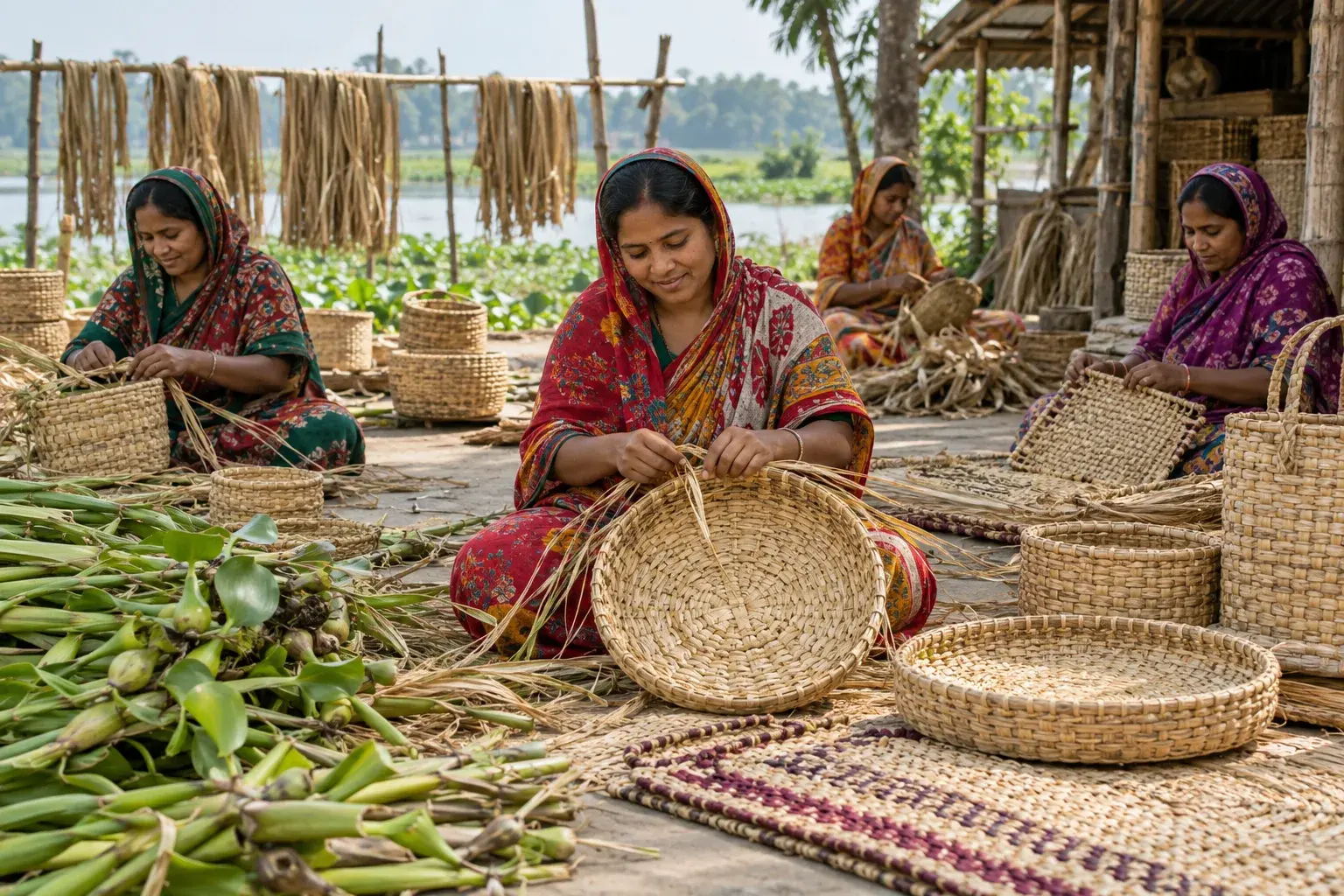
Water hyacinth and hogla handicraft
Drying water hyacinth and weaving it into trays, baskets and doormats. In Jhenaidah 800 women do this at home at Tk 20 a piece, 12-15 pieces a day, about Tk 3,000 a month, and the goods go to 82 countries.
- Capital
- ৳1k – ৳40k
- People
- 1 – 5
- First income
- 7 – 30 days
 Light manufacturing & workshop
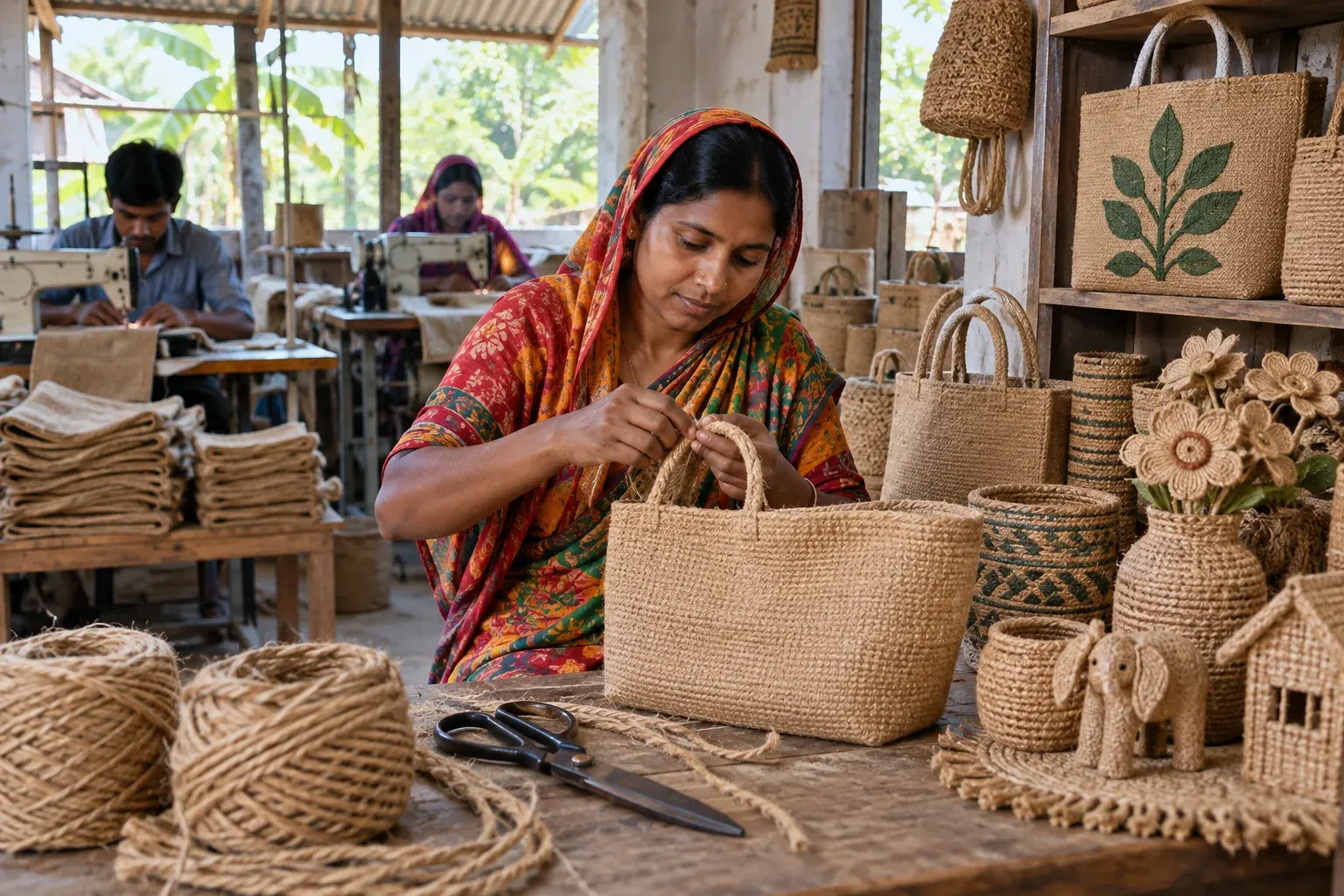
Jute handicraft
Making bags, pots and showpieces from jute. Tk 2,000 of scissors and rope starts it by hand, but an export order needs a workshop, and ten machines cost about Tk 500,000.
- Capital
- ৳2k – ৳10 lakh
- People
- 1 – 40
- First income
- 7 – 120 days
 Light manufacturing & workshop
Block, batik and tie-dye
Making batik and tie-dye sarees and three-pieces at home with wax and dye on cotton. Cumilla shops sell batik sarees from Tk 500 to Tk 1,700, and one karigar can finish about ten sarees a day.
- Capital
- ৳5k – ৳50k
- People
- 1 – 20
- First income
- 7 – 30 days
 Light manufacturing & workshop
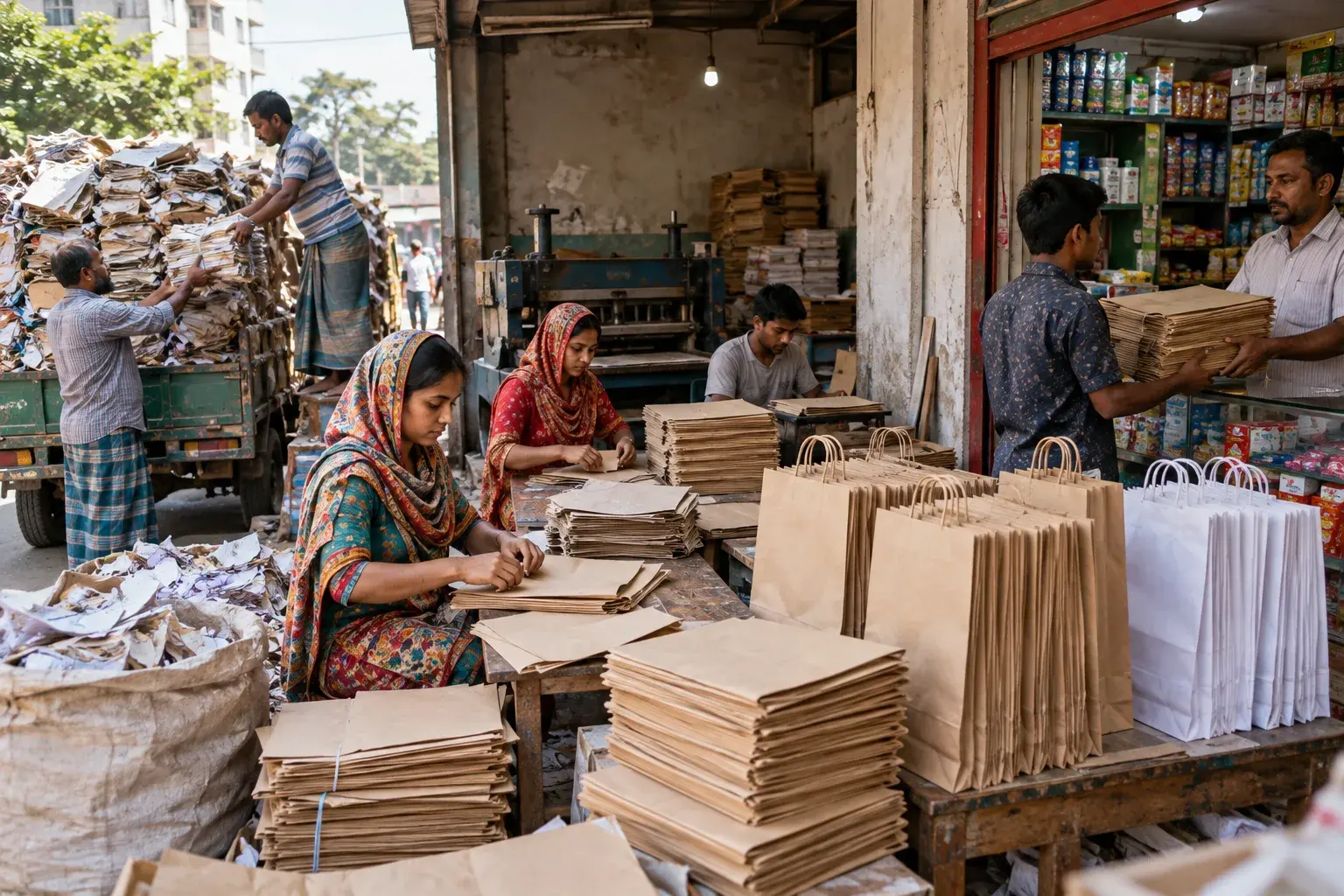
Paper bag and packaging making
Buying waste paper, folding bags by hand and supplying shops. Khaki bags sell at Tk 135-140 a kg and white at Tk 80; 60 kg of paper costs Tk 7,500 and yields 70 kg of bags for Tk 2,300 profit.
- Capital
- ৳10k – ৳60k
- People
- 1 – 20
- First income
- 3 – 15 days