
Block, batik and tie-dye
Making batik and tie-dye sarees and three-pieces at home with wax and dye on cotton. Cumilla shops sell batik sarees from Tk 500 to Tk 1,700, and one karigar can finish about ten sarees a day.
- Last reviewed: 19 September 2026
- Version 1

Block, batik and tie-dye
- Starting capital
- ৳5,000 – ৳50,000 Editorial estimate
- Manpower
- 1 – 20 people
- First sale
- 7 – 30 days Editorial estimate
- Break-even
- 1 – 4 months Editorial estimate
- Kind of work
- Home-based · Easy
About the business
Work that can be done in a courtyard or on a verandah: waxing a design onto plain cotton, dipping it in dye, and turning out block, batik and tie-dye sarees, three-pieces, ornas and panjabis. The equipment is a stove, a pot, wax, dye and a set of hand blocks. The steps are straightforward. Bolt cotton comes from Narayanganj, is cut to saree or three-piece size and stacked, and the design is waxed on piece by piece. The cloth is then wrapped in paper, tied and dipped, one side at a time. After dyeing it is washed in hot water so the wax melts away, starched, dried, ironed and it is ready to sell. Anandapur and Komolpur, two neighbouring villages in Cumilla, make nearly all of that district's batik. The measure there is that a workshop of 20 karigars working flat out can produce about 200 sarees a day - roughly ten a head. On price: at the shops in Hilton Tower, Monoharpur, a batik saree starts at Tk 500, cotton runs Tk 650-1,050, silk Tk 850-1,300, and a batik saree with handwork on it Tk 1,200-1,700. A three-piece is Tk 500-1,200, an orna Tk 200-250 and a panjabi Tk 500-700. Production climbs through the hot months and before Eid, when extra hands are taken on at daily wages. Alongside the shops, Facebook pages now carry the goods across the country.
Unit economics
| Item | Range | Evidence | Suggest a correction |
|---|---|---|---|
| Monthly working capital | ৳5,000 – ৳50,000 | Editorial estimate | |
| Selling price | ৳200 – ৳1,800 / unit | Market quote | |
| Variable cost | ৳130 – ৳750 / unit | Editorial estimate | |
| Gross margin | 35% – 58% | Editorial estimate | |
| Time to first revenue | 7 – 30 days | Editorial estimate | |
| Break-even time | 1 – 4 months | Editorial estimate | |
| Cash cycle | 0 – 30 days | Editorial estimate | |
| Waste / loss | 5% – 10% | Editorial estimate | |
| Daily capacity | 10 – 30 | Market quote |
What you need to start
- A stove and a large pot for melting wax and dyeing, a way of washing in hot water, the printing blocks, a line or rack for drying, and an iron. All ordinary household items.Equipment
- Bolt cotton from Narayanganj, cut or rolled, plus wax and fabric dye. On 16 September 2026 household fabric dye was selling on Daraz at Tk 51-95 a pack (sellers Shoili Ghor and Groceria Hub). Bulk dye used in workshops is priced differently and could not be verified.Starting stock
- Trade licence from the union parishad, municipality or city corporation: form Tk 10, licence book Tk 50, standard tax Tk 30, non-judicial stamp Tk 150-300, licence fee Tk 100-60,000 by trade type, issued in 3-5 working days.Licence
- Laying the design in wax and judging the dye - both learned by hand. If the wax is not fully lifted in the hot-water wash the cloth keeps the marks and loses its price.Skill
- A bolt-cloth trader in Narayanganj, a dye and wax shop, and on the selling side the boutiques and cloth shops of the district town - in Cumilla's case the batik market at Hilton Tower, Monoharpur.Supplier
- A courtyard or verandah - open space for dyeing, water, and sun to dry the cloth. No shop or factory is needed; in the Cumilla villages of Anandapur and Komolpur the work is done house by house.Workspace
How the work is done
- 1Learn the work by hand first. The upazila women's affairs office and the technical training centres run block and batik courses.
- 2Source bolt cotton. The Cumilla workshops bring cotton from Narayanganj, cut or on the roll. Buying regularly from one supplier gets a better rate.
- 3Cut the cloth to saree or three-piece size and stack it. Cutting to size first stops cloth being wasted later.
- 4Melt the wax and lay the design on the cloth. This is where your identity is - if everyone runs the same design, the price falls.
- 5Wrap the cloth in paper, tie it and dip it in the dye. Once one side has taken, the other side must be dyed too.
- 6Wash it thoroughly in hot water so the design wax melts and comes away. Get this step wrong and the marks stay in the cloth.
- 7Starch, dry and iron it ready for market. An ironed piece and an unironed one do not fetch the same price.
- 8Price item by item. Saree, three-piece, orna, fatua, panjabi, lungi and bedsheet all come off the same cloth, and while an orna is Tk 200, a saree with handwork reaches Tk 1,700.
- 9Open a Facebook page, post photographs and start selling. The Cumilla shops now send goods across the country through their pages as well as over the counter.
- 10Step production up before the hot season and Eid. Demand climbs then and the workshops take on extra hands at daily wages, so lay in cloth and dye ahead of time.
- 11Once selling becomes regular, take a trade licence from the union parishad or municipality, and record the cloth and dye cost of every batch.
Seasons
- JanNormal
- FebHigh
- MarHigh
- AprHigh
- MayHigh
- JunHigh
- JulNormal
- AugNormal
- SepNormal
- OctNormal
- NovNormal
- DecNormal
Where it works well
- Strong fitCumilla · Anandapur and Komolpur in Adarsha Sadar upazila hold nearly all the district's batik workshops, and Hilton Tower in Monoharpur is the biggest and most reliable batik market.
- Strong fitDhaka · The largest buying market and the centre of online and Facebook selling, with the boutique houses here too.
- Strong fitNarayanganj · The source of bolt cotton, batik's main raw material; working next to the input cuts the cost.
- Strong fitTangail · A handloom cotton district; 'Tangail cotton batik print saree' is a recognised name online and sellers trade under it.
- PossibleBrahmanbaria · Adjacent to the Cumilla batik belt, with both inputs and buyers close by.
- PossibleChandpur · Close to Cumilla, with easy river links to Dhaka.
- PossibleChattogram · A large city market, and batik sarees are sold online from here too.
- PossibleGazipur · A garment area, so cloth and dye are easy to find, and the Dhaka market is close.
- PossibleRajshahi · Training for women entrepreneurs and a boutique habit exist, but the big wholesale markets are far.
- PossibleSirajganj · A handloom area where cotton cloth is available locally.
Risks and cautions
- HighDemand: For most of the year sales are slow and two or three seasons carry everything. The Cumilla workshops say production climbs before the hot months and Eid and extra hands go on at daily wages. So cloth and dye must be bought ahead and labour paid through those weeks - and if the goods do not move, that money is stuck until a season that is months away.
- MediumDependency: The raw material comes from one place. The main input for Cumilla batik, cotton cloth, is brought from Narayanganj. If the rate there rises or supply tightens, a karigar working at home has no alternative, and buying in small quantities costs more anyway.
- MediumDemand: When everyone runs the same design the price falls. Two villages in Cumilla make nearly all the district's batik and the shops are stacked with near-identical sarees and three-pieces. On Daraz on 16 September 2026, different sellers' batik sarees ran from Tk 594 to Tk 1,800 - and when a buyer goes to the cheap end, a small maker has no answer.
- MediumWorking capital: Cloth, wax and dye are paid for up front and come back only after the sale. Selling through a Facebook page often means cash on delivery with the money returning through the courier; supplying a shop means credit. How much stock a small maker can afford to have tied up at once is the real limit on this trade.
Sources
সিটি কর্পোরেশন থেকে ট্রেড লাইসেন্স প্রাপ্তির ধাপ সমূহ
Collected: 16 Sept 2026Supports: Starting capital · বাংলাদেশ
What changed
No corrections have been published yet.
Questions and answers
No questions yet. Be the first to ask.
Stories about this business
60-70 taka of profit a piece, yet workshop owners are leaving batik
Kamalpur village turns over 40-45 crore taka a year across 15-20 batik workshops. One owner makes 60-70 taka a piece, but the cost of cloth and chemicals and a shortage of artisans are pushing others out of the trade.
- Reasons
- Supplier problem, Skill gap
Similar businesses
 Light manufacturing & workshop
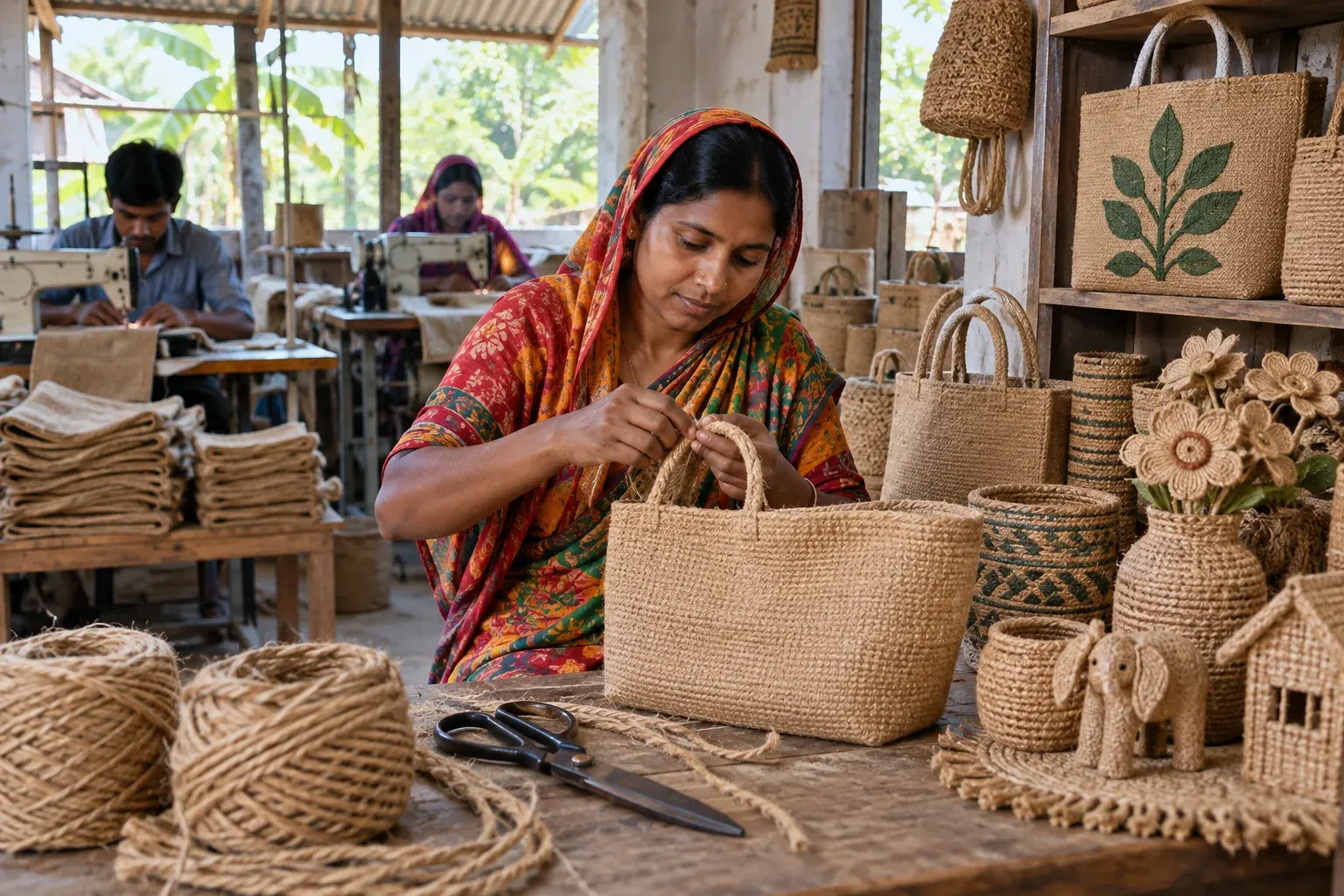
Jute handicraft
Making bags, pots and showpieces from jute. Tk 2,000 of scissors and rope starts it by hand, but an export order needs a workshop, and ten machines cost about Tk 500,000.
- Capital
- ৳2k – ৳10 lakh
- People
- 1 – 40
- First income
- 7 – 120 days
 Light manufacturing & workshop
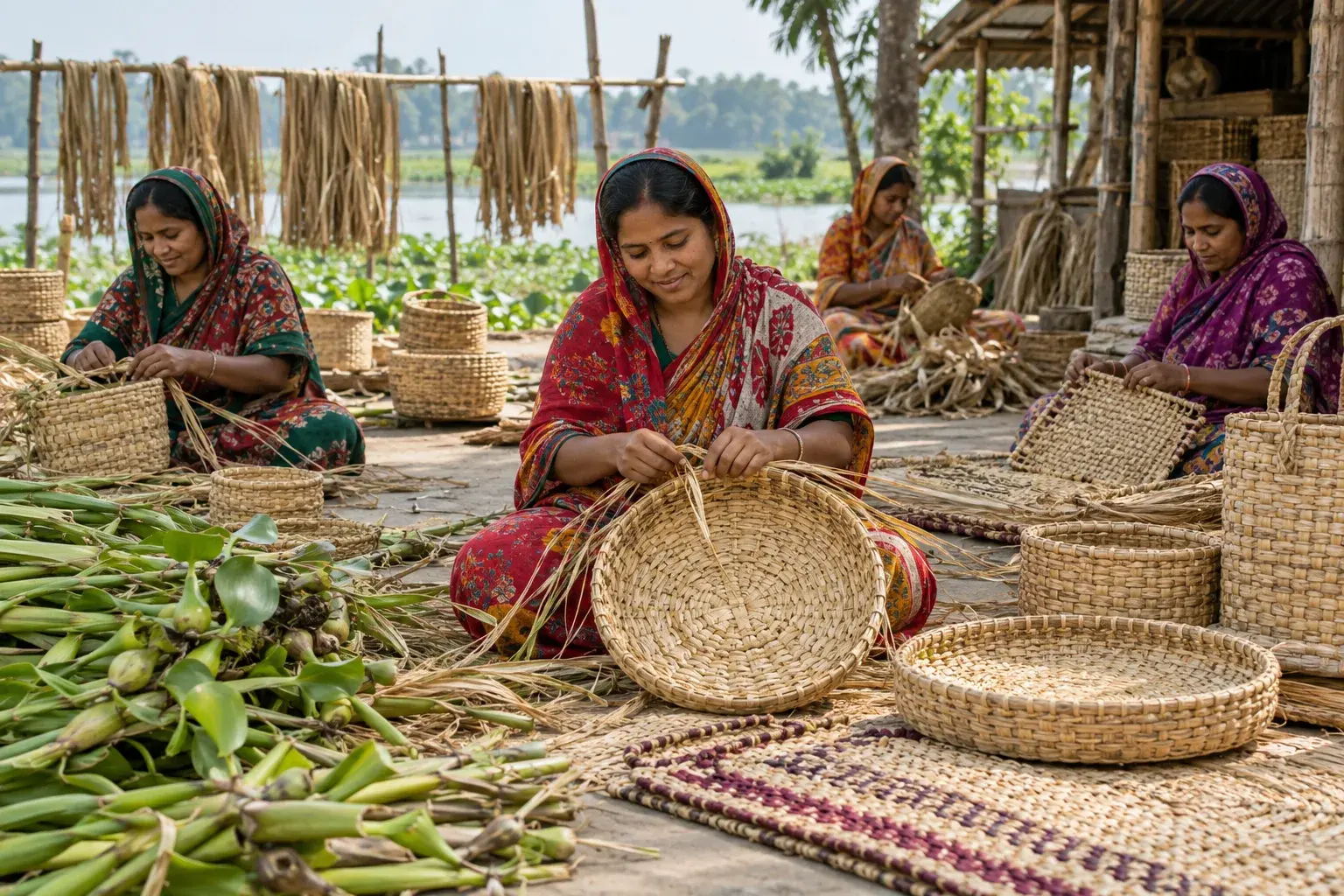
Water hyacinth and hogla handicraft
Drying water hyacinth and weaving it into trays, baskets and doormats. In Jhenaidah 800 women do this at home at Tk 20 a piece, 12-15 pieces a day, about Tk 3,000 a month, and the goods go to 82 countries.
- Capital
- ৳1k – ৳40k
- People
- 1 – 5
- First income
- 7 – 30 days
 Light manufacturing & workshop
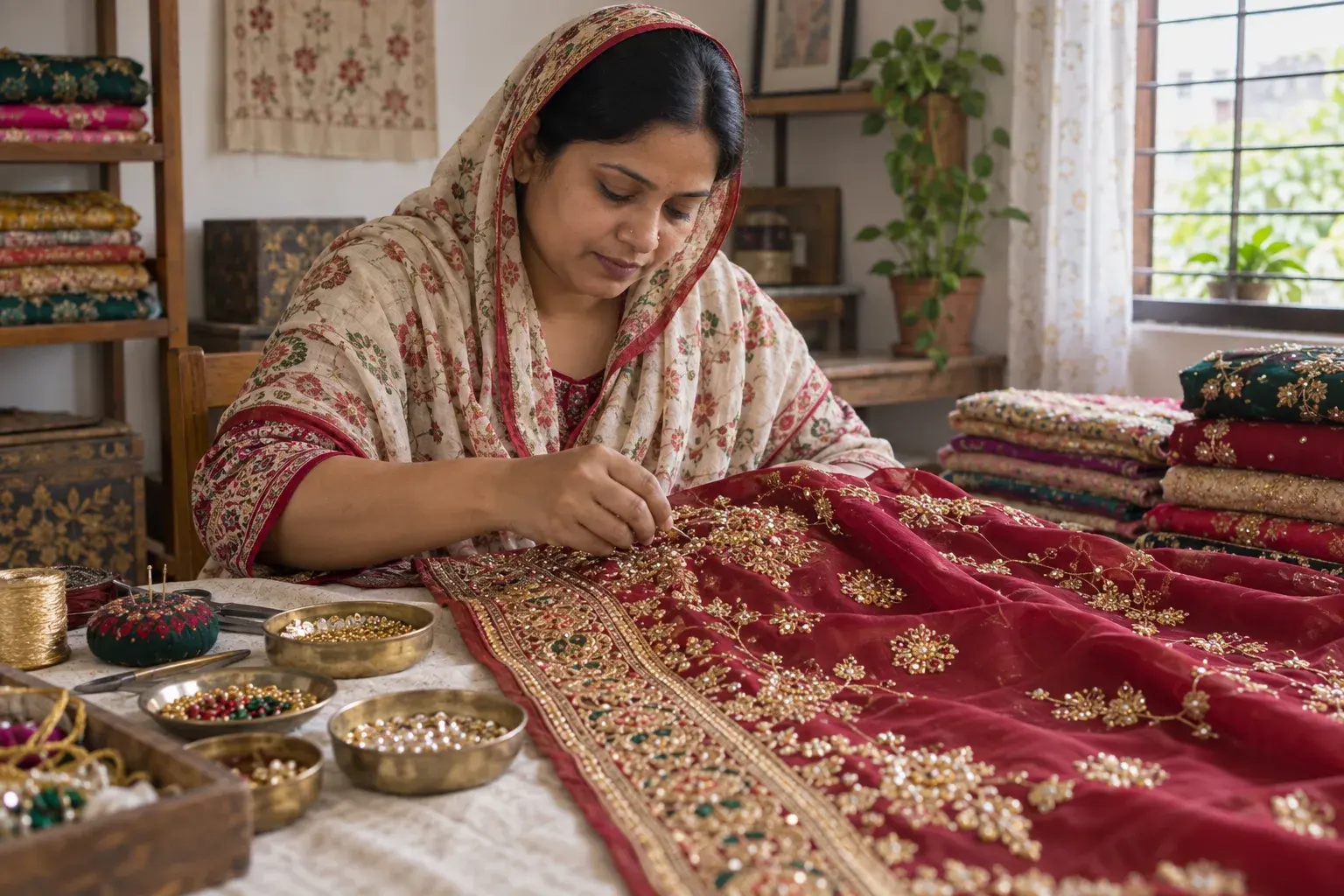
Karchupi hand embroidery
Sequin, bead and zari handwork on sarees and three-pieces, done at home. The mohajon supplies every material; the piece rate is Tk 700-800 a saree and one saree takes at least fifteen days.
- Capital
- ৳500 – ৳5k
- People
- 1 – 3
- First income
- 15 – 20 days
 Light manufacturing & workshop
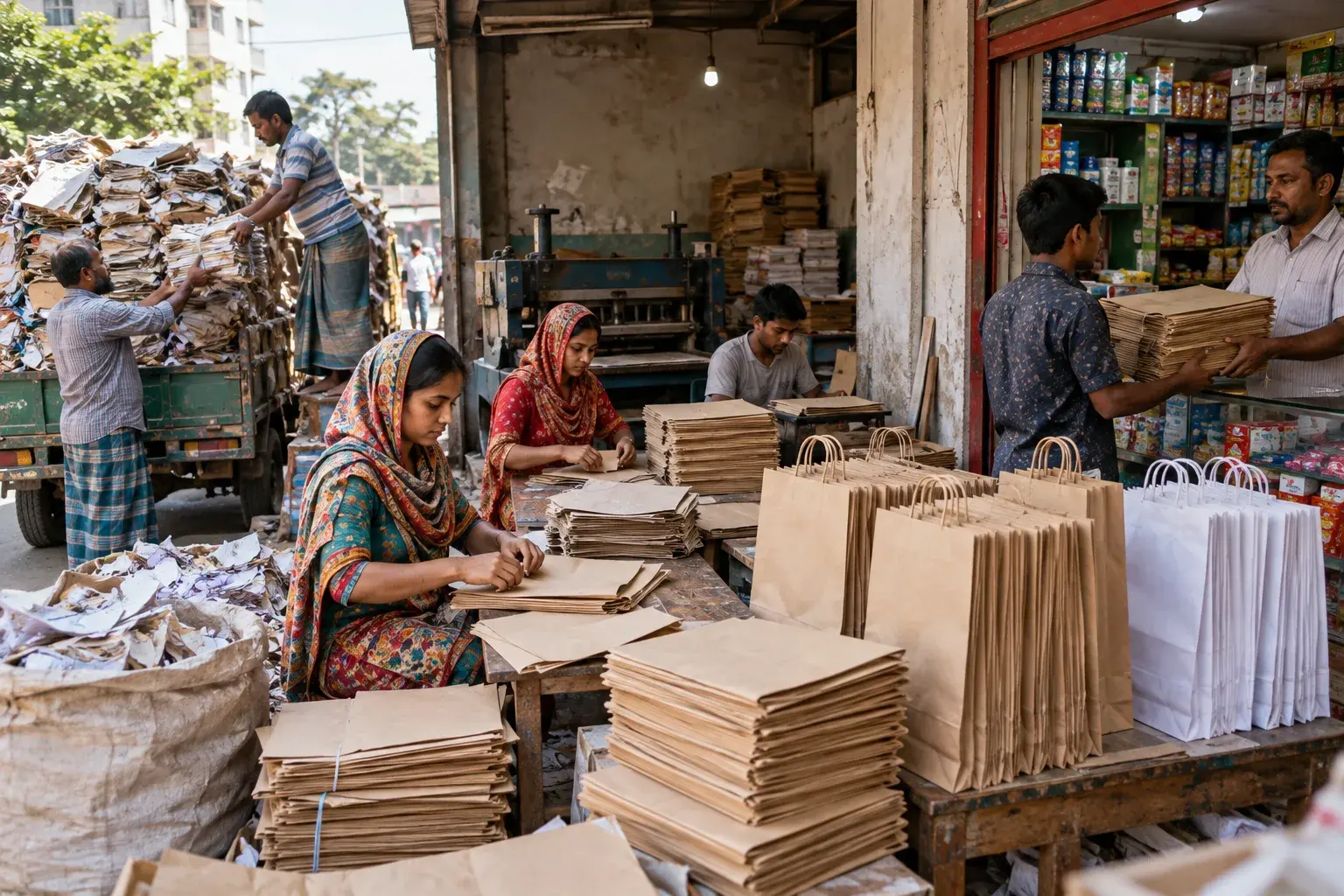
Paper bag and packaging making
Buying waste paper, folding bags by hand and supplying shops. Khaki bags sell at Tk 135-140 a kg and white at Tk 80; 60 kg of paper costs Tk 7,500 and yields 70 kg of bags for Tk 2,300 profit.
- Capital
- ৳10k – ৳60k
- People
- 1 – 20
- First income
- 3 – 15 days