
Milk collection and supply
Buying milk from farmers and delivering it to chilling centres and shops. Farmers get Tk 35-50 a litre and plants pay Tk 48-58; that gap is the business.
- Last reviewed: 19 September 2026
- Version 1

Milk collection and supply
- Starting capital
- ৳50,000 – ৳4,00,000 Editorial estimate
- Manpower
- 1 – 4 people
- First sale
- 7 – 21 days Editorial estimate
- Break-even
- 4 – 9 months Editorial estimate
- Kind of work
- Mobile service · Medium difficulty
About the business
Buying milk from village farmers morning and evening and delivering it to a chilling centre, a sweetmeat shop or a tea stall. It sounds simple but the whole business is one gap: what you pay the farmer against what the plant pays you. In July 2024 in Pabna and Sirajganj farmers were selling in the open market at Tk 35-40 a litre while processors were paying Tk 48-52, with Milk Vita paying Tk 52 for good quality. In June 2025 Milk Vita said it bought 4 percent fat milk at Tk 58 a litre, over Tk 61 with transport. So a collector holds roughly Tk 8 to 13 a litre, and out of that come fuel, cans, ice and the milk that turns before it arrives. Milk is not a one-day product but a few-hours product, which is why Milk Vita runs more than fifty chilling centres across the country, densest around Shahjadpur and Baghabarighat in Sirajganj, Bhangura in Pabna and Natore. Whether the farmer survives is also your problem: farmers say a litre costs them close to Tk 70 to produce and they are paid less, and when feed prices rise farms close and the collection van comes back empty. In Ramadan the open market price jumps; in the monsoon the opposite - milk sits unsold and the price falls.
Unit economics
| Item | Range | Evidence | Suggest a correction |
|---|---|---|---|
| Monthly working capital | ৳40,000 – ৳2,50,000 | Editorial estimate | |
| Selling price | ৳48 – ৳58 / unit | Market quote | |
| Variable cost | ৳35 – ৳50 / unit | Market quote | |
| Gross margin | 14% – 33% | Editorial estimate | |
| Time to first revenue | 7 – 21 days | Editorial estimate | |
| Break-even time | 4 – 9 months | Editorial estimate | |
| Cash cycle | 5 – 15 days | Editorial estimate | |
| Waste / loss | 2% – 5% | Editorial estimate | |
| Daily capacity | 100 – 300 | Editorial estimate |
What you need to start
- Steel or aluminium milk cans, correct measures, a lactometer and a way to read fat, clean water for washing, and a motorcycle or van to get there fast.Equipment
- Trade licence from the city corporation or municipality: form Tk 10, licence book Tk 50, standard tax Tk 30, non-judicial stamp Tk 150-300, licence fee Tk 100-60,000 by trade type, issued in 3-5 working days.Licence
- Under the Food Safety (Registration and Licensing) Regulations 2026, registration is compulsory for dairy businesses: Tk 1,000 new, Tk 500 renewal, valid three years. Whether it applies to someone only buying raw milk and delivering it to a plant should be checked with the district office.Licence
- Reading fat and spotting adulteration. The plant prices on fat and rejects a whole can if quality fails, and that loss is the collector's, not the farmer's.Skill
- A chilling centre as the buyer. Milk Vita alone runs more than fifty across the country - in Rajshahi division the Baghabarighat dairy factory, Shahjadpur Purbachal, Bhangura, Natore, Gabtoli, Ishwardi and Lahiri Mohanpur; in Dhaka division Tekerhat, Tungipara, Manikganj, Tangail, Bhairab, Sripur and several more.Supplier
- Farmers. A cow gives 6-7 litres a day, so collecting a hundred litres needs an area with fifteen to twenty milking cows. The Pabna-Sirajganj belt has more than 25,000 farms.Supplier
- A fixed collection point inside the village with shade, clean water and room for the cans. No separate shop is needed.Workspace
How the work is done
- 1Find the buyer before the farmer. Go to the nearest chilling centre and ask whether they are taking milk, what they pay a litre, below what fat they reject, and when they pay.
- 2Measure the distance from your area to the centre. The longer milk sits after milking the worse it gets, so do not plan to collect from a village you cannot reach the centre from in about two hours.
- 3Agree with the farmers who will give how many litres and when. Milking is morning and evening, so work out first whether you must run twice a day.
- 4Keep the means to measure and test: correct measures, a lactometer and, if possible, a way to read fat. The plant prices on fat, so buy on fat too, or the loss is yours.
- 5Get steel or aluminium cans and wash and dry them every time. Good milk turns on the road in a dirty can, and if the plant rejects it nobody pays for it.
- 6Keep cash for the daily run. Farmers usually want money quickly while the plant settles later, and that gap runs out of your own pocket.
- 7Do not rely on one plant. Keep sweetmeat shops, curd makers and tea stalls as buyers too, so that when the plant cuts the rate or the intake, the milk has somewhere to go.
- 8Write it down daily: from whom, how many litres, what fat, at what rate, and how much went to the plant and how much came back. That book is what tells you at month end whether there was a profit.
- 9Plan separately for Ramadan and the monsoon. In Ramadan the open market price jumps; in the monsoon milk sits and the price falls.
- 10Once the business is regular, take a trade licence from the city corporation or municipality. Packing or processing the milk for sale also needs Food Safety Authority registration.
Seasons
- JanNormal
- FebHigh
- MarHigh
- AprNormal
- MayNormal
- JunNormal
- JulLow
- AugLow
- SepNormal
- OctNormal
- NovNormal
- DecNormal
Where it works well
- Strong fitNatore · Milk Vita's Natore chilling centre, inside the Baghabari milk area so the factory is easy to reach.
- Strong fitPabna · Milk Vita chilling centres at Bhangura and Ishwardi, with dense farming in Bera, Santhia, Faridpur and Chatmohar. The whole Pabna-Sirajganj belt has more than 25,000 farms.
- Strong fitSirajganj · The heart of the dairy belt - the Baghabarighat dairy factory and the Shahjadpur Purbachal chilling centre are here, and at Shahjadpur the plants of Milk Vita, Aarong, Pran, Igloo and Akij together collect three and a half lakh litres a day.
- PossibleBogura · Milk Vita's Gabtoli chilling centre, and as the commercial centre of the north there are sweetmeat and curd factories as buyers too.
- PossibleFaridpur · Milk Vita chilling centres at Alfadanga and Char Bhadrasan, in char areas where cattle rearing is common.
- PossibleGopalganj · Three Milk Vita chilling centres at Tungipara, Kashiani and Kotalipara, so distances are short.
- PossibleMadaripur · Tekerhat has both a Milk Vita dairy factory and a chilling centre.
- PossibleManikganj · Milk Vita's Manikganj chilling centre, with easy transport along the Dhaka-Aricha highway.
- PossiblePanchagarh · A Milk Vita chilling centre at Panchagarh; dairy farming is growing in this border area though the processing factory is far.
- PossibleRangpur · Milk Vita centres at Rangpur, Badarganj, Gangachara, Kaunia and Pirganj, with comparatively cheap cattle feed.
- PossibleSatkhira · Satkhira, Ashashuni, Tala and Kaliganj make the densest cluster of Milk Vita centres in Khulna division.
- PossibleTangail · Milk Vita chilling centres at Tangail and Dhanbari, close enough to Dhaka to reach city buyers as well.
Risks and cautions
- MediumOther: If the farmer does not survive, neither does the business. Farmers say a litre costs them about Tk 70 to produce and they are paid less. When feed prices rise, farms close, cow numbers fall and the collection van comes back empty. Milk Vita itself said in August 2026 that its per-litre production cost had risen by Tk 11 to 11.5.
- HighSpoilage: Milk is a few-hours product, not a one-day one. In the heat, a delay after milking or a badly washed can turns it on the road, and if the plant rejects it on the quality test the whole can comes out of the collector's pocket, because the farmer has already been paid. This is why Milk Vita built chilling centres across the country; the further you are from one, the higher the risk.
- HighDependency: The plant sets the rate, not you. Milk Vita cut its per-litre rate to farmers in Sirajganj and neither the farmers nor the collectors could do anything about it. If a plant reduces or suspends intake, the milk in hand has to be sold within hours, at whatever a sweetmeat shop or tea stall will give.
- MediumWorking capital: Farmers must be paid quickly while the plant settles later, and the whole gap sits with the collector. Collecting two hundred litres a day means a few thousand taka going out every day, and one week's delay from the plant stops the next day's collection.
- MediumDemand: Demand swings through the year. In Ramadan the open market price jumps; in the monsoon milk sits and the price falls - in July 2024 farmers in Pabna and Sirajganj were forced to sell at Tk 35-40 in the open market. A collector who has promised a fixed rate all year is the one who loses in these months.
Sources
বিভাগভিত্তিক দুগ্ধ শীতলীকরণ কেন্দ্র ও দুগ্ধ কারখানার তালিকা
Collected: 16 Sept 2026Supports: Starting capital · বাংলাদেশ
সিটি কর্পোরেশন থেকে ট্রেড লাইসেন্স প্রাপ্তির ধাপ সমূহ
Collected: 16 Sept 2026Supports: Starting capital · বাংলাদেশ
All food businesses now need safety registration
Collected: 22 Jul 2026Supports: Starting capital · বাংলাদেশ
What changed
No corrections have been published yet.
Questions and answers
No questions yet. Be the first to ask.
Stories about this business
Two cows at the start, 1,500 litres of milk a day now
Started in 1994 with two cows bought for 1.5 lakh taka; the farm now holds 215 cattle, produces about 1,500 litres a day and sells at the gate at 80 taka a litre.
- Capital
- ৳1.5 lakh
- Reasons
- Weak demand, Loyal customers
Similar businesses
 Agriculture & farming
Poultry and duck hatchery
Setting eggs in an incubator and selling day-old chicks to farmers. Ducklings cost Tk 30-35 and sell at Tk 72-75, but chicken chick prices swing from Tk 25 to Tk 85 and back to Tk 5 within months.
- Capital
- ৳50k – ৳8 lakh
- People
- 2 – 15
- First income
- 28 – 60 days
 Agriculture & farming
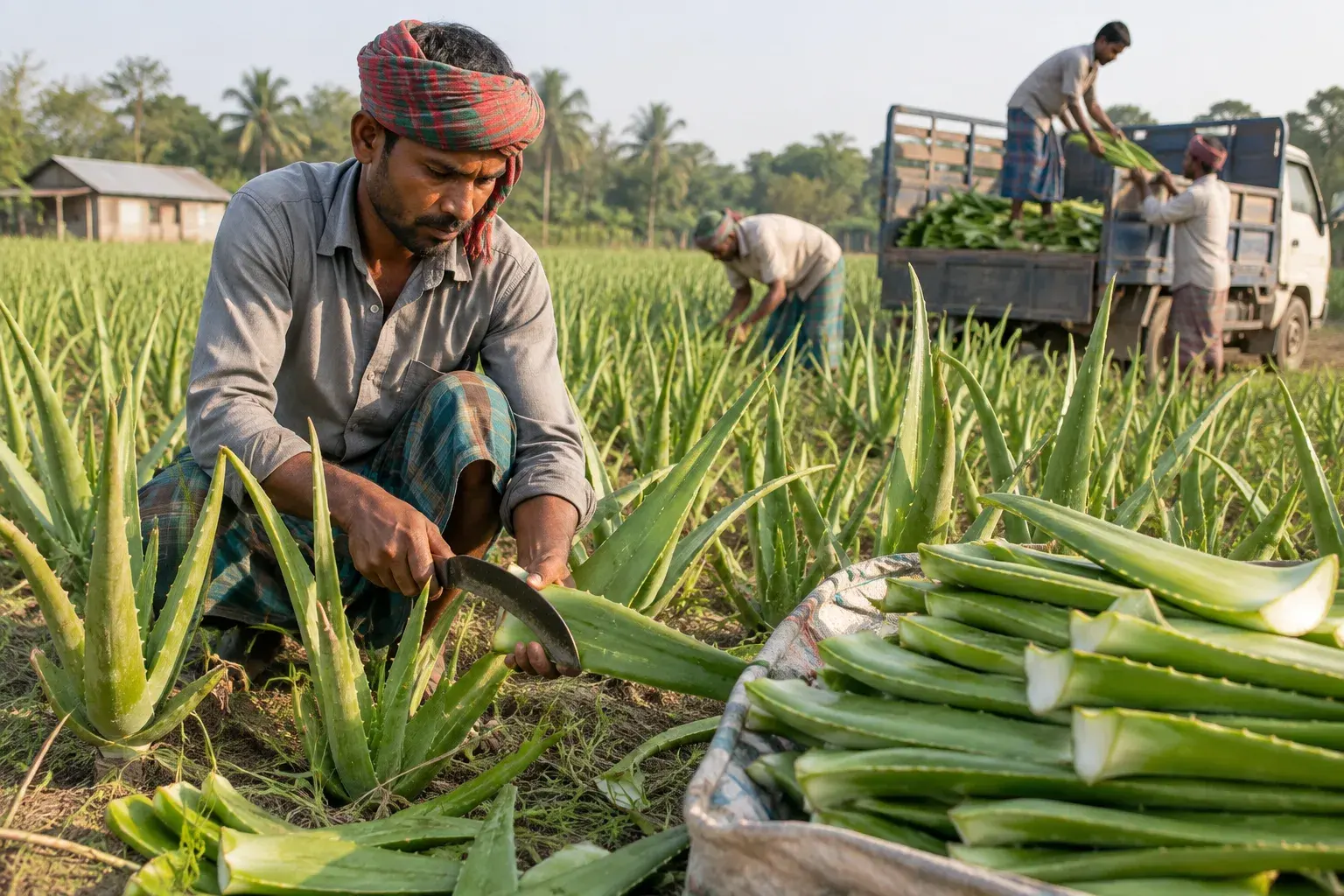
Aloe vera farming
Cutting aloe leaves and selling them to companies. About Tk 50,000 a bigha to grow and Tk 1.5-2.5 lakh of leaves, but the only buyers are a few pharmaceutical and juice companies.
- Capital
- ৳50k – ৳2 lakh
- People
- 1 – 6
- First income
- 90 – 120 days
 Agriculture & farming
Cashew and coffee farming
Cashew and coffee orchards on hill land. Farmers get Tk 180-200 a kg for raw cashew and Tk 350-400 for raw coffee, but the first crop comes three to four years after planting for coffee and four to five for cashew.
- Capital
- ৳50k – ৳5 lakh
- People
- 1 – 6
- First income
- 1,095 – 1,825 days
 Agriculture & farming
Oyster mushroom growing
Grown indoors in straw packs. First harvest in 21 days, with rising city demand.
- Capital
- ৳50k – ৳1.2 lakh
- People
- 1 – 2
- First income
- 21 – 35 days