
Mobile and accessories shop
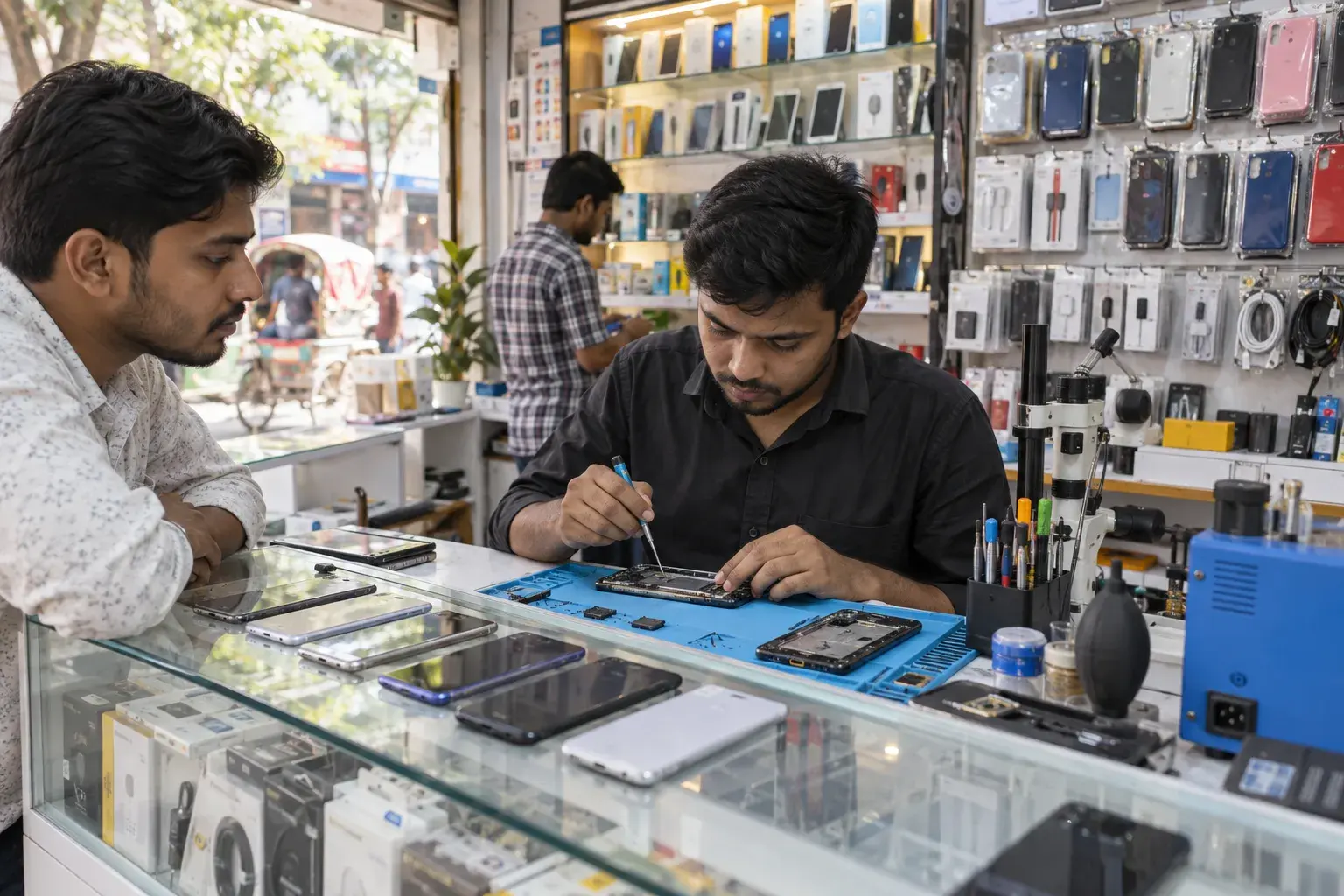
A shop selling phones, accessories and repairs. There is almost nothing in a handset — accessories and repair labour are what keep the shop open.
- Last reviewed: 19 September 2026
- Version 1
Mobile and accessories shop
- Starting capital
- ৳1,00,000 – ৳5,00,000 Editorial estimate
- Manpower
- 1 – 3 people
- First sale
- 10 – 30 days Editorial estimate
- Break-even
- 4 – 8 months Editorial estimate
- Kind of work
- Shop · Medium difficulty
About the business
A small shop with a few phones in the glass case at the front, and behind them chargers, back covers, screen glass, headphones, power banks and memory cards — with a repair table in one corner. From outside it looks like the shop lives on selling handsets. It does not. Handset prices are fixed, the shop next door sells at the same price, and what is left on a set is small. The shop lives on accessories and repair: a charger sells for Tk 190-690, glass and covers come in for less than that, and on a screen replacement or a charging-port repair the labour is the profit. A shopkeeper who does not understand that split ends up with his capital sitting in the display case. The rules have changed too. NEIR went live on 16 December 2025 and enforcement began on 1 January 2026: every handset's 15-digit IMEI must now sit in the BTRC database against a National ID, and illegal or cloned handsets face disconnection after a 90-day grace period. Between 60 and 90 percent of phones in active use are unregistered or grey, which means much of the stock in the country's shops is in question. On 7 December 2025 mobile traders shut their shops nationwide indefinitely in protest. The shops that are safe now are the ones that keep the authorised importer's receipt and know how to repair.
Unit economics
| Item | Range | Evidence | Suggest a correction |
|---|---|---|---|
| Monthly working capital | ৳80,000 – ৳4,00,000 | Editorial estimate | |
| Selling price | ৳190 – ৳690 / unit | Market quote | |
| Variable cost | ৳110 – ৳450 / unit | Editorial estimate | |
| Gross margin | 35% – 42% | Editorial estimate | |
| Time to first revenue | 10 – 30 days | Editorial estimate | |
| Break-even time | 4 – 8 months | Editorial estimate | |
| Cash cycle | 0 – 1 days | Editorial estimate | |
| Waste / loss | 3% – 8% | Editorial estimate | |
| Daily capacity | 10 – 40 | Editorial estimate |
What you need to start
- A glass display case, a repair bench, a screwdriver set, a heat gun, a soldering iron, a multimeter, a flashing box and a computer.Equipment
- Fast-moving accessories: chargers, Type-C and micro USB cables, screen glass, back covers, headphones, power banks, memory cards. Without covers and glass for the models people actually carry, customers walk out.Starting stock
- Trade licence from the city corporation or municipality: form Tk 10, licence book Tk 50, standard tax Tk 30, stamp Tk 150-300, licence fee Tk 100-60,000 by trade type. Issued in 3-5 working days.Licence
- BTRC's NEIR: every handset's 15-digit IMEI must be registered in the central database against a National ID. Live from 16 December 2025, enforced from 1 January 2026, with a 90-day window for illegal and cloned handsets.Licence
- Repair skills: screen and battery replacement, charging ports, software and flashing. It brings customers back and the labour is almost pure margin.Skill
- An authorised importer or company distributor, plus a wholesale accessories market. Stocking a handset whose receipt does not carry the IMEI is no longer safe.Supplier
- A small shop in the bazar or on a busy road, with reliable power and good lighting. It needs little space but a lot of passing traffic.Workspace
How the work is done
- 1Pick the spot: inside the bazar, beside a bus stand or a college, where a lot of people walk past. A mobile shop is a footfall business.
- 2Take the trade licence from the city corporation or municipality and get a TIN from the NBR.
- 3Decide what the shop actually is: accessories and repair only, or handsets as well. Starting with accessories and repair needs far less capital.
- 4If you stock handsets, buy only from an authorised importer or the company's distributor, and check that the IMEI is written on the receipt for every set.
- 5Check every handset's IMEI against NEIR before selling it. If an illegal or cloned phone is disconnected later, the customer comes back to you.
- 6Buy accessories from the wholesale market in small lots — chargers, cables, glass, covers, headphones, power banks — and note which model's cover actually sells.
- 7Learn repair work or seat a technician. Screen replacement, charging ports, batteries and software work are where the day's real income comes from.
- 8Fit the glass and the cover in front of the customer. It brings them back, and those small jobs are what keep the shop ticking over.
- 9Write down each day's takings in three separate lines: handsets, accessories, repair. After a month you will see plainly which one the shop stands on.
- 10Stock up before Ramadan and the two Eids, and budget on the basis that most handsets sell in those weeks.
Seasons
- JanNormal
- FebNormal
- MarHigh
- AprHigh
- MayHigh
- JunNormal
- JulNormal
- AugNormal
- SepNormal
- OctNormal
- NovNormal
- DecNormal
Where it works well
- Strong fitChattogram · A wholesale trade centred on Reazuddin Bazar and the large customer base of the port city.
- Strong fitDhaka · Shops across the country buy their stock from the mobile markets at Motaleb Plaza and Bashundhara City, and neighbourhood repair demand is highest here too.
- Strong fitGazipur · Hundreds of thousands of garment workers keep year-round demand for cheap phones, chargers and repairs.
- Strong fitNarayanganj · Dense settlement and factory areas, with Dhaka's wholesale market right next door.
- PossibleBogura · The trading hub of the north; small shops from nearby districts take their accessories from here.
- PossibleCumilla · Highway bazars and remittance-backed purchasing power make demand for costlier sets relatively strong.
- PossibleKhulna · A divisional city where people come in from the surrounding upazilas to buy and repair phones.
- PossibleMymensingh · A large student market around the university and colleges, where accessories move fastest.
- PossibleRangpur · A big market for feature phones and cheap sets, though expensive handsets move slowly.
- PossibleSylhet · A high share of families with relatives abroad supports demand for expensive smartphones and accessories.
Risks and cautions
- HighDemand: There is almost nothing in a handset: the company fixes the price, the shop next door quotes the same, and online is cheaper still. A shop that only stocks phones has its capital locked in the display case and cannot cover the rent. Without accessories and repair it does not stand up.
- MediumWorking capital: Stock is bought before it is sold. When models change, nobody wants the covers and glass for the old one, and smartphone prices fall as soon as a newer model lands. Stock sitting in the case is the biggest single loss a small shop takes.
- MediumDependency: Import and supply sit with a handful of firms. In December 2025 traders shut shops nationwide indefinitely, demanding an end to the syndicate and open import rights. When supply stops or terms change, a small shop has no alternative.
- MediumOther: Repair carries its own risk: if a customer's phone is damaged on the bench or the data is wiped, the shop carries the whole liability. Breaking the screen of an expensive set can cost several thousand taka, far more than a day's takings.
- HighCompliance: With NEIR running, phones with illegal, smuggled or cloned IMEIs are meant to be disconnected. Between 60 and 90 percent of phones in active use are unregistered or grey, so a lot of shop stock is exposed. When such a set is sold and then cut off, the customer demands his money back and the shop absorbs the loss.
Sources
সিটি কর্পোরেশন থেকে ট্রেড লাইসেন্স প্রাপ্তির ধাপ সমূহ
Collected: 16 Sept 2026Supports: Starting capital, Time to first revenue · বাংলাদেশ
What changed
No corrections have been published yet.
Questions and answers
No questions yet. Be the first to ask.
Stories about this business
Five lakh chargers a month and 80 percent of the market, undone by an undated guarantee card
Started in 1996, this charger and battery business was selling about five lakh chargers a month by 2010 — roughly 2.5 crore taka of sales and about 80 percent of the national market. Its six-month replacement card carried no date, so old products kept coming back for free replacement indefinitely.
- Reasons
- Other, Working capital
Similar businesses
 Retail & wholesale
Betel nut trading
Buying betel nut from households and selling at the hat, or soaking and drying it to sell later. In Lakshmipur in October 2025 a kaun fetched Tk 2,500-2,800 and a pon Tk 150-250.
- Capital
- ৳1 lakh – ৳25 lakh
- People
- 1 – 8
- First income
- 1 – 240 days
 Retail & wholesale
Clothing and boutique shop
A shop selling fabric and ready-made clothes. Cotton runs Tk 300-700 a yard in Dhaka, and most of the year's takings arrive in the last ten days of Ramadan.
- Capital
- ৳1 lakh – ৳8 lakh
- People
- 1 – 5
- First income
- 15 – 45 days
 Retail & wholesale
Potato storage trading
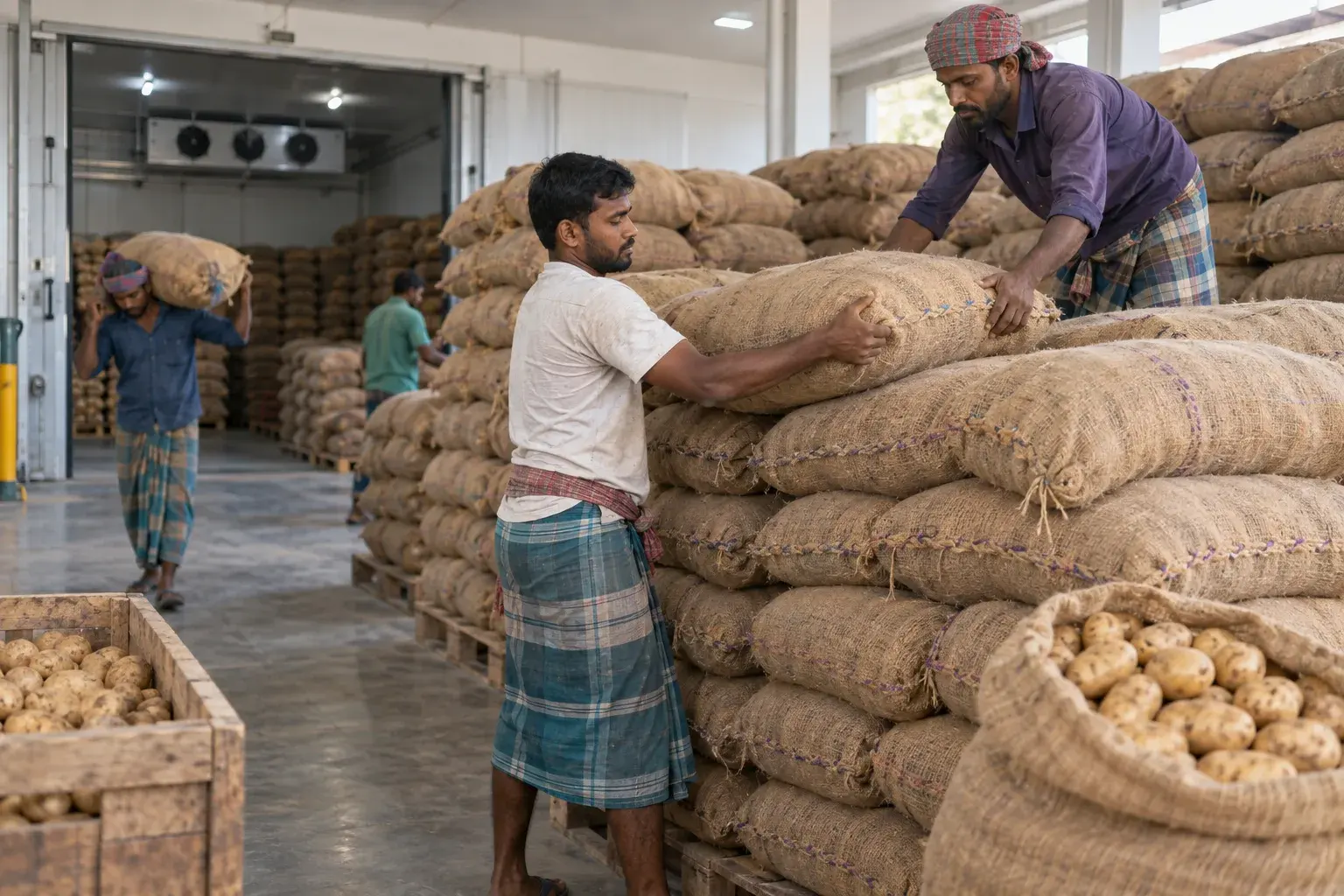
Buying potatoes at harvest, storing them cold and selling later. Rent is capped at Tk 6.00/kg, but in 2026 a 60 kg sack cost Tk 1,150-1,300 and sold for Tk 800-870.
- Capital
- ৳1.2 lakh – ৳6.5 lakh
- People
- 1 – 3
- First income
- 150 – 270 days
 Retail & wholesale
Grocery shop
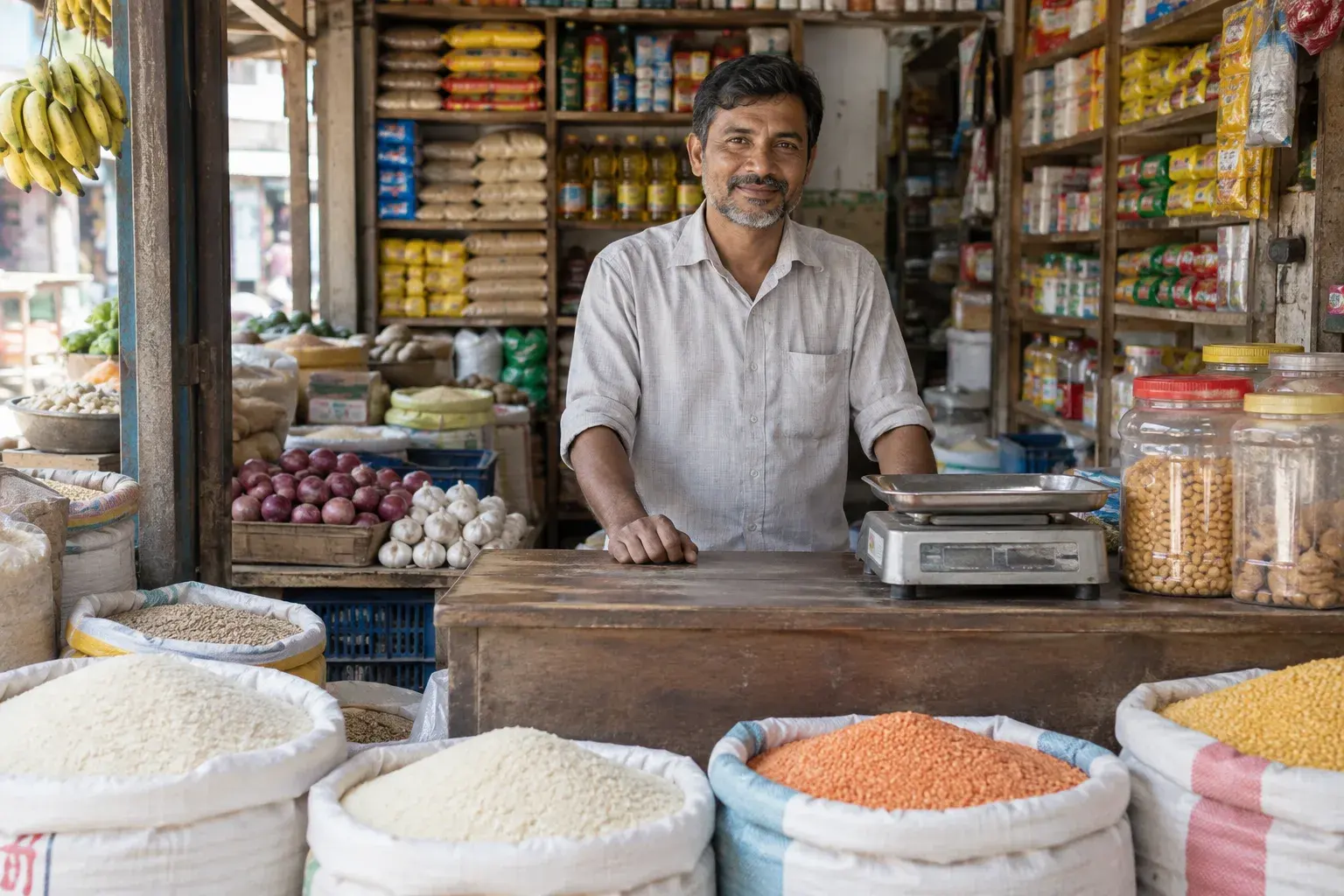
The neighbourhood everyday-goods shop. A few taka a kilo, so income depends on volume - and the shop usually dies when customer credit locks up the cash.
- Capital
- ৳80k – ৳5 lakh
- People
- 1 – 3
- First income
- 10 – 30 days