
Clothing and boutique shop
A shop selling fabric and ready-made clothes. Cotton runs Tk 300-700 a yard in Dhaka, and most of the year's takings arrive in the last ten days of Ramadan.
- Last reviewed: 19 September 2026
- Version 1

Clothing and boutique shop
- Starting capital
- ৳1,00,000 – ৳8,00,000 Editorial estimate
- Manpower
- 1 – 5 people
- First sale
- 15 – 45 days Editorial estimate
- Break-even
- 7 – 10 months Editorial estimate
- Kind of work
- Shop · Medium difficulty
About the business
A shop selling fabric by the yard, three-piece sets, sarees, panjabis and ready-made clothes. Stock comes from the wholesale markets of Islampur and Keraniganj in Dhaka, which feed thousands of small shops around the country. Retail prices depend on the cloth. In March 2024 at New Market, Chandrima, Priyangan, Mouchak and Islampur in Dhaka, printed cotton was Tk 300-400 a yard, plain cotton Tk 300-700, china linen Tk 150, cotton katan Tk 400-500, silk Tk 700-1,200 and heavily worked georgette Tk 700-2,000. Those rates are a year and a half old. The arithmetic of this business is not annual, it is the Eid arithmetic. One account of the footwear market found that 30 to 35 percent of a year's sales happen at Eid, with the heaviest crowds in the last ten days of Ramadan, and the clothing trade follows the same calendar. The money goes out before Ramadan and comes back in the final days before Eid. Whatever design did not sell becomes the burden of the whole year. At the Friday footpath market in Rajshahi, shop employees sell their own shop's leftovers at a discount, where even a new jacket goes for Tk 700 or less. That is where unsold stock ends up, and at those prices the profit is gone and often the cost with it.
Unit economics
| Item | Range | Evidence | Suggest a correction |
|---|---|---|---|
| Monthly working capital | ৳30,000 – ৳3,50,000 | Editorial estimate | |
| Selling price | ৳90 – ৳2,000 / unit | Market quote | |
| Variable cost | ৳60 – ৳1,500 / unit | Editorial estimate | |
| Gross margin | 25% – 33% | Editorial estimate | |
| Time to first revenue | 15 – 45 days | Editorial estimate | |
| Break-even time | 7 – 10 months | Editorial estimate | |
| Cash cycle | 0 days | Editorial estimate | |
| Waste / loss | 5% – 15% | Editorial estimate | |
| Daily capacity | 20 – 150 | Editorial estimate |
What you need to start
- Racks and shelves, hangers, a large mirror, a trial room, a measuring stick, a cash box and good lighting.Equipment
- A stock of fabric and ready-made clothes. Dhaka retail rates (March 2024): printed cotton Tk 300-400 a yard, plain cotton Tk 300-700, china linen Tk 150, cotton katan Tk 400-500, silk Tk 700-1,200, georgette Tk 700-2,000. Wholesale is lower, but those rates could not be verified.Starting stock
- Trade licence from the city corporation or municipality: form Tk 10, licence book Tk 50, standard tax Tk 30, stamp Tk 150-300, licence fee Tk 100-60,000 by trade type. Issued in 3-5 working days.Licence
- A TIN from the NBR, and VAT registration depending on the size of the business. The VAT rate for retail cloth trading could not be verified in this research.Licence
- Judging which colours and designs will move in your area before you buy, and knowing cloth quality by hand. Buying the wrong design locks up a whole season's money.Skill
- The wholesale markets of Islampur and Keraniganj in Dhaka; Chandrima, Priyangan, Mouchak and Mohammadpur Krishi Market are also sources inside the city. Local weavers and block and batik workers are the alternative.Supplier
- A shop on the busy side of the market, with a trial room and good lighting. Rent and advance vary by locality and could not be verified here.Workspace
How the work is done
- 1Decide from the area what you will sell: fabric by the yard, ready-made three-piece sets, or sarees. Trying to keep all three means never having enough of any.
- 2Take a shop on the busy side of the market where people already walk. A cloth shop lives on passing trade.
- 3Take the trade licence from the city corporation or municipality, and a TIN and, where required, VAT registration from the NBR.
- 4Go round the Islampur and Keraniganj wholesale markets at least twice, and learn the rates, the minimum lot and the return terms before you buy anything.
- 5Keep the first lot small and spread the designs. Buying big before you know which colours and patterns move in your area is how money gets locked into stock that does not sell.
- 6Fit the shop with racks, hangers, a large mirror, a trial room and good lighting. Cloth colour depends on light, and good cloth does not sell under bad light.
- 7Record the cost, the date it came in and the date it sold for every item. How long a piece has been sitting is the single number that decides profit or loss in this trade.
- 8Bring in the Eid stock before Ramadan begins. The rush is in the last ten days, but the money has to go out long before that.
- 9In the week after Eid, separate what did not move and clear it at a discount. The longer you hold it the less it fetches and the longer your money stays locked.
- 10Open a Facebook page with photographs and prices. Customers come from outside your own area, and it keeps some sales going in the months away from Eid.
Seasons
- JanNormal
- FebHigh
- MarHigh
- AprNormal
- MayHigh
- JunNormal
- JulNormal
- AugNormal
- SepNormal
- OctNormal
- NovNormal
- DecNormal
Where it works well
- Strong fitChattogram · A large city with many households able to spend and big Eid takings.
- Strong fitDhaka · The Islampur and Keraniganj wholesale markets are here, with rows of retail shops at New Market, Chandrima, Priyangan and Mouchak.
- Strong fitNarayanganj · Next to Dhaka, so stock is easy to lift from Islampur, and dense settlement keeps customers close.
- PossibleBogura · The commercial hub of the north, where small shopkeepers from nearby districts also lift stock.
- PossibleCumilla · A district town on the highway, drawing buyers from surrounding upazilas at Eid and in the wedding season.
- PossibleGazipur · Factory workers have their own earnings, and the days after the Eid bonus bring a sharp burst of sales.
- PossibleRajshahi · The Friday footpath market from Kumarpara to Shaheb Bazar Zero Point draws 200-300 traders, and it is also where discounted stock is cleared.
- PossibleSylhet · Remittance households can spend more, and demand for better and dearer cloth is relatively strong.
Risks and cautions
- HighWorking capital: Unsold stock is what kills this business. Cloth does not rot, so the loss is invisible; the money simply sits on the shelf. A design that missed at Eid loses value every month and finally goes to the discount market. At the Friday footpath market in Rajshahi, shop employees sell their own shop's leftovers at a discount, where even a new jacket goes for Tk 700 or less. No published figure exists for what share of stock ends up this way, and that is the biggest unknown on this page.
- HighDemand: The year's sales pile into a few weeks. One account of the footwear market found that 30-35 percent of annual sales happen at Eid, with the heaviest crowds in the last ten days of Ramadan, and the clothing trade runs on the same calendar. Get the stock wrong for those ten days and the year is lost; buy too much and it becomes a burden from the day after Eid. Note that the figure is for footwear, not clothing; no equivalent figure for apparel was found.
- MediumLate payment: Customers pay cash in the shop, but stock often comes from the wholesale market on credit, especially before Eid when everybody buys big. If Eid sales disappoint the wholesaler's money stays outstanding, and next season he will not give credit again. The length and terms of that credit could not be verified in this research.
- MediumOther: Brand outlets and online sellers are taking share. At Eid 2026 branded footwear outsold non-branded, brands hold more than 30 percent of that market and are growing 10-15 percent a year. If clothing follows the same path, the neighbourhood shop's customers move to malls and Facebook pages.
- LowCompliance: On paper this is an easy trade: a trade licence and a TIN are enough. The difficulty starts when the business grows past the VAT registration threshold, after which the record-keeping rules are no longer what they were.
Sources
সিটি কর্পোরেশন থেকে ট্রেড লাইসেন্স প্রাপ্তির ধাপ সমূহ
Collected: 16 Sept 2026Supports: Starting capital, Time to first revenue · বাংলাদেশ
What changed
No corrections have been published yet.
Questions and answers
No questions yet. Be the first to ask.
Stories about this business
Fire takes the saree shop and both godowns, and the loss figures do not agree
A canal-side saree shop and both its godowns burned in Bhola. The owner put the loss at 25-30 lakh taka; the Fire Service put it at 15-20 lakh.
- Reasons
- Other, Poor location
40,000 taka of capital, over four lakh five years later
A cloth business run from home in Bera municipality started about five years ago with roughly 40,000 taka; the capital is now over 400,000.
- Capital
- ৳40k
- Reasons
- Working capital, Good location
Similar businesses
 Retail & wholesale
Betel nut trading
Buying betel nut from households and selling at the hat, or soaking and drying it to sell later. In Lakshmipur in October 2025 a kaun fetched Tk 2,500-2,800 and a pon Tk 150-250.
- Capital
- ৳1 lakh – ৳25 lakh
- People
- 1 – 8
- First income
- 1 – 240 days
 Retail & wholesale
Mobile and accessories shop
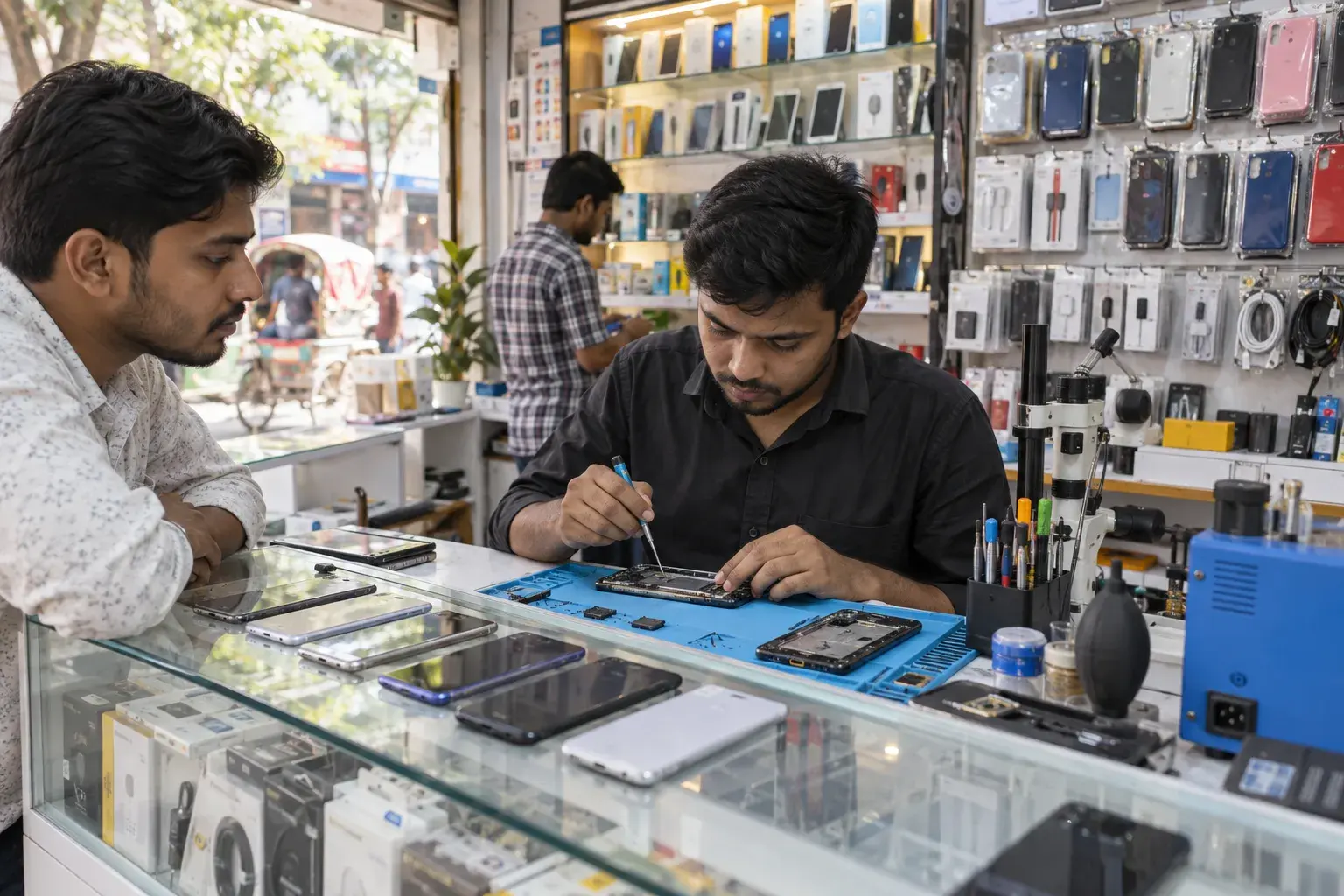
A shop selling phones, accessories and repairs. There is almost nothing in a handset — accessories and repair labour are what keep the shop open.
- Capital
- ৳1 lakh – ৳5 lakh
- People
- 1 – 3
- First income
- 10 – 30 days
 Retail & wholesale
Potato storage trading
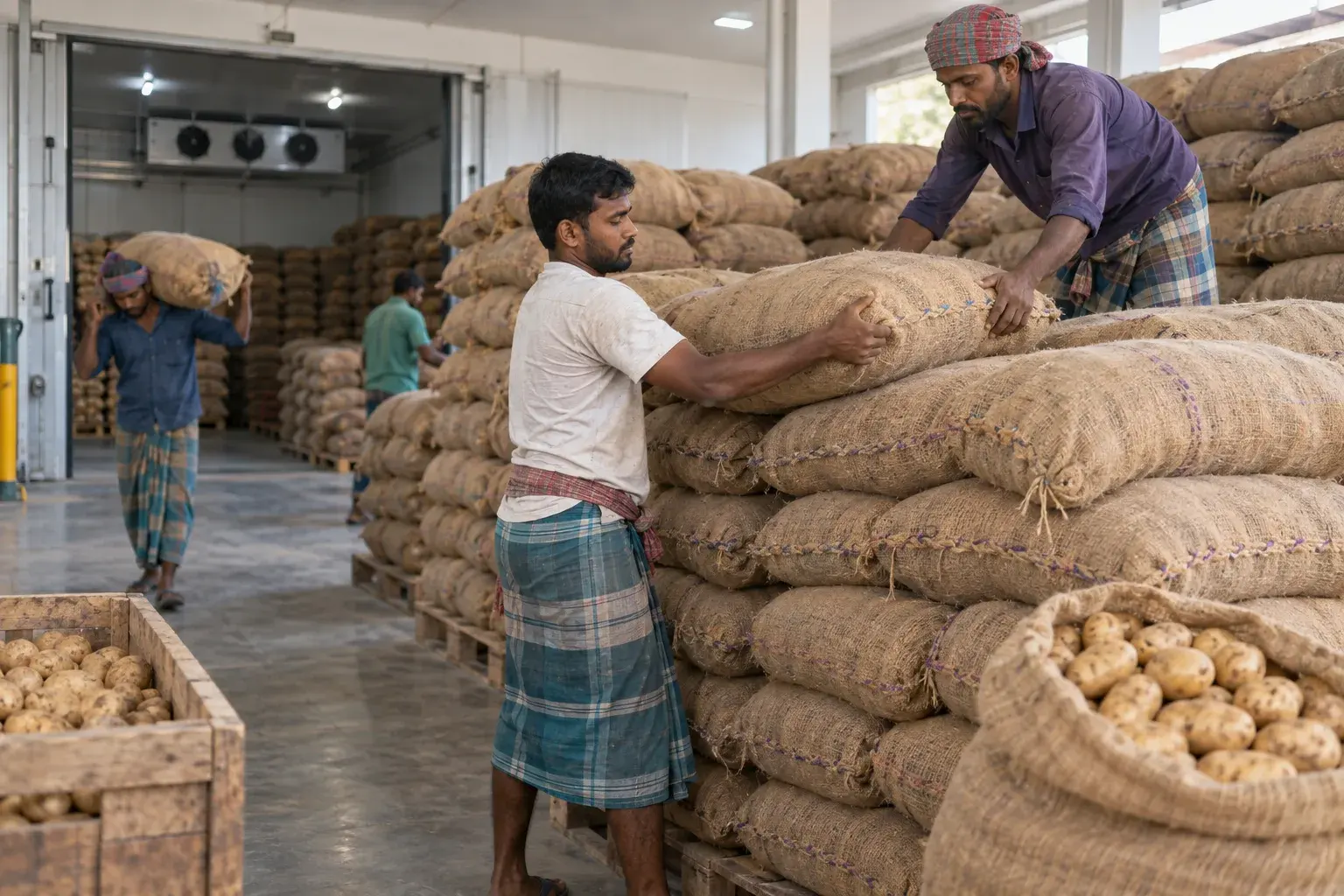
Buying potatoes at harvest, storing them cold and selling later. Rent is capped at Tk 6.00/kg, but in 2026 a 60 kg sack cost Tk 1,150-1,300 and sold for Tk 800-870.
- Capital
- ৳1.2 lakh – ৳6.5 lakh
- People
- 1 – 3
- First income
- 150 – 270 days
 Retail & wholesale
Grocery shop
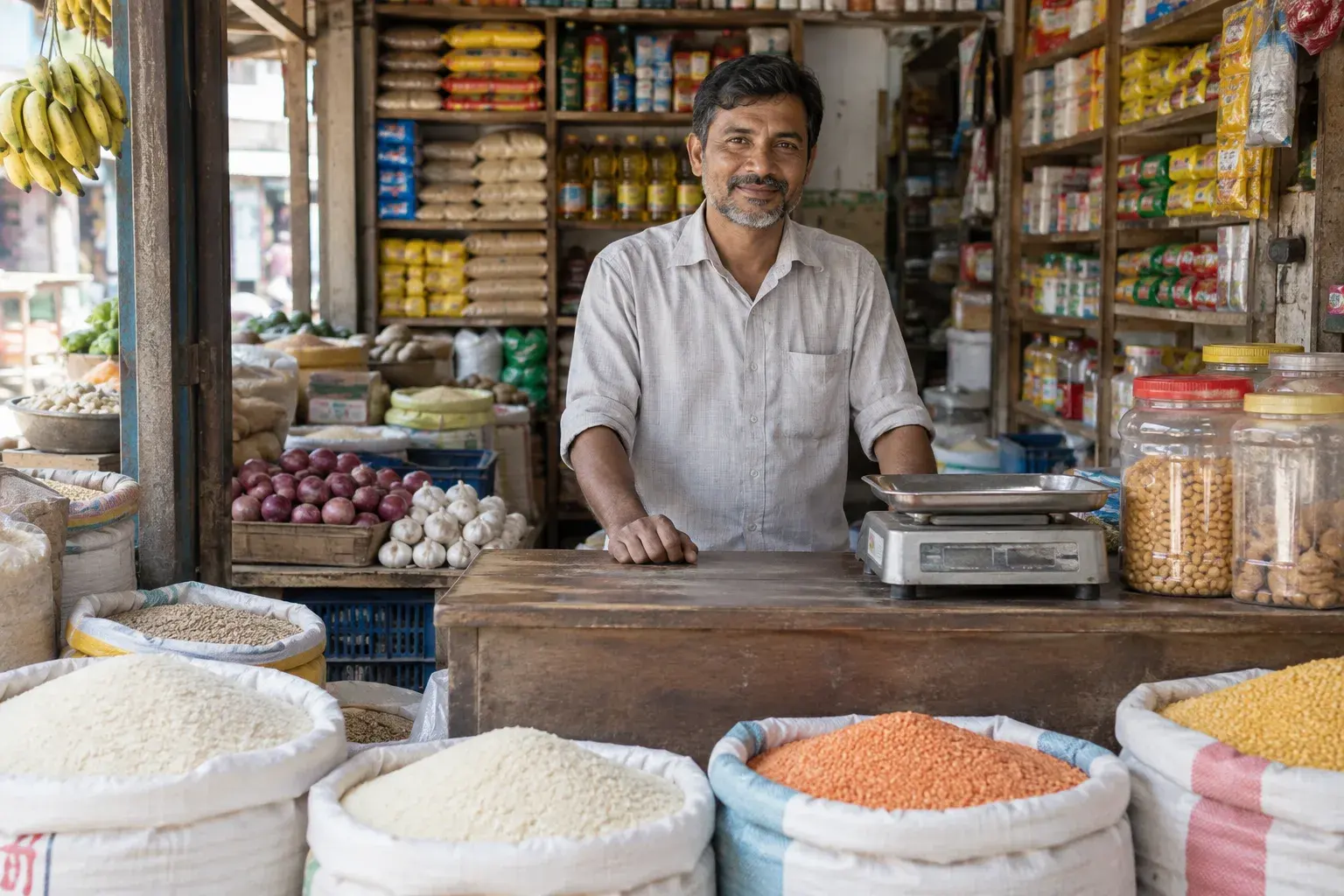
The neighbourhood everyday-goods shop. A few taka a kilo, so income depends on volume - and the shop usually dies when customer credit locks up the cash.
- Capital
- ৳80k – ৳5 lakh
- People
- 1 – 3
- First income
- 10 – 30 days