
Plain-land tea growing
Growing tea on flat land, plucking green leaf and selling it to factories for cash. The fixed rate in March 2026 was Tk 28 a kg with the market at Tk 34-35, but up to 40 percent can be cut off the weight.
- Last reviewed: 19 September 2026
- Version 1

Plain-land tea growing
- Starting capital
- ৳1,00,000 – ৳5,00,000 Editorial estimate
- Manpower
- 1 – 6 people
- First sale
- 730 – 1,095 days Editorial estimate
- Break-even
- 58 – 86 months Editorial estimate
- Kind of work
- Farm · Medium difficulty
About the business
Growing tea on flat land rather than hills, plucking the green leaf and selling it to a factory. The trade sits in five northern districts: Panchagarh, Thakurgaon, Dinajpur, Nilphamari and Lalmonirhat. Bangladesh Tea Board figures for the 2025 season show 97.7 million kg of green leaf taken off 11,599 acres across those districts and processed in 31 factories into 20.2 million kg of made tea, over 21 percent of national output. There are more than eight thousand growers and most of them work two or three bighas. A bush planted once yields leaf for up to a hundred years and the factories pay cash for leaf every day, which is why people have moved off paddy. The question is the price. The green leaf rate is set by the Bot Leaf Committee; in March 2026 the fixed rate was Tk 28 a kg while tight early-season supply pushed the market to Tk 34-35. Prices fall once full plucking starts. More important is the deduction: factories cut up to 40 percent off the weight for wet or poor leaf, so a grower is not paid for everything he carries in. In 2026 costs rose as well, with red spider mite, looper caterpillar and jassid forcing three or four pesticide sprays per round, while the agriculture department holds no fertiliser allocation for tea at all.
Unit economics
| Item | Range | Evidence | Suggest a correction |
|---|---|---|---|
| Monthly working capital | ৳7,000 – ৳70,000 | Editorial estimate | |
| Selling price | ৳28 – ৳35 / kg | Official source | |
| Variable cost | ৳18 – ৳36 / kg | Editorial estimate | |
| Gross margin | 0% – 35.7% | Editorial estimate | |
| Time to first revenue | 730 – 1,095 days | Editorial estimate | |
| Break-even time | 58 – 86 months | Editorial estimate | |
| Cash cycle | 0 – 1 days | Practitioner verified | |
| Waste / loss | 0% – 40% | Editorial estimate | |
| Daily capacity | 13 – 65 | Editorial estimate |
What you need to start
- A shallow pump and pipe for irrigation, a pesticide sprayer, a sickle or shears for plucking, and sacks and a van to carry the leaf.Equipment
- Improved tea seedlings, distributed by the Bangladesh Tea Board regional office on easy terms at low cost. The seedling price could not be verified.Starting stock
- Registration of the tea garden with the Bangladesh Tea Board. As of 2025 the northern belt had 2,225 registered smallholdings and 6,146 unregistered. Being unregistered keeps growers out of the fertiliser allocation route that runs through factories. The smallholding registration fee could not be verified.Licence
- Trade licence from the union parishad, municipality or city corporation: form Tk 10, licence book Tk 50, standard tax Tk 30, stamp Tk 150-300, licence fee Tk 100-60,000 by trade type.Licence
- Knowing which bud to take and when, spotting pests and dosing pesticide correctly. It is the shortage of skilled hands that makes Panchagarh growers cut with a sickle, and that is exactly why more is deducted from their weight.Skill
- Urea and DAP fertiliser and pesticide. The catch is that the Department of Agricultural Extension holds no separate fertiliser allocation for tea; it comes through the commerce and industries ministries via the factories.Supplier
- High flat land that does not waterlog. Tea took hold on exactly the raised northern plots that grew little before because they could not be irrigated or ploughed.Workspace
How the work is done
- 1First find out how far the nearest factory or leaf collection centre is. Green leaf must reach the factory the day it is plucked or the price drops.
- 2Register the garden at the Bangladesh Tea Board regional office in Panchagarh. A large share of the northern smallholdings are still unregistered, and without registration you are outside the fertiliser and support system altogether.
- 3Take improved seedlings from the Tea Board regional office on easy terms at low cost, and attend their training workshops.
- 4Plant the seedlings about four feet apart. The land must be high; tea will not survive waterlogging.
- 5Plant shade trees at set intervals. The Tea Board recommends kalo koroi and sada shirish. Shade keeps the leaf cool, cuts red spider mite attacks, and the fallen leaves rot down into organic matter.
- 6Fertilise twice a year, irrigate every fifteen days in the dry season, and spray pesticide at least six times a year. Under 2026's pest pressure many are spraying three or four times per round.
- 7Pluck in seven to ten rounds between March and November, with three or four rounds in the July-August peak. Hand-plucking allows up to 30-32 rounds a season; cutting with a sickle delays the new bud.
- 8Get the leaf to the factory or collection centre as fast as possible. Wet leaf means a bigger deduction from the weight.
- 9Watch the weighing and the deduction yourself and write it down. How many kilos you handed in each round, how much was cut and how much you were paid is the only leverage you will have next season.
- 10Join a small tea growers' cooperative. You cannot negotiate the price alone; in Panchagarh it has taken collective action on the road, repeatedly.
Seasons
- JanLow
- FebLow
- MarNormal
- AprNormal
- MayNormal
- JunHigh
- JulHigh
- AugHigh
- SepHigh
- OctNormal
- NovNormal
- DecLow
Where it works well
- Strong fitPanchagarh · The centre of plain-land tea: 9,819.73 acres across five upazilas, 83.2 million kg of green leaf in the 2025 season yielding 17.2 million kg of made tea, with 30 running factories. The country's third tea auction centre, online, opened here on 2 September 2023.
- Strong fitThakurgaon · 1,457 acres under tea; in the 2025 season 12.36 million kg of green leaf gave 2.56 million kg of made tea. One factory runs here and the rest of the leaf goes to Panchagarh.
- PossibleDinajpur · One of the Tea Board's five districts; the area is growing but processing still depends on Panchagarh.
- PossibleLalmonirhat · One of the Tea Board's five listed districts, but the area is still small and there is no factory.
- PossibleNilphamari · Part of the 322.87 acres shared with Lalmonirhat and Dinajpur. There is no local factory, so leaf must go to Panchagarh, adding transport cost and the risk of the leaf wilting on the way.
- Weak fitRangpur · It sits in Rangpur division but is not on the Tea Board's list of plain-land tea districts. Nobody should start here without checking soil and elevation first.
Risks and cautions
- HighDependency: The factory is the only buyer of green leaf and the Bot Leaf Committee sets the price, so the grower has no bargaining position. Until 2020 competition among factories got growers Tk 33-39 a kg; the price fell every year after that and in the 2023 season many had to sell at Tk 10-15. Unable to earn, they could not tend their gardens that year and paid for it the next.
- HighOther: The weight deduction. Factories cut up to 40 percent for wet or poor leaf. In the 2023 season some growers were left with under Tk 8 a kg after the cut, against a production cost of about Tk 18. Anyone budgeting off the announced rate will be caught out; the real number is the rate after the deduction.
- HighOther: Pest attack. In the 2026 peak season red spider mite, looper caterpillar, jassid, mosquito bug and thrips cut output in half in many Panchagarh gardens. Growers say three or four sprays per round are not working and pesticide prices have doubled. Some have cut back the bushes instead of plucking them.
- MediumDependency: No fertiliser allocation. With no tea allocation in the five Rangpur division districts, urea and DAP are unavailable in the peak season. In Sylhet growers get fertiliser at a fair price through the factories, but in the north most smallholders are unregistered, so that route is closed too.
- MediumOther: Heat and drought. Tea wants 28-30 degrees Celsius, but in April-May 2024 Tetulia's daily maximum swung between 30 and 38.8 degrees. Under strong sun no new bud comes, and most northern gardens have no shade trees.
Sources
সিটি কর্পোরেশন থেকে ট্রেড লাইসেন্স প্রাপ্তির ধাপ সমূহ
Collected: 16 Sept 2026Supports: Starting capital · বাংলাদেশ
- Collected: 20 Oct 2025
Supports: Starting capital · উপ-পরিচালক (পরিকল্পনা), বাংলাদেশ চা বোর্ড, চট্টগ্রাম
What changed
No corrections have been published yet.
Questions and answers
No questions yet. Be the first to ask.
Stories about this business
An official 18.50 a kilo, 12-15 from the factory, and a garden torn out after 20 lakh of losses
A 7-bigha tea garden in Boda, Panchagarh, paid for three or four years and then lost about 20 lakh taka: the fixed green-leaf price is 18.50 a kg, but factories paid 12-15 and cut a further 20-30 percent on top.
- Reasons
- Price drop, Dependency
Similar businesses
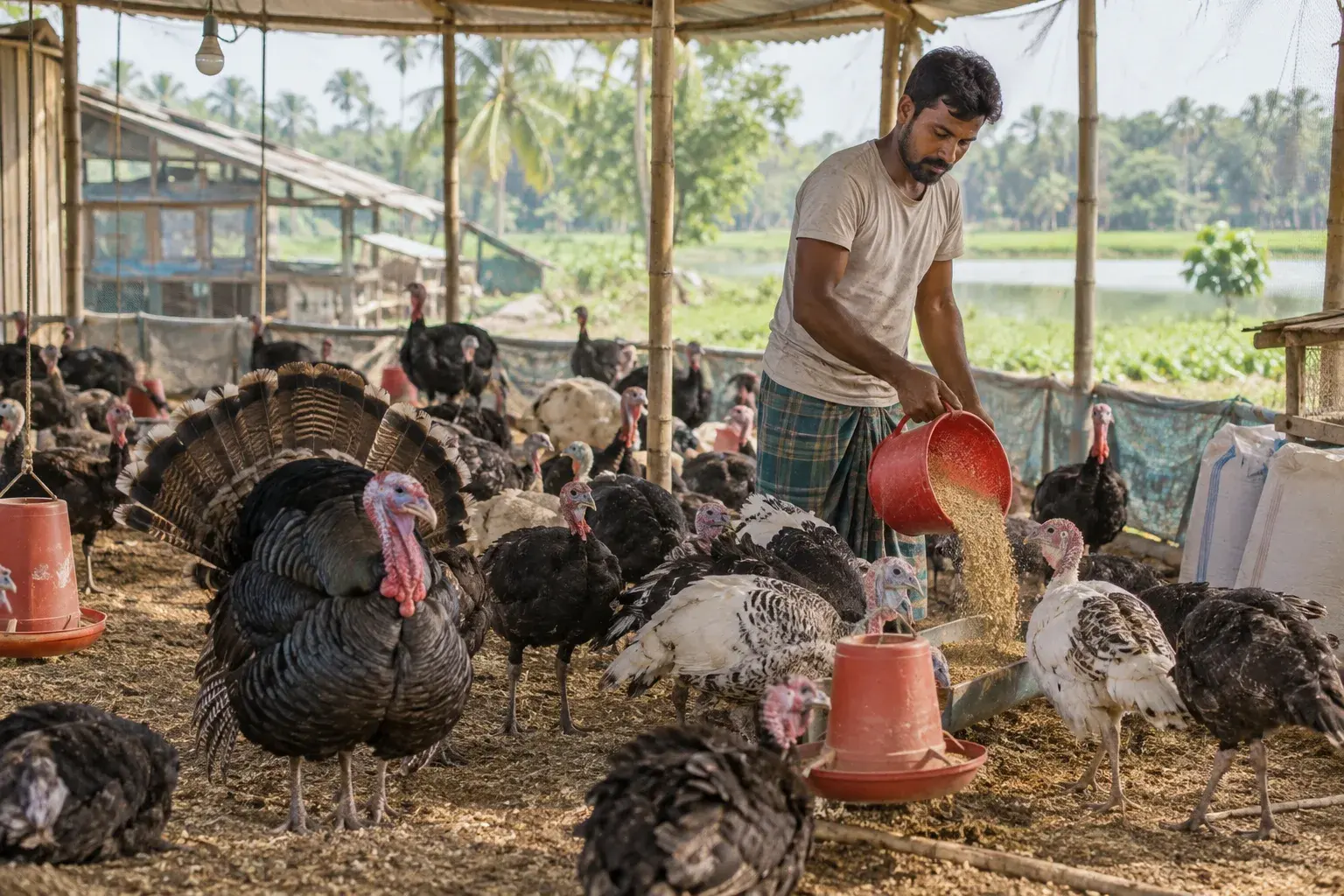 Agriculture & farming
Turkey farming
About 5,000 farms sprang up in the 2015-2020 rush and a few hundred remain. Chick prices fell from Tk 600 to Tk 150 and the livestock department discourages the trade.
- Capital
- ৳1 lakh
- People
- 1 – 3
- First income
- 30 days
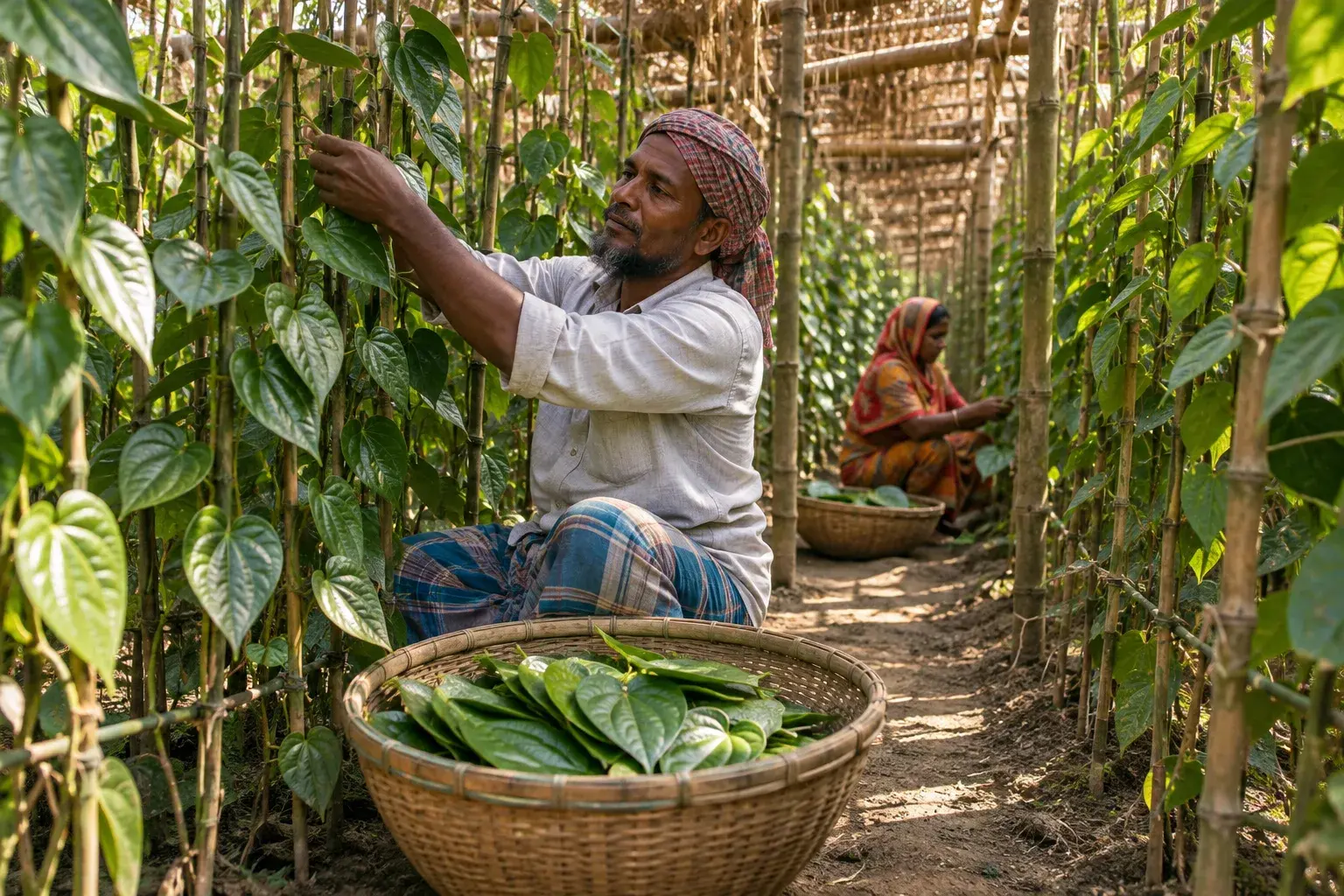 Agriculture & farming
Betel leaf cultivation (boroj)
Growing betel vine inside a bamboo-and-thatch boroj. About Tk 1 lakh a bigha to run, and in Rajshahi a bira of 64 leaves has gone from Tk 100-120 to Tk 4.
- Capital
- ৳1 lakh
- People
- 1 – 4
- First income
- 120 – 180 days
 Agriculture & farming
Agar (agarwood) plantation
Growing agar trees, driving nails into them to force the resin, and selling the wood or the attar. The first money arrives 8 to 16 years after planting, and exporting needs a CITES no-objection certificate from the Forest Department.
- Capital
- ৳1 lakh – ৳10 lakh
- People
- 1 – 6
- First income
- 2,555 – 5,840 days
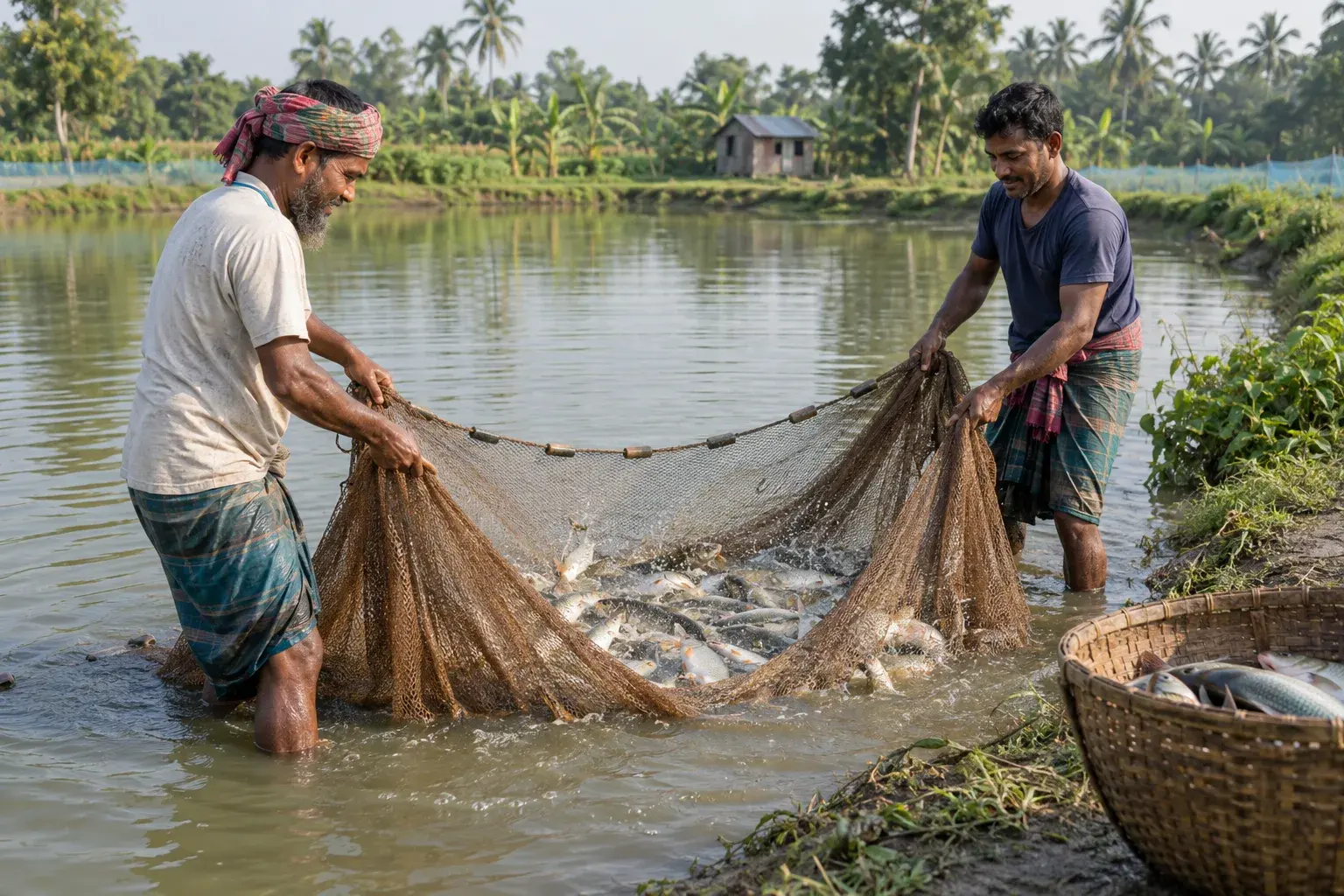 Agriculture & farming
Pond fish farming
The Department of Fisheries measures pond yield at a national average of 4.96 tonnes per hectare: 12.72 in Mymensingh, 2.01 in Rangamati. The district decides the income.
- Capital
- ৳1 lakh – ৳6 lakh
- People
- 1 – 4
- First income
- 240 – 365 days