
Tulshimala aromatic rice
Growing and milling Sherpur's GI-registered aromatic paddy. Paddy is Tk 2,200-2,400 a maund and the rice sells online at Tk 145-150 a kilo - no higher than aromatic rice without a GI.
- Last reviewed: 19 September 2026
- Version 1
Tulshimala aromatic rice
- Starting capital
- ৳50,000 – ৳3,00,000 Editorial estimate
- Manpower
- 1 – 6 people
- First sale
- 120 – 180 days Editorial estimate
- Break-even
- 6 – 12 months Editorial estimate
- Kind of work
- Farm · Medium difficulty
About the business
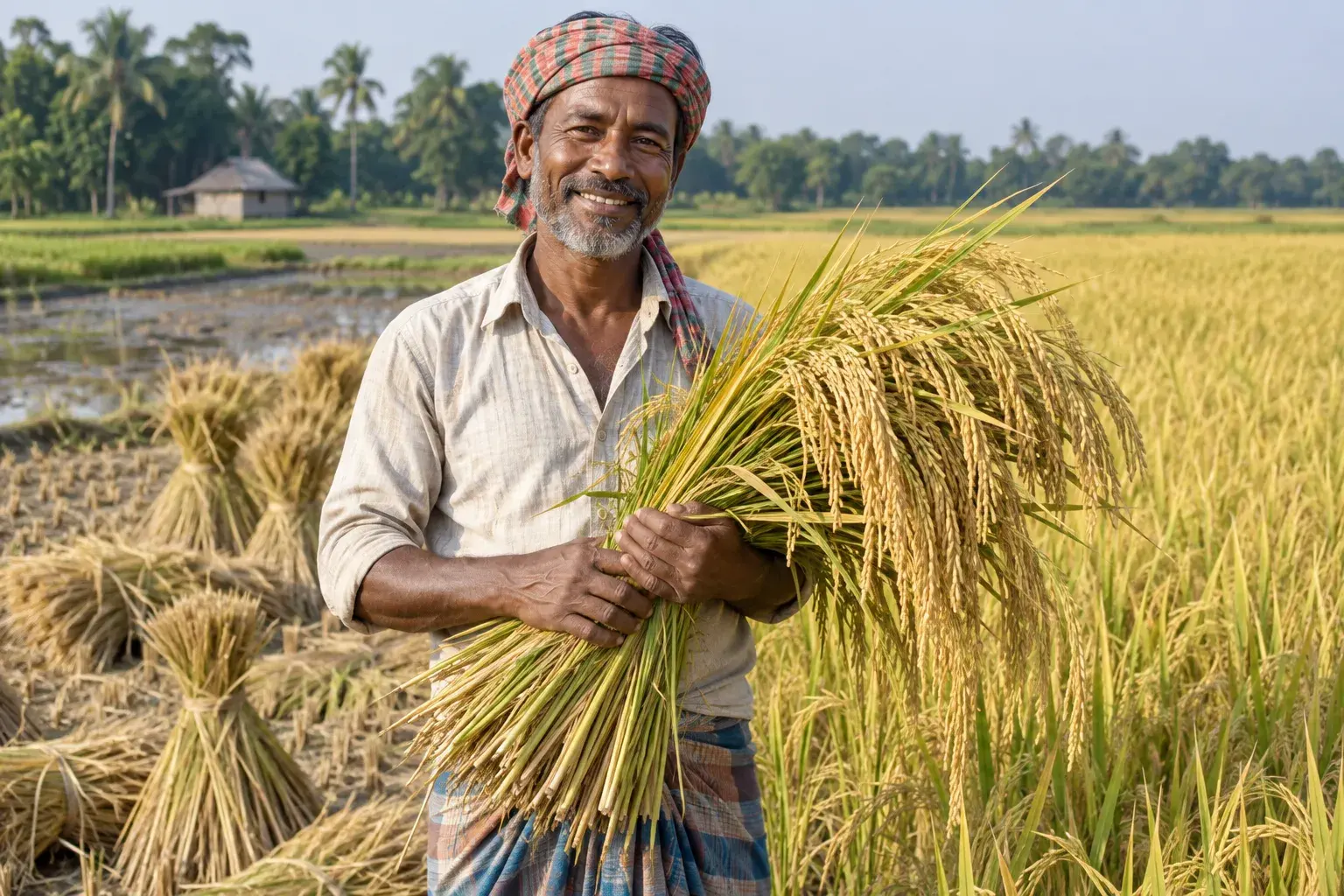
Growing Sherpur's traditional aromatic paddy tulshimala, milling it and selling the rice under its own name. The slender dark grain is a transplanted aman crop, planted in July-August, with the rice reaching the market from the first week of December; it goes into polao, biryani, khichuri, payesh and pitha. In the 2025 aman season five upazilas of Sherpur grew it on 8,718 hectares, most of it - 4,147 hectares - in Nalitabari. Yield runs 30 to 32 maunds an acre and paddy fetched Tk 2,200-2,400 a maund. Milling 68 kg of paddy gives one maund, that is 40 kg, of rice. On 12 June 2023 tulshimala received geographical indication registration as Bangladesh's fourteenth GI product. Whether that recognition raised the price is worth doing the arithmetic on. In September 2026 tulshimala rice sells online at Tk 145-150 a kilo, while chinigura aromatic rice, which holds no GI, sells at Tk 140 in the same place, and on 15 September 2026 the Dhaka retail band for aromatic or polao rice generally was Tk 170-215. The GI tag has not lifted tulshimala above ordinary aromatic rice. Nor has the extra money reached the grower: paddy prices rise only after the farmers' stores are empty. And because the yield per acre is low, many farmers will not grow it at all.
Unit economics
| Item | Range | Evidence | Suggest a correction |
|---|---|---|---|
| Monthly working capital | ৳8,000 – ৳60,000 | Editorial estimate | |
| Selling price | ৳145 – ৳150 / kg | Market quote | |
| Variable cost | ৳94 – ৳102 / kg | Editorial estimate | |
| Gross margin | 30% – 38% | Editorial estimate | |
| Time to first revenue | 120 – 180 days | Editorial estimate | |
| Break-even time | 6 – 12 months | Editorial estimate | |
| Cash cycle | 0 – 30 days | Editorial estimate | |
| Waste / loss | 3% – 6% | Editorial estimate | |
| Daily capacity | 2 – 12 | Editorial estimate |
What you need to start
- For packing, a sealing machine, scales and 5 kg and 10 kg bags - unavoidable if you want to sell online.Equipment
- True tulshimala seed. Mixed seed kills the aroma and the mill knocks the price down.Starting stock
- Trade licence from the union parishad or municipality: form Tk 10, licence book Tk 50, standard tax Tk 30, stamp Tk 150-300, fee Tk 100-60,000 by trade type. Not needed to grow and sell paddy at the hat, but needed to trade or pack rice.Licence
- Registration under the Food Safety (Registration and Licensing) Regulations 2026: Tk 1,000 new and Tk 500 renewal for packaged food producers, valid three years.Licence
- Judging how far to dry the paddy - too damp and the aroma goes, too dry and the broken-grain fraction rises.Skill
- A rice mill. About fifty automatic mills in Sherpur district mill tulshimala, working on 68 kg of paddy to 40 kg of rice.Supplier
- Aman-season land. In 2025 the five Sherpur upazilas grew it on 8,718 hectares - Nalitabari 4,147, Sherpur sadar 2,225, Jhenaigati 1,231, Nakla 691 and Sribardi 425.Workspace
How the work is done
- 1Get true tulshimala seed. The growers of Sherpur sadar, Nalitabari, Nakla, Sribardi and Jhenaigati hold it, and the upazila agriculture office gives training and advice.
- 2Transplant in July-August as an aman crop. It does not grow in any other season.
- 3Do not expect more than 30-32 maunds an acre. The low yield is exactly why growers drop it, so decide how much land to commit against that number.
- 4Cut and thresh in Agrahayan and dry thoroughly. Damp aromatic paddy loses its scent and the mill pays less for it.
- 5Do not dump the whole crop at the hat. The price farmers get at the start of the season rises sharply once their stores are empty, and that gain then goes to the trader and the mill.
- 6Get it milled. Sixty-eight kilos of paddy give one maund, 40 kg, of rice - price everything off that ratio.
- 7Sell at the Sherpur arot. Sherpur has greater Mymensingh's largest aromatic rice arot, and the district's fifty-odd mills supply Dhaka from it.
- 8To pack under your own name, register with the Bangladesh Food Safety Authority: Tk 1,000 new, Tk 500 renewal, valid three years.
- 9Open a direct online channel. Sherpur entrepreneurs have been shipping tulshimala through Facebook groups and marketplaces since 2020, and a 5 kg pack now sells at Tk 725.
- 10Do not expect the GI to add money. Three years after the 2023 registration tulshimala sells online at Tk 145-150 against Tk 140 for chinigura with no GI - effectively no difference. The GI helps recognition, not price.
- 11Talk to an exporter. Tulshimala goes from Sherpur to districts across the country and abroad, but export permission sits with only a handful of firms.
Seasons
- JanHigh
- FebNormal
- MarNormal
- AprNormal
- MayLow
- JunLow
- JulHigh
- AugHigh
- SepNormal
- OctNormal
- NovHigh
- DecHigh
Where it works well
- Strong fitMymensingh · Sherpur's millers also buy aromatic atap paddy at the hats of Durgapur, Gouripur, Fulpur and Haluaghat in Mymensingh - the same agricultural zone and the same paddy.
- Strong fitSherpur · Tulshimala's own district. In the 2025 aman season 8,718 hectares across five upazilas - Nalitabari 4,147, sadar 2,225, Jhenaigati 1,231, Nakla 691, Sribardi 425. The district has about fifty automatic rice mills and greater Mymensingh's largest aromatic rice arot.
- PossibleDhaka · A selling district, not a growing one. The district millers' association says Sherpur's mill owners supply half of Dhaka's aromatic rice demand.
- PossibleDinajpur · The rival aromatic centre - most of the country's chinigura (BRRI-34) grows here on 95,000 hectares, with some 200 automatic rice mills built around it. Tulshimala's price is really set against this market.
- PossibleJamalpur · Adjoins Sherpur inside the same greater Mymensingh aman belt, with the Sherpur arot an hour away.
- PossibleNetrokona · An aman district in the same region, with its hats feeding aromatic atap paddy through Durgapur to the Sherpur mills.
- PossiblePanchagarh · The third chinigura area, part of the northern aromatic rice supply.
- PossibleThakurgaon · Another chinigura growing area, which also feeds the supply and the price of aromatic rice.
Risks and cautions
- HighDemand: The GI has not raised the price. Tulshimala became Bangladesh's fourteenth GI product on 12 June 2023, yet in September 2026 it sells online at Tk 145-150 a kilo while chinigura, with no GI, sells at Tk 140 in the same place. The TCB Dhaka retail band for aromatic or polao rice on 15 September 2026 was Tk 170-215, so tulshimala sits below it. Anyone budgeting a GI premium into this business is budgeting a number that is not there.
- HighWorking capital: The price climbs only after the farmers' stores are empty. In the same aromatic paddy market a 75 kg sack sold for Tk 4,000 in season, then Tk 6,000, and later Tk 8,500 - but the farmers' stock was gone before the price even reached Tk 5,200. A grower without the cash to hold stock is forced to sell at the bottom.
- MediumDependency: The yield is 30-32 maunds an acre, below ordinary aman. As one grower puts it, many will not grow it because the acre gives too little. Covering that shortfall requires a higher price per maund, and the market is not paying one.
- MediumSpoilage: The whole price of aromatic rice rides on its scent. Poor drying or a damp store takes the aroma away, and without it the grain is ordinary fine rice at roughly half the price. For a small grower with nowhere dry to spread paddy in the rains, this is the real danger.
- MediumCompliance: Packing and selling requires food safety registration and full label information. The consumer rights directorate raids aromatic rice shops - one trader was fined Tk 10,000 over his price although he said he had bought at that rate from the company's own godown.
Sources
সিটি কর্পোরেশন থেকে ট্রেড লাইসেন্স প্রাপ্তির ধাপ সমূহ
Collected: 16 Sept 2026Supports: Starting capital · বাংলাদেশ
- Collected: 15 Sept 2026
Supports: Selling price · ঢাকা মহানগর — সিপাহীবাগ, মিরপুর-৬, মোহাম্মদপুর টাউন হল, নিউমার্কেট, রামপুরা, মহাখালী বাজার
All food businesses now need safety registration
Collected: 22 Jul 2026Supports: Starting capital · বাংলাদেশ
What changed
No corrections have been published yet.
Questions and answers
No questions yet. Be the first to ask.
Similar businesses
 Food processing
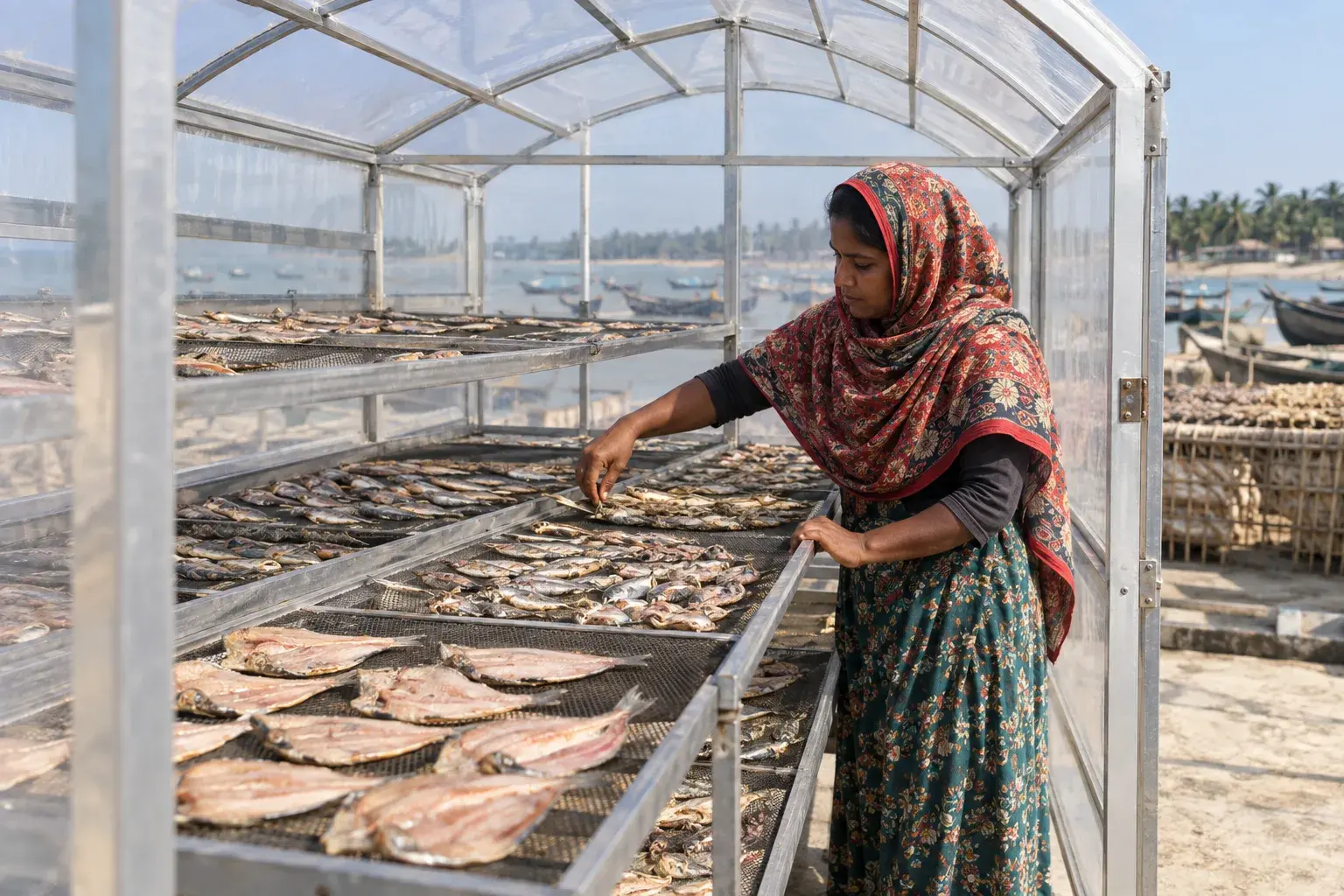
Solar and rack-dried shutki
Drying fish on raised racks or inside a solar dryer instead of on the ground, so no insecticide is needed. At Asadganj on 3 June 2026 good churi shutki fetched Tk 2,000-2,500 and loitta Tk 600-1,500 a kg.
- Capital
- ৳50k – ৳6 lakh
- People
- 2 – 20
- First income
- 20 – 60 days
 Food processing
Paneer and chhana making
Milk split into chhana, pressed into paneer. 8-10 kg of milk makes 1 kg of paneer, which sells at Tk 900-1,200 a kg - the whole business is the gap between the two prices.
- Capital
- ৳50k – ৳20 lakh
- People
- 1 – 10
- First income
- 7 – 135 days
 Food processing
Dry fish (shutki) processing
Buying fresh fish, sun-drying it for three to four days and selling shutki. December 2025 prices ran from poa at Tk 500-800 to rupchanda at Tk 1,800-2,500 a kilo; drying without insecticide is the condition for export.
- Capital
- ৳50k – ৳5 lakh
- People
- 3 – 30
- First income
- 4 – 30 days
 Food processing
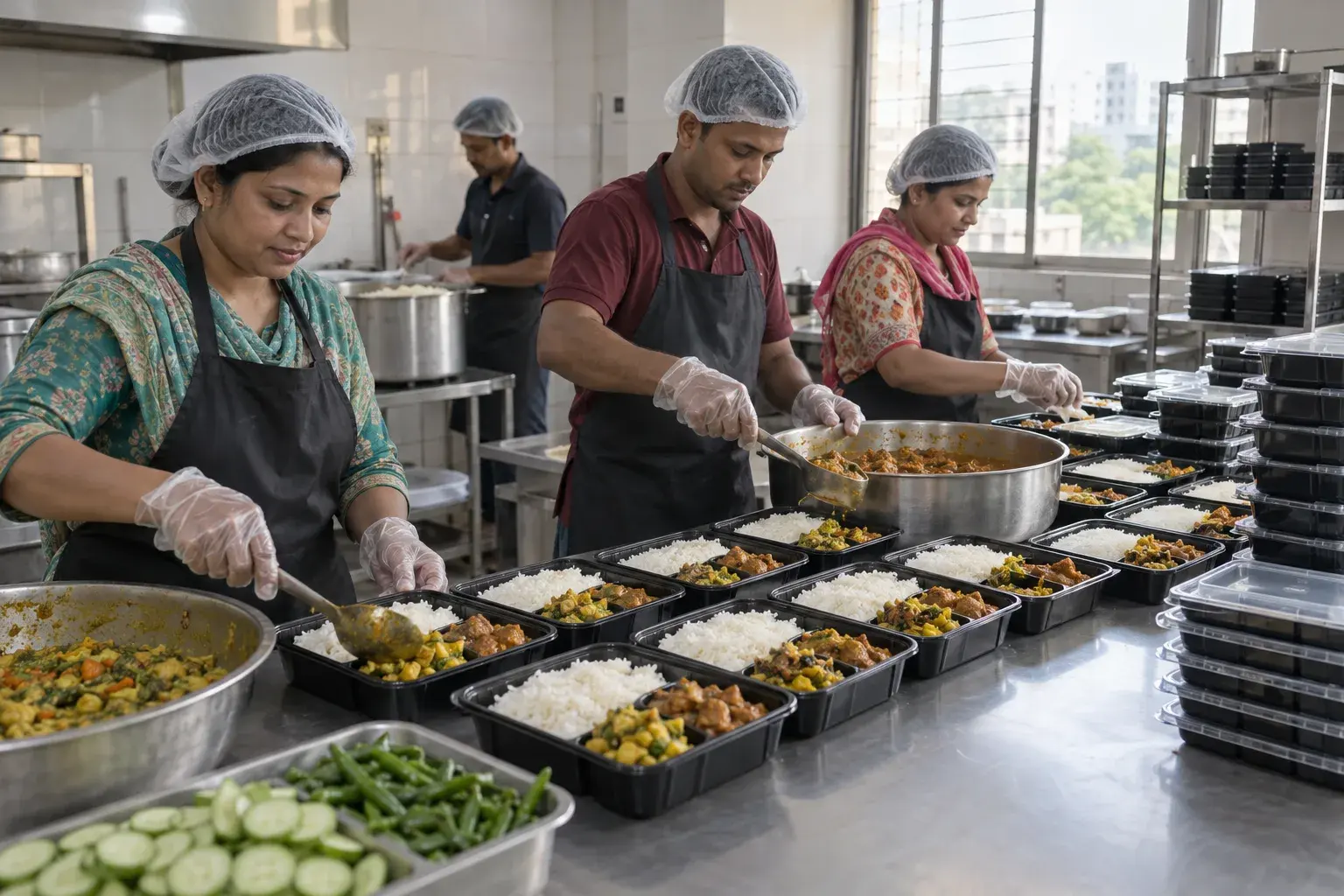
Corporate meal delivery
Daily cooked meals delivered to offices on contract. Dhaka breakfast sells from Tk 40 and lunch packages from Tk 85 to Tk 150, but the office pays at month end.
- Capital
- ৳45k – ৳1.8 lakh
- People
- 1 – 4
- First income
- 15 – 45 days