
Solar and rack-dried shutki
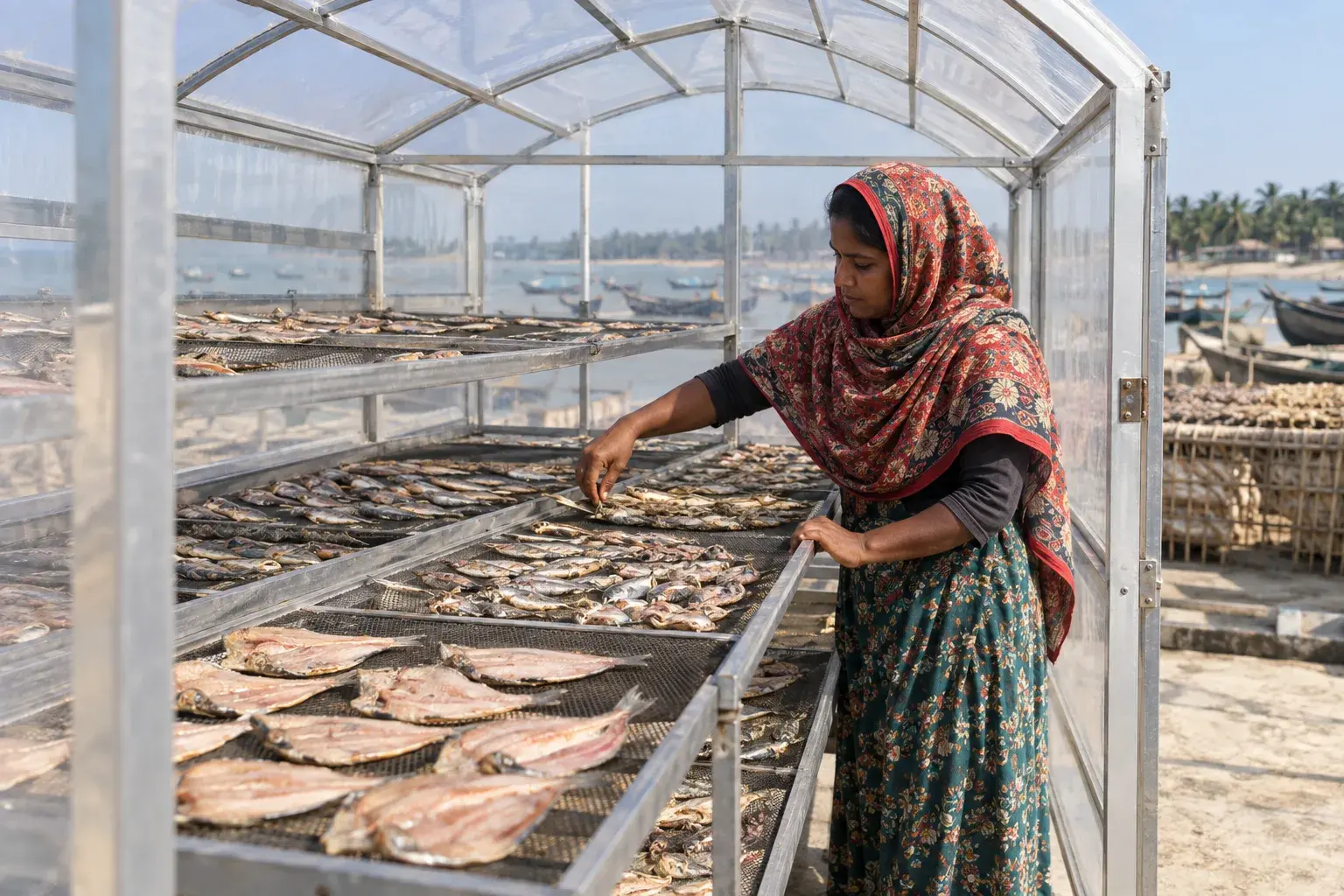
Drying fish on raised racks or inside a solar dryer instead of on the ground, so no insecticide is needed. At Asadganj on 3 June 2026 good churi shutki fetched Tk 2,000-2,500 and loitta Tk 600-1,500 a kg.
- Last reviewed: 21 September 2026
- Version 1
Solar and rack-dried shutki
- Starting capital
- ৳50,000 – ৳6,00,000 Editorial estimate
- Manpower
- 2 – 20 people
- First sale
- 20 – 60 days Editorial estimate
- Break-even
- 3 – 12 months Editorial estimate
- Kind of work
- Workshop · Medium difficulty
About the business
The old way of making shutki is to spread fish on sand or bare ground in the sun. To keep flies and beetles off, many yards spray insecticide on the fish - Nogos, DDT and the like. This is not rumour but measured: of 92 samples tested at the BARI laboratory between January and June 2018, 42 - that is 45.7 percent - carried pesticide residue, and 92 percent of the dried loitta samples were contaminated. A 2025 report puts the figure at 13 percent instead; the two do not agree, so both are recorded here. This business is the other side of that problem. The fish goes on bamboo or net racks, or inside a solar tunnel dryer, instead of on the ground. Fewer insects reach it, no sand gets into it, a shower does not wash the batch away, and there is no reason to spray. At Nazirartek in Cox's Bazar about 800 mahals turn out roughly 120 tonnes a day, and in the haors of Sunamganj and Sylhet freshwater shutki is made from Kartik to Falgun with no chemicals at all. Price follows the fish. At the Asadganj wholesale market on 3 June 2026 loitta ran Tk 600-1,500, good churi Tk 2,000-2,500, faisya Tk 500-1,000, chapa Tk 550-850 and laksha above Tk 5,000. On how much fresh fish makes a kilo of dried, traders say 5 kg of churi or 7 kg of loitta; a research review says 2 to 5 kg. Weigh your own fish before you build a budget on either.
Unit economics
| Item | Range | Evidence | Suggest a correction |
|---|---|---|---|
| Monthly working capital | ৳1,25,000 – ৳18,72,000 | Editorial estimate | |
| Selling price | ৳500 – ৳2,500 / kg | Market quote | |
| Variable cost | ৳480 – ৳1,080 / kg | Editorial estimate | |
| Gross margin | 20% – 57% | Editorial estimate | |
| Time to first revenue | 20 – 60 days | Editorial estimate | |
| Break-even time | 3 – 12 months | Editorial estimate | |
| Cash cycle | 5 – 45 days | Editorial estimate | |
| Waste / loss | 8% – 25% | Editorial estimate | |
| Daily capacity | 49 – 150 | Editorial estimate |
What you need to start
- Raised bamboo or steel racks with nylon netting, mosquito-net covers, gutting knives, baskets and a weighing scale. The improved route is a solar tunnel dryer; research papers describe 50 kg and 120-150 kg loading designs, but no price is published anywhere.Equipment
- BSTI-marked iodised salt. Iodised salt is item 46 on the mandatory certification list, BDS 1236:2020 (2nd revision). How much salt per unit of fish could not be verified here.Starting stock
- Trade licence from the city corporation, municipality or union parishad: form Tk 10, book Tk 50, standard tax Tk 30, stamp Tk 150-300, licence fee Tk 100-60,000, issued in 3-5 working days and renewed yearly.Licence
- Bangladesh Food Safety Authority registration as a food processor: Tk 1,000 new, Tk 500 renewal, valid three years, under the food safety registration and licensing regulations gazetted on 16 July 2026.Licence
- Export requires approval from the Department of Fisheries quality control wing under the fish and fish products inspection and quality control rules. The fee, conditions and timeline could not be verified here and must be checked with the district fisheries officer. Selling only inside the country does not need it.Licence
- Knowing by hand when the fish is dry enough. Too much moisture and it ferments; too dry and the weight, and so the price, falls. About half the workers in the drying yards are women, and the skill is learned by hand.Skill
- A steady supply of fresh fish from the landings: Cox's Bazar, Teknaf, Maheshkhali, Kutubdia, Sonadia, Sandwip, Hatiya and Patuakhali all feed the shutki trade.Supplier
- Open, well-ventilated ground or a mahal. Nazirartek in Cox's Bazar holds about 800 mahals, so space has to be leased there; in the haor districts it can be done on your own land. Rents could not be verified.Workspace
How the work is done
- 1Decide first which fish you will dry. Faisya and chapa fetch Tk 500-850 a kg, good churi Tk 2,000-2,500. That choice, not the labour, sets the income.
- 2Build a link with the landing. Find out before the season who lands fresh fish at Cox's Bazar, Teknaf, Maheshkhali or the haor arots, when, and at what price.
- 3Settle the site: open, windy ground, a little away from housing. In a place like Nazirartek the mahal has to be leased.
- 4Build net racks on bamboo or steel posts, at least three feet off the ground. Getting the fish off the ground is the whole point of this business.
- 5If you can, add a solar tunnel dryer - a tunnel under clear polythene with fans run off a solar panel. Work does not stop on a wet day and insects stay out.
- 6Buy BSTI-marked iodised salt (BDS 1236:2020). It is on the mandatory certification list, so buying unmarked salt puts the risk on you.
- 7Wash the fish, gut it, rub in salt and lay it on the rack. Splitting churi and loitta lets the inside dry faster.
- 8Do not touch insecticide - that is what your product is. Cover the racks with mosquito netting instead and close them at dusk.
- 9Take the trade licence (form Tk 10, book Tk 50, standard tax Tk 30, stamp Tk 150-300, fee Tk 100-60,000, issued in 3-5 working days).
- 10Register with the Food Safety Authority: Tk 1,000 new, Tk 500 renewal, valid three years. Selling packed under your own name requires it.
- 11Write down the fish, the date, the wet weight and the dry weight of every batch. Until you measure the ratio yourself, the profit will never add up.
- 12If you aim at export you will need approval from the Department of Fisheries quality control wing; talk to the district fisheries officer early and learn the conditions.
Seasons
- JanHigh
- FebHigh
- MarHigh
- AprNormal
- MayLow
- JunLow
- JulLow
- AugNormal
- SepNormal
- OctHigh
- NovHigh
- DecHigh
Where it works well
- Strong fitBagerhat · Dublar Char in the Sundarbans is one of the country's main drying grounds, with thousands of fishers camping on the char through the season.
- Strong fitChattogram · Asadganj is the country's largest wholesale shutki market: 50 depots, 330 retail shops and at least Tk 1,000 crore of trade a year. The price is set here.
- Strong fitCox's Bazar · About 800 mahals at Nazirartek turning out roughly 120 tonnes a day, with a separate poison-free drying area now running at the New Fishery Ghat.
- Strong fitSunamganj · The haors yield puti, shrimp, tengra, shol and baim from Kartik to Falgun, and that shutki is traditionally made without chemicals - a market already primed for rack drying.
- Strong fitSylhet · Eighteen to twenty kinds of shutki are made from haor fish across Sylhet and Sunamganj, and some of it goes to Europe and the Middle East.
- PossibleBarguna · Cheap small fish from the big landing centre at Pathorghata, though the large wholesale markets are far away.
- PossibleBhola · Large landings of small fish at the Meghna and Tetulia mouths, with open char land to dry on.
- PossibleKhulna · Sundarbans shutki reaches the market through Khulna, and export paperwork can be handled from here.
- PossibleMoulvibazar · Shutki is made every year along the Kawadighi haor; the fish is close by, so haulage on fresh fish is cheap.
- PossibleNoakhali · Hatiya's fish already goes to Asadganj; drying it locally cuts spoilage on the fresh fish and lifts the price.
- PossiblePatuakhali · Fish from the Kuakata and Alipur landings feeds the trade, and Patuakhali shutki already reaches Asadganj, so the buyers are known.
Risks and cautions
- HighSpoilage: Unseasonal rain or a run of cloudy days. Fish on the racks that gets wet ferments inside, and two days later the smell gives it away; the whole batch then goes at poultry-feed prices. Losing two or three batches like that in a season is not unusual.
- HighDemand: The wholesaler may not pay extra for poison-free fish. At the arot everything sits in the same row and buyers cannot tell the difference by eye. Traders say genuine shutki is firm, does not break under pressure and is not shiny - but because buyers do not know that test, the price gap stays closed.
- HighWorking capital: Fresh fish is paid for in cash at the landing while the arot settles one to four weeks later. Fish is cheapest at the height of the season, exactly when buying more would pay - and exactly when cash is shortest. This is where dadon and high-interest lending begin.
- MediumCompliance: Dried fish is not on BSTI's mandatory list, so no CM licence is needed. But packed sale is not allowed without Food Safety Authority registration, and the salt must be BSTI-marked. Mobile courts that find insecticide in a drying yard destroy the stock and fine the owner.
- MediumDependency: During the fishing ban and the height of the monsoon the supply of fresh fish stops while mahal rent and the watchman's wage run on. Cheap imports from India and Myanmar hold the price down at the same time - at Asadganj the landed cost with duty is Tk 170-180 a kg.
Sources
Supports: requirements · বাংলাদেশ
- Collected: 21 Sept 2026
Supports: Time to first revenue · বাংলাদেশ
- Collected: 16 Jul 2026
Supports: requirements · বাংলাদেশ
- Collected: 3 Jun 2026
Supports: districts, Selling price · চট্টগ্রাম — আছাদগঞ্জ শুঁটকি পট্টি
Supports: Starting capital, risks · বাংলাদেশ
Supports: Manpower, Time to first revenue, Variable cost · বাংলাদেশ
- Collected: 12 Nov 2024
Supports: Daily capacity · কক্সবাজার — নাজিরারটেক ও নতুন ফিশারিঘাট
- Collected: 30 May 2022
Supports: Variable cost · চট্টগ্রাম — আছাদগঞ্জ
Supports: Daily capacity, Selling price · কক্সবাজার — নাজিরারটেক
Supports: risks · বাংলাদেশ
What changed
No corrections have been published yet.
Questions and answers
No questions yet. Be the first to ask.
Similar businesses
 Food processing
Tulshimala aromatic rice
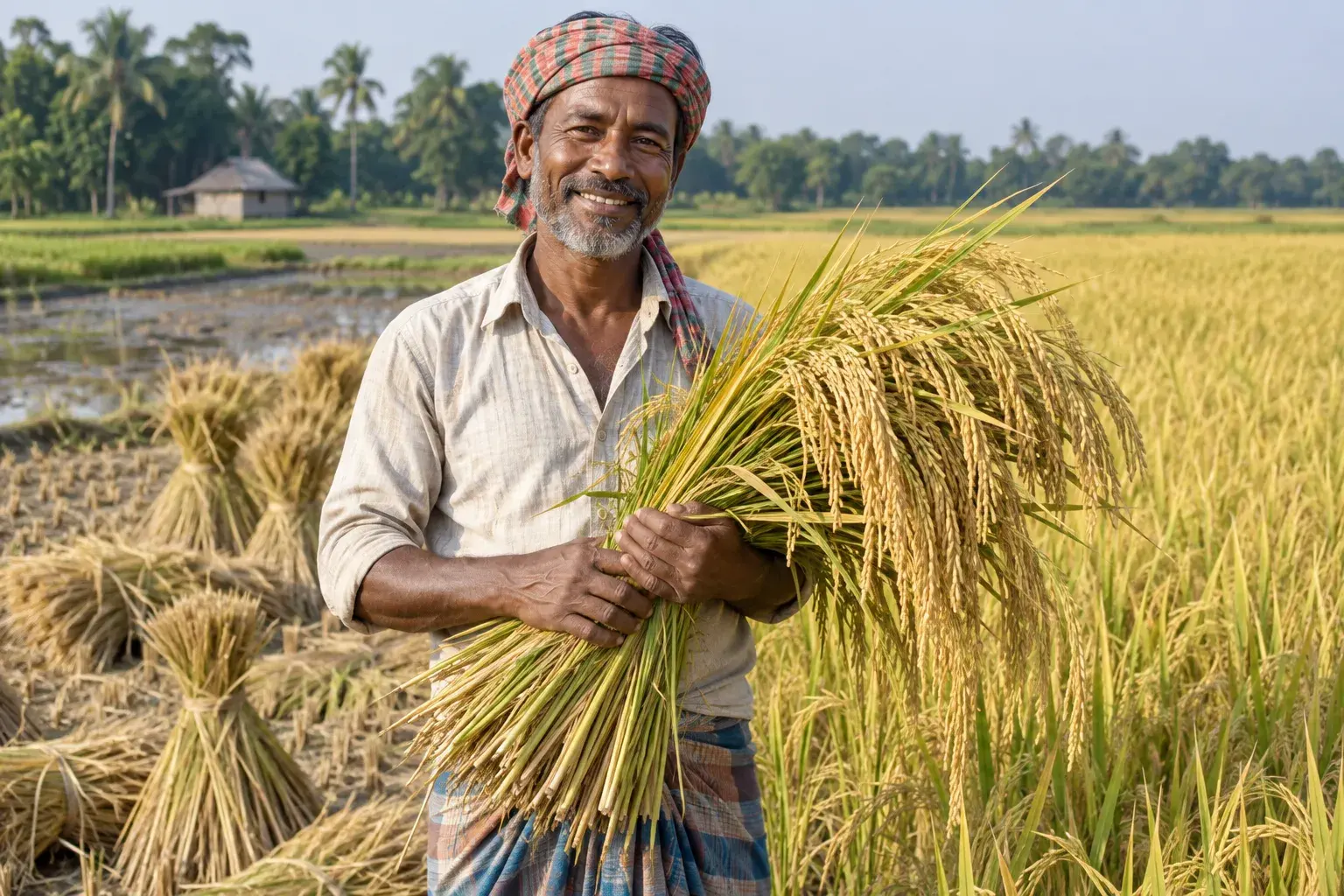
Growing and milling Sherpur's GI-registered aromatic paddy. Paddy is Tk 2,200-2,400 a maund and the rice sells online at Tk 145-150 a kilo - no higher than aromatic rice without a GI.
- Capital
- ৳50k – ৳3 lakh
- People
- 1 – 6
- First income
- 120 – 180 days
 Food processing
Paneer and chhana making
Milk split into chhana, pressed into paneer. 8-10 kg of milk makes 1 kg of paneer, which sells at Tk 900-1,200 a kg - the whole business is the gap between the two prices.
- Capital
- ৳50k – ৳20 lakh
- People
- 1 – 10
- First income
- 7 – 135 days
 Food processing
Dry fish (shutki) processing
Buying fresh fish, sun-drying it for three to four days and selling shutki. December 2025 prices ran from poa at Tk 500-800 to rupchanda at Tk 1,800-2,500 a kilo; drying without insecticide is the condition for export.
- Capital
- ৳50k – ৳5 lakh
- People
- 3 – 30
- First income
- 4 – 30 days
 Food processing
Corporate meal delivery
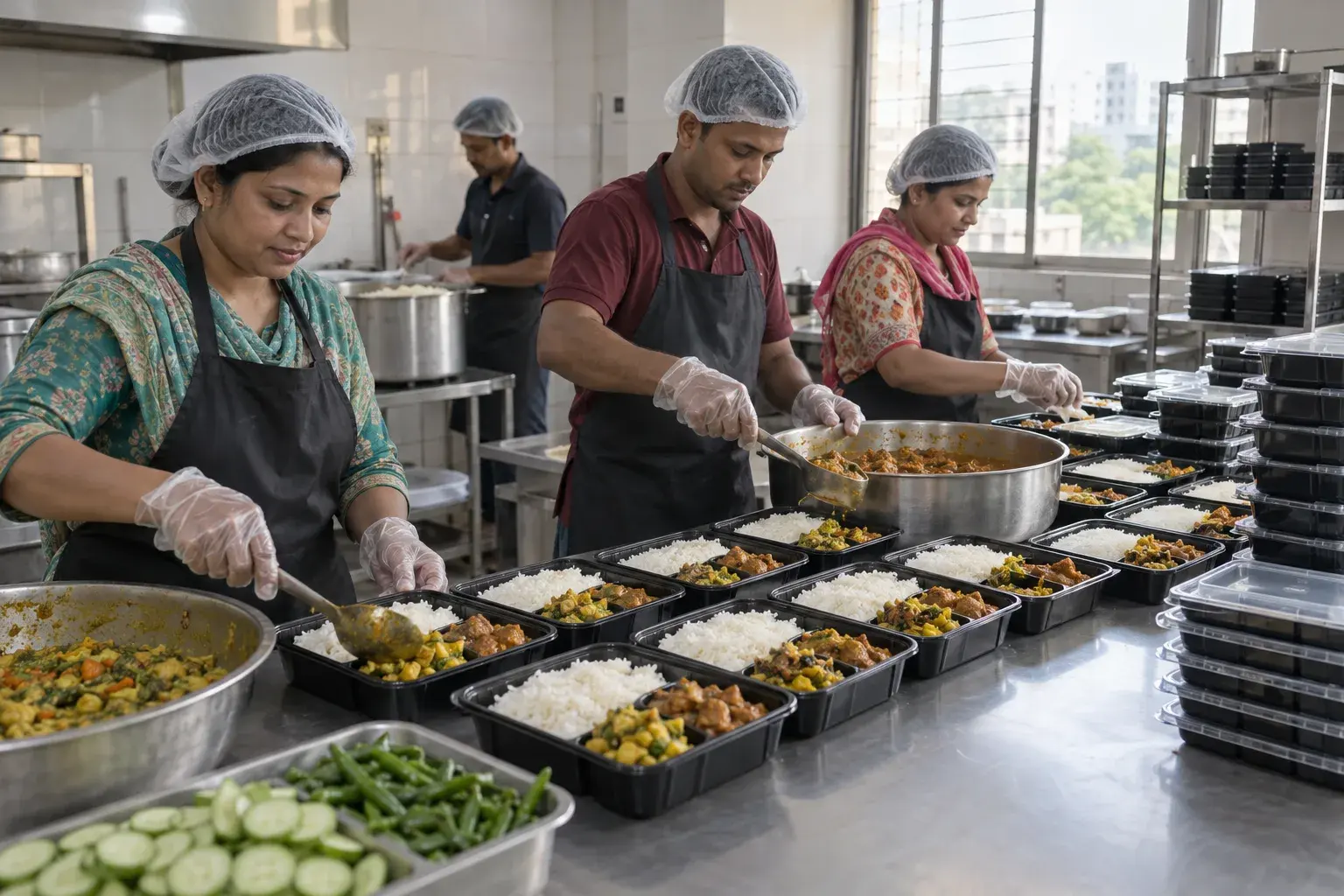
Daily cooked meals delivered to offices on contract. Dhaka breakfast sells from Tk 40 and lunch packages from Tk 85 to Tk 150, but the office pays at month end.
- Capital
- ৳45k – ৳1.8 lakh
- People
- 1 – 4
- First income
- 15 – 45 days