
Corporate meal delivery
Daily cooked meals delivered to offices on contract. Dhaka breakfast sells from Tk 40 and lunch packages from Tk 85 to Tk 150, but the office pays at month end.
- Last reviewed: 19 September 2026
- Version 1
Corporate meal delivery
- Starting capital
- ৳45,000 – ৳1,80,000 Editorial estimate
- Manpower
- 1 – 4 people
- First sale
- 15 – 45 days Editorial estimate
- Break-even
- 4 – 7 months Editorial estimate
- Kind of work
- Home-based · Medium difficulty
About the business
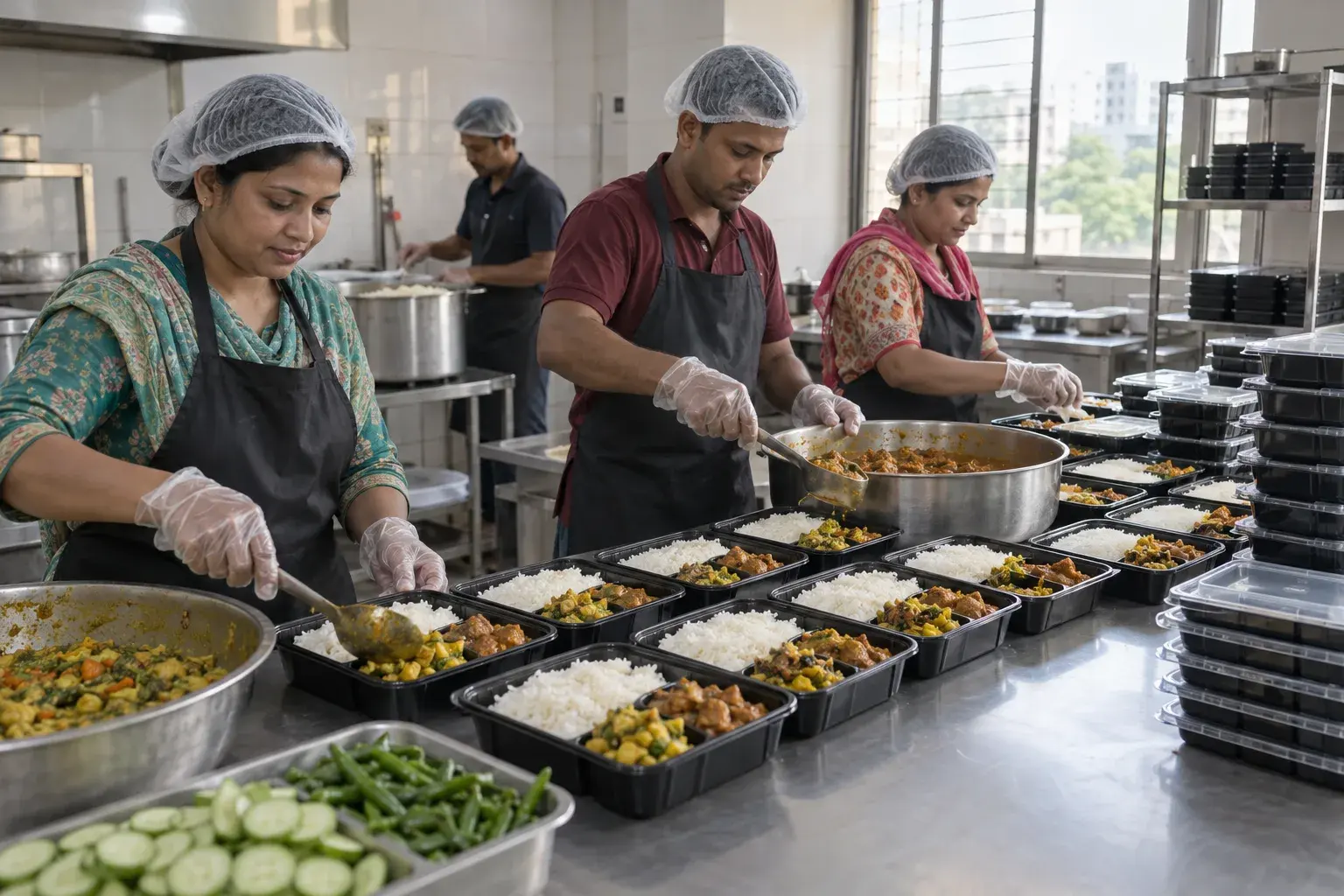
Cooking meals at home or in a small kitchen and delivering them to offices on a daily contract. The customer is a company, not a walk-in, so one signed office locks in 30 to 100 plates a day. The cash cycle is what separates this from a rice hotel: a hotel takes cash at the table, while an office pays at month end and sometimes fifteen days after that. You fund one to one and a half months of ingredients out of your own pocket before the first payment lands, which is why undercapitalised operators close inside three months. Margins are thin at the price points people actually charge. Using TCB's Dhaka retail prices for 15 September 2026 (coarse rice Tk 50-55/kg, atta Tk 48-50/kg, lentil Tk 90-100/kg, farm eggs Tk 48-50 per hali, broiler Tk 180-200/kg), the raw ingredients for two parathas with dal, potato bhaji and one egg come to roughly Tk 27-30. Add a Tk 9 foil container, gas and delivery and a Tk 40 breakfast leaves almost nothing. Operators who survive buy wholesale at Karwan Bazar or Mohakhali and cook in volume; the business does not work at low plate counts. Collection, consistent food quality and on-time delivery decide whether the contract is renewed.
Unit economics
| Item | Range | Evidence | Suggest a correction |
|---|---|---|---|
| Monthly working capital | ৳30,000 – ৳90,000 | Editorial estimate | |
| Selling price | ৳40 – ৳150 / unit | Market quote | |
| Variable cost | ৳27 – ৳48 / unit | Editorial estimate | |
| Gross margin | 20% – 40% | Editorial estimate | |
| Time to first revenue | 15 – 45 days | Editorial estimate | |
| Break-even time | 4 – 7 months | Editorial estimate | |
| Cash cycle | 30 – 45 days | Editorial estimate | |
| Waste / loss | 5% – 15% | Editorial estimate | |
| Daily capacity | 30 – 150 | Editorial estimate |
What you need to start
- Large pots and pans, a two-burner stove, LPG cylinders (the regulated price of a 12 kg cylinder is Tk 1,585 from 2 September 2026), a fridge and insulated delivery bags.Equipment
- 750 ml aluminium foil containers at about Tk 9.20 each, plus lids, spoons and carry bags.Starting stock
- VAT registration with the National Board of Revenue. Catering and food supply services are charged 15 percent VAT against 5 percent for dine-in restaurants. BROA asked for it to be cut to 5 percent in the FY2026-27 budget.Licence
- Food safety registration from the Bangladesh Food Safety Authority. New registration Tk 1,000, renewal Tk 500, valid three years. Compulsory for catering services under the Food Safety (Registration and Licensing) Regulations, 2026.Licence
- Trade licence from the city corporation or municipality. Application form Tk 10, licence book Tk 50, city corporation standard tax Tk 30, non-judicial stamp Tk 150-300, and a licence fee of Tk 100-60,000 depending on trade type. Issued in 3-5 working days when documents are complete.Licence
- Cooking at volume, keeping the taste identical every day, and keeping a monthly account.Skill
- Wholesale produce markets, in Dhaka Karwan Bazar and Mohakhali. Chawkbazar for packaging and foil containers.Supplier
- Kitchen space. Your own kitchen is enough to start; above roughly 100 plates a day a rented kitchen becomes necessary.Workspace
How the work is done
- 1Walk the nearest office area and find out how many staff each office has and what they eat now.
- 2Cost the plate at different volumes, taking prices from the TCB daily list rather than guessing.
- 3Send free sample meals to three or four offices. This is the real marketing in this business.
- 4Take a trade licence from the city corporation or municipality.
- 5Register with the Bangladesh Food Safety Authority; the 2026 regulations make this compulsory for catering services.
- 6Set up the kitchen: large pots, burners, a gas cylinder, a fridge and insulated carry bags.
- 7Sign a written contract: plate count, price, payment date and any advance, all on paper.
- 8Fix a wholesale market. Buying weekly at Karwan Bazar or Mohakhali cuts the ingredient cost sharply.
- 9Deliver at a fixed time every day. Dhaka services deliver between 1:00 and 1:30 pm; missing it loses the contract.
- 10Invoice on the last day of the month and follow up within seven days. Collection is the real job here.
Seasons
- JanNormal
- FebLow
- MarLow
- AprNormal
- MayHigh
- JunHigh
- JulHigh
- AugHigh
- SepHigh
- OctHigh
- NovHigh
- DecNormal
Where it works well
- Strong fitChattogram · Port, shipping and trading offices have steady demand for a fixed lunch.
- Strong fitDhaka · The densest office areas are Gulshan, Banani, Mohakhali, Karwan Bazar and Motijheel. Existing Dhaka services deliver to exactly these areas.
- Strong fitGazipur · Garment factory staff and management teams need large daily plate counts.
- Strong fitNarayanganj · Many factory and trading offices, with Dhaka's wholesale markets close by.
- PossibleCumilla · The EPZ and highway-side businesses.
- PossibleKhulna · Government offices and shrimp exporters give moderate demand.
- PossibleNarsingdi · Industrial area, but far fewer office workers than Dhaka.
- PossibleRajshahi · Demand centred on educational institutions and government departments.
- PossibleSylhet · Banks, remittance-linked offices and private universities.
- Weak fitBogura · Few offices, and most staff bring food from home.
- Weak fitRangpur · Almost no corporate offices.
Risks and cautions
- HighLate payment: Offices pay at month end, many 15-30 days after that. At 100 plates a day at Tk 100 you have delivered Tk 300,000 of food before any money arrives. Without that float the business closes inside three months.
- HighDependency: If one office is the whole business, one cancellation takes revenue to zero. Layoffs or a shift to working from home can halve the plate count overnight.
- HighSpoilage: Cooked food unsold the same day is a total loss. A sudden public holiday writes off that day's cooking. In hot weather spoiled food makes staff ill and the contract ends immediately.
- MediumWorking capital: Ingredient prices move mid-contract while the office price is fixed for a year. Between September 2025 and September 2026 loose soybean oil rose about 11 percent and broiler chicken about 7 percent, with no matching price rise per plate.
- MediumCompliance: The Food Safety (Registration and Licensing) Regulations, 2026 bring catering services under compulsory BFSA registration. Home-kitchen operations that were previously outside the rules are now inside them.
- HighCompliance: Catering pays 15 percent VAT, three times the dine-in rate. On a Tk 100 plate that is Tk 15, against the Tk 30-40 left after ingredients and packaging. Once registered and invoicing an office the VAT is unavoidable, and large offices will not pay without a proper invoice.
Sources
সিটি কর্পোরেশন থেকে ট্রেড লাইসেন্স প্রাপ্তির ধাপ সমূহ
Collected: 16 Sept 2026Supports: Starting capital · বাংলাদেশ
- Collected: 15 Sept 2026
Supports: Gross margin, Variable cost · ঢাকা মহানগর — সিপাহীবাগ, মিরপুর-৬, মোহাম্মদপুর টাউন হল, নিউমার্কেট, রামপুরা, মহাখালী বাজার
LPG price cut by Tk 13, 12kg cylinder now Tk 1,585 (BERC, কার্যকর ২ সেপ্টেম্বর ২০২৬)
Collected: 2 Sept 2026Supports: Starting capital · বাংলাদেশ
All food businesses now need safety registration
Collected: 22 Jul 2026Supports: Starting capital · বাংলাদেশ
Budget FY27: Restaurant owners demand flat 5% VAT (বসে খাওয়ায় ভ্যাট ৫%, ক্যাটারিংয়ে ১৫%)
Collected: 20 Jun 2026Supports: Gross margin · বাংলাদেশ
What changed
No corrections have been published yet.
Questions and answers
No questions yet. Be the first to ask.
Stories about this business
500 boxes at 99-120 taka, and 30-40 lakh to build the kitchen
A commercial kitchen in Tejgaon cost 30-40 lakh taka to set up and sends out about 500 boxes a day at 99-120 taka each, taking around 10 lakh taka a month. With oil up from 115 taka to 170-180, home kitchens have had to lift their meal price from 80-90 taka to 110.
- Capital
- ৳35 lakh
- Reasons
- Weak demand, Working capital
Similar businesses
 Food processing
Tulshimala aromatic rice
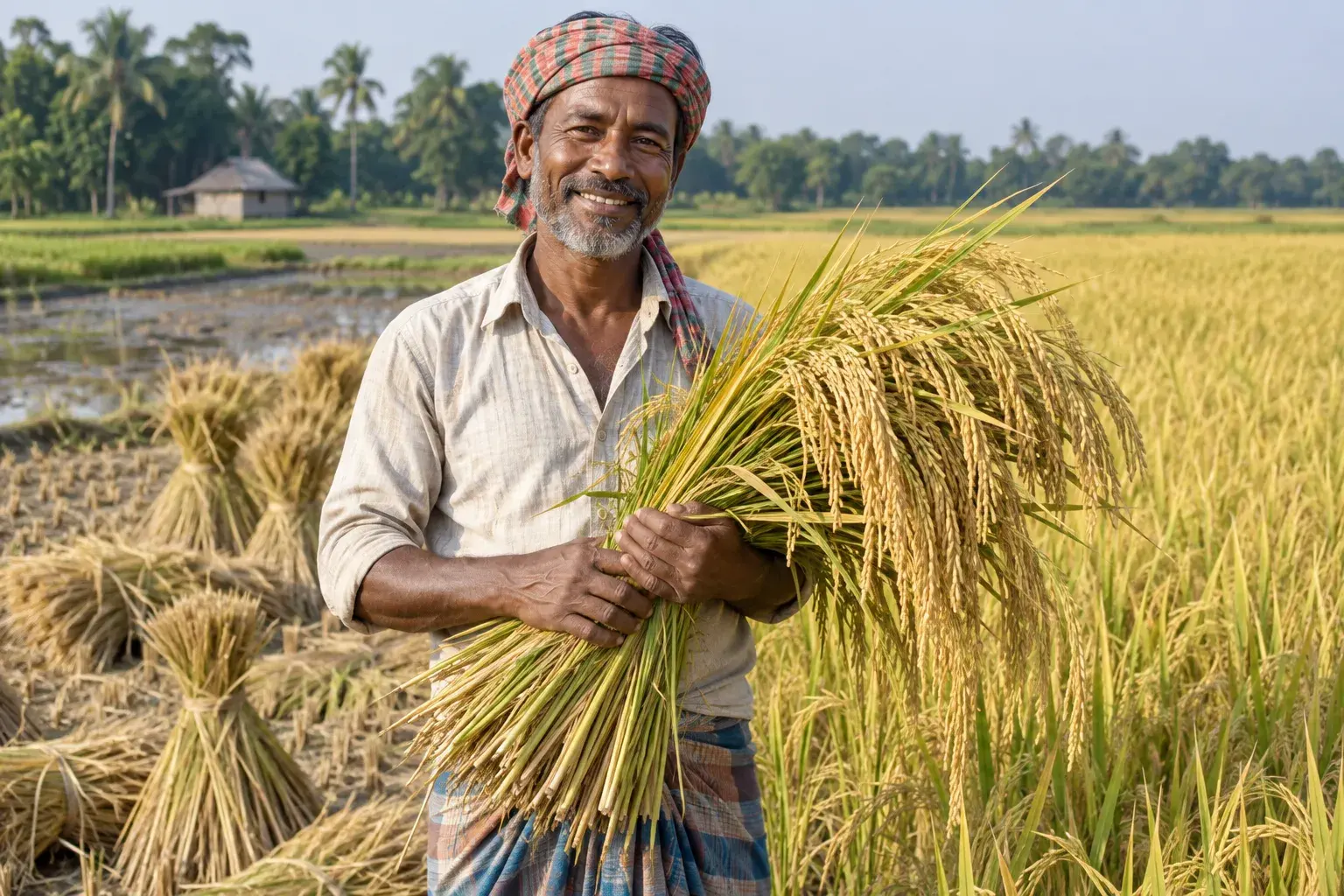
Growing and milling Sherpur's GI-registered aromatic paddy. Paddy is Tk 2,200-2,400 a maund and the rice sells online at Tk 145-150 a kilo - no higher than aromatic rice without a GI.
- Capital
- ৳50k – ৳3 lakh
- People
- 1 – 6
- First income
- 120 – 180 days
 Food processing
Home bakery (cakes and cookies)
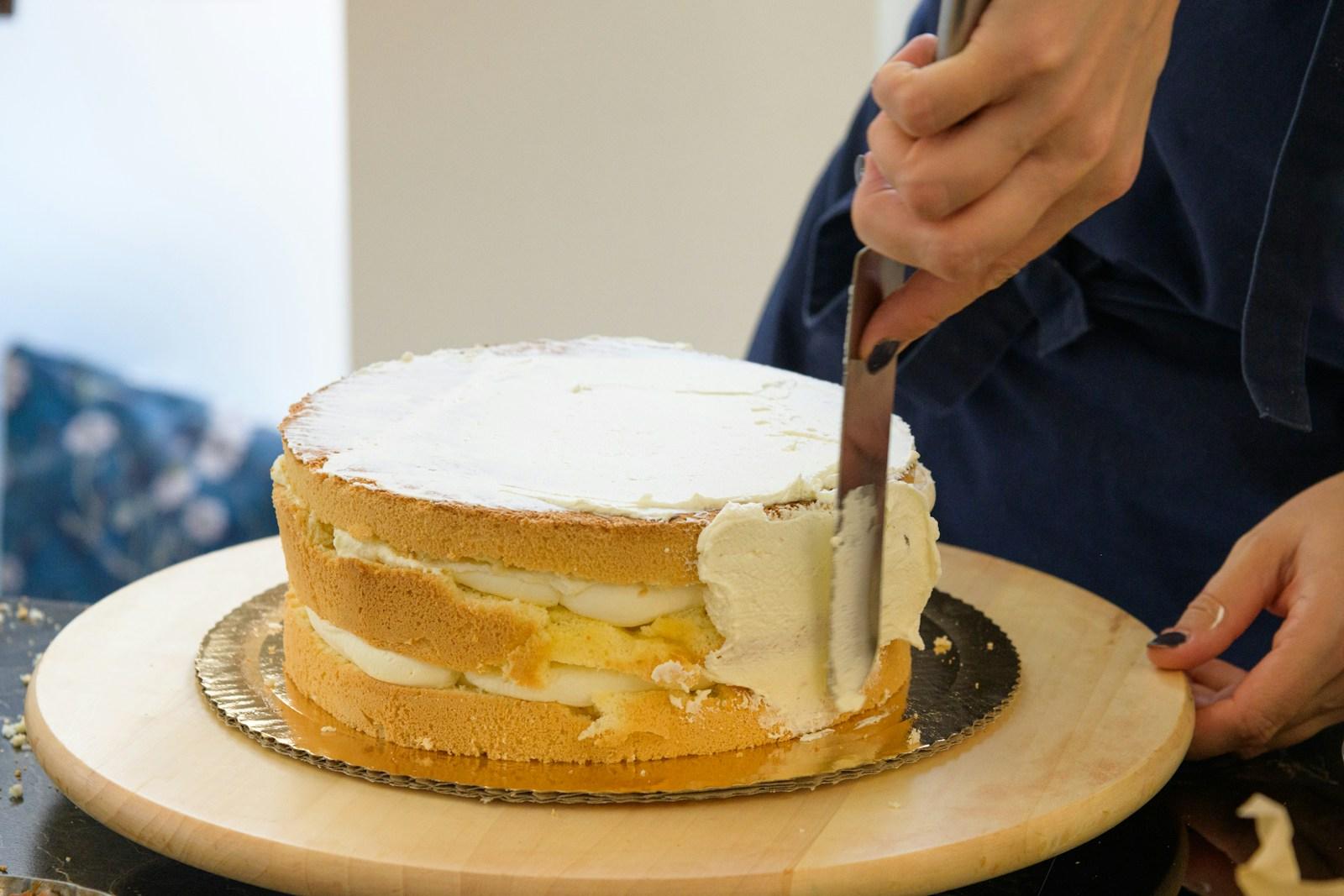
Birthday and event cakes from a home oven, ordered through Facebook and friends.
- Capital
- ৳40k – ৳1 lakh
- People
- 1 – 2
- First income
- 7 – 21 days
 Food processing
Solar and rack-dried shutki
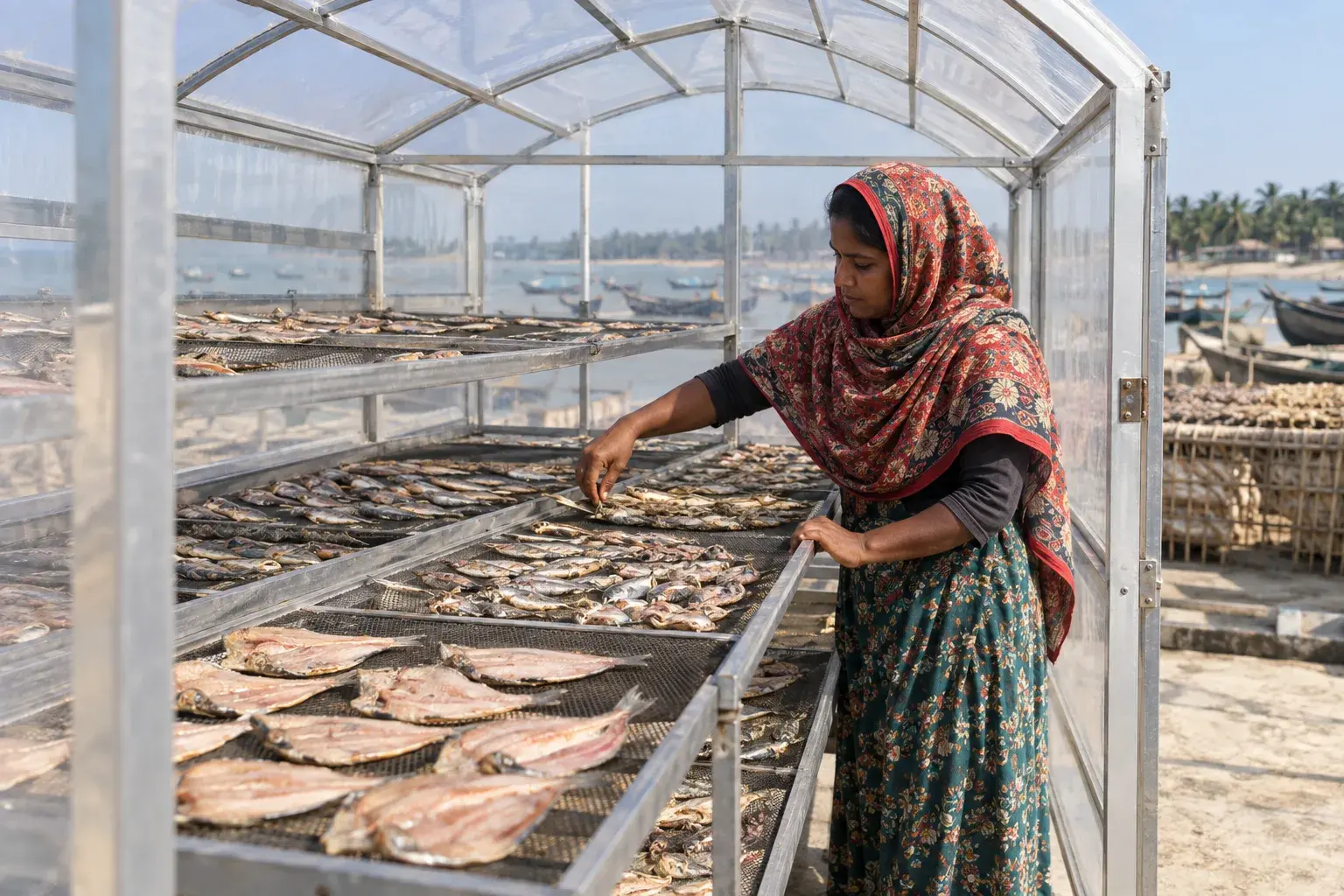
Drying fish on raised racks or inside a solar dryer instead of on the ground, so no insecticide is needed. At Asadganj on 3 June 2026 good churi shutki fetched Tk 2,000-2,500 and loitta Tk 600-1,500 a kg.
- Capital
- ৳50k – ৳6 lakh
- People
- 2 – 20
- First income
- 20 – 60 days
 Food processing
Paneer and chhana making
Milk split into chhana, pressed into paneer. 8-10 kg of milk makes 1 kg of paneer, which sells at Tk 900-1,200 a kg - the whole business is the gap between the two prices.
- Capital
- ৳50k – ৳20 lakh
- People
- 1 – 10
- First income
- 7 – 135 days