
Cotton farming
Sold at the price the Cotton Development Board sets, Tk 3,900 a maund of seed cotton in 2025-26. At the national average yield of about 7.6 maunds a bigha that is roughly Tk 30,000 a bigha for six to seven months of land.
- Last reviewed: 21 September 2026
- Version 1
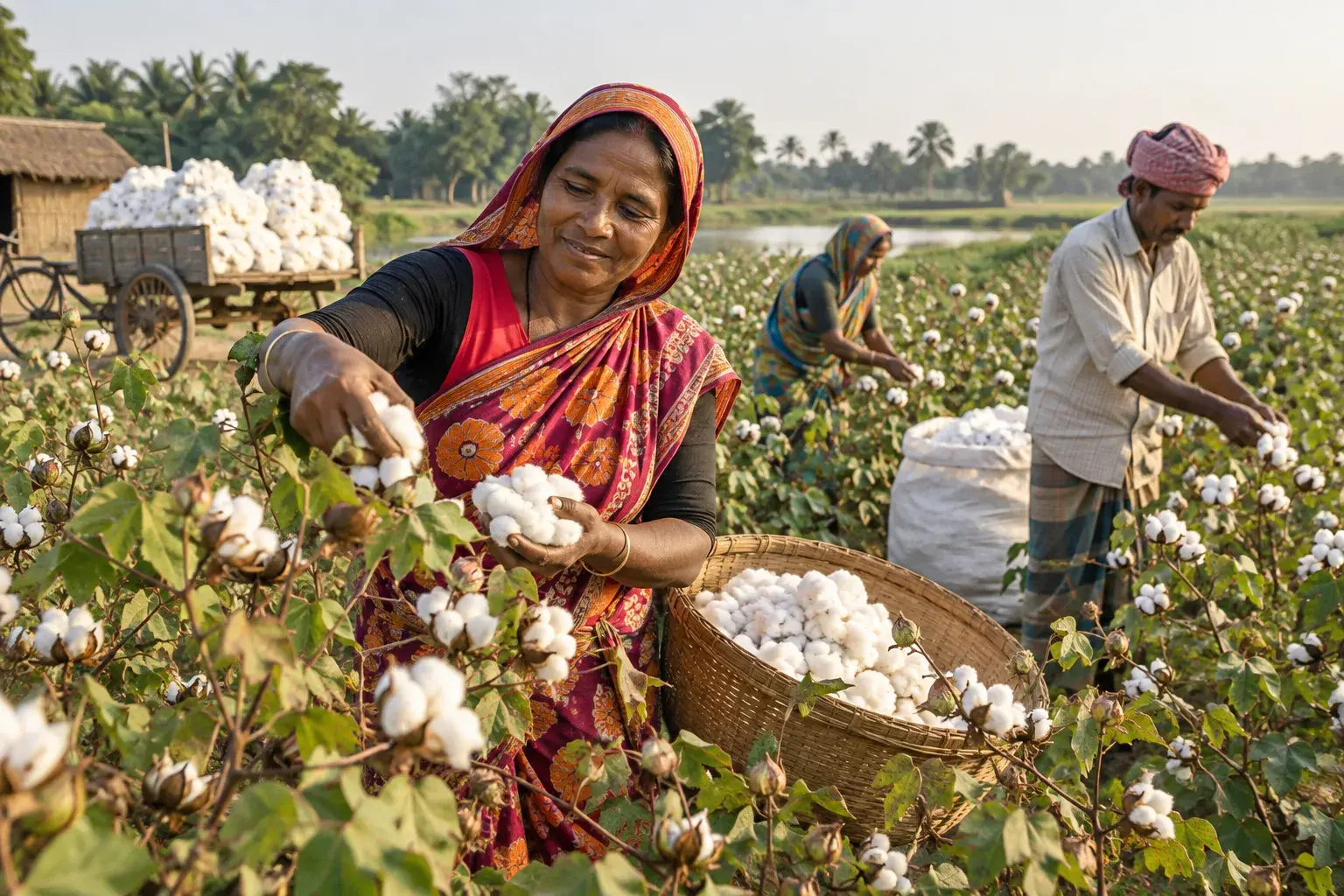
Cotton farming
- Starting capital
- ৳16,000 – ৳1,00,000 Editorial estimate
- Manpower
- 1 – 6 people
- First sale
- 150 – 240 days Editorial estimate
- Break-even
- 6 – 9 months Editorial estimate
- Kind of work
- Farm · Medium difficulty
About the business
Cotton farming is work done inside the Cotton Development Board's system. The Board registers growers, hands out incentive packages, advises in the field, and each season fixes the price of seed cotton. For 2025-26 the price was announced at Tk 3,840 a maund on 12 March 2026, then raised to Tk 3,900 on 1 April 2026. Ginning and spinning mills buy at that price, and there is no other real market, because cotton cannot be eaten and nobody but a mill wants it. Under the incentive programme small and marginal growers get about Tk 8,000 of inputs free: 600 grams of hybrid cotton seed, 25 kg urea, 50 kg TSP, 50 kg MOP, 2 kg boron, 450 ml of pesticide and 300 ml of plant growth regulator. Not everyone gets it; for 2026-27 it was 500 growers across Thakurgaon and Dinajpur. Now the real sums. The Board's own figures give 99,798 tonnes of seed cotton from 46,760 hectares in 2024-25: 2.13 tonnes a hectare, about 285 kg or 7.6 maunds a bigha. At Tk 3,900 that is about Tk 29,800 a bigha. Growers said in 2024 that a bigha cost them Tk 16,000-20,000. So after six or seven months of land tied up, Tk 10,000-14,000 a bigha is left. Cabbage or cauliflower on the same bigha sells for Tk 80,000-100,000 in three months and leaves room for a boro paddy crop after. That is why growers try cotton for a year and drop it the next, and why the country grows only about 3 percent of the cotton it uses.
Unit economics
| Item | Range | Evidence | Suggest a correction |
|---|---|---|---|
| Monthly working capital | ৳2,300 – ৳8,600 | Editorial estimate | |
| Selling price | ৳96 – ৳105 / kg | Disputed | |
| Variable cost | ৳27 – ৳70 / kg | Editorial estimate | |
| Gross margin | 27% – 74% | Editorial estimate | |
| Time to first revenue | 150 – 240 days | Editorial estimate | |
| Break-even time | 6 – 9 months | Editorial estimate | |
| Cash cycle | 180 – 250 days | Editorial estimate | |
| Waste / loss | 5% – 20% | Editorial estimate | |
| Daily capacity | 1 – 8 | Editorial estimate |
What you need to start
- Seed: 1 kg a bigha for the Board's open-pollinated varieties, 500-600 grams for hybrids. Of the Board's 19 released varieties, 18 high-yielding and 1 hybrid are in cultivation, plus 2 hybrids imported by private companies. 2022 reporting put local seed at Tk 25 a kg and Chinese hybrid at Tk 2,600-3,000 (an old price).Starting stock
- Fertiliser and pesticide: the incentive package gives a fair idea of what one plot needs, 25 kg urea, 50 kg TSP, 50 kg MOP, 2 kg boron, 450 ml of pesticide and 300 ml of PGR, plus 5 grams of Gaucho or Confidor per kg for seed treatment.Starting stock
- Registration as a grower with the Cotton Development Board, through the online grower registration page on the Board's website or directly at the upazila office. Incentives and sale at the Board's announced price both run through this system. No fee was found.Licence
- A trade licence is not needed to sell your own crop. To buy other growers' cotton and supply mills you need one: form Tk 10, standard tax Tk 30, licence book Tk 50, non-judicial stamp Tk 150-300, 3-5 working days. Trading without it draws Tk 5,000 the first time and Tk 500 a day after.Licence
- Earthing up, pruning vegetative branches, foliar feeding and monsoon drainage. The Board's field staff demonstrate these and the Board runs regular training; in 2024, 12,375 trained growers were covered by a Tk 10 crore incentive package.Skill
- High land where water does not stand more than 6-8 hours, sandy loam or loam at pH 6-7.5; moderately saline high land (8 dS/m) also works. A covered place to keep picked cotton dry.Workspace
How the work is done
- 1Go to the Cotton Development Board's upazila office first. Cotton is grown inside the Board's system: seed, incentives, advice and the selling price all come from here. The Board's website also has a page for online grower registration.
- 2Try to get on the incentive list. Small and marginal growers receive about Tk 8,000 of inputs free: 600 grams of hybrid cotton seed, 25 kg urea, 50 kg TSP, 50 kg MOP, 2 kg boron, 450 ml of pesticide and 300 ml of PGR. Places are limited: 190 in Thakurgaon and 310 in Dinajpur for 2026-27.
- 3Choose the land with care. Cotton cannot stand water: it needs high ground where flood or rain water does not sit for more than 6-8 hours. Sandy loam or loam is best, pH 6-7.5. Leave out shaded, damp land.
- 4Spread 1-1.5 tonnes of cow dung or compost a bigha before ploughing, then plough and ladder three or four times between rains when the soil is right.
- 5Sow between 15 June and 30 July, or by 15 August at the latest; hybrids do best sown early. Sown on time, the land is free after picking for boro, potato, wheat, maize or vegetables; sown late, that next crop slips too.
- 6Seed: 1 kg a bigha for the Board's high-yielding open-pollinated varieties, 500-600 grams for hybrids. Soak 3-4 hours, rub with dry soil or ash, mix in 5 grams of Gaucho or Confidor per kg and dry 40-50 minutes in the shade before sowing.
- 7Rows 90 cm apart, plants 45 cm apart, rows running north to south. Two or three seeds half an inch deep, lightly covered. A good crop needs at least 3,000 plants a bigha.
- 8At the urea side dressings 40 and 60 days after sowing, earth up around the plants so they do not lodge and water drains off. From 50-60 days to 100 days, spray the leaves three or four times at 10-15 day intervals with 2 percent urea or DAP and 1 percent MOP for more and bigger bolls.
- 9Never let water stand. At no age will cotton tolerate standing water for more than 2-3 days, and in constantly wet soil buds, flowers and bolls drop. Keep the drains open through the rains.
- 10Cut off one or two vegetative branches near the base. The fruiting branches above grow better, air and light get through, and pests and disease ease off.
- 11From November, pick in several rounds as the bolls open, and only when dry. Wet or dirty cotton gets its price docked. Picking wages are the big cost of this stage.
- 12Deliver the seed cotton to a ginning mill at the Board's announced price: Tk 3,900 a maund for 2025-26 (1 April 2026, after Tk 3,840 on 12 March). The price is often announced after picking, so check the Board's district office notices yourself.
Seasons
- JanHigh
- FebHigh
- MarNormal
- AprLow
- MayLow
- JunHigh
- JulHigh
- AugNormal
- SepNormal
- OctNormal
- NovHigh
- DecHigh
Where it works well
- Strong fitBogura · Headquarters of the Board's Bogura zone; 820 growers across Bogura, Sirajganj and Pabna received incentives in 2025-26.
- Strong fitDinajpur · Under the Thakurgaon zone; 310 small and marginal growers received incentives for 2026-27, distributed through the Parbatipur and Phulbari units.
- Strong fitRangpur · The Board's Rangpur regional office; in 2024, 7,000 growers in the Rangpur region grew cotton on 2,375 hectares.
- Strong fitThakurgaon · The Board's Thakurgaon zone: 190 growers on incentives for 2026-27 and a 574-hectare target. The price notices are published from here too.
- PossibleBandarban · Has a district Board office; hill cotton is grown in jhum plots.
- PossibleChuadanga · Has a Board office, but competition for land with tobacco and maize is stiff.
- PossibleKhagrachhari · Has a district Board office; the crop here is hill cotton, grown differently from plain-land cotton.
- PossibleLalmonirhat · Cotton country in the Rangpur region; growers here told reporters in 2024 they were happy with yields but disappointed with the price.
- PossiblePabna · An incentive programme district under the Bogura zone.
- PossibleRajshahi · Has a Board zone office in Rajshahi, and the high Barind land avoids waterlogging.
- PossibleSirajganj · Under the Bogura zone and in the incentive programme, but the Jamuna chars carry flood risk.
- Weak fitRangamati · Hill cotton country, but the ginning mills are far away and transport eats a large part of the price.
Risks and cautions
- HighOther: Waterlogging. At no age will cotton stand water for more than 2-3 days, and it is sown right in the middle of the monsoon, in June and July. Standing water on seedlings brings collar rot; later, wet soil drops buds, flowers and bolls. One heavy monsoon spell can finish a field.
- MediumWorking capital: Costs are rising and the price is not. By growers' own accounts a bigha cost Tk 11,000-14,000 in 2023 and Tk 16,000-20,000 in 2024, nearly half as much again in a year, while the price rose by just Tk 100 a maund. The Tk 8,000 incentive package covers part of the gap, but not everyone gets it.
- HighDemand: Other crops pay far more on the same land. Cabbage or cauliflower sells for Tk 80,000-100,000 a bigha in three months with a boro paddy crop after; cotton ties the land up six or seven months for Tk 29,800 a bigha at the national average yield. So growers try it for a year and drop it the next. The target was 100,000 hectares by 2021; in 2024-25 the area was 46,760.
- HighDependency: One buyer, one price. Cotton is inedible and nobody but a mill buys it, and the price is set by a committee of the Board and the ginners. Growers asked for Tk 5,000 a maund for a fair margin; they got Tk 3,800 in 2023 and Tk 3,900 in 2024 and 2025-26, and by the USDA's account the 2025-26 price was 5 percent below the year before. There is no room to bargain.
- MediumLate payment: The price comes late. For 2025-26 the first price was announced on 12 March 2026 and the revised one on 1 April 2026, while picking starts in November. Growers pick and pay the wages without knowing for certain what they will get. The Bogura zone had posted a 'private price' of Tk 3,840 in February.
Sources
- Collected: 21 Sept 2026
Supports: Starting capital, Starting capital · বাংলাদেশ
২০২৫-২৬ মৌসুমের উৎপাদিত প্রতিমণ বীজতুলার মূল্য ৩৯০০ টাকা নির্ধারণ করা হয়েছে (প্রকাশ ০১-০৪-২০২৬)
Collected: 21 Sept 2026Supports: Selling price · ঠাকুরগাঁও ও দিনাজপুর
ইউরিয়া, ডিএপি, টিএসপি ও এমওপি সারের দাম কেজিতে ৫ টাকা বাড়ান হয়েছে (প্রকাশ ১১-০৪-২০২৩)
Collected: 21 Sept 2026Supports: Starting capital · বাংলাদেশ
ঠাকুরগাঁওয়ে ১৯০ তুলা চাষির প্রণোদনা, আবাদ বাড়াতে তুলা উন্নয়ন বোর্ডের উদ্যোগ (প্রকাশ ১৪-০৭-২০২৬)
Collected: 21 Sept 2026Supports: Starting capital, Monthly working capital · ঠাকুরগাঁও ও দিনাজপুর
- Collected: 21 Sept 2026
Supports: Variable cost · বাংলাদেশ
- Collected: 21 Sept 2026
Supports: Selling price · ঠাকুরগাঁও ও দিনাজপুর
বীজতুলা কেনা-বেচা: ২০২৫-২৬ তুলাচাষ মৌসুমের বেসরকারী মূল্য ৩৮৪০/- প্রতি মণ (প্রকাশ ১৬-০২-২০২৬)
Collected: 21 Sept 2026Supports: Selling price · বগুড়া, সিরাজগঞ্জ ও পাবনা
সমভূমির তুলাচাষ প্রযুক্তি — জমি নির্বাচন, বপনের সময়, বীজের হার, সার ও পরিচর্যা
Collected: 21 Sept 2026Supports: Time to first revenue · বাংলাদেশ
সিটি কর্পোরেশন থেকে ট্রেড লাইসেন্স প্রাপ্তির ধাপ সমূহ — ফি, কাগজপত্র, সময় ও জরিমানা
Collected: 21 Sept 2026Supports: requirements · বাংলাদেশ
Farmers in Thakurgaon count losses as potato prices fall
Collected: 28 Feb 2026Supports: Starting capital · ঠাকুরগাঁও
What changed
No corrections have been published yet.
Questions and answers
No questions yet. Be the first to ask.
Similar businesses
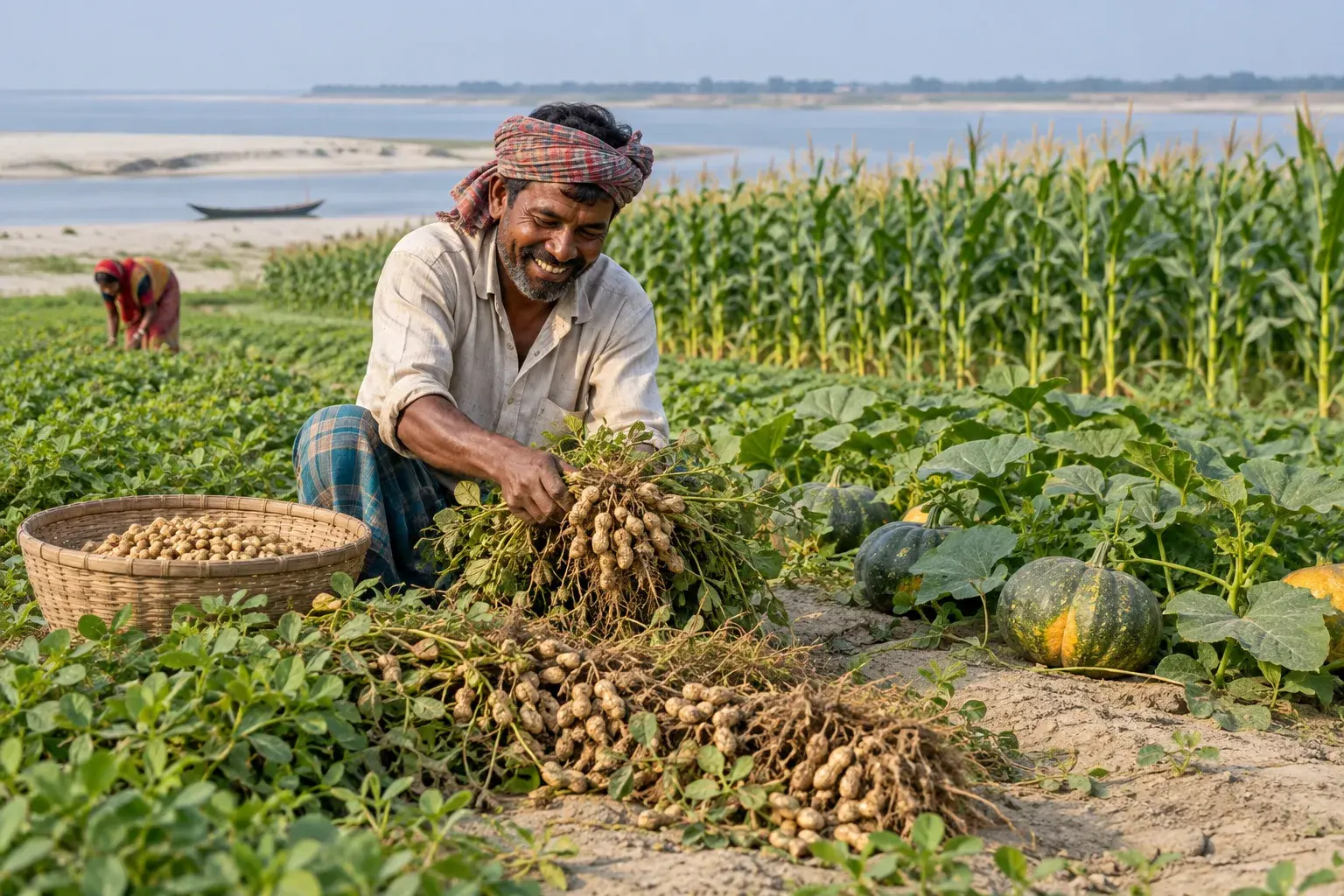 Agriculture & farming
Char land farming and groundnut
Growing groundnut, maize and pumpkin on river chars. The land is close to free: Tk 16,000 on 25 decimals returned Tk 26,400, and an acre costs Tk 65,000 to return about Tk 137,000.
- Capital
- ৳16k – ৳65k
- People
- 1 – 5
- First income
- 100 – 120 days
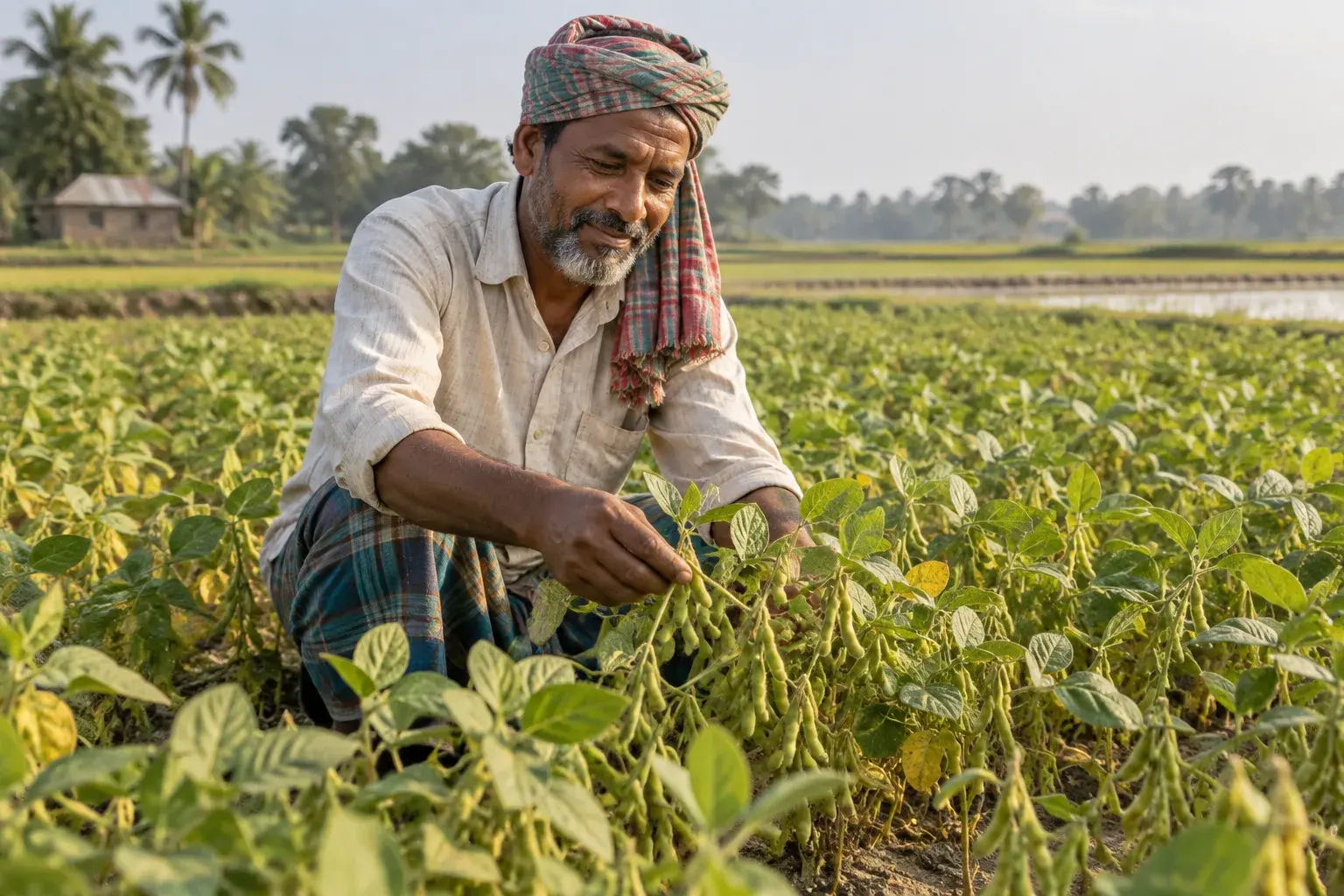 Agriculture & farming
Soybean farming
Sowing soybean in December-January on land left free after aman and harvesting in May. Lakshmipur grows 70-80 percent of the national crop, and oil and feed mills are the guaranteed buyer.
- Capital
- ৳17k – ৳1 lakh
- People
- 1 – 5
- First income
- 130 – 150 days
 Agriculture & farming
Bamboo cultivation
Planting bamboo clumps and cutting culms year after year. Nothing can be cut for the first 3-4 years after planting; after that a culm fetches Tk 100-250 in the village and Tk 125-350 wholesale at the market.
- Capital
- ৳15k – ৳3 lakh
- People
- 1 – 4
- First income
- 1,095 – 2,920 days
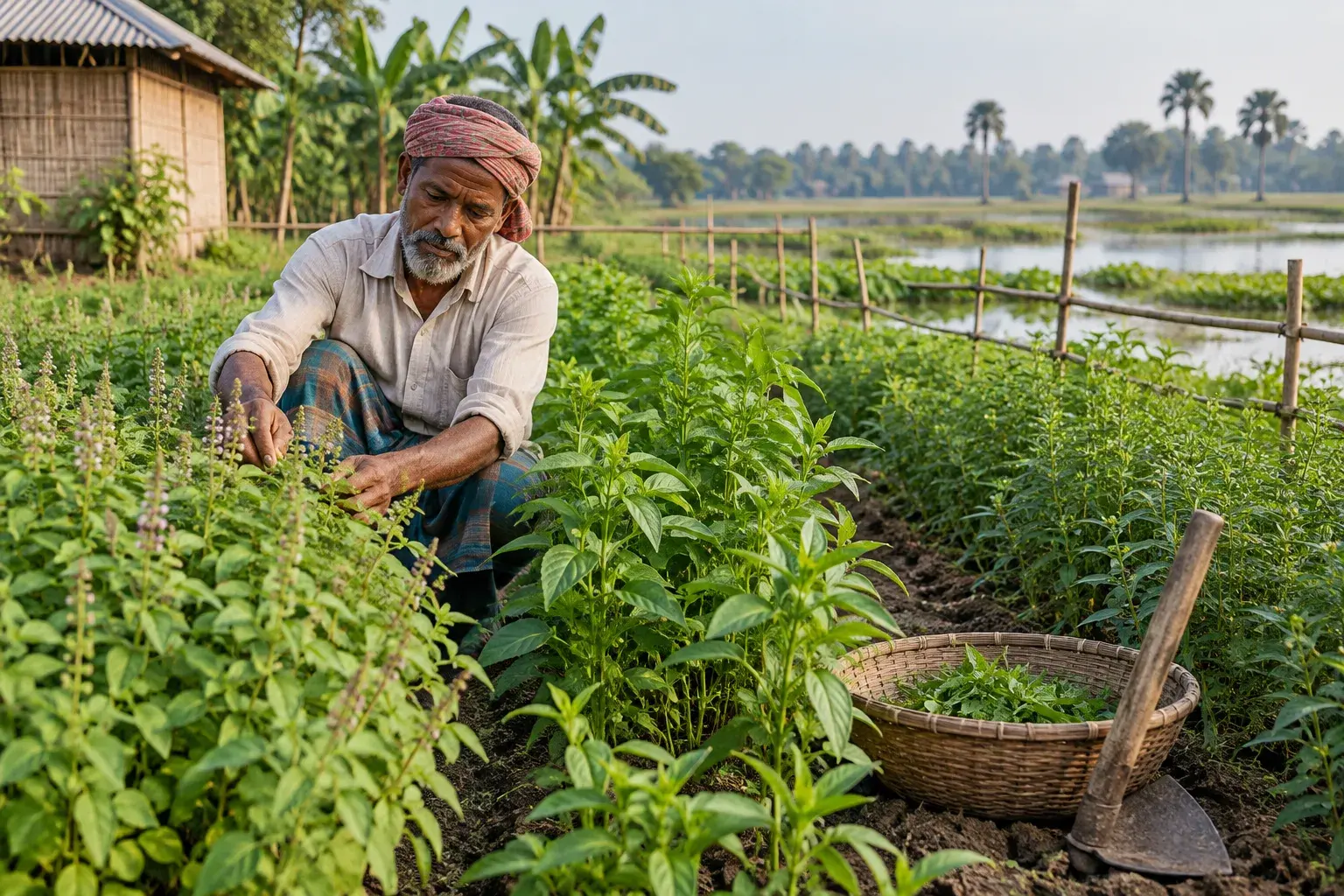 Agriculture & farming
Medicinal plant farming
Growing basok, kalomegh, tulsi and arjun. The buyers are medicine companies, so the price is set by contract or tender: a bigha of kalomegh costs Tk 15,000, yields 20-22 maunds and sells at Tk 2,400 a maund.
- Capital
- ৳15k – ৳1 lakh
- People
- 1 – 5
- First income
- 90 – 365 days