
Onion farming
Two crops in one year, muri-kata and hali. Local onion averaged Tk 41.82 a kg wholesale nationally in August 2026, but at harvest farmers got Tk 700-1,100 a maund against a cost of Tk 1,400-1,600.
- Last reviewed: 21 September 2026
- Version 1
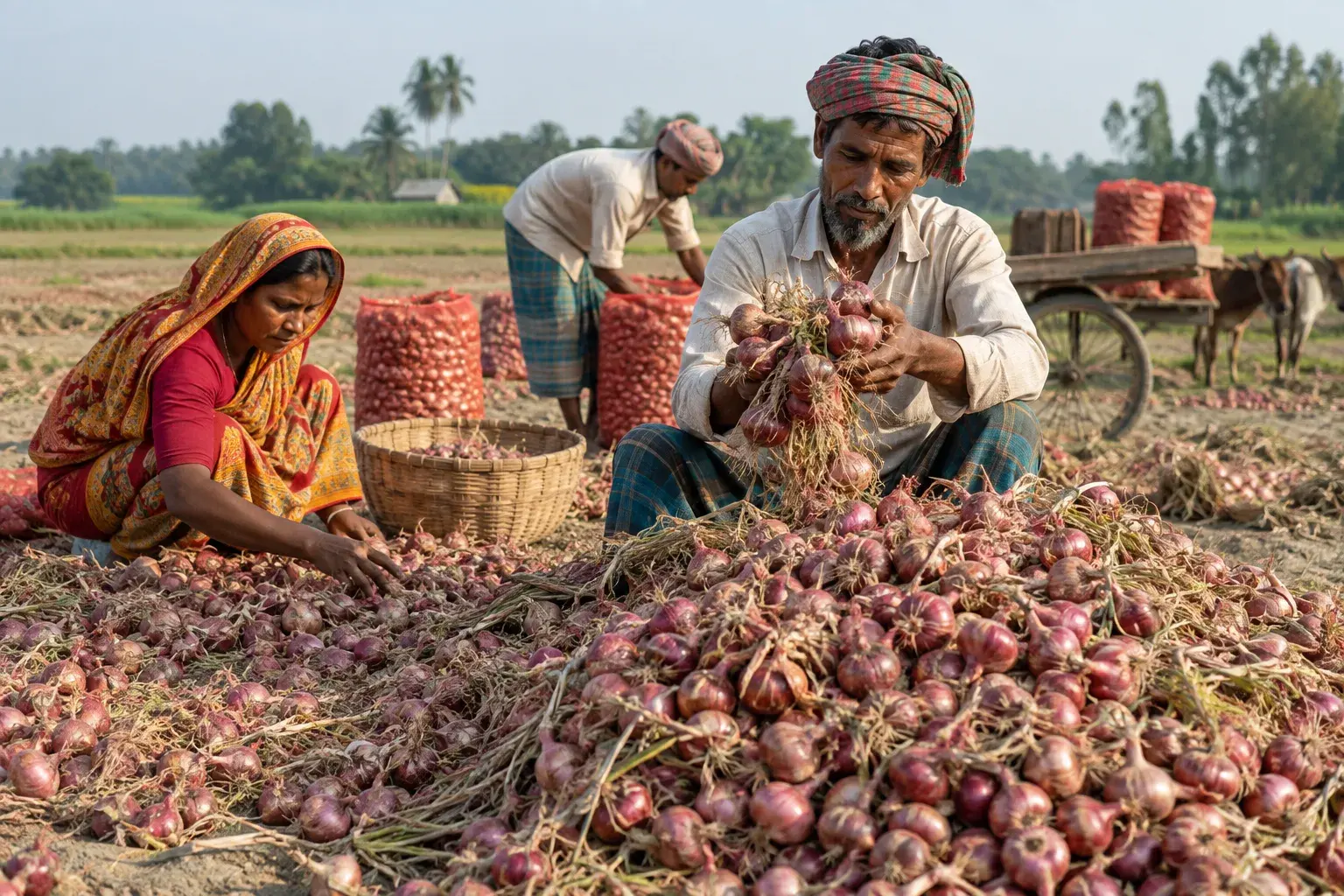
Onion farming
- Starting capital
- ৳30,000 – ৳2,50,000 Editorial estimate
- Manpower
- 2 – 10 people
- First sale
- 90 – 150 days Editorial estimate
- Break-even
- 4 – 24 months Editorial estimate
- Kind of work
- Farm · Hard
About the business
Bangladesh grows onion in two rounds. Muri-kata is planted in October-November from bulbs saved from the last crop and lifted in December-January; it is what takes the heat out of the early winter market. Hali onion is raised in a seedbed, transplanted in December-January and lifted in March-April, and it is most of the country's crop. The arithmetic is brutal. In March 2026 farmers in Faridpur got Tk 700-1,100 a maund while their own reckoning put production cost at Tk 1,400-1,600 a maund, a loss of Tk 500-600 on every maund. In May, Banibhah bazaar in Rajbari was paying Tk 700-1,050 a maund against Tk 1,800-2,000 at the same time the year before. On your own land the cost works out at Tk 28-30 a kg; on rented land Tk 38-40, and that gap decides who survives. Seed is the most expensive input in the crop: the Ministry of Agriculture's incentive order values winter onion seed at Tk 3,520 a kg, at one kg per bigha. Storage is the other trap, with about 30 percent of onion kept in ordinary houses and racks lost to rot, so everyone is forced to sell at once, and selling at once is what breaks the price. Then in September and October, when local onion runs short, the same onion sells at Tk 50-64 a kg retail in Dhaka.
Unit economics
| Item | Range | Evidence | Suggest a correction |
|---|---|---|---|
| Monthly working capital | ৳30,000 – ৳1,25,000 | Disputed | |
| Selling price | ৳18 – ৳42 / kg | Official source | |
| Variable cost | ৳28 – ৳40 / kg | Disputed | |
| Gross margin | -71% – 33% | Editorial estimate | |
| Time to first revenue | 90 – 150 days | Editorial estimate | |
| Break-even time | 4 – 24 months | Editorial estimate | |
| Cash cycle | 90 – 240 days | Editorial estimate | |
| Waste / loss | 25% – 30% | Editorial estimate | |
| Daily capacity | 5 – 55 | Editorial estimate |
What you need to start
- Raised ground and a cover for the seedbed, tools for lifting seedlings, irrigation, a shaded curing area and sacks or baskets. The government project is fitting air-flow machines in storage houses.Equipment
- Fertiliser at the government farmer-level rates: urea Tk 27, TSP Tk 27, DAP Tk 21 and MoP Tk 20 a kg. The incentive programme gives 10 kg of DAP and 10 kg of MoP per bigha for winter onion, which is the government's own assumed dose.Starting stock
- Seed or bulbs, the largest single cost in this crop. The Ministry of Agriculture's rabi 2025-26 incentive order prices winter onion seed at Tk 3,520 a kg, at one kg per bigha. In the market, seed bulbs have ranged from Tk 3,500 to Tk 8,000 a maund.Starting stock
- Agricultural marketing licence from the Department of Agricultural Marketing under the Agricultural Marketing Act 2018 and its rules, applied for on Form-1. It applies to arotdars, mokam stockists and wholesalers. The fee and validity could not be verified here.Licence
- Trade licence from the city corporation, municipality or union parishad: form Tk 10, licence book Tk 50, standard tax Tk 30, stamp Tk 150-300, licence fee Tk 100-60,000, issued in 3-5 working days and renewed yearly. Not needed to sell your own crop.Licence
- Raising a seedbed and transplanting at the right seedling age, recognising the lifting stage when 70-80 percent of tops have dried, curing properly afterwards, and sorting and keeping bulbs separately. Lift at the wrong time or store it green and the whole lot goes in storage.Skill
- A dependable supplier of bulbs and seed (BADC or an approved dealer), a fertiliser dealer, a bepari at the haat or an arotdar at the mokam, and a labour gang for transplanting and lifting.Supplier
- A storage room or bamboo rack with air movement. The Department of Agricultural Marketing's model houses in Rajbari hold at least 300 maunds each and last about 20 years. Cold storage is no help here; onion is not cold-stored.Workspace
How the work is done
- 1Decide whether you are doing muri-kata, hali, or both. Muri-kata returns money fast, in 90 days, and catches the good early-winter price, but the bulbs cost a lot to buy. Hali yields more, but everyone lifts at once and the price falls at once.
- 2Line up bulbs or seed early; this is the biggest cost. The Ministry of Agriculture's incentive order values winter onion seed at Tk 3,520 a kg at one kg per bigha, and seed bulbs have swung between Tk 3,500 and Tk 8,000 a maund.
- 3Check at the upazila agriculture office whether your name is on the extension department's incentive list. For rabi 2025-26, winter onion had 23,000 farmer-bigha slots, each getting 1 kg of seed, 10 kg of DAP and 10 kg of MoP, worth Tk 3,942.50 a bigha.
- 4Think about producing your own seed. BSS reports that 8,000 farmers in 20 districts are getting inputs worth Tk 11,825 each, 160 kg of bulbs for 20 decimals plus 20 kg DAP, 20 kg MoP, a seed storage container and cash for maintenance. Your own seed removes the biggest cost line next year.
- 5Raise the seedbed carefully if you are doing hali. The dearer the seed, the bigger the loss when seedlings die, and a seedbed lost to heavy rain or thick fog pushes the whole season back.
- 6Buy fertiliser at the government rate: DAP Tk 21, MoP Tk 20, urea and TSP Tk 27 a kg at farmer level. Ask for a receipt if the shop wants more; with the 2026 supply squeeze many places charged above the fixed rate.
- 7Before lifting, decide how much to sell now and how much to keep. Taking it all to the haat at once drives the price down further, and keeping it loses about 30 percent in three to six months. The decision sits between those two losses.
- 8Lift when 70-80 percent of the tops have dried down, then cure it properly in the shade before it goes into the store. Green onion put away wet rots at the neck, and rot spreads from one sack through the whole rack.
- 9Keep air moving through the rack or store. The government project is handing out air-flow machines, but they run on electricity and stop when the power goes, so the height of the rack and the gaps in the stack are what you actually rely on.
- 10Watch the import news. When the government stopped issuing new import permits on 5 January 2026, the local onion price rose Tk 5-10 a kg within about a week. The reverse happens just as fast.
- 11Set aside next season's bulbs and keep them apart from the eating stock. Bulb prices have been seen to double in a single year.
- 12If you buy and resell, or hold stock at a mokam, take the agricultural marketing licence and a trade licence. Selling your own crop needs neither.
Seasons
- JanHigh
- FebNormal
- MarHigh
- AprHigh
- MayNormal
- JunLow
- JulLow
- AugLow
- SepNormal
- OctHigh
- NovHigh
- DecHigh
Where it works well
- Strong fitBogura · Part of the northern onion belt with large wholesale markets; 500 farmers in the seed programme.
- Strong fitFaridpur · The second-largest, with 54,000 hectares in 2025-26 against a 48,000 target, and 12,500 hectares in Saltha upazila alone. Most of the harvest-season loss reports come from here.
- Strong fitPabna · The country's top onion district, with 54,400 hectares in 2025-26 and 16,690 in Santhia upazila alone. The mokams at Santhia and Sujanagar set the price for the north.
- Strong fitRajbari · Big mokams including Banibhah, and the Department of Agricultural Marketing's 50 model storage houses are here, 30 in Baliakandi and 20 in Kalukhali, holding about 15,000 maunds in all.
- Strong fitRajshahi · One of the two districts with the most beneficiaries (1,000 farmers) in the 2026 winter onion seed production programme, so it is being built up as a seed-producing base as well.
- Strong fitSirajganj · The Bogura-Sirajganj-Pabna-Joypurhat zone grows 59,439 hectares of onion between them, and Sirajganj also got 600 farmers in the seed programme.
- PossibleJhenaidah · Shailkupa is one of the country's big onion mokams, and the district is in the seed production programme.
- PossibleKushtia · One of the north-western districts supplying the Dhaka market, though with little storage here most of the crop has to be sold as it is lifted.
- PossibleManikganj · Close to Dhaka, so the crop can reach Karwan Bazar and Shyambazar the day it is lifted; also included in the seed programme.
- PossibleMeherpur · Local-variety onion goes from here to Khatunganj in Chattogram; in January 2026 Meherpur onion was Tk 40-42 a kg at Khatunganj.
- PossibleThakurgaon · Allocated 900 farmers for winter onion seed production, picked as part of cutting the country's dependence on imported seed.
Risks and cautions
- HighDemand: The price falling below the cost of production at harvest. In March 2026 Faridpur farmers got Tk 700-1,100 a maund against a cost of Tk 1,400-1,600, losing Tk 500-600 on every maund. Muri-kata fell from about Tk 3,500 a maund early in the season to Tk 700-800. In May, Rajbari was paying Tk 700-1,050 against Tk 1,800-2,000 the year before. A bumper crop is the cause: when sown area overshoots the target the price collapses.
- HighSpoilage: Rot in storage. There is no cold chain; onion sits in houses and on racks, and about 30 percent of national output is lost that way. In Rajbari in May 2026 rot came on top of the low price. The government's air-flow machines run on electricity, so in months of load-shedding they are no guarantee either.
- HighWorking capital: The swing in seed and bulb prices. In 2024 seed bulbs went from Tk 3,500-4,000 to Tk 7,000-8,000 a maund and land rent from Tk 8,000-10,000 to Tk 20,000-25,000 a bigha, pushing the cost per bigha from Tk 60,000-65,000 to Tk 120,000-125,000. That money goes out before planting, four or five months before there is a crop.
- HighDependency: The import decision. Part of the country's demand is met by imports, so whether the government has import permits open or closed is what sets the farmer's price. When new permits stopped on 5 January 2026, local onion rose Tk 5-10 a kg; when permits open, the price stays down even in the harvest season. The farmer has no say in it.
- MediumOther: Weather. Heavy rain or thick fog at seedbed time kills the seedlings, and at Tk 3,520 a kg for seed that is a straight cash loss. Rain just before lifting wets the crop so it cannot be stored and has to be sold at once, which is exactly when the price is lowest.
Sources
- Collected: 21 Sept 2026
Supports: requirements · বাংলাদেশ
দৈনিক বাজার দর প্রতিবেদন — চলমান মূল্য টিকার (পেঁয়াজ দেশী ৬০.০০–৬৪.০০ টাকা/কেজি)
Collected: 21 Sept 2026Supports: Selling price · বাংলাদেশ
পণ্যভিত্তিক মাসিক পাইকারী ও খুচরা জাতীয় গড় বাজারদর, আগষ্ট ২০২৬ (২৭১টি কৃষিপণ্যের বুলেটিন)
Collected: 21 Sept 2026Supports: Selling price · বাংলাদেশ (জাতীয় গড়)
সারের বিক্রয়মূল্য — টিএসপি, এমওপি ও ডিএপি সারের ডিলার ও কৃষক পর্যায়ে বিক্রয়মূল্য
Collected: 21 Sept 2026Supports: requirements · বাংলাদেশ
সিটি কর্পোরেশন থেকে ট্রেড লাইসেন্স প্রাপ্তির ধাপ সমূহ ও ফি
Collected: 21 Sept 2026Supports: requirements · বাংলাদেশ
- Collected: 20 Sept 2026
Supports: Selling price · ঢাকা মহানগর — সিপাহীবাগ, মিরপুর-৬, মোহাম্মদপুর টাউন হল, নিউমার্কেট, রামপুরা, মহাখালী বাজার
- Collected: 17 Sept 2026
Supports: Selling price · ঢাকা মহানগর
পেঁয়াজ ও আলুর দৈনিক পাইকারী ও খুচরা বাজারদর (সর্বশেষ ১৬-০৯-২০২৬)
Collected: 16 Sept 2026Supports: Selling price · বাংলাদেশ
শীতকালীন পেঁয়াজ বীজ উৎপাদনে বিনামূল্যে উপকরণ পাচ্ছেন ৮ হাজার কৃষক
Collected: 9 Jun 2026Supports: districts, requirements · রাজশাহী, ফরিদপুর, ঠাকুরগাঁও, পাবনা, সিরাজগঞ্জ, বগুড়া ও অন্যান্য ২০ জেলা
কম দামে দিশেহারা পেঁয়াজ চাষি, পচনে বাড়ছে ক্ষতি — রাজবাড়ীর বানীবহ বাজার
Collected: 26 May 2026Supports: Selling price, Variable cost · রাজবাড়ী, ফরিদপুর
Onion farmers face heavy losses as prices plummet amid supply surplus (ফরিদপুর)
Collected: 6 Mar 2026Supports: districts, Selling price, Variable cost · ফরিদপুর, পাবনা, সাঁথিয়া, সালথা
আমদানি বন্ধে চাঙ্গা হচ্ছে নিম্নমুখী থাকা দেশী পেঁয়াজের বাজার — ৫ জানুয়ারি ২০২৬ থেকে নতুন আইপি বন্ধ
Collected: 23 Jan 2026Supports: risks · বাংলাদেশ
75,000 tonnes of local onions to hit market this month; prices expected to stabilise
Collected: 7 Nov 2025Supports: risks · বাংলাদেশ, চট্টগ্রাম খাতুনগঞ্জ
Supports: requirements · বাংলাদেশ
- Collected: 11 Apr 2023
Supports: requirements · বাংলাদেশ
What changed
No corrections have been published yet.
Questions and answers
No questions yet. Be the first to ask.
Stories about this business
4.7 lakh taka of onions, and 90 percent of the 450 stored maunds rotted
He spent 470,000 taka on four and a half acres and harvested 600 maunds. He stored 450 of them waiting for a better price and about 90 percent rotted; he now expects to finish the season with under 100,000 taka.
- Capital
- ৳4.7 lakh
- Reasons
- Spoilage, Price drop
Similar businesses
 Agriculture & farming
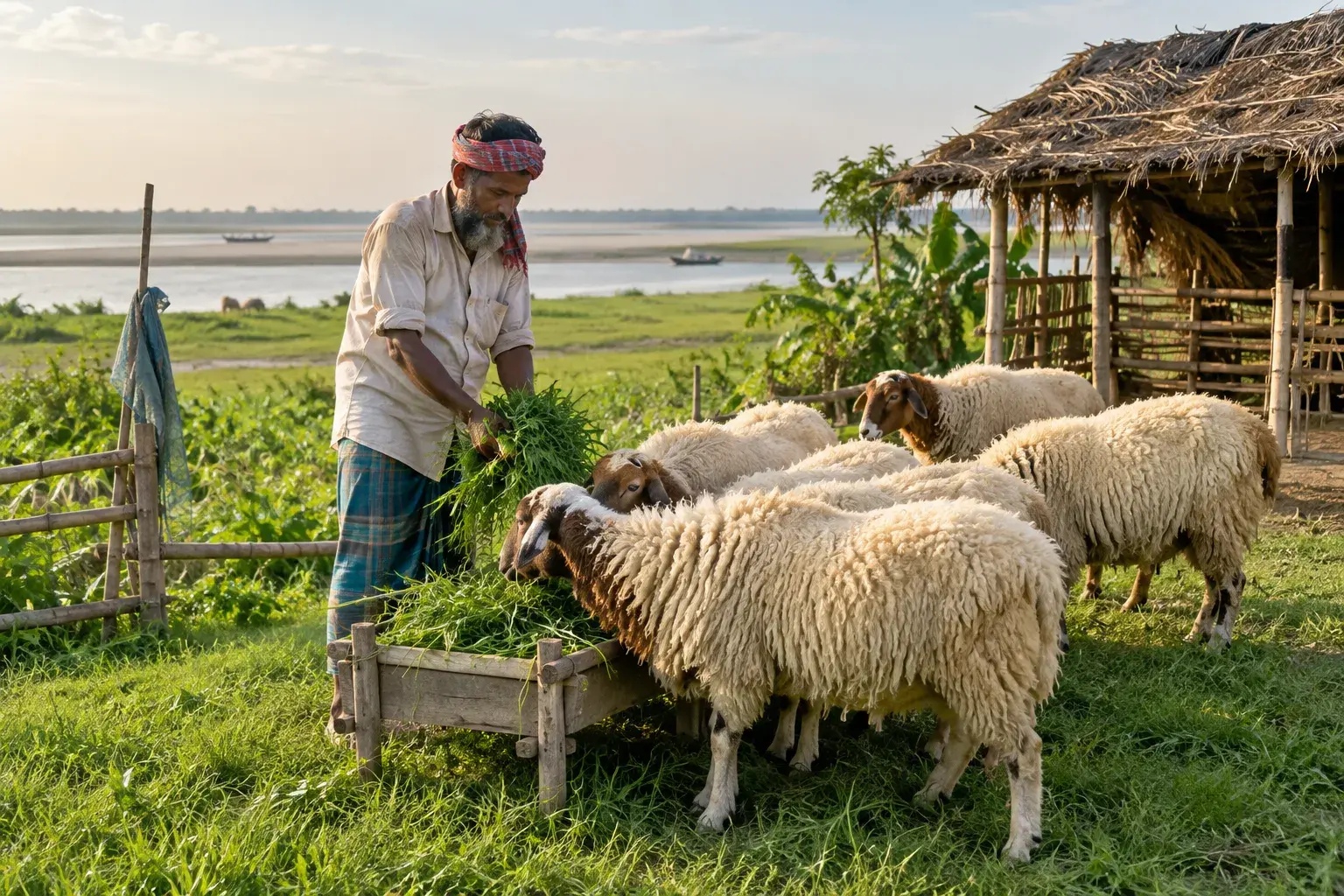
Sheep rearing
Rearing sheep on open grazing in fields and chars. Before Qurbani 2026 one Joypurhat farmer sold 26 sheep for Tk 2,30,000, about Tk 8,800 each.
- Capital
- ৳30k – ৳2.5 lakh
- People
- 1 – 3
- First income
- 180 – 365 days
 Agriculture & farming
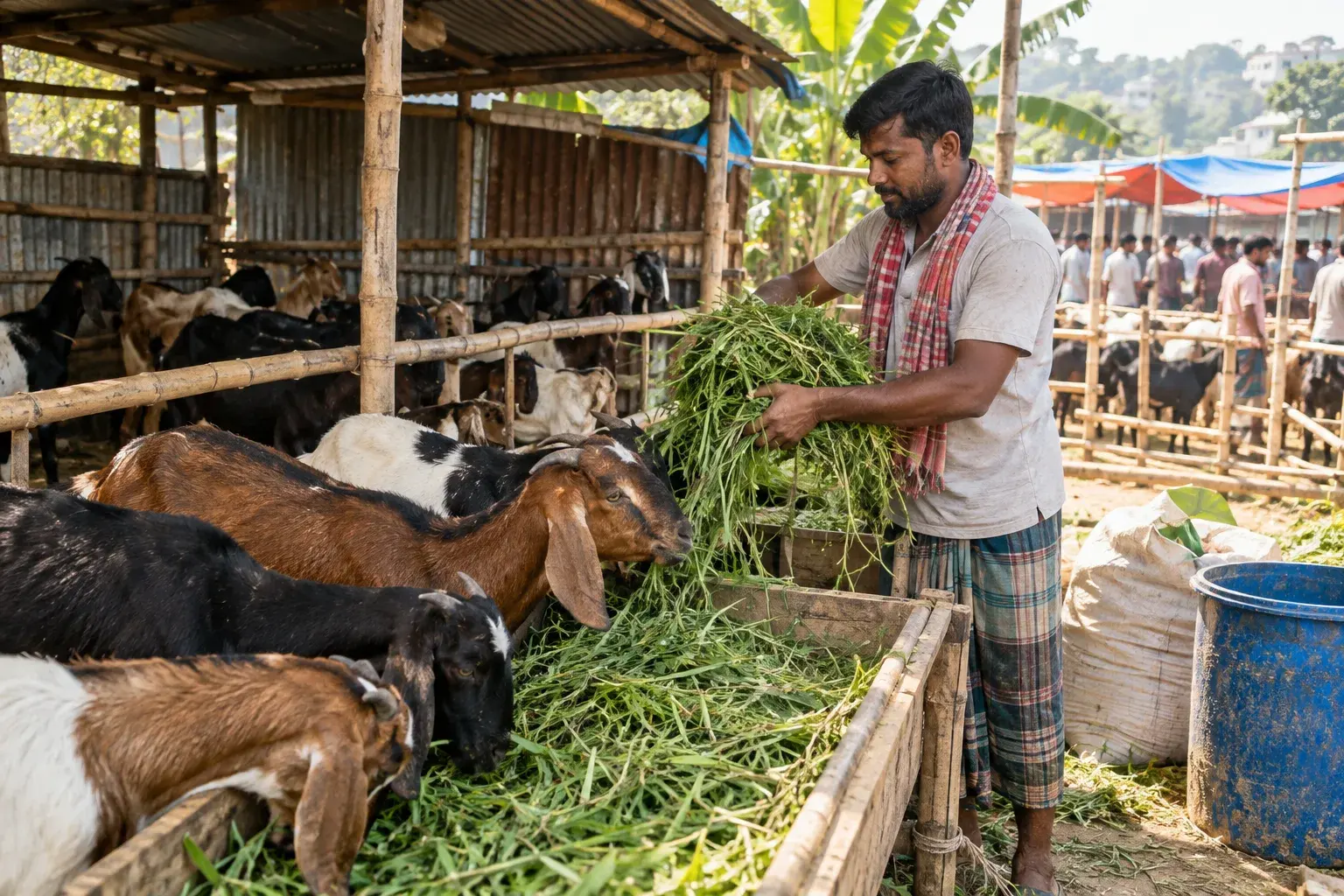
Goat fattening
Buying five to six month old khasi, feeding them up and selling at the Qurbani haat. In May 2026 Chattogram haats paid Tk 8,000-15,000 for small goats and Tk 40,000-50,000 for large ones; big crossbreeds went at Tk 700-800 a kilo.
- Capital
- ৳30k – ৳2.5 lakh
- People
- 1 – 3
- First income
- 90 – 365 days
 Agriculture & farming
Mussel and pearl culture
Seeding pond mussels to grow pearls in seven to eleven months. Grade A pearls sell wholesale at Tk 500-600, but there is no regular buyer - and that is the main risk.
- Capital
- ৳30k – ৳1.5 lakh
- People
- 1 – 6
- First income
- 210 – 330 days
 Agriculture & farming
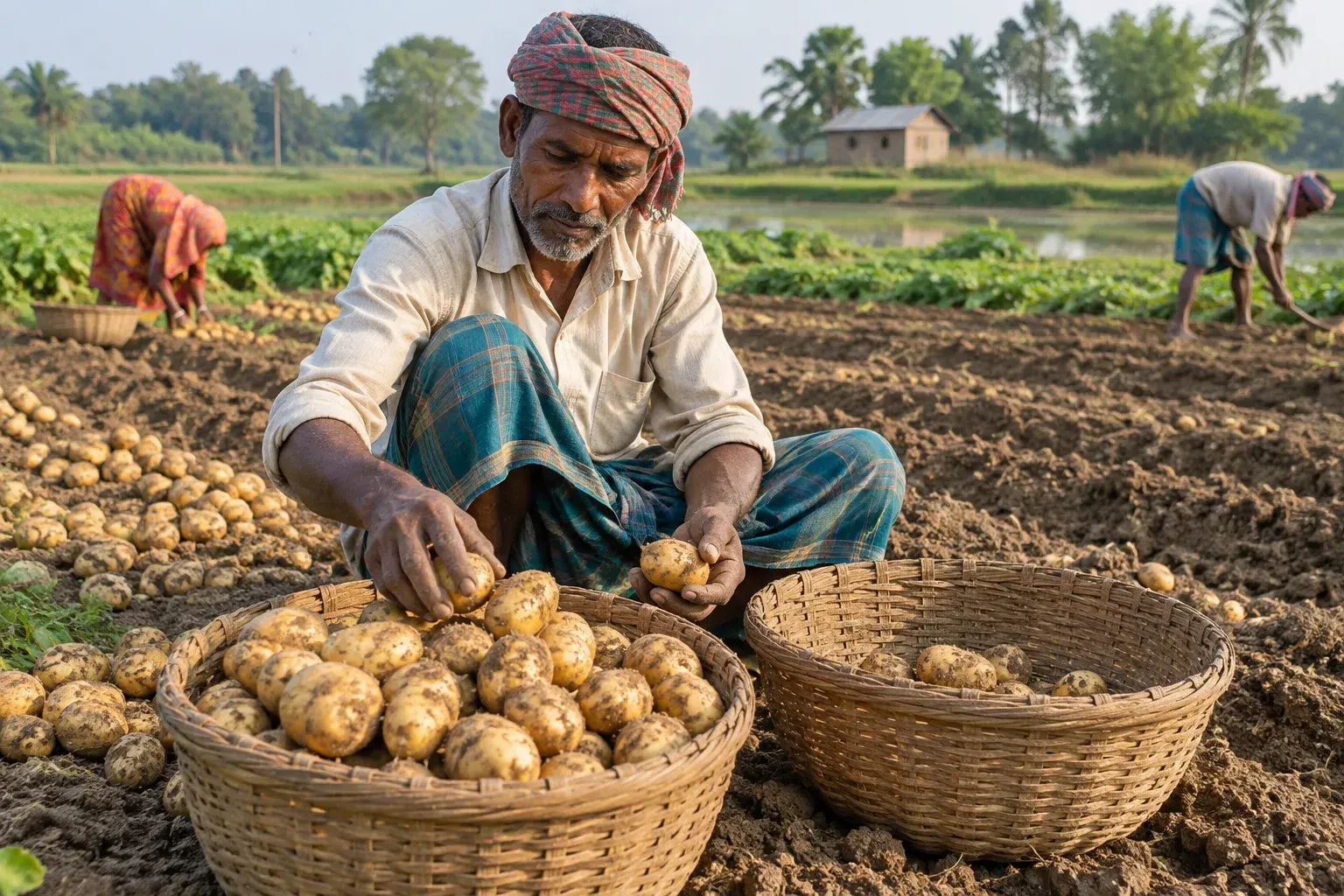
Potato farming
Planted in winter, lifted in February-March. National average wholesale in August 2026 was Tk 29.80/kg for local potato and Tk 20.53-20.71 for Holland varieties, but at harvest the field price fell to Tk 3-7; cold storage rent is now Tk 6 a kg.
- Capital
- ৳30k – ৳3 lakh
- People
- 2 – 10
- First income
- 90 – 120 days