
Goat fattening
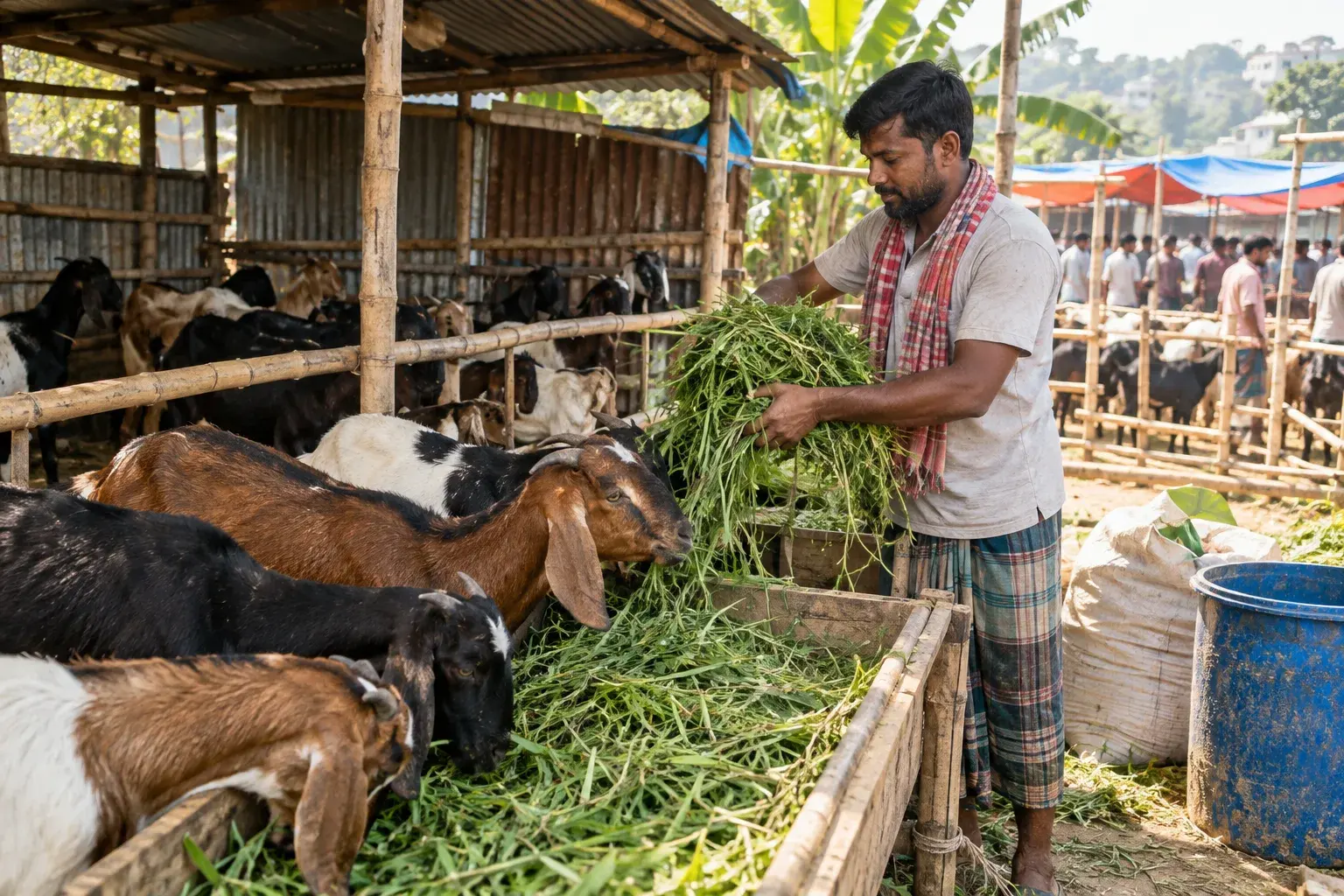
Buying five to six month old khasi, feeding them up and selling at the Qurbani haat. In May 2026 Chattogram haats paid Tk 8,000-15,000 for small goats and Tk 40,000-50,000 for large ones; big crossbreeds went at Tk 700-800 a kilo.
- Last reviewed: 19 September 2026
- Version 1
Goat fattening
- Starting capital
- ৳30,000 – ৳2,50,000 Editorial estimate
- Manpower
- 1 – 3 people
- First sale
- 90 – 365 days Editorial estimate
- Break-even
- 10 – 24 months Editorial estimate
- Kind of work
- Farm · Easy
About the business
Buying young castrated goats, feeding them up over a few months and selling them at the Qurbani haat. The Agricultural Information Service advises buying five to six month old Black Bengal, Jamunapari or crossbred khasi, picked by firm legs, a smooth coat, loose skin and clearly defined ribs. A goat eats four to five percent of its body weight a day, sixty to eighty percent of it grass and leaves and the rest concentrate; a growing khasi needs 200-250 grams of mixed concentrate daily. That is why the work fits a family with one bigha - the grass grows on your own land and the only cash cost is the concentrate. The money comes once a year, at Eid-ul-Azha. In May 2026 at the Bibirhat and Sagarika haats in Chattogram, small local goats went for Tk 8,000-15,000, medium ones Tk 18,000-30,000 and large ones Tk 40,000-50,000. At the haat goats sell by the head, not by the kilo, so looking big is the price. On farms, large crossbreeds do sell by weight: in May 2026 one farmer asked Tk 800 a kilo for goats of 76, 64 and 54 kg and sold one at Tk 700 a kilo for Tk 44,800. Prices are up on last year, with a Tk 15,000-16,000 goat now Tk 20,000, and with cattle over a lakh many families are turning to goats.
Unit economics
| Item | Range | Evidence | Suggest a correction |
|---|---|---|---|
| Monthly working capital | ৳300 – ৳3,000 | Editorial estimate | |
| Selling price | ৳8,000 – ৳50,000 / unit | Market quote | |
| Variable cost | ৳6,000 – ৳43,000 / unit | Editorial estimate | |
| Gross margin | 14% – 25% | Editorial estimate | |
| Time to first revenue | 90 – 365 days | Editorial estimate | |
| Break-even time | 10 – 24 months | Editorial estimate | |
| Cash cycle | 90 – 365 days | Editorial estimate | |
| Waste / loss | 3% – 10% | Editorial estimate | |
| Daily capacity | 0 – 0.1 | Editorial estimate |
What you need to start
- Healthy five to six month old khasi - Black Bengal, Jamunapari or a cross. Their purchase price could not be verified here, and it is the largest part of the capital.Starting stock
- Mixed concentrate - bran, broken maize, oil cake, pulses and chickpea. A growing khasi takes 200-250 grams a day, a doe with kids 350-450 grams.Starting stock
- Trade licence from the union parishad, municipality or city corporation, needed if you farm commercially: form Tk 10, licence book Tk 50, standard tax Tk 30, stamp Tk 150-300, licence fee Tk 100-60,000 by trade type.Licence
- Judging health and growth potential in a live animal, and catching disease early. With goats you cannot wait.Skill
- A nearby livestock haat or a trusted dealer for kids, a feed shop, and the upazila livestock office for vaccines and treatment.Supplier
- Land for fodder. Even one bigha of napier can feed a few goats; one farmer runs his big goats off one and a half bighas of napier.Workspace
- A shed that keeps sun, rain, cold and wild animals off: a pucca or semi-pucca floor, or a bamboo or timber platform three to five feet above ground, with plenty of light and air.Workspace
How the work is done
- 1Set up the shed. A bamboo or timber platform three to five feet off the ground lets the droppings fall through and keeps the goats dry. Leave it open to light and air.
- 2Arrange the grass before the goats. Without land for napier or other fodder you will be buying feed daily, and that eats the profit.
- 3Buy healthy five to six month old khasi - Black Bengal, Jamunapari or a cross. Pick by firm legs, a smooth coat, loose skin and clearly defined ribs.
- 4Go to the upazila livestock office and give the PPR vaccine as soon as you buy. It is the deadliest disease goats get, and without the vaccine a whole flock can go at once.
- 5Deworm every three to four months. Do not let them graze beside ditches and ponds - that is where liver fluke comes from.
- 6Split the daily ration: four to five percent of body weight, sixty to eighty percent grass, leaves and straw, the rest concentrate, with 200-250 grams of mixed concentrate for a growing khasi.
- 7Weigh each goat monthly and write it down. If the weight is not rising, the feed or the worms are the problem, and finding that out three months late is too late.
- 8Keep them out of the rain and the cold. Goats are very sensitive to cold, and a soaking brings pneumonia.
- 9Step up the concentrate two or three months before Qurbani - the weight put on at the end is what lifts the price at the haat.
- 10Get to the haat at least a week before Eid, or sell from home to a dealer. Sell on the last day and the dealer cuts the price, because you have nowhere to take the animal back to.
- 11The moment the money is in hand, buy next year's kids. Kid prices are at their lowest right after Eid.
Seasons
- JanNormal
- FebNormal
- MarNormal
- AprHigh
- MayHigh
- JunNormal
- JulNormal
- AugNormal
- SepNormal
- OctNormal
- NovNormal
- DecNormal
Where it works well
- Strong fitChattogram · At the Bibirhat and Sagarika livestock haats in May 2026 small goats fetched Tk 8,000-15,000 and large ones Tk 40,000-50,000, and goats sold better than cattle this year.
- Strong fitDhaka · The biggest Qurbani buying market; alongside the haats, online sales with home delivery are growing and let a farmer get the price directly.
- PossibleFaridpur · Grass grows on the char land and the Dhaka haats are within reach.
- PossibleJashore · Long-standing Black Bengal country, so kids are available close by and cost less to buy.
- PossibleJhenaidah · Many goat haats and dealers, so there is room to bargain at selling time.
- PossibleKushtia · A livestock area where mustard cake for feed comes cheap from the local ghanis.
- PossibleMymensingh · Livestock services and veterinary help are close at hand, so vaccines are easy to get.
- PossibleRajbari · The chars give grazing room, so the cash feed bill stays low.
- PossibleRangpur · Feed and labour are both cheap, but with lower local buying power the big goats have to go to Dhaka.
- PossibleSirajganj · Grass on the chars and a long tradition of livestock, with plenty of dealers at the northern haats.
Risks and cautions
- HighDemand: The money comes once a year, at Qurbani Eid. If the price does not come up in those few days, a year of feed is not covered and the goat has to be fed another year. On 27 May 2026 sellers said that rain and thin crowds on the last day forced them to let animals go cheap.
- HighDependency: PPR is the deadliest disease goats get and it spreads fast. Without vaccination a whole flock can die together, and a year's money goes in a week. Skin disease, orf, tetanus, foot and mouth and worms are all risks too, and goats are very sensitive to cold and fall ill if they get soaked.
- MediumWorking capital: Costs are daily, income is annual. Feeding large crossbreeds can run to Tk 100 per goat per day, Tk 3,000 a month; ten goats means Tk 30,000 a month in feed alone, and it comes back only after Eid. Run out of money midway and you cut the ration, and the moment you do the weight stops.
- MediumOther: At the haat goats sell by the head, not by weight. The price therefore depends on how big the animal looks to the buyer, not on what it weighs. A farmer who budgeted per kilo may not get that back at the haat. To sell by weight you have to line the buyer up at the farm beforehand.
- LowCompliance: Keeping a few goats at home needs no separate licence, but a commercial farm needs a trade licence. Whether the upazila livestock office requires farm registration could not be verified here - ask at the office before you start.
Sources
সিটি কর্পোরেশন থেকে ট্রেড লাইসেন্স প্রাপ্তির ধাপ সমূহ
Collected: 16 Sept 2026Supports: Starting capital · বাংলাদেশ
দেশীয় পদ্ধতিতে ছাগল মোটাতাজাকরণ — কৃষি কথা, জ্যৈষ্ঠ ১৪৩২
Collected: 15 May 2025Supports: Monthly working capital, Time to first revenue · বাংলাদেশ
What changed
No corrections have been published yet.
Questions and answers
No questions yet. Be the first to ask.
Stories about this business
Four goats for 20,000 taka doubled in a year; the herd is now 300
Four goats bought for 20,000 taka in 2012 sold for 40,000 within a year. The herd is now 300 goats of four breeds, worth about 15 lakh taka.
- Capital
- ৳20k
- Ran for
- 12 months
- Reasons
- Working capital, Strong network
Similar businesses
 Agriculture & farming
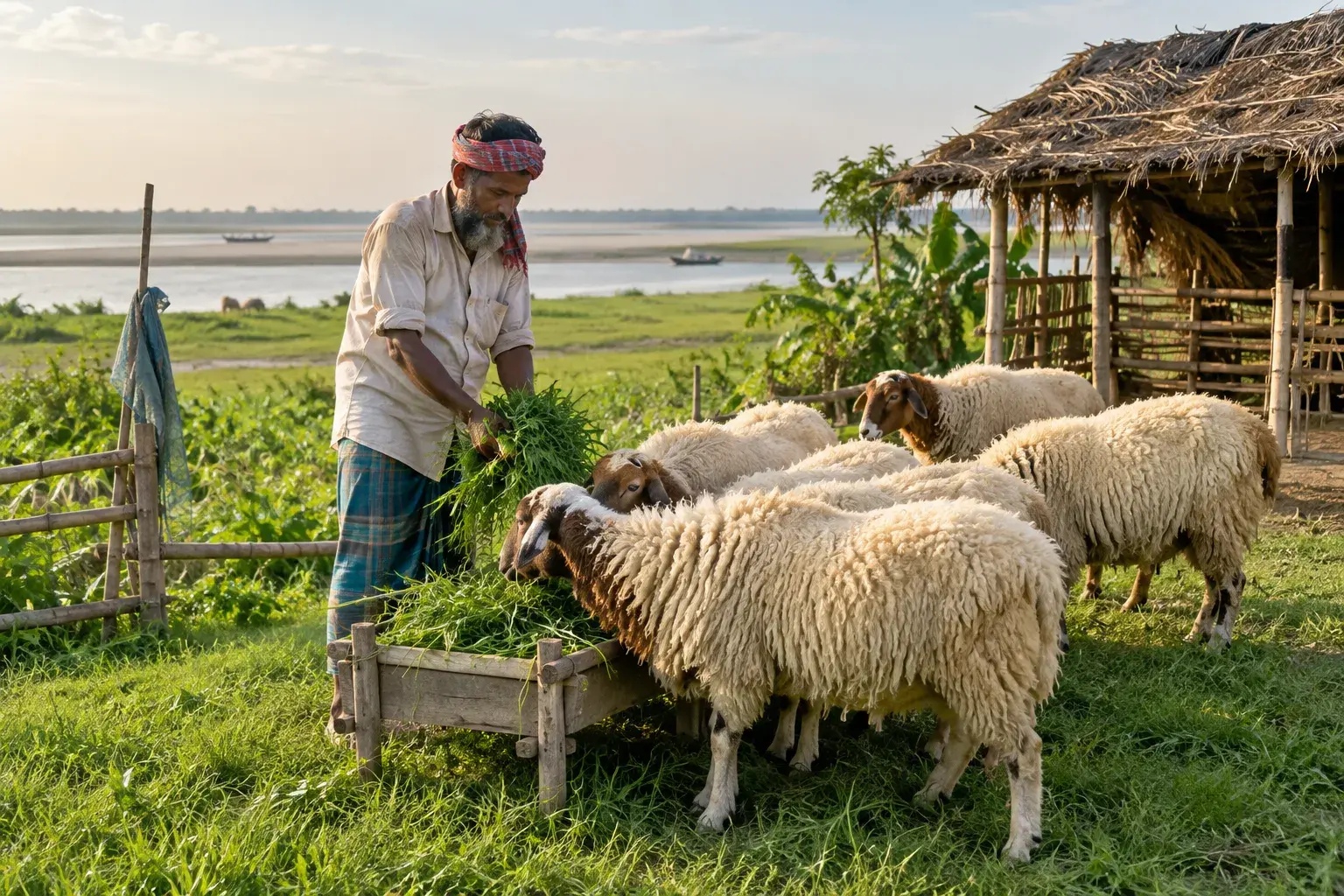
Sheep rearing
Rearing sheep on open grazing in fields and chars. Before Qurbani 2026 one Joypurhat farmer sold 26 sheep for Tk 2,30,000, about Tk 8,800 each.
- Capital
- ৳30k – ৳2.5 lakh
- People
- 1 – 3
- First income
- 180 – 365 days
 Agriculture & farming
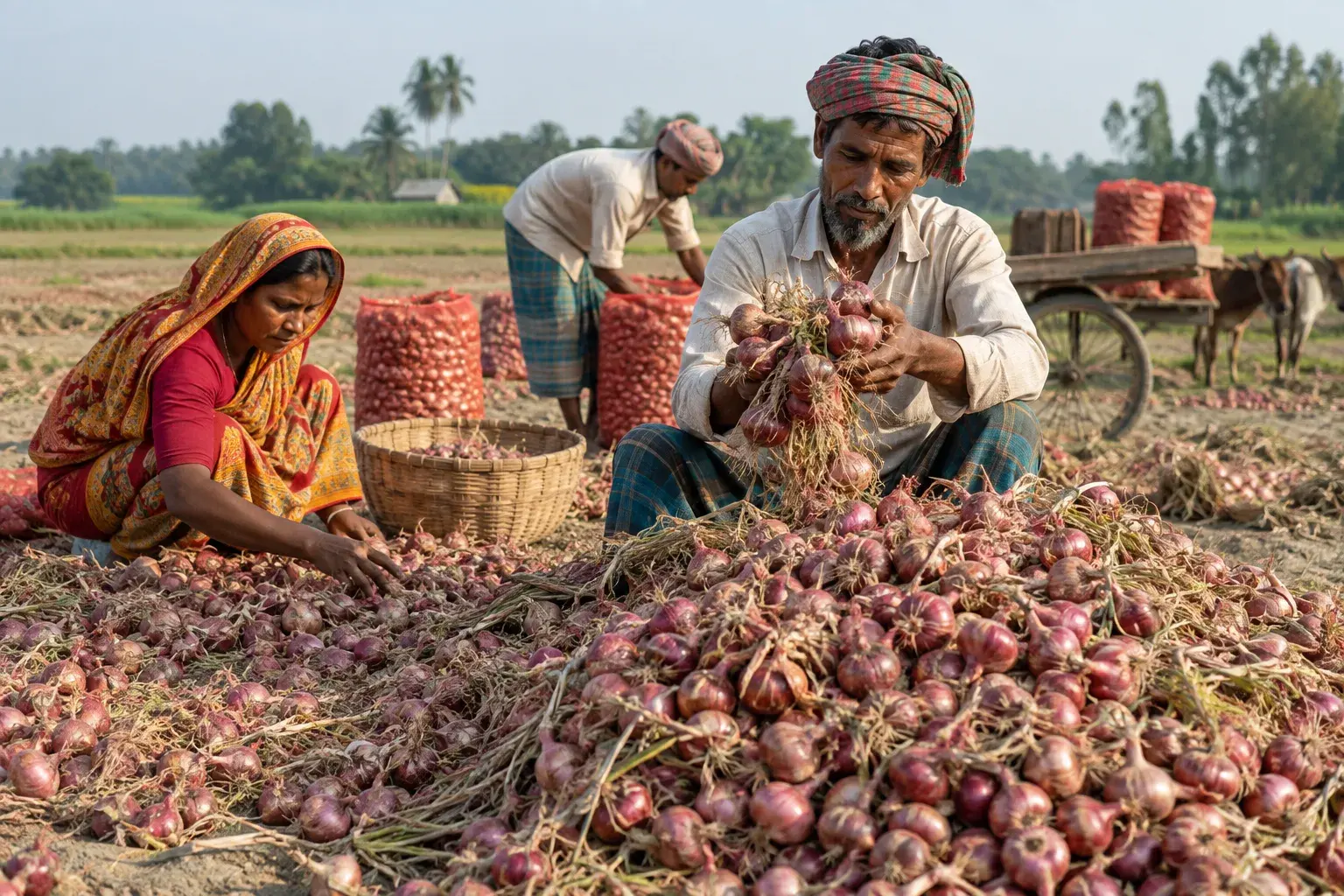
Onion farming
Two crops in one year, muri-kata and hali. Local onion averaged Tk 41.82 a kg wholesale nationally in August 2026, but at harvest farmers got Tk 700-1,100 a maund against a cost of Tk 1,400-1,600.
- Capital
- ৳30k – ৳2.5 lakh
- People
- 2 – 10
- First income
- 90 – 150 days
 Agriculture & farming
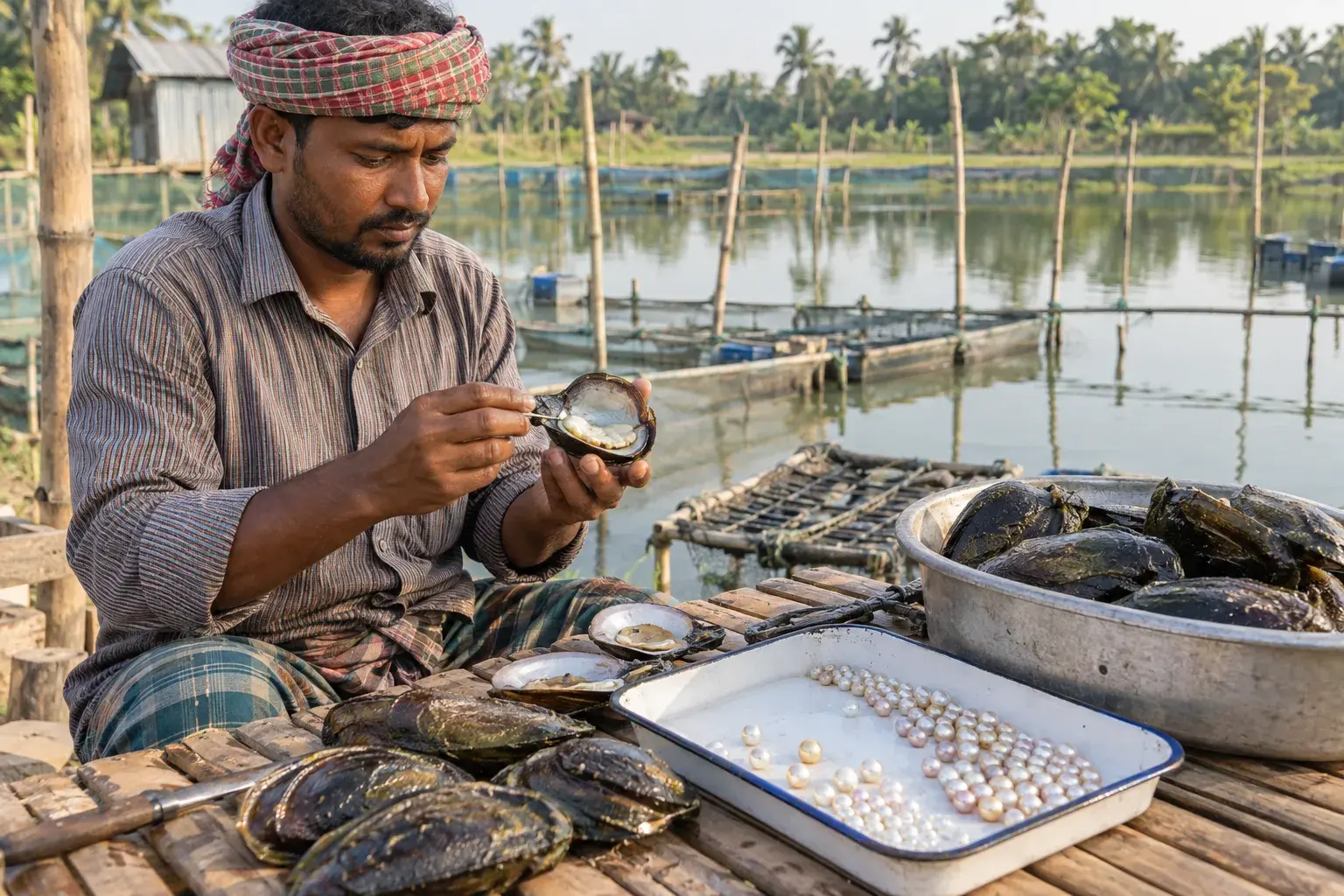
Mussel and pearl culture
Seeding pond mussels to grow pearls in seven to eleven months. Grade A pearls sell wholesale at Tk 500-600, but there is no regular buyer - and that is the main risk.
- Capital
- ৳30k – ৳1.5 lakh
- People
- 1 – 6
- First income
- 210 – 330 days
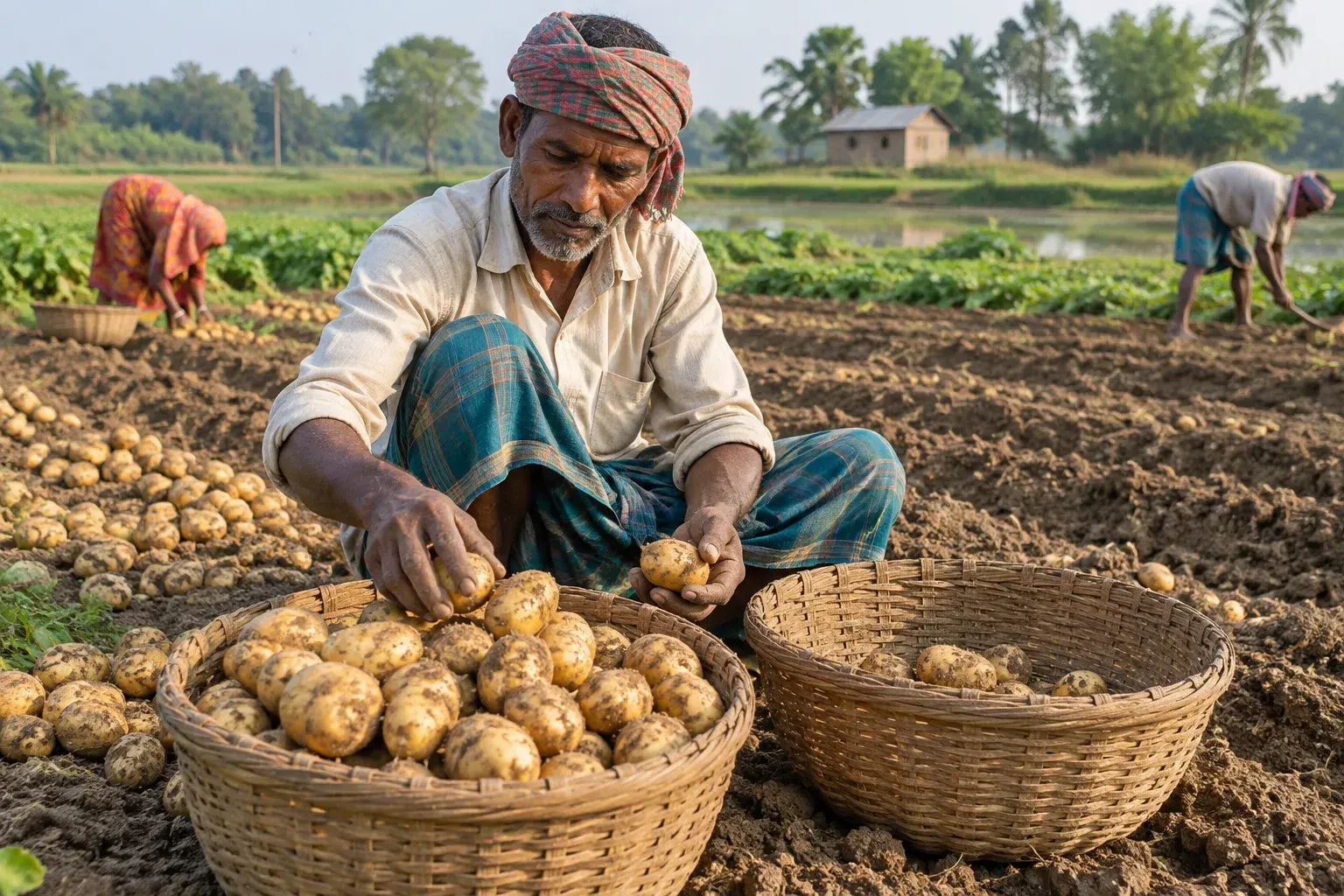 Agriculture & farming
Potato farming
Planted in winter, lifted in February-March. National average wholesale in August 2026 was Tk 29.80/kg for local potato and Tk 20.53-20.71 for Holland varieties, but at harvest the field price fell to Tk 3-7; cold storage rent is now Tk 6 a kg.
- Capital
- ৳30k – ৳3 lakh
- People
- 2 – 10
- First income
- 90 – 120 days