
Paneer and chhana making
Milk split into chhana, pressed into paneer. 8-10 kg of milk makes 1 kg of paneer, which sells at Tk 900-1,200 a kg - the whole business is the gap between the two prices.
- Last reviewed: 21 September 2026
- Version 1

Paneer and chhana making
- Starting capital
- ৳50,000 – ৳20,00,000 Editorial estimate
- Manpower
- 1 – 10 people
- First sale
- 7 – 135 days Editorial estimate
- Break-even
- 2 – 18 months Editorial estimate
- Kind of work
- Workshop · Medium difficulty
About the business
This trade is one sum: what the milk cost and what the paneer fetched. The Livestock Research Institute puts the yield at 8 kg of cow milk per kg of paneer in winter, 9 kg in summer, and 7 kg for buffalo milk. The makers of Austagram say 10 kg of cow milk to the kilo. Since 1 August 2026 Milk Vita has paid farmers Tk 53 a litre for milk at 4 percent fat, rising past Tk 60 at 4.7 percent. In Sirajganj, though, farmers are forced to sell at Tk 45-50 and the ghosh buy at Tk 48-54. Call the milk Tk 55, and a kilo of paneer has Tk 440-550 of milk in it before anything else. Austagram makers sell their paneer at Tk 900-1,200 a kg; on Chaldal, Aarong Dairy paneer is Tk 200 for 200g, which is Tk 1,000 a kg. The gap is there, but it is narrow: five taka a litre on the milk adds Tk 40-50 to the cost of a kilo of paneer. And one more thing: chhana is a one-day product. Without a chiller it sours by the next day, which is why Austagram presses its paneer in bamboo baskets and salts it - the salt is their refrigeration. In Thakurgaon, meanwhile, 33 factories turn out about 96 tonnes of mozzarella a month, selling at Tk 500-650 a kg. The law is not light either: item 3 of schedule 1 of the Food Safety Authority's draft regulations covers 'all ice cream and dairy product production and processing', and chhana is item 43 on BSTI's mandatory list (BDS 1180:2016).
Unit economics
| Item | Range | Evidence | Suggest a correction |
|---|---|---|---|
| Monthly working capital | ৳60,000 – ৳5,00,000 | Editorial estimate | |
| Selling price | ৳500 – ৳1,200 / kg | Market quote | |
| Variable cost | ৳420 – ৳660 / kg | Editorial estimate | |
| Gross margin | 15% – 45% | Editorial estimate | |
| Time to first revenue | 7 – 135 days | Editorial estimate | |
| Break-even time | 2 – 18 months | Editorial estimate | |
| Cash cycle | 1 – 45 days | Editorial estimate | |
| Waste / loss | 3% – 20% | Editorial estimate | |
| Daily capacity | 5 – 120 | Editorial estimate |
What you need to start
- A chiller or chest freezer for the milk (125-250 litres, Tk 27,900-51,400, Daraz 21-09-2026), large pans and a stove, strainers and muslin, a paneer press (stainless steel Tk 1,119-1,146) or bamboo baskets as in Austagram, scales and food-grade containers. A cream separator is Tk 35,000-40,000. Prices for a milk fat tester and a small pasteuriser could not be verified here.Equipment
- BSTI CM licence, needed once it is packed and sold under your own name. On the mandatory list chhana is item 43 (BDS 1180:2016, 1st revision), cheese item 107 (BDS CXS 283:2022), cream cheeses 104, extra hard grating cheese 105, whey cheeses 108 and butter 111. Sample test fees over 14 working days: chhana Tk 4,000 (Tk 8,000 urgent over 5 days), cheese Tk 3,000 (Tk 6,000), cream cheese Tk 7,000, whey cheese Tk 1,300 - with 15 percent VAT on all fees. New CM application Tk 1,000, annual CM fee 0.10 percent of production value with a Tk 3,500 floor. Time 19-94 working days. 'Paneer' has no entry of its own on the list; the chhana and cheese entries may both apply and this has to be confirmed.Licence
- Trade licence. In the 2016 city corporation schedule, serial 163 'manufacture of dairy products' is Tk 1,000, serial 67 'yoghurt, malai, mawa' Tk 500 and serial 180 'yoghurt manufacture' Tk 1,000; signboard tax is Tk 80 per square foot. In a pourashava farms and works are banded by capital - Tk 600 at Tk 3-10 lakh, Tk 1,000 at Tk 10-25 lakh. Fiscal year, renewal by 30 September.Licence
- In a pourashava, registration of the food premises under clause 18 of the Model Tax Schedule and section 21 of the Pure Food Ordinance 1959: Tk 500 a year for a dairy products factory, Tk 500 for premises that grind or process food, Tk 400 for a large selling shop and Tk 200 for a small one. BSTI's CM licence conditions also ask for a 'premises licence' in the case of food products.Licence
- Fire safety certificate; no size exemption. Animal fats including ghee and butter, and LPG, are listed in group 3: Tk 2,000 up to 150 sq ft, Tk 2,400 for 151-500, Tk 4,000 for 501-1,000, Tk 6,000 for 1,001-3,000, Tk 8,000 for 3,001-6,000. Application form Tk 100 by treasury challan. It expires on 30 June of the financial year, with a 5 percent monthly late fee for six months and then cancellation. Rebates of 5 percent in a pourashava and 10 percent in a union parishad. Running a factory without one carries a minimum of three years in prison under section 17.Licence
- Environmental clearance, and it depends on size. Family-run with investment up to Tk 5 lakh is cottage industry and needs none. Above that, 'dairy processing' is serial 106 of the Orange class in schedule 1 of the Environment Conservation Rules 2023: a location clearance and an Initial Environmental Examination first, up to 21 working days to approve, a Tk 5,000 processing fee, and a clearance fee of Tk 3,000 (investment Tk 1-5 lakh), Tk 6,000 (5-10 lakh), Tk 10,000 (10-50 lakh) or Tk 20,000 (50 lakh to 1 crore), valid one year and renewed at half. Being caught without one means, under rule 23, a show cause, a hearing, then a closure order and a request to cut off electricity, water and gas.Licence
- Food business registration with the Food Safety Authority - serial 3 of schedule 1 of the Authority's draft regulations, 'all ice cream and dairy product production and processing'. Valid three years, renewal at least 90 days before expiry. Two sources give two fees: the Authority's draft schedule 10 makes new registration free with Tk 100 renewal, while press reporting says Tk 1,000 and Tk 500.Licence
- Knowing at what heat the milk splits and how much acid or old whey to use, judging how long to press, and being able to tell watered or adulterated milk. In Austagram old chhana is used as the starter, the curd is drained, pressed in a bamboo mould and salted so it keeps.Skill
- A guaranteed daily volume of milk, priced on fat. Since 01-08-2026 Milk Vita pays Tk 53 a litre at 4 percent fat, Tk 54.10 at 4.1, Tk 55.30 at 4.2 and over Tk 60 at 4.7. In Sirajganj farmers are forced to sell at Tk 45-50 and the ghosh buy at Tk 48-54. The national average for liquid cow milk is Tk 72.54 a litre wholesale and Tk 80 retail (Department of Agricultural Marketing, August 2026).Supplier
- A clean room with drainage and a water supply, a commercial power connection (DPDC LT-E flat Tk 15.36 a unit with a Tk 90 per kW monthly demand charge, effective from June 2026), and somewhere for the whey to go. Every 40 kg of milk leaves 35-36 litres of whey, and that is precisely why the Orange clearance class applies.Workspace
How the work is done
- 1Settle the milk supply before the workshop. How many litres a day, from whom, at what price, and when it has to be paid - without those four the rest is pointless, because more than half the selling price is the milk.
- 2Set up a way to test the milk for fat and density. Milk Vita pays by fat: Tk 53 a litre at 4 percent, over Tk 60 at 4.7. If you do not measure, you pay full price for watered milk and get a poorer yield.
- 3Take the trade licence: in a city corporation it is serial 163, 'manufacture of dairy products', at Tk 1,000; in a pourashava the premises registration for a dairy products factory is a separate Tk 500.
- 4Register with the Food Safety Authority. Item 3 of schedule 1 of the Authority's draft regulations covers 'all ice cream and dairy product production and processing'. The registration runs three years.
- 5Buy a chiller, or at least a deep freezer - it is the first machine in this trade. Without cold, chhana sours the next day, and losing a day's output means losing that day's whole milk bill. A 150-litre chest freezer starts at Tk 27,900 (Daraz, 21-09-2026).
- 6Get the boiling pans, strainers, muslin and a press. In Austagram the paneer is pressed in bamboo baskets and salted; a stainless steel paneer press is Tk 1,119-1,146 on Daraz.
- 7Take the fire safety certificate. There is no size exemption - with cooking fuel or an LPG cylinder it falls in group 3 or 4: Tk 2,000 up to 150 sq ft, Tk 2,400 for 151-500, Tk 4,000 for 501-1,000, Tk 6,000 for 1,001-3,000. It expires on 30 June of the financial year.
- 8Do the environmental arithmetic before fixing the size of the workshop. Run by the family with investment under Tk 5 lakh, it is cottage industry and needs no clearance. But 'dairy processing' is serial 106 of the Orange class in the Environment Conservation Rules 2023, which means a location clearance, an Initial Environmental Examination, 21 working days, a Tk 5,000 processing fee, a Tk 10,000 clearance fee at Tk 10-50 lakh of investment, and a validity of only one year.
- 9Decide early whether you sell loose or in your own pack. The Austagram makers sell loose at Tk 900-1,200 a kg; packing under your own name puts chhana at item 43 of the mandatory list (BDS 1180:2016), with a sample test fee of Tk 4,000, or Tk 3,000 for cheese, and 15 percent VAT on top of both.
- 10Tie up the buyers before raising output. Sweet shops, restaurants and pizza outlets take regularly but pay late; retailing in the bazar pays cash but in small quantities. Without a mix of both, either the stock sits or the money does.
- 11Write down every day how much milk went in and how much paneer came out. Eight kilos should give one; if it suddenly takes ten or eleven, either the milk is watered or the fat is low, and the written record is what catches it.
- 12Do not throw the whey away - 40 kg of milk gives 35-36 litres of it. It has uses as cattle feed or as a drink, though its market price could not be verified here.
Seasons
- JanHigh
- FebHigh
- MarNormal
- AprNormal
- MayLow
- JunLow
- JulLow
- AugLow
- SepNormal
- OctNormal
- NovHigh
- DecHigh
Where it works well
- Strong fitKishoreganj · Austagram paneer received its Geographical Indication certificate on 30-04-2025, and the makers sell at Tk 900-1,200 a kg. The haor's buffalo and cow milk is the base, and buffalo milk gives the best yield at 7 kg to the kilo. Only 14 government-listed paneer makers are left in the upazila, though.
- Strong fitPabna · Part of the Baghabari dairy belt next to Sirajganj, with milk collection and chilling infrastructure already in place.
- Strong fitSirajganj · The country's main dairy belt and Milk Vita's collection area. Milk is easiest and cheapest to get here - on 08-04-2026 farmers were being forced to sell at Tk 45-50 a litre. On raw material it is the best place, and also the most competitive.
- Strong fitTangail · Ghoshpara in Uphulki village, Mirzapur, has a long-standing trade splitting milk into ghee, chhana and sour yoghurt. On 21-08-2026 a maund of milk was being bought at Tk 60 a kg and giving 7-8 kg of chhana for sweets.
- Strong fitThakurgaon · The mozzarella centre: on 15-01-2026 thirty-three factories were producing about 96 tonnes a month with a local market value of around Tk 60 crore a month, each medium factory employing 10-35 people. The collection centres gather 600-700 litres a day. Cheese sells at Tk 500-650 a kg.
- PossibleBagerhat · Buffalo milk country in the Khulna region, and buffalo milk gives the best yield at 7 kg to the kilo. Milk collection figures for this district were not verified here.
- PossibleDhaka · Not the raw material but the market: the sweet shops, restaurants, pizza outlets and supermarkets are all here, and retail prices are the highest (Aarong Dairy paneer at Tk 200 for 200g). But the milk has to come in from outside and city space and rent are both dearer.
- PossibleManikganj · A dairy area close to Dhaka, within a day's reach of the capital's sweet shops and restaurants - the single biggest advantage for something as perishable as chhana. Separate production figures for the district were not verified here.
- PossibleMymensingh · A milk-producing area and the home of dairy technology teaching at the agricultural university. A caution, though: on 19-09-2026 this zone had the country's worst load shedding at 31.2 percent, and the chhana trade does not run without cold.
- PossibleRangpur · A northern dairy area near the Thakurgaon cheese factories. But on 19-09-2026 the Rajshahi zone was losing 14.5 percent to load shedding, which makes holding the cold harder here.
Risks and cautions
- HighWorking capital: The margin is the gap between the milk price and the paneer price, and the gap is narrow. A kilo of paneer takes 8-10 kg of milk, so five taka a litre adds Tk 40-50 to the cost of a kilo - and the sweet shop or supermarket will not let you raise the price the same week. In August 2026 Milk Vita put the farmer price up three taka to Tk 53 and the consumer price up ten to Tk 110; by 14-09-2026 the private dairies, Aarong and Akij among them, had gone to Tk 110-115 a litre too, so milk had risen across the whole market. The small maker sits in the middle, buying at the new price and selling at the old.
- HighSpoilage: Chhana is a one-day product. Without a chiller whatever is unsold sours by the next day, and that is the whole of that day's milk money gone - 50 kg of milk is Tk 2,750. The yield falls in the heat too: BLRI puts it at 8 kg of milk per kilo in winter but 9 kg in summer. So the months with the highest risk of spoilage are also the months with the highest cost.
- HighDependency: The whole business rests on cold, and cold means electricity. On 19-09-2026 the evening shortfall was 1,686 MW nationally; on 11 August 2026 it was 3,142 MW. That day Dhaka lost 1.4 percent but the Mymensingh zone lost 31.2, Sylhet 19.5, Khulna 15.9 and Rajshahi 14.5 - which is to say the districts with the most milk have the least power. A generator is no answer: diesel went to Tk 135 a litre on 21-09-2026, and at about 0.4 litre a unit the fuel alone is roughly Tk 54 a unit against Tk 15.36 from the grid. As The Daily Star reported, small businesses cannot afford to run generators.
- HighCompliance: Dairy asks for more paper than any of these four trades. Food Safety Authority registration (draft schedule 1, item 3), a trade licence, a separate food premises registration in a pourashava, a fire safety certificate, and above Tk 5 lakh of investment an Orange-class environmental clearance - which needs a location clearance and an Initial Environmental Examination first and is valid only a year. Selling packed adds the BSTI CM licence on top, at 19-94 working days. Operating without registration carries six months to a year in prison or Tk 1,00,000-2,00,000 under section 38 of the Safe Food Act; running a factory without a fire licence carries a minimum of three years.
- MediumLate payment: The milk has to be paid for in cash or weekly, but sweet shops, restaurants and supermarkets pay late. The more you supply, the more money is out of your hands - and the farmer will not wait. This is why a small maker who lands a big buyer still cannot scale: the capital does not grow, only the receivables. The actual payment delay could not be verified here.
- MediumOther: Adulterated milk costs you twice. Watered milk drops the yield - ten or eleven kilos instead of eight, which raises the cost per kilo directly. And paneer made from adulterated milk that fails a BSTI or Food Safety Authority test means a held consignment and a licence at risk. Without a fat tester both are caught far too late.
Sources
Supports: Starting capital · বাংলাদেশ (অনলাইন)
- Collected: 21 Sept 2026
Supports: Starting capital · বাংলাদেশ (অনলাইন)
Supports: Starting capital, Starting capital · বাংলাদেশ (অনলাইন)
- Collected: 21 Sept 2026
Supports: Starting capital, requirements · বাংলাদেশ
- Collected: 21 Sept 2026
Supports: requirements · বাংলাদেশ
ডিপিডিসি ট্যারিফ হার — জুন ২০২৬ বিল মাস হতে কার্যকর খুচরা বিদ্যুৎ হার
Collected: 21 Sept 2026Supports: requirements · ঢাকার ডিপিডিসি এলাকা
নিরাপদ খাদ্য আইন, ২০১৩ (২০১৩ সনের ৪৩ নং আইন) — তফসিল, ধারা ৩১ ও ৩৮ এর দণ্ড
Collected: 21 Sept 2026Supports: risks · বাংলাদেশ
- Collected: 21 Sept 2026
Supports: requirements · বাংলাদেশ
- Collected: 21 Sept 2026
Supports: Starting capital, requirements · বাংলাদেশের সকল পৌরসভা
- Collected: 21 Sept 2026
Supports: Daily capacity, Variable cost · বাংলাদেশ
- Collected: 21 Sept 2026
Supports: requirements · বাংলাদেশ
- Collected: 21 Sept 2026
Supports: requirements · বাংলাদেশ
- Collected: 21 Sept 2026
Supports: requirements · বাংলাদেশ
সারণী-২: পণ্যের পরীক্ষণ ফি'র তালিকা, রসায়ন পরীক্ষণ উইং — ফুড ডিভিশন
Collected: 21 Sept 2026Supports: Starting capital, requirements · বাংলাদেশ
সিএম লাইসেন্স প্রসেস ম্যাপ (বাধ্যতামূলক পণ্য) — সেবা প্রোফাইল, প্রয়োজনীয় সময় ১৯–৯৪ কর্মদিবস
Collected: 21 Sept 2026Supports: requirements · বাংলাদেশ
সি এম লাইসেন্স ফি শিডিউল — সিএম উইং
Collected: 21 Sept 2026Supports: Starting capital, requirements · বাংলাদেশ
- Collected: 21 Sept 2026
Supports: Starting capital, requirements · ঢাকা উত্তর, ঢাকা দক্ষিণ, চট্টগ্রাম ও অন্যান্য সিটি কর্পোরেশন
- Collected: 20 Sept 2026
Supports: risks · বাংলাদেশ
- Collected: 19 Sept 2026
Supports: risks · বাংলাদেশ — ঢাকা, চট্টগ্রাম, ময়মনসিংহ, সিলেট, খুলনা, রাজশাহী ও কুমিল্লা জোন
Now private dairies raise liquid milk prices by Tk 10 a litre
Collected: 14 Sept 2026Supports: risks · বাংলাদেশ
- Collected: 2 Sept 2026
Supports: Starting capital, Monthly working capital · বাংলাদেশ
পণ্যভিত্তিক মাসিক পাইকারী ও খুচরা জাতীয় গড় বাজারদর, আগস্ট ২০২৬ — ২৭১টি কৃষিপণ্যের বুলেটিন
Collected: 31 Aug 2026Supports: Variable cost · বাংলাদেশ (জাতীয় গড়)
'দুধ ভাঙানোর মেশিনের' শব্দে মুখর ঘোষপাড়া, তৈরি হচ্ছে ঘি, ছানা ও টক দই
Collected: 21 Aug 2026Supports: districts, Variable cost · টাঙ্গাইল — মির্জাপুর, উফুল্কি গ্রামের ঘোষপাড়া
Frequent power cuts put small businesses under pressure
Collected: 13 Aug 2026Supports: risks · বাংলাদেশ — পাবনা, বরিশাল ও পল্লী বিদ্যুৎ এলাকা
মিল্কভিটার তরল দুধের ভোক্তা মূল্য তালিকা
Collected: 13 Aug 2026Supports: Variable cost · বাংলাদেশ
মিল্কভিটার দুধের দাম লিটারে ১০ টাকা বাড়ল, কারণ হিসেবে যা জানাল কর্তৃপক্ষ
Collected: 10 Aug 2026Supports: risks · বাংলাদেশ
Milk Vita hikes prices by Tk 10 per litre
Collected: 8 Aug 2026Supports: Starting capital, Variable cost · বাংলাদেশ
- Collected: 8 Apr 2026
Supports: Variable cost · সিরাজগঞ্জ
Thakurgaon emerges as major hub of mozzarella cheese production
Collected: 15 Jan 2026Supports: districts, Selling price · ঠাকুরগাঁও
অপার সম্ভাবনা অষ্টগ্রামের পনিরে
Collected: 26 Jul 2025Supports: districts, Selling price · কিশোরগঞ্জ — অষ্টগ্রাম
What changed
No corrections have been published yet.
Questions and answers
No questions yet. Be the first to ask.
Stories about this business
From 27 litres of milk a day to 2,200, and over 100 workers
Paneer-making started in 2012 on 27 litres of milk a day now takes 2,200 litres daily at the main factory and 2,500 more across two others; over 100 workers earn 4,500-5,000 taka a month each and the owner clears 60,000-70,000.
- Reasons
- Weak demand, Working capital
Similar businesses
 Food processing
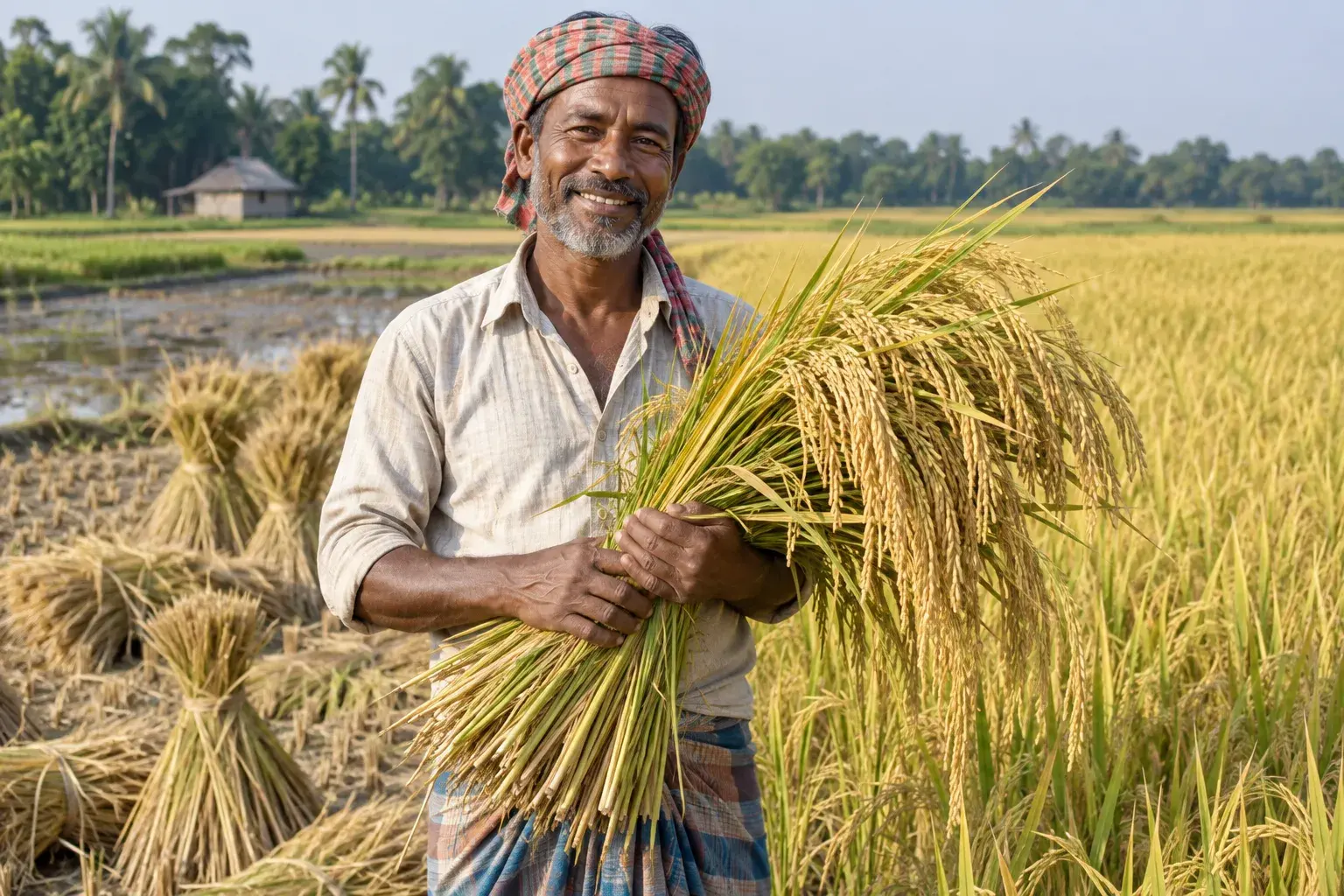
Tulshimala aromatic rice
Growing and milling Sherpur's GI-registered aromatic paddy. Paddy is Tk 2,200-2,400 a maund and the rice sells online at Tk 145-150 a kilo - no higher than aromatic rice without a GI.
- Capital
- ৳50k – ৳3 lakh
- People
- 1 – 6
- First income
- 120 – 180 days
 Food processing
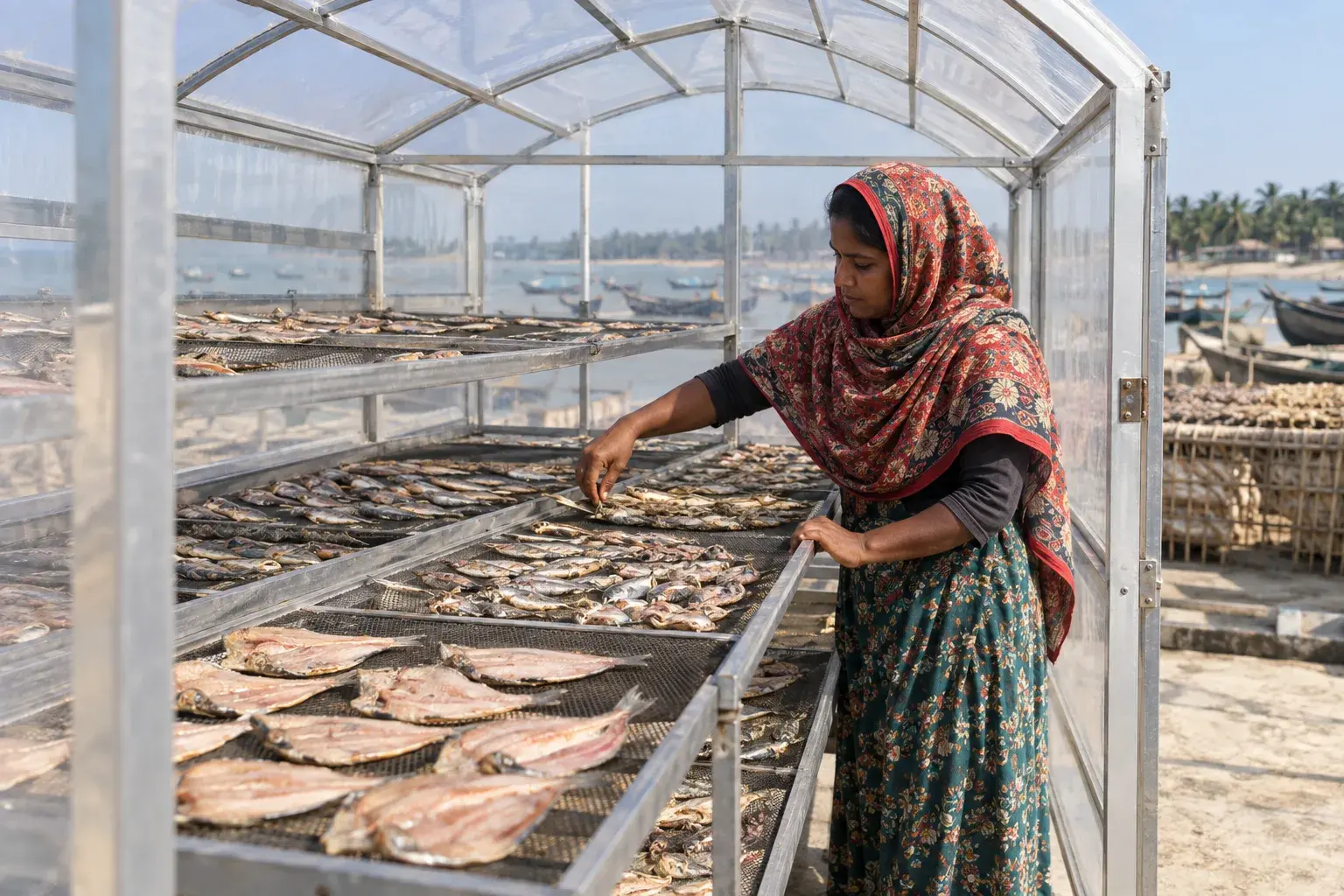
Solar and rack-dried shutki
Drying fish on raised racks or inside a solar dryer instead of on the ground, so no insecticide is needed. At Asadganj on 3 June 2026 good churi shutki fetched Tk 2,000-2,500 and loitta Tk 600-1,500 a kg.
- Capital
- ৳50k – ৳6 lakh
- People
- 2 – 20
- First income
- 20 – 60 days
 Food processing
Dry fish (shutki) processing
Buying fresh fish, sun-drying it for three to four days and selling shutki. December 2025 prices ran from poa at Tk 500-800 to rupchanda at Tk 1,800-2,500 a kilo; drying without insecticide is the condition for export.
- Capital
- ৳50k – ৳5 lakh
- People
- 3 – 30
- First income
- 4 – 30 days
 Food processing
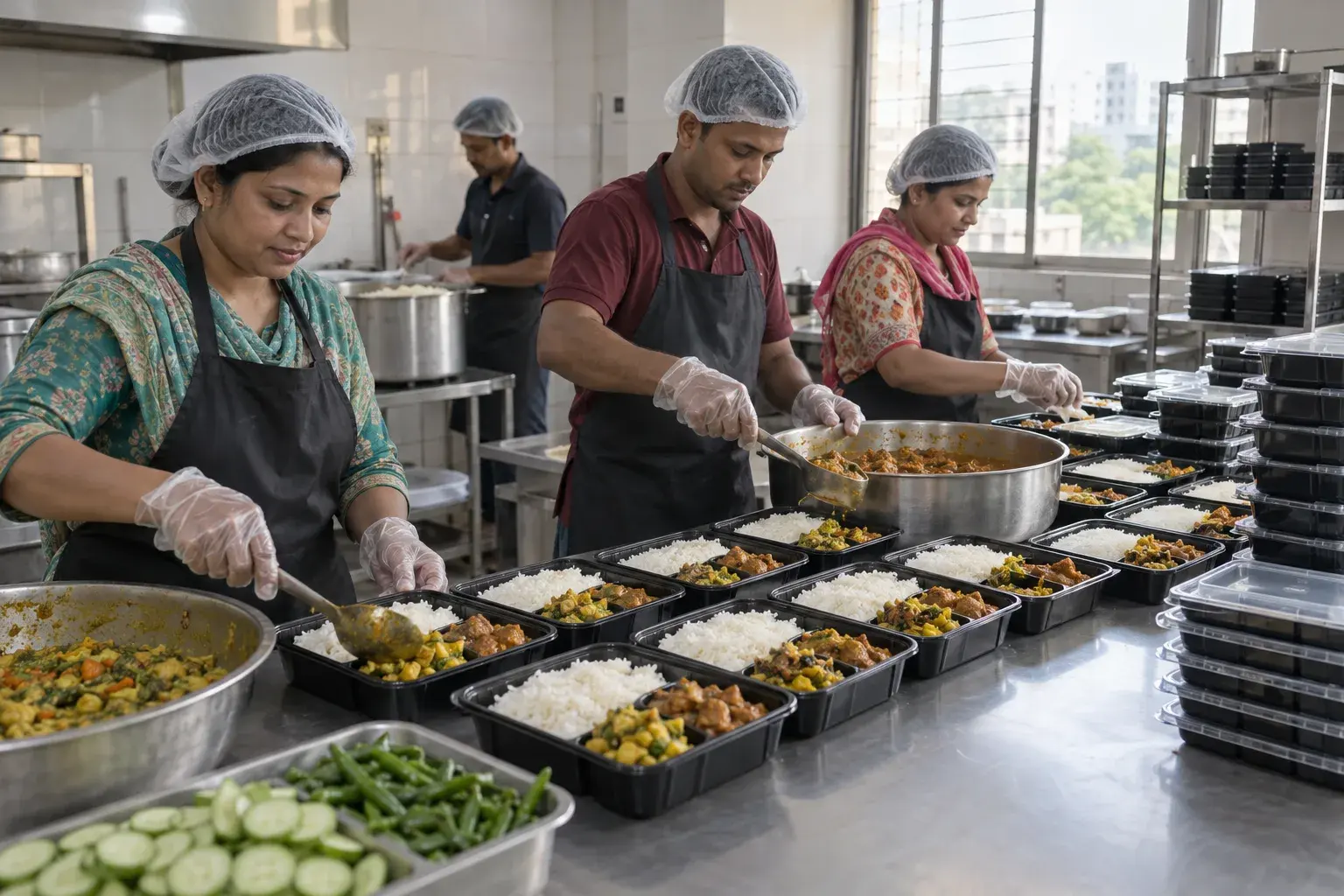
Corporate meal delivery
Daily cooked meals delivered to offices on contract. Dhaka breakfast sells from Tk 40 and lunch packages from Tk 85 to Tk 150, but the office pays at month end.
- Capital
- ৳45k – ৳1.8 lakh
- People
- 1 – 4
- First income
- 15 – 45 days