
Shoe and bag shop
Retailing shoes, sandals, school bags and belts. School shoes Tk 559-1,999 and school bags Tk 279-996; unsold odd sizes are the biggest loss in this trade.
- Last reviewed: 19 September 2026
- Version 1
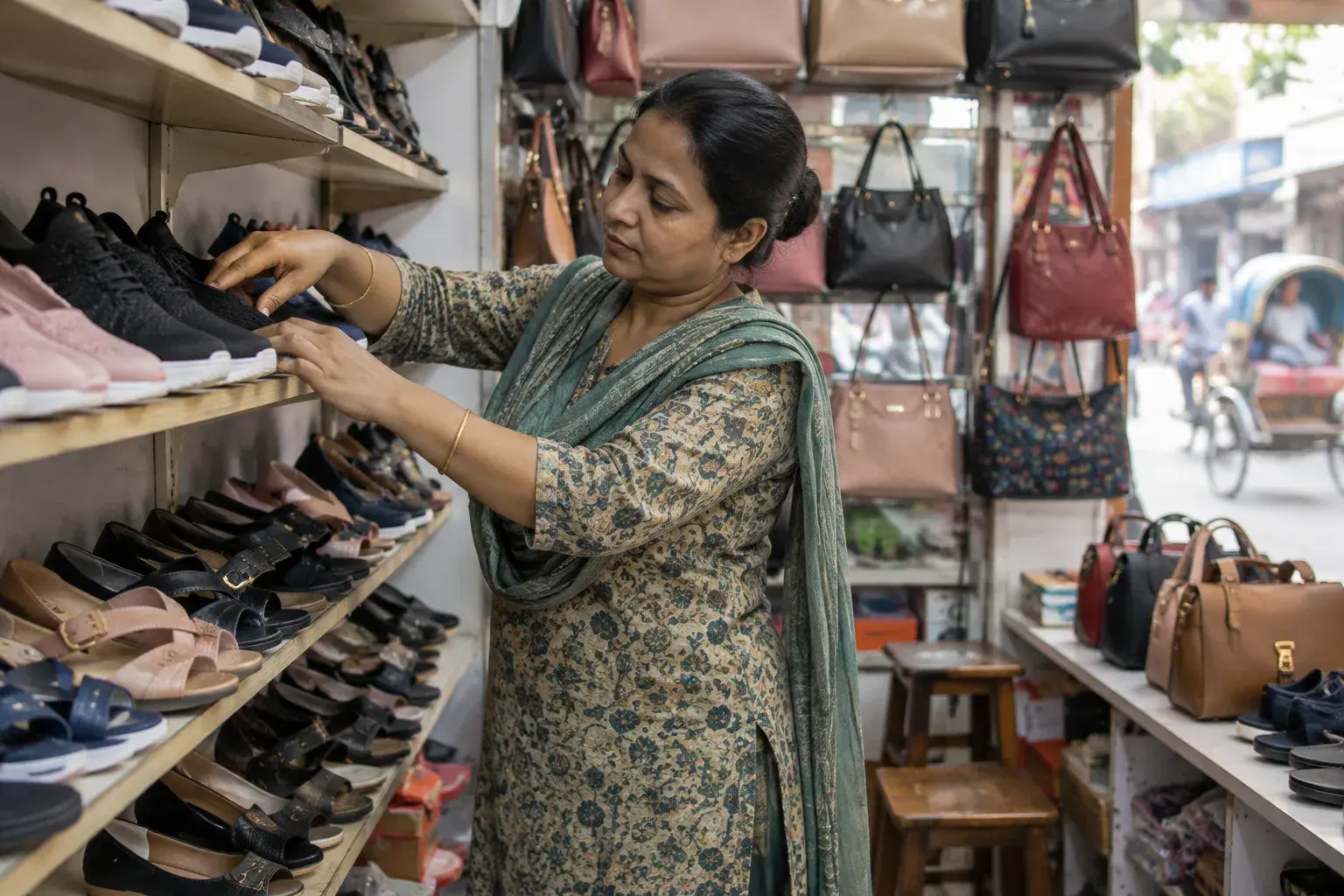
Shoe and bag shop
- Starting capital
- ৳2,00,000 – ৳9,00,000 Editorial estimate
- Manpower
- 1 – 3 people
- First sale
- 15 – 45 days Editorial estimate
- Break-even
- 7 – 15 months Editorial estimate
- Kind of work
- Shop · Easy
About the business
A shop selling shoes, sandals, school bags, handbags and belts together. Much of what the country's small footwear workshops make ends up on these shelves. On 16 September 2026 the Daraz catalogue showed Bata's own store listing school shoes at Tk 559 to Tk 1,999, flip-flops at Tk 120-239, Walkaroo clogs at Tk 504-597 and a Lotto slide at Tk 695. On the bag side, school bags ran Tk 279-996 and women's handbags Tk 299-1,604. Belts are the cheapest line, starting at Tk 134 in artificial leather and Tk 979 for full-grain. The real game here is size and design. Shoes sell by size, so a dozen pairs of one design will lose its middle sizes first and leave the extremes sitting; those leftover pairs eat the profit. Bags have no size problem, which is why many shops lean on them. Demand is uneven through the year: it jumps when school reopens in January, rises again before both Eids, and almost stops in the monsoon, when people buy plastic sandals rather than leather shoes.
Unit economics
| Item | Range | Evidence | Suggest a correction |
|---|---|---|---|
| Monthly working capital | ৳80,000 – ৳3,00,000 | Editorial estimate | |
| Selling price | ৳120 – ৳1,999 / unit | Market quote | |
| Variable cost | ৳90 – ৳1,400 / unit | Editorial estimate | |
| Gross margin | 25% – 30% | Editorial estimate | |
| Time to first revenue | 15 – 45 days | Editorial estimate | |
| Break-even time | 7 – 15 months | Editorial estimate | |
| Cash cycle | 0 – 3 days | Editorial estimate | |
| Waste / loss | 3% – 8% | Editorial estimate | |
| Daily capacity | 8 – 35 | Editorial estimate |
What you need to start
- Wall shelving, a mirror, a stool, a shoehorn, a way to measure feet, and a glass showcase. The bottom shelf should sit high enough to keep boxes off a wet floor in the monsoon.Equipment
- A size run for every design, weighted to the middle sizes, or money gets stuck in unsold pairs. Bags and belts carry no size risk and are safer stock.Starting stock
- Trade licence from the city corporation, municipality or union parishad: form Tk 10, licence book Tk 50, standard tax Tk 30, non-judicial stamp Tk 150-300, licence fee Tk 100-60,000 by trade type, plus VAT and signboard fee. Issued in 3-5 working days with papers ready.Licence
- At least two wholesale sources - small footwear workshops or a wholesale market. Tied to one source you accept their price and their designs.Supplier
- A small shop at a school, college or market entrance. Wall-to-wall shelving is needed because shoes do not sell unless displayed, plus space at the back or above for the boxes.Workspace
How the work is done
- 1Look for a shop near a school, college or market gate. Shoes and bags are bought while walking past, so footfall is everything.
- 2Take the trade licence from the city corporation, municipality or union parishad.
- 3Decide which wholesale market you buy from, and keep at least two sources so you can switch when one raises prices.
- 4Weight the first stock towards cheap and mid-price lines. Expensive shoes look good on the shelf but sit for months in a new shop.
- 5Decide the size run for each design before you buy: more of the middle sizes, fewer of the extremes. Ignore this and the shelf stays full while the sizes people want are gone.
- 6Stock bags and belts alongside shoes. Bags have no size problem, so the money that gets stuck in unsold shoe sizes does not get stuck in them.
- 7Put out a stool, a mirror and a shoehorn. Nobody buys shoes without trying them, and a customer who has to try them standing up walks out.
- 8Build up school shoes and school bags before schools reopen in January. Those few weeks are the surest sales of the year.
- 9Before the monsoon, cut back on leather and stock plastic and rubber sandals. Leather does not sell in the mud months and grows mould sitting on the shelf.
- 10Every two or three months clear out leftover sizes and old designs at a discount. A shoe that has sat six months will not sell in a year either; getting the money back out is the gain.
Seasons
- JanHigh
- FebNormal
- MarNormal
- AprNormal
- MayNormal
- JunNormal
- JulLow
- AugLow
- SepNormal
- OctNormal
- NovNormal
- DecHigh
Where it works well
- Strong fitBrahmanbaria · An old handmade-footwear area where small quantities can be bought from local workshops, which suits a new shop.
- Strong fitChattogram · A large city with a dense concentration of schools and colleges, and imported bags and shoes land here first.
- Strong fitDhaka · The largest retail market, with wholesale sources close enough to restock and return the same day, so less stock has to be held.
- Strong fitKishoreganj · Bhairab is one of the country's older footwear manufacturing clusters, so stock can be lifted at the factory gate and the middle wholesaler's margin saved.
- PossibleBogura · The trading centre of the north; shopkeepers from surrounding upazilas also buy here.
- PossibleCumilla · On the Dhaka-Chattogram highway so stock can come from either direction, and the district town has many schools.
- PossibleGazipur · A factory-worker area with steady demand for cheap sandals and bags, though expensive lines do not move.
- PossibleNarayanganj · Dense settlement, an hour from Dhaka's wholesale markets.
- PossibleRangpur · A divisional city, but with lower purchasing power - the weight of sales is in cheap plastic and rubber sandals.
- PossibleSylhet · Remittance families have higher purchasing power, so branded shoes and bags also move.
Risks and cautions
- HighWorking capital: Shoes sell by size and that is where the money dies. Buy 12 pairs of a design and the middle sizes go in weeks while two or three pairs at the ends sit for months. Those leftovers swallow the shop's cash, and clearing them means selling at cost. A few hundred such pairs accumulated over a year and there is nothing left to restock with.
- HighDemand: Sales are uneven and the bad months come in a run. In the monsoon people skip leather and make do with plastic sandals, so the average ticket drops while the rent does not. The two or three weeks before Eid and the January school reopening carry sales the rest of the year never approaches, so running short of stock in those weeks spoils the whole year.
- MediumSpoilage: The goods do not rot but they do spoil. Leather and rexine shoes and bags grow mould in the monsoon, the adhesive lets go and soles harden and crack. A shoe left in the store room through one season cannot be sold as new in the next, and the design has dated as well.
- MediumDependency: Everything on the shelf comes from outside; nothing is made here. If the wholesaler or workshop changes designs, raises prices or delivers late, the shop has no answer. Standing on a single supplier carries the worst risk of all - no goods in the week before Eid.
Sources
সিটি কর্পোরেশন থেকে ট্রেড লাইসেন্স প্রাপ্তির ধাপ সমূহ
Collected: 16 Sept 2026Supports: Starting capital · বাংলাদেশ
What changed
No corrections have been published yet.
Questions and answers
No questions yet. Be the first to ask.
Stories about this business
90,000 taka of a wife's savings, and 8 crore taka of turnover a year
A shoe label started in 2021 with 90,000 taka of the wife's savings, selling on Facebook and its own website; it now has two Dhaka showrooms, about 90 staff and annual turnover of around 8 crore taka.
- Capital
- ৳90k
- Reasons
- Weak demand, Good quality
Similar businesses
 Retail & wholesale
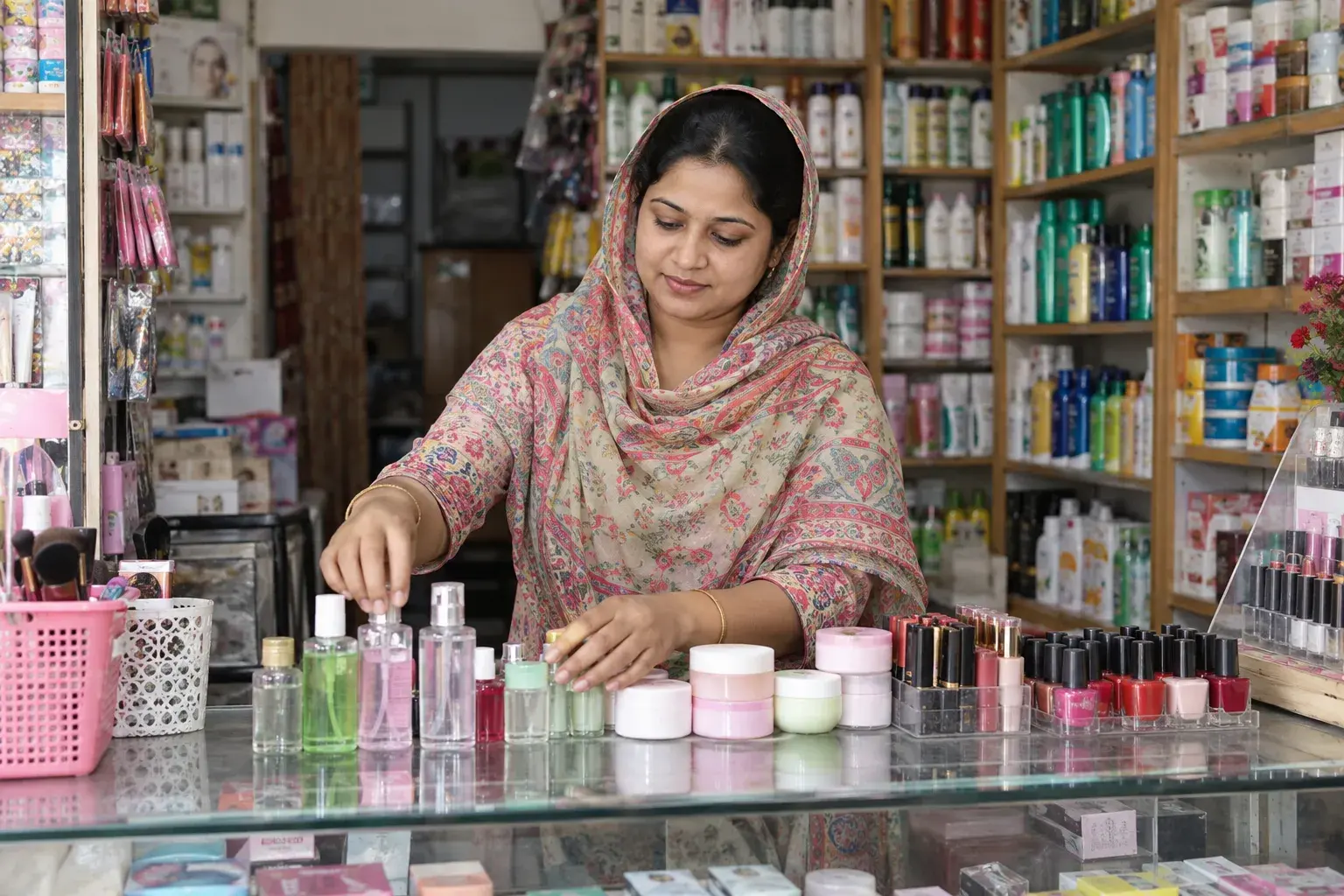
Cosmetics shop
A retail shop for creams, shampoo, face wash and make-up. At least 18 cosmetic categories are on BSTI's mandatory list, and uncertified or undocumented imported stock is the shopkeeper's liability.
- Capital
- ৳2 lakh – ৳15 lakh
- People
- 1 – 5
- First income
- 15 – 45 days
 Retail & wholesale
Optical shop (spectacles)
Buying frames and lenses and assembling spectacles over the counter. A complete ordinary pair retails at Tk 649 to Tk 5,400 (online prices, 21 Sep 2026). No BSTI certificate is needed; the trade licence is the only paper.
- Capital
- ৳2 lakh – ৳15 lakh
- People
- 1 – 4
- First income
- 15 – 60 days
 Retail & wholesale
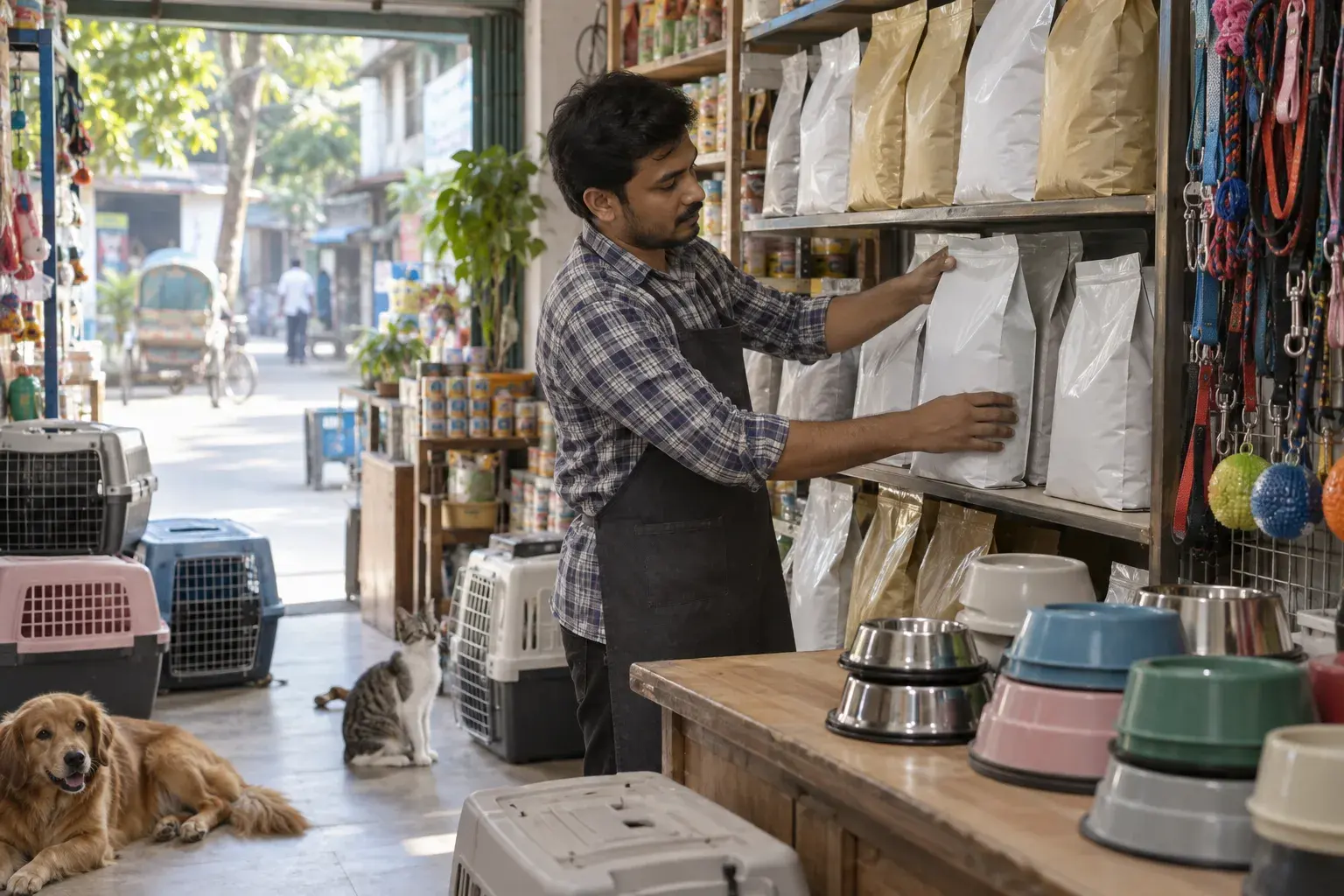
Pet food and supplies shop
A shop selling imported cat and dog food, litter and accessories. Dry food runs Tk 487 to Tk 1,900 a kg (21-09-2026). Customs duty on pet food is 25%, and demand is still mostly confined to Dhaka.
- Capital
- ৳2 lakh – ৳10 lakh
- People
- 1 – 4
- First income
- 15 – 60 days
 Retail & wholesale
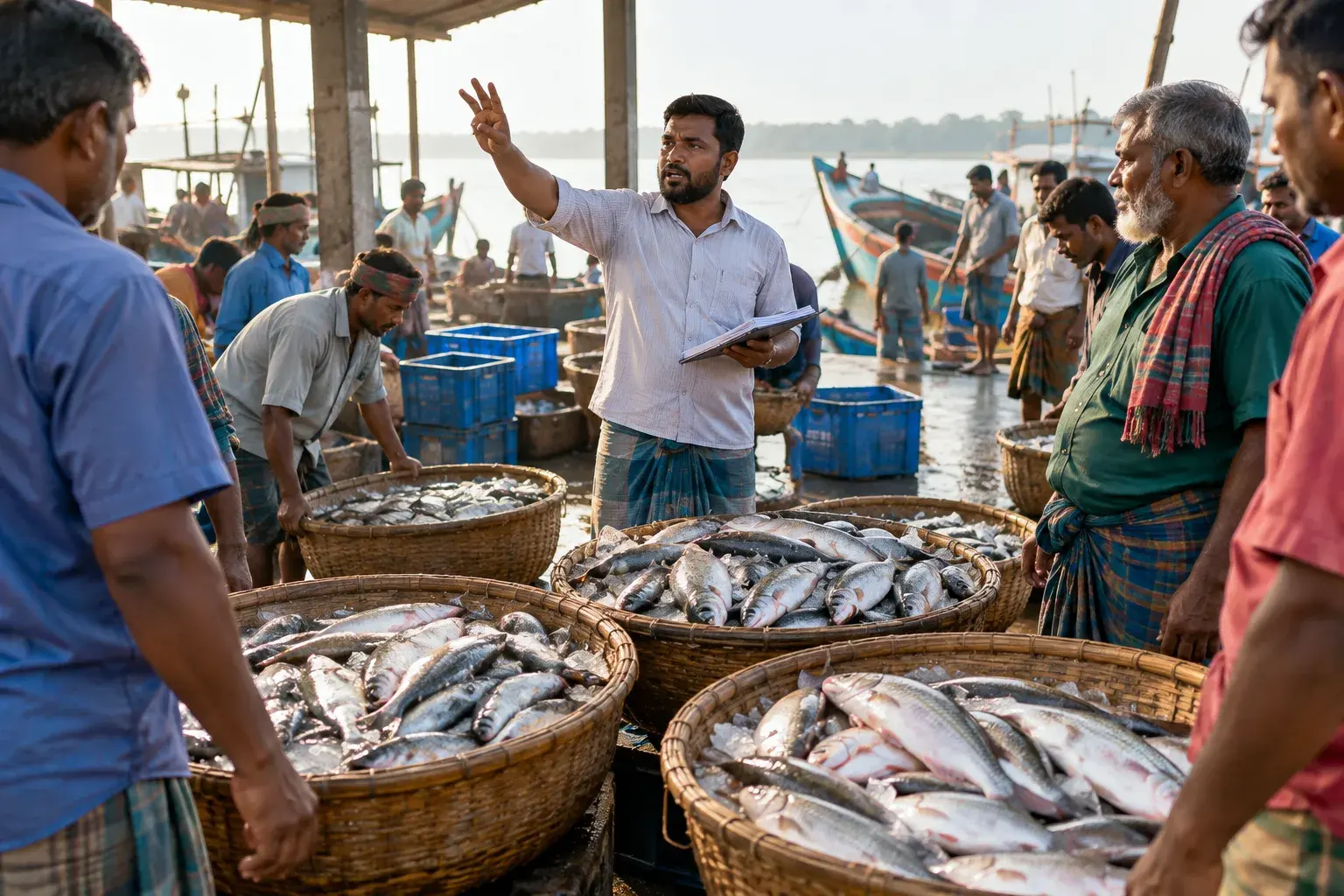
Fish wholesale arot
Auctioning farmers' fish on commission. The rate is about 3 per cent, and holding suppliers means giving interest-free advances - the money is in volume, not margin.
- Capital
- ৳2 lakh – ৳15 lakh
- People
- 3 – 12
- First income
- 15 – 60 days