
Stone and sand trading
Buying river stone and sand and selling it into construction. A 100-cubic-foot tractor load costs Tk 8,000 at the Panchagarh pit head while Dhaka pays Tk 123-125 a cubic foot for local three-quarter stone, and the gap is freight and lease tolls.
- Last reviewed: 19 September 2026
- Version 1
Stone and sand trading
- Starting capital
- ৳1,50,000 – ৳15,00,000 Editorial estimate
- Manpower
- 2 – 20 people
- First sale
- 30 – 365 days Editorial estimate
- Break-even
- 6 – 14 months Editorial estimate
- Kind of work
- Shop · Hard
About the business
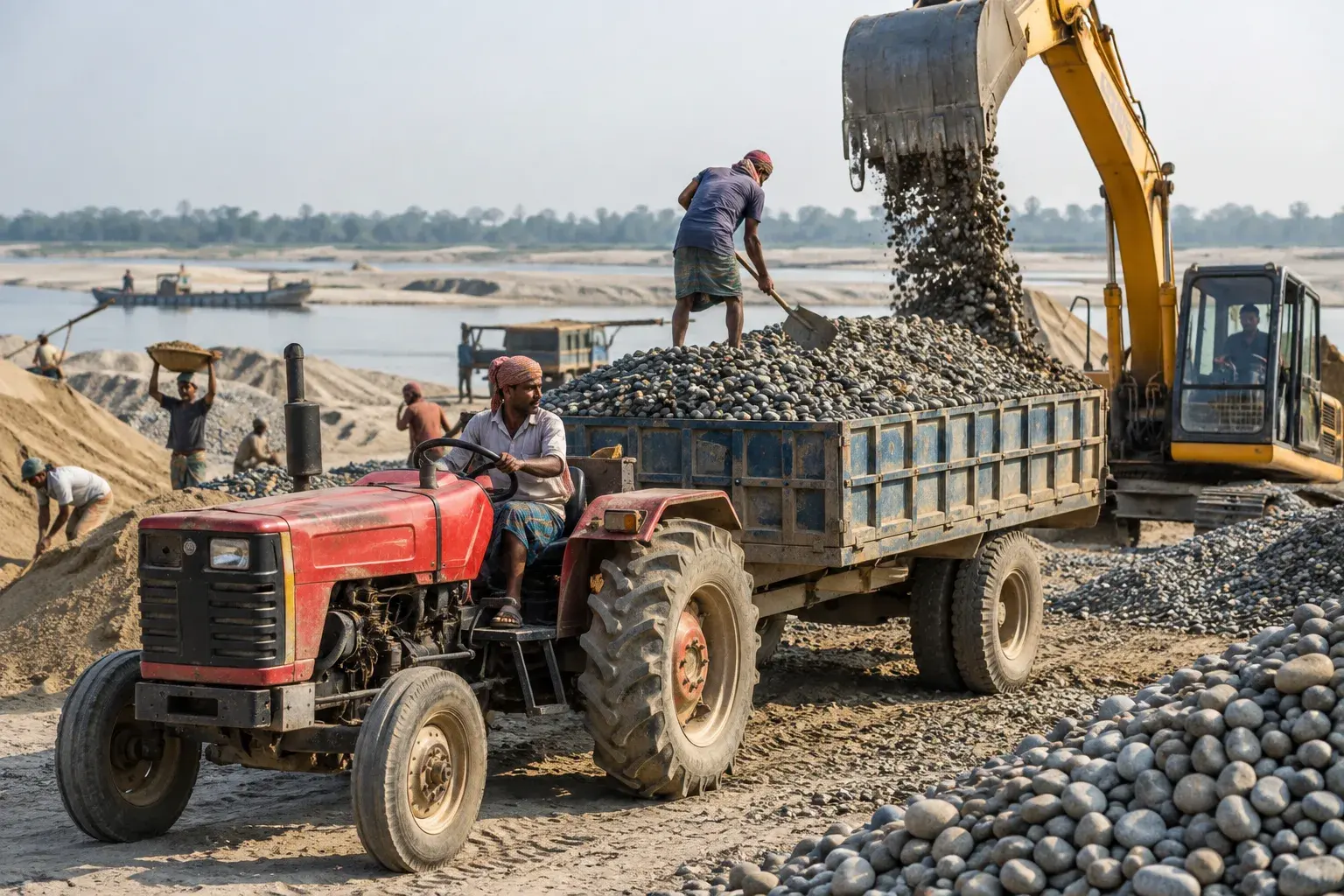
Buying stone and sand lifted from rivers and sand mahals, loading it on trucks and selling it into the construction market. Tetulia in Panchagarh is the country's stone belt: the district has 19 government-leased stone mahals, all in rivers. The material changes hands four times. Worker gangs lift stone from the riverbed with a jakhla and a donga and sell it by the tractor load; in December 2025 at Balabari a tractor of about 100 cubic feet was selling for Tk 8,000, of which Tk 1,000 went to the owner of the submerged plot, and at the end of the day each of the nineteen workers took home at most Tk 600. A local small trader or mahajan buys that, a crusher owner buys from him, and third-tier traders from around the country take the crushed stone away. Lessees collect a toll off the trucks: Tk 500 for a ten-wheeler, Tk 300 for a six-wheeler. On 28 June 2026 the Dhaka market was paying Tk 123-125 a cubic foot for local three-quarter stone and Tk 130-140 for Bhutanese stone, with selection sand at Tk 17-27, Sylhet red sand at Tk 37-45 and fill sand at Tk 8-12. Distance sets the price: the truck fare from Panchagarh to Dhaka is the single biggest cost. The law is hard. Under the Sand Mahal and Soil Management Act 2010 no underground sand may be lifted by pump or dredger at all, nothing may be taken near a bridge, dam, road or railway or within one kilometre of a residential area, and breaking that carries up to two years in prison, a fine of Tk 50,000 to Tk 10 lakh, and confiscation of the dredger and the vehicles.
Unit economics
| Item | Range | Evidence | Suggest a correction |
|---|---|---|---|
| Monthly working capital | ৳2,40,000 – ৳4,80,000 | Editorial estimate | |
| Selling price | ৳8 – ৳140 / unit | Market quote | |
| Variable cost | ৳6 – ৳126 / unit | Editorial estimate | |
| Gross margin | 10% – 20% | Editorial estimate | |
| Time to first revenue | 30 – 365 days | Editorial estimate | |
| Break-even time | 6 – 14 months | Editorial estimate | |
| Cash cycle | 0 – 60 days | Editorial estimate | |
| Waste / loss | 3% – 8% | Editorial estimate | |
| Daily capacity | 2 – 20 | Editorial estimate |
What you need to start
- Tractors and trucks, owned or hired, a measuring tape and cubic-foot arithmetic, and for traditional lifting a jakhla, a donga and an iron net. No machine may be used to lift stone.Equipment
- Sand mahal lease from the Deputy Commissioner. Under section 13 of the Sand Mahal and Soil Management Act 2010 (Act 62 of 2010, amended by Act 35 of 2023) the lease runs one year, 1 Baishakh to 30 Chaitra. Under section 10 the government may take a security deposit over and above the lease price, forfeit it on breach, and impose six-monthly digital survey or CCTV monitoring. The lease price varies by mahal and is stated in the notice.Licence
- TIN and VAT registration from the National Board of Revenue. Without both, bills cannot be raised against contractors, developers or government projects.Licence
- Trade licence from the city corporation or municipality: form Tk 10, licence book Tk 50, standard tax Tk 30, non-judicial stamp Tk 150-300, licence fee Tk 100-60,000 by trade type, plus VAT and signboard fee.Licence
- Judging cubic feet by eye, knowing stone sizes and grades, and pricing backwards from the truck fare. Buy on a wrong measure and the whole consignment loses money.Skill
- A lessee or a pit worker gang, and a crusher owner for graded stone. In Panchagarh the toll collection is controlled by the District Stone and Sand Joint Federation, a front of six lessee organisations.Supplier
- A depot or yard with room for trucks to come and go. Piling on the highway itself brings trouble from the highway police and the roads department.Workspace
How the work is done
- 1Decide which rung you will sit on: lessee, pit-head mahajan, crusher owner, or a town depot selling on. The money, the risk and the paperwork are different for each.
- 2Go to the Deputy Commissioner's office for the list of sand and stone mahals, the lease notice and the government lease price. Leases run for one year, 1 Baishakh to 30 Chaitra.
- 3Check for yourself whether the spot is prohibited. No sand or soil may be taken near a bridge, culvert, dam, embankment, road, highway, forest, railway line or important installation, or within at least one kilometre of a residential area.
- 4Put underground sand out of your mind: lifting sand or soil from below ground by pump, dredging or any other means is completely prohibited, and bulkhead or bulgate dredgers are not allowed either.
- 5Take the trade licence from the city corporation or municipality and get a TIN and VAT registration from the NBR; contractors and government projects will not pay a bill without them.
- 6Fix a yard for the stock, and keep it off the highway. In Panchagarh the piles along both sides of the Banglabandha highway have brought both complaints and enforcement.
- 7Line up trucks and tractors and fix the fare in advance. On long hauls the fare is the largest part of the price, and there are transport syndicates.
- 8Budget for the lessee's toll. In Tetulia lessees take Tk 500 per ten-wheel truck and Tk 300 per six-wheel truck, and they collect it on stone lifted from outside the lease area too.
- 9Line up buyers: crusher owners, contractors, developers, brick kilns or block factories. Price moves with size and grade, so learn which size goes to which buyer first.
- 10If you supply government work, understand the billing cycle first. Contractors are still working to a four-year-old government rate schedule, and when prices rise they are the first to slow their offtake.
- 11Keep the paper for every consignment: where it was lifted, whose lease, which truck carried it. When a mobile court stops you, the paper is the only defence.
Seasons
- JanHigh
- FebHigh
- MarHigh
- AprHigh
- MayNormal
- JunLow
- JulLow
- AugLow
- SepLow
- OctNormal
- NovHigh
- DecHigh
Where it works well
- Strong fitPanchagarh · The country's stone belt. The district has 19 government-leased stone mahals, all in rivers; thousands of workers lift stone in Tetulia and Sadar, and sand and stone are piled along both sides of the Banglabandha-Panchagarh highway.
- Strong fitSunamganj · Sand and gravel come out of the border rivers including the Jadukata, and this is the main living for the barki boat workers.
- Strong fitSylhet · The Jaflong and Bholaganj stone country, and Sylhet red sand fetches the highest sand price in Dhaka at Tk 37-45 a cubic foot.
- PossibleLalmonirhat · Sand is lifted from the border rivers including at Patgram, though restrictions are tightening because of bank erosion.
- PossibleMoulvibazar · Sand is taken from tea-garden streams, but the Act names those streams specifically and enforcement is tightening as unplanned lifting puts bridges at risk.
- PossibleMunshiganj · An old base for shipping sand into the Dhaka construction market by river, with strong demand for fill sand.
- PossibleNarayanganj · River port and depot area right beside Dhaka, a large market for both sand and stone.
- PossibleNetrokona · Sand and gravel from hill rivers including the Someshwari, going to both local and Dhaka markets.
- PossibleNilphamari · Sand comes off the northern rivers and goes into construction across the region.
- PossibleThakurgaon · Next to Panchagarh with the same river system and the same trading circle; supply is easy but there are fewer mahals.
Risks and cautions
- HighCompliance: The penalties are heavy. Under section 15 of the Sand Mahal and Soil Management Act 2010, lifting sand or soil without permission or from a prohibited place carries up to two years in prison or a fine of Tk 50,000 to Tk 10 lakh or both, and the dredger and the carrying vehicles are confiscated to the state. Trial is by executive magistrate in a mobile court, meaning on the spot, and the offence is cognizable.
- HighDependency: You do not control the mahal. On 18 June 2020 the Ministry of Power, Energy and Mineral Resources wrote to stop quarry leasing and stone extraction nationwide, and in Tetulia extraction stopped for roughly four years. Workers and traders alike lost their living. This trade can be shut down by a single government letter.
- HighOther: Local capture and violence are ordinary events here. On 26 January 2020 a highway blockade at Bhojanpur in Tetulia demanding the right to lift stone ended in a clash with police and one death. Bomb machines have brought repeated raids, cases and counter-agitations, with allegations of political backing behind them. An outsider cannot simply walk into this trade.
- MediumDemand: Sales depend entirely on construction. In the monsoon the rivers are full, extraction falls and building slows at the same time. When prices jump, contractors stop work: in March 2026 stone rose Tk 700-900 a tonne in a week and many sites in Khulna simply halted.
- MediumWorking capital: Stock is bought for cash while contractors and developers pay late. One tractor of stone alone is Tk 8,000, and two a day ties up about Tk 4.8 lakh a month. The lease toll and the truck fare have to be paid before that.
Sources
- Collected: 16 Sept 2026
Supports: Starting capital, Time to first revenue · বাংলাদেশ
সিটি কর্পোরেশন থেকে ট্রেড লাইসেন্স প্রাপ্তির ধাপ সমূহ
Collected: 16 Sept 2026Supports: Starting capital · বাংলাদেশ
What changed
No corrections have been published yet.
Questions and answers
No questions yet. Be the first to ask.
Similar businesses
 Retail & wholesale
Children's clothing shop
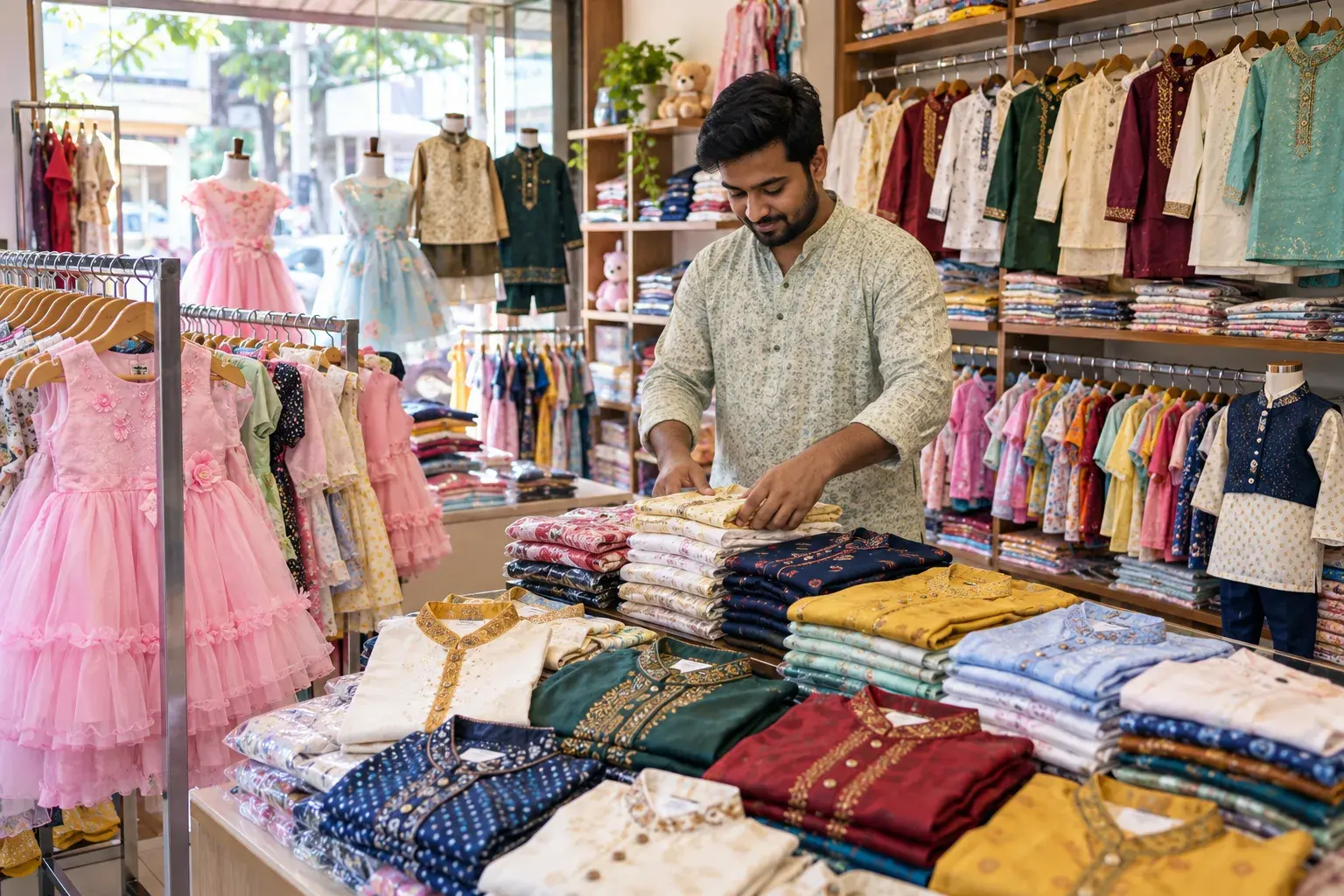
Retailing clothes for children aged 0-12. Panjabi sets Tk 260-985, frocks Tk 150-650. Children outgrow clothes, so stock turns over far faster than in an adult boutique.
- Capital
- ৳1.5 lakh – ৳7 lakh
- People
- 1 – 3
- First income
- 20 – 45 days
 Retail & wholesale
Stationery and book shop
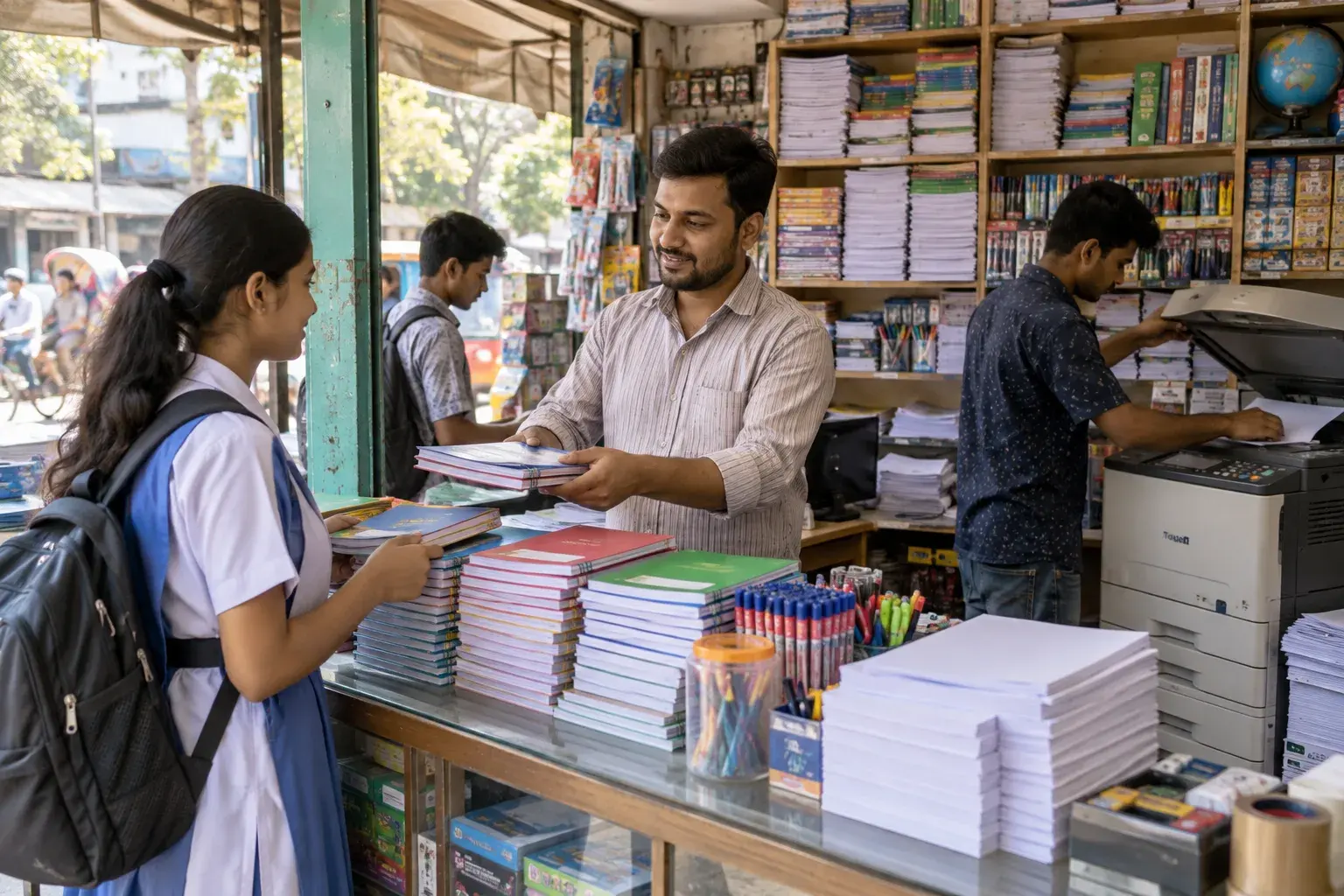
A stationery and book shop with photocopying. A 204-page exercise book is Tk 68, a 300-page one Tk 169, and white paper Tk 34-40 a dista. Textbooks come free from the government, so the season's money is in exercise books and photocopies.
- Capital
- ৳1.5 lakh – ৳8 lakh
- People
- 1 – 4
- First income
- 15 – 45 days
 Retail & wholesale
Toy and gift shop
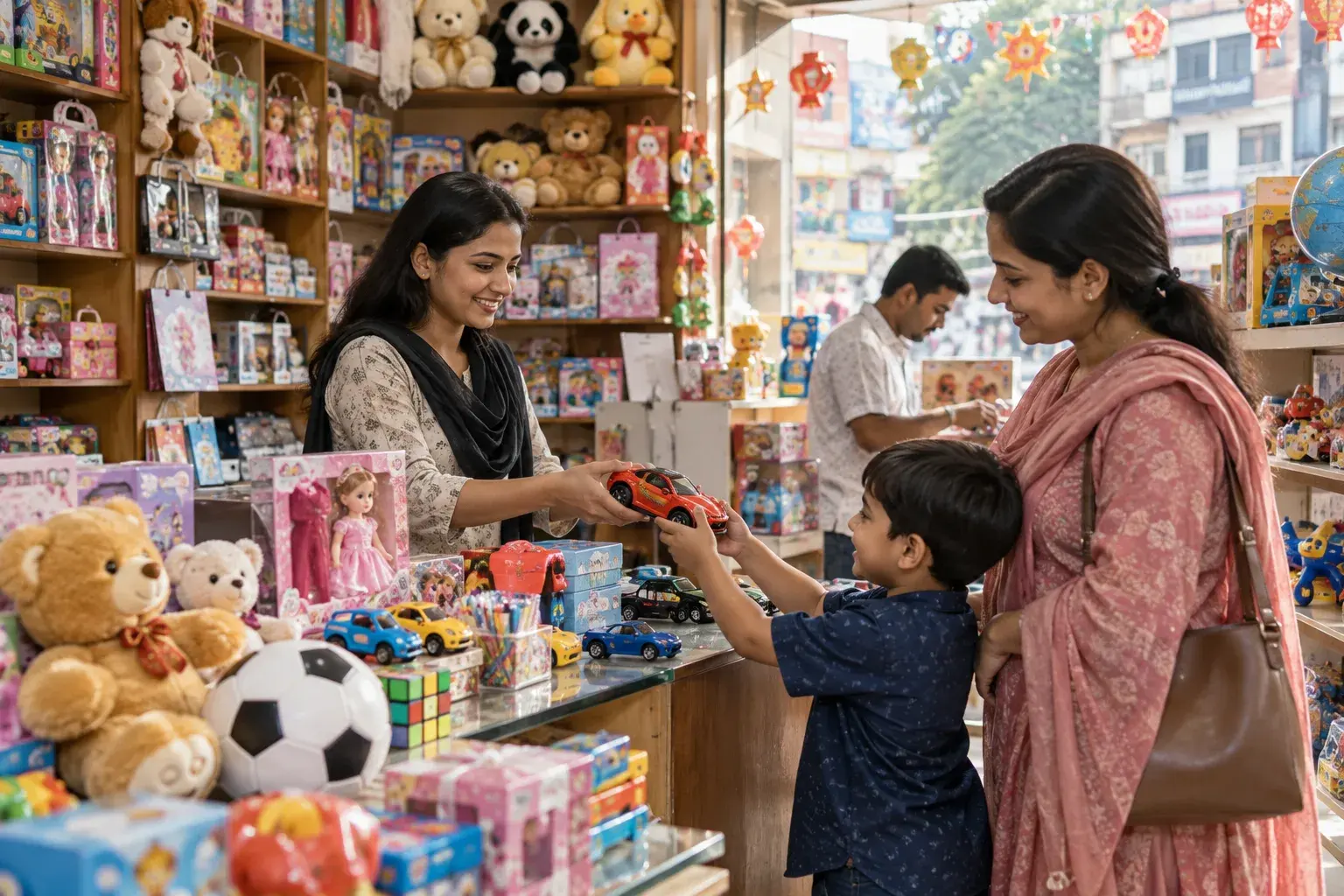
Retailing toys and gift items. In September 2026 online toy prices ran from Tk 58 to Tk 3,815. Imported toys carry 25 percent customs duty, and most of the year's selling happens in the few weeks around Eid and Pohela Boishakh.
- Capital
- ৳1.5 lakh – ৳14 lakh
- People
- 1 – 5
- First income
- 3 – 45 days
 Retail & wholesale
Seed, fertiliser and feed dealership
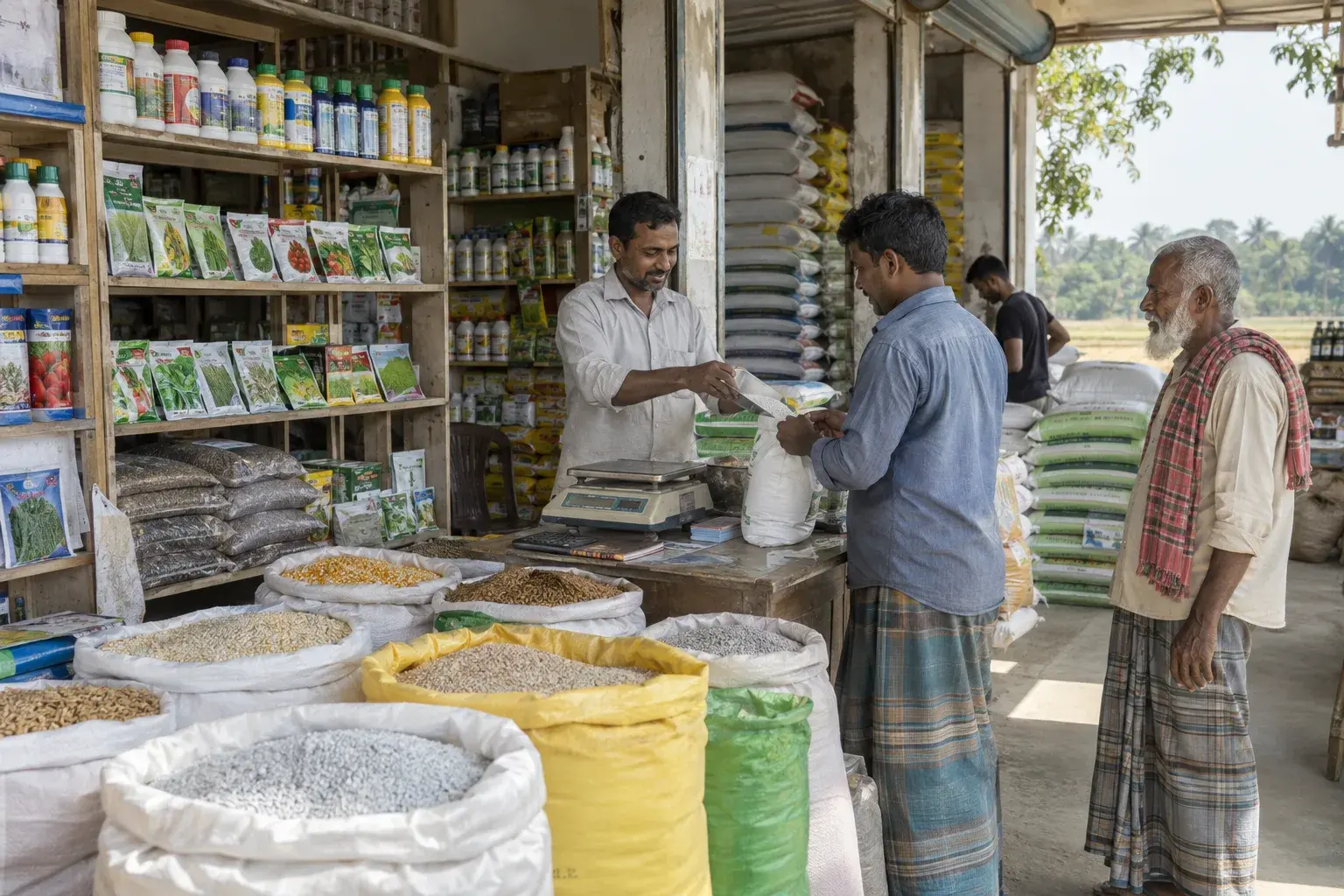
A farm input shop selling seed, fertiliser, pesticide and feed. The fertiliser margin is fixed by government at Tk 2 a kg today, rising to Tk 3 from 1 July 2027.
- Capital
- ৳1.5 lakh – ৳25 lakh
- People
- 1 – 5
- First income
- 30 – 180 days