
Children's clothing shop
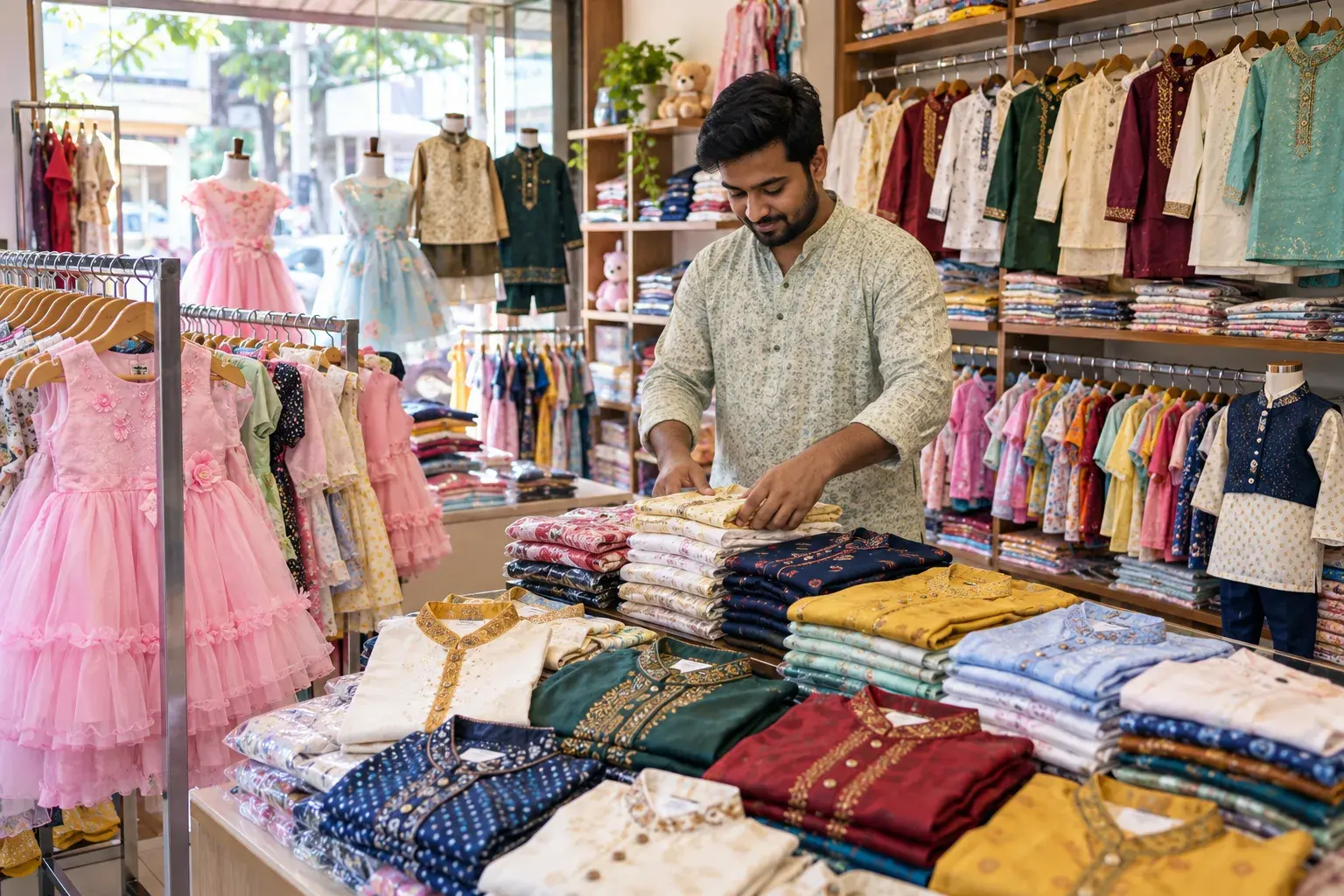
Retailing clothes for children aged 0-12. Panjabi sets Tk 260-985, frocks Tk 150-650. Children outgrow clothes, so stock turns over far faster than in an adult boutique.
- Last reviewed: 19 September 2026
- Version 1
Children's clothing shop
- Starting capital
- ৳1,50,000 – ৳7,00,000 Editorial estimate
- Manpower
- 1 – 3 people
- First sale
- 20 – 45 days Editorial estimate
- Break-even
- 6 – 12 months Editorial estimate
- Kind of work
- Shop · Easy
About the business
A shop selling clothes for children from newborn to about twelve: frocks, panjabis, shirts and trousers, vests, school uniforms and winter sweaters. On 16 September 2026 the Daraz catalogue listed, from named Bangladeshi sellers, children's panjabi sets at Tk 260-985, girls' frocks at Tk 150-650, four-piece frock combos at Tk 310-349 and plain baby dresses at Tk 99-399. Compared with an adult boutique, the decisive advantage here is that stock does not sit. Children grow, so last year's size no longer fits and the same family comes back two or three times a year. A garment that does not sell this Eid will fit a different child next Eid, because children's clothing carries no fashion memory the way adult wear does, where last season's design simply sits on the rack. Unit prices are lower too, so an unsold piece locks up far less money than an unsold saree or three-piece. Sizing is simpler: stock is bought and sold by age band, 0-2, 2-5, 5-8, not by exact fit like footwear. What must be planned for is the shape of demand. More sells in the three weeks before each Eid than in the rest of the year; winter sweaters and January school uniforms are the two secondary seasons; and in the monsoon the shop is nearly empty, which is when buying must stop.
Unit economics
| Item | Range | Evidence | Suggest a correction |
|---|---|---|---|
| Monthly working capital | ৳80,000 – ৳4,00,000 | Editorial estimate | |
| Selling price | ৳99 – ৳1,213 / unit | Market quote | |
| Variable cost | ৳60 – ৳800 / unit | Editorial estimate | |
| Gross margin | 34% – 39% | Editorial estimate | |
| Time to first revenue | 20 – 45 days | Editorial estimate | |
| Break-even time | 6 – 12 months | Editorial estimate | |
| Cash cycle | 0 – 1 days | Editorial estimate | |
| Waste / loss | 2% – 8% | Editorial estimate | |
| Daily capacity | 8 – 40 | Editorial estimate |
What you need to start
- Glass display cases, hangers and racks, a full-length mirror, a curtained trial corner, a calculator and a bKash or Nagad merchant number.Equipment
- Separate boys' and girls' stock across four age bands (0-2, 2-5, 5-8, 8-12); heavier panjabi and frock sets before Eid, sweaters in winter, school uniforms in January.Starting stock
- Trade licence from the city corporation or municipality: form Tk 10, licence book Tk 50, standard tax Tk 30, non-judicial stamp Tk 150-300, licence fee Tk 100-60,000 by trade type, plus VAT and signboard fee. Issued in 3-5 working days with the papers ready.Licence
- Judging size from the child's age and picking two or three garments that fit the parent's budget. Children choose for themselves, so being able to talk to the child helps.Skill
- Islampur and Chawkbazar in Dhaka, Tanbazar in Narayanganj, the Keraniganj garment cluster, and suppliers of export-surplus stock lots.Supplier
- A 100-300 square foot shop beside a school, bazaar or main road, with glass display, wall racks and hanging rails.Workspace
How the work is done
- 1Look for a shop near a school, madrasa or bazaar. Parents buy children's clothes while passing, so there must be room to stop in front.
- 2Take the trade licence from the city corporation or municipality and pay the signboard fee. A cloth shop needs no separate licence.
- 3Walk the wholesale market - Islampur-Chawkbazar in Dhaka, Tanbazar in Narayanganj, or the nearest district town - and take prices from at least three suppliers. Do not buy everything from one.
- 4Buy by age band: 0-2, 2-5, 5-8, 8-12. Do not take all four bands of every design; first find out which age sells in your area.
- 5Display boys' and girls' stock separately and split the racks by price band. Parents look at the price first and the design second.
- 6Buy the big consignment at least six weeks before Eid. Close to Eid the wholesale price rises and the good designs are gone.
- 7Stock sweaters, jackets and socks in September-October before winter and try to clear them by December.
- 8Before schools reopen in January, find out the uniform colours and patterns of nearby schools and stock accordingly. It is a certain sale, but the season is only three or four weeks.
- 9Open a Facebook page, post photographs and deliver to the home. Mothers who do not want to go out with a small child buy this way.
- 10Cut back on new stock through the two monsoon months and clear old stock at a discount, so there is cash in hand when the Eid consignment has to be bought.
Seasons
- JanHigh
- FebNormal
- MarHigh
- AprNormal
- MayHigh
- JunNormal
- JulLow
- AugLow
- SepNormal
- OctNormal
- NovHigh
- DecHigh
Where it works well
- Strong fitChattogram · A large city with many schools and wholesale supply at Riazuddin Bazar.
- Strong fitDhaka · The Islampur and Chawkbazar wholesale markets are at hand, and dense settlement means many schools.
- Strong fitGazipur · Dense garment-worker families, and export-surplus stock is available locally.
- Strong fitNarayanganj · Stock can be bought cheap and direct from Tanbazar and the surrounding knitwear factories.
- PossibleBogura · A northern trading hub; buyers come in from surrounding upazilas on market days.
- PossibleCumilla · Many remittance families, who spend more on children's clothes at Eid.
- PossibleJashore · Many schools in the district town, and border trade keeps cash circulating.
- PossibleMymensingh · A divisional town and a big education centre, with steady school-uniform demand.
- PossibleRangpur · A divisional town, but lower purchasing power means the cheaper price bands sell most.
- PossibleSylhet · Remittance families have higher purchasing power, so costlier sets also move.
Risks and cautions
- HighDemand: The year's sales are packed into a few weeks: the three weeks before each Eid, six weeks of winter and the January school reopening. Outside those the shop is nearly empty. If the Eid consignment is bought in the wrong designs or the wrong age bands, the year's profit goes with it, because most of the year's capital is in that one consignment.
- HighWorking capital: The wholesale market does not give credit to a new shopkeeper; cash goes in advance. In the month before Eid the buying figure is three or four times a normal month. A shop that cannot raise it has no good stock, and the customer walks into the next shop.
- MediumDependency: Stock comes from Islampur-Chawkbazar or Keraniganj in Dhaka. A strike, a fire or a traffic blockage there holds up the consignment that was meant to arrive just before Eid, and that is the biggest week of the year.
- MediumOther: Facebook pages and online sellers offer the same designs cheaper because they pay no shop rent; on 16 September 2026 Daraz listed children's frocks from Tk 150 and plain baby dresses from Tk 99. Letting the child try the garment on is the shop's only real answer.
- LowSpoilage: Clothes do not rot, but hung stock fades in the sun and mildews in the monsoon. In a tin-roofed shop a night of leaking rain can ruin a lot of it.
Sources
সিটি কর্পোরেশন থেকে ট্রেড লাইসেন্স প্রাপ্তির ধাপ সমূহ
Collected: 16 Sept 2026Supports: Starting capital · বাংলাদেশ
What changed
No corrections have been published yet.
Questions and answers
No questions yet. Be the first to ask.
Similar businesses
 Retail & wholesale
Stone and sand trading
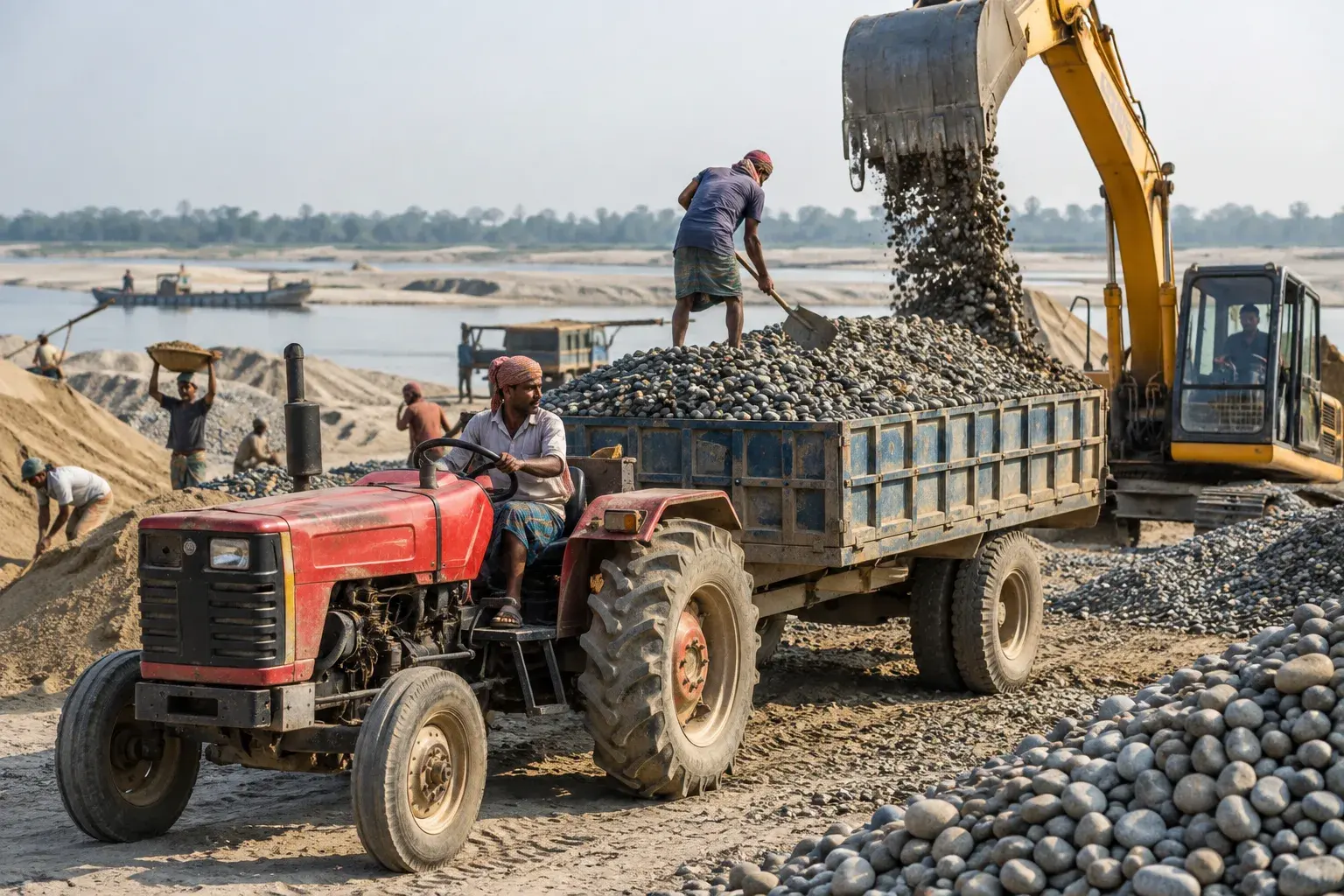
Buying river stone and sand and selling it into construction. A 100-cubic-foot tractor load costs Tk 8,000 at the Panchagarh pit head while Dhaka pays Tk 123-125 a cubic foot for local three-quarter stone, and the gap is freight and lease tolls.
- Capital
- ৳1.5 lakh – ৳15 lakh
- People
- 2 – 20
- First income
- 30 – 365 days
 Retail & wholesale
Stationery and book shop
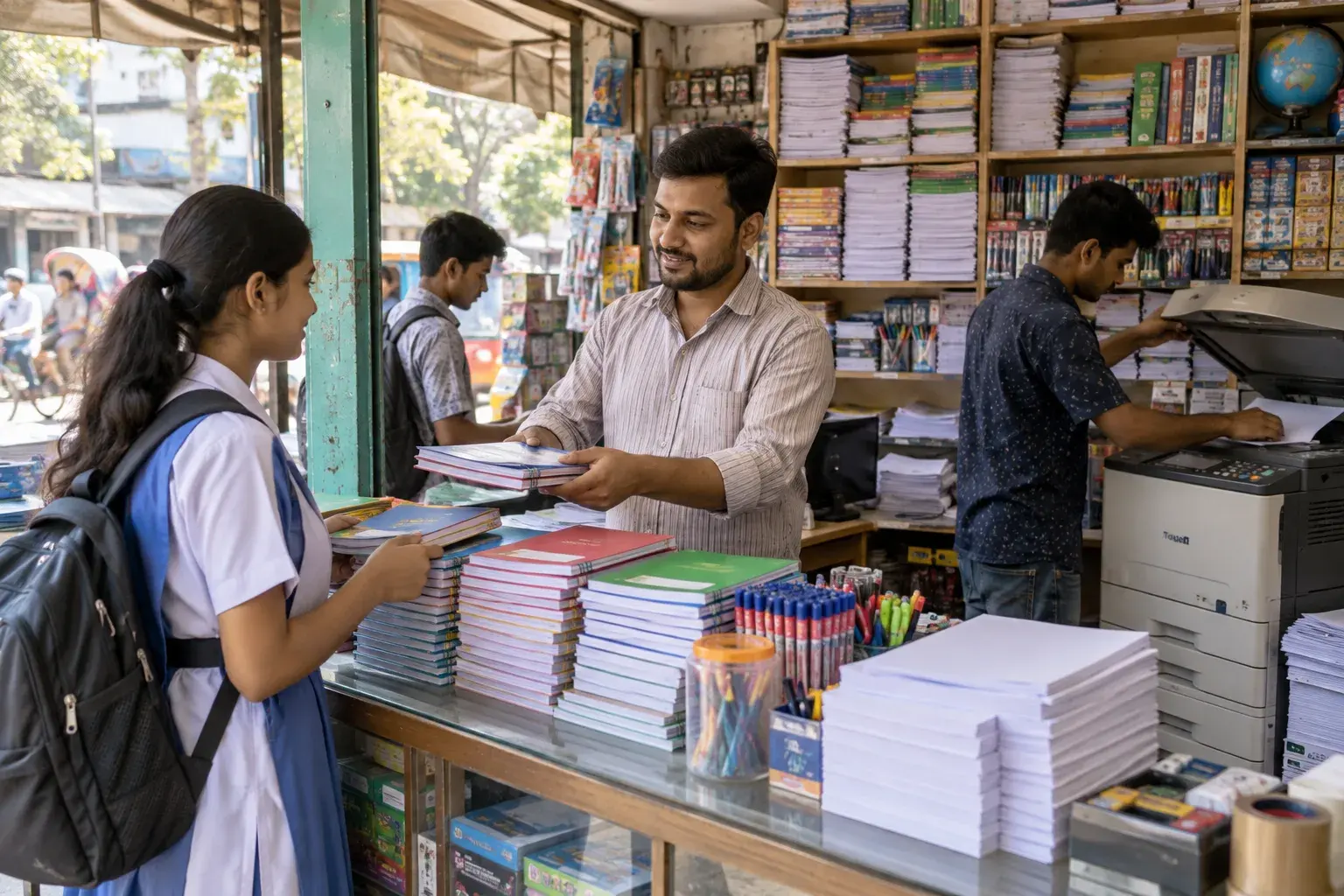
A stationery and book shop with photocopying. A 204-page exercise book is Tk 68, a 300-page one Tk 169, and white paper Tk 34-40 a dista. Textbooks come free from the government, so the season's money is in exercise books and photocopies.
- Capital
- ৳1.5 lakh – ৳8 lakh
- People
- 1 – 4
- First income
- 15 – 45 days
 Retail & wholesale
Toy and gift shop
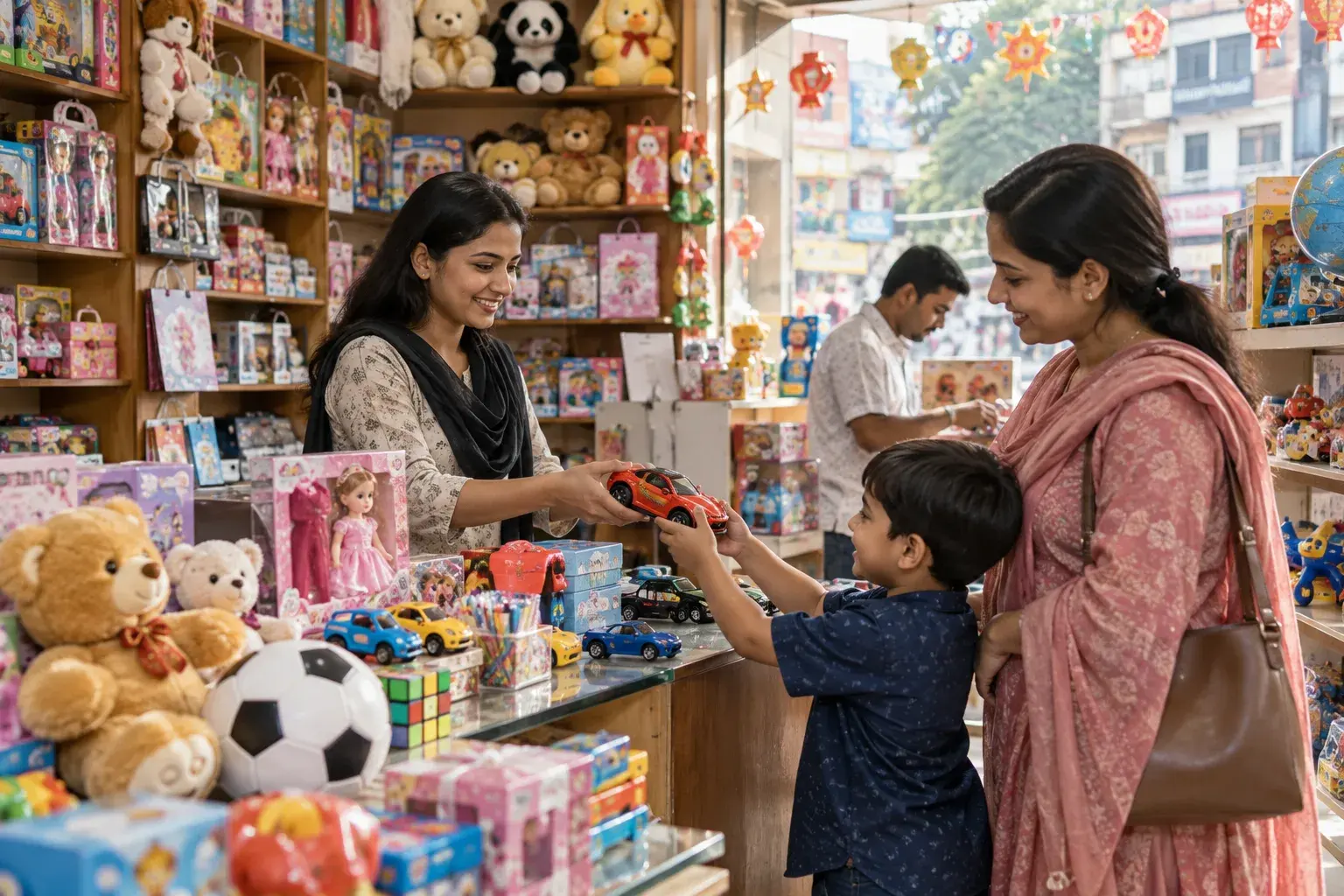
Retailing toys and gift items. In September 2026 online toy prices ran from Tk 58 to Tk 3,815. Imported toys carry 25 percent customs duty, and most of the year's selling happens in the few weeks around Eid and Pohela Boishakh.
- Capital
- ৳1.5 lakh – ৳14 lakh
- People
- 1 – 5
- First income
- 3 – 45 days
 Retail & wholesale
Seed, fertiliser and feed dealership
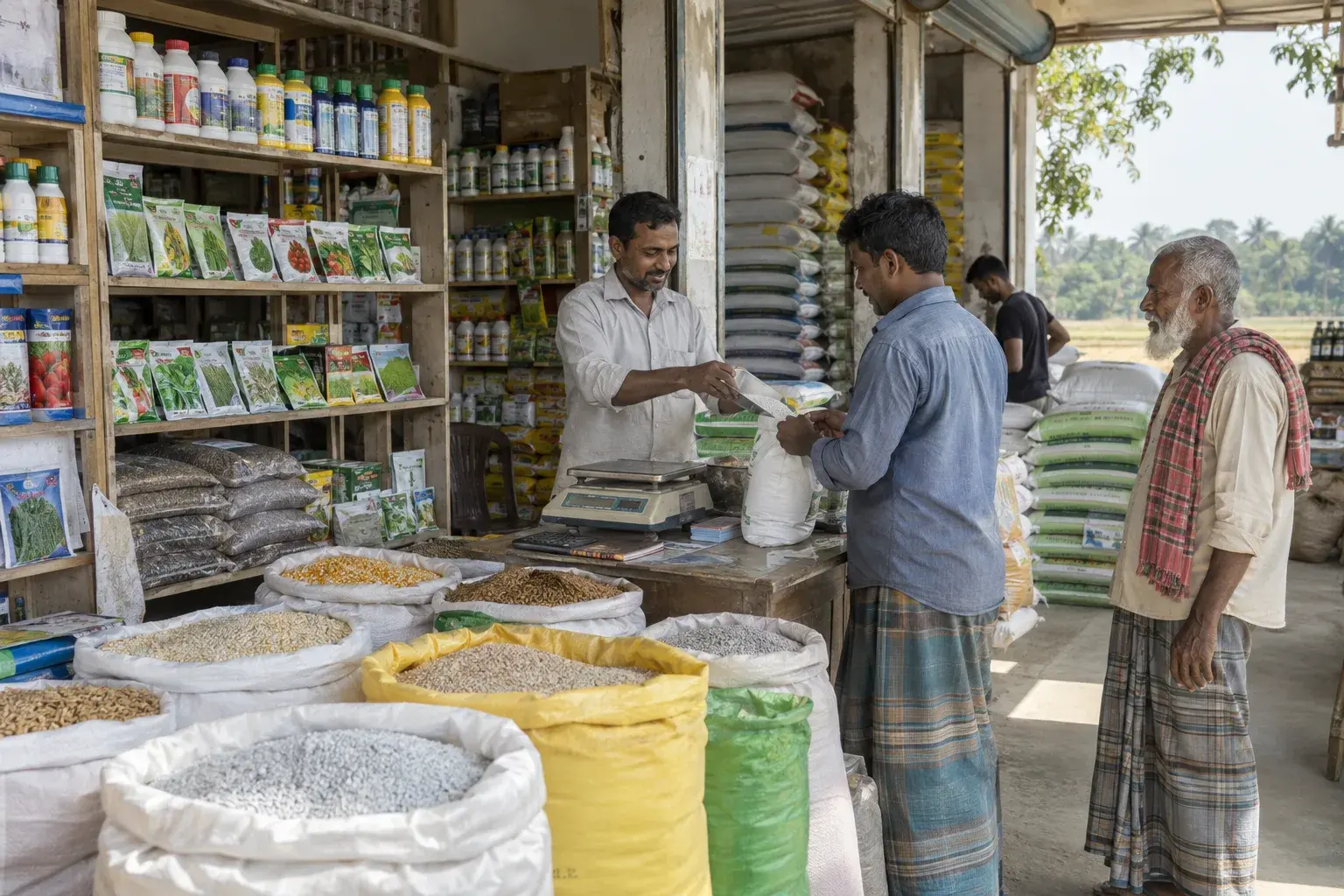
A farm input shop selling seed, fertiliser, pesticide and feed. The fertiliser margin is fixed by government at Tk 2 a kg today, rising to Tk 3 from 1 July 2027.
- Capital
- ৳1.5 lakh – ৳25 lakh
- People
- 1 – 5
- First income
- 30 – 180 days