
Biogas plant
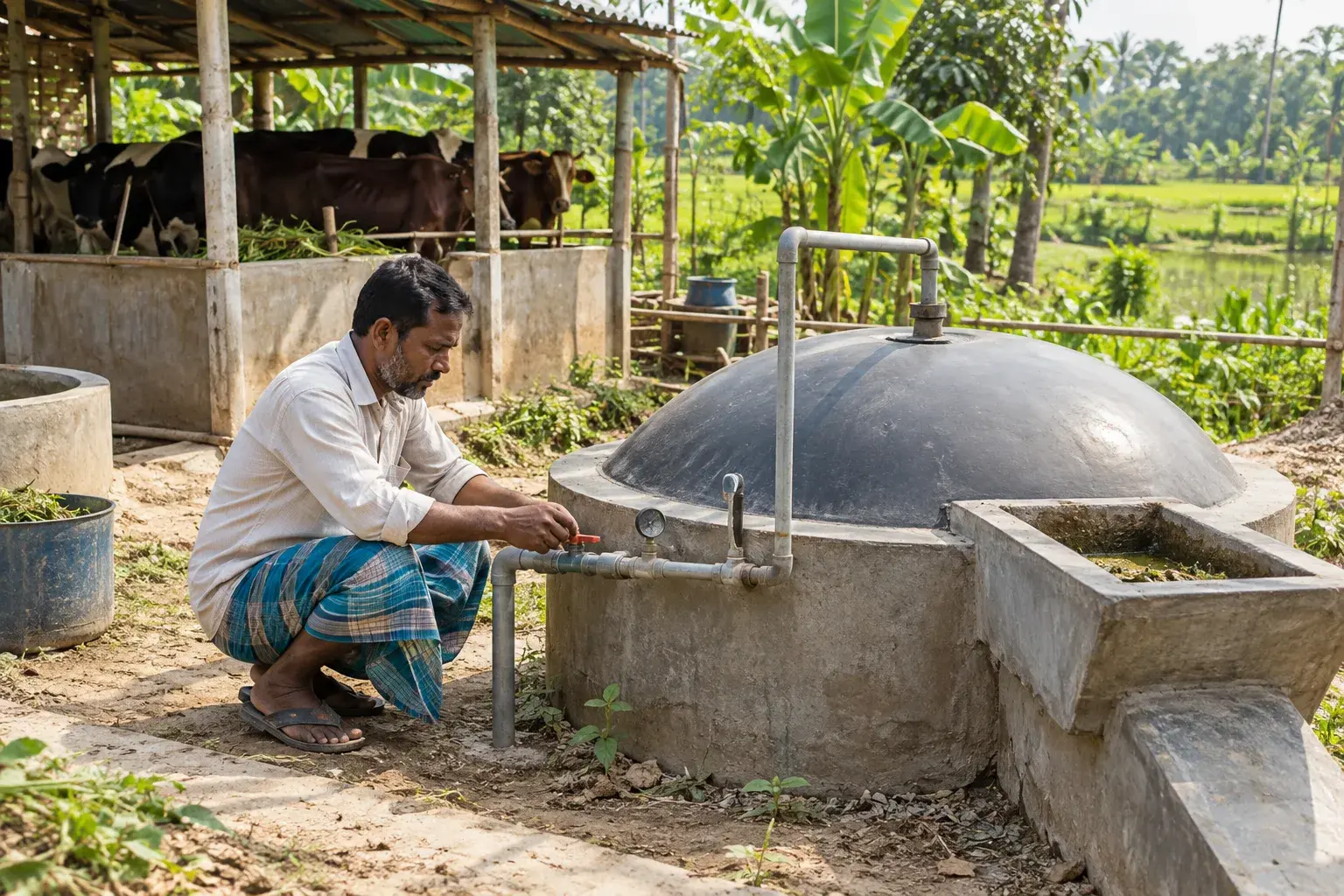
Cooking gas and organic fertiliser out of cow dung. This is not an income business but a cost-saving one: the plant costs Tk 28,000-50,000 and saves about Tk 4,000 a month in fuel plus Tk 2,000-2,500 from selling the surplus fertiliser.
- Last reviewed: 21 September 2026
- Version 1
Biogas plant
- Starting capital
- ৳28,000 – ৳50,000 Practitioner verified
- Manpower
- 1 – 2 people
- First sale
- 15 – 90 days Editorial estimate
- Break-even
- 7 – 30 months Editorial estimate
- Kind of work
- Farm · Medium difficulty
About the business
Nobody gets rich installing a biogas plant. It is a device that turns your cattle's dung into two things, cooking gas and organic fertiliser, and in doing so closes two of your monthly expenses. The gain sits on the cost side of the ledger, not the income side, and that is the honest way to look at it. In Pabna in June 2026 one plant cost Tk 28,000 to build, with others quoted at Tk 30,000-50,000; one family was saving Tk 4,000 a month on fuel and taking another Tk 2,000-2,500 by selling the surplus organic fertiliser. Two cattle are the minimum, five is comfortable. IDCOL has run this since 2006, financing plants of 1.2 to 25 cubic metres of gas a day through 38 partner organisations, and had financed over 56,500 plants by December 2020. The national count has now passed one hundred thousand, against a biomass-based potential of about four million, which is two and a half percent of what is possible. The arithmetic has moved in its favour: no new household natural gas connection has been given since 2020, and a 12 kg LPG cylinder has cost Tk 1,585 since 2 September 2026. Two warnings, though. Without cattle already in the yard the sums mean nothing, because buying cattle costs several times what the plant costs. And slurry handling is, in SREDA's own words, a major challenge: in a house with no land to spread it on and no buyer, the daily residue becomes a problem of its own.
Unit economics
| Item | Range | Evidence | Suggest a correction |
|---|---|---|---|
| Monthly working capital | ৳300 – ৳2,000 | Editorial estimate | |
| Selling price | ৳4,000 – ৳6,500 / unit | Practitioner verified | |
| Variable cost | ৳300 – ৳1,700 / unit | Editorial estimate | |
| Gross margin | 58% – 95% | Editorial estimate | |
| Time to first revenue | 15 – 90 days | Editorial estimate | |
| Break-even time | 7 – 30 months | Editorial estimate | |
| Cash cycle | 0 – 30 days | Editorial estimate | |
| Waste / loss | 20% – 50% | Editorial estimate | |
| Daily capacity | 1.2 – 25 | Official source |
What you need to start
- The plant itself, at Tk 28,000-50,000 to build (Pabna, 9 June 2026). Two kinds, brick-and-cement and pre-fabricated bio-digester, and IDCOL finances both. Sizes run from 1.2 to 25 cubic metres of gas a day. Plus piping and a biogas stove and burner.Equipment
- Cattle: at least two, and five covers both the family's cooking and a surplus of fertiliser (from the working plants in Pabna, 9 June 2026). Dung is the only raw material and is the real capital in this arrangement. Cattle prices could not be verified here, but they are several times the cost of the plant.Starting stock
- No source was found requiring a separate licence for a biogas plant built for your own household. But packing the fertiliser and selling it under a brand would need a trade licence (form Tk 10, book Tk 50, standard tax Tk 30, stamp Tk 150-300, fee Tk 100-60,000, 3-5 working days) and possibly registration under the fertiliser management law, which could not be verified here.Licence
- Sound masonry: a cracked brick digester leaks gas and is expensive to repair. On the running side, mixing dung and water in the right proportion every day, reading why the pressure has dropped, and emptying the tank every four or five years.Skill
- An IDCOL partner organisation: IDCOL finances and supervises construction through 38 of them, reachable on 16653 (8 am to 9 pm) or biogas@idcol.org. Grameen Shakti has also installed more than 40,000 plants nationwide.Supplier
- A buyer for the fertiliser: a neighbouring vegetable or rice grower, a nursery, a fish pond, or the local fertiliser shop. One family in Pabna takes Tk 2,000-2,500 a month from this alone; with no buyer that income is zero.Supplier
- Space beside the cattle shed. A 2011 report puts a typical household plant at about 200 square feet, which is old information. Beyond that, land or a fish pond to take the slurry: without one the daily residue becomes a problem.Workspace
How the work is done
- 1Count the cattle. This is the first and only real question. Of the working plants in Pabna one runs on two cows and another on five. Without cattle none of these sums apply, because buying cattle costs several times what the plant costs, and buying them for the gas alone makes no sense.
- 2Work out what cooking costs you now. If it is LPG, a 12 kg cylinder is Tk 1,585 (BERC, 2 September 2026), so count how many you use a month. If it is firewood, bought or gathered, price that too. That number is your actual income from this.
- 3Decide where the slurry goes before anything else. In SREDA's own words, slurry management is a major challenge. Your own land or fish pond is best; failing that, settle it in advance with a neighbouring farmer or nursery. One family in Pabna takes Tk 2,000-2,500 a month from the fertiliser alone.
- 4Call IDCOL's call centre on 16653 (8 am to 9 pm) or write to biogas@idcol.org. IDCOL works through 38 partner organisations; ask them which one covers your area and what the current subsidy and loan terms are.
- 5Get the current subsidy figure from them directly. In 2011 IDCOL's start-up subsidy was Tk 9,000 with a Tk 14,000-16,000 loan through the partner organisation; a 2024 report puts the domestic subsidy at 10-20 percent. Both figures are old, so do not plan on either without checking.
- 6Choose the type. IDCOL finances two: a brick-and-cement plant and a pre-fabricated bio-digester. The brick one lasts longer but cracks if the masonry is poor; the pre-fab goes in faster.
- 7Size it on the cattle you have, not on ambition. IDCOL finances plants from 1.2 to 25 cubic metres of gas a day. Build one too big and there will not be dung to fill it, and a half-fed digester does not make gas properly.
- 8Build it beside the cattle shed. The further the dung has to be carried the heavier the daily job becomes, and the day it feels heavy is the day the plant starts dying. Keep the pipe run to the kitchen short too.
- 9Feed it dung mixed with water every single day. This is a daily job, not an occasional one; skip it and the gas falls off and the burner dies.
- 10Empty the tank every four or five years, which is what the Pabna operators report. Clearing the settled sludge brings the gas back. Not doing it is the commonest reason plants stop working.
- 11Keep a buyer for the surplus fertiliser. IDCOL reckons its whole programme produces 335,000 tonnes of organic fertiliser a year and displaces 48,000 tonnes of chemical fertiliser, so there is a market for the stuff; you only have to find the buyer in your own area.
- 12Check for leaks regularly. Gas escaping through a crack or a pipe joint weakens the flame, and methane collecting in an enclosed space is dangerous. Soapy water on the joints, watching for bubbles, is the simplest test.
Seasons
- JanNormal
- FebNormal
- MarNormal
- AprNormal
- MayNormal
- JunNormal
- JulNormal
- AugNormal
- SepNormal
- OctNormal
- NovNormal
- DecNormal
Where it works well
- Strong fitDinajpur · No piped gas and plenty of cattle, with demand for organic fertiliser on the rice land.
- Strong fitGazipur · A dense belt of poultry and dairy farms, and SREDA notes that poultry-waste plants have been the most successful of all.
- Strong fitMymensingh · A large poultry and dairy area where piped gas does not reach everywhere, so cooking is on costlier LPG or firewood.
- Strong fitPabna · IDCOL has installed more than 2,000 plants here since 2006; dairy sheds are dense, both masons and partner organisations are at hand, and there are buyers for the fertiliser.
- Strong fitRangpur · No piped natural gas at all, so cooking runs on LPG and firewood; with a 12 kg cylinder at Tk 1,585 the saving is largest here.
- Strong fitSirajganj · Part of the Pabna-Sirajganj dairy belt: cattle in nearly every yard guarantee the dung supply, and the vegetable growers on the chars buy the fertiliser.
- PossibleBogura · A big vegetable district, so buyers for the fertiliser are easy to find, and cattle numbers are good.
- PossibleCumilla · Both dairy and poultry are here, though piped gas in many areas makes the saving smaller.
- PossibleJashore · Heavy vegetable and flower growing gives a certain buyer for the fertiliser, and there are cattle enough.
- PossibleKishoreganj · In the haor country cooking is done on firewood and dung cakes, both of which biogas replaces, though there is a risk of the plant flooding in the monsoon.
- PossibleSatkhira · No piped gas and cattle are kept, though saline water and a high water table mean the digester site has to be chosen carefully.
- PossibleTangail · Cattle are widely kept in the villages, and being close to Dhaka makes masons and fittings easy to get.
Risks and cautions
- HighDependency: It all rests on the cattle. Sell them, lose them, or send one for Eid, and the dung stops, the gas stops, and the plant sits unused in the ground. A family with five cows today and three next year will not have gas through the month. This investment is really part of the decision to keep cattle, not a business of its own.
- HighOther: A large share of installed plants stops working. The Business Standard counts about 100,000 of 200,000 kitchen-waste projects as non-functional. The reasons are ordinary: the feeding stops, the tank is never emptied, gas leaks from a crack. The money goes in on the day the plant is built, and it only comes back if the dung goes in every day after that.
- MediumWorking capital: For anyone without cattle the arithmetic is simply wrong. The plant is Tk 28,000-50,000, but two to five cattle cost several times that and their feed and shed are a monthly cost forever after. The claim that it pays back in seven months is true only for households that already have cattle tied in the shed.
- MediumOther: With nowhere to put the slurry the plant becomes a burden. SREDA states on its own page that slurry management after gas production is a major challenge and that a separate guideline was drawn up for it. Roughly as much wet residue comes out each day as dung went in, and left to pile up in the yard it means smell and flies.
- MediumDemand: There is not a fertiliser buyer everywhere. The Pabna family takes Tk 2,000-2,500 a month because there are farmers around who buy. In a village where everyone uses their own dung, the surplus will not move even free, and the loss of that two thousand a month roughly doubles the payback period.
Sources
IDCOL Biogas and Bio-fertilizer Program
Collected: 21 Sept 2026Supports: Daily capacity, Monthly working capital · বাংলাদেশ
বায়োগ্যাস — স্রেডার তথ্য পাতা (কনটেন্ট হালনাগাদ ১৭-০৯-২০২০)
Collected: 21 Sept 2026Supports: risks · বাংলাদেশ
সিটি কর্পোরেশন থেকে ট্রেড লাইসেন্স প্রাপ্তির ধাপ সমূহ
Collected: 16 Sept 2026Supports: requirements · বাংলাদেশ
LPG price cut by Tk 13, 12kg cylinder now Tk 1,585 — বিইআরসি ঘোষিত সেপ্টেম্বর ২০২৬ মূল্য
Collected: 2 Sept 2026Supports: Selling price · বাংলাদেশ
Inside Pabna’s biogas boom: A rural energy revolution takes shape
Collected: 9 Jun 2026Supports: Starting capital, Gross margin, Selling price, Variable cost · পাবনা
Bangladesh vastly misses out on biogas, organic fertilizer potential
Collected: 5 Jun 2024Supports: Waste / loss · বাংলাদেশ
বায়োগ্যাস: সম্ভাবনার মাত্র আড়াই শতাংশ কাজে লাগছে
Collected: 15 Jul 2023Supports: Break-even time · বাংলাদেশ
IDCOL to install 1.5 lakh biogas plants
Collected: 18 Dec 2011Supports: Starting capital · বাংলাদেশ
What changed
No corrections have been published yet.
Questions and answers
No questions yet. Be the first to ask.
Similar businesses
 Agriculture & farming
Sheep rearing
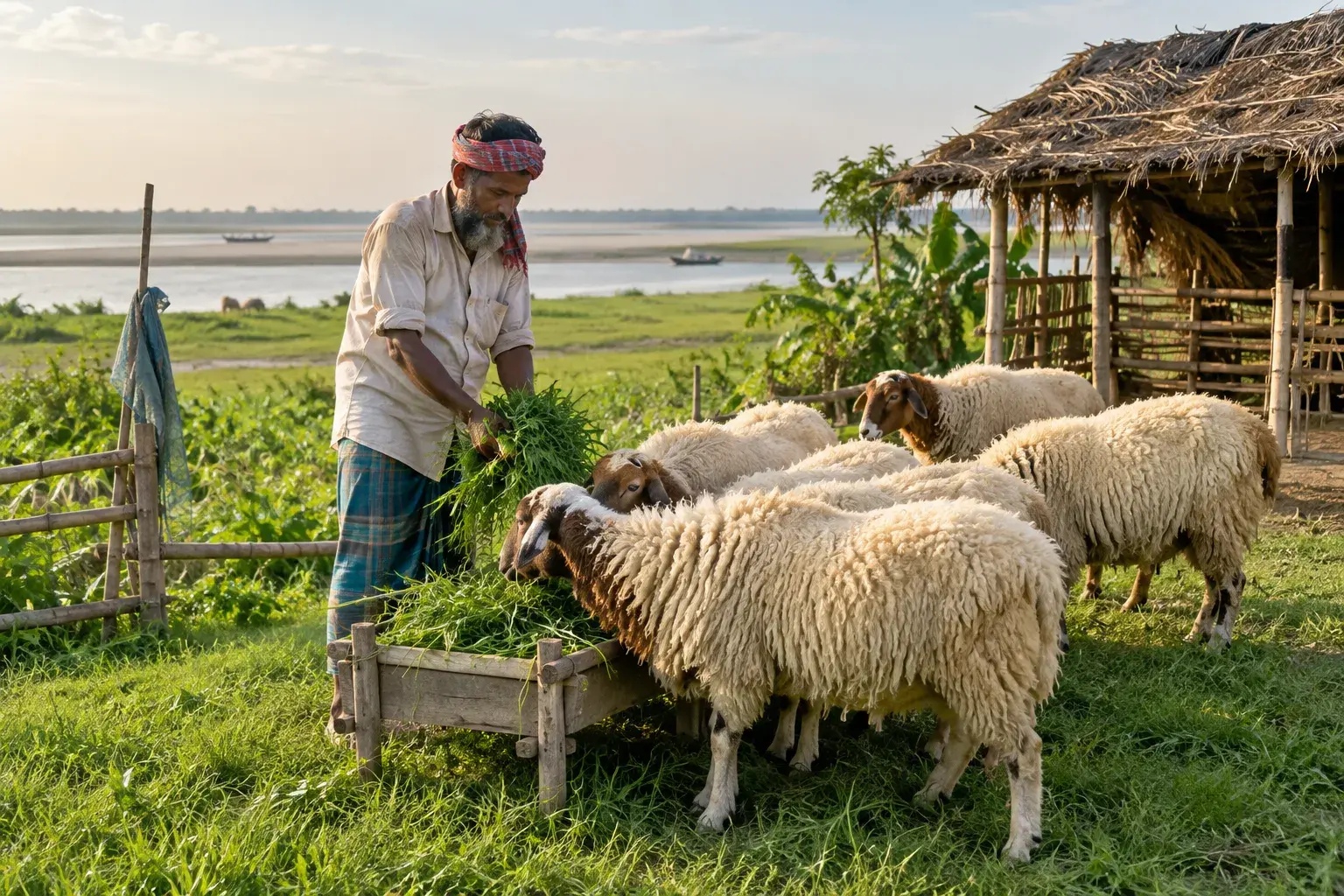
Rearing sheep on open grazing in fields and chars. Before Qurbani 2026 one Joypurhat farmer sold 26 sheep for Tk 2,30,000, about Tk 8,800 each.
- Capital
- ৳30k – ৳2.5 lakh
- People
- 1 – 3
- First income
- 180 – 365 days
 Agriculture & farming
Onion farming
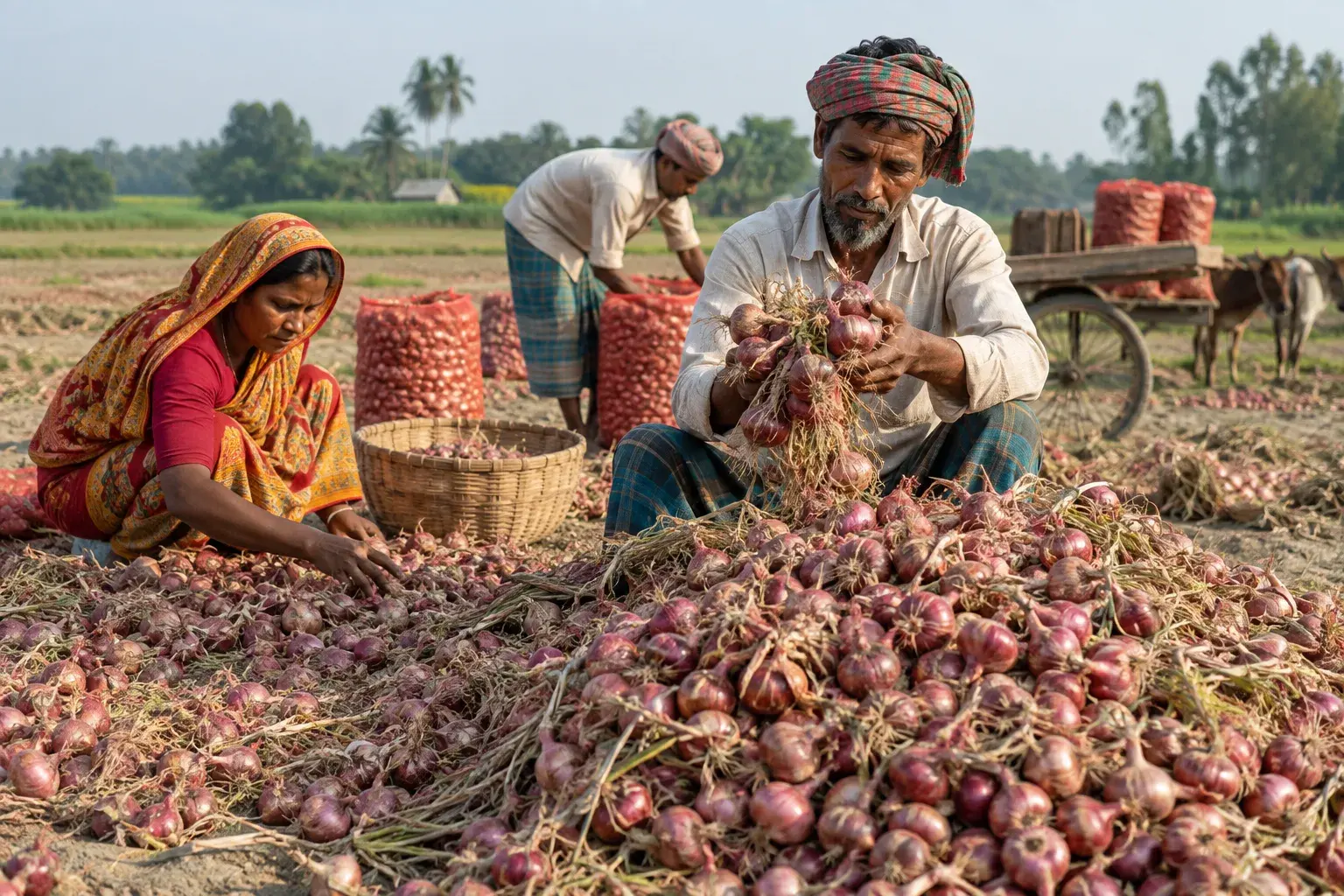
Two crops in one year, muri-kata and hali. Local onion averaged Tk 41.82 a kg wholesale nationally in August 2026, but at harvest farmers got Tk 700-1,100 a maund against a cost of Tk 1,400-1,600.
- Capital
- ৳30k – ৳2.5 lakh
- People
- 2 – 10
- First income
- 90 – 150 days
 Agriculture & farming
Goat fattening
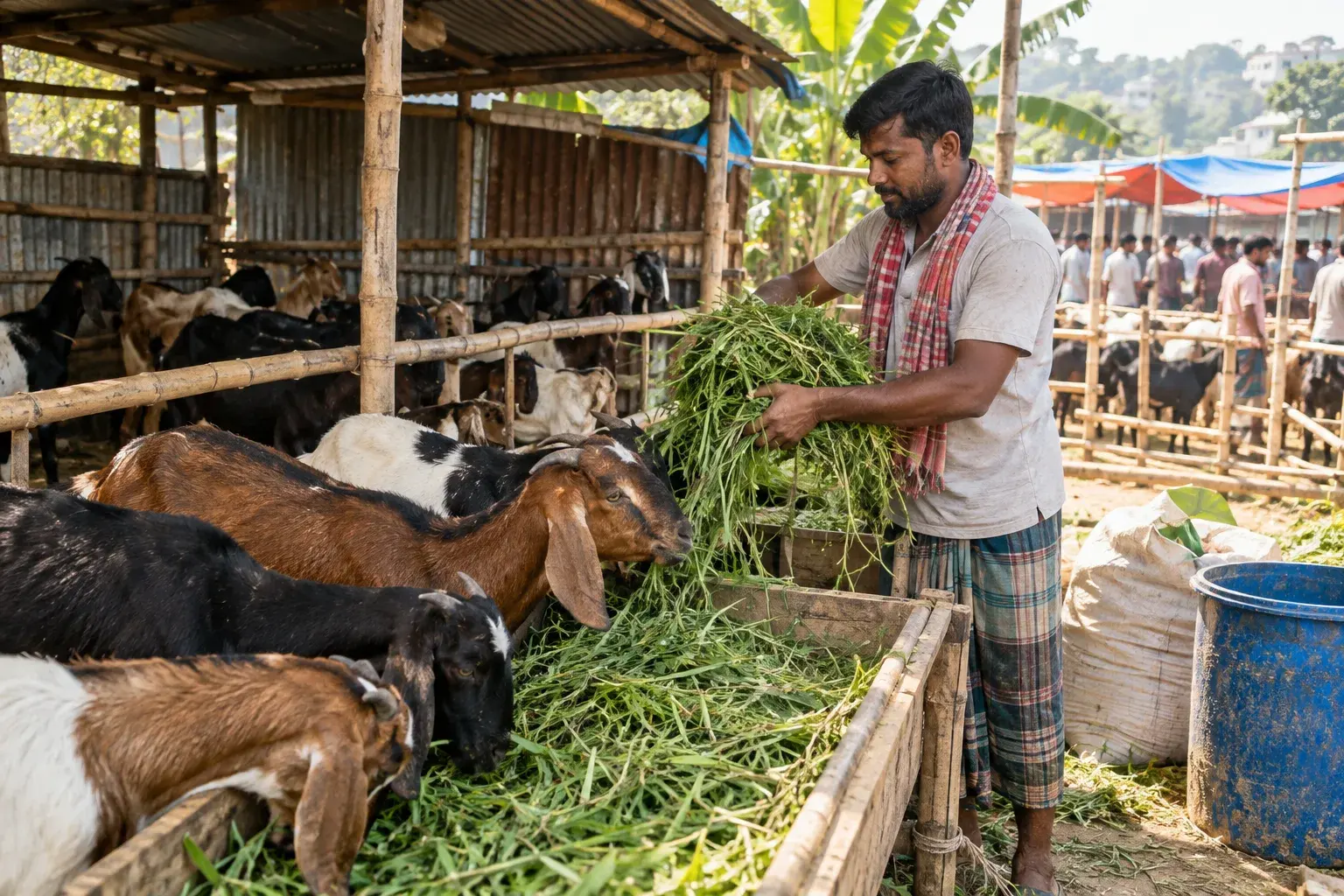
Buying five to six month old khasi, feeding them up and selling at the Qurbani haat. In May 2026 Chattogram haats paid Tk 8,000-15,000 for small goats and Tk 40,000-50,000 for large ones; big crossbreeds went at Tk 700-800 a kilo.
- Capital
- ৳30k – ৳2.5 lakh
- People
- 1 – 3
- First income
- 90 – 365 days
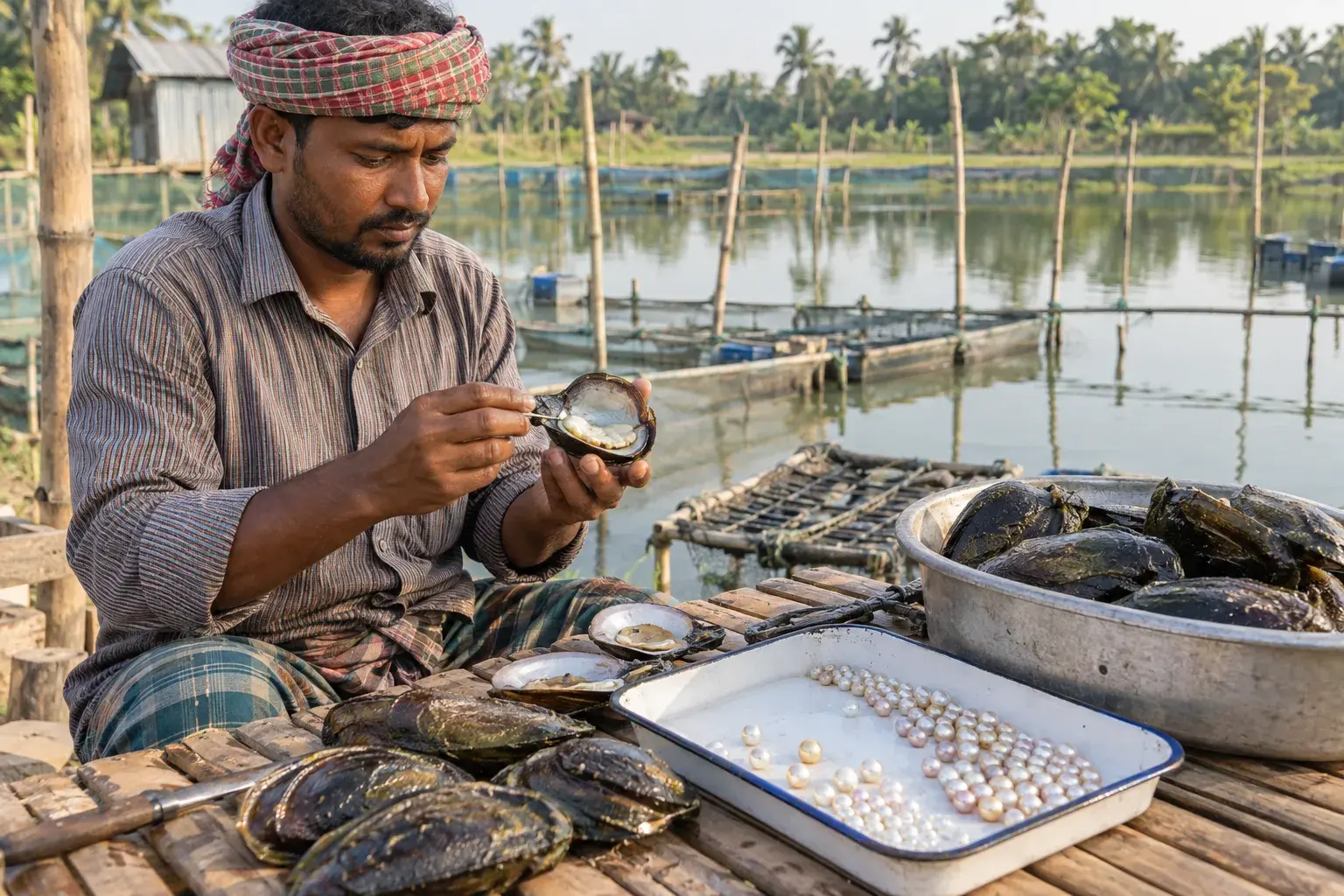 Agriculture & farming
Mussel and pearl culture
Seeding pond mussels to grow pearls in seven to eleven months. Grade A pearls sell wholesale at Tk 500-600, but there is no regular buyer - and that is the main risk.
- Capital
- ৳30k – ৳1.5 lakh
- People
- 1 – 6
- First income
- 210 – 330 days