
Rope and twine making
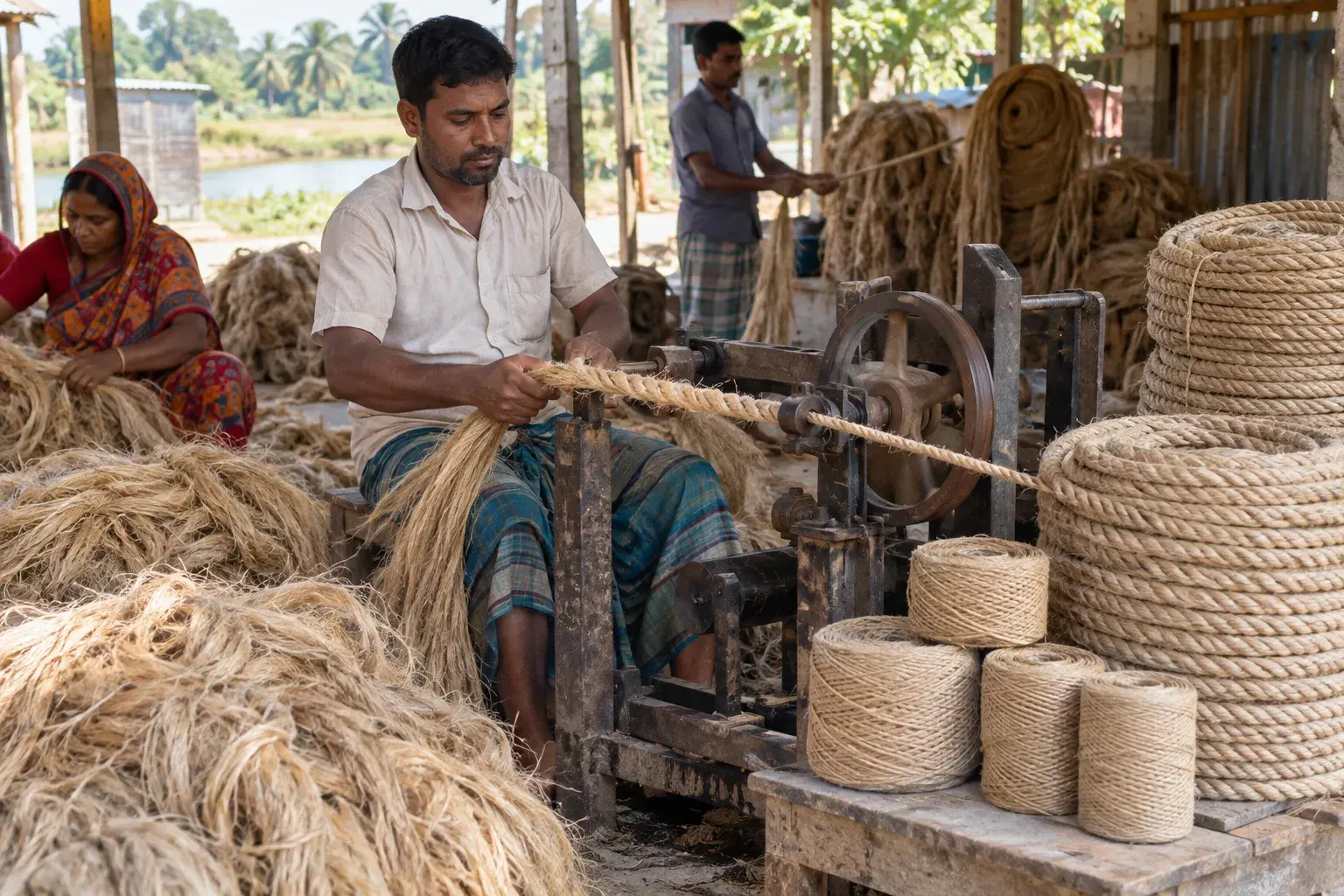
Twisting jute fibre into rope and twine. In September 2026 raw jute was about Tk 86-99 a kilo while finished twine listed online at Tk 390 a kilo - that gap is the business.
- Last reviewed: 19 September 2026
- Version 1
Rope and twine making
- Starting capital
- ৳40,000 – ৳6,00,000 Editorial estimate
- Manpower
- 2 – 15 people
- First sale
- 15 – 60 days Editorial estimate
- Break-even
- 2 – 6 months Editorial estimate
- Kind of work
- Workshop · Easy
About the business
Twisting jute fibre into rope and twine is old work in rural Bangladesh, and it survives because demand has not gone away. Rope is needed to tie sacks, pack goods, bind courier parcels, weave beds and chairs, tether cattle, moor boats, and on brick kiln and construction sites. The raw material is domestic, and that is the real advantage here. On 15 September 2026 raw jute in Satkhira was selling at Tk 3,200-3,700 a maund by grade, which is roughly Tk 86-99 a kilo, while on 16 September 2026 finished jute rope and twine was listed online at Tk 390 a kilo. That gap is the business - but wages, fibre waste, transport and the wholesaler's commission all come out of it. The work can start small: twine can be twisted on a hand-cranked wheel in a courtyard, while a motorised machine multiplies daily output. Jute arrives from July to September and is cheapest then. A maker who can buy in season and store a year's fibre earns more; one who buys at the haat every week rides the jute price up and down with it.
Unit economics
| Item | Range | Evidence | Suggest a correction |
|---|---|---|---|
| Monthly working capital | ৳25,000 – ৳3,00,000 | Editorial estimate | |
| Selling price | ৳390 / kg | Market quote | |
| Variable cost | ৳86 – ৳99 / kg | Market quote | |
| Gross margin | 74% – 78% | Editorial estimate | |
| Time to first revenue | 15 – 60 days | Editorial estimate | |
| Break-even time | 2 – 6 months | Editorial estimate | |
| Cash cycle | 20 – 180 days | Editorial estimate | |
| Waste / loss | 8% – 15% | Editorial estimate | |
| Daily capacity | 20 – 500 | Editorial estimate |
What you need to start
- A twisting wheel or motorised twisting machine, a combing device, weighing scales and winding frames. Machine prices could not be found in this research.Equipment
- Raw jute: on 15-09-2026 Satkhira prices were Tk 3,200-3,700 a maund by grade, roughly Tk 86-99 a kilo. One bale holds about 182 kg.Starting stock
- Trade licence from the city corporation or municipality: form Tk 10, licence book Tk 50, standard tax Tk 30, stamp Tk 150-300, licence fee Tk 100-60,000 by trade type. Issued in 3-5 working days and renewed yearly.Licence
- Judging fibre grade, twisting to an even thickness and finishing the ends. The work is not hard, but without practice the thickness wanders and buyers reject it.Skill
- Jute markets and village agents - weekly jute haats such as Patkelghata in Satkhira and Karmaja Chaturhat in Santhia, Pabna.Supplier
- Dry, roofed space - wet jute rots and loses colour, which cuts its price. Twisting also needs a long open run.Workspace
How the work is done
- 1Decide the product first: thin twine for sacks and parcels, medium rope for tethering cattle and weaving beds, or thick rope for boats and construction. Each has a different buyer and a different price.
- 2Pick your jute market. Patkelghata in Satkhira has a large jute market, and traders also buy village to village from farmers. Tk 500 a maund is about Tk 13 a kilo, so choosing the market is the first profit.
- 3Buy jute between July and September. In Satkhira in 2025 a maund was Tk 3,400-3,500 at the start of the season and Tk 4,000-4,200 at the end. Buy as much as you can in season and store it dry.
- 4Sort and clean the fibre. Price varies by grade, and rope twisted from poor fibre snaps - and a buyer who gets a snapped rope does not come back.
- 5Set up production. A hand-cranked wheel works in a courtyard; a motorised twisting machine multiplies daily output. Starting by hand and moving to a machine as sales grow is the safer path.
- 6Take the trade licence from the city corporation or municipality. Even a small home-based unit needs it to sell.
- 7Find repeat buyers. Rice and fertiliser wholesalers, courier firms, brick kilns and construction contractors take the same quantity every month. Once that is regular, selling stops being a problem.
- 8Sell the jute sticks separately if you process the plant yourself. In Satkhira a bundle of jute sticks fetches Tk 60-100.
- 9Look for handicraft and export-facing buyers. Jute twine goes into bags, mats and home decor, where it earns more than plain rope.
- 10Record how many kilos of fibre went in and how many kilos of rope came out of each batch. That waste figure is what tells you whether you are actually making money.
Seasons
- JanNormal
- FebNormal
- MarNormal
- AprNormal
- MayNormal
- JunNormal
- JulNormal
- AugHigh
- SepHigh
- OctHigh
- NovNormal
- DecNormal
Where it works well
- Strong fitFaridpur · One of the country's main jute-growing and jute-trading centres, with raw material close at hand.
- Strong fitJashore · Strong in both jute farming and jute trading, with handicraft artisans available.
- Strong fitPabna · Thousands of hectares of jute across upazilas including Santhia, with a weekly jute haat at Karmaja Chaturhat.
- Strong fitRajbari · A large jute-growing area right beside the Faridpur jute market.
- Strong fitSatkhira · About 11,675 hectares of jute across seven upazilas with a large market at Patkelghata - yet the district has no jute-based industry, so the processing space is open.
- PossibleJamalpur · A tradition of jute handicraft with a large number of women artisans.
- PossibleKushtia · Good jute acreage, with space and labour easy to find for a small unit.
- PossibleNarail · A jute-growing area close to the Jashore and Khulna markets.
- PossibleSirajganj · Heavy jute cultivation on the Jamuna chars, with workers already experienced in yarn and loom work.
- PossibleTangail · A jute and handloom district where artisans already know fibre and yarn work.
Risks and cautions
- HighWorking capital: The jute price moves twice a year and eats the margin. In Satkhira in 2025 a maund went from Tk 3,400-3,500 early in the season to Tk 4,000-4,200 at the end, about 20 percent more. A maker who cannot fund an in-season purchase ends up buying at the highest price late in the year and selling rope at the same old price.
- MediumDependency: A district that grows jute does not necessarily process it. The Satkhira DAE office says outright that because the district has no jute-based industry its jute is sold outside. A small maker therefore pays transport on both the fibre coming in and the rope going out.
- MediumDemand: Cheap plastic and nylon rope does the same job for less. Much packaging and tying has already moved to plastic tape, and buyers decide on price. Jute rope holds only where biodegradability or a natural material is a requirement.
- MediumLate payment: Wholesalers and large buyers take the goods first and pay later. A small maker is then short of cash for the next batch of fibre, and when work stops the workers leave for other jobs.
Sources
সিটি কর্পোরেশন থেকে ট্রেড লাইসেন্স প্রাপ্তির ধাপ সমূহ
Collected: 16 Sept 2026Supports: Starting capital · বাংলাদেশ
What changed
No corrections have been published yet.
Questions and answers
No questions yet. Be the first to ask.
Stories about this business
3,000 taka to start, now 3.5 lakh taka of sales a month
Started at home in 2020 with 3,000 taka. Sales now run at 3-3.5 lakh taka a month on a 15-17 percent margin after costs, with 21-30 people working.
- Capital
- ৳3k
- Reasons
- Working capital, Weak demand
Similar businesses
 Light manufacturing & workshop
Pottery and terracotta
Making clay pots, planters and terracotta showpieces. Bijoypur's work is exported, but with no gas the kilns run on firewood and part of the output is spoiled.
- Capital
- ৳40k – ৳4 lakh
- People
- 2 – 12
- First income
- 30 – 90 days
 Light manufacturing & workshop
Tiles and marble fitting
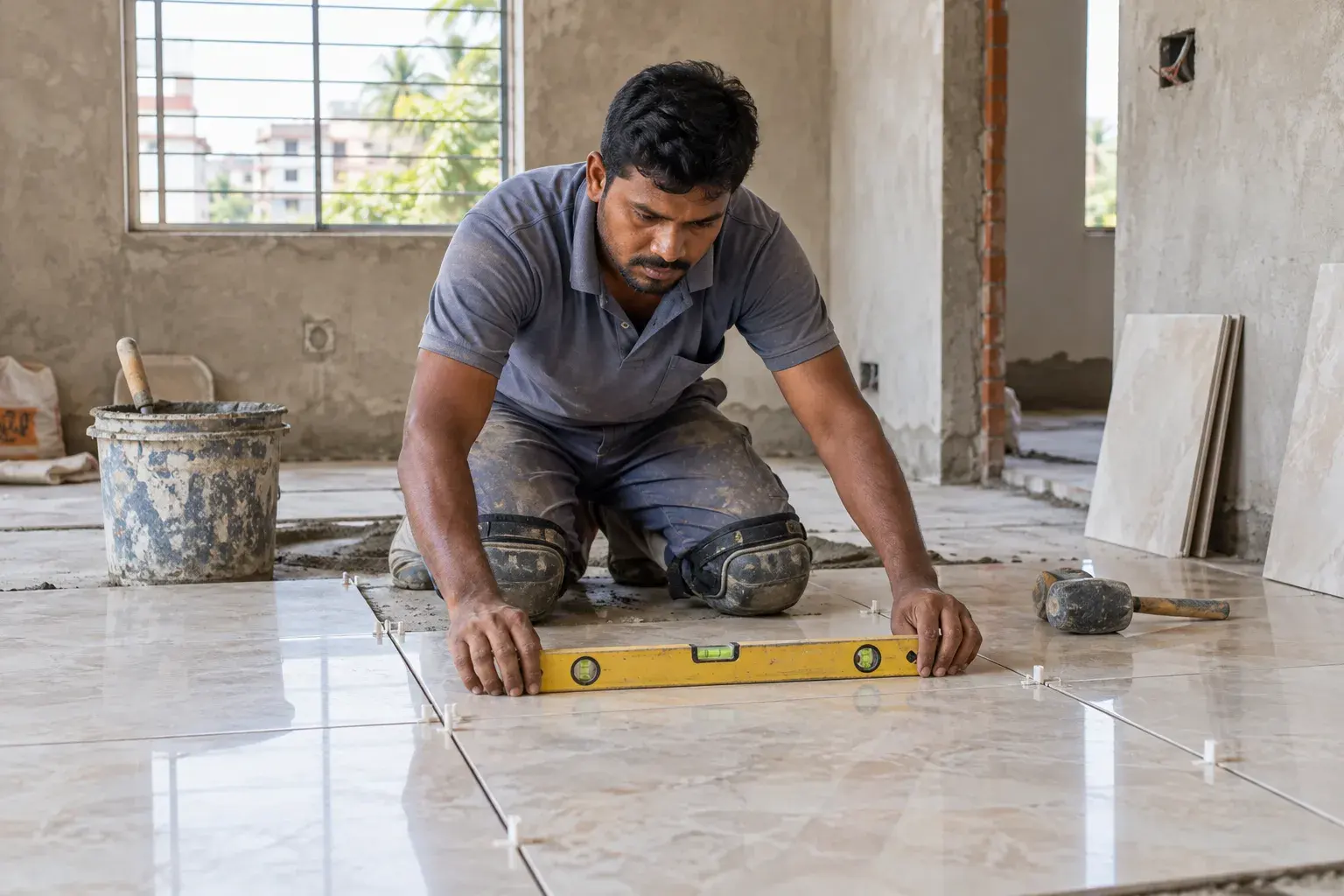
Laying tiles and marble on floors, walls and bathrooms. Tiles run Tk 55-170 a piece and the statutory minimum for a tile man is Tk 1,105 a day in town, the highest on any site.
- Capital
- ৳30k – ৳2.5 lakh
- People
- 2 – 8
- First income
- 7 – 30 days
 Light manufacturing & workshop
Masonry and building contracting
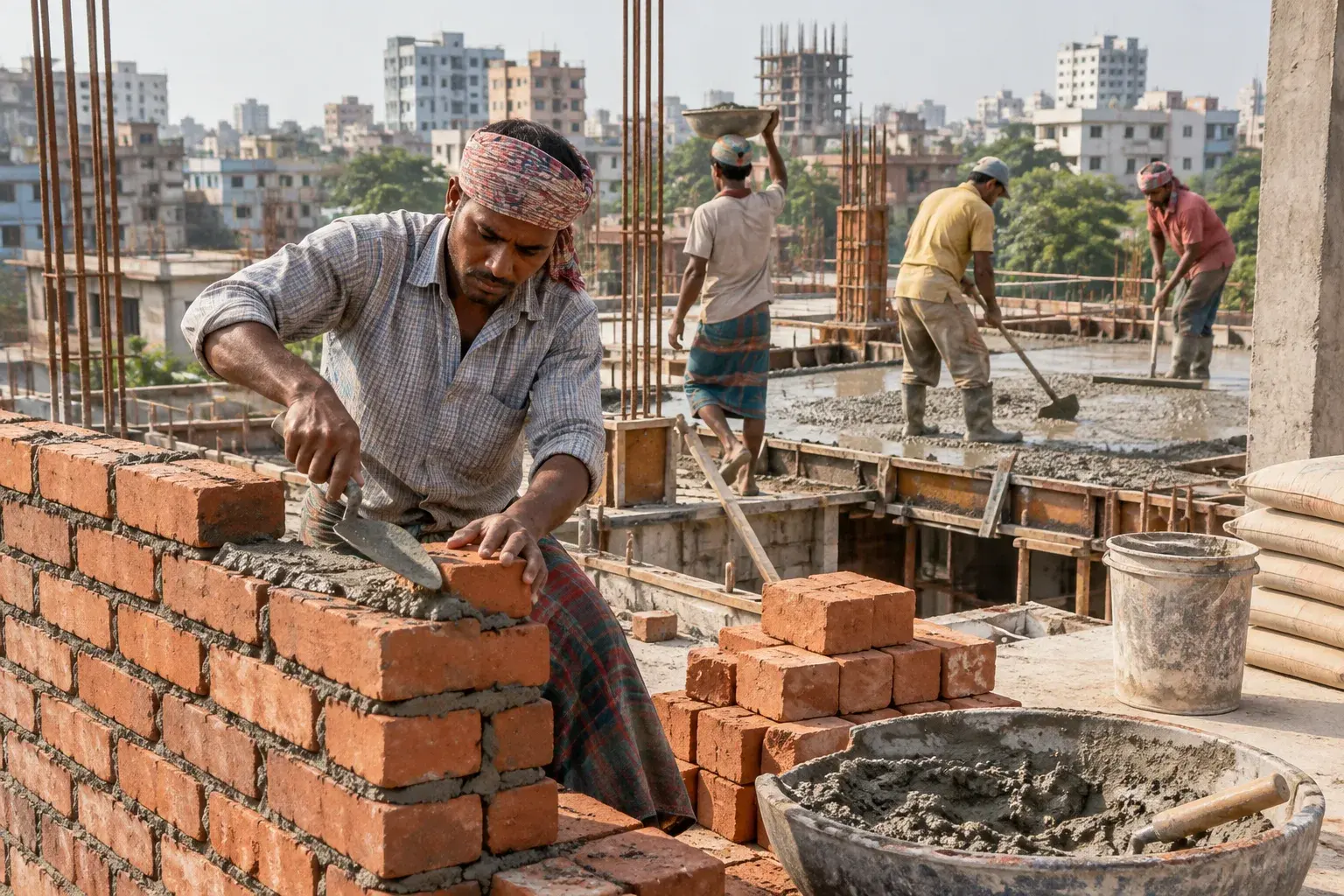
Contracting the labour of brickwork, casting and finishing. Dhaka construction runs Tk 1,800-3,000 per square foot of plinth area, and the statutory minimum for a mason is Tk 940 a day in town.
- Capital
- ৳50k – ৳5 lakh
- People
- 3 – 25
- First income
- 15 – 60 days
 Light manufacturing & workshop
Battery reconditioning
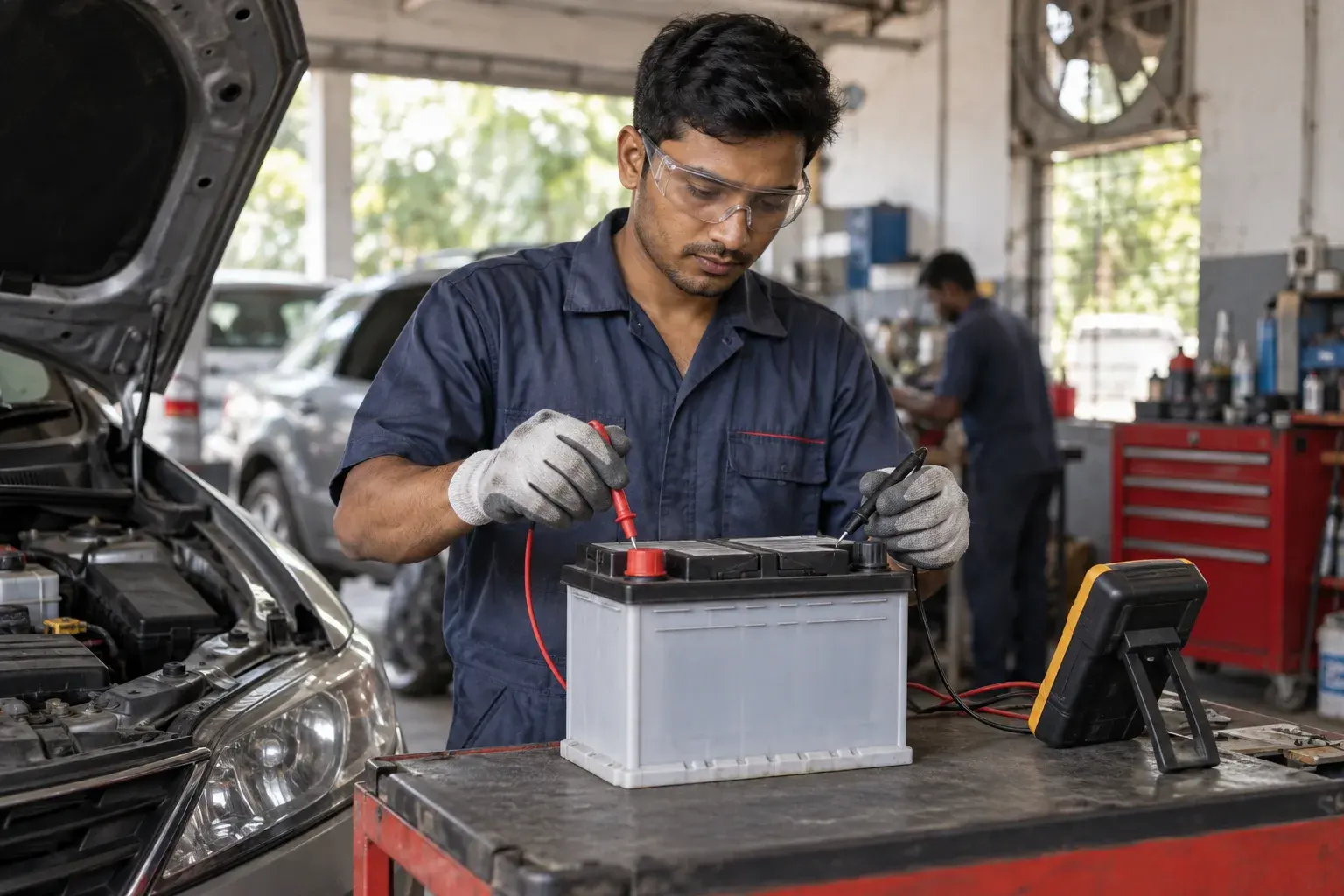
Bringing weak lead-acid batteries back with electrolyte correction and slow charging. Breaking batteries open and smelting the lead is a completely different trade - an offence without Department of Environment clearance, and only 7 of about 1,100 such operations in the country hold one.
- Capital
- ৳50k – ৳4 lakh
- People
- 1 – 5
- First income
- 15 – 60 days