
Bamboo and cane handicraft
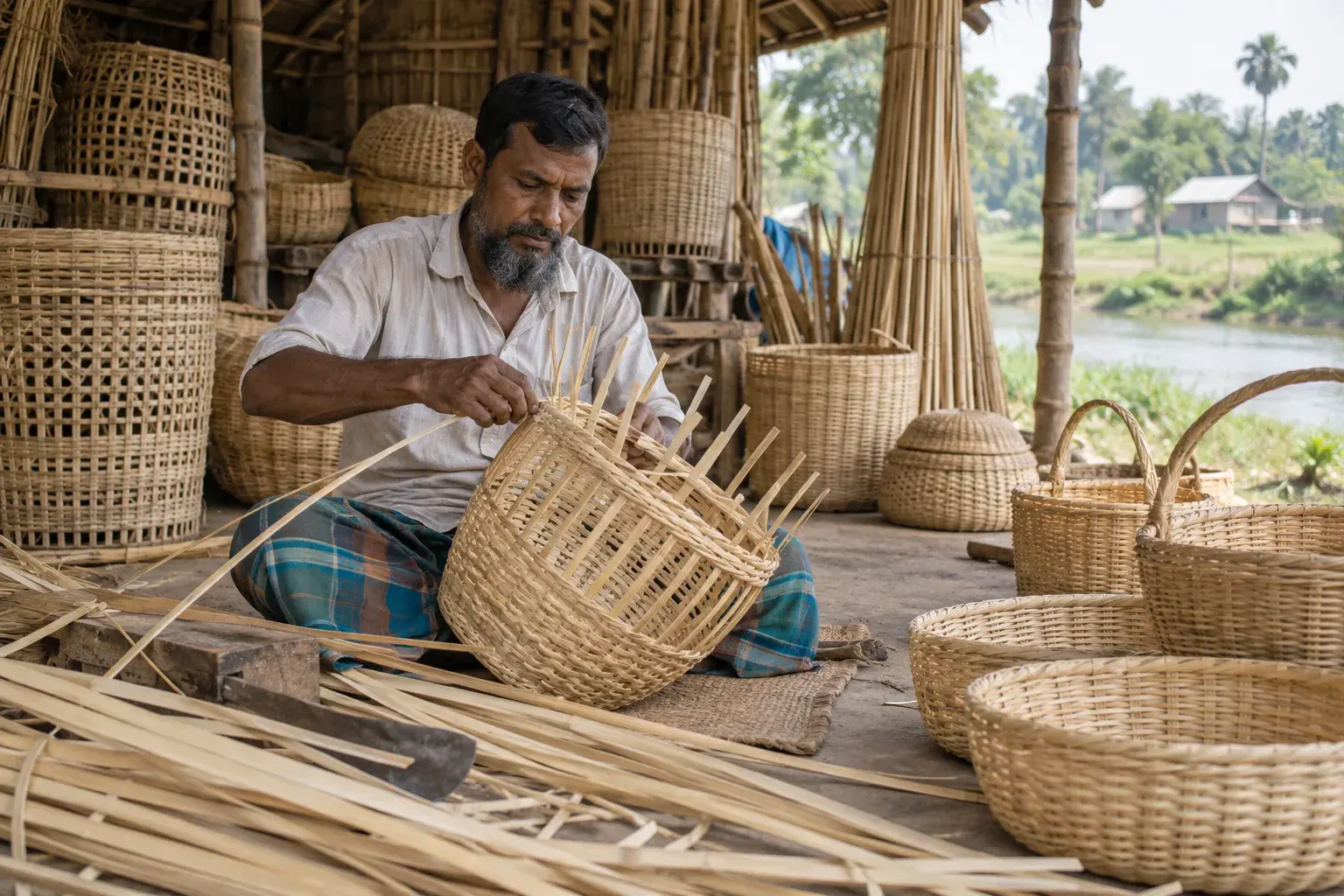
Splitting bamboo and cane into kula, baskets, cages and tourist crafts. A good bamboo costs Tk 400-500 and makes 15-20 kula in five days; a poultry cage earns the maker Tk 180 and the shopkeeper sells it at Tk 200.
- Last reviewed: 19 September 2026
- Version 1
Bamboo and cane handicraft
- Starting capital
- ৳10,000 – ৳1,00,000 Editorial estimate
- Manpower
- 1 – 6 people
- First sale
- 5 – 30 days Editorial estimate
- Break-even
- 2 – 6 months Editorial estimate
- Kind of work
- Home-based · Easy
About the business
Splitting bamboo and cane into strips and weaving kula winnowers, baskets, poultry cages, darma matting, or bottles, mugs and pen stands for tourists. The raw material is nearby, the work is done at home and the whole household joins in, and that is the advantage. The arithmetic is the hard part. Nikhil Nomo Sutradhar of Boro Machimpur in Cumilla, thirty years in the trade, says a good bamboo costs Tk 400-500 and that one bamboo makes fifteen to twenty kula in five days. The women of that para mostly make poultry cages, about fifteen a week between husband and wife. Retailer Ripon Mia buys a cage from them at Tk 180 and sells it at Tk 200 in the markets. So a full week's work brings the pair roughly Tk 2,700, out of which the bamboo still has to be paid for. Bamboo has risen several times over while product prices have not, and cheap plastic keeps eating the demand. In the hills the picture differs: there the buyer is the tourist. At Shoilo Propat in Bandarban a bamboo bottle sells at Tk 350, a mug at Tk 150 and a pen stand at Tk 100, and sales jump when foreign visitors come. The Forest Research Institute trained several hundred artisans across the three hill districts and NGOs helped with marketing, but when the projects ended they withdrew and the producers were cut off from the market. There is no bank credit for producers, so nobody can build anything larger.
Unit economics
| Item | Range | Evidence | Suggest a correction |
|---|---|---|---|
| Monthly working capital | ৳2,000 – ৳6,000 | Editorial estimate | |
| Selling price | ৳100 – ৳350 / unit | Market quote | |
| Variable cost | ৳20 – ৳100 / unit | Editorial estimate | |
| Gross margin | 44% – 86% | Editorial estimate | |
| Time to first revenue | 5 – 30 days | Editorial estimate | |
| Break-even time | 2 – 6 months | Editorial estimate | |
| Cash cycle | 5 – 30 days | Editorial estimate | |
| Waste / loss | 10% – 15% | Editorial estimate | |
| Daily capacity | 2 – 4 | Practitioner verified |
What you need to start
- Dao, katari, knives and splitting tools, plus dye if you colour the strips. It is all handwork, and BSCIC says surviving will mean moving to some mechanisation.Equipment
- Bamboo and cane. One artisan needs five or six bamboos a month, because one bamboo is five days of work.Starting stock
- Trade licence from the union parishad, municipality or city corporation, needed for regular wholesale supply or a shop: form Tk 10, licence book Tk 50, standard tax Tk 30, stamp Tk 150-300, licence fee Tk 100-60,000 by trade type.Licence
- Splitting bamboo into even strips and then weaving to a pattern. The Cumilla artisans learned from their fathers and grandfathers; in the three hill districts the Forest Research Institute has run training.Skill
- A bamboo hat and grove owners. A good bamboo costs Tk 400-500 and often has to be fetched from a distant hat. Artisans say the price has risen several times over.Supplier
- The yard or verandah of the house with a dry, shaded spot. No separate workshop is needed, which is why the capital is low.Workspace
How the work is done
- 1Find out first which nearby hat has good bamboo. The Cumilla artisans buy at Machimpur or Gazipur bazar, and for good bamboo they have to go as far as Muradnagar or Gharmura.
- 2Decide what you will make. Kula, baskets, darma and poultry cages sell to villagers; bottles, mugs, vases and pen stands sell to tourists. The two have different markets, prices and seasons.
- 3Learn the splitting, stripping and weaving. The Forest Research Institute has trained and given technical support to several hundred artisans across the three hill districts, and asking may still open a place.
- 4Go to the district BSCIC office about small and cottage industry registration and training. BSCIC runs the clusters and fairs for this sector.
- 5Get the dao, katari, knives and splitting tools. The verandah or the yard is enough; no separate workshop is needed.
- 6Start with a few bamboos and keep count: how many pieces came out of one bamboo and in how many days. That count is your real wage.
- 7Settle the rate with the local retailer. In Cumilla the shopkeeper buys a cage at Tk 180 and sells at Tk 200, and knowing that makes the bargaining easier.
- 8In a tourist area, supply the shops at spots like Shoilo Propat, Chimbuk and Nilachal, and make to order when a booking comes. Sales rise sharply when foreign visitors arrive.
- 9Try to get into the handicraft fairs in Dhaka, Narayanganj and Chattogram. Hill craft reached those markets before Covid, and the fairs are still the easiest way in.
- 10Do not try to beat plastic on price. Cheap plastic is taking the demand for plain goods; the separate price comes from design, strength and the fact that it is handwork.
Seasons
- JanHigh
- FebHigh
- MarNormal
- AprNormal
- MayNormal
- JunLow
- JulLow
- AugLow
- SepNormal
- OctNormal
- NovHigh
- DecHigh
Where it works well
- Strong fitBandarban · It has a tourist-driven market: the shops at Shoilo Propat, Chimbuk and Nilachal sell bamboo bottles at Tk 350, mugs at Tk 150 and pen stands at Tk 100. The BSCIC district office is here too.
- Strong fitCumilla · About 35 families in Nampara, Boro Machimpur are still in the trade; bamboo comes from Machimpur, Gazipur bazar and Muradnagar, and retailers buy poultry cages regularly.
- Strong fitKhagrachhari · One of the three hill districts with an old bamboo and cane tradition, though the same disconnection from the market applies here.
- Strong fitRangamati · One of the three hill districts where the Forest Research Institute trained and equipped several hundred artisans, with the raw material right at hand.
- PossibleHabiganj · Artisan families survive in Madhabpur and a few other areas, though earnings are falling.
- PossibleLakshmipur · The dol has disappeared but darma matting is still made here.
- PossibleMadaripur · A traditional cane-craft area, though reports say it is on the way out.
- PossibleMoulvibazar · Bamboo and cane work continues in Rajnagar and around, and visitors to the tea-garden areas are potential buyers.
- PossibleNetrokona · Demand has fallen and the artisans are struggling, but both the raw material and the skill are there.
- PossibleSunamganj · An old bamboo and cane tradition in the haor country, though at Shantiganj and elsewhere the craft has been shrinking.
Risks and cautions
- HighWorking capital: The raw material is rising and the product price is not. Artisans say bamboo has gone up several times over while their goods have not followed. A husband and wife making fifteen cages a week at Tk 180 each take about Tk 2,700, and the bamboo comes out of that. There is no bank credit for producers either, so they cannot buy bamboo ahead.
- HighDemand: Cheap plastic is taking the space. The kula, baskets and household items that used to be bamboo are now available in plastic and cheaper. Shamim Alam, manager of the BSCIC office in Bandarban, says imported goods made with better technology are better and cheaper, so handwork will not survive without some mechanisation.
- HighDependency: There is nobody to carry the goods to market. Seven or eight years ago NGOs and the Bangladesh Folk Art and Crafts Foundation helped with marketing; when the projects ended they withdrew. The supply chain broke and the producers were cut off. The artisans are there, the raw material is there and the demand is there, but the trader in between is missing.
- MediumDemand: In the hills sales rest entirely on tourists. Sellers at Shoilo Propat say the buyers are mainly well-off visitors from outside the district and foreigners, and sales jump when foreigners come. If travel to the hills is restricted or the monsoon keeps visitors away, sales nearly stop.
- MediumOther: The raw material is not secure either. Artisans say good bamboo has to be fetched from distant hats: the Cumilla makers go as far as Muradnagar or Gharmura. As groves shrink both the price and the distance rise, and both come straight out of the wage.
Sources
সিটি কর্পোরেশন থেকে ট্রেড লাইসেন্স প্রাপ্তির ধাপ সমূহ
Collected: 16 Sept 2026Supports: Starting capital · বাংলাদেশ
What changed
No corrections have been published yet.
Questions and answers
No questions yet. Be the first to ask.
Stories about this business
A bamboo costs 150-200 taka while a basket still sells for 150
About 50 artisans still work bamboo in Kora Pakratel village, Debhata. A basket costs 70-80 taka in materials and sells for 150, two a day; another artisan buys a woven tabra at 180 taka and sells it at 200.
- Reasons
- Supplier problem, Weak demand
A training course and a Facebook page, 20,000 taka a month after costs
He graduated in 2017, took bamboo handicraft training in 2021 instead of chasing a job, and started that December. Trays sell at 600 taka, vases at 400 and miniature jhumghar models at 1,200; after all costs he earns about 20,000 taka a month.
- Reasons
- Weak demand, Good quality
Similar businesses
 Light manufacturing & workshop
Paper bag and packaging making
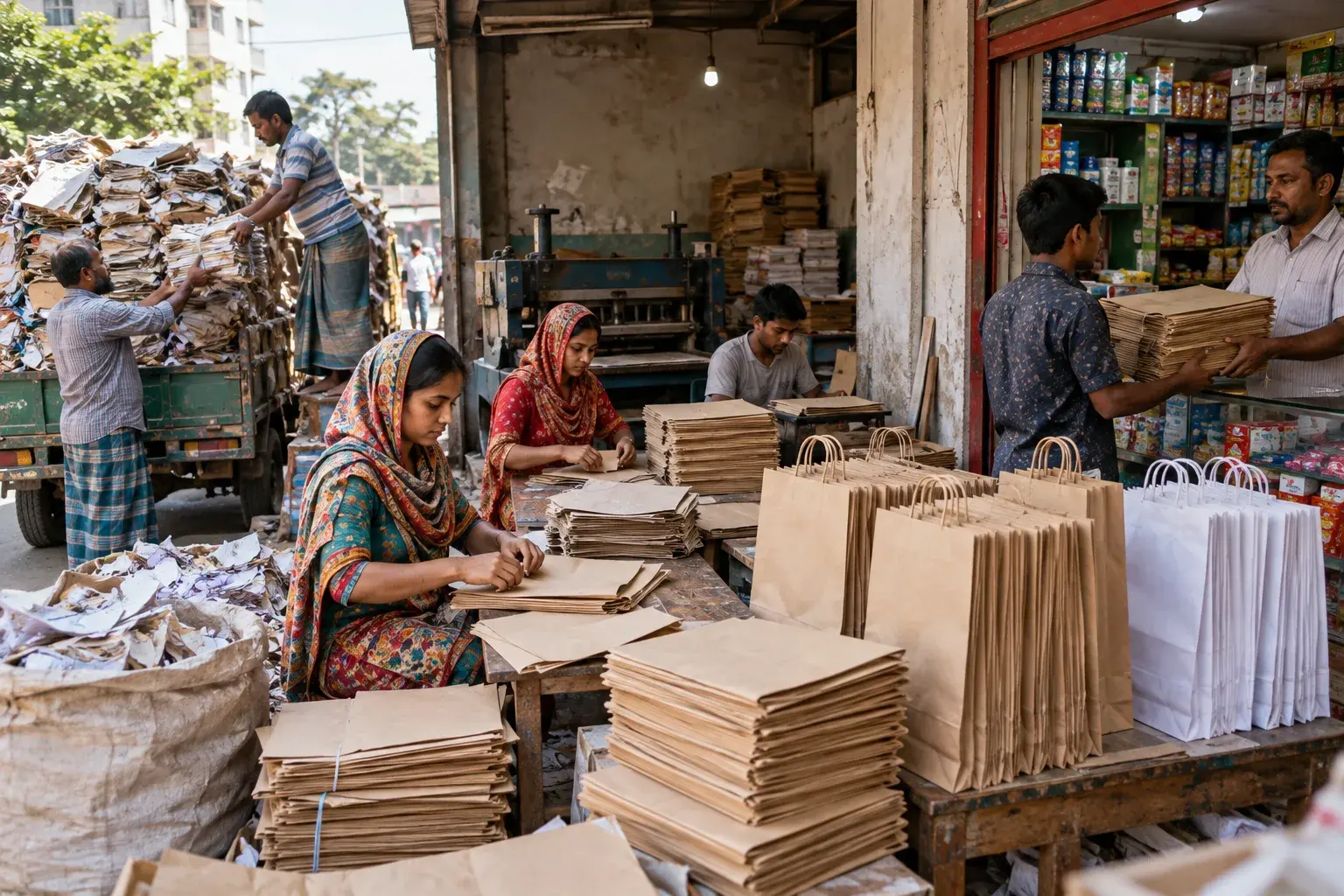
Buying waste paper, folding bags by hand and supplying shops. Khaki bags sell at Tk 135-140 a kg and white at Tk 80; 60 kg of paper costs Tk 7,500 and yields 70 kg of bags for Tk 2,300 profit.
- Capital
- ৳10k – ৳60k
- People
- 1 – 20
- First income
- 3 – 15 days
 Light manufacturing & workshop
Shitalpati mat weaving
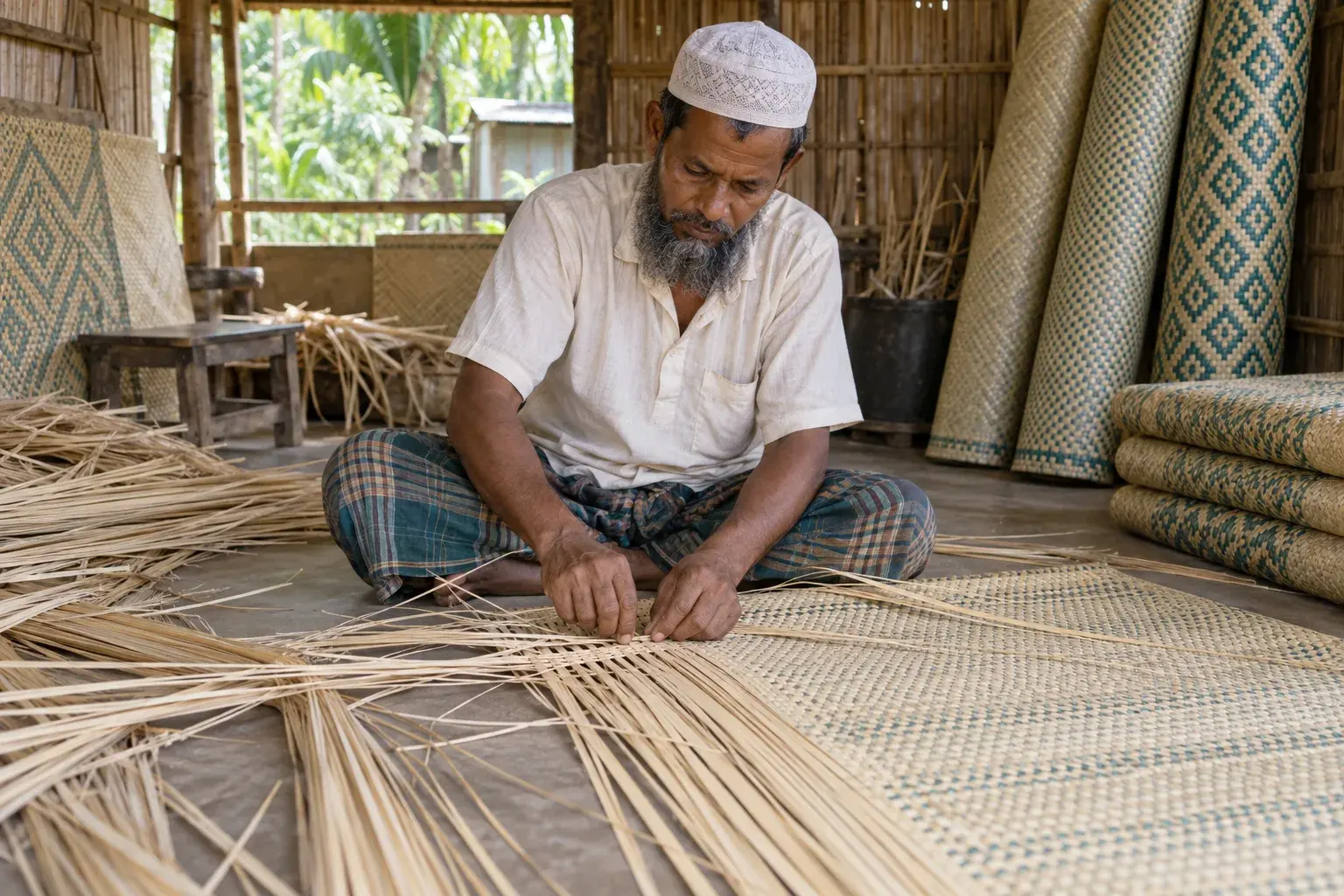
Hand-weaving mats from murta strips. In Jhalokathi one mat takes four to five days and sells for Tk 1,000-3,500, and the GI certificate has not raised that price; the weaver is still tied to the mahajan's advance.
- Capital
- ৳10k – ৳80k
- People
- 1 – 5
- First income
- 12 – 365 days
 Light manufacturing & workshop
Cycle and rickshaw repair shop
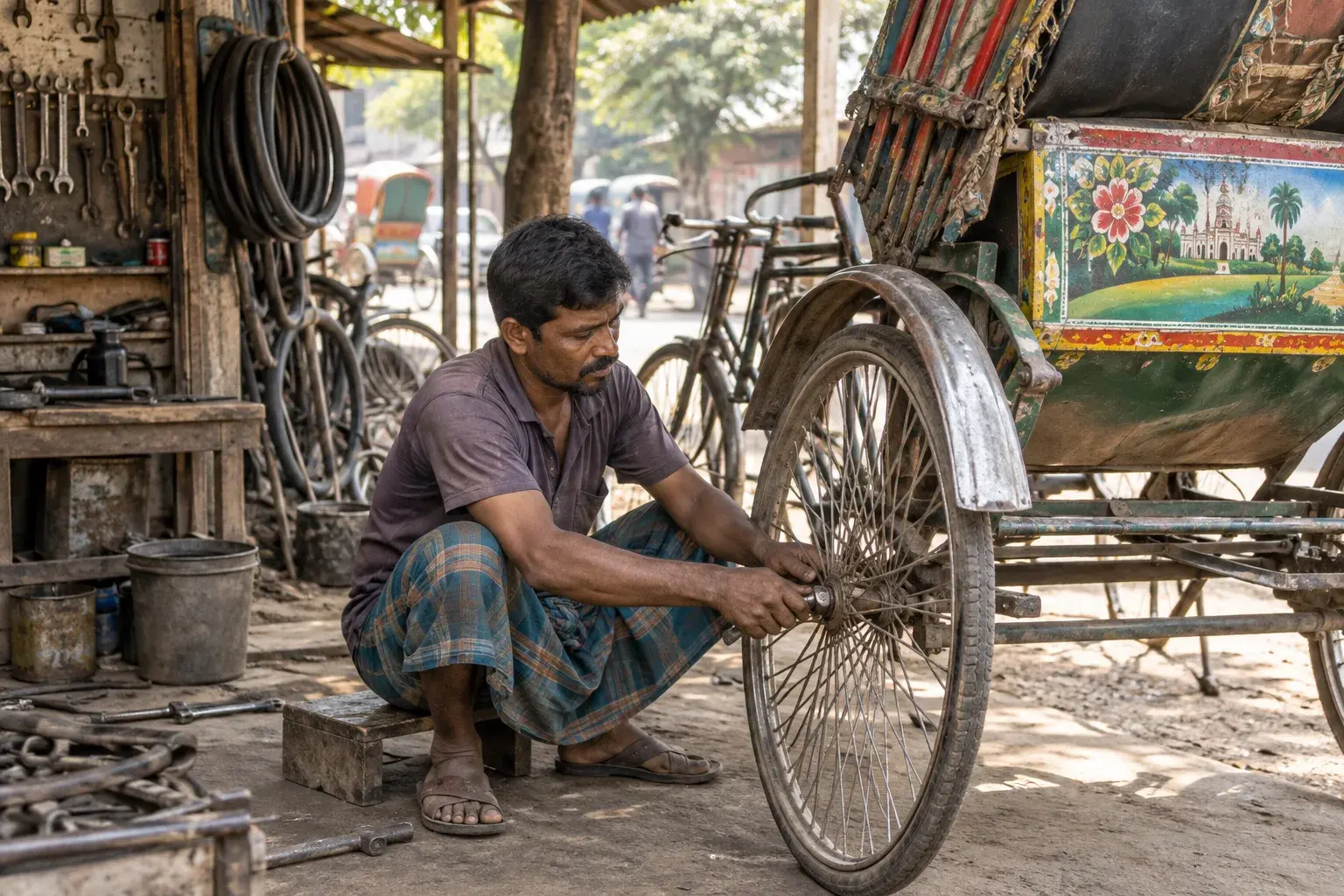
A roadside shop repairing bicycles, rickshaws and e-rickshaws. It can start from about Tk 15,000 of tools and stock, and customers pay cash when the job is done.
- Capital
- ৳15k – ৳1.2 lakh
- People
- 1 – 3
- First income
- 7 – 30 days
 Light manufacturing & workshop
Block, batik and tie-dye
Making batik and tie-dye sarees and three-pieces at home with wax and dye on cotton. Cumilla shops sell batik sarees from Tk 500 to Tk 1,700, and one karigar can finish about ten sarees a day.
- Capital
- ৳5k – ৳50k
- People
- 1 – 20
- First income
- 7 – 30 days