
Banana cultivation
350-400 plants to a bigha, fruit in 10-13 months. Tk 150-200 a plant to grow, Tk 350-450 a bunch to sell, and the extension department puts profit at Tk 120-180 a plant.
- Last reviewed: 19 September 2026
- Version 1

Banana cultivation
- Starting capital
- ৳35,000 – ৳80,000 Editorial estimate
- Manpower
- 1 – 4 people
- First sale
- 300 – 395 days Official source
- Break-even
- 10 – 15 months Editorial estimate
- Kind of work
- Farm · Medium difficulty
About the business
Digging pits, planting suckers and lifting bunches. The extension department's spacing - 60 cm pits one and a half to two metres apart - puts 350 to 400 plants on a bigha. The crop matures 10 to 13 months after planting, so the land is tied up for about a year and the money arrives in one go. In Tangail it costs Tk 150-200 to take one plant from planting to market and a bunch sells for Tk 350-450; the extension department puts profit at up to Tk 120-180 a plant under modern methods. The thing to understand about this trade is that bananas are cut green and ripened somewhere else. The farmer sells the green bunch and the ripening room or chamber does the rest, and a large part of the price is made at that step. Twenty to thirty truckloads leave the Jalchhatra, Garo Bazaar and Kutubpur markets in Tangail every day, and 70-80 percent of it goes to Chattogram division. The risks are real: Panama disease means burning the plants and keeping banana off that land for three or four years, and a storm that flattens plants carrying bunches wipes out a year's work in a night.
Unit economics
| Item | Range | Evidence | Suggest a correction |
|---|---|---|---|
| Monthly working capital | ৳3,000 – ৳7,000 | Editorial estimate | |
| Selling price | ৳180 – ৳600 / unit | Market quote | |
| Variable cost | ৳75 – ৳200 / unit | Editorial estimate | |
| Gross margin | 27% – 51% | Editorial estimate | |
| Time to first revenue | 300 – 395 days | Official source | |
| Break-even time | 10 – 15 months | Editorial estimate | |
| Cash cycle | 180 – 395 days | Editorial estimate | |
| Waste / loss | 5% – 15% | Editorial estimate | |
| Daily capacity | 0.9 – 1.1 | Editorial estimate |
What you need to start
- An irrigation pump and pipe, tools for cutting drains, perforated polythene bunch sleeves, and a sprayer.Equipment
- Disease-free suckers, 350 to 400 a bigha. Never take suckers off an infected plant.Starting stock
- Fertiliser per pit: 10 kg cow dung, 500 g urea, 400 g TSP, 600 g MOP, 200 g gypsum, 1.5 g zinc sulphate, 2 g boric acid.Starting stock
- Trade licence from the union parishad, municipality or city corporation: form Tk 10, licence book Tk 50, standard tax Tk 30, stamp Tk 150-300, licence fee Tk 100-60,000 by trade type, issued in 3-5 working days. Selling your own bunches at the haat usually does not need it; running a banana arat or trading does.Licence
- Selecting suckers, keeping just one after the flower emerges, and cutting the bunch green at the right moment. Too early and it will not ripen, too late and it ripens and spoils on the road.Skill
- The banana haat and its traders, and the owners of ripening rooms or chambers. Jalchhatra, Garo Bazaar in Madhupur and Kutubpur Bazaar in Sakhipur are the big markets in Tangail.Supplier
- High, sunny loam that drains. At one and a half to two metre spacing a bigha takes 350 to 400 plants.Workspace
How the work is done
- 1Take high, sunny, fertile loam that drains. Water standing in the monsoon rots the base.
- 2Find out whether banana or Panama disease was on that land before. Infected land cannot take banana for three or four years.
- 3Plough deep, then dig 60 x 60 x 60 cm pits one and a half to two metres apart, at least a month before planting.
- 4Mix cow dung and TSP into the pit and close it. Per pit the crop needs 10 kg cow dung, 500 g urea, 400 g TSP, 600 g MOP, 200 g gypsum, 1.5 g zinc sulphate and 2 g boric acid.
- 5Take suckers from a disease-free plantation. Suckers off an infected plant carry Panama disease to new land.
- 6Plant in Ashwin-Kartik, mid-September to mid-November, or in Magh-Falgun, mid-January to mid-March.
- 7Irrigate every 15 to 20 days in the dry season and cut drains to take the water out in the monsoon.
- 8Cut away every sucker until the flower emerges, then keep just one. That is what makes the bunch big.
- 9Sleeve the emerging bunch in a perforated polythene bag. The beetle marks the young fruit, and marked fruit loses its market price.
- 10Cut the bunch green, when the ridges are about three-quarters full. Do not rest the cut bunch on the ground or anything hard; it bruises black and that patch rots first when it ripens.
- 11Sell the green bunch at the haat or to a trader; ripening is done by a ripening room or chamber. Twenty to thirty truckloads a day leave Jalchhatra, Garo Bazaar and Kutubpur Bazaar in Tangail.
- 12Keep a written record of which trader pays and when. Once the bunches are on the truck there is no getting them back, so settle the credit terms first.
Seasons
- JanNormal
- FebHigh
- MarHigh
- AprNormal
- MayNormal
- JunNormal
- JulNormal
- AugNormal
- SepHigh
- OctHigh
- NovHigh
- DecNormal
Where it works well
- Strong fitChattogram · The buying end: 70-80 percent of the bananas leaving Tangail go to districts in Chattogram division, which makes it the country's biggest banana market.
- Strong fitJhenaidah · 5,805 hectares in 2021, concentrated in Sailkupa, with bunch prices varying sharply by variety, from Tk 180-220 for sagar to Tk 500-600 for dhupchaya.
- Strong fitKushtia · Grown on the river chars of Bheramara and Daulatpur. One grower alone farms 1,100 bighas, turning over Tk 20-30 million a year with about 95 workers a day, putting otherwise idle char land to use.
- Strong fitNarsingdi · Famous for sagar kola: in 2022 the district had 2,300 hectares under banana, 1,700 of it sagar, with 350 hectares champa, 170 sapori and 40 gera. Planting is dense around Shilmandi in Palash.
- Strong fitTangail · 4,667 hectares in 2023, with 2,355 in Madhupur and 950 in Ghatail. Twenty to thirty truckloads leave Jalchhatra, Garo Bazaar and Kutubpur Bazaar every day.
- PossibleDhaka · The largest consuming market, and where the ripening rooms are. On 16 September 2026 Dhaka online retail was Tk 55 for four sagar, Tk 29 for four champa and Tk 55 for four green bananas.
- UnknownBogura · Known for the north's big fruit arats, but no documentation of banana area or price here was found in this research.
- UnknownJashore · Known as banana country, but the hectares and bunch rates here could not be verified.
Risks and cautions
- HighOther: Panama disease. This fungal disease yellows the leaves, drops them and kills the plant. The extension department's instruction is to lift and burn affected plants, never plant their suckers, and keep banana off that land for three or four years. So an outbreak costs not just this year's crop but the land itself for several years.
- HighOther: Storm flattening. Banana plants are tall and soft-stemmed and become top-heavy once the bunch sets, so one night's wind can lay down whole rows. The risk peaks at the very end of a 10-13 month wait, and a flattened plant cannot be stood back up.
- HighSpoilage: Once the green bunch is cut there is very little time. Resting it on the ground bruises it black and that spot rots first in ripening; beetle marks cut the price too. If a load ripens before it reaches its destination the whole consignment loses value.
- HighWorking capital: The land is tied up for a year and the money arrives all at once. For 10 to 13 months there is fertiliser, irrigation and labour to pay for and no income. Costs run from Tk 30,000-35,000 a bigha for a season (2021) to Tk 150-200 a plant (2023), and none of it comes back until the first cutting.
- MediumLate payment: Money gets stuck with traders and aratdars. Twenty to thirty truckloads a day leave the Tangail markets and 70-80 percent goes to Chattogram division, so the buyer is far away. Once the load is on the truck the farmer has no leverage left, and without written terms the money takes time to come back.
Sources
কলা চাষ পদ্ধতি — ই-কৃষি (কৃষি প্রযুক্তি হাতবই, ১০ম সংস্করণ অবলম্বনে)
Collected: 16 Sept 2026Supports: Starting capital, Gross margin, Time to first revenue · বাংলাদেশ
সিটি কর্পোরেশন থেকে ট্রেড লাইসেন্স প্রাপ্তির ধাপ সমূহ
Collected: 16 Sept 2026Supports: Starting capital · বাংলাদেশ
What changed
No corrections have been published yet.
Questions and answers
No questions yet. Be the first to ask.
Stories about this business
93,000 taka for an acre of bananas, 2.5 lakh of sales in seven months
Back from working abroad, he planted 320 saplings on one acre in June 2024: 13,000 taka of saplings and 80,000 on labour, fertiliser, pesticide and irrigation. Bearing began at 10 months, and seven months of selling has brought about 250,000 taka, clearing 30,000-40,000 a month.
- Capital
- ৳93k
- Ran for
- 10 months
- Reasons
- Working capital, Weak demand
Similar businesses
 Agriculture & farming
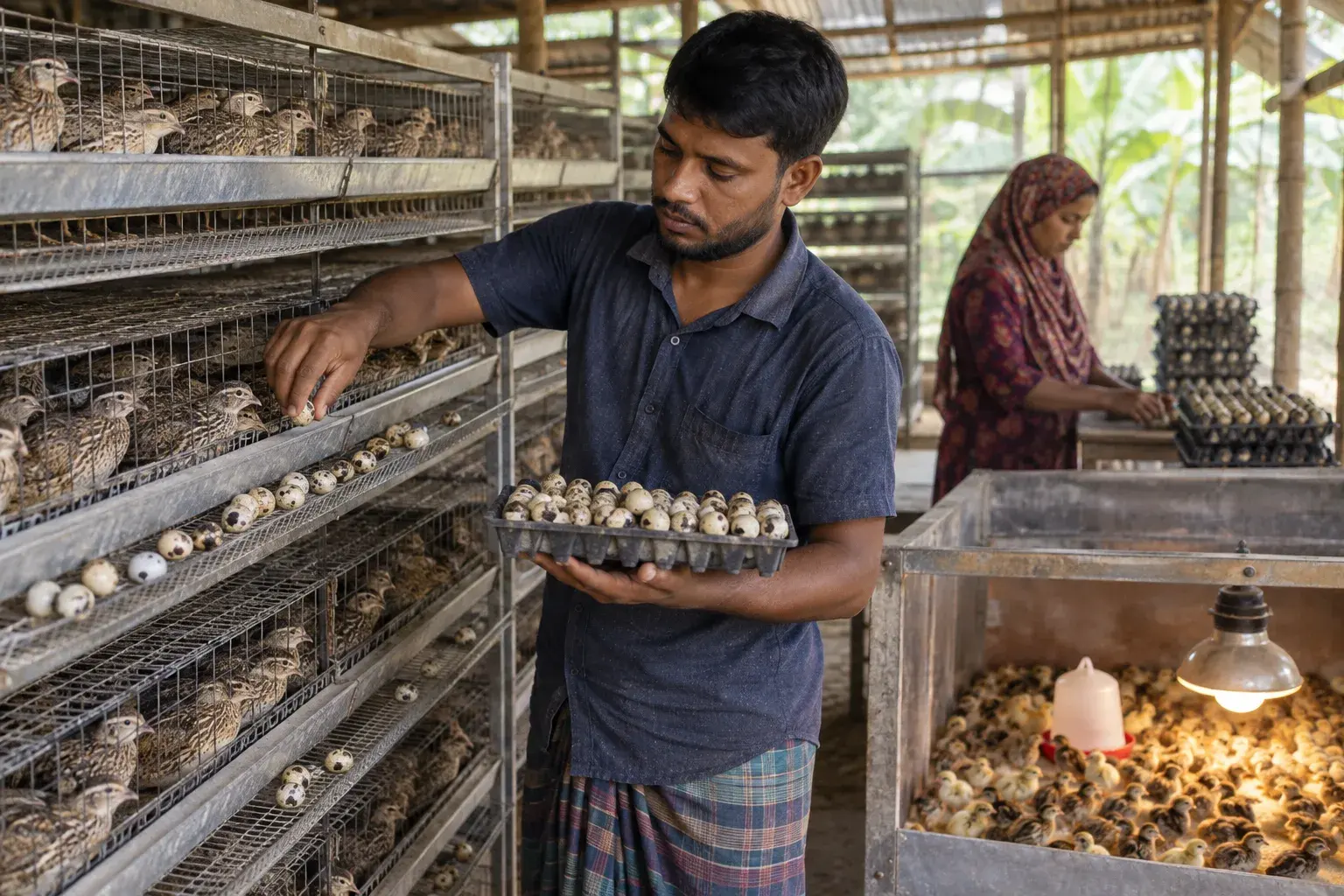
Quail farming
Cage-reared quail. Laying starts in 35-45 days; an egg costs about Tk 1.20 to produce and sells wholesale at Tk 2.80-3.50. The market is narrow, and the bigger money is in selling chicks.
- Capital
- ৳35k – ৳2.5 lakh
- People
- 1 – 3
- First income
- 35 – 49 days
 Agriculture & farming
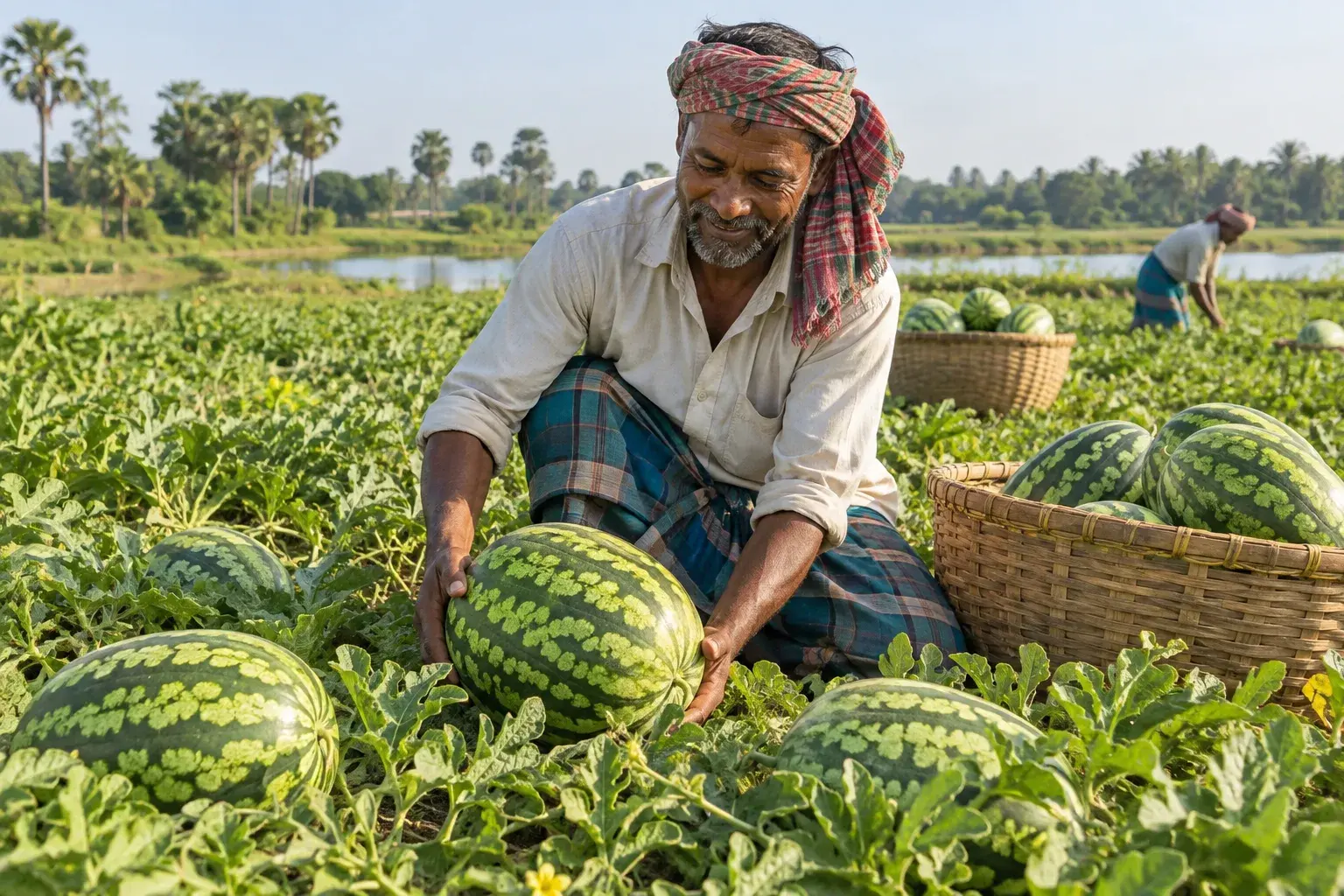
Watermelon farming
A three-month coastal crop. Tk 30,000-35,000 a bigha to grow, Tk 80,000 to a lakh a bigha in a good year, and a selling window only about two weeks wide.
- Capital
- ৳35k – ৳3.5 lakh
- People
- 2 – 10
- First income
- 90 – 120 days
 Agriculture & farming
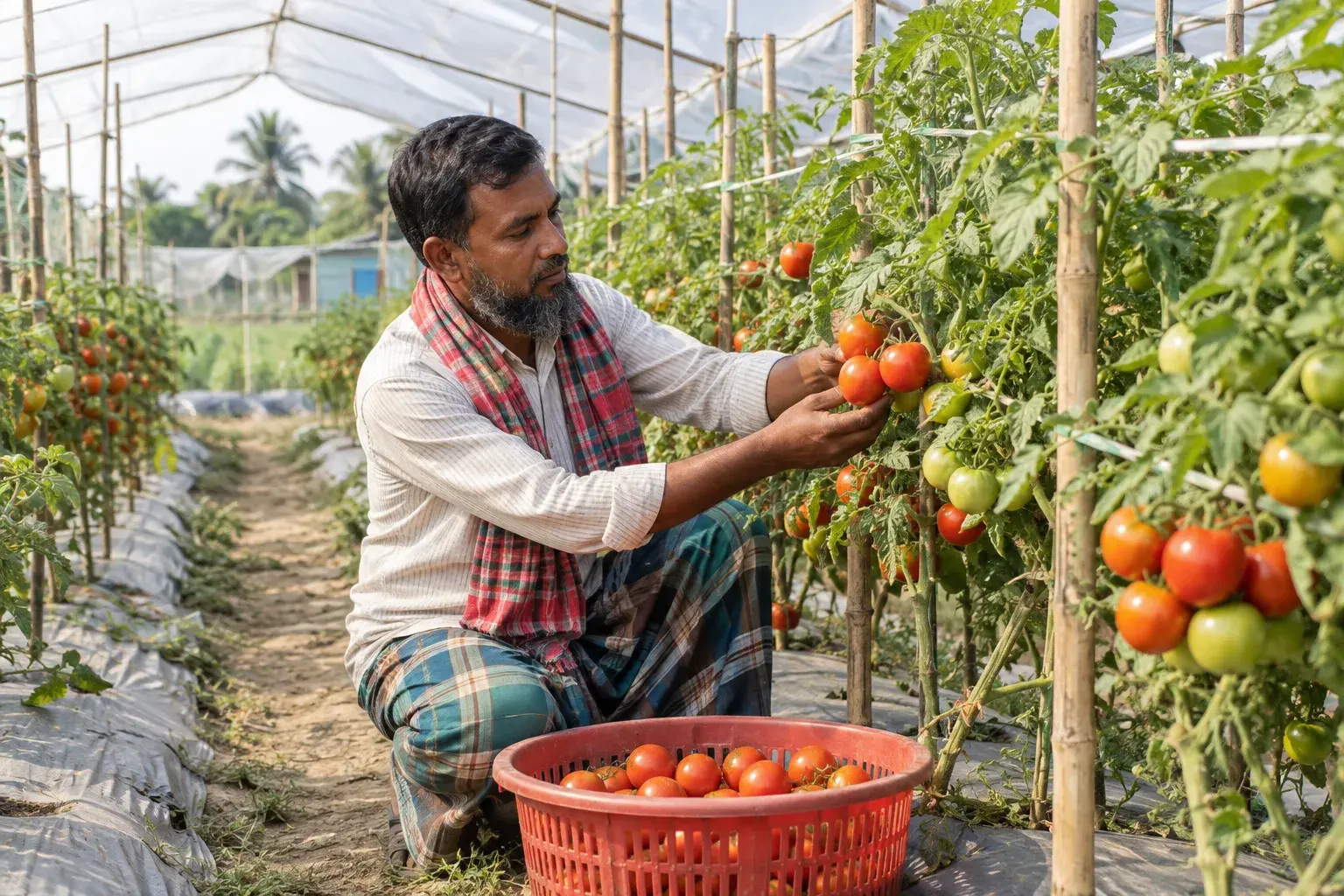
Summer tomato farming
Planted in December, sold April to June. Tk 70,000-80,000 a bigha, 300-400 maunds of fruit, Tk 1,000-1,800 a maund, and Tk 3-4 crore a day changing hands at Gabura Bazar in Dinajpur.
- Capital
- ৳35k – ৳1.6 lakh
- People
- 1 – 6
- First income
- 90 – 120 days
 Agriculture & farming
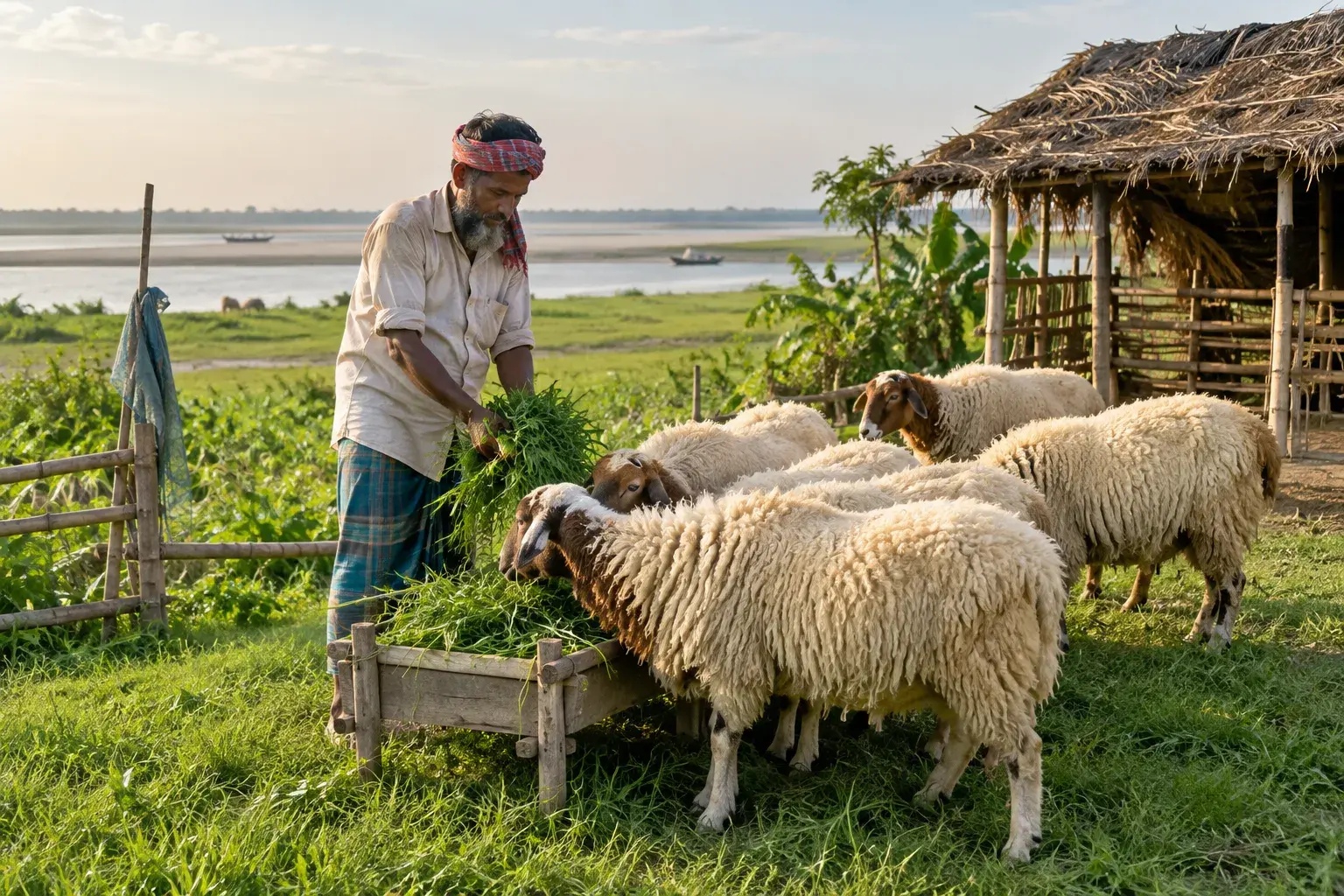
Sheep rearing
Rearing sheep on open grazing in fields and chars. Before Qurbani 2026 one Joypurhat farmer sold 26 sheep for Tk 2,30,000, about Tk 8,800 each.
- Capital
- ৳30k – ৳2.5 lakh
- People
- 1 – 3
- First income
- 180 – 365 days